
Creativity and Inspiration

Mirza Ghalib
About My Poems
I agree, O heart, that my ghazals are not easy to take in.
When they hear my works, experienced poets
tell me
I should write something easier.
I have to write difficult, otherwise it is difficult to write.
When they hear my works, experienced poets
tell me
I should write something easier.
I have to write difficult, otherwise it is difficult to write.
356
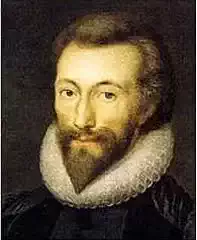
John Donne
To The Earl Of Doncaster
SEE, sir, how, as the sun's hot masculine flame
Begets strange creatures on Nile's dirty slime,
In me your fatherly yet lusty rhyme
—For these songs are their fruits—have wrought the same.
But though th' engend'ring force from which they came
Be strong enough, and Nature doth admit
Seven to be born at once ; I send as yet
But six ; they say the seventh hath still some maim.
I choose your judgment, which the same degree
Doth with her sister, your invention, hold,
As fire these drossy rhymes to purify,
Or as elixir, to change them to gold.
You are that alchemist, which always had
Wit, whose one spark could make good things of bad.
348

Johann Wolfgang von Goethe
The Consecrated Spot
WHEN in the dance of the Nymphs, in the moonlight so holy assembled,
Mingle the Graces, down from Olympus in secret descending,
Here doth the minstrel hide, and list to their numbers enthralling,
Here doth he watch their silent dances' mysterious measure.
All that is glorious in Heaven, and all that the earth in her beauty
Ever hath brought into life, the dreamer awake sees before him;
All he repeats to the Muses, and lest the gods should be anger'd,
How to tell of secrets discreetly, the Muses instruct him.
348

Robert Louis Stevenson
To the Muse
Resign the rhapsody, the dream,
To men of larger reach;
Be ours the quest of a plain theme,
The piety of speech.
As monkish scribes from morning break
Toiled till the close of light,
Nor thought a day too long to make
One line or letter bright:
We also with an ardent mind,
Time, wealth, and fame forgot,
Our glory in our patience find
And skim, and skim the pot:
Till last, when round the house we hear
The evensong of birds,
One corner of blue heaven appear
In our clear well of words.
Leave, leave it then, muse of my heart!
Sans finish and sans frame,
Leave unadorned by needless art
The picture as it came.
345
Mirza Ghalib
These Divine Verses
These divine verses,
As I write
Are
The hallowed revelations
Descending
From on high
The sound of the scribe's pen
In the stillness of the night is indeed
The heavenly muse
Uttering her immortal words
As I write
Are
The hallowed revelations
Descending
From on high
The sound of the scribe's pen
In the stillness of the night is indeed
The heavenly muse
Uttering her immortal words
342
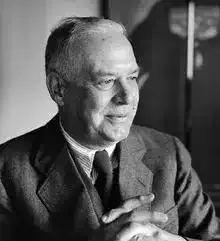
Wallace Stevens
Poem Written at Morning
A sunny day's complete Poussiniana
Divide it from itself. It is this or that
And it is not.
By metaphor you paint
A thing. Thus, the pineapple was a leather fruit,
A fruit for pewter, thorned and palmed and blue,
To be served by men of ice.
The senses paint
By metaphor. The juice was fragranter
Than wettest cinnamon. It was cribled pears
Dripping a morning sap.
The truth must be
That you do not see, you experience, you feel,
That the buxom eye brings merely its element
To the total thing, a shapeless giant forced
Upward.
Green were the curls upon that head.
342

James Whitcomb Riley
Heat-Lightning
There was a curious quiet for a space
Directly following: and in the face
Of one rapt listener pulsed the flush and glow
Of the heat-lightning that pent passions throw
Long ere the crash of speech.--He broke the spell--
The host:--The Traveler's story, told so well,
He said, had wakened there within his breast
A yearning, as it were, to know _the rest_--
That all unwritten sequence that the Lord
Of Righteousness must write with flame and sword,
Some awful session of His patient thought--
Just then it was, his good old mother caught
His blazing eye--so that its fire became
But as an ember--though it burned the same.
It seemed to her, she said, that she had heard
It was the _Heavenly_ Parent never erred,
And not the _earthly_ one that had such grace:
'Therefore, my son,' she said, with lifted face
And eyes, 'let no one dare anticipate
The Lord's intent. While _He_ waits, _we_ will wait'
And with a gust of reverence genuine
Then Uncle Mart was aptly ringing in-
''_If the darkened heavens lower,
Wrap thy cloak around thy form;
Though the tempest rise in power,
God is mightier than the storm!_''
Which utterance reached the restive children all
As something humorous. And then a call
For _him_ to tell a story, or to 'say
A funny piece.' His face fell right away:
He knew no story worthy. Then he must
_Declaim_ for them: In that, he could not trust
His memory. And then a happy thought
Struck some one, who reached in his vest and brought
Some scrappy clippings into light and said
There was a poem of Uncle Mart's he read
Last April in '_The Sentinel_.' He had
It there in print, and knew all would be glad
To hear it rendered by the author.
And,
All reasons for declining at command
Exhausted, the now helpless poet rose
And said: 'I am discovered, I suppose.
Though I have taken all precautions not
To sign my name to any verses wrought
By my transcendent genius, yet, you see,
Fame wrests my secret from me bodily;
So I must needs confess I did this deed
Of poetry red-handed, nor can plead
One whit of unintention in my crime--
My guilt of rhythm and my glut of rhyme.-
'Maenides rehearsed a tale of arms,
And Naso told of curious metat_mur_phoses;
Unnumbered pens have pictured woman's charms,
While crazy _I_'ve made poetry _on purposes!_'
In other words, I stand convicted--need
I say--by my own doing, as I read.
336

Billy Collins
Man Listening To Disc
This is not bad -ambling
along 44th Street
with Sonny Rollins for company,
his music flowing through the soft calipers
of these earphones,
as if he were right beside me
on this clear day in March,
the pavement sparkling with sunlight,
pigeons fluttering off the curb,
nodding over a profusion of bread crumbs.
In fact, I would say
my delight at being suffused
with phrases from his saxophone -some
like honey, some like vinegar -is
surpassed only by my gratitude
to Tommy Potter for taking the time
to join us on this breezy afternoon
with his most unwieldy bass
and to the esteemed Arthur Taylor
who is somehow managing to navigate
this crowd with his cumbersome drums.
And I bow deeply to Thelonious Monk
for figuring out a way
to motorize -- or whatever -- his huge piano
so he could be with us today.
This music is loud yet so confidential.
I cannot help feeling even more
like the center of the universe
than usual as I walk along to a rapid
little version of "The Way You Look Tonight,"
and all I can say to my fellow pedestrians,
to the woman in the white sweater,
the man in the tan raincoat and the heavy glasses,
who mistake themselves for the center of the universe -all
I can say is watch your step,
because the five of us, instruments and all,
are about to angle over
to the south side of the street
and then, in our own tightly knit way,
turn the corner at Sixth Avenue.
And if any of you are curious
about where this aggregation,
this whole battery-powered crew,
is headed, let us just say
that the real center of the universe,
the only true point of view,
is full of hope that he,
the hub of the cosmos
with his hair blown sideways,
will eventually make it all the way downtown.
335

Carl Sandburg
Style
Style--go ahead talking about style.
You can tell where a man gets his style just
as you can tell where Pavlowa got her legs
or Ty Cobb his batting eye.
Go on talking.
Only don't take my style away.
It's my face.
Maybe no good
but anyway, my face.
I talk with it, I sing with it, I see, taste and feel with it,
I know why I want to keep it.
Kill my style
and you break Pavlowa's legs,
and you blind Ty Cobb's batting eye.
332
Wallace Stevens
Of Modern Poetry
The poem of the mind in the act of finding
What will suffice. It has not always had
To find: the scene was set; it repeated what
Was in the script.
Then the theatre was changed
To something else. Its past was a souvenir.
It has to be living, to learn the speech of the place.
It has to face the men of the time and to meet
The women of the time. It has to think about war
And it has to find what will suffice. It has
To construct a new stage. It has to be on that stage,
And, like an insatiable actor, slowly and
With meditation, speak words that in the ear,
In the delicatest ear of the mind, repeat,
Exactly, that which it wants to hear, at the sound
Of which, an invisible audience listens,
Not to the play, but to itself, expressed
In an emotion as of two people, as of two
Emotions becoming one. The actor is
A metaphysician in the dark, twanging
An instrument, twanging a wiry string that gives
Sounds passing through sudden rightnesses, wholly
Containing the mind, below which it cannot descend,
Beyond which it has no will to rise.
It must
Be the finding of a satisfaction, and may
Be of a man skating, a woman dancing, a woman
Combing. The poem of the act of the mind.
326

Nazim Hikmet
A Spring Piece Left In The Middle
Taut, thick fingers punch
the teeth of my typewriter.
Three words are down on paper
in capitals:
SPRING
SPRING
SPRING...
And me -- poet, proofreader,
the man who's forced to read
two thousand bad lines
every day
for two liras--
why,
since spring
has come, am I
still sitting here
like a ragged
black chair?
My head puts on its cap by itself,
I fly out of the printer's,
I'm on the street.
The lead dirt of the composing room
on my face,
seventy-five cents in my pocket.
SPRING IN THE AIR...
In the barbershops
they're powdering
the sallow cheeks
of the pariah of Publishers Row.
And in the store windows
three-color bookcovers
flash like sunstruck mirrors.
But me,
I don't have even a book of ABC's
that lives on this street
and carries my name on its door!
But what the hell...
I don't look back,
the lead dirt of the composing room
on my face,
seventy-five cents in my pocket,
SPRING IN THE AIR...
*
The piece got left in the middle.
It rained and swamped the lines.
But oh! what I would have written...
The starving writer sitting on his three-thousand-page
three-volume manuscript
wouldn't stare at the window of the kebab joint
but with his shining eyes would take
the Armenian bookseller's dark plump daughter by storm...
The sea would start smelling sweet.
Spring would rear up
like a sweating red mare
and, leaping onto its bare back,
I'd ride it
into the water.
Then
my typewriter would follow me
every step of the way.
I'd say:
"Oh, don't do it!
Leave me alone for an hour..."
then
my head-my hair failing out--
would shout into the distance:
"I AM IN LOVE..."
*
I'm twenty-seven,
she's seventeen.
"Blind Cupid,
lame Cupid,
both blind and lame Cupid
said, Love this girl,"
I was going to write;
I couldn't say it
but still can!
But if
it rained,
if the lines I wrote got swamped,
if I have twenty-five cents left in my pocket,
what the hell...
Hey, spring is here spring is here spring
spring is here!
My blood is budding inside me!
and April
Trans. by Randy Blasing and Mutlu Konuk ()
324

Emily Dickinson
I send Two Sunsets
I send Two Sunsets-
Day and I-in competition ran-
I finished Two-and several Stars-
While He-was making One-
His own was ampler-but as I
Was saying to a friend
Mine-
is the more convenient
To Carry in the Hand-
Day and I-in competition ran-
I finished Two-and several Stars-
While He-was making One-
His own was ampler-but as I
Was saying to a friend
Mine-
is the more convenient
To Carry in the Hand-
319

Henry Wadsworth Longfellow
In The Harbour: Possibilities
Where are the Poets, unto whom belong
The Olympian heights; whose singing shafts were sent
Straight to the mark, and not from bows half bent,
But with the utmost tension of the thong?
Where are the stately argosies of song,
Whose rushing keels made music as they went
Sailing in search of some new continent,
With all sail set, and steady winds and strong?
Perhaps there lives some dreamy boy, untaught
In schools, some graduate of the field or street,
Who shall become a master of the art,
An admiral sailing the high seas of thought,
Fearless and first, and steering with his fleet
For lands not yet laid down in any chart.
317
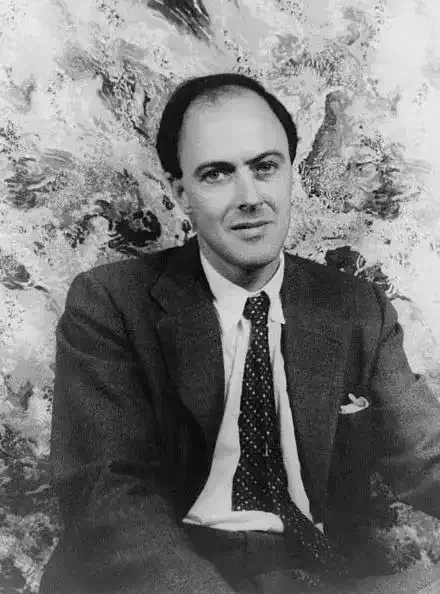
Roald Dahl
Television
The most important thing we've learned,
So far as children are concerned,
Is never, NEVER, NEVER let
Them near your television set --
Or better still, just don't install
The idiotic thing at all.
In almost every house we've been,
We've watched them gaping at the screen.
They loll and slop and lounge about,
And stare until their eyes pop out.
(Last week in someone's place we saw
A dozen eyeballs on the floor.)
They sit and stare and stare and sit
Until they're hypnotised by it,
Until they're absolutely drunk
With all that shocking ghastly junk.
Oh yes, we know it keeps them still,
They don't climb out the window sill,
They never fight or kick or punch,
They leave you free to cook the lunch
And wash the dishes in the sink --
But did you ever stop to think,
To wonder just exactly what
This does to your beloved tot?
IT ROTS THE SENSE IN THE HEAD!
IT KILLS IMAGINATION DEAD!
IT CLOGS AND CLUTTERS UP THE MIND!
IT MAKES A CHILD SO DULL AND BLIND
HE CAN NO LONGER UNDERSTAND
A FANTASY, A FAIRYLAND!
HIS BRAIN BECOMES AS SOFT AS CHEESE!
HIS POWERS OF THINKING RUST AND FREEZE!
HE CANNOT THINK -- HE ONLY SEES!
'All right!' you'll cry. 'All right!' you'll say,
'But if we take the set away,
What shall we do to entertain
Our darling children? Please explain!'
We'll answer this by asking you,
'What used the darling ones to do?
'How used they keep themselves contented
Before this monster was invented?'
Have you forgotten? Don't you know?
We'll say it very loud and slow:
THEY ... USED ... TO ... READ! They'd READ and READ,
AND READ and READ, and then proceed
To READ some more. Great Scott! Gadzooks!
One half their lives was reading books!
The nursery shelves held books galore!
Books cluttered up the nursery floor!
And in the bedroom, by the bed,
More books were waiting to be read!
Such wondrous, fine, fantastic tales
Of dragons, gypsies, queens, and whales
And treasure isles, and distant shores
Where smugglers rowed with muffled oars,
And pirates wearing purple pants,
And sailing ships and elephants,
And cannibals crouching 'round the pot,
Stirring away at something hot.
(It smells so good, what can it be?
Good gracious, it's Penelope.)
The younger ones had Beatrix Potter
With Mr. Tod, the dirty rotter,
And Squirrel Nutkin, Pigling Bland,
And Mrs. Tiggy-Winkle and-
Just How The Camel Got His Hump,
And How the Monkey Lost His Rump,
And Mr. Toad, and bless my soul,
There's Mr. Rate and Mr. Mole-
Oh, books, what books they used to know,
Those children living long ago!
So please, oh please, we beg, we pray,
Go throw your TV set away,
And in its place you can install
A lovely bookshelf on the wall.
Then fill the shelves with lots of books,
Ignoring all the dirty looks,
The screams and yells, the bites and kicks,
And children hitting you with sticks-
Fear not, because we promise you
That, in about a week or two
Of having nothing else to do,
They'll now begin to feel the need
Of having something to read.
And once they start -- oh boy, oh boy!
You watch the slowly growing joy
That fills their hearts. They'll grow so keen
They'll wonder what they'd ever seen
In that ridiculous machine,
That nauseating, foul, unclean,
Repulsive television screen!
And later, each and every kid
Will love you more for what you did.
315
Roald Dahl
Of dragons, gypsies, queens, and whales
And treasure isles, and distant shores
Where smugglers rowed with muffled oars,
And pirates wearing purple pants,
And sailing ships and elephants,
And cannibals crouching 'round the pot,
Stirring away at something hot.
(It smells so good, what can it be?
Good gracious, it's Penelope.)
The younger ones had Beatrix Potter
With Mr. Tod, the dirty rotter,
And Squirrel Nutkin, Pigling Bland,
And Mrs. Tiggy-Winkle and-
Just How The Camel Got His Hump,
And How the Monkey Lost His Rump,
And Mr. Toad, and bless my soul,
There's Mr. Rat and Mr. Mole-
Oh, books, what books they used to know,
Those children living long ago!
So please, oh please, we beg, we pray,
Go throw your TV set away,
And in its place you can install
A lovely bookshelf on the wall.
Then fill the shelves with lots of books,
Ignoring all the dirty looks,
The screams and yells, the bites and kicks,
And children hitting you with sticks-
Fear not, because we promise you
That, in about a week or two
Of having nothing else to do,
They'll now begin to feel the need
Of having something to read.
And once they start -- oh boy, oh boy!
You watch the slowly growing joy
That fills their hearts. They'll grow so keen
They'll wonder what they'd ever seen
In that ridiculous machine,
That nauseating, foul, unclean,
Repulsive television screen!
And later, each and every kid
Will love you more for what you did.
308

Walt Whitman
Ages And Ages, Returning At Intervals
AGES and ages, returning at intervals,
Undestroy'd, wandering immortal,
Lusty, phallic, with the potent original loins, perfectly sweet,
I, chanter of Adamic songs,
Through the new garden, the West, the great cities calling,
Deliriate, thus prelude what is generated, offering these, offering
myself,
Bathing myself, bathing my songs in Sex,
Offspring of my loins.
309
Billy Collins
The Best Cigarette
There are many that I miss
having sent my last one out a car window
sparking along the road one night, years ago.
The heralded one, of course:
after sex, the two glowing tips
now the lights of a single ship;
at the end of a long dinner
with more wine to come
and a smoke ring coasting into the chandelier;
or on a white beach,
holding one with fingers still wet from a swim.
How bittersweet these punctuations
of flame and gesture;
but the best were on those mornings
when I would have a little something going
in the typewriter,
the sun bright in the windows,
maybe some Berlioz on in the background.
I would go into the kitchen for coffee
and on the way back to the page,
curled in its roller,
I would light one up and feel
its dry rush mix with the dark taste of coffee.
Then I would be my own locomotive,
trailing behind me as I returned to work
little puffs of smoke,
indicators of progress,
signs of industry and thought,
the signal that told the nineteenth century
it was moving forward.
That was the best cigarette,
when I would steam into the study
full of vaporous hope
and stand there,
the big headlamp of my face
pointed down at all the words in parallel lines.
303

William Shakespeare
Sonnet 100: Where art thou, Muse, that thou forget'st so long
Where art thou, Muse, that thou forget'st so long
To speak of that which gives thee all thy might?
Spend'st thou thy fury on some worthless song,
Darkening thy power to lend base subjects light?
Return, forgetful Muse, and straight redeem
In gentle numbers time so idly spent;
Sing to the ear that doth thy lays esteem
And gives thy pen both skill and argument.
Rise, resty Muse, my love's sweet face survey,
If Time have any wrinkle graven there;
If any, be a satire to decay,
And make Time's spoils despised every where.
Give my love fame faster than Time wastes life;
So thou prevent'st his scythe and crooked knife.
300
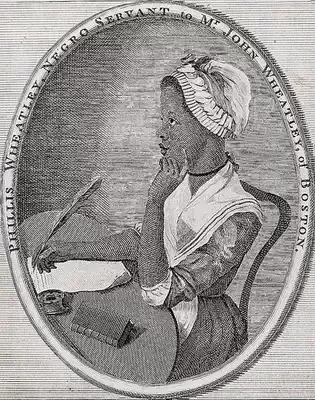
Phillis Wheatley
On Imagination
THY various works, imperial queen, we see,
How bright their forms! how deck'd with pomp
by thee!
Thy wond'rous acts in beauteous order stand,
And all attest how potent is thine hand.
From Helicon's refulgent heights attend,
Ye sacred choir, and my attempts befriend:
To tell her glories with a faithful tongue,
Ye blooming graces, triumph in my song.
Now here, now there, the roving Fancy flies,
Till some lov'd object strikes her wand'ring eyes,
Whose silken fetters all the senses bind,
And soft captivity involves the mind.
Imagination! who can sing thy force?
Or who describe the swiftness of thy course?
Soaring through air to find the bright abode,
Th' empyreal palace of the thund'ring God,
We on thy pinions can surpass the wind,
And leave the rolling universe behind:
From star to star the mental optics rove,
Measure the skies, and range the realms above.
There in one view we grasp the mighty whole,
Or with new worlds amaze th' unbounded soul.
Though Winter frowns to Fancy's raptur'd eyes
The fields may flourish, and gay scenes arise;
The frozen deeps may break their iron bands,
And bid their waters murmur o'er the sands.
Fair Flora may resume her fragrant reign,
And with her flow'ry riches deck the plain;
Sylvanus may diffuse his honours round,
And all the forest may with leaves be crown'd:
Show'rs may descend, and dews their gems disclose,
And nectar sparkle on the blooming rose.
Such is thy pow'r, nor are thine orders vain,
O thou the leader of the mental train:
In full perfection all thy works are wrought,
And thine the sceptre o'er the realms of thought.
Before thy throne the subject-passions bow,
Of subject-passions sov'reign ruler thou;
At thy command joy rushes on the heart,
And through the glowing veins the spirits dart.
Fancy might now her silken pinions try
To rise from earth, and sweep th' expanse on high:
From Tithon's bed now might Aurora rise,
Her cheeks all glowing with celestial dies,
While a pure stream of light o'erflows the skies.
The monarch of the day I might behold,
And all the mountains tipt with radiant gold,
But I reluctant leave the pleasing views,
Which Fancy dresses to delight the Muse;
Winter austere forbids me to aspire,
And northern tempests damp the rising fire;
They chill the tides of Fancy's flowing sea,
Cease then, my song, cease the unequal lay.
300
James Whitcomb Riley
If I Knew What Poets Know
If I knew what poets know,
Would I write a rhyme
Of the buds that never blow
In the summer-time?
Would I sing of golden seeds
Springing up in ironweeds?
And of rain-drops turned to snow,
If I knew what poets know?
Did I know what poets do,
Would I sing a song
Sadder than the pigeon's coo
When the days are long?
Where I found a heart in pain,
I would make it glad again;
And the false should be the true,
Did I know what poets do.
If I knew what poets know,
I would find a theme
Sweeter than the placid flow
Of the fairest dream:
I would sing of love that lives
On the errors it forgives;
And the world would better grow
If I knew what poets know.
300
James Whitcomb Riley
Limitations Of Genius
The audience entire seemed pleased--indeed
_Extremely_ pleased. And little Maymie, freed
From her task of instructing, ran to show
Her wondrous colored picture to and fro
Among the company.
'And how comes it,' said
Some one to Mr. Hammond, 'that, instead
Of the inventor's life you did not choose
The _artist's?_--since the world can better lose
A cutting-box or reaper than it can
A noble picture painted by a man
Endowed with gifts this drawing would suggest'--
Holding the picture up to show the rest.
'_There now!_' chimed in the wife, her pale face lit
Like winter snow with sunrise over it,-'
That's what _I'm_ always asking him.--But _he_-_
Well_, as he's answering _you_, he answers _me_,--
With that same silent, suffocating smile
He's wearing now!'
For quite a little while
No further speech from anyone, although
All looked at Mr. Hammond and that slow,
Immutable, mild smile of his. And then
The encouraged querist asked him yet again
_Why was it_, and etcetera--with all
The rest, expectant, waiting 'round the wall,--
Until the gentle Mr. Hammond said
He'd answer with a '_parable_,' instead--
About 'a dreamer' that he used to know-'
An artist'--'master'--_all_--in _embryo_.
296
Henry Wadsworth Longfellow
Tales Of A Wayside Inn : Part 3. Interlude VI.
'Now that is after my own heart,'
The Poet cried; 'one understands
Your swarthy hero Scanderbeg,
Gauntlet on hand and boot on leg,
And skilled in every warlike art,
Riding through his Albanian lands,
And following the auspicious star
That shone for him o'er Ak-Hissar.'
The Theologian added here
His word of praise not less sincere,
Although he ended with a jibe;
'The hero of romance and song
Was born,' he said, 'to right the wrong;
And I approve; but all the same
That bit of treason with the Scribe
Adds nothing to your hero's fame.'
The Student praised the good old times,
And liked the canter of the rhymes,
That had a hoofbeat in their sound;
But longed some further word to hear
Of the old chronicler Ben Meir,
And where his volume might he found.
The tall Musician walked the room
With folded arms and gleaming eyes,
As if he saw the Vikings rise,
Gigantic shadows in the gloom;
And much he talked of their emprise
And meteors seen in Northern skies,
And Heimdal's horn, and day of doom.
But the Sicilian laughed again;
'This is the time to laugh,' he said,
For the whole story he well knew
Was an invention of the Jew,
Spun from the cobwebs in his brain,
And of the same bright scarlet thread
As was the Tale of Kambalu.
Only the Landlord spake no word;
'T was doubtful whether he had heard
The tale at all, so full of care
Was he of his impending fate,
That, like the sword of Damocles,
Above his head hung blank and bare,
Suspended by a single hair,
So that he could not sit at ease,
But sighed and looked disconsolate,
And shifted restless in his chair,
Revolving how he might evade
The blow of the descending blade.
The Student came to his relief
By saying in his easy way
To the Musician: 'Calm your grief,
My fair Apollo of the North,
Balder the Beautiful and so forth;
Although your magic lyre or lute
With broken strings is lying mute,
Still you can tell some doleful tale
Of shipwreck in a midnight gale,
Or something of the kind to suit
The mood that we are in to-night
For what is marvellous and strange;
So give your nimble fancy range,
And we will follow in its flight.'
But the Musician shook his head;
'No tale I tell to-night,' he said,
'While my poor instrument lies there,
Even as a child with vacant stare
Lies in its little coffin dead.'
Yet, being urged, he said at last:
'There comes to me out of the Past
A voice, whose tones are sweet and wild,
Singing a song almost divine,
And with a tear in every line;
An ancient ballad, that my nurse
Sang to me when I was a child,
In accents tender as the verse;
And sometimes wept, and sometimes smiled
While singing it, to see arise
The look of wonder in my eyes,
And feel my heart with terror beat.
This simple ballad I retain
Clearly imprinted on my brain,
And as a tale will now repeat.'
298
Henry Wadsworth Longfellow
Prometheus, Or, The Poet's Forethought. (Birds Of Passage. Flight The First)
Of Prometheus, how undaunted
On Olympus' shining bastions
His audacious foot he planted,
Myths are told and songs are chanted,
Full of promptings and suggestions.
Beautiful is the tradition
Of that flight through heavenly portals,
The old classic superstition
Of the theft and the transmission
Of the fire of the Immortals!
First the deed of noble daring,
Born of heavenward aspiration,
Then the fire with mortals sharing,
Then the vulture,--the despairing
Cry of pain on crags Caucasian.
All is but a symbol painted
Of the Poet, Prophet, Seer;
Only those are crowned and sainted
Who with grief have been acquainted,
Making nations nobler, freer.
In their feverish exultations,
In their triumph and their yearning,
In their passionate pulsations,
In their words among the nations,
The Promethean fire is burning.
Shall it, then, be unavailing,
All this toil for human culture?
Through the cloud-rack, dark and trailing,
Must they see above them sailing
O'er life's barren crags the vulture?
Such a fate as this was Dante's,
By defeat and exile maddened;
Thus were Milton and Cervantes,
Nature's priests and Corybantes,
By affliction touched and saddened.
But the glories so transcendent
That around their memories cluster,
And, on all their steps attendant,
Make their darkened lives resplendent
With such gleams of inward lustre!
All the melodies mysterious,
Through the dreary darkness chanted;
Thoughts in attitudes imperious,
Voices soft, and deep, and serious,
Words that whispered, songs that haunted!
All the soul in rapt suspension,
All the quivering, palpitating
Chords of life in utmost tension,
With the fervor of invention,
With the rapture of creating!
Ah, Prometheus! heaven-scaling!
In such hours of exultation
Even the faintest heart, unquailing,
Might behold the vulture sailing
Round the cloudy crags Caucasian!
Though to all there is not given
Strength for such sublime endeavor,
Thus to scale the walls of heaven,
And to leaven with fiery leaven
All the hearts of men forever;
Yet all bards, whose hearts unblighted
Honor and believe the presage,
Hold aloft their torches lighted,
Gleaming through the realms benighted,
As they onward bear the message!
293