
Hope and Optimism
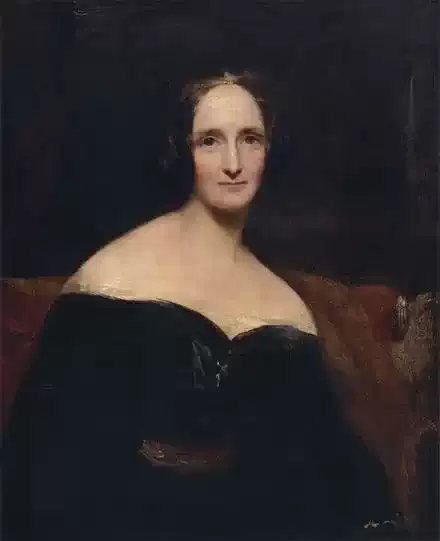
Percy Bysshe Shelley
The Invitation
BEST and brightest, come away!
Fairer far than this fair Day,
Which, like thee to those in sorrow,
Comes to bid a sweet good-morrow
To the rough Year just awake
In its cradle on the brake.
The brightest hour of unborn Spring,
Through the winter wandering,
Found, it seems, the halcyon Morn
To hoar February born.
Bending from heaven, in azure mirth,
It kiss'd the forehead of the Earth;
And smiled upon the silent sea;
And bade the frozen streams be free;
And waked to music all their fountains;
And breathed upon the frozen mountains;
And like a prophetess of May
Strew'd flowers upon the barren way,
Making the wintry world appear
Like one on whom thou smilest, dear.
Away, away, from men and towns,
To the wild wood and the downs--
To the silent wilderness
Where the soul need not repress
Its music lest it should not find
An echo in another's mind,
While the touch of Nature's art
Harmonizes heart to heart.
I leave this notice on my door
For each accustom'd visitor:--
'I am gone into the fields
To take what this sweet hour yields.
Reflection, you may come to-morrow;
Sit by the fireside with Sorrow.
You with the unpaid bill, Despair,--
You, tiresome verse-reciter, Care,--
I will pay you in the grave,--
Death will listen to your stave.
Expectation too, be off!
To-day is for itself enough.
Hope, in pity mock not Woe
With smiles, nor follow where I go;
Long having lived on your sweet food,
At length I find one moment's good
After long pain: with all your love,
This you never told me of.'
Radiant Sister of the Day,
Awake! arise! and come away!
To the wild woods and the plains;
And the pools where winter rains
Image all their roof of leaves;
Where the pine its garland weaves
Of sapless green and ivy dun
Round stems that never kiss the sun;
Where the lawns and pastures be,
And the sandhills of the sea;
Where the melting hoar-frost wets
The daisy-star that never sets,
And wind-flowers, and violets
Which yet join not scent to hue,
Crown the pale year weak and new;
When the night is left behind
In the deep east, dun and blind,
And the blue noon is over us,
And the multitudinous
Billows murmur at our feet
Where the earth and ocean meet,
And all things seem only one
In the universal sun.
416

Ella Wheeler Wilcox
The Saddest Hour
The saddest hour of anguish and of loss
Is not that season of supreme despair
When we can find no least light anywhere
To gild the dread, black shadow of the Cross;
Not in that luxury of sorrow when
We sup on salt of tears, and drink the gall
Of memories of days beyond recall—
Of lost delights that cannot come again.
But when, with eyes that are no longer wet,
We look out on the great, wide world of men,
And, smiling, lean toward a bright to-morrow,
Then backward shrink, with sudden keen regret,
To find that we are learning to forget:
Ah! then we face the saddest hour of sorrow.
410

Johann Wolfgang von Goethe
On The New Year
FATE now allows us,
'Twixt the departing
And the upstarting,
Happy to be;
And at the call of
Memory cherish'd,
Future and perish'd
Moments we see.
Seasons of anguish,--
Ah, they must ever
Truth from woe sever,
Love and joy part;
Days still more worthy
Soon will unite us,
Fairer songs light us,
Strength'ning the heart.
We, thus united,
Think of, with gladness,
Rapture and sadness,
Sorrow now flies.
Oh, how mysterious
Fortune's direction!
Old the connection,
New-born the prize!
Thank, for this, Fortune,
Wavering blindly!
Thank all that kindly
Fate may bestow!
Revel in change's
Impulses clearer,
Love far sincerer,
More heartfelt glow!
Over the old one,
Wrinkles collected,
Sad and dejected,
Others may view;
But, on us gently
Shineth a true one,
And to the new one
We, too, are new.
As a fond couple
'Midst the dance veering,
First disappearing,
Then reappear,
So let affection
Guide thro' life's mazy
Pathways so hazy
Into the year!
410

Rudyard Kipling
To T. A.
I have made for you a song,
And it may be right or wrong,
But only you can tell me if it's true;
I have tried for to explain
Both your pleasure and your pain,
And, Thomas, here's my best respects to you!
O there'll surely come a day
When they'll give you all your pay,
And treat you as a Christian ought to do;
So, until that day comes round,
Heaven keep you safe and sound,
And, Thomas, here's my best respects to you!
409
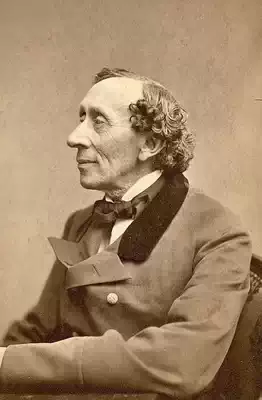
Hans Christian Andersen
From The Philosopher’s Stone
Now she heard the following words sadly sung,—
“Life is a shadow that flits away
In a night of darkness and woe.”
But then would follow brighter thoughts:
“Life has the rose’s sweet perfume
With sunshine, light, and joy.”
And if one stanza sounded painfully—
“Each mortal thinks of himself alone,
Is a truth, alas, too clearly known;”
Then, on the other hand, came the answer—
“Love, like a mighty flowing stream,
Fills every heart with its radiant gleam.”
She heard, indeed, such words as these—
“In the pretty turmoil here below,
All is a vain and paltry show.”
Then came also words of comfort—
“Great and good are the actions done
By many whose worth is never known.”
And if sometimes the mocking strain reached her—
“Why not join in the jesting cry
That contemns all gifts from the throne on high?”
In the blind girl’s heart a stronger voice repeated—
“To trust in thyself and God is best,
In His holy will forever to rest.”
But the evil spirit could not see this and remain contented.
405

Alfred Lord Tennyson
In Memoriam A. H. H.: 54. Oh, yet we Trust that somehow Goo
Oh, yet we trust that somehow good
Will be the final end of ill,
To pangs of nature, sins of will,
Defects of doubt, and taints of blood;
That nothing walks with aimless feet;
That not one life shall be destroy'd,
Or cast as rubbish to the void,
When God hath made the pile complete;
That not a worm is cloven in vain;
That not a moth with vain desire
I shrivell'd in a fruitless fire,
Or but subserves another's gain.
Behold, we know not anything;
I can but trust that good shall fall
At last--far off--at last, to all,
And every winter change to spring.
So runs my dream: but what am I?
An infant crying in the night:
An infant crying for the light:
And with no language but a cry.
404

Robert Louis Stevenson
Man Sails The Deep Awhile
MAN sails the deep awhile;
Loud runs the roaring tide;
The seas are wild and wide;
O'er many a salt, o'er many a desert mile,
The unchained breakers ride,
The quivering stars beguile.
Hope bears the sole command;
Hope, with unshaken eyes,
Sees flaw and storm arise;
Hope, the good steersman, with unwearying hand,
Steers, under changing skies,
Unchanged toward the land.
O wind that bravely blows!
O hope that sails with all
Where stars and voices call!
O ship undaunted that forever goes
Where God, her admiral,
His battle signal shows!
What though the seas and wind
Far on the deep should whelm
Colours and sails and helm?
There, too, you touch that port that you designed -
There, in the mid-seas' realm,
Shall you that haven find.
Well hast thou sailed: now die,
To die is not to sleep.
Still your true course you keep,
O sailor soul, still sailing for the sky;
And fifty fathom deep
Your colours still shall fly.
402
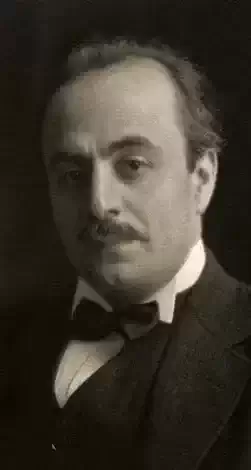
Khalil Gibran
The Farewell XXVIII
And now it was evening.
And Almitra the seeress said, "Blessed be this day and this place and your spirit that
has spoken."
And he answered, Was it I who spoke? Was I not also a listener?
Then he descended the steps of the Temple and all the people followed him. And he
reached his ship and stood upon the deck.
And facing the people again, he raised his voice and said:
People of Orphalese, the wind bids me leave you.
Less hasty am I than the wind, yet I must go.
We wanderers, ever seeking the lonelier way, begin no day where we have ended
another day; and no sunrise finds us where sunset left us.
Even while the earth sleeps we travel.
We are the seeds of the tenacious plant, and it is in our ripeness and our fullness of
heart that we are given to the wind and are scattered.
Brief were my days among you, and briefer still the words I have spoken.
But should my voice fade in your ears, and my love vanish in your memory, then I will
come again,
And with a richer heart and lips more yielding to the spirit will I speak.
Yea, I shall return with the tide,
And though death may hide me, and the greater silence enfold me, yet again will I
seek your understanding.
And not in vain will I seek.
If aught I have said is truth, that truth shall reveal itself in a clearer voice, and in
words more kin to your thoughts.
I go with the wind, people of Orphalese, but not down into emptiness;
And if this day is not a fulfillment of your needs and my love, then let it be a promise
till another day. Know therefore, that from the greater silence I shall return.
The mist that drifts away at dawn, leaving but dew in the fields, shall rise and gather
into a cloud and then fall down in rain.
And not unlike the mist have I been.
In the stillness of the night I have walked in your streets, and my spirit has entered
your houses,
And your heart-beats were in my heart, and your breath was upon my face, and I knew
you all.
Ay, I knew your joy and your pain, and in your sleep your dreams were my dreams.
And oftentimes I was among you a lake among the mountains.
I mirrored the summits in you and the bending slopes, and even the passing flocks of
your thoughts and your desires.
And to my silence came the laughter of your children in streams, and the longing of
your youths in rivers.
And when they reached my depth the streams and the rivers ceased not yet to sing.
But sweeter still than laughter and greater than longing came to me.
It was boundless in you;
The vast man in whom you are all but cells and sinews;
He in whose chant all your singing is but a soundless throbbing.
It is in the vast man that you are vast,
And in beholding him that I beheld you and loved you.
For what distances can love reach that are not in that vast sphere?
What visions, what expectations and what presumptions can outsoar that flight?
Like a giant oak tree covered with apple blossoms is the vast man in you.
His mind binds you to the earth, his fragrance lifts you into space, and in his durability
you are deathless.
You have been told that, even like a chain, you are as weak as your weakest link.
This is but half the truth. You are also as strong as your strongest link.
To measure you by your smallest deed is to reckon the power of ocean by the frailty of
its foam.
To judge you by your failures is to cast blame upon the seasons for their inconsistency.
Ay, you are like an ocean,
And though heavy-grounded ships await the tide upon your shores, yet, even like an
ocean, you cannot hasten your tides.
And like the seasons you are also,
And though in your winter you deny your spring,
Yet spring, reposing within you, smiles in her drowsiness and is not offended.
Think not I say these things in order that you may say the one to the other, "He
praised us well. He saw but the good in us."
I only speak to you in words of that which you yourselves know in thought.
And what is word knowledge but a shadow of wordless knowledge?
Your thoughts and my words are waves from a sealed memory that keeps records of
our yesterdays,
And of the ancient days when the earth knew not us nor herself,
And of nights when earth was upwrought with confusion,
Wise men have come to you to give you of their wisdom. I came to take of your
wisdom:
And behold I have found that which is greater than wisdom.
It is a flame spirit in you ever gathering more of itself,
While you, heedless of its expansion, bewail the withering of your days.
It is life in quest of life in bodies that fear the grave.
There are no graves here.
These mountains and plains are a cradle and a stepping-stone.
Whenever you pass by the field where you have laid your ancestors look well
thereupon, and you shall see yourselves and your children dancing hand in hand.
Verily you often make merry without knowing.
Others have come to you to whom for golden promises made unto your faith you have
given but riches and power and glory.
Less than a promise have I given, and yet more generous have you been to me.
You have given me deeper thirsting after life.
Surely there is no greater gift to a man than that which turns all his aims into parching
lips and all life into a fountain.
And in this lies my honour and my reward, -
That whenever I come to the fountain to drink I find the living water itself thirsty;
And it drinks me while I drink it.
Some of you have deemed me proud and over-shy to receive gifts.
To proud indeed am I to receive wages, but not gifts.
And though I have eaten berries among the hill when you would have had me sit at
your board,
And slept in the portico of the temple where you would gladly have sheltered me,
Yet was it not your loving mindfulness of my days and my nights that made food sweet
to my mouth and girdled my sleep with visions?
For this I bless you most:
You give much and know not that you give at all.
Verily the kindness that gazes upon itself in a mirror turns to stone,
And a good deed that calls itself by tender names becomes the parent to a curse.
And some of you have called me aloof, and drunk with my own aloneness,
And you have said, "He holds council with the trees of the forest, but not with men.
He sits alone on hill-tops and looks down upon our city."
True it is that I have climbed the hills and walked in remote places.
How could I have seen you save from a great height or a great distance?
How can one be indeed near unless he be far?
And others among you called unto me, not in words, and they said,
Stranger, stranger, lover of unreachable heights, why dwell you among the summits
where eagles build their nests?
Why seek you the unattainable?
What storms would you trap in your net,
And what vaporous birds do you hunt in the sky?
Come and be one of us.
Descend and appease your hunger with our bread and quench your thirst with our
wine."
In the solitude of their souls they said these things;
But were their solitude deeper they would have known that I sought but the secret of
your joy and your pain,
And I hunted only your larger selves that walk the sky.
But the hunter was also the hunted:
For many of my arrows left my bow only to seek my own breast.
And the flier was also the creeper;
For when my wings were spread in the sun their shadow upon the earth was a turtle.
And I the believer was also the doubter;
For often have I put my finger in my own wound that I might have the greater belief in
you and the greater knowledge of you.
And it is with this belief and this knowledge that I say,
You are not enclosed within your bodies, nor confined to houses or fields.
That which is you dwells above the mountain and roves with the wind.
It is not a thing that crawls into the sun for warmth or digs holes into darkness for
safety,
But a thing free, a spirit that envelops the earth and moves in the ether.
If this be vague words, then seek not to clear them.
Vague and nebulous is the beginning of all things, but not their end,
And I fain would have you remember me as a beginning.
Life, and all that lives, is conceived in the mist and not in the crystal.
And who knows but a crystal is mist in decay?
This would I have you remember in remembering me:
That which seems most feeble and bewildered in you is the strongest and most
determined.
Is it not your breath that has erected and hardened the structure of your bones?
And is it not a dream which none of you remember having dreamt that building your
city and fashioned all there is in it?
Could you but see the tides of that breath you would cease to see all else,
And if you could hear the whispering of the dream you would hear no other sound.
But you do not see, nor do you hear, and it is well.
The veil that clouds your eyes shall be lifted by the hands that wove it,
And the clay that fills your ears shall be pierced by those fingers that kneaded it.
And you shall see
And you shall hear.
Yet you shall not deplore having known blindness, nor regret having been deaf.
For in that day you shall know the hidden purposes in all things,
And you shall bless darkness as you would bless light.
After saying these things he looked about him, and he saw the pilot of his ship standing
by the helm and gazing now at the full sails and now at the distance.
And he said:
Patient, over-patient, is the captain of my ship.
The wind blows, and restless are the sails;
Even the rudder begs direction;
Yet quietly my captain awaits my silence.
And these my mariners, who have heard the choir of the greater sea, they too have
heard me patiently.
Now they shall wait no longer.
I am ready.
The stream has reached the sea, and once more the great mother holds her son
against her breast.
Fare you well, people of Orphalese.
This day has ended.
It is closing upon us even as the water-lily upon its own tomorrow.
What was given us here we shall keep,
And if it suffices not, then again must we come together and together stretch our
hands unto the giver.
Forget not that I shall come back to you.
A little while, and my longing shall gather dust and foam for another body.
A little while, a moment of rest upon the wind, and another woman shall bear me.
Farewell to you and the youth I have spent with you.
It was but yesterday we met in a dream.
You have sung to me in my aloneness, and I of your longings have built a tower in the
sky.
But now our sleep has fled and our dream is over, and it is no longer dawn.
The noontide is upon us and our half waking has turned to fuller day, and we must
part.
If in the twilight of memory we should meet once more, we shall speak again together
and you shall sing to me a deeper song.
And if our hands should meet in another dream, we shall build another tower in the
sky.
So saying he made a signal to the seamen, and straightaway they weighed anchor and
cast the ship loose from its moorings, and they moved eastward.
And a cry came from the people as from a single heart, and it rose the dusk and was
carried out over the sea like a great trumpeting.
Only Almitra was silent, gazing after the ship until it had vanished into the mist.
And when all the people were dispersed she still stood alone upon the sea-wall,
remembering in her heart his saying,
A little while, a moment of rest upon the wind, and another woman shall bear me."
395
Ella Wheeler Wilcox
Optimism
Talk happiness. The world is sad enough
Without your woes. No path is wholly rough;
Look for the places that are smooth and clear,
And speak of those, to rest the weary ear
Of Earth, so hurt by one continuous strain
Of human discontent and grief and pain.
Talk faith. The world is better off without
Your uttered ignorance and morbid doubt.
If you have faith in God, or man, or self,
Say so. If not, push back upon the shelf
Of silence all your thoughts, till faith shall come;
No one will grieve because your lips are dumb.
Talk health. The dreary, never-changing tale
Of mortal maladies is worn and stale.
You cannot charm, or interest, or please
By harping on that minor chord, disease.
Say you are well, or all is well with you,
And God shall hear your words and make them true.
392
Robert Louis Stevenson
The Clock's Clear Voice Into The Clearer Air
THE cock's clear voice into the clearer air
Where westward far I roam,
Mounts with a thrill of hope,
Falls with a sigh of home.
A rural sentry, he from farm and field
The coming morn descries,
And, mankind's bugler, wakes
The camp of enterprise.
He sings the morn upon the westward hills
Strange and remote and wild;
He sings it in the land
Where once I was a child.
He brings to me dear voices of the past,
The old land and the years:
My father calls for me,
My weeping spirit hears.
Fife, fife, into the golden air, O bird,
And sing the morning in;
For the old days are past
And new days begin.
390

William Shakespeare
Sonnet 56: Sweet love, renew thy force; be it not said
Sweet love, renew thy force; be it not said
Thy edge should blunter be than appetite,
Which but to-day by feeding is allay'd,
To-morrow sharpen'd in his former might:
So, love, be thou; although to-day thou fill
Thy hungry eyes even till they wink with fullness,
To-morrow see again, and do not kill
The spirit of love with a perpetual dullness.
Let this sad interim like the ocean be
Which parts the shore, where two contracted new
Come daily to the banks, that, when they see
Return of love, more blest may be the view;
Else call it winter, which being full of care
Makes summer's welcome thrice more wish'd, more rare.
389
Ella Wheeler Wilcox
The Truth Teller
The Truth Teller lifts the curtain,
And shows us the people's plight;
And everything seems uncertain,
And nothing at all looks right.
Yet out of the blackness groping,
My heart finds a world in bloom;
For it somehow is fashioned for hoping,
And it cannot live in the gloom.
He tells us from border to border,
That race is warring with race;
With riot and mad disorder,
The earth is a wretched place;
And yet ere the sun is setting
I am thinking of peace, not strife;
For my heart has a way of forgetting
All things save the joy of life.
I heard in my Youth's beginning
That earth was a region of woe,
And trouble, and sorrow, and sinning:
The Truth Teller told me so.
I knew it was true, and tragic;
And I mourned over much that was wrong;
And then, by some curious magic,
The heart of me burst into song.
The years have been going, going,
A mixture of pleasure and pain;
But the Truth Teller's books are showing
That evil is on the gain.
And I know that I ought to be grieving,
And I should be too sad to sing;
But somehow I keep on believing
That life is a glorious thing.
387
Johann Wolfgang von Goethe
To The Husbandman
SMOOTHLY and lightly the golden seed by the furrow is cover'd;
Yet will a deeper one, friend, cover thy bones at the last.
Joyously plough'd and sow'd! Here food all living is budding,
E'en from the side of the tomb Hope will not vanish away.
Yet will a deeper one, friend, cover thy bones at the last.
Joyously plough'd and sow'd! Here food all living is budding,
E'en from the side of the tomb Hope will not vanish away.
387

John Greenleaf Whittier
After Election
THE day's sharp strife is ended now,
Our work is done, God knoweth how!
As on the thronged, unrestful town
The patience of the moon looks down,
I wait to hear, beside the wire,
The voices of its tongues of fire.
Slow, doubtful, faint,they seem at first:
Be strong, my heart, to know the worst!
Hark! there the Alleghanies spoke;
That sound from lake and prairie broke,
That sunset-gun of triumph rent
The silence of a continent!
That signal from Nebraska sprung,
This, from Nevada's mountain tongue!
Is that thy answer, strong and free,
O loyal heart of Tennessee?
What strange, glad voice is that which calls
From Wagner's grave and Sumter's walls?
From Mississippi's fountain-head
A sound as of the hisoh's tread!
There rustled freedom's Charter Oak!
In that wild burst the Ozarks spoke!
Cheer answers cheer from rise to set
Of sun. We have a country yet!
The praise, O God, be thine alone!
Thou givest not for bread a stone;
Thou hast not led us through the night
To blind us with returning light;
Not through the furnace have we passed,
To perish at its mouth at last.
O night of peace, thy flight restrain!
November's moon, be slow to wane!
Shine on the freedman's cabin floor,
On brows of prayer a blessing pour;
And give, with full assurance blest,
The weary heart of Freedom rest!
386
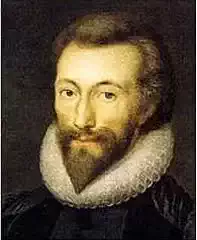
John Donne
TO Mr.T.W.
PREGNANT again with th' old twins, Hope and Fear,
Oft have I asked for thee, both how and where
Thou wert ; and what my hopes of letters were ;
As in our streets sly beggars narrowly
Watch motions of the giver's hand or eye,
And evermore conceive some hope thereby.
And now thy alms is given, thy letter's read,
The body risen again, the which was dead,
And thy poor starveling bountifully fed.
After this banquet my soul doth say grace,
And praise thee for 't, and zealously embrace
Thy love, though I think thy love in this case
To be as gluttons, which say 'midst their meat,
They love that best of which they most do eat.
382
Johann Wolfgang von Goethe
My Goddess
SAY, which Immortal
Merits the highest reward?
With none contend I,
But I will give it
To the aye-changing,
Ever-moving
Wondrous daughter of Jove.
His best-beloved offspring.
Sweet Phantasy.
For unto her
Hath he granted
All the fancies which erst
To none allow'd he
Saving himself;
Now he takes his pleasure
In the mad one.
She may, crowned with roses,
With staff twined round with lilies,
Roam thro' flow'ry valleys,
Rule the butterfly-people,
And soft-nourishing dew
With bee-like lips
Drink from the blossom:
Or else she may
With fluttering hair
And gloomy looks
Sigh in the wind
Round rocky cliffs,
And thousand-hued.
Like morn and even.
Ever changing,
Like moonbeam's light,
To mortals appear.
Let us all, then,
Adore the Father!
The old, the mighty,
Who such a beauteous
Ne'er-fading spouse
Deigns to accord
To perishing mortals!
To us alone
Doth he unite her,
With heavenly bonds,
While he commands her,
in joy and sorrow,
As a true spouse
Never to fly us.
All the remaining
Races so poor
Of life-teeming earth.
In children so rich.
Wander and feed
In vacant enjoyment,
And 'mid the dark sorrows
Of evanescent
Restricted life,
Bow'd
by the heavy
Yoke of Necessity.
But unto us he
Hath his most versatile,
Most cherished daughter
Granted,-what joy!
Lovingly greet her
As a beloved one!
Give her the woman's
Place in our home!
And oh, may the aged
Stepmother Wisdom
Her gentle spirit
Ne'er seek to harm!
Yet know I her sister,
The older, sedater,
Mine own silent friend;
Oh, may she never,
Till life's lamp is quench'd,
Turn away from me,-
That noble inciter,
Comforter,-Hope!
381
John Greenleaf Whittier
A Christmas Carmen
I.
Sound over all waters, reach out from all lands,
The chorus of voices, the clasping of hands;
Sing hymns that were sung by the stars of the morn,
Sing songs of the angels when Jesus was born!
With glad jubilations
Bring hope to the nations!
The dark night is ending and dawn has begun:
Rise, hope of the ages, arise like the sun,
All speech flow to music, all hearts beat as one!
II.
Sing the bridal of nations! with chorals of love
Sing out the war-vulture and sing in the dove,
Till the hearts of the peoples keep time in accord,
And the voice of the world is the voice of the Lord!
Clasp hands of the nations
In strong gratulations:
The dark night is ending and dawn has begun;
Rise, hope of the ages, arise like the sun,
All speech flow to music, all hearts beat as one!
III.
Blow, bugles of battle, the marches of peace;
East, west, north, and south let the long quarrel cease
Sing the song of great joy that the angels began,
Sing of glory to God and of good-will to man!
Hark! joining in chorus
The heavens bend o’er us!
The dark night is ending and dawn has begun;
Rise, hope of the ages, arise like the sun,
All speech flow to music, all hearts beat as one!
379
Ella Wheeler Wilcox
Listen!
Whoever you are as you read this,
Whatever your trouble or grief,
I want you to know and to heed this:
The day draweth near with relief.
No sorrow, no woe is unending,
Though heaven seems voiceless and dumb;
So sure as your cry is ascending,
So surely an answer will come.
Whatever temptation is near you,
Whose eyes on this simple verse fall;
Remember good angels will hear you
And help you to stand, if you call.
Though stunned with despair I beseech you,
Whatever your losses, your need,
Believe, when these printed words reach you,
Believe you were born to succeed.
You are stronger, I tell you, this minute,
Than any unfortunate fate!
And the coveted prize - you can win it;
While life lasts 'tis never too late!
377

Alexander Pope
From an Essay on Man
Heav'n from all creatures hides the book of fate,
All but the page prescrib'd, their present state:
From brutes what men, from men what spirits know:
Or who could suffer being here below?
The lamb thy riot dooms to bleed today,
Had he thy reason, would he skip and play?
Pleas'd to the last, he crops the flow'ry food,
And licks the hand just rais'd to shed his blood.
Oh blindness to the future! kindly giv'n,
That each may fill the circle mark'd by Heav'n:
Who sees with equal eye, as God of all,
A hero perish, or a sparrow fall,
Atoms or systems into ruin hurl'd,
And now a bubble burst, and now a world.
Hope humbly then; with trembling pinions soar;
Wait the great teacher Death; and God adore.
What future bliss, he gives not thee to know,
But gives that hope to be thy blessing now.
Hope springs eternal in the human breast:
Man never is, but always to be blest:
The soul, uneasy and confin'd from home,
Rests and expatiates in a life to come.
Lo! the poor Indian, whose untutor'd mind
Sees God in clouds, or hears him in the wind;
His soul, proud science never taught to stray
Far as the solar walk, or milky way;
Yet simple nature to his hope has giv'n,
Behind the cloud topp'd hill, an humbler heav'n;
Some safer world in depth of woods embrac'd,
Some happier island in the wat'ry waste,
Where slaves once more their native land behold,
No fiends torment, no Christians thirst for gold.
To be, contents his natural desire,
He asks no angel's wing, no seraph's fire;
But thinks, admitted to that equal sky.
376

Emily Dickinson
It was too late for Man
It was too late for Man-
But early, yet, for GodCreation-
impotent to help-
But Prayer-remained-Our Side-
How excellent the Heaven-
When Earth-cannot be had-
How hospitable-then-the face
Of our Old Neighbor-God-
But early, yet, for GodCreation-
impotent to help-
But Prayer-remained-Our Side-
How excellent the Heaven-
When Earth-cannot be had-
How hospitable-then-the face
Of our Old Neighbor-God-
375
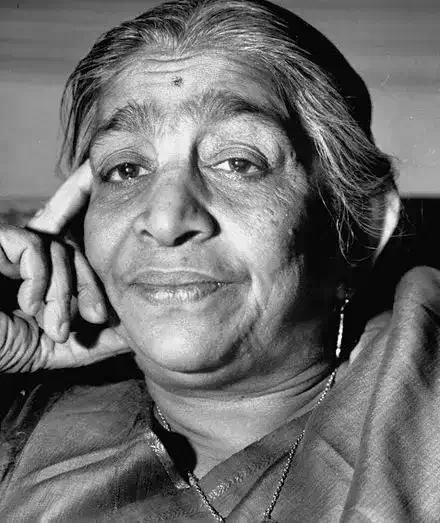
Sarojini Naidu
In Salutation to the Eternal Peace
Men say the world is full of fear and hate,
And all life's ripening harvest-fields await
The restless sickle of relentless fate.
But I, sweet Soul, rejoice that I was born,
When from the climbing terraces of corn
I watch the golden orioles of Thy morn.
What care I for the world's desire and pride,
Who know the silver wings that gleam and glide,
The homing pigeons of Thine eventide?
What care I for the world's loud weariness,
Who dream in twilight granaries Thou dost bless
With delicate sheaves of mellow silences?
Say, shall I heed dull presages of doom,
Or dread the rumoured loneliness and gloom,
The mute and mythic terror of the tomb?
For my glad heart is drunk and drenched with Thee,
O inmost wind of living ecstasy!
O intimate essence of eternity!
377

Henry Wadsworth Longfellow
O Ship of State
Thou, too, sail on, O Ship of State!
Sail on, O Union, strong and great!
Humanity with all its fears,
With all the hopes of future years,
Is hanging breathless on thy fate!
We know what Master laid thy keel,
What Workmen wrought thy ribs of steel,
Who made each mast, and sail, and rope,
What anvils rang, what hammers beat,
In what a forge and what a heat
Were shaped the anchors of thy hope!
Fear not each sudden sound and shock,
'Tis of the wave and not the rock;
'Tis but the flapping of the sail,
And not a rent made by the gale!
In spite of rock and tempest's roar,
In spite of false lights on the shore,
Sail on, nor fear to breast the sea!
Our hearts, our hopes, are all with thee.
Our hearts, our hopes, our prayers, our tears,
Our faith triumphant o'er our fears,
Are all with thee, -are all with thee!
373
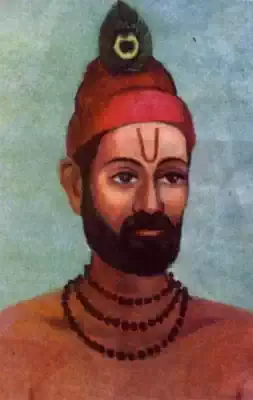
Kabir
The Guest is inside you, and also inside me
The Guest is inside you, and also inside me;
you know the sprout is hidden inside the seed.
We are all struggling; none of us has gone far.
Let your arrogance go, and look around inside.
The blue sky opens out further and farther,
the daily sense of failure goes away,
the damage I have done to myself fades,
a million suns come forward with light,
when I sit firmly in that world.
I hear bells ringing that no one has shaken,
inside 'love' there is more joy than we know of,
rain pours down, although the sky is clear of clouds,
there are whole rivers of light.
The universe is shot through in all parts by a single sort of love.
How hard it is to feel that joy in all our four bodies!
Those who hope to be reasonable about it fail.
The arrogance of reason has separated us from that love.
With the word 'reason' you already feel miles away.
How lucky Kabir is, that surrounded by all this joy
he sings inside his own little boat.
His poems amount to one soul meeting another.
These songs are about forgetting dying and loss.
They rise above both coming in and going out.
373
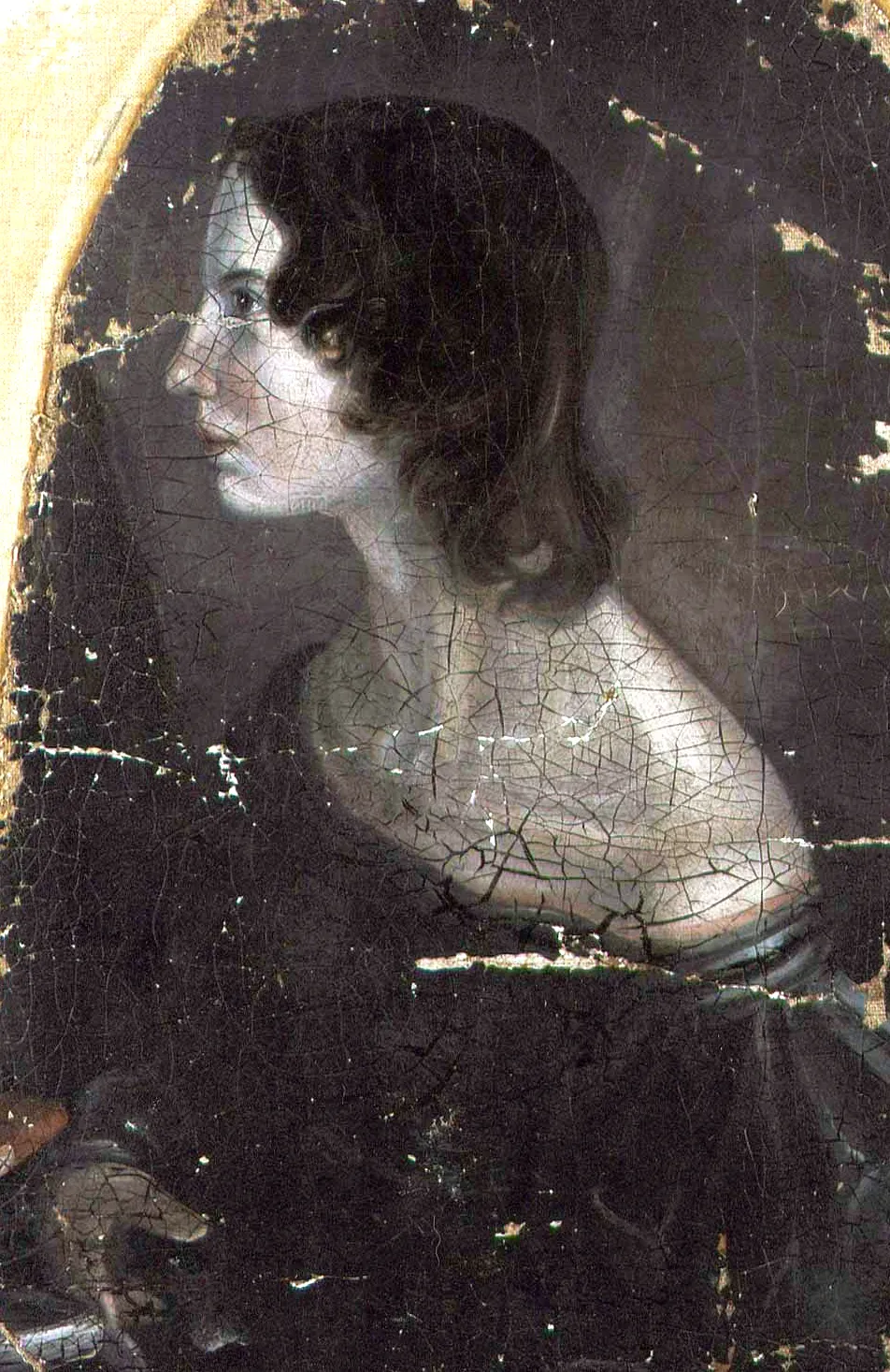
Emily Jane Brontë
The Prisoner
Still let my tyrants know, I am not doomed to wear
Year after year in gloom and desolate despair;
A messenger of Hope comes every night to me,
And offers for short life, eternal liberty.
He comes with western winds, with evening's wandering airs,
With that clear dusk of heaven that brings the thickest stars:
Winds take a pensive tone, and stars a tender fire,
And visions rise, and change, that kill me with desire.
Desire for nothing known in my maturer years,
When Joy grew mad with awe, at counting future tears:
When, if my spirit's sky was full of flashes warm,
I knew not whence they came, from sun or thunderstorm.
But first, a hush of peace -a soundless calm descends;
The struggle of distress and fierce impatience ends;
Mute music soothes my breast -unuttered harmony
That I could never dream, till Earth was lost to me.
Then dawns the Invisible; the Unseen its truth reveals;
My outward sense is gone, my inward essence feels;
Its wings are almost free -its home, its harbour found;
Measuring the gulf, it stoops, and dares the final bound.
O dreadful is the check -intense the agony -
When the ear begins to hear, and the eye begins to see;
When the pulse begins to throb, the brain to think again,
The soul to feel the flesh, and the flesh to feel the chain.
Yet I would lose no sting, would wish no torture less;
The more that anguish racks, the earlier it will bless;
And robed in fires of hell, or bright with heavenly shine,
If it but herald Death, the vision is divine.
371