
Hope and Optimism

Ella Wheeler Wilcox
Ten Thousand Men A Day
All the world was sad;
Everything was shadow-filled;
Things were going bad.
Then a rumour stirred all hearts
As a wind stirs trees-
Ten thousand men a day
Coming over seas!
Soon we saw them marching by-
God! what a sight!-
Shoulders back, and heads erect,
Faces full of light.
Smiling like a morn in May,
Moving like a breeze,
Ten thousand men a day
Coming over seas.
Weary soldiers worn with war
Lifted up their eyes,
Shadows seemed to lift a bit,
Dawn was in the skies.
Hope sprang to troubled hearts,
Strength to tired knees:
Ten thousand men a day
Were coming over seas.
France and England swarmed with them,
Khaki-clad and young,
Filled with all the joy of life-
Into line they swung.
Waning valour rose anew
At the sight of these
Ten thousand men a day
Coming over seas.
Still they come-and still they come
In their strength and pride.
Victory with radiant mien
Marches on beside.
Victory is here to stay,
Every heart agrees,
With ten thousand men a day
Coming over seas.
Ella Wheeler Wilcox
Our Atlas
Bore such a burden as this man, on whom the Gods have hurled
The evils of old festering lands-yea, hurled them in their might
And left him standing all alone, to set the wrong things right.
It is the way the Fates have done since first Time's race began!
They open up Pandora's box before some chosen man;
And then, aloof, they wait and watch, to see if he will find
And wake the slumbering God that dwells in every mortal's mind.
Erect, our modern Atlas stands, with brave uplifted head,
And there is courage in his eyes, if in his heart be dread.
Not dread of foes, but dread of friends, who may not pull together,
To bring the lurching ship of State safe through the stormy weather.
Oh, never were there wilder waves or more stupendous seas,
Or rougher rocks or bleaker winds, or darker days than these.
Not Washington, not Lincoln knew so grave an hour of Time
As he who now stands face to face with War's world-shaking crime.
His brain is clear, his soul is brave, his heart is just and right,
He asks no honours of the earth, but favour in God's sight;
His aim is not to wear a crown or win imperial power,
But to use wisely for the race life's terrible great hour.
O Liberty, who lights the world with rays that come from God,
Shine on Columbia's troubled track, and make it bright and broad;
Shine on each heart, and give it strength to meet its pains and losses,
And give supernal strength to one who bears the whole world's crosses;
Take from his thought the fear of friends who may not pull together,
And bring the glorious ship of State safe through wild waves and weather.

Rudyard Kipling
The Last Lap
Where the mired and sulky oxen wait,
And it looks as though we might wait for ever,
How do we know that the floods abate?
There is no change in the current's brawling--
Louder and harsher the freshet scolds;
Yet we can feel she is falling, falling
And the more she threatens the less she holds,
Down to the drift, with no word spoken,
The wheel-chained wagons slither and slue....
Achtung! The back of the worst is broken!
And--lash your leaders!--we're through--we're through!
How do we know, when the port-fog holds us
Moored and helpless, a mile from the pier,
And the week-long summer smother enfolds us--
How do we know it is going to clear?
There is no break in the blindfold weather,
But, one and another, about the bay,
The unseen capstans clink together,
Getting ready to up and away.
A pennon whimpers--the breeze has found us--
A headsail jumps through the thinning haze.
The whole hull follows, till--broad around us--
The clean-swept ocean says: "Go your ways!"
How do we know, when the long fight rages,
On the old, stale front that we cannot shake,
And it looks as though we were locked for ages,
How do we know they are going to break?
There is no lull in the level firing,
Nothing has shifted except the sun.
Yet we can feel they are tiring, tiring--
Yet we can tell they are ripe to run.
Something wavers, and, while we wonder,
Their centre-trenches are emptying out,
And, before their useless flanks go under,
Our guns have pounded retreat to rout!
Ella Wheeler Wilcox
Sunshine And Shadow
Its lights and its shades, all twined together.
I tried to single them out, one by one,
Single and count them, determining whether
There was less blue than there was grey,
And more of the deep night than of the day.
But dear me, dear me, my task’s but begun,
And I am not half way into the sun.
For the longer I look on the bright side of earth,
The more of the beautiful do I discover;
And really, I never knew what life was worth
Till I searched the wide storehouse of happiness over.
It is filled from the cellar well up to the skies,
With things meant to gladden the heart and the eyes.
The doors are unlocked, you can enter each room,
That lies like a beautiful garden in bloom.
Yet life has its shadow, as well as its sun;
Earth has its storehouse of joy and sorrow.
But the first is so wide – and my task’s but begun –
That the last must be left for a far-distant morrow.
I will count up the blessings God gave in a row,
But dear me! When I get through them, I know
I shall have little tine left for the rest,
For life is a swift-flowing river at best.
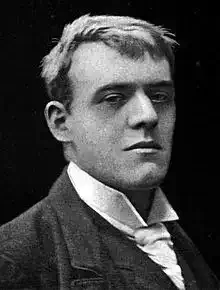
Hilaire Belloc
Ballade to Our Lady of Czestochowa
Lady and Queen and Mystery manifold
And very Regent of the untroubled sky,
Whom in a dream St. Hilda did behold
And heard a woodland music passing by:
You shall receive me when the clouds are high
With evening and the sheep attain the fold.
This is the faith that I have held and hold,
And this is that in which I mean to die.
II
Steep are the seas and savaging and cold
In broken waters terrible to try;
And vast against the winter night the wold,
And harbourless for any sail to lie.
But you shall lead me to the lights, and I
Shall hymn you in a harbour story told.
This is the faith that I have held and hold,
And this is that in which I mean to die.
III
Help of the half-defeated, House of gold,
Shrine of the Sword, and Tower of Ivory;
Splendour apart, supreme and aureoled,
The Battler's vision and the World's reply.
You shall restore me, O my last Ally,
To vengence and the glories of the bold.
This is the faith that I have held and hold,
And this is that in which I mean to die.
Envoi
Prince of the degradations, bought and sold,
These verses, written in your crumbling sty,
Proclaim the faith that I have held and hold
And publish that in which I mean to die.

Paul Celan
Ice, Eden
Moon waxes in its Reeds,
and all that’s turned to frost
with us, burns there and sees.
It sees, for it has Eyes,
Earths they are, and bright.
Night, Night, Alkalis.
It sees, this Child of Sight.
It sees, it sees, we see,
I see you, you too see.
Ice will rise again before
This Hour shall cease to be.
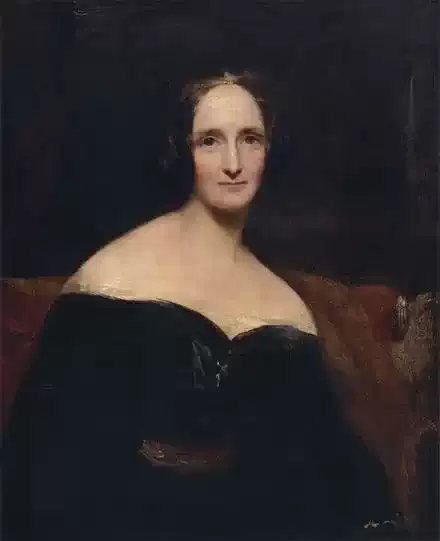
Percy Bysshe Shelley
The Two Spirits: An Allegory
O thou, who plum'd with strong desire
Wouldst float above the earth, beware!
A Shadow tracks thy flight of fire--
Night is coming!
Bright are the regions of the air,
And among the winds and beams
It were delight to wander there--
Night is coming!SECOND SPIRIT
The deathless stars are bright above;
If I would cross the shade of night,
Within my heart is the lamp of love,
And that is day!
And the moon will smile with gentle light
On my golden plumes where'er they move;
The meteors will linger round my flight,
And make night day.FIRST SPIRIT
But if the whirlwinds of darkness waken
Hail, and lightning, and stormy rain;
See, the bounds of the air are shaken--
Night is coming!
The red swift clouds of the hurricane
Yon declining sun have overtaken,
The clash of the hail sweeps over the plain--
Night is coming!SECOND SPIRIT
I see the light, and I hear the sound;
I'll sail on the flood of the tempest dark,
With the calm within and the light around
Which makes night day:
And thou, when the gloom is deep and stark,
Look from thy dull earth, slumber-bound,
My moon-like flight thou then mayst mark
On high, far away.----
Some say there is a precipice
Where one vast pine is frozen to ruin
O'er piles of snow and chasms of ice
Mid Alpine mountains;
And that the languid storm pursuing
That winged shape, for ever flies
Round those hoar branches, aye renewing
Its aëry fountains.
Some say when nights are dry and dear,
And the death-dews sleep on the morass,
Sweet whispers are heard by the traveller,
Which make night day:
And a silver shape like his early love doth pass
Upborne by her wild and glittering hair,
And when he awakes on the fragrant grass,
He finds night day.
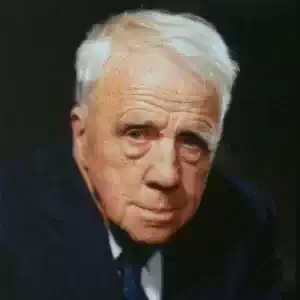
Robert Frost
Two Look at Two
A little further up the mountain side
With night so near, but not much further up.
They must have halted soon in any case
With thoughts of a path back, how rough it was
With rock and washout, and unsafe in darkness;
When they were halted by a tumbled wall
With barbed-wire binding. They stood facing this,
Spending what onward impulse they still had
In One last look the way they must not go,
On up the failing path, where, if a stone
Or earthslide moved at night, it moved itself;
No footstep moved it. 'This is all,' they sighed,
Good-night to woods.' But not so; there was more.
A doe from round a spruce stood looking at them
Across the wall, as near the wall as they.
She saw them in their field, they her in hers.
The difficulty of seeing what stood still,
Like some up-ended boulder split in two,
Was in her clouded eyes; they saw no fear there.
She seemed to think that two thus they were safe.
Then, as if they were something that, though strange,
She could not trouble her mind with too long,
She sighed and passed unscared along the wall.
'This, then, is all. What more is there to ask?'
But no, not yet. A snort to bid them wait.
A buck from round the spruce stood looking at them
Across the wall as near the wall as they.
This was an antlered buck of lusty nostril,
Not the same doe come back into her place.
He viewed them quizzically with jerks of head,
As if to ask, 'Why don't you make some motion?
Or give some sign of life? Because you can't.
I doubt if you're as living as you look."
Thus till he had them almost feeling dared
To stretch a proffering hand -- and a spell-breaking.
Then he too passed unscared along the wall.
Two had seen two, whichever side you spoke from.
'This must be all.' It was all. Still they stood,
A great wave from it going over them,
As if the earth in one unlooked-for favour
Had made them certain earth returned their love.
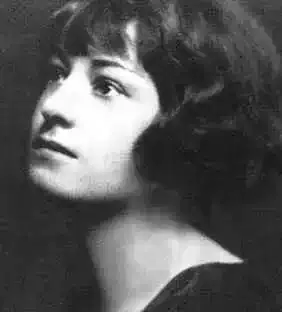
Dorothy Parker
A Fairly Sad Tale
Why I am thus, and I am so.
Around me, other girls inspire
In men the rush and roar of fire,
The sweet transparency of glass,
The tenderness of April grass,
The durability of granite;
But me- I don't know how to plan it.
The lads I've met in Cupid's deadlock
Were- shall we say?- born out of wedlock.
They broke my heart, they stilled my song,
And said they had to run along,
Explaining, so to sop my tears,
First came their parents or careers.
But ever does experience
Deny me wisdom, calm, and sense!
Though she's a fool who seeks to capture
The twenty-first fine, careless rapture,
I must go on, till ends my rope,
Who from my birth was cursed with hope.
A heart in half is chaste, archaic;
But mine resembles a mosaic-
The thing's become ridiculous!
Why am I so? Why am I thus?
Rudyard Kipling
In the Matter of One Compass
The helmsman dare not look behind,
But hears beyond his compass-light,
The blind bow thunder through the night,
And, like a harpstring ere it snaps,
The rigging sing beneath the caps;
Above the shriek of storm in sail
Or rattle of the blocks blown free,
Set for the peace beyond the gale,
This song the Needle sings the Sea;
Oh, drunken Wave! Oh, driving Cloud!
Rage of the Deep and sterile Rain,
By love upheld, by God allowed,
We go, but we return again!
When leagued about the 'wildered boat
The rainbow Jellies fill and float,
And, lilting where the laver lingers,
The Starfish trips on all her fingers;
Where, 'neath his myriad spines ashock,
The Sea-egg ripples down the rock,
An orange wonder dimly guessed
From darkness where the Cuttles rest,
Moored o'er the darker deeps that hide
The blind white Sea-snake and his bride,
Who, drowsing, nose the long-lost Ships
Let down through darkness to their lips --
Safe-swung above the glassy death,
Hear what the constant Needle saith:
Oh, lisping Reef! Oh, listless Cloud,
In slumber on a pulseless main!
By Love upheld, by God allowed,
We go, but we return again!
E'en so through Tropic and through Trade,
Awed by the shadow of new skies,
As we shall watch old planets fade
And mark the stranger stars arise,
So, surely, back through Sun and Cloud,
So, surely, from the outward main
By Love recalled, by God allowed,
Shall we return -- return again!
Yea, we return -- return again!
Elizabeth Barrett Browning
Cheerfulness Taught By Reason
In this fair world of God's. Had we no hope
Indeed beyond the zenith and the slope
Of yon gray blank of sky, we might grow faint
To muse upon eternity's constraint
Round our aspirant souls; but since the scope
Must widen early, is it well to droop,
For a few days consumed in loss and taint ?
O pusillanimous Heart, be comforted
And, like a cheerful traveller, take the road
Singing beside the hedge. What if the bread
Be bitter in thine inn, and thou unshod
To meet the flints ? At least it may be said
' Because the way is short, I thank thee, God. '
Ella Wheeler Wilcox
The Optimist
Or note enlivened the depressing wood,
A soiled and sullen, stubborn snowdrift stood
Beside the roadway. Winds came muttering
Of storms to be, and brought the chilly sting
Of icebergs in their breath. Stalled cattle mooed
Forth plaintive pleadings for the earth's green food.
No gleam, no hint of hope in anything.
The sky was blank and ashen, like the face
Of some poor wretch who drains life's cup too fast.
Yet, swaying to and fro, as if to fling
About chilled Nature its lithe arms of grace,
Smiling with promise in the wintry blast,
The optimistic Willow spoke of spring.

Alexander Pope
The Messiah : A Sacred Eclogue
To heavenly themes sublimer strains belong.
The mossy fountains, and the sylvan shades,
The dreams of Pindus, and the Aonian maids,
Delight no more - O thou, my voice inspire,
Who touched Isaiah's hallowed lips with fire!
Rapt into future times the bard begun,
A virgin shall conceive, a Virgin bear a son!
From Jesse's root behold a branch arise,
Whose sacred flower with fragrance fills the skies;
The ethereal Spirit o'er its leaves shall move,
And on its top descend the mystic Dove.
Ye heavens! from high the dewy nectar pour,
And in soft silence shed the kindly shower!
The sick and weak, the healing Plant shall aid,
From storms a shelter, and from heat a shade.
All crimes shall cease, and ancient fraud shall fail;
Returning justice lift aloft her scale.
Peace o'er the world her olive wand extend,
And white robed innocence from heaven descend.
Swift fly the years, and rise the expected morn!
O spring to light, auspicious Babe, be born!
See! nature hastes her earliest wreaths to bring,
WIth all the incense of the breathing spring!
See! lofty Lebanon his head advance,
See! nodding forests on the mountains dance:
See! spicy clouds from lowly Sharon rise;
And Carmel's flowery top perfumes the skies.
Hark! a glad voice the lonely desart cheers;
Prepare the way! a God, a God appears:
A God, a God! the vocal hills reply,
The rocks proclaim the approaching Deity.
Lo! earth receives him from the bending skies!
Sink down ye mountains, and ye vallies rise!
With heads declined ye cedars homage pay!
Be smooth ye rocks, ye rapid floods give way!
The Saviour comes! by ancient bards foretold:
Hear him ye deaf, and all ye blind, behold!
He from thick films shall purge the visual ray,
And on the sightless eye-ball pour the day.
'Tis he the obstructed paths of sound shall clear,
The dumb shall sing, the lame his crutch forego,
And leap exulting like the bounding roe:
No sigh, no murmer the wide world shall hear;
From every face he wipes off every tear.
In adamantine chains shall death be bound,
And hell's grim tyrant feel the eternal wound.
As the good shepherd tends his fleecy care,
Seeks freshest pastures and the purest air:
Explores the lost, the wandering sheep directs,
By day o'ersees them, and by night protects;
The tender lambs he raises in his arms,
Feeds from his hand, and in his bosom warms!
Thus shall mankind his guardian care engage,
The promis'd father of the future age.
No more shall nation against nation rise,
Nor ardent warriors meet with hateful eyes;
Nor fields with gleaming steel be cover'd o'er,
The brazen trumpets kindle rage no more;
But useless lances into scythes shall bend,
And the broad faulchion in a plough-share end.
Then palaces shall rise: the joyful son
Shall finish what his short-liv'd fire begun;
Their vines a shadow to their race shall yield,
And the same hand that sow'd, shall reap the field.
The swain in barren desarts with surprise
Sees lillies spring, and sudden verdure rise,
And starts amidst the thirsty wilds to hear
New falls of water murmuring in his ear;
On rifted rocks, the dragon's late abodes,
The green reed trembles, and the bulrush nods.
Waste sandy vallies once perplex'd with thorn,
The spiry fir and shapely box adorn;
The leafless shrubs the flow'ring palms succeed,
And odorous myrtle to the noisome weed.
The lambs with wolves shall grace the verdant mead,
And boys in flow'ry bands the tyger lead;
The steer and lion at one crib shall meet,
And harmless serpents lick the pilgrim's feet.
The smiling infant in his hand shall take
The crested basilisk and speckled snake;
Pleas'd, the green lustres of the scales survey,
And with their forky tongues shall innocently play.
Rise, crown'd with light, imperial Salem rise!
Exalt thy tow'ry head, and lift thy eyes!
See! a long race thy spacious courts adorn;
See! future sons and daughters yet unborn,
In crowding ranks on ev'ry side arise,
Demanding life, impatient for the skies!
See! barb'rous nations at thy gates attend,
Walk in thy light, and in thy temple bend;
See! thy bright altars throng'd with prostrate kings,
And heap'd with products of Sabaean springs!
For thee Idume's spicy forests blow,
And seeds of gold in Ophir's mountains glow.
See! heav'n its sparkling portals wide display,
And break upon thee in a flood of day!
No more the rising sun shall gild the morn,
Nor ev'ning Cynthia fill her silver horn;
But lost, dissolv'd in thy superior rays,
One tide of glory, one unclouded blaze,
O'erflow thy courts: the Light Himself shall shine
Reveal'd, and God's eternal day be thine!
The seas shall waste, the skies in smoke decay,
Rocks fall to dust, and mountains melt away;
But fix'd his word, his saving pow'r remains,
Thy realm for ever lasts, thy own Messiah reigns.
Langston Hughes
Dreams
For if dreams die
Life is a broken-winged bird
That cannot fly.
Hold fast to dreams
For when dreams go
Life is a barren field
Frozen with snow.
Ella Wheeler Wilcox
Be Not Weary
And tired out with working long and well,
And earth is dark, and skies above are dreary,
And heart and soul are all too sick to tell,
These words have come to me like angel fingers
Pressing the spirit's eyelids down in sleep,
'Oh let us not be weary in well doing,
For in due season we shall surely reap.'
Oh, blessed promise! When I seem to hear it,
Whispered by angel voices on the air,
It breathes new life and courage to my spirit,
And gives me strength to suffer and forbear.
And I can wait most patiently for harvest,
And cast my seeds, nor ever faint, nor weep,
If I know surely that my work availeth,
And in God's season, I at last shall reap.
When mind and body were borne down completely,
And I have thought my efforts were all in vain,
These words have come to me so softly, sweetly,
And whispered hope, and urged me on again.
And though my labour seems all unavailing,
And all my striving fruitless, yet the Lord
Doth treasure up each little seed I scatter,
And sometime, sometime, I shall reap the reward.
Langston Hughes
Oppression
Are not available
To the dreamers,
Nor songs
To the singers.
In some lands
Dark night
And cold steel
Prevail
But the dream
Will come back,
And the song
Break
Its jail.

Johann Wolfgang von Goethe
Three Palinodias - 03 Rain And Rainbow
That from his room a cockney glanced
At the fierce tempest as it broke,
While to his neighbour thus he spoke:
"The thunder has our awe inspired,
Our barns by lightning have been fired,--
Our sins to punish, I suppose;
But in return, to soothe our woes,
See how the rain in torrents fell,
Making the harvest promise well!
But it's a rainbow that I spy
Extending o'er the dark-grey sky?
With it I'm sure we may dispense,
The colour'd cheat! The vain pretence!"
Dame Iris straightway thus replied:
"Dost dare my beauty to deride?
In realms of space God station'd me
A type of better worlds to be
To eyes that from life's sorrows rove
In cheerful hope to Heav'n above,
And, through the mists that hover here
God and his precepts blest revere.
Do thou, then, grovel like the swine,
And to the ground thy snout confine,
But suffer the enlighten'd eye
To feast upon my majesty."
Ella Wheeler Wilcox
Summer Song
From morning to evening fill all the sweet air,
And my heart is as light as the down of a thistle –
The world is so bright and the earth is so fair.
There is life in the wood, there is bloom on the meadow;
The air drops with songs that the merry birds sing.
The sunshine has won, in the battle with shadow,
And she’s dressed the glad earth with robes of the spring.
The bee leaves his hive for the field of red clover
And the vale where the daisies bloom white as the snow,
And a mantle of warm yellow sunshine hangs over
The calm little pond, where the pale lillies grow.
In the woodland beyond it, a thousand gay voices
Are singing in chorus some jubilant air.
The bird and the bee and all nature rejoices,
The world is so bright, and the earth is so fair.
I am glad as a child, in this beautiful weather;
I have tossed all my burdens and trials away;
My heart is as light – yes, as light as a feather; I
am care-free, and careless, and happy to-day.
Can it be there approaches a dark, dreary to-morrow?
Can shadows e’er fall on this beautiful earth?
Ah! To-day is my own! No forebodings of sorrow
Shall darken my skies, or shall dampen my mirth.
Ella Wheeler Wilcox
Our Lives
And we set them to music at pleasure;
And the song grows glad, or sweet, or sad,
As we choose to fashion the measure.
We must write the music, whatever the song,
Whatever its rhyme, or metre;
And if it is sad, we can make it glad,
Or if sweet, we can make it sweeter.
One has a song that is free and strong;
But the music he writes is minor;
And the sad, sad strain is replete with pain,
And the singer becomes a repiner.
And he thinks God gave him a dirge-like lay,
Nor knows that the words are cheery;
And the song seems lonely and solemn-only
Because the music is dreary.
And the song of another has through the words
An under current of sadness;
But he sets it to music of ringing chords,
And makes it a pean of gladness.
So whether our songs are sad or not,
We can give the world more pleasure,
And better ourselves, by setting the words
To a glad, triumphant measure.
1872
Ella Wheeler Wilcox
The Voice
Cried loudly thro’ the world, ‘Disarm! Disarm! ’
And there was consernation in the camps;
And men who strutted under braid and lace
Beat on their medalled breasts, and wailed,
‘Undone! ’
The word was echoed from a thousand hills,
And shop and mill, and factory and forge,
Where throve the awful industries of death,
Hushed into silence. Scrawled upon the doors,
The passer read, ‘Peace bids her children
Starve.’
But foolish women clasped their little sons
And wept for joy, not reasoning like men.
Again the Voice commanded: ‘Now go forth
And build a world for Progress and for Peace.
This world had waited since the earth was
Shaped;
But men were fighting, and they could not
Toil.
The needs of life outnumbered needs of death.
Leave death with God. Go forth, I say, and
Build.’
And then a sudden comprehensive joy
Shone in the eyes of men; and one who thought
Only of conquests and of victories
Woke from his gloomy reverie and cried,
‘Ay, come and build! I challenge all to try.
And I will make a world more beautiful
Then Eden was before the serpent came.’
And like a running flame on western wilds,
Ambition spread from mind to listening mind,
And lo! the looms were busy once again,
And all the earth resounded with men’s toil.
Vast palaces of Science graced the world;
Their banquet tables spread with feasts of truth
For all who hungered. Music kissed the air,
Once rent with boom of cannons. Statues gleamed
From wooded ways, where ambushed armies hid
In times of old. The sea and air were gay
With shining sails that soared from land to land.
A universal language of the world
Made nations kin, and poverty was known
But as a word marked ‘obsolete, ’ like war.
The arts were kindled with celestial fire;
New poets sang so Homer’s fame grew dim;
And brush and chisel gave the wondering race
Sublimer treasures than old Greece displayed.
Men differed still; fierce argument arose,
For men are human in this human sphere;
But unarmed Arbitration stood between
And Reason settled in a hundred hours
What War disputed for a hundred years.
Oh, that a Voice, of one God-authorised
Might cry to all mankind, Disarm! Disarm!
Remembered
His art was loving; Eres set his sign
Upon that youthful forehead, and he drew
The hearts of women, as the sun draws dew.
Love feeds love’s thirst as wine feeds love of wine;
Nor is there any potion from the vine
Which makes men drunken like the subtle brew
Of kisses crushed by kisses; and he grew
Inebriated with that draught divine.
Yet in his sober moments, when the sun
Of radiant summer paled to lonely fall,
And passion’s sea had grown an ebbing tide,
From out the many, Memory singled one
Full cup that seemed the sweetest of them all –
The warm red mouth that mocked him and denied.

Henry Wadsworth Longfellow
Endymion
Her level rays, like golden bars,
Lie on the landscape green,
With shadows brown between.
And silver white the river gleams,
As if Diana, in her dreams,
Had dropt her silver bow
Upon the meadows low.
On such a tranquil night as this,
She woke Endymion with a kiss,
When, sleeping in the grove,
He dreamed not of her love.
Like Dian's kiss, unasked, unsought,
Love gives itself, but is not bought;
Nor voice, nor sound betrays
Its deep, impassioned gaze.
It comes,--the beautiful, the free,
The crown of all humanity,-In
silence and alone
To seek the elected one.
It lifts the boughs, whose shadows deep
Are Life's oblivion, the soul's sleep,
And kisses the closed eyes
Of him, who slumbering lies.
O weary hearts! O slumbering eyes!
O drooping souls, whose destinies
Are fraught with fear and pain,
Ye shall be loved again!
No one is so accursed by fate,
No one so utterly desolate,
But some heart, though unknown,
Responds unto his own.
Responds,--as if with unseen wings,
An angel touched its quivering strings;
And whispers, in its song,
"'Where hast thou stayed so long?"
Ella Wheeler Wilcox
The Universal Route
We see, on youth’s flower-decked slope,
Like a beacon of light, shining fair on the sight,
The beautiful Station of Hope.
But the wheels of old Time roll along as we climb,
And our youth speeds away on the years;
And with hearts that are numb with life’s sorrows we come
To the mist-covered Station of Tears.
Still onward we pass, where the milestones, alas!
Are tombs of our dead, to the West,
Where glitters and gleams, in the dying sunbeams,
The sweet, silent Station of Rest.
All rest is but change, and no grave can estrange
The soul from its Parent above;
And, scorning the rod, it soars back to God,
To the limitless City of Love.

Walt Whitman
Brother Of All, With Genesrous Hand
Of thee, pondering on thee, as o'er thy tomb, I and my Soul,
A thought to launch in memory of thee,
A burial verse for thee.
What may we chant, O thou within this tomb?
What tablets, pictures, hang for thee, O millionaire?
--The life thou lived'st we know not,
But that thou walk'dst thy years in barter, 'mid the haunts of
brokers;
Nor heroism thine, nor war, nor glory.
Yet lingering, yearning, joining soul with thine,
If not thy past we chant, we chant the future,
Select, adorn the future.
Lo, Soul, the graves of heroes!
The pride of lands--the gratitudes of men,
The statues of the manifold famous dead, Old World and New,
The kings, inventors, generals, poets, (stretch wide thy vision,
Soul,)
The excellent rulers of the races, great discoverers, sailors,
Marble and brass select from them, with pictures, scenes,
(The histories of the lands, the races, bodied there,
In what they've built for, graced and graved,
Monuments to their heroes.)
Silent, my Soul,
With drooping lids, as waiting, ponder'd,
Turning from all the samples, all the monuments of heroes.
While through the interior vistas,
Noiseless uprose, phantasmic (as, by night, Auroras of the North,)
Lambent tableaux, prophetic, bodiless scenes,
Spiritual projections.
In one, among the city streets, a laborer's home appear'd,
After his day's work done, cleanly, sweet-air'd, the gaslight
burning,
The carpet swept, and a fire in the cheerful stove.
In one, the sacred parturition scene,
A happy, painless mother birth'd a perfect child.
In one, at a bounteous morning meal,
Sat peaceful parents, with contented sons.
In one, by twos and threes, young people,
Hundreds concentering, walk'd the paths and streets and roads,
Toward a tall-domed school.
In one a trio, beautiful,
Grandmother, loving daughter, loving daughter's daughter, sat,
Chatting and sewing.
In one, along a suite of noble rooms,
'Mid plenteous books and journals, paintings on the walls, fine
statuettes,
Were groups of friendly journeymen, mechanics, young and old,
Reading, conversing.
All, all the shows of laboring life,
City and country, women's, men's and children's,
Their wants provided for, hued in the sun, and tinged for once with
joy,
Marriage, the street, the factory, farm, the house-room, lodgingroom,
Labor and toil, the bath, gymnasium, play-ground, library,
college,
The student, boy or girl, led forward to be taught;
The sick cared for, the shoeless shod--the orphan father'd and
mother'd,
The hungry fed, the houseless housed;
(The intentions perfect and divine,
The workings, details, haply human.)
O thou within this tomb,
From thee, such scenes--thou stintless, lavish Giver,
Tallying the gifts of Earth--large as the Earth,
Thy name an Earth, with mountains, fields and rivers.
Nor by your streams alone, you rivers,
By you, your banks, Connecticut,
By you, and all your teeming life, Old Thames,
By you, Potomac, laving the ground Washington trod--by you Patapsco,
You, Hudson--you, endless Mississippi--not by you alone,
But to the high seas launch, my thought, his memory.
Lo, Soul, by this tomb's lambency,
The darkness of the arrogant standards of the world,
With all its flaunting aims, ambitions, pleasures.
(Old, commonplace, and rusty saws,
The rich, the gay, the supercilious, smiled at long,
Now, piercing to the marrow in my bones,
Fused with each drop my heart's blood jets,
Swim in ineffable meaning.)
Lo, Soul, the sphere requireth, portioneth,
To each his share, his measure,
The moderate to the moderate, the ample to the ample.
Lo, Soul, see'st thou not, plain as the sun,
The only real wealth of wealth in generosity,
The only life of life in goodness?

Carl Sandburg
Work Gangs
Box cars run by a mile long.
And I wonder what they say to each other
When they stop a mile long on a sidetrack.
Maybe their chatter goes:
I came from Fargo with a load of wheat up to the danger line.
I came from Omaha with a load of shorthorns and they splintered my boards.
I came from Detroit heavy with a load of fivers.
I carried apples from the Hood river last year and this year bunches of bananas from
Florida; they look for me with watermelons from Mississippi next year.
Hammers and shovels of work gangs sleep in shop corners
when the dark stars come on the sky and the night watchmen walk and look.
Then the hammer heads talk to the handles,
then the scoops of the shovels talk,
how the day’s work nicked and trimmed them,
how they swung and lifted all day,
how the hands of the work gangs smelled of hope.
In the night of the dark stars
when the curve of the sky is a work gang handle,
in the night on the mile long sidetracks,
in the night where the hammers and shovels sleep in corners,
the night watchmen stuff their pipes with dreams—
and sometimes they doze and don’t care for nothin’,
and sometimes they search their heads for meanings, stories, stars.
The stuff of it runs like this:
A long way we come; a long way to go; long rests and long deep sniffs for our lungs on
the way.
Sleep is a belonging of all; even if all songs are old songs and the singing heart is
snuffed out like a switchman’s lantern with the oil gone, even if we forget our names
and houses in the finish, the secret of sleep is left us, sleep belongs to all, sleep is the
first and last and best of all.
People singing; people with song mouths connecting with song hearts; people who
must sing or die; people whose song hearts break if there is no song mouth; these are
my people.