
Humanity and Solidarity

Walt Whitman
To The East And To The West
To the man of the Seaside State, and of Pennsylvania,
To the Kanadian of the North--to the Southerner I love;
These, with perfect trust, to depict you as myself--the germs are in
all men;
I believe the main purport of These States is to found a superb
friendship, exalté, previously unknown,
Because I perceive it waits, and has been always waiting, latent in
all men.
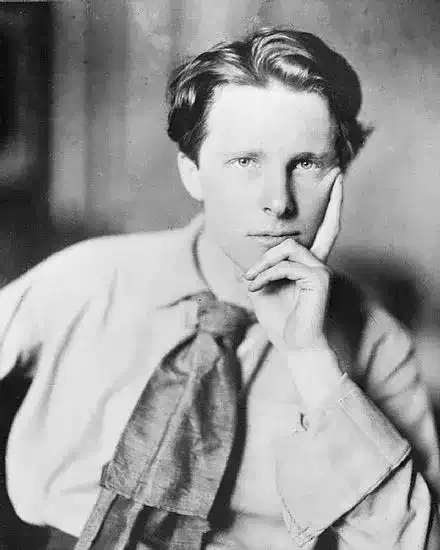
Rupert Brooke
III. The Dead
There's none of these so lonely and poor of old,
But, dying, has made us rarer gifts than gold.
These laid the world away; poured out the red
Sweet wine of youth; gave up the years to be
Of work and joy, and that unhoped serene,
That men call age; and those who would have been,
Their sons, they gave, their immortality.
Blow, bugles, blow! They brought us, for our dearth,
Holiness, lacked so long, and Love, and Pain.
Honour has come back, as a king, to earth,
And paid his subjects with a royal wage;
And Nobleness walks in our ways again;
And we have come into our heritage.
John Donne
No Man Is An Island
Entire of itself.
Each is a piece of the continent,
A part of the main.
If a clod be washed away by the sea,
Europe is the less.
As well as if a promontory were.
As well as if a manor of thine own
Or of thine friend's were.
Each man's death diminishes me,
For I am involved in mankind.
Therefore, send not to know
For whom the bell tolls,
It tolls for thee.
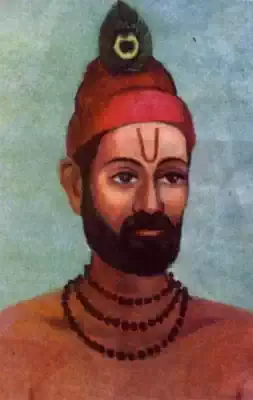
Kabir
O lord Increate, who will serve Thee?
Every votary offers his worship to the God of his own creation:
each day he receives service-
None seek Him, the Perfect:
Brahma, the Indivisible Lord.
They believe in ten Avatars;
but no Avatar can be the Infinite Spirit,
for he suffers the results of his deeds:
The Supreme One must be other than this.
The Yogi, the Sanyasi,
the Ascetics, are disputing one with another:
Kabîr says, 'O brother! he who has seen that radiance of love,
he is saved.'
Walt Whitman
Unfolded Out Of The Folds
always to come unfolded;
Unfolded only out of the superbest woman of the earth, is to come the
superbest man of the earth;
Unfolded out of the friendliest woman, is to come the friendliest
man;
Unfolded only out of the perfect body of a woman, can a man be form'd
of perfect body;
Unfolded only out of the inimitable poem of the woman, can come the
poems of man--(only thence have my poems come;)
Unfolded out of the strong and arrogant woman I love, only thence can
appear the strong and arrogant man I love;
Unfolded by brawny embraces from the well-muscled woman I love, only
thence come the brawny embraces of the man;
Unfolded out of the folds of the woman's brain, come all the folds of
the man's brain, duly obedient;
Unfolded out of the justice of the woman, all justice is unfolded;
Unfolded out of the sympathy of the woman is all sympathy:
A man is a great thing upon the earth, and through eternity--but
every jot of the greatness of man is unfolded out of woman,
First the man is shaped in the woman, he can then be shaped in
himself.

Ella Wheeler Wilcox
The Creed
And came desired and welcome into life,
Is of immaculate conception. He
Whose heart is full of tenderness and truth,
Who loves mankind more than he loves himself,
And cannot find room in his heart for hate,
May be another Christ. We all may be
The Saviours of the world if we believe
In the Divinity which dwells in us
And worship it, and nail our grosser selves,
Our tempers, greeds, and our unworthy aims,
Upon the cross. Who giveth love to all;
Pays kindness for unkindness, smiles for frowns;
And lends new courage to each fainting heart,
And strengthens hope and scatters joy abroad—
He, too, is a Redeemer, Son of God.
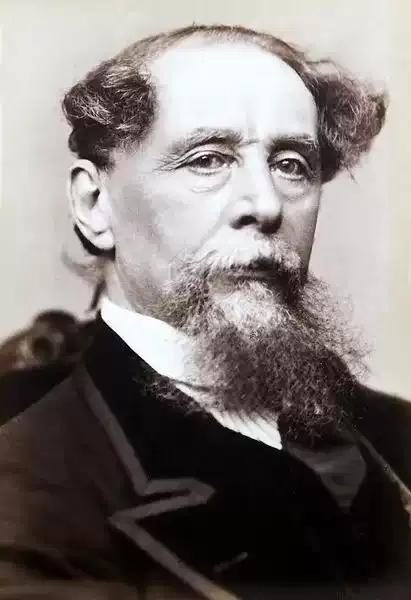
Charles Dickens
The Song Of The Wreck
A ship drove on the land,
A hundred human creatures saved
Kneel'd down upon the sand.
Threescore were drown'd, threescore were thrown
Upon the black rocks wild,
And thus among them, left alone,
They found one helpless child.
A seaman rough, to shipwreck bred,
Stood out from all the rest,
And gently laid the lonely head
Upon his honest breast.
And travelling o'er the desert wide
It was a solemn joy,
To see them, ever side by side,
The sailor and the boy.
In famine, sickness, hunger, thirst,
The two were still but one,
Until the strong man droop'd the first
And felt his labors done.
Then to a trusty friend he spake,
'Across the desert wide,
Oh, take this poor boy for my sake!'
And kiss'd the child and died.
Toiling along in weary plight
Through heavy jungle, mire,
These two came later every night
To warm them at the fire.
Until the captain said one day
'O seaman, good and kind,
To save thyself now come away,
And leave the boy behind!'
The child was slumbering near the blaze:
'O captain, let him rest
Until it sinks, when God's own ways
Shall teach us what is best!'
They watch'd the whiten'd, ashy heap,
They touch'd the child in vain;
They did not leave him there asleep,
He never woke again.

Rudyard Kipling
The Miracle of Purun Bhagat
We stole and plucked him by the hand,
Because we loved him with the love
That knows but cannot understand.
And when the roaring hillside broke,
And all our world fell down in rain,
We saved him, we the Little Folk;
But lo! he does not come again!
Mourn now, we saved him for the sake
Of such poor love as wild ones may.
Mourn ye! Our brother will not wake,
And his own kind drive us away!

Carl Sandburg
Work Gangs
Box cars run by a mile long.
And I wonder what they say to each other
When they stop a mile long on a sidetrack.
Maybe their chatter goes:
I came from Fargo with a load of wheat up to the danger line.
I came from Omaha with a load of shorthorns and they splintered my boards.
I came from Detroit heavy with a load of fivers.
I carried apples from the Hood river last year and this year bunches of bananas from
Florida; they look for me with watermelons from Mississippi next year.
Hammers and shovels of work gangs sleep in shop corners
when the dark stars come on the sky and the night watchmen walk and look.
Then the hammer heads talk to the handles,
then the scoops of the shovels talk,
how the day’s work nicked and trimmed them,
how they swung and lifted all day,
how the hands of the work gangs smelled of hope.
In the night of the dark stars
when the curve of the sky is a work gang handle,
in the night on the mile long sidetracks,
in the night where the hammers and shovels sleep in corners,
the night watchmen stuff their pipes with dreams—
and sometimes they doze and don’t care for nothin’,
and sometimes they search their heads for meanings, stories, stars.
The stuff of it runs like this:
A long way we come; a long way to go; long rests and long deep sniffs for our lungs on
the way.
Sleep is a belonging of all; even if all songs are old songs and the singing heart is
snuffed out like a switchman’s lantern with the oil gone, even if we forget our names
and houses in the finish, the secret of sleep is left us, sleep belongs to all, sleep is the
first and last and best of all.
People singing; people with song mouths connecting with song hearts; people who
must sing or die; people whose song hearts break if there is no song mouth; these are
my people.

Khalil Gibran
The Creation I
upon her all the blessings of gracefulness and kindness. He gave her the cup of
happiness and said, "Drink not from this cup unless you forget the past and the future,
for happiness is naught but the moment." And He also gave her a cup of sorrow and
said, "Drink from this cup and you will understand the meaning of the fleeting instants
of the joy of life, for sorrow ever abounds."
And the God bestowed upon her a love that would desert he forever upon her first sigh
of earthly satisfaction, and a sweetness that would vanish with her first awareness of
flattery.
And He gave her wisdom from heaven to lead to the all-righteous path, and placed in
the depth of her heart and eye that sees the unseen, and created in he an affection
and goodness toward all things. He dressed her with raiment of hopes spun by the
angels of heaven from the sinews of the rainbow. And He cloaked her in the shadow of
confusion, which is the dawn of life and light.
Then the God took consuming fire from the furnace of anger, and searing wind from
the desert of ignorance, and sharp- cutting sands from the shore of selfishness, and
coarse earth from under the feet of ages, and combined them all and fashioned Man.
He gave to Man a blind power that rages and drives him into a madness which
extinguishes only before gratification of desire, and placed life in him which is the
specter of death.
And the god laughed and cried. He felt an overwhelming love and pity for Man, and
sheltered him beneath His guidance.
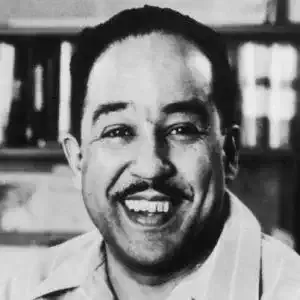
Langston Hughes
My People
So the faces of my people.
The stars are beautiful,
So the eyes of my people.
Beautiful, also, is the sun.
Beautiful, also, are the souls of my people.
Walt Whitman
Ethiopia Saluting The Colors
With your woolly-white and turban'd head, and bare bony feet?
Why, rising by the roadside here, do you the colors greet?
('Tis while our army lines Carolina's sand and pines,
Forth from thy hovel door, thou, Ethiopia, com'st to me,
As, under doughty Sherman, I march toward the sea.)
Me, master, years a hundred, since from my parents sunder'd,
A little child, they caught me as the savage beast is caught;
Then hither me, across the sea, the cruel slaver brought.
No further does she say, but lingering all the day,
Her high-borne turban'd head she wags, and rolls her darkling eye,
And curtseys to the regiments, the guidons moving by.
What is it, fateful woman--so blear, hardly human?
Why wag your head, with turban bound--yellow, red and green?
Are the things so strange and marvelous, you see or have seen?

William Butler Yeats
Mad As The Mist And Snow
For the foul winds blow:
Our minds are at their best this night,
And I seem to know
That everything outside us is
Mad as the mist and snow.
Horace there by Homer stands,
Plato stands below,
And here is Tully's open page.
How many years ago
Were you and I unlettered lads
Mad as the mist and snow?
You ask what makes me sigh, old friend,
What makes me shudder so?
I shudder and I sigh to think
That even Cicero
And many-minded Homer were
Mad as the mist and snow.

Johann Wolfgang von Goethe
Hermann And Dorothea - I. Kalliope
'NE'ER have I seen the market and streets so thoroughly empty!
Still as the grave is the town, clear'd out! I verily fancy
Fifty at most of all our inhabitants still may be found there.
People are so inquisitive! All are running and racing
Merely to see the sad train of poor fellows driven to exile.
Down to the causeway now building, the distance nearly a league is,
And they thitherward rush, in the heat and the dust of the noonday.
As for me, I had rather not stir from my place just to stare at
Worthy and sorrowful fugitives, who, with what goods they can carry,
Leaving their own fair land on the further side of the Rhine-stream,
Over to us are crossing, and wander through the delightful
Nooks of this fruitful vale, with all its twistings and windings.
Wife, you did right well to bid our son go and meet them,
Taking with him old linen, and something to eat and to drink too,
Just to give to the poor; the rich are bound to befriend them.
How he is driving along! How well he holds in the horses!
Then the new little carriage looks very handsome; inside it
Four can easily sit, besides the one on the coachbox.
This time he is alone; how easily-turns it the corner!'
Thus to his wife the host of the Golden Lion discoursed,
Sitting at ease in the porch of his house adjoining the market.
Then replied as follows the shrewd and sensible hostess
'Father, I don't like giving old linen away, for I find it
Useful in so many ways, 'tis not to he purchased for money
Just when it's wanted. And yet to-day I gladly have given
Many excellent articles, shirts and covers and suchlike;
For I have heard of old people and children walking half-naked.
Will you forgive me, too, for having ransacked your presses?
That grand dressing-gown, cover'd with Indian flowers all over,
Made of the finest calico, lined with excellent flannel,
I have despatch'd with the rest; 'tis thin, old, quite out of fashion.'
But the worthy landlord only smiled, and then answer'd
I shall dreadfully miss that ancient calico garment,
Genuine Indian stuff! They're not to be had any longer.
Well! I shall wear it no more. And your poor husband henceforward
Always must wear a surtout, I suppose, or commonplace jacket,
Always must put on his boots; good bye to cap and to slippers!'
'See,' continued his wife, 'a few are already returning
Who have seen the procession, which long ago must have pass'd by.
See how dusty their shoes are, and how their faces are glowing
Each one carries a handkerchief, wiping the sweat from his forehead.
I, for one, wouldn't hurry and worry myself in such weather
Merely to see such a sight! I'm certain to hear all about it.'
And the worthy father, speaking with emphasis, added
'Such fine weather seldom lasts through the whole of the harvest
And we're bringing the fruit home, just as the hay we brought lately,
Perfectly dry; the sky is clear, no cloud's in the heavens,
And the whole day long delicious breezes are blowing.
Splendid weather I call it! The corn already too ripe is,
And to-morrow begin we to gather the plentiful harvest.'
Whilst he was thus discoursing, the number of men and of women
Crossing the market and going towards home kept ever increasing;
And there return'd amongst others, bringing with him his daughters,
On the other side of the market, their prosperous neighbour,
Going full speed to his newbuilt house, the principal merchant,
Riding inside an open carriage (in Landau constructed).
All the streets were alive; for the town, though small, was well peopled,
Many a factory throve there, and many a business also.
Long sat the excellent couple under the doorway, exchanging
Many a passing remark on the people who happen'd to pass them.
Presently thus to her husband exclaim'd the good-natured hostess
'See! Yon comes the minister; with him is walking the druggist:
They'll be able to give an account of all that has happen'd,
What they witness'd, and many a sight I fear which was painful.'
Both of them came in a friendly manner, and greeted the couple,
Taking their seats on the wooden benches under the doorway,
Shaking the dust from their feet, their handkerchiefs using to fan them.
Presently, after exchanging reciprocal greetings, the druggist
Open'd his mouth, and almost peevishly vented his feelings
'What strange creatures men are! They all resemble each other,
All take pleasure in staring, when troubles fall on their neighbours.
Ev'ry one runs to see the flames destroying a dwelling,
Or a poor criminal led in terror and shame to the scaffold.
All the town has been out to gaze at the sorrowing exiles,
None of them bearing in mind that a like misfortune hereafter,
Possibly almost directly, may happen to be their own portion.
I can't pardon such levity; yet 'tis the nature of all men.'
Thereupon rejoin'd the noble and excellent pastor,
He, the charm of the town, in age scarce more than a stripling:-(
He was acquainted with life, and knew the wants of his hearers,
Fully convinced of the worth of the Holy Scriptures, whose mission
Is to reveal man's fate, his inclinations to fathom;
He was also well read in the best of secular writings.)
'I don't like to find fault with any innocent impulse
Which in the mind of man Dame Nature has ever implanted;
For what reason and intellect ne'er could accomplish, is often
Done by some fortunate, quite irresistible instinct within him.
If mankind were never by curiosity driven,
Say, could they e'er have found out for themselves the wonderful manner
Things in the world range in order? For first they Novelty look for,
Then with untiring industry seek to discover the Useful,
Lastly they yearn for the Good, which makes them noble and worthy.
All through their youth frivolity serves as their joyous companion,
Hiding the presence of danger, and. swiftly effacing the traces
Caused by misfortune and grief, as soon as their onslaught is over.
Truly the man's to be praised who, as years roll onward, develops
Out of such glad disposition an intellect settled and steady,--
Who, in good fortune as well as misfortune, strives zealously, nobly;
For what is Good he brings forth, replacing whatever is injured.'
Then in a friendly voice impatiently spoke thus the hostess:-'
Tell us what have you seen; I am eagerly longing to hear it.'
Then with emphasis answer'd the druggist:--' The terrible stories
Told me to-day will serve for a long time to make me unhappy.
Words would fail to describe the manifold pictures of mis'ry.
Far in the distance saw we the dust, before we descended
Down to the meadows; the rising hillocks hid the procession
Long from our eyes, and little could we distinguish about it.
When, however, we reach'd the road that winds thro' the valley,
Great was the crowd and the noise of the emigrants mix'd with the waggons.
We unhappily saw poor fellows passing in numbers,
Some of them showing how bitter the sense of their sorrowful flight was,
Some with a feeling of joy at saving their lives in a hurry.
Sad was the sight of the manifold goods and chattels pertaining
Unto a well-managed house, which the careful owner's accustom'd
Each in its proper position to place, and in regular order,
Always ready for use, for all are wanted and useful.--
Sad was the sight of them now, on many a waggon and barrow
Heap'd in thorough confusion, and hurriedly huddled together.
Over a cupboard was placed a sieve and a coverlet woollen;
Beds in the kneeding troughs lay, and linen over the glasses.
Ah! and the danger appear'd to rob the men of their senses,
Just as in our great fire of twenty years ago happen'd,
When what was worthless they saved, and left all the best things behind them.
So on the present occasion with heedless caution they carried
Many valueless chattels, o'erlading the cattle and horses,--
Common old boards and barrels, a birdcage next to a goosepen.
Women and children were gasping beneath the weight of their bundles,
Baskets and tubs full of utterly useless articles, bearing.
(Man is always unwilling the least of his goods to abandon.)
Thus on its dusty way advanced the crowded procession,
All in hopeless confusion. First one, whose cattle were weaker,
Fain would slowly advance, while others would eagerly hasten.
Then there arose a scream of half-crush'd women and children,
And a lowing of cattle, with yelping of dogs intermingled,
And a wailing of aged and sick, all sitting and shaking,
Ranged in their beds on the top of the waggon too-heavily laden.
Next some lumbering wheel, push'd out of the track by the pressure,
Went to the edge of the roadway; the vehicle fell in the ditch then,
Rolling right over, and throwing, in falling, the men who were in it
Far in the field, screaming loudly, their persons however uninjured.
Then the boxes roll'd off and tumbled close to the waggon.
Those who saw them failing full surely expected to see them
Smash'd to pieces beneath the weight of the chests and the presses.
So the waggon lay broken, and those that it carried were helpless,
For the rest of the train went on, and hurriedly pass'd them,
Thinking only of self, and carried away by the current.
So we sped to the spot, and found the sick and the aged
Who, when at home and in bed, could scarcely endure their sad ailments,
Lying there on the ground, all sighing and groaning in anguish,
Stifled by clouds of dust, and scorch'd by the fierce sun of summer.
Then replied in tones of compassion the sensitive landlord
Hermann I trust will find them and give them refreshment and clothing.
I should unwillingly see them: I grieve at the eight of such sorrow.
Touch'd by the earliest news of the sad extent of the suffering,
Hastily sent we a trifle from out of our superabundance,
Just to comfort a few, and then our minds were more easy.
Now let us cease to discourse on such a sorrowful subject,
For men's hearts are easily overshadow'd by terror,
And by care, more odious far to me than misfortune.
Now let us go to a cooler place, the little back-parlour;
There the sun never shines, and the walls are so thick that the hot air
Never can enter; and mother shall forthwith bring us a glass each
Full of fine Eighty-three, well fitted to drive away trouble.
This is a bad place for drinking; the flies will hum round the glasses.'
So they all went inside, enjoying themselves in the coolness.
Then in a well-cut flask the mother carefully brought them
Some of that clear good wine, upon a bright metal waiter
With those greenish rummers, the fittingest goblets for Rhine wine.
So the three sat together, around the glistening polish'd
Circular large brown table-Äon massive feet it was planted.
Merrily clink'd together the glasses of host and of pastor,
But the other one thoughtfully held his glass without moving,
And in friendly fashion the host thus ask'd him to join them:-
'Drink, good neighbour, I pray! A merciful God has protected
Us in the past from misfortune, and will protect us in future.
All must confess that since He thought fit to severely chastise us,
When that terrible fire occurr'd, He has constantly bless'd us.
And watch'd over us constantly, just as man is accustom'd
His eye's precious apple to guard, that dearest of members.
Shall He not for the future preserve us, and be our Protector?
For 'tis in danger we learn to appreciate duly His Goodness.
This so flourishing town, which He built again from its ashes
By the industrious hands of its burghers, and bless'd it so richly,
Will He again destroy it, and render their toil unavailing?'
Cheerfully answer'd the excellent pastor, in accents of mildness
'Steadfastly cling to this faith, and cherish such worthy opinions;
In good fortune they'll make you prudent, and then in misfortune
Well-grounded hopes they'll supply, and furnish you true consolation.'
Then continued the host, with thoughts full of manhood and wisdom
'Oft have I greeted with wonder the rolling flood of the Rhine stream,
When, on my business trav'lling, I've once more come to its borders.
Grand has it ever appear'd, exalting my feelings and senses;
But I could never imagine that soon its beautiful margin
Into a wall would be turn'd, to keep the French from our country,
And its wide-spreading bed a ditch to hinder and check them.
So by Nature we're guarded, we're guarded by valorous Germans,
And by the Lord we're guarded; who then would foolishly tremble?
Weary the combatants are, and all things indicate peace soon;
And when at length the long-expected festival's holden
Here in our church, and the bells chime in with the organ in chorus,
And the trumpets are blowing, the noble Te Deum upraising,
Then on that selfsame day I fain would see, my good pastor,
Our dear Hermann kneel with his bride at the altar before you,
And the glad festival held through the length and breadth of the country
Will henceforward to me be a glad anniversary also!
But I am grieved to observe that the youth, who is always so active
When he is here at home, abroad is so slow and so timid.
Little at any time cares he to mix with the rest of the people;
Yes, he even avoids young maidens' society ever,
And the frolicsome dance, that great delight of young people.'
Thus he spake, and then listen'd. The sound of the stamping of horses
Drawing nearer was heard; and then the roll of the carriage,
Which, with impetuous speed, now thunder'd under the gateway.
Ella Wheeler Wilcox
All Roads That Lead To God Are Good
What matters it, your faith, or mine?
Both centre at the goal divine
Of love’s eternal Brotherhood.
The kindly life in house or street –
The life of prayer and mystic rite –
The student’s search for truth and light –
These paths at one great Junction meet.
Before the oldest book was writ,
Full many a prehistoric soul
Arrived at this unchanging goal,
Through changeless Love, that leads to it.
What matters that one found his Christ
In rising sun, or burning fire?
In faith within him did not tire,
His longing for the Truth sufficed.
Before our modern hell was brought
To edify the modern world,
Full many a hate-filled soul was hurled
In lakes of fire by its own thought.
A thousand creeds have come and gone,
But what is that to you or me?
Creeds are but branches of a tree –
The root of love lives on and on.
Though branch by branch proved withered wood,
The root is warm with precious wine.
Then keep your faith, and leave me mine –
All roads that lead to God are good.

Phillis Wheatley
One Being Brought From Africa To America
Taught my benighted soul to understand
That there's a God, that there's a Saviour too:
Once I redemption neither sought now knew,
Some view our sable race with scornful eye,
'Their colour is a diabolic die.'
Remember, Christians, Negroes, black as Cain,
May be refin'd, and join th' angelic train.

Henry Wadsworth Longfellow
By The Seaside : The Lighthouse
And on its outer point, some miles away,
The Lighthouse lifts its massive masonry,
A pillar of fire by night, of cloud by day.
Even at this distance I can see the tides,
Upheaving, break unheard along its base,
A speechless wrath, that rises and subsides
In the white lip and tremor of the face.
And as the evening darkens, lo! how bright,
Through the deep purple of the twilight air,
Beams forth the sudden radiance of its light
With strange, unearthly splendor in the glare!
Not one alone; from each projecting cape
And perilous reef along the ocean's verge,
Starts into life a dim, gigantic shape,
Holding its lantern o'er the restless surge.
Like the great giant Christopher it stands
Upon the brink of the tempestuous wave,
Wading far out among the rocks and sands,
The night-o'ertaken mariner to save.
And the great ships sail outward and return,
Bending and bowing o'er the billowy swells,
And ever joyful, as they see it burn,
They wave their silent welcomes and farewells.
They come forth from the darkness, and their sails
Gleam for a moment only in the blaze,
And eager faces, as the light unveils,
Gaze at the tower, and vanish while they gaze.
The mariner remembers when a child,
On his first voyage, he saw it fade and sink;
And when, returning from adventures wild,
He saw it rise again o'er ocean's brink.
Steadfast, serene, immovable, the same
Year after year, through all the silent night
Burns on forevermore that quenchless flame,
Shines on that inextinguishable light!
It sees the ocean to its bosom clasp
The rocks and sea-sand with the kiss of peace;
It sees the wild winds lift it in their grasp,
And hold it up, and shake it like a fleece.
The startled waves leap over it; the storm
Smites it with all the scourges of the rain,
And steadily against its solid form
Press the great shoulders of the hurricane.
The sea-bird wheeling round it, with the din
Of wings and winds and solitary cries,
Blinded and maddened by the light within,
Dashes himself against the glare, and dies.
A new Prometheus, chained upon the rock,
Still grasping in his hand the fire of Jove,
It does not hear the cry, nor heed the shock,
But hails the mariner with words of love.
'Sail on!' it says, 'sail on, ye stately ships!
And with your floating bridge the ocean span;
Be mine to guard this light from all eclipse,
Be yours to bring man nearer unto man!'
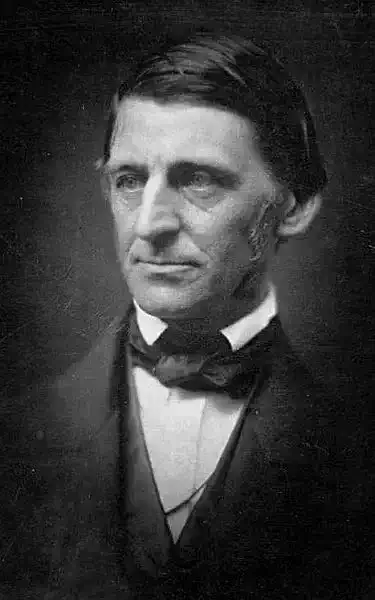
Ralph Waldo Emerson
Seashore
Say, Pilgrim, why so late and slow to come?
Am I not always here, thy summer home?
Is not my voice thy music, morn and eve?
My breath thy healthful climate in the heats,
My touch thy antidote, my bay thy bath?
Was ever building like my terraces?
Was ever couch magnificent as mine?
Lie on the warm rock-ledges, and there learn
A little hut suffices like a town.
I make your sculptured architecture vain,
Vain beside mine. I drive my wedges home,
And carve the coastwise mountain into caves.
Lo! here is Rome and Nineveh and Thebes,
Karnak and Pyramid and Giant's Stairs
Half piled or prostrate; and my newest slab
Older than all thy race.
Behold the Sea,
The opaline, the plentiful and strong,
Yet beautiful as is the rose in June,
Fresh as the trickling rainbow of July;
Sea full of food, the nourisher of kinds,
Purger of earth, and medicine of men;
Creating a sweet climate by my breath,
Washing out harms and griefs from memory,
And, in my mathematic ebb and flow,
Giving a hint of that which changes not.
Rich are the sea-gods:--who gives gifts but they?
They grope the sea for pearls, but more than pearls:
They pluck Force thence, and give it to the wise.
For every wave is wealth to Dædalus,
Wealth to the cunning artist who can work
This matchless strength. Where shall he find, O waves!
A load your Atlas shoulders cannot lift?
I with my hammer pounding evermore
The rocky coast, smite Andes into dust,
Strewing my bed, and, in another age,
Rebuild a continent of better men.
Then I unbar the doors: my paths lead out
The exodus of nations: I dispersed
Men to all shores that front the hoary main.
I too have arts and sorceries;
Illusion dwells forever with the wave.
I know what spells are laid. Leave me to deal
With credulous and imaginative man;
For, though he scoop my water in his palm,
A few rods off he deems it gems and clouds.
Planting strange fruits and sunshine on the shore,
I make some coast alluring, some lone isle,
To distant men, who must go there, or die.

Henry Van Dyke
Joyful, Joyful, We Adore Thee
Hearts unfold like flowers before Thee, hail Thee as the sun above.
Melt the clouds of sin and sadness, drive the dark of doubt away;
Giver of immortal gladness, fill us with the light of day.
All Thy works with joy surround Thee, earth and heav'n reflect Thy rays,
Stars and agnels sing around Thee, center of unbroken praise;
Field and forest, vale and moutain, flow'ry meadow, flashing sea,
Chanting birds and flowing fountain call us to rejoice in Thee.
Thou art givind and forgiving, ever blessing, ever blest,
Wellspring of the joy of living, ocean depth of happy rest.
Thou our Father, Christ our Brother, all who live in love are Thine;
Teach us how to love each other, lift us to the Joy Divine.
Mortals, join the mighty chorus which the morning stars began,
Father love is reigning o'er us, brother love binds man to man.
Ever singing, march we onward, victors in the midst of strife;
Joyful music lifts us sunward, in the triumph song of life.
Kabir
Where do you search me
Mein To Tere Paas Mein
Na Teerath Mein, Na Moorat Mein
Na Ekant Niwas Mein
Na Mandir Mein, Na Masjid Mein
Na Kabe Kailas Mein
Mein To Tere Paas Mein Bande
Mein To Tere Paas Mein
Na Mein Jap Mein, Na Mein Tap Mein
Na Mein Barat Upaas Mein
Na Mein Kiriya Karm Mein Rehta
Nahin Jog Sanyas Mein
Nahin Pran Mein Nahin Pind Mein
Na Brahmand Akas Mein
Na Mein Prakuti Prawar Gufa Mein
Nahin Swasan Ki Swans Mein
Khoji Hoye Turat Mil Jaoon
Ik Pal Ki Talas Mein
Kahet Kabir Suno Bhai Sadho
Mein To Hun Viswas Mein
English Translation:
Where do you search me?
I am with you
Not in pilgrimage, nor in icons
Neither in solitudes
Not in temples, nor in mosques
Neither in Kaba nor in Kailash
I am with you O man
I am with you
Not in prayers, nor in meditation
Neither in fasting
Not in yogic exercises
Neither in renunciation
Neither in the vital force nor in the body
Not even in the ethereal space
Neither in the womb of Nature
Not in the breath of the breath
Seek earnestly and discover
In but a moment of search
Says Kabir, Listen with care
Where your faith is, I am there.
Walt Whitman
Native Moments
libidinous joys only! Give me the drench of my passions! Give me life
coarse and rank! To-day, I go consort with nature's darlings--to-night too;
I am for those who believe in loose delights--I share the midnight orgies
of young men; I dance with the dancers, and drink with the drinkers; The
echoes ring with our indecent calls; I take for my love some prostitute--I
pick out some low person for my dearest friend, He shall be lawless, rude,
illiterate--he shall be one condemn'd by others for deeds done; I will play
a part no longer--Why should I exile myself from my companions? 10 O you
shunn'd persons! I at least do not shun you, I come forthwith in your
midst--I will be your poet, I will be more to you than to any of the rest.
Johann Wolfgang von Goethe
Celebrity
Stands Nepomucks in ev'ry state,
Of bronze, wood, painted, or of stone,
Some small as dolls, some giants grown;
Each passer must worship before Nepomuck,
Who to die on a bridge chanced to have the ill luck,
When once a man with head and ears
A saint in people's eyes appears,
Or has been sentenced piteously
Beneath the hangman's hand to die,
He's as a noted person prized,
In portrait is immortalized.
Engravings, woodcuts, are supplied,
And through the world spread far and wide.
Upon them all is seen his name,
And ev'ry one admits his claim;
Even the image of the Lord
Is not with greater zeal ador'd.
Strange fancy of the human race!
Half sinner frail, half child of grace
We see HERR WERTHER of the story
In all the pomp of woodcut glory.
His worth is first made duly known,
By having his sad features shown
At ev'ry fair the country round;
In ev'ry alehouse too they're found.
His stick is pointed by each dunce
"The ball would reach his brain at once!"
And each says, o'er his beer and bread:
"Thank Heav'n that 'tis not we are dead!"
Ella Wheeler Wilcox
Which are You?
Just two kinds of people, no more, I say.
Not the sinner and saint, for it's well understood,
The good are half bad, and the bad are half good.
Not the rich and the poor, for to rate a man's wealth,
You must first know the state of his conscience and health.
Not the humble and proud, for in life's little span,
Who puts on vain airs, is not counted a man.
Not the happy and sad, for the swift flying years
Bring each man his laughter and each man his tears.
No; the two kinds of people on earth I mean,
Are the people who lift, and the people who lean.
Wherever you go, you will find the earth's masses,
Are always divided in just these two classes.
And oddly enough, you will find too, I ween,
There's only one lifter to twenty who lean.
In which class are you? Are you easing the load,
Of overtaxed lifters, who toil down the road?
Or are you a leaner, who lets others share
Your portion of labor, and worry and care?
Carl Sandburg
Always The Mob
high rock and dropped off and down into the sea: a mob.
The sheep on the hills of Australia, blundering fourfooted in the sunset mist to the
dark, they go one way, they hunt one sleep, they find one pocket of grass for all.
Karnak? Pyramids? Sphinx paws tall as a coolie? Tombs kept for kings and sacred
cows? A mob.
Young roast pigs and naked dancing girls of Belshazzar, the room where a thousand sat
guzzling when a hand wrote: Mene, mene, tekel, upharsin? A mob.
The honeycomb of green that won the sun as the Hanging Gardens of Nineveh, flew to
its shape at the hands of a mob that followed the fingers of Nebuchadnezzar: a mob of
one hand and one plan.
Stones of a circle of hills at Athens, staircases of a mountain in Peru, scattered clans of
marble dragons in China: each a mob on the rim of a sunrise: hammers and wagons
have them now.
Locks and gates of Panama? The Union Pacific crossing deserts and tunneling
mountains? The Woolworth on land and the Titanic at sea? Lighthouses blinking a coast
line from Labrador to Key West? Pig iron bars piled on a barge whistling in a fog off
Sheboygan? A mob: hammers and wagons have them to-morrow.
The mob? A typhoon tearing loose an island from thousand-year moorings and
bastions, shooting a volcanic ash with a fire tongue that licks up cities and peoples.
Layers of worms eating rocks and forming loam and valley floors for potatoes, wheat,
watermelons.
The mob? A jag of lightning, a geyser, a gravel mass loosening…
The mob … kills or builds … the mob is Attila or Ghengis Khan, the mob is Napoleon,
Lincoln.
I am born in the mob—I die in the mob—the same goes for you—I don’t care who you
are.
I cross the sheets of fire in No Man’s land for you, my brother—I slip a steel tooth into
your throat, you my brother—I die for you and I kill you—It is a twisted and gnarled
thing, a crimson wool:
One more arch of stars,
In the night of our mist,
In the night of our tears.