
Memories and Recollections

Henry Wadsworth Longfellow
Tales Of A Wayside Inn : Part 3. Finale
These are the tales those merry guests
Told to each other, well or ill;
Like summer birds that lift their crests
Above the borders of their nests
And twitter, and again are still.
These are the tales, or new or old,
In idle moments idly told;
Flowers of the field with petals thin,
Lilies that neither toil nor spin,
And tufts of wayside weeds and gorse
Hung in the parlor of the inn
Beneath the sign of the Red Horse.
And still, reluctant to retire,
The friends sat talking by the fire
And watched the smouldering embers burn
To ashes, and flash up again
Into a momentary glow,
Lingering like them when forced to go,
And going when they would remain;
For on the morrow they must turn
Their faces homeward, and the pain
Of parting touched with its unrest
A tender nerve in every breast.
But sleep at last the victory won;
They must be stirring with the sun,
And drowsily good night they said,
And went still gossiping to bed,
And left the parlor wrapped in gloom,
The only live thing in the room
Was the old clock, that in its pace
Kept time with the revolving spheres
And constellations in their flight,
And struck with its uplifted mace
The dark, unconscious hours of night,
To senseless and unlistening ears.
Uprose the sun; and every guest,
Uprisen, was soon equipped and dressed
For journeying home and city-ward;
The old stage-coach was at the door,
With horses harnessed, long before
The sunshine reached the withered sward
Beneath the oaks, whose branches hoar
Murmured: ?Farewell forevermore.?
?Farewell!? the portly Landlord cried;
?Farewell!? the parting guests replied,
But little thought that nevermore
Their feet would pass that thershold o?er;
That nevermore together there
Would they assemble, free from care,
To hear the oaks? mysterious roar,
And breathe the wholesome country air.
Where are they now? What lands and skies
Paint pictures in their friendly eyes?
What hope deludes, what promise cheers,
What pleasant voices fill their ears?
Two are beyond the salt sea waves,
And three already in their graves.
Perchance the living still may look
Into the pages of this book,
And see the days of long ago
Floating and fleeting to and fro,
As in the well-remembered brook
They saw the inverted landscape gleam,
And their own faces like a dream
Look up upon them from below.
303

John Greenleaf Whittier
The Tent On The Beach
I would not sin, in this half-playful strain,-Too
light perhaps for serious years, though born
Of the enforced leisure of slow pain,-Against
the pure ideal which has drawn
My feet to follow its far-shining gleam.
A simple plot is mine: legends and runes
Of credulous days, old fancies that have lain
Silent, from boyhood taking voice again,
Warmed into life once more, even as the tunes
That, frozen in the fabled hunting-horn,
Thawed into sound:--a winter fireside dream
Of dawns and-sunsets by the summer sea,
Whose sands are traversed by a silent throng
Of voyagers from that vaster mystery
Of which it is an emblem;--and the dear
Memory of one who might have tuned my song
To sweeter music by her delicate ear.
When heats as of a tropic clime
Burned all our inland valleys through,
Three friends, the guests of summer time,
Pitched their white tent where sea-winds blew.
Behind them, marshes, seamed and crossed
With narrow creeks, and flower-embossed,
Stretched to the dark oak wood, whose leafy arms
Screened from the stormy East the pleasant inland farms.
At full of tide their bolder shore
Of sun-bleached sand the waters beat;
At ebb, a smooth and glistening floor
They touched with light, receding feet.
Northward a 'green bluff broke the chain
Of sand-hills; southward stretched a plain
Of salt grass, with a river winding down,
Sail-whitened, and beyond the steeples of the town,
Whence sometimes, when the wind was light
And dull the thunder of the beach,
They heard the bells of morn and night
Swing, miles away, their silver speech.
Above low scarp and turf-grown wall
They saw the fort-flag rise and fall;
And, the first star to signal twilight's hour,
The lamp-fire glimmer down from the tall light-house tower.
They rested there, escaped awhile
From cares that wear the life away,
To eat the lotus of the Nile
And drink the poppies of Cathay,-To
fling their loads of custom down,
Like drift-weed, on the sand-slopes brown,
And in the sea waves drown the restless pack
Of duties, claims, and needs that barked upon their track.
One, with his beard scarce silvered, bore
A ready credence in his looks,
A lettered magnate, lording o'er
An ever-widening realm of books.
In him brain-currents, near and far,
Converged as in a Leyden jar;
The old, dead authors thronged him round about,
And Elzevir's gray ghosts from leathern graves looked out.
He knew each living pundit well,
Could weigh the gifts of him or her,
And well the market value tell
Of poet and philosopher.
But if he lost, the scenes behind,
Somewhat of reverence vague and blind,
Finding the actors human at the best,
No readier lips than his the good he saw confessed.
His boyhood fancies not outgrown,
He loved himself the singer's art;
Tenderly, gently, by his own
He knew and judged an author's heart.
No Rhadamanthine brow of doom
Bowed the dazed pedant from his room;
And bards, whose name is legion, if denied,
Bore off alike intact their verses and their pride.
Pleasant it was to roam about
The lettered world as he had, done,
And see the lords of song without
Their singing robes and garlands on.
With Wordsworth paddle Rydal mere,
Taste rugged Elliott's home-brewed beer,
And with the ears of Rogers, at fourscore,
Hear Garrick's buskined tread and Walpole's wit once more.
And one there was, a dreamer born,
Who, with a mission to fulfil,
Had left the Muses' haunts to turn
The crank of an opinion-mill,
Making his rustic reed of song
A weapon in the war with wrong,
Yoking his fancy to the breaking-plough
That beam-deep turned the soil for truth to spring and grow.
Too quiet seemed the man to ride
The winged Hippogriff Reform;
Was his a voice from side to side
To pierce the tumult of the storm?
A silent, shy, peace-loving man,
He seemed no fiery partisan
To hold his way against the public frown,
The ban of Church and State, the fierce mob's hounding down.
For while he wrought with strenuous will
The work his hands had found to do,
He heard the fitful music still
Of winds that out of dream-land blew.
The din about him could not drown
What the strange voices whispered down;
Along his task-field weird processions swept,
The visionary pomp of stately phantoms stepped:
The common air was thick with dreams,-He
told them to the toiling crowd;
Such music as the woods and streams
Sang in his ear he sang aloud;
In still, shut bays, on windy capes,
He heard the call of beckoning shapes,
And, as the gray old shadows prompted him,
To homely moulds of rhyme he shaped their legends grim.
He rested now his weary hands,
And lightly moralized and laughed,
As, tracing on the shifting sands
A burlesque of his paper-craft,
He saw the careless waves o'errun
His words, as time before had done,
Each day's tide-water washing clean away,
Like letters from the sand, the work of yesterday.
And one, whose Arab face was tanned
By tropic sun and boreal frost,
So travelled there was scarce a land
Or people left him to exhaust,
In idling mood had from him hurled
The poor squeezed orange of the world,
And in the tent-shade, as beneath a palm,
Smoked, cross-legged like a Turk, in Oriental calm.
The very waves that washed the sand
Below him, he had seen before
Whitening the Scandinavian strand
And sultry Mauritanian shore.
From ice-rimmed isles, from summer seas
Palm-fringed, they bore him messages;
He heard the plaintive Nubian songs again,
And mule-bells tinkling down the mountain-paths of Spain.
His memory round the ransacked earth
On Puck's long girdle slid at ease;
And, instant, to the valley's girth
Of mountains, spice isles of the seas,
Faith flowered in minster stones, Art's guess
At truth and beauty, found access;
Yet loved the while, that free cosmopolite,
Old friends, old ways, and kept his boyhood's dreams in sight.
Untouched as yet by wealth and pride,
That virgin innocence of beach
No shingly monster, hundred-eyed,
Stared its gray sand-birds out of reach;
Unhoused, save where, at intervals,
The white tents showed their canvas walls,
Where brief sojourners, in the cool, soft air,
Forgot their inland heats, hard toil, and year-long care.
Sometimes along the wheel-deep sand
A one-horse wagon slowly crawled,
Deep laden with a youthful band,
Whose look some homestead old recalled;
Brother perchance, and sisters twain,
And one whose blue eyes told, more plain
Than the free language of her rosy lip,
Of the still dearer claim of love's relationship.
With cheeks of russet-orchard tint,
The light laugh of their native rills,
The perfume of their garden's mint,
The breezy freedom of the hills,
They bore, in unrestrained delight,
The motto of the Garter's knight,
Careless as if from every gazing thing
Hid by their innocence, as Gyges by his ring.
The clanging sea-fowl came and went,
The hunter's gun in the marshes rang;
At nightfall from a neighboring tent
A flute-voiced woman sweetly sang.
Loose-haired, barefooted, hand-in-hand,
Young girls went tripping down the sand;
And youths and maidens, sitting in the moon,
Dreamed o'er the old fond dream from which we wake too soon.
At times their fishing-lines they plied,
With an old Triton at the oar,
Salt as the sea-wind, tough and dried
As a lean cusk from Labrador.
Strange tales he told of wreck and storm,-Had
seen the sea-snake's awful form,
And heard the ghosts on Haley's Isle complain,
Speak him off shore, and beg a passage to old Spain!
And there, on breezy morns, they saw
The fishing-schooners outward run,
Their low-bent sails in tack and flaw
Turned white or dark to shade and sun.
Sometimes, in calms of closing day,
They watched the spectral mirage play,
Saw low, far islands looming tall and nigh,
And ships, with upturned keels, sail like a sea the sky.
Sometimes a cloud, with thunder black,
Stooped low upon the darkening main,
Piercing the waves along its track
With the slant javelins of rain.
And when west-wind and sunshine warm
Chased out to sea its wrecks of storm,
They saw the prismy hues in thin spray showers
Where the green buds of waves burst into white froth flowers.
And when along the line of shore
The mists crept upward chill and damp,
Stretched, careless, on their sandy floor
Beneath the flaring lantern lamp,
They talked of all things old and new,
Read, slept, and dreamed as idlers do;
And in the unquestioned freedom of the tent,
Body and o'er-taxed mind to healthful ease unbent.
Once, when the sunset splendors died,
And, trampling up the sloping sand,
In lines outreaching far and wide,
The white-waned billows swept to land,
Dim seen across the gathering shade,
A vast and ghostly cavalcade,
They sat around their lighted kerosene,
Hearing the deep bass roar their every pause between.
Then, urged thereto, the Editor
Within his full portfolio dipped,
Feigning excuse while seaching for
(With secret pride) his manuscript.
His pale face flushed from eye to beard,
With nervous cough his throat he cleared,
And, in a voice so tremulous it betrayed
The anxious fondness of an author's heart, he read:
302

Henry Van Dyke
To James Whitcomb Riley
On his "Book of Joyous Children"
Yours is a garden of old-fashioned flowers;
Joyous children delight to play there;
Weary men find rest in its bowers,
Watching the lingering light of day there.
Old-time tunes and young love's laughter
Ripple and run among the roses;
Memory's echoes, murmuring after,
Fill the dusk when the long day closes.
Simple songs with a cadence olden--
These you learned in the Forest of Arden:
Friendly flowers with hearts all golden--
These you borrowed from Eden's garden.
This is the reason why all men love you;
Truth to life is the charm of art:
Other poets may soar above you--
You keep close to the human heart.
301

Walter de la Mare
A Song of Enchantment
A song of Enchantment I sang me there,
In a green-green wood, by waters fair,
Just as the words came up to me
I sang it under the wild wood tree.
Widdershins turned I, singing it low,
Watching the wild birds come and go;
No cloud in the deep dark blue to be seen
Under the thick-thatched branches green.
Twilight came: silence came:
The planet of Evening's silver flame;
By darkening paths I wandered through
Thickets trembling with drops of dew.
But the music is lost and the words are gone
Of the song I sang as I sat alone,
Ages and ages have fallen on me -
On the wood and the pool and the elder tree.
301
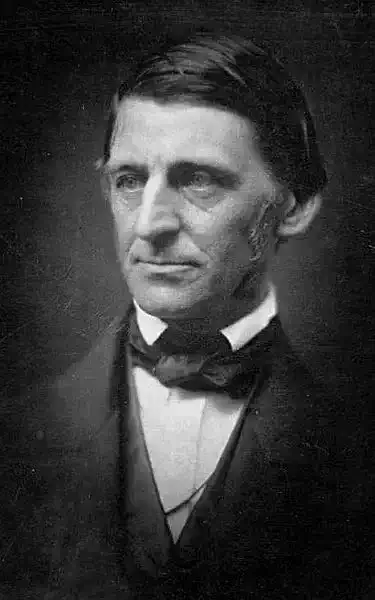
Ralph Waldo Emerson
The Forerunners
Long I followed happy guides,—
I could never reach their sides.
Their step is forth, and, ere the day,
Breaks up their leaguer, and away.
Keen my sense, my heart was young,
Right goodwill my sinews strung,
But no speed of mine avails
To hunt upon their shining trails.
On and away, their hasting feet
Make the morning proud and sweet.
Flowers they strew, I catch the scent,
Or tone of silver instrument
Leaves on the wind melodious trace,
Yet I could never see their face.
On eastern hills I see their smokes
Mixed with mist by distant lochs.
I meet many travellers
Who the road had surely kept,—
They saw not my fine revellers,—
These had crossed them while they slept.
Some had heard their fair report
In the country or the court.
Fleetest couriers alive
Never yet could once arrive,
As they went or they returned,
At the house where these sojourned.
Sometimes their strong speed they slacken,
Though they are not overtaken:
In sleep, their jubilant troop is near,
I tuneful voices overhear,
It may be in wood or waste,—
At unawares 'tis come and passed.
Their near camp my spirit knows
By signs gracious as rainbows.
I thenceforward and long after
Listen for their harplike laughter,
And carry in my heart for days
Peace that hallows rudest ways.—
299

James Whitcomb Riley
The Ancient Printman
'O Printerman of sallow face,
And look of absent guile,
Is it the 'copy' on your 'case'
That causes you to smile?
Or is it some old treasure scrap
You cull from Memory's file?
'I fain would guess its mystery--
For often I can trace
A fellow dreamer's history
Whene'er it haunts the face;
Your fancy's running riot
In a retrospective race!
'Ah, Printerman, you're straying
Afar from 'stick' and type--
Your heart has 'gone a-maying,'
And you taste old kisses, ripe
Again on lips that pucker
At your old asthmatic pipe!
'You are dreaming of old pleasures
That have faded from your view;
And the music-burdened measures
Of the laughs you listen to
Are now but angel-echoes--
O, have I spoken true?'
The ancient Printer hinted
With a motion full of grace
To where the words were printed
On a card above his 'case,'-'
I am deaf and dumb!' I left him
With a smile upon his face.
299
Walter de la Mare
When the Rose is Faded
When the rose is faded,
Memory may still dwell on
Her beauty shadowed,
And the sweet smell gone.
That vanishing loveliness,
That burdening breath,
No bond of life hath then,
Nor grief of death.
'Tis the immortal thought
Whose passion still
Makes the changing
The unchangeable.
Oh, thus thy beauty,
Loveliest on earth to me,
Dark with no sorrow, shines
And burns, with thee.
300

Mirza Ghalib
He was, when it was aught
He was, when it was aught
He would still be, even if it might have been naught
Drowned I am in my ego
What would have happened if 'I' was not
Laden with distraught and feeling apathetic
do I have to worry about the head being severed
If it did not severe from the body
The head would have simply reposed on the lap
It has been ages that 'Ghalib' died
Yet the memories linger on
His saying this on every occasion
If it was 'like this' then what it would be!
299

Carl Sandburg
Troths
Yellow dust on a bumble
bee's wing,
Grey lights in a woman's
asking eyes,
Red ruins in the changing
sunset embers:
I take you and pile high
the memories.
Death will break her claws
on some I keep.
bee's wing,
Grey lights in a woman's
asking eyes,
Red ruins in the changing
sunset embers:
I take you and pile high
the memories.
Death will break her claws
on some I keep.
298
James Whitcomb Riley
Find The Favorite
Our three cats is Maltese cats,
An' they's two that's white,--
An' bofe of 'em's _deef_--an' that's
'Cause their _eyes_ ain't right.--
Uncle say that _Huxley_ say
Eyes of _white_ Maltese--
When they don't match thataway-They're
deef as you please!
_Girls, they_ like our white cats best,
'Cause they're white as snow,
Yes, an' look the stylishest--
But they're deef, you know!
They don't know their names, an' don't
Hear us when we call
'Come in, Nick an' Finn!'--they won't
Come fer us at all!
But our _other_ cat, _he_ knows
Mister Nick an' Finn,-Mowg's
_his_ name,--an' when _he_ goes
Fer 'em, they come in!
Mowgli's _all_ his name--the same
Me an' Muvver took
Like the Wolf-Child's _other_ name,
In 'The Jungul Book.'
I bet Mowg's the smartest cat
In the world!--_He's_ not
_White_, but mousy-plush, with that
Smoky gloss he's got!
All's got little bells to ring,
Round their neck; but none
Only Mowg _knows_ anything-He's
the only one!
I ist 'spect sometimes he hate
White cats' stupid ways:--
He won't hardly 'sociate
With 'em, lots o' days!
Mowg wants in where _we_ air,--well,
He'll ist take his paw
An' ist ring an' ring his bell
There till me er Ma
Er _some_body lets him in
Nen an' shuts the door.-
An', when he wants out ag'in,
Nen he'll ring some more.
Ort to hear our Katy tell!
She sleeps 'way up-stairs;
An' last night she hear Mowg's bell
Ringin' round _some_wheres...
Trees grows by her winder.--So,
She lean out an' see
Mowg up there, 'way out, you know,
In the clingstone-tree;-
An'-sir! he ist _hint_ an' _ring_,--
Till she ketch an' plat
Them limbs;--nen he crawl an' spring
In where Katy's at!
299
Carl Sandburg
Follies
Shaken,
The blossoms of lilac,
And shattered,
The atoms of purple.
Green dip the leaves,
Darker the bark,
Longer the shadows.
Sheer lines of poplar
Shimmer with masses of silver
And down in a garden old with years
And broken walls of ruin and story,
Roses rise with red rain-memories.
May!
In the open world
The sun comes and finds your face,
Remembering all.
299

Emily Dickinson
He forgot—and I—remembered
He forgot—and I—remembered—
'Twas an everyday affair—
Long ago as Christ and Peter—
"Warmed them" at the "Temple fire."
"Thou wert with him"—quoth "the Damsel"?
"No"—said Peter, 'twasn't me—
Jesus merely "looked" at Peter—
Could I do aught else—to Thee?
'Twas an everyday affair—
Long ago as Christ and Peter—
"Warmed them" at the "Temple fire."
"Thou wert with him"—quoth "the Damsel"?
"No"—said Peter, 'twasn't me—
Jesus merely "looked" at Peter—
Could I do aught else—to Thee?
296
John Greenleaf Whittier
At Eventide
Poor and inadequate the shadow-play
Of gain and loss, of waking and of dream,
Against life's solemn background needs must seem
At this late hour. Yet, not unthankfully,
I call to mind the fountains by the way,
The breath of flowers, the bird-song on the spray,
Dear friends, sweet human loves, the joy of giving
And of receiving, the great boon of living
In grand historic years when Liberty
Had need of word and work, quick sympathies
For all who fail and suffer, song's relief,
Nature's uncloying loveliness; and chief,
The kind restraining hand of Providence,
The inward witness, the assuring sense
Of an Eternal Good which overlies
The sorrow of the world, Love which outlives
All sin and wrong, Compassion which forgives
To the uttermost, and Justice whose clear eyes
Through lapse and failure look to the intent,
And judge our frailty by the life we meant.
298
James Whitcomb Riley
Up And Down Old Brandywine
Up and down old Brandywine,
In the days 'at's past and gone--
With a dad-burn hook-and line
And a saplin' pole--swawn!
I've had more fun, to the square
Inch, than ever ANYwhere!
Heaven to come can't discount MINE
Up and down old Brandywine!
Hain't no sense in WISHIN'--yit
Wisht to goodness I COULD jes
'Gee' the blame' world round and git
Back to that old happiness!--
Kindo' drive back in the shade
'The old Covered Bridge' there laid
'Crosst the crick, and sorto' soak
My soul over, hub and spoke!
Honest, now!--it hain't no DREAM
'At I'm wantin',--but THE FAC'S
As they wuz; the same old stream,
And the same old times, i jacks!--
Gim me back my bare feet--and
Stonebruise too!--And scratched and tanned!
And let hottest dog-days shine
Up and down old Brandywine!
In and on betwixt the trees
'Long the banks, pour down yer noon,
Kindo' curdled with the breeze
And the yallerhammer's tune;
And the smokin', chokin' dust
O' the turnpike at its wusst--
SATURD'YS, say, when it seems
Road's jes jammed with country teams!--
Whilse the old town, fur away
'Crosst the hazy pastur'-land,
Dozed-like in the heat o' day
Peaceful' as a hired hand.
Jolt the gravel th'ough the floor
O' the old bridge!--grind and roar
With yer blame percession-line--
Up and down old Brandywine!
Souse me and my new straw-hat
Off the foot-log!--what _I_ care?--
Fist shoved in the crown o' that--
Like the old Clown ust to wear.
Wouldn't swop it fer a' old
Gin-u-wine raal crown o' gold!--
Keep yer KING ef you'll gim me
Jes the boy I ust to be!
Spill my fishin'-worms! er steal
My best 'goggle-eye!'--but you
Can't lay hands on joys I feel
Nibblin' like they ust to do!
So, in memory, to-day
Same old ripple lips away
At my 'cork' and saggin' line,
Up and down old Bradywine!
There the logs is, round the hill,
Where 'Old Irvin' ust to lift
Out sunfish from daylight till
Dewfall--'fore he'd leave 'The Drift'
And give US a chance--and then
Kindo' fish back home again,
Ketchin' 'em jes left and right
Where WE hadn't got 'a bite!'
Er, 'way windin' out and in,--
Old path th'ough the iurnweeds
And dog-fennel to yer chin--
Then come suddent, th'ough the reeds
And cat-tails, smack into where
Them--air woods--hogs ust to scare
Us clean 'crosst the County-line,
Up and down old Brandywine!
But the dim roar o' the dam
It 'ud coax us furder still
To'rds the old race, slow and ca'm,
Slidin' on to Huston's mill--
Where, I'spect, 'The Freeport crowd'
Never WARMED to us er 'lowed
We wuz quite so overly
Welcome as we aimed to be.
Still it 'peared like ever'thing--
Fur away from home as THERE--
Had more RELISH-like, i jing!--
Fish in stream, er bird in air!
O them rich old bottom-lands,
Past where Cowden's Schoolhouse stands!
Wortermelons--MASTER-MINE!
Up and down old Brandywine!
And sich pop-paws!--Lumps o' raw
Gold and green,--jes oozy th'ough
With ripe yaller--like you've saw
Custard-pie with no crust to:
And jes GORGES o' wild plums,
Till a feller'd suck his thumbs
Clean up to his elbows! MY!--
ME SOME MORE ER LEM ME DIE!
Up and down old Brandywine! ...
Stripe me with pokeberry-juice!--
Flick me with a pizenvine
And yell 'Yip!' and lem me loose!
--Old now as I then wuz young,
'F I could sing as I HAVE sung,
Song 'ud surely ring DEE-VINE
Up and down old Brandywine!
296
James Whitcomb Riley
The Orchard Lands Of Long Ago
The orchard lands of Long Ago!
O drowsy winds, awake, and blow
The snowy blossoms back to me,
And all the buds that used to be!
Blow back along the grassy ways
Of truant feet, and lift the haze
Of happy summer from the trees
That trail their tresses in the seas
Of grain that float and overflow
The orchard lands of Long Ago!
Blow back the melody that slips
In lazy laughter from the lips
That marvel much if any kiss
Is sweeter than the apple's is.
Blow back the twitter of the birds--
The lisp, the titter, and the words
Of merriment that found the shine
Of summer-time a glorious wine
That drenched the leaves that loved it so,
In orchard lands of Long Ago!
O memory! alight and sing
Where rosy-bellied pippins cling,
And golden russets glint and gleam,
As, in the old Arabian dream,
The fruits of that enchanted tree
The glad Aladdin robbed for me!
And, drowsy winds, awake and fan
My blood as when it overran
A heart ripe as the apples grow
In orchard lands of Long Ago!
298

William Butler Yeats
Memory
ONE had a lovely face,
And two or three had charm,
But charm and face were in vain
Because the mountain grass
Cannot but keep the form
Where the mountain hare has lain.
And two or three had charm,
But charm and face were in vain
Because the mountain grass
Cannot but keep the form
Where the mountain hare has lain.
298
Henry Wadsworth Longfellow
Tales Of A Wayside Inn : Part 3. Interlude VI.
'Now that is after my own heart,'
The Poet cried; 'one understands
Your swarthy hero Scanderbeg,
Gauntlet on hand and boot on leg,
And skilled in every warlike art,
Riding through his Albanian lands,
And following the auspicious star
That shone for him o'er Ak-Hissar.'
The Theologian added here
His word of praise not less sincere,
Although he ended with a jibe;
'The hero of romance and song
Was born,' he said, 'to right the wrong;
And I approve; but all the same
That bit of treason with the Scribe
Adds nothing to your hero's fame.'
The Student praised the good old times,
And liked the canter of the rhymes,
That had a hoofbeat in their sound;
But longed some further word to hear
Of the old chronicler Ben Meir,
And where his volume might he found.
The tall Musician walked the room
With folded arms and gleaming eyes,
As if he saw the Vikings rise,
Gigantic shadows in the gloom;
And much he talked of their emprise
And meteors seen in Northern skies,
And Heimdal's horn, and day of doom.
But the Sicilian laughed again;
'This is the time to laugh,' he said,
For the whole story he well knew
Was an invention of the Jew,
Spun from the cobwebs in his brain,
And of the same bright scarlet thread
As was the Tale of Kambalu.
Only the Landlord spake no word;
'T was doubtful whether he had heard
The tale at all, so full of care
Was he of his impending fate,
That, like the sword of Damocles,
Above his head hung blank and bare,
Suspended by a single hair,
So that he could not sit at ease,
But sighed and looked disconsolate,
And shifted restless in his chair,
Revolving how he might evade
The blow of the descending blade.
The Student came to his relief
By saying in his easy way
To the Musician: 'Calm your grief,
My fair Apollo of the North,
Balder the Beautiful and so forth;
Although your magic lyre or lute
With broken strings is lying mute,
Still you can tell some doleful tale
Of shipwreck in a midnight gale,
Or something of the kind to suit
The mood that we are in to-night
For what is marvellous and strange;
So give your nimble fancy range,
And we will follow in its flight.'
But the Musician shook his head;
'No tale I tell to-night,' he said,
'While my poor instrument lies there,
Even as a child with vacant stare
Lies in its little coffin dead.'
Yet, being urged, he said at last:
'There comes to me out of the Past
A voice, whose tones are sweet and wild,
Singing a song almost divine,
And with a tear in every line;
An ancient ballad, that my nurse
Sang to me when I was a child,
In accents tender as the verse;
And sometimes wept, and sometimes smiled
While singing it, to see arise
The look of wonder in my eyes,
And feel my heart with terror beat.
This simple ballad I retain
Clearly imprinted on my brain,
And as a tale will now repeat.'
298

D.H. Lawrence
Piano
Softly, in the dusk, a woman is singing to me;
Taking me back down the vista of years, till I see
A child sitting under the piano, in the boom of the tingling strings
And pressing the small, poised feet of a mother who smiles as she sings.
In spite of myself, the insidious mastery of song
Betrays me back, till the heart of me weeps to belong
To the old Sunday evenings at home, with winter outside
And hymns in the cosy parlour, the tinkling piano our guide.
So now it is vain for the singer to burst into clamour
With the great black piano appassionato. The glamour
Of childish days is upon me, my manhood is cast
Down in the flood of remembrance, I weep like a child for the past.
294

Henry Lawson
Old North Sydney
They're shifting old North Sydney—
Perhaps ’tis just as well—
They’re carting off the houses
Where the old folks used to dwell.
Where only ghosts inhabit
They lay the old shops low;
But the Spirit of North Sydney,
It vanished long ago.
The Spirit of North Sydney,
The good old time and style,
It camped, maybe, at Crow’s Nest,
But only for a while.
It left about the season,
Or at the time, perhaps,
When old Inspector Cotter
Transferred his jokes and traps.
A brand new crowd is thronging
The brand new streets aglow
Where the Spirit of North Sydney
Would gossip long ago.
They will not know to-morrow—
Tho’ ’twere but yesterday—
Exactly how McMahon’s Point
And its ferry used to lay.
The good old friendly spirit
Its sorrows would unfold,
When householders were neighbours
And shop-keeping was old;
But now we’re busy strangers,
Our feelings we restrain—
The Spirit of North Sydney
Shall never come again!
295
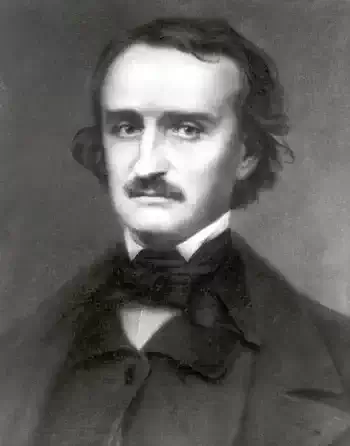
Edgar Allan Poe
Tamerlane
Kind solace in a dying hour!
Such, father, is not (now) my theme
I will not madly deem that power
Of Earth may shrive me of the sin
Unearthly pride hath revell'd in
I have no time to dote or dream:
You call it hope- that fire of fire!
It is but agony of desire:
If I can hope- Oh God! I can
Its fount is holier- more divine
I
would not call thee fool, old man,
But such is not a gift of thine.
Know thou the secret of a spirit
Bow'd from its wild pride into shame.
O yearning heart! I did inherit
Thy withering portion with the fame,
The searing glory which hath shone
Amid the jewels of my throne,
Halo of Hell! and with a pain
Not Hell shall make me fear againO
craving heart, for the lost flowers
And sunshine of my summer hours!
The undying voice of that dead time,
With its interminable chime,
Rings, in the spirit of a spell,
Upon thy emptiness- a knell.
I have not always been as now:
The fever'd diadem on my brow
I claim'd and won usurpingly
Hath not the same fierce heirdom given
Rome to the Caesar- this to me?
The heritage of a kingly mind,
And a proud spirit which hath striven
Triumphantly with human kind.
On mountain soil I first drew life:
The mists of the Taglay have shed
Nightly their dews upon my head,
And, I believe, the winged strife
And tumult of the headlong air
Have nestled in my very hair.
So late from Heaven- that dew- it fell
(Mid dreams of an unholy night)
Upon me with the touch of Hell,
While the red flashing of the light
From clouds that hung, like banners, o'er,
Appeared to my half-closing eye
The pageantry of monarchy,
And the deep trumpet-thunder's roar
Came hurriedly upon me, telling
Of human battle, where my voice,
My own voice, silly child!- was swelling
(O! how my spirit would rejoice,
And leap within me at the cry)
The battle-cry of Victory!
The rain came down upon my head
Unshelter'd- and the heavy wind
Rendered me mad and deaf and blind.
It was but man, I thought, who shed
Laurels upon me: and the rush
The
torrent of the chilly air
Gurgled within my ear the crush
Of empires- with the captive's prayer
The
hum of suitors- and the tone
Of flattery 'round a sovereign's throne.
My passions, from that hapless hour,
Usurp'd a tyranny which men
Have deem'd, since I have reach'd to power,
My innate nature- be it so:
But father, there liv'd one who, then,
Then- in my boyhood- when their fire
Burn'd with a still intenser glow,
(For passion must, with youth, expire)
E'en then who knew this iron heart
In woman's weakness had a part.
I have no words- alas!- to tell
The loveliness of loving well!
Nor would I now attempt to trace
The more than beauty of a face
Whose lineaments, upon my mind,
Are- shadows on th' unstable wind:
Thus I remember having dwelt
Some page of early lore upon,
With loitering eye, till I have felt
The letters- with their meaning- melt
To fantasies- with none.
O, she was worthy of all love!
Love- as in infancy was mine'
Twas such as angel minds above
Might envy; her young heart the shrine
On which my every hope and thought
Were incense- then a goodly gift,
For they were childish and upright
Pure-
as her young example taught:
Why did I leave it, and, adrift,
Trust to the fire within, for light?
We grew in age- and love- together,
Roaming the forest, and the wild;
My breast her shield in wintry weather
And when the friendly sunshine smil'd,
And she would mark the opening skies,
I saw no Heaven- but in her eyes.
Young Love's first lesson is- the heart:
For 'mid that sunshine, and those smiles,
When, from our little cares apart,
And laughing at her girlish wiles,
I'd throw me on her throbbing breast,
And pour my spirit out in tears
There
was no need to speak the rest
No need to quiet any fears
Of her- who ask'd no reason why,
But turn'd on me her quiet eye!
Yet more than worthy of the love
My spirit struggled with, and strove,
When, on the mountain peak, alone,
Ambition lent it a new tone
I
had no being- but in thee:
The world, and all it did contain
In the earth- the air- the sea
Its
joy- its little lot of pain
That was new pleasure- the ideal,
Dim vanities of dreams by night
And dimmer nothings which were real(
Shadows- and a more shadowy light!)
Parted upon their misty wings,
And, so, confusedly, became
Thine image, and- a name- a name!
Two separate- yet most intimate things.
I was ambitious- have you known
The passion, father? You have not:
A cottager, I mark'd a throne
Of half the world as all my own,
And murmur'd at such lowly lot
But,
just like any other dream,
Upon the vapour of the dew
My own had past, did not the beam
Of beauty which did while it thro'
The minute- the hour- the day- oppress
My mind with double loveliness.
We walk'd together on the crown
Of a high mountain which look'd down
Afar from its proud natural towers
Of rock and forest, on the hills
The dwindled hills! begirt with bowers,
And shouting with a thousand rills.
I spoke to her of power and pride,
But mystically- in such guise
That she might deem it nought beside
The moment's converse; in her eyes
I read, perhaps too carelessly
A
mingled feeling with my own
The
flush on her bright cheek, to me
Seem'd to become a queenly throne
Too well that I should let it be
Light in the wilderness alone.
I wrapp'd myself in grandeur then,
And donn'd a visionary crown
Yet
it was not that Fantasy
Had thrown her mantle over me
But that, among the rabble- men,
Lion ambition is chained down
And
crouches to a keeper's hand
Not
so in deserts where the grand
The
wild- the terrible conspire
With their own breath to fan his fire.
Look 'round thee now on Samarcand!
Is not she queen of Earth? her pride
Above all cities? in her hand
Their destinies? in all beside
Of glory which the world hath known
Stands she not nobly and alone?
Falling- her veriest stepping-stone
Shall form the pedestal of a throne
And
who her sovereign? Timour- he
Whom the astonished people saw
Striding o'er empires haughtily
A diadem'd outlaw!
O, human love! thou spirit given
On Earth, of all we hope in Heaven!
Which fall'st into the soul like rain
Upon the Siroc-wither'd plain,
And, failing in thy power to bless,
But leav'st the heart a wilderness!
Idea! which bindest life around
With music of so strange a sound,
And beauty of so wild a birth
Farewell!
for I have won the Earth.
When Hope, the eagle that tower'd, could see
No cliff beyond him in the sky,
His pinions were bent droopingly
And homeward turn'd his soften'd eye.
'Twas sunset: when the sun will part
There comes a sullenness of heart
To him who still would look upon
The glory of the summer sun.
That soul will hate the ev'ning mist,
So often lovely, and will list
To the sound of the coming darkness (known
To those whose spirits hearken) as one
Who, in a dream of night, would fly
But cannot from a danger nigh.
What tho' the moon- the white moon
Shed all the splendour of her noon,
Her smile is chilly, and her beam,
In that time of dreariness, will seem
(So like you gather in your breath)
A portrait taken after death.
And boyhood is a summer sun
Whose waning is the dreariest one
For
all we live to know is known,
And all we seek to keep hath flown
Let
life, then, as the day-flower, fall
With the noon-day beauty- which is all.
I reach'd my home- my home no more
For all had flown who made it so.
I pass'd from out its mossy door,
And, tho' my tread was soft and low,
A voice came from the threshold stone
Of one whom I had earlier known
O, I defy thee, Hell, to show
On beds of fire that burn below,
A humbler heart- a deeper woe.
Father, I firmly do believe
I
know- for Death, who comes for me
From regions of the blest afar,
Where there is nothing to deceive,
Hath left his iron gate ajar,
And rays of truth you cannot see
Are flashing thro' Eternity
I do believe that Eblis hath
A snare in every human path
Else
how, when in the holy grove
I wandered of the idol, Love,
Who daily scents his snowy wings
With incense of burnt offerings
From the most unpolluted things,
Whose pleasant bowers are yet so riven
Above with trellis'd rays from Heaven,
No mote may shun- no tiniest fly
The lightning of his eagle eye
How
was it that Ambition crept,
Unseen, amid the revels there,
Till growing bold, he laughed and leapt
In the tangles of Love's very hair?
294
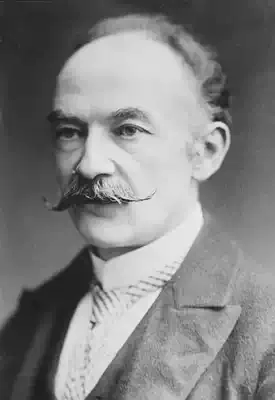
Thomas Hardy
A Spot
In years defaced and lost,
Two sat here, transport-tossed,
Lit by a living love
The wilted world knew nothing of:
Scared momently
By gaingivings,
Then hoping things
That could not be.
Of love and us no trace
Abides upon the place;
The sun and shadows wheel,
Season and season sereward steal;
Foul days and fair
Here, too, prevail,
And gust and gale
As everywhere.
But lonely shepherd souls
Who bask amid these knolls
May catch a faery sound
On sleepy noontides from the ground:
"O not again
Till Earth outwears
Shall love like theirs
Suffuse this glen!"
294
Henry Wadsworth Longfellow
The Haunted Chamber. (Birds Of Passage. Flight The Third)
Each heart has its haunted chamber,
Where the silent moonlight falls!
On the floor are mysterious footsteps,
There are whispers along the walls!
And mine at times is haunted
By phantoms of the Past
As motionless as shadows
By the silent moonlight cast.
A form sits by the window,
That is not seen by day,
For as soon as the dawn approaches
It vanishes away.
It sits there in the moonlight
Itself as pale and still,
And points with its airy finger
Across the window-sill.
Without before the window,
There stands a gloomy pine,
Whose boughs wave upward and downward
As wave these thoughts of mine.
And underneath its branches
Is the grave of a little child,
Who died upon life's threshold,
And never wept nor smiled.
What are ye, O pallid phantoms!
That haunt my troubled brain?
That vanish when day approaches,
And at night return again?
What are ye, O pallid phantoms!
But the statues without breath,
That stand on the bridge overarching
The silent river of death?
293
James Whitcomb Riley
To Annie
When the lids of dusk are falling
O'er the dreamy eyes of day,
And the whippoorwills are calling,
And the lesson laid away,--
May Mem'ry soft and tender
As the prelude of the night,
Bend over you and render
As tranquil a delight.
O'er the dreamy eyes of day,
And the whippoorwills are calling,
And the lesson laid away,--
May Mem'ry soft and tender
As the prelude of the night,
Bend over you and render
As tranquil a delight.
292
James Whitcomb Riley
Jack-In-The-Box
_(Grandfather, musing.)_
In childish days! O memory,
You bring such curious things to me!--
Laughs to the lip--tears to the eye,
In looking on the gifts that lie
Like broken playthings scattered o'er
Imagination's nursery floor!
Did these old hands once click the key
That let 'Jack's' box-lid upward fly,
And that blear-eyed, fur-whiskered elf
Leap, as though frightened at himself,
And quiveringly lean and stare
At me, his jailer, laughing there?
A child then! Now--I only know
They call me very old; and so
They will not let me have my way,--
But uselessly I sit all day
Here by the chimney-jamb, and poke
The lazy fire, and smoke and smoke,
And watch the wreaths swoop up the flue,
And chuckle--ay, I often do--
Seeing again, all vividly,
Jack-in-the-box leap, as in glee
To see how much he looks like me!
... They talk. I can't hear what they say--
But I am glad, clean through and through
Sometimes, in fancying that they
Are saying, 'Sweet, that fancy strays
In age back to our childish days!'
292