
Death and Mourning
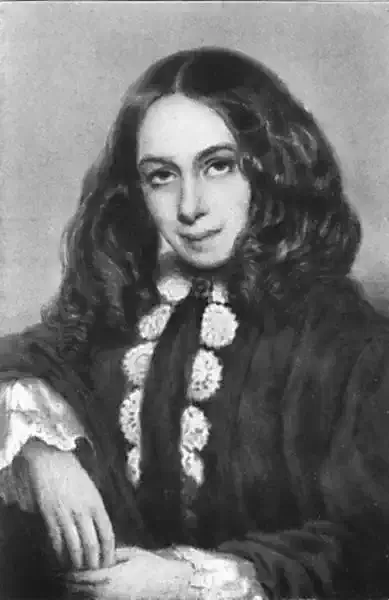
Elizabeth Barrett Browning
XXII
When our two souls stand up erect and strong,
Face to face, silent, drawing nigh and nigher,
Until the lengthening wings break into fire
At either curved point,--what bitter wrong
Can the earth do to us, that we should not long
Be here contented ? Think. In mounting higher,
The angels would press on us and aspire
To drop some golden orb of perfect song
Into our deep, dear silence. Let us stay
Rather on earth, Beloved,--where the unfit
Contrarious moods of men recoil away
And isolate pure spirits, and permit
A place to stand and love in for a day,
With darkness and the death-hour rounding it.
Read more →
1,939
8
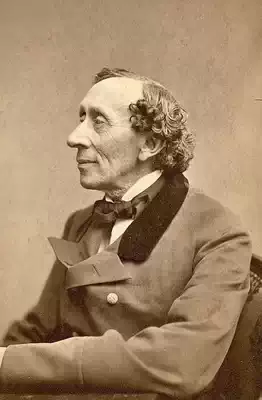
Hans Christian Andersen
The Dying Child
Mother, I'm tired, and I would fain be sleeping;
Let me repose upon thy bosom sick;
But promise me that thou wilt leave off weeping,
Because thy tears fall hot upon my cheek.
Here it is cold: the tempest raveth madly;
But in my dreams all is so wondrous bright;
I see the angel-children smiling gladly,
When from my weary eyes I shut out light.
Mother, one stands beside me now! and, listen!
Dost thou not hear the music's sweet accord?
See how his white wings beautifully glisten?
Surely those wings were given him by the Lord!
Green, gold, and red, are floating all around me;
They are the flowers the angel scattereth.
Should I have also wings while life has bound me?
Or, mother, are they given alone in death?
Why dost thou clasp me as if I were going?
Why dost thou press thy cheek so unto mine?
Thy cheek is hot, and yet thy tears are flowing!
I will, dear mother, will be always thine!
Do not sigh thus - it marreth my reposing;
But if thou weep, then I must weep with thee!
Ah, I am tired - my weary eyes are closing -
Look, mother, look! the angel kisseth me!
Read more →
729
1
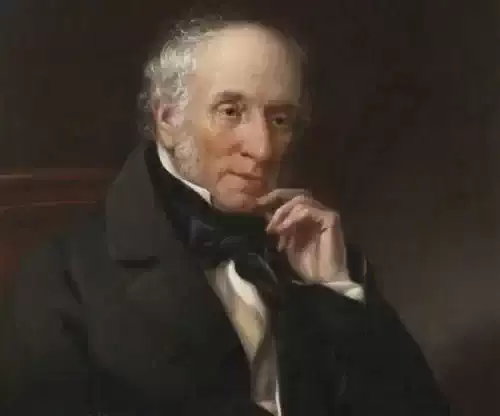
William Wordsworth
Lucy iv
THREE years she grew in sun and shower;
Then Nature said, 'A lovelier flower
On earth was never sown;
This child I to myself will take;
She shall be mine, and I will make
A lady of my own.
"Myself will to my darling be
Both law and impulse: and with me
The girl, in rock and plain,
In earth and heaven, in glade and bower,
Shall feel an overseeing power
To kindle or restrain.
'She shall be sportive as the fawn
That wild with glee across the lawn
Or up the mountain springs;
And hers shall be the breathing balm,
And hers the silence and the calm
Of mute insensate things.
'The floating clouds their state shall lend
To her; for her the willow bend;
Nor shall she fail to see
Even in the motions of the storm
Grace that shall mould the maiden's form
By silent sympathy.
'The stars of midnight shall be dear
To her; and she shall lean her ear
In many a secret place
Where rivulets dance their wayward round,
And beauty born of murmuring sound
Shall pass into her face.
'And vital feelings of delight
Shall rear her form to stately height,
Her virgin bosom swell;
Such thoughts to Lucy I will give
While she and I together live
Here in this happy dell.'
Thus Nature spake--The work was done--
How soon my Lucy's race was run!
She died, and left to me
This heath, this calm, and quiet scene;
The memory of what has been,
And never more will be.
Read more →
1,322
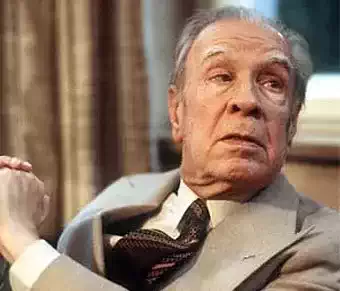
Jorge Luis Borges
Susana Soca
With lingering love she gazed at the dispersed
Colors of dusk. It pleased her utterly
To lose herself in the complex melody
Or in the cunous life to be found in verse.
lt was not the primal red but rather grays
That spun the fine thread of her destiny,
For the nicest distinctions and all spent
In waverings, ambiguities, delays.
Lacking the nerve to tread this treacherous
Labyrinth, she looked in on, whom without,
The shapes, the turbulence, the striving rout,
(Like the other lady of the looking glass.)
The gods that dwell too far away for prayer
Abandoned her to the final tiger, Fire.
Read more →
1,274
Elizabeth Barrett Browning
Sonnet III
Unlike are we, unlike, O princely Heart !
Unlike our uses and our destinies.
Our ministering two angels look surprise
On one another, as they strike athwart
Their wings in passing. Thou, bethink thee, art
A guest for queens to social pageantries,
With gages from a hundred brighter eyes
Than tears even can make mine, to play thy part
Of chief musician. What hast thou to do
With looking from the lattice-lights at me,
A poor, tired, wandering singer, singing through
The dark, and leaning up a cypress tree ?
The chrism is on thine head,--on mine, the dew,--
And Death must dig the level where these agree.
Read more →
1,396
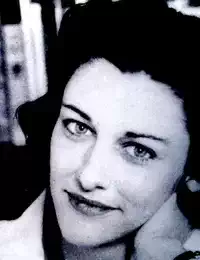
Anne Sexton
Sylvias Death
O Sylvia, Sylvia,
with a dead box of stones and spoons,
with two children, two meteors
wandering loose in a tiny playroom,
with your mouth into the sheet,
into the roofbeam, into the dumb prayer,
(Sylvia, Sylvia
where did you go
after you wrote me
from Devonshire
about raising potatoes
and keeping bees?)
what did you stand by,
just how did you lie down into?
Thief --
how did you crawl into,
crawl down alone
into the death I wanted so badly and for so long,
the death we said we both outgrew,
the one we wore on our skinny breasts,
the one we talked of so often each time
we downed three extra dry martinis in Boston,
the death that talked of analysts and cures,
the death that talked like brides with plots,
the death we drank to,
the motives and the quiet deed?
(In Boston
the dying
ride in cabs,
yes death again,
that ride home
with our boy.)
O Sylvia, I remember the sleepy drummer
who beat on our eyes with an old story,
how we wanted to let him come
like a sadist or a New York fairy
to do his job,
a necessity, a window in a wall or a crib,
and since that time he waited
under our heart, our cupboard,
and I see now that we store him up
year after year, old suicides
and I know at the news of your death
a terrible taste for it, like salt,
(And me,
me too.
And now, Sylvia,
you again
with death again,
that ride home
with our boy.)
And I say only
with my arms stretched out into that stone place,
what is your death
but an old belonging,
a mole that fell out
of one of your poems?
(O friend,
while the moons bad,
and the kings gone,
and the queens at her wits end
the bar fly ought to sing!)
O tiny mother,
you too!
O funny duchess!
O blonde thing!
February 17, 1963
Read more →
1,382
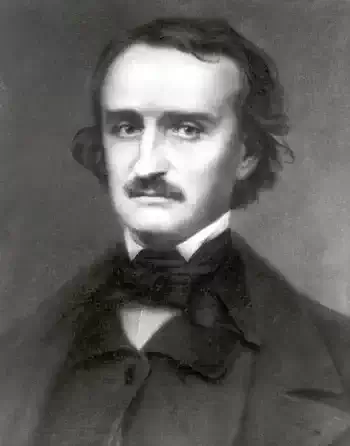
Edgar Allan Poe
To One in Paradise
Thou wast all that to me, love,
For which my soul did pine-
A green isle in the sea, love,
A fountain and a shrine,
All wreathed with fairy fruits and flowers,
And all the flowers were mine.
Ah, dream too bright to last!
Ah, starry Hope! that didst arise
But to be overcast!
A voice from out the Future cries,
"Onward!"- but o'er the Past
(Dim gulf!) my spirit hovering lies
Mute, motionless, aghast!
For, alas! alas! with me
The light of life is o'er!
"No more-- no more-- no more,"
(Such language holds the solemn sea
To the sands upon the shore)
Shall bloom the thunder-blasted tree
Or the stricken eagle soar!
And all my hours are trances,
And all my nightly dreams
Are where thy dark eye glances,
And where thy footstep gleams-
In what ethereal dances,
By what Italian streams.
Alas! for that accursed time
They bore thee o'er the billow,
From Love to titled age and crime,
And an unholy pillow!--
From me, and from our misty clime,
Where weeps the silver willow!
1834
Read more →
1,370
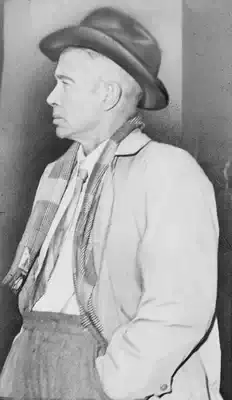
E. E. Cummings
Since feeling is first
since feeling is first
who pays any attention
to the syntax of things
will never wholly kiss you;
wholly to be a fool
while spring is in the world
my blood approves,
and kisses are a better fate
than wisdom
lady i swear by all flowers. Dont cry
-the best gesture of my brain is less than
your eyelids flutter which says
we are for each other: then
laugh, leaning back in my arms
for lifes not a paragraph
and death i think is no parenthesis
Read more →
1,466
Edgar Allan Poe
The Lake
In youth's spring, it was my lot
To haunt of the wide earth a spot
The which I could not love the less;
So lovely was the loneliness
Of a wild lake, with black rock bound.
And the tall pines that tower'd around.
But when the night had thrown her pall
Upon that spot — as upon all,
And the wind would pass me by
In its stilly melody,
My infant spirit would awake
To the terror of the lone lake.
Yet that terror was not fright —
But a tremulous delight,
And a feeling undefin'd,
Springing from a darken'd mind.
Death was in that poison'd wave
And in its gulf a fitting grave
For him who thence could solace bring
To his dark imagining;
Whose wild'ring thought could even make
An Eden of that dim lake.
1827
Read more →
1,661
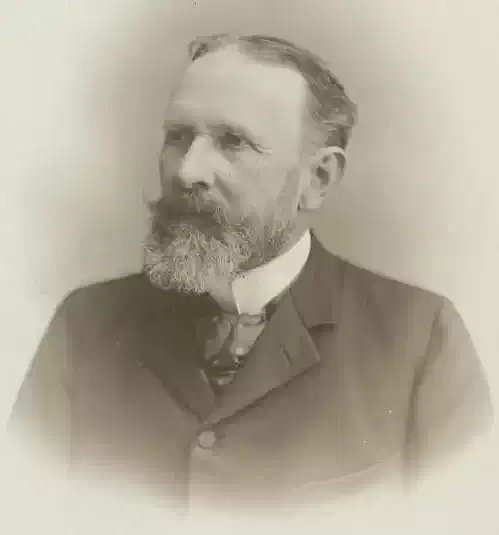
Carl Spitteler
The Hiker
Downy flakes whisper softly from the sky.
A hiker climbs over firn and ice.
The snow woman follows him with treacherous steps:
"Hold still, my dear, and take me with you!
The evening is near and the summit is far away.
I'd be happy to play you a little song just to keep you entertained."
She puts the green shawm on her lip,
She rejoiced at flowers and Lenz and Mai.
He listened, cheeks wet with tears,
Then he ticked the box and drew for bass.
And darker clouds the twilight snow.
She crept to his side on a cunning toe:
"Stop! let me shine for you, you are wandering astray!
I'll tell you a friendly fairy tale."
A traffic light she drew from her robe:
The homeland shines before his eyes,
The hill, the garden, being a parent
In the blissful golden glow of youth.
He swayed. Already he shortens the measure of his steps,
Then he ticked the box and drew for bass.
And it storms and it rummages with storm power,
White night yawns from the howling rock.
His will failed, his knee sank.
There she sat on a stone bench.
"It's comfortable here; come, sit down!
I really know how to caress.
And slumber lures you and a dream laughs at you:
There is room on my warm bosom."
She looked so lovely, she nodded so sweetly,
as if the sky wanted to open up to him.
He staggers towards her in a staggering run
and fell at her feet - never got up again.
Read more →
1,107
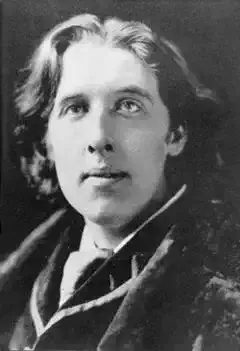
Oscar Wilde
The Harlot's House
We caught the tread of dancing feet,
We loitered down the moonlit street,
And stopped beneath the harlot's house.
Inside, above the din and fray,
We heard the loud musicians play
The "Treues Liebes Herz" of Strauss.
Like strange mechanical grotesques,
Making fantastic arabesques,
The shadows raced across the blind.
We watched the ghostly dancers spin
To sound of horn and violin,
Like black leaves wheeling in the wind.
Like wire-pulled automatons,
Slim silhouetted skeletons
Went sidling through the slow quadrille.
They took each other by the hand,
And danced a stately saraband;
Their laughter echoed thin and shrill.
Sometimes a clockwork puppet pressed
A phantom lover to her breast,
Sometimes they seemed to try to sing.
Sometimes a horrible marionette
Came out, and smaoked its cigarette
Upon the steps like a live thing.
Then, turning to my love, I said,
"The dead are dancing with the dead,
The dust is whirling with the dust."
But she--she heard the violin,
And left my side, and entered in:
Love passed into the house of lust.
Then suddenly the tune went false,
The shadows wearied of the waltz,
The shadows ceased to wheel and whirl.
And down the long and silent street,
The dawn, with silver-sandalled feet,
Crept like a frightened girl.
Read more →
1,061
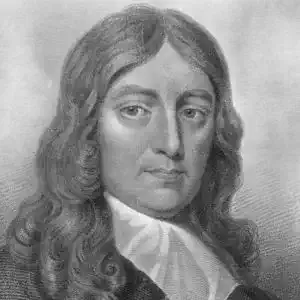
John Milton
Methought I Saw My Late Espoused Saint
Methought I saw my late espoused Saint
Brought to me like Alcestus from the grave,
Who Jove's great Son to her glad Husband gave,
Rescu'd from death by force though pale and faint.
Mine as whom washt from spot of child-bed taint
Purification in the old Law did save,
And such as yet once more I trust to have
Full sight of her in Heav'n without restraint,
Came vested all in white, pure as her mind:
Her face was veil'd, yet to my fancied sight
Love, sweetness, goodness in her person shin'd
So clear, as in no face with more delight.
But O as to embrace me she enclin'd
I wak'd, she fled, and day brought back my night.
Read more →
1,035
Oscar Wilde
Requiescat
TREAD lightly, she is near
Under the snow,
Speak gently, she can hear
The daisies grow.
All her bright golden hair
Tarnished with rust,
She that was young and fair
Fallen to dust.
Lily-like, white as snow,
She hardly knew
She was a woman, so
Sweetly she grew.
Coffin-board, heavy stone,
Lie on her breast,
I vex my heart alone
She is at rest.
Peace, Peace, she cannot hear
Lyre or sonnet,
All my life's buried here,
Heap earth upon it.
AVIGNON.
Read more →
1,117

William Shakespeare
Sonnet 146: Poor soul, the centre of my sinful earth
Poor soul, the centre of my sinful earth,
[......] these rebel powers that thee array,
Why dost thou pine within and suffer dearth,
Painting thy outward walls so costly gay?
Why so large cost, having so short a lease,
Dost thou upon thy fading mansion spend?
Shall worms, inheritors of this excess,
Eat up thy charge? Is this thy body's end?
Then soul, live thou upon thy servant's loss
And let that pine to aggravate thy store;
Buy terms divine in selling hours of dross;
Within be fed, without be rich no more.
So shalt thou feed on Death, that feeds on men,
And, Death once dead, there's no more dying then.
Read more →
950
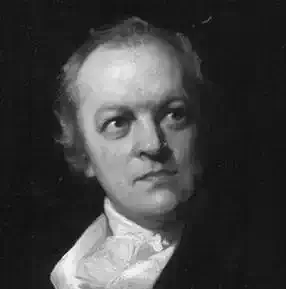
William Blake
The Land of Dreams
Awake, awake, my little boy!
Thou wast thy mother's only joy;
Why dost thou weep in thy gentle sleep?
Awake! thy father does thee keep.
'O, what land is the Land of Dreams?
What are its mountains, and what are its streams?
O father! I saw my mother there,
Among the lilies by waters fair.
'Among the lambs, cloth?d in white,
She walk'd with her Thomas in sweet delight.
I wept for joy, like a dove I mourn;
O! when shall I again return?'
Dear child, I also by pleasant streams
Have wander'd all night in the Land of Dreams;
But tho' calm and warm the waters wide,
I could not get to the other side.
'Father, O father! what do we here
In this land of unbelief and fear?
The Land of Dreams is better far
Above the light of the morning star.'
Read more →
962
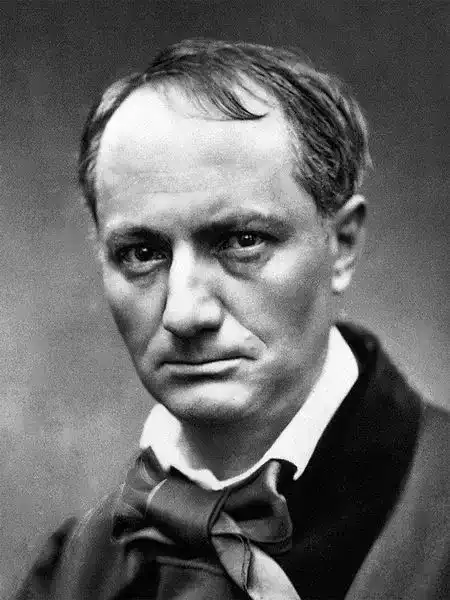
Charles Baudelaire
The Carcass
Remember that object we saw, dear soul,
In the sweetness of a summer morn:
At a bend of the path a loathsome carrion
On a bed with pebbles strewn,
With legs raised like a lustful woman,
Burning and sweating poisons,
It spread open, nonchalant and scornful,
Its belly, ripe with exhalations.
The sun shone onto the rotting heap,
As if to bring it to the boil,
And tender a hundredfold to vast Nature
All that together she had joined;
And the sky watched that superb carcass
Like a flower blossom out.
The stench was so strong that on the grass
You thought you would pass out.
Flies hummed upon the putrid belly,
Whence larvae in black battalions spread
And like a heavy liquid flowed
Along the tatters deliquescing.
All together it unfurled, and rose like a wave
And bubbling it sprang forth;
One might have believed that, with a faint breath filled,
The body, multiplying, lived.
And this world gave out a strange music
Like of running water and of wind,
Or of grain in a winnow
Rhythmically shaken and tossed.
Form was erased and all but a vision,
A sketch slow to take shape
On a forgotten canvas, which the artist finishes
From memory alone.
Behind the rocks a fretting bitch
Looked at us with fierce mien
Anxious to retrieve from the corpse
A morsel that she had dropped.
Yet to this rot you shall be like,
To this horrid corruption,
Star of my eyes, sun of desire,
You, my angel and my passion!
Yes, such you shall be, you, queen of all graces,
After the last sacraments,
When you go beneath the grass and waxy flowers,
To mold among the skeletons.
Then, oh my beauty! You must tell the vermin,
As it eats you up with kisses,
That I have preserved the form and essence divine
Of my decayed loves.
Read more →
967

Antonio Roberval Miketen
Mendes and the Bullfight in the Round
To yield silk for silk,
millimeter by millimeter,
the petal-like tissue
to the finest needles.
To weave, weave, weave,
weave the bull in pink,
without yielding the very terrain
of the matador.
In the smothness of the silk,
in the cutting edge of a glimpse,
to slide over the sword
the purity of fire.
To retain the fate of the bull,
to feel the vein on the fingertip,
to bring the leather close to the body
without a flip of fear.
With the thinness of the needle,
even if the blood chills,
retain the dark rose
on the petal-like skin.
In the bullfight in the round,
to spill blood and salt,
weaving a rose
of fatal red color.
Millimeter by millimeter,
to yield, yield, yieid,
to yield until the very minute
when feeling that death has come.
Read more →
943
Antonio Roberval Miketen
It is Late to be Morning
For Simone
Poor little helpless baby chick,
leaning against the thrash can,
at ease in a coat of sheer luxury,
derived from a secret sable fur,
finer
than human skin.
High up, the clouds
are becoming the color
of the yellow of your softness.
The evening turned the morning late.
Your little eyes still open
want my hands
touching the back of your feathers.
They want me to be a small boy,
a small boy offering my innocence
to the little child that chirps inside you.
Sweet was your tameness
bent over a defeated rose,
while you rested your eternity
on a bouquet of roses, despised
because withered.
But under you each petal bleeded,
leaving a stain of wine
in the rniddle of your belly.
I then passed by,
you were already dead when I passed by
enamored of the sunset,
oblivious of the morning
that was rising in your little eyes.
Read more →
943
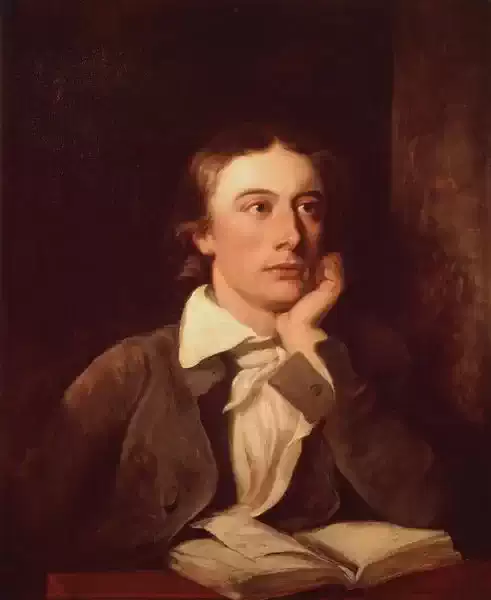
John Keats
Why did I laugh tonight? No voice will tell
Why did I laugh tonight? No voice will tell
No God, no demon of severe response
Deigns to reply from heaven or from hell
Then to my human heart I turn at once:
Heart, thou and I are here, sad and alone,
Say, why did I laugh? O mortal pain!
O darkness! darkness! Forever must I moan
To question heaven and hell and heart in vain?
Why did I laugh? I know this being's lease
My fancy to it's utmost blisses spreads
Yet would I on this very midnight cease
And all the world's gaudy ensigns see in shreds
Verse, fame and beauty are intense indeed
But death intenser, death is life's high meed.
Read more →
942

Federico García Lorca
City That Does Not Sleep
In the sky there is nobody asleep. Nobody, nobody.
Nobody is asleep.
The creatures of the moon sniff and prowl about their cabins.
The living iguanas will come and bite the men who do not dream,
and the man who rushes out with his spirit broken will meet on the
street corner
the unbelievable alligator quiet beneath the tender protest of the
stars.
Nobody is asleep on earth. Nobody, nobody.
Nobody is asleep.
In a graveyard far off there is a corpse
who has moaned for three years
because of a dry countryside on his knee;
and that boy they buried this morning cried so much
it was necessary to call out the dogs to keep him quiet.
Life is not a dream. Careful! Careful! Careful!
We fall down the stairs in order to eat the moist earth
or we climb to the knife edge of the snow with the voices of the dead
dahlias.
But forgetfulness does not exist, dreams do not exist;
flesh exists. Kisses tie our mouths
in a thicket of new veins,
and whoever his pain pains will feel that pain forever
and whoever is afraid of death will carry it on his shoulders.
One day
the horses will live in the saloons
and the enraged ants
will throw themselves on the yellow skies that take refuge in the
eyes of cows.
Another day
we will watch the preserved butterflies rise from the dead
and still walking through a country of gray sponges and silent boats
we will watch our ring flash and roses spring from our tongue.
Careful! Be careful! Be careful!
The men who still have marks of the claw and the thunderstorm,
and that boy who cries because he has never heard of the invention
of the bridge,
or that dead man who possesses now only his head and a shoe,
we must carry them to the wall where the iguanas and the snakes
are waiting,
where the bear's teeth are waiting,
where the mummified hand of the boy is waiting,
and the hair of the camel stands on end with a violent blue shudder.
Nobody is sleeping in the sky. Nobody, nobody.
Nobody is sleeping.
If someone does close his eyes,
a whip, boys, a whip!
Let there be a landscape of open eyes
and bitter wounds on fire.
No one is sleeping in this world. No one, no one.
I have said it before.
No one is sleeping.
But if someone grows too much moss on his temples during the
night,
open the stage trapdoors so he can see in the moonlight
the lying goblets, and the poison, and the skull of the theaters.
Read more →
967
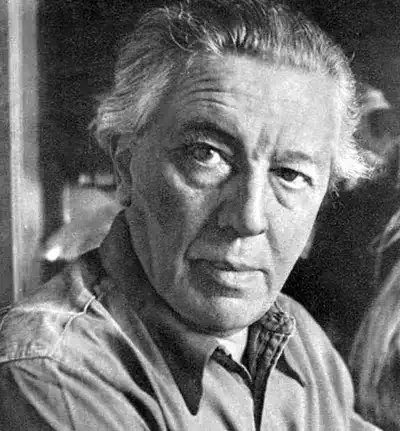
André Breton
The Spectral Attitudes
I attach no importance to life
I pin not the least of life's butterflies to importance
I do not matter to life
But the branches of salt the white branches
All the shadow bubbles
And the sea-anemones
Come down and breathe within my thoughts
They come from tears that are not mine
From steps I do not take that are steps twice
And of which the sand remembers the flood-tide
The bars are in the cage
And the birds come down from far above to sing before these bars
A subterranean passage unites all perfumes
A woman pledged herself there one day
This woman became so bright that I could no longer see her
With these eyes which have seen my own self burning
I was then already as old as I am now
And I watched over myself and my thoughts like a night watchman in an immense
factory Keeping watch alone
The circus always enchants the same tramlines
The plaster figures have lost nothing of their expression
They who bit the smile's fig
I know of a drapery in a forgotten town
If it pleased me to appear to you wrapped in this drapery
You would think that your end was approaching
Like mine
At last the fountains would understand that you must not say Fountain
The wolves are clothed in mirrors of snow
I have a boat detached from all climates
I am dragged along by an ice-pack with teeth of flame
I cut and cleave the wood of this tree that will always be green
A musician is caught up in the strings of his instrument
The skull and crossbones of the time of any childhood story
Goes on board a ship that is as yet its own ghost only
Perhaps there is a hilt to this sword
But already there is a duel in this hilt
During the duel the combatants are unarmed
Death is the least offence
The future never comes
The curtains that have never been raised
Float to the windows of houses that are to be built
The beds made of lilies
Slide beneath the lamps of dew
There will come an evening
The nuggets of light become still underneath the blue moss
The hands that tie and untie the knots of love and of air
Keep all their transparency for those who have eyes to see
They see the palms of hands
The crowns in eyes
But the brazier of crown and palms
Can scarcely be lit in the deepest part of the forest
There where the stags bend their heads to examine the years
Nothing more than a feeble beating is heard
From which sound a thousand louder or softer sounds proceed
And the beating goes on and on
There are dresses that vibrate
And their vibration is in unison with the beating
When I wish to see the faces of those that wear them
A great fog rises from the ground
At the bottom of the steeples behind the most elegant reservoirs of life and of wealth
In the gorges which hide themselves between two mountains
On the sea at the hour when the sun cools down
Those who make signs to me are separated by stars
And yet the carriage overturned at full speed
Carries as far as my last hesitation
That awaits me down there in the town where the statues of bronze
and of stone have changed places with statues of wax Banyans banyans.
Read more →
990
Oscar Wilde
The Dole Of The King's Daughter (Breton)
Seven stars in the still water,
And seven in the sky;
Seven sins on the King's daughter,
Deep in her soul to lie.
Red roses are at her feet,
(Roses are red in her red-gold hair)
And O where her bosom and girdle meet
Red roses are hidden there.
Fair is the knight who lieth slain
Amid the rush and reed,
See the lean fishes that are fain
Upon dead men to feed.
Sweet is the page that lieth there,
(Cloth of gold is goodly prey,)
See the black ravens in the air,
Black, O black as the night are they.
What do they there so stark and dead?
(There is blood upon her hand)
Why are the lilies flecked with red?
(There is blood on the river sand.)
There are two that ride from the south and east,
And two from the north and west,
For the black raven a goodly feast,
For the King's daughter rest.
There is one man who loves her true,
(Red, O red, is the stain of gore!)
He hath duggen a grave by the darksome yew,
(One grave will do for four.)
No moon in the still heaven,
In the black water none,
The sins on her soul are seven,
The sin upon his is one.
Read more →
905
Oscar Wilde
Holy Week at Genoa
I wandered through Scoglietto's far retreat,
The oranges on each o'erhanging spray
Burned as bright lamps of gold to shame the day;
Some startled bird with fluttering wings and fleet
Made snow of all the blossoms; at my feet
Like silver moons the pale narcissi lay:
And the curved waves that streaked the great green bay
Laughed i' the sun, and life seemed very sweet.
Outside the young boy-priest passed singing clear,
'Jesus the son of Mary has been slain,
O come and fill His sepulchre with flowers.'
Ah, God! Ah, God! those dear Hellenic hours
Had drowned all memory of Thy bitter pain,
The Cross, the Crown, the Soldiers and the Spear.
Read more →
914

William Butler Yeats
The Harp Of Aengus
Edain came out of Midhir's hill, and lay
Beside young Aengus in his tower of glass,
Where time is drowned in odour-laden winds
And Druid moons, and murmuring of boughs,
And sleepy boughs, and boughs where apples made
Of opal and ruhy and pale chrysolite
Awake unsleeping fires; and wove seven strings,
Sweet with all music, out of his long hair,
Because her hands had been made wild by love.
When Midhir's wife had changed her to a fly,
He made a harp with Druid apple-wood
That she among her winds might know he wept;
And from that hour he has watched over none
But faithful lovers.
Read more →
909