
Night and Moon

Carl Sandburg
Nocturne in a Deserted Brickyard
Stuff of the moon
Runs on the lapping sand
Out to the longest shadows.
Under the curving willows,
And round the creep of the wave line,
Fluxions of yellow and dusk on the waters
Make a wide dreaming pansy of an old pond in the night.
Runs on the lapping sand
Out to the longest shadows.
Under the curving willows,
And round the creep of the wave line,
Fluxions of yellow and dusk on the waters
Make a wide dreaming pansy of an old pond in the night.
353
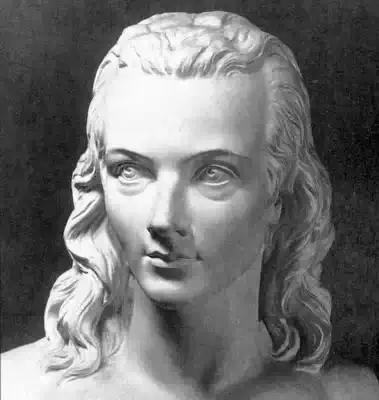
Novalis
Hymns to the Night
Now I know when will come the last morning -- when the Light no more scares away
Night and Love -- when sleep shall be without waking, and but one continuous dream. I
feel in me a celestial exhaustion. Long and weariful was my pilgrimage to the holy
grave, and crushing was the cross. The crystal wave, which, imperceptible to the
ordinary sense, springs in the dark bosom of the mound against whose foot breaks the
flood of the world, he who has tasted it, he who has stood on the mountain frontier of
the world, and looked across into the new land, into the abode of the Night -- truly he
turns not again into the tumult of the world, into the land where dwells the Light in
ceaseless unrest.
On those heights he builds for himself tabernacles -- tabernacles of peace, there longs
and loves and gazes across, until the welcomest of all hours draws him down into the
waters of the spring -- afloat above remains what is earthly, and is swept back in
storms, but what became holy by the touch of love, runs free through hidden ways to
the region beyond, where, like fragrances, it mingles with love asleep.
Still wakest thou, cheerful Light, that weary man to his labor -- and into me pourest
joyous life -- but thou wilest me not away from Memory's moss-grown monument.
Gladly will I stir busy hands, everywhere behold where thou hast need of me -- praise
the lustre of thy splendor -- pursue unwearied the lovely harmonies of thy skilled
handicraft -- gladly contemplate the clever pace of thy mighty, luminous clock --
explore the balance of the forces and the laws of the wondrous play of countless worlds
and their seasons. But true to the Night remains my secret heart, and to creative Love,
her daughter. Canst thou show me a heart eternally true? has thy sun friendly eyes
that know me? do thy stars lay hold of my longing hand? and return me the tender
pressure and the caressing word? was it thou did adorn them with colors and a
flickering outline -- or was it she who gave to thy jewels a higher, a dearer weight?
What delight, what pleasure offers thy life, to outweigh the transports of Death? Wears
not everything that inspires us the color of the Night? She sustains thee mother-like,
and to her thou owest all thy glory. Thou wouldst vanish into thyself -- in boundless
space thou wouldst dissolve, if she did not hold thee fast, if she swaddled thee not, so
that thou grewest warm, and flaming, begot the universe. Truly I was, before thou
wast -- the mother sent me with my brothers and sisters to inhabit thy world, to hallow
it with love that it might be an ever-present memorial -- to plant it with flowers
unfading. As yet they have not ripened, these thoughts divine -- as yet is there small
trace of our coming revelation -- One day thy clock will point to the end of time, and
then thou shalt be as one of us, and shalt, full of ardent longing, be extinguished and
die. I feel in me the close of thy activity -- heavenly freedom, and blessed return. With
wild pangs I recognize thy distance from our home, thy resistance against the ancient,
glorious heaven. Thy rage and thy raving are in vain. Unscorchable stands the cross --
victory-banner of our breed.
Over I journey
And for each pain
A pleasant sting only
Shall one day remain.
Yet in a few moments
Then free am I,
And intoxicated
In Love's lap lie.
Life everlasting
Lifts, wave-like, at me,
I gaze from its summit
Down after thee.
Your lustre must vanish
Yon mound underneath --
A shadow will bring thee
Thy cooling wreath.
Oh draw at my heart, love,
Draw till I'm gone,
That, fallen asleep, I
Still may love on.
I feel the flow of
Death's youth-giving flood
To balsam and ether
Transform my blood --
I live all the daytime
In faith and in might
And in holy fire
I die every night.
349
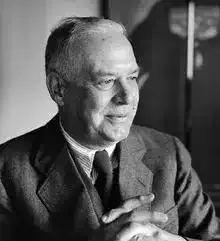
Wallace Stevens
Domination Of Black
At night, by the fire,
The colors of the bushes
And of the fallen leaves,
Repeating themselves,
Turned in the room,
Like the leaves themselves
Turning in the wind.
Yes: but the color of the heavy hemlocks
Came striding.
And I remembered the cry of the peacocks.
The colors of their tails
Were like the leaves themselves
Turning in the wind,
In the twilight wind.
They swept over the room,
Just as they flew from the boughs of the hemlocks
Down to the ground.
I heard them cry -- the peacocks.
Was it a cry against the twilight
Or against the leaves themselves
Turning in the wind,
Turning as the flames
Turned in the fire,
Turning as the tails of the peacocks
Turned in the loud fire,
Loud as the hemlocks
Full of the cry of the peacocks?
Or was it a cry against the hemlocks?
Out of the window,
I saw how the planets gathered
Like the leaves themselves
Turning in the wind.
I saw how the night came,
Came striding like the color of the heavy hemlocks
I felt afraid.
And I remembered the cry of the peacocks.
350
Carl Sandburg
Child Moon
The child's wonder
At the old moon
Comes back nightly.
She points her finger
To the far silent yellow thing
Shining through the branches
Filtering on the leaves a golden sand,
Crying with her little tongue, “See the moon!”
And in her bed fading to sleep
With babblings of the moon on her little mouth.
At the old moon
Comes back nightly.
She points her finger
To the far silent yellow thing
Shining through the branches
Filtering on the leaves a golden sand,
Crying with her little tongue, “See the moon!”
And in her bed fading to sleep
With babblings of the moon on her little mouth.
350
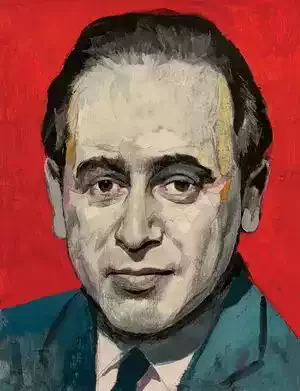
Paul Celan
On my Right
On my Right – who? The Death-Woman.
And you, on my Left, you?
The Wandering-Sickles in extraheavenly
Place
mime themselves grey-white
Moon-Swallows, together,
Star-Swifts,
I plunge there
and pour an Urnful
down onto you,
in you.
And you, on my Left, you?
The Wandering-Sickles in extraheavenly
Place
mime themselves grey-white
Moon-Swallows, together,
Star-Swifts,
I plunge there
and pour an Urnful
down onto you,
in you.
348

Walter de la Mare
Full Moon
One night as Dick lay half asleep,
Into his drowsy eyes
A great still light began to creep
From out the silent skies.
It was the lovely moon's, for when
He raised his dreamy head,
Her surge of silver filled the pane
And streamed across his bed.
So, for a while, each gazed at each --
Dick and the solemn moon --
Till, climbing slowly on her way,
She vanished, and was gone.
349
Novalis
Hymns to the Night
Must the morning always return? Will the despotism of the earthly never cease? Unholy
activity consumes the angel-visit of the Night. Will the time never come when Love's
hidden sacrifice shall burn eternally? To the Light a season was set; but everlasting and
boundless is the dominion of the Night. -- Endless is the duration of sleep. Holy Sleep
-- gladden not too seldom in this earthly day-labor, the devoted servant of the Night.
Fools alone mistake thee, knowing nought of sleep but the shadow which, in the
twilight of the real Night, thou pitifully castest over us. They feel thee not in the golden
flood of the grapes -- in the magic oil of the almond tree -- and the brown juice of the
poppy. They know not that it is thou who hauntest the bosom of the tender maiden,
and makest a heaven of her lap -- never suspect it is thou, opening the doors to
Heaven, that steppest to meet them out of ancient stories, bearing the key to the
dwellings of the blessed, silent messenger of secrets infinite.
344

William Butler Yeats
Parting
He. Dear, I must be gone
While night Shuts the eyes
Of the household spies;
That song announces dawn.
She. No, night's bird and love's
Bids all true lovers rest,
While his loud song reproves
The murderous stealth of day.
He. Daylight already flies
From mountain crest to crest
She. That light is from the moon.
He. That bird...
She. Let him sing on,
I offer to love's play
My dark declivities.
344

William Shakespeare
Twelve O'Clock - Fairy time
Through the house give glimmering light
By the dead and drowsy fire;
Every elf and fairy sprite
hop as light as bird from brier.
Now, until the break of day
Through this house each fairy stray.
By the dead and drowsy fire;
Every elf and fairy sprite
hop as light as bird from brier.
Now, until the break of day
Through this house each fairy stray.
334
Wallace Stevens
Two Figures in Dense Violet Light
I had as lief be embraced by the portier of the hotel
As to get no more from the moonlight
Than your moist hand.
Be the voice of the night and Florida in my ear.
Use dasky words and dusky images.
Darken your speech.
Speak, even, as if I did not hear you speaking,
But spoke for you perfectly in my thoughts,
Conceiving words,
As the night conceives the sea-sound in silence,
And out of the droning sibilants makes
A serenade.
Say, puerile, that the buzzards crouch on the ridge-pole
and sleep with one eye watching the stars fall
Beyond Key West.
Say that the palms are clear in the total blue.
Are clear and are obscure; that it is night;
That the moon shines.
332
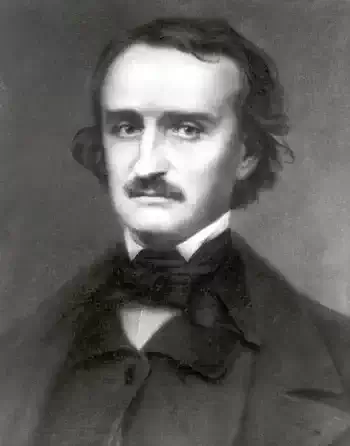
Edgar Allan Poe
Evening Star
'Twas noontide of summer,
And mid-time of night;
And stars, in their orbits,
Shone pale, thro' the light
Of the brighter, cold moon,
'Mid planets her slaves,
Herself in the Heavens,
Her beam on the waves.
I gazed awhile
On her cold smile;
Too cold- too cold for me
There
pass'd, as a shroud,
A fleecy cloud,
And I turned away to thee,
Proud Evening Star,
In thy glory afar,
And dearer thy beam shall be;
For joy to my heart
Is the proud part
Thou bearest in Heaven at night,
And more I admire
Thy distant fire,
Than that colder, lowly light.
331

Robert Louis Stevenson
In Port
Last, to the chamber where I lie
My fearful footsteps patter nigh,
And come out from the cold and gloom
Into my warm and cheerful room.
There, safe arrived, we turn about
To keep the coming shadows out,
And close the happy door at last
On all the perils that we past.
Then, when mamma goes by to bed,
She shall come in with tip-toe tread,
And see me lying warm and fast
And in the land of Nod at last.
327

James Whitcomb Riley
August
A day of torpor in the sullen heat
Of Summer's passion: In the sluggish stream
The panting cattle lave their lazy feet,
With drowsy eyes, and dream.
Long since the winds have died, and in the sky
There lives no cloud to hint of Nature's grief;
The sun glares ever like an evil eye,
And withers flower and leaf.
Upon the gleaming harvest-field remote
The thresher lies deserted, like some old
Dismantled galleon that hangs afloat
Upon a sea of gold.
The yearning cry of some bewildered bird
Above an empty nest, and truant boys
Along the river's shady margin heard--
A harmony of noise--
A melody of wrangling voices blent
With liquid laughter, and with rippling calls
Of piping lips and thrilling echoes sent
To mimic waterfalls.
And through the hazy veil the atmosphere
Has draped about the gleaming face of Day,
The sifted glances of the sun appear
In splinterings of spray.
The dusty highway, like a cloud of dawn,
Trails o'er the hillside, and the passer-by,
A tired ghost in misty shroud, toils on
His journey to the sky.
And down across the valley's drooping sweep,
Withdrawn to farthest limit of the glade,
The forest stands in silence, drinking deep
Its purple wine of shade.
The gossamer floats up on phantom wing;
The sailor-vision voyages the skies
And carries into chaos everything
That freights the weary eyes:
Till, throbbing on and on, the pulse of heat
Increases--reaches--passes fever's height,
And Day sinks into slumber, cool and sweet,
Within the arms of Night.
326

Ella Wheeler Wilcox
Warning
High in the heavens I saw the moon this morning,
Albeit the sun shone bright;
Unto my soul it spoke, in voice of warning,
‘Remember Night! ’
Albeit the sun shone bright;
Unto my soul it spoke, in voice of warning,
‘Remember Night! ’
324
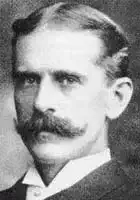
Henry Van Dyke
Twilight in the Alps
I love the hour that comes, with dusky hair
And dewy feet, along the Alpine dells
To lead the cattle forth. A thousand bells
Go chiming after her across the fair
And flowery uplands, while the rosy flare
Of sunset on the snowy mountain dwells,
And valleys darken, and the drowsy spells
Of peace are woven through the purple air.
Dear is the magic of this hour: she seems
To walk before the dark by falling rills,
And lend a sweeter song to hidden streams;
She opens all the doors of night, and fills
With moving bells the music of my dreams,
That wander far among the sleeping hills.
319

Henry Lawson
Above Lavender Bay
’Tis glorious morning everywhere
Save where the alleys lie—
I see the fleecy steam jets bid
“Good morning” to the sky.
The gullies of the waratah
Are near, with fall and pool,
And by the shadowed western rocks
The bays are fresh and cool.
To “points” that hint of Italy—
Of Italy and Spain—
I see the busy ferry boats
Come nosing round again.
To the toy station down below
I see the toy trains run—
(I wonder when those ferry boats
Will get their business done?)
Above the Bay called Lavender
This bard is domiciled,
Where up through rich, dark greenery
The red-tiled roofs are piled—
(At least some are—I hope that soon
They all shall be red-tiled)—
A moonlight night in middle-age
That makes one feel a child.
Close over, to the nearer left—
That feels the ocean breeze—
A full moon in a dim blue sky
A church spire and dark trees.
And, further right, the harsher heights
Of Mosman, Double Bay,
And Rose Bay, with their scattered lights,
Have softened with the day.
And fair across to where we know
The shelving sea cliffs are—
The lighthouse, with a still faint glow,
Beneath a twinkling star.
Across the harbour from the right,
And fairly in a line,
The Clock-tower on the City Hall,
A ship-mast and a pine.
The pale and bright, yet dusky blue,
And crossed by fleecy bars,
Flings out the brilliant city lights,
The moonlight and the stars—
And like a transformation scene,
On sheet glass down below,
The fairy-lighted ferry boats
Are gliding to and fro.
318

Henry Wadsworth Longfellow
Tales Of A Wayside Inn : Part 2. Prelude
A cold, uninterrupted rain,
That washed each southern window-pane,
And made a river of the road;
A sea of mist that overflowed
The house, the barns, the gilded vane,
And drowned the upland and the plain,
Through which the oak-trees, broad and high,
Like phantom ships went drifting by;
And, hidden behind a watery screen,
The sun unseen, or only seen
As a faint pallor in the sky;--
Thus cold and colorless and gray,
The morn of that autumnal day,
As if reluctant to begin,
Dawned on the silent Sudbury Inn,
And all the guests that in it lay.
Full late they slept. They did not hear
The challenge of Sir Chanticleer,
Who on the empty threshing-floor,
Disdainful of the rain outside,
Was strutting with a martial stride,
As if upon his thigh he wore
The famous broadsword of the Squire,
And said, 'Behold me, and admire!'
Only the Poet seemed to hear,
In drowse or dream, more near and near
Across the border-land of sleep,
The blowing of a blithesome horn,
That laughed the dismal day to scorn;
A splash of hoofs and rush of wheels
Through sand and mire like stranding keels,
As from the road with sudden sweep
The Mail drove up the little steep,
And stopped beside the tavern door;
A moment stopped, and then again
With crack of whip and bark of dog
Plunged forward through the sea of fog,
And all was silent as before,--
All silent save the dripping rain.
Then one by one the guests came down,
And greeted with a smile the Squire,
Who sat before the parlor fire,
Reading the paper fresh from town.
First the Sicilian, like a bird,
Before his form appeared, was heard
Whistling and singing down the stair;
Then came the Student, with a look
As placid as a meadow-brook;
The Theologian, still perplexed
With thoughts of this world and the next;
The Poet then, as one who seems
Walking in visions and in dreams;
Then the Musician, like a fair
Hyperion from whose golden hair
The radiance of the morning streams;
And last the aromatic Jew
Of Alicant, who, as he threw
The door wide open, on the air
Breathed round about him a perfume
Of damask roses in full bloom,
Making a garden of the room.
The breakfast ended, each pursued
The promptings of his various mood;
Beside the fire in silence smoked
The taciturn, impassive Jew,
Lost in a pleasant revery;
While, by his gravity provoked,
His portrait the Sicilian drew,
And wrote beneath it 'Edrehi,
At the Red Horse in Sudbury.'
By far the busiest of them all,
The Theologian in the hall
Was feeding robins in a cage,--
Two corpulent and lazy birds,
Vagrants and pilferers at best,
If one might trust the hostler's words,
Chief instrument of their arrest;
Two poets of the Golden Age,
Heirs of a boundless heritage
Of fields and orchards, east and west,
And sunshine of long summer days,
Though outlawed now and dispossessed!--
Such was the Theologian's phrase.
Meanwhile the Student held discourse
With the Musician, on the source
Of all the legendary lore
Among the nations, scattered wide
Like silt and seaweed by the force
And fluctuation of the tide;
The tale repeated o'er and o'er,
With change of place and change of name,
Disguised, transformed, and yet the same
We've heard a hundred times before.
The Poet at the window mused,
And saw, as in a dream confused,
The countenance of the Sun, discrowned,
And haggard with a pale despair,
And saw the cloud-rack trail and drift
Before it, and the trees uplift
Their leafless branches, and the air
Filled with the arrows of the rain,
And heard amid the mist below,
Like voices of distress and pain,
That haunt the thoughts of men insane,
The fateful cawings of the crow.
Then down the road, with mud besprent,
And drenched with rain from head to hoof,
The rain-drops dripping from his mane
And tail as from a pent-house roof,
A jaded horse, his head down bent,
Passed slowly, limping as he went.
The young Sicilian--who had grown
Impatient longer to abide
A prisoner, greatly mortified
To see completely overthrown
His plans for angling in the brook,
And, leaning o'er the bridge of stone,
To watch the speckled trout glide by,
And float through the inverted sky,
Still round and round the baited hook--
Now paced the room with rapid stride,
And, pausing at the Poet's side,
Looked forth, and saw the wretched steed,
And said: 'Alas for human greed,
That with cold hand and stony eye
Thus turns an old friend out to die,
Or beg his food from gate to gate!
This brings a tale into my mind,
Which, if you are not disinclined
To listen, I will now relate.'
All gave assent; all wished to hear,
Not without many a jest and jeer,
The story of a spavined steed;
And even the Student with the rest
Put in his pleasant little jest
Out of Malherbe, that Pegasus
Is but a horse that with all speed
Bears poets to the hospital;
While the Sicilian, self-possessed,
After a moment's interval
Began his simple story thus.
316
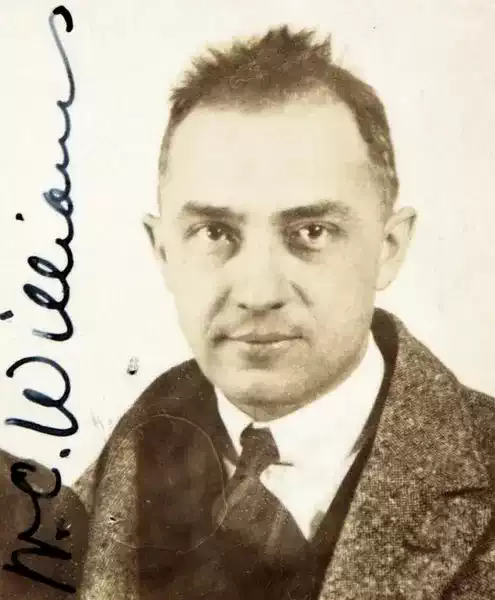
William Carlos Williams
The Cold Night
It is cold. The white moon
is up among her scattered stars--
like the bare thighs of
the Police Sergeant's wife--among
her five children . . .
No answer. Pale shadows lie upon
the frosted grass. One answer:
It is midnight, it is still
and it is cold . . . !
White thights of the sky! a
new answer out of the depths of
my male belly: In April . . .
In April I shall see again--In April!
the round and perfects thighs
of the Police Sergeant's wife
perfect still after many babies.
Oya!
315
James Whitcomb Riley
Moon-Drowned
'Twas the height of the fete when we quitted the riot,
And quietly stole to the terrace alone,
Where, pale as the lovers that ever swear by it,
The moon it
The sight of the stars and the moon and the sea,
And the infinite skies of that opulent night of
Purple and gold and ivory!
The lisp of the lip of the ripple just under--
The half-awake nightingale's dream in the yews--
Came up from the water, and down from the wonder
Of shadowy foliage, drowsed with the dews,--
Unsteady the firefly's taper--unsteady
The poise of the stars, and their light in the tide,
As it struggled and writhed in caress of the eddy,
As love in the billowy breast of a bride.
The far-away lilt of the waltz rippled to us,
And through us the exquisite thrill of the air:
Like the scent of bruised bloom was her breath, and its dew was
Not honier-sweet than her warm kisses were.
We stood there enchanted.--And O the delight of
The sight of the stars and the moon and the sea,
And the infinite skies of that opulent night of
Purple and gold and ivory!
310
Henry Wadsworth Longfellow
Tales Of A Wayside Inn : Part 2. The Musician's Tale; The Ballad of Carmilhan -
IV.
And now along the horizon's edge
Mountains of cloud uprose,
Black as with forests underneath,
Above their sharp and jagged teeth
Were white as drifted snows.
Unseen behind them sank the sun,
But flushed each snowy peak
A little while with rosy light
That faded slowly from the sight
As blushes from the cheek.
Black grew the sky,--all black, all black;
The clouds were everywhere;
There was a feeling of suspense
In nature, a mysterious sense
Of terror in the air.
And all on board the Valdemar
Was still as still could be;
Save when the dismal ship-bell tolled,
As ever and anon she rolled,
And lurched into the sea.
The captain up and down the deck
Went striding to and fro;
Now watched the compass at the wheel,
Now lifted up his hand to feel
Which way the wind might blow.
And now he looked up at the sails,
And now upon the deep;
In every fibre of his frame
He felt the storm before it came,
He had no thought of sleep.
Eight bells! and suddenly abaft,
With a great rush of rain,
Making the ocean white with spume,
In darkness like the day of doom,
On came the hurricane.
The lightning flashed from cloud to cloud,
And rent the sky in two;
A jagged flame, a single jet
Of white fire, like a bayonet_
That pierced the eyeballs through.
Then all around was dark again,
And blacker than before;
But in that single flash of light
He had beheld a fearful sight,
And thought of the oath he swore.
For right ahead lay the Ship of the Dead,
The ghostly Carmilhan!
Her masts were stripped, her yards were bare,
And on her bowsprit, poised in air,
Sat the Klaboterman.
Her crew of ghosts was all on deck
Or clambering up the shrouds;
The boatswain's whistle, the captain's hail,
Were like the piping of the gale,
And thunder in the clouds.
And close behind the Carmilhan
There rose up from the sea,
As from a foundered ship of stone,
Three bare and splintered masts alone:
They were the Chimneys Three.
And onward dashed the Valdemar
And leaped into the dark;
A denser mist, a colder blast,
A little shudder, and she had passed
Right through the Phantom Bark.
She cleft in twain the shadowy hulk,
But cleft it unaware;
As when, careering to her nest,
The sea-gull severs with her breast
The unresisting air.
Again the lightning flashed; again
They saw the Carmilhan,
Whole as before in hull and spar;
But now on board of the Valdemar
Stood the Klaboterman.
And they all knew their doom was sealed;
They knew that death was near;
Some prayed who never prayed before,
And some they wept, and some they swore,
And some were mute with fear.
Then suddenly there came a shock,
And louder than wind or sea
A cry burst from the crew on deck,
As she dashed and crashed, a hopeless wreck,
Upon the Chimneys Three.
The storm and night were passed, the light
To streak the east began;
The cabin-boy, picked up at sea,
Survived the wreck, and only he,
To tell of the Carmilhan.
309
James Whitcomb Riley
In The Dark
O in the depths of midnight
What fancies haunt the brain!
When even the sigh of the sleeper
Sounds like a sob of pain.
A sense of awe and of wonder
I may never well define,--
For the thoughts that come in the shadows
Never come in the shine.
The old clock down in the parlor
Like a sleepless mourner grieves,
And the seconds drip in the silence
As the rain drips from the eaves.
And I think of the hands that signal
The hours there in the gloom,
And wonder what angel watchers
Wait in the darkened room.
And I think of the smiling faces
That used to watch and wait,
Till the click of the clock was answered
By the click of the opening gate.--
They are not there now in the evening--
Morning or noon--not there;
Yet I know that they keep their vigil,
And wait for me Somewhere.
305
Henry Wadsworth Longfellow
The Saga of King Olaf: VIII. Gudrun
On King Olaf's bridal night
Shines the moon with tender light,
And across the chamber streams
Its tide of dreams.
At the fatal midnight hour,
When all evil things have power,
In the glimmer of the moon
Stands Gudrun.
Close against her heaving breast
Something in her hand is pressed;
Like an icicle, its sheen
Is cold and keen.
On the cairn are fixed her eyes
Where her murdered father lies,
And a voice remote and drear
She seems to hear.
What a bridal night is this!
Cold will be the dagger's kiss;
Laden with the chill of death
Is its breath.
Like the drifting snow she sweeps
To the couch where Olaf sleeps;
Suddenly he wakes and stirs,
His eyes meet hers.
'What is that,' King Olaf said,
'Gleams so bright above my head?
Wherefore standest thou so white
In pale moonlight?'
''T is the bodkin that I wear
When at night I bind my hair;
It woke me falling on the floor;
'T is nothing more.'
'Forests have ears, and fields have eyes;
Often treachery lurking lies
Underneath the fairest hair!
Gudrun beware!'
Ere the earliest peep of morn
Blew King Olaf's bugle-horn;
And forever sundered ride
Bridegroom and bride!
299
Henry Wadsworth Longfellow
Musings
I sat by my window one night,
And watched how the stars grew high;
And the earth and skies were a splendid sight
To a sober and musing eye.
From heaven the silver moon shone down
With gentle and mellow ray,
And beneath the crowded roofs of the town
In broad light and shadow lay.
A glory was on the silent sea,
And mainland and island too,
Till a haze came over the lowland lea,
And shrouded that beautiful blue.
Bright in the moon the autumn wood
Its crimson scarf unrolled,
And the trees like a splendid army stood
In a panoply of gold!
I saw them waving their banners high,
As their crests to the night wind bowed,
And a distant sound on the air went by,
Like the whispering of a crowd.
Then I watched from my window how fast
The lights all around me fled,
As the wearied man to his slumber passed
And the sick one to his bed.
All faded save one, that burned
With distant and steady light;
But that, too, went out -- and I turned
Where my own lamp within shone bright!
Thus, thought I, our joys must die,
Yes -- the brightest from earth we win:
Till each turns away, with a sign,
To the lamp that burns brightly within.
294
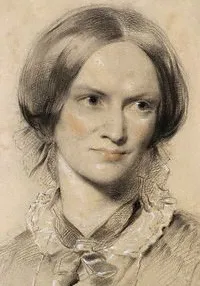
Charlotte Brontë
Speak of the North! A Lonely Moor
Speak of the North! A lonely moor
Silent and dark and tractless swells,
The waves of some wild streamlet pour
Hurriedly through its ferny dells.
Profoundly still the twilight air,
Lifeless the landscape; so we deem
Till like a phantom gliding near
A stag bends down to drink the stream.
And far away a mountain zone,
A cold, white waste of snowdrifts
lies,
And one star, large and soft and lone,
Silently lights the unclouded skies.
294