
Animals and Nature

Rudyard Kipling
The Miracle of Purun Bhagat
The night we felt the earth would move
We stole and plucked him by the hand,
Because we loved him with the love
That knows but cannot understand.
And when the roaring hillside broke,
And all our world fell down in rain,
We saved him, we the Little Folk;
But lo! he does not come again!
Mourn now, we saved him for the sake
Of such poor love as wild ones may.
Mourn ye! Our brother will not wake,
And his own kind drive us away!
427
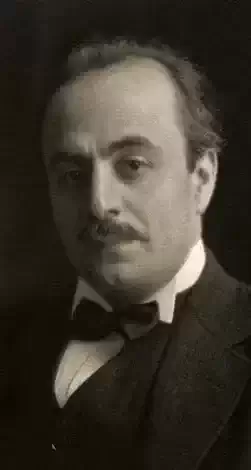
Khalil Gibran
The Life of Love XVI
Spring
Come, my beloved; let us walk amidst the knolls,
For the snow is water, and Life is alive from its
Slumber and is roaming the hills and valleys.
Let us follow the footprints of Spring into the
Distant fields, and mount the hilltops to draw
Inspiration high above the cool green plains.
Dawn of Spring has unfolded her winter-kept garment
And placed it on the peach and citrus trees; and
They appear as brides in the ceremonial custom of
the Night of Kedre.
The sprigs of grapevine embrace each other like
Sweethearts, and the brooks burst out in dance
Between the rocks, repeating the song of joy;
And the flowers bud suddenly from the heart of
Nature, like foam from the rich heart of the sea.
Come, my beloved; let us drink the last of Winter's
Tears from the cupped lilies, and soothe our spirits
With the shower of notes from the birds, and wander
In exhilaration through the intoxicating breeze.
Let us sit by that rock, where violets hide; let us
Pursue their exchange of the sweetness of kisses.
Summer
Let us go into the fields, my beloved, for the
Time of harvest approaches, and the sun's eyes
Are ripening the grain.
Let us tend the fruit of the earth, as the
Spirit nourishes the grains of Joy from the
Seeds of Love, sowed deep in our hearts.
Let us fill our bins with the products of
Nature, as life fills so abundantly the
Domain of our hearts with her endless bounty.
Let us make the flowers our bed, and the
Sky our blanket, and rest our heads together
Upon pillows of soft hay.
Let us relax after the day's toil, and listen
To the provoking murmur of the brook.
Autumn
Let us go and gather grapes in the vineyard
For the winepress, and keep the wine in old
Vases, as the spirit keeps Knowledge of the
Ages in eternal vessels.
Let us return to our dwelling, for the wind has
Caused the yellow leaves to fall and shroud the
Withering flowers that whisper elegy to Summer.
Come home, my eternal sweetheart, for the birds
Have made pilgrimage to warmth and lest the chilled
Prairies suffering pangs of solitude. The jasmine
And myrtle have no more tears.
Let us retreat, for the tired brook has
Ceased its song; and the bubblesome springs
Are drained of their copious weeping; and
Their cautious old hills have stored away
Their colorful garments.
Come, my beloved; Nature is justly weary
And is bidding her enthusiasm farewell
With quiet and contented melody.
Winter
Come close to me, oh companion of my full life;
Come close to me and let not Winter's touch
Enter between us. Sit by me before the hearth,
For fire is the only fruit of Winter.
Speak to me of the glory of your heart, for
That is greater than the shrieking elements
Beyond our door.
Bind the door and seal the transoms, for the
Angry countenance of the heaven depresses my
Spirit, and the face of our snow-laden fields
Makes my soul cry.
Feed the lamp with oil and let it not dim, and
Place it by you, so I can read with tears what
Your life with me has written upon your face.
Bring Autumn's wine. Let us drink and sing the
Song of remembrance to Spring's carefree sowing,
And Summer's watchful tending, and Autumn's
Reward in harvest.
Come close to me, oh beloved of my soul; the
Fire is cooling and fleeing under the ashes.
Embrace me, for I fear loneliness; the lamp is
Dim, and the wine which we pressed is closing
Our eyes. Let us look upon each other before
They are shut.
Find me with your arms and embrace me; let
Slumber then embrace our souls as one.
Kiss me, my beloved, for Winter has stolen
All but our moving lips.
You are close by me, My Forever.
How deep and wide will be the ocean of Slumber,
And how recent was the dawn!
424

Ella Wheeler Wilcox
Summer Song
The meadow lark’s trill and the brown thrush’s whistle
From morning to evening fill all the sweet air,
And my heart is as light as the down of a thistle –
The world is so bright and the earth is so fair.
There is life in the wood, there is bloom on the meadow;
The air drops with songs that the merry birds sing.
The sunshine has won, in the battle with shadow,
And she’s dressed the glad earth with robes of the spring.
The bee leaves his hive for the field of red clover
And the vale where the daisies bloom white as the snow,
And a mantle of warm yellow sunshine hangs over
The calm little pond, where the pale lillies grow.
In the woodland beyond it, a thousand gay voices
Are singing in chorus some jubilant air.
The bird and the bee and all nature rejoices,
The world is so bright, and the earth is so fair.
I am glad as a child, in this beautiful weather;
I have tossed all my burdens and trials away;
My heart is as light – yes, as light as a feather; I
am care-free, and careless, and happy to-day.
Can it be there approaches a dark, dreary to-morrow?
Can shadows e’er fall on this beautiful earth?
Ah! To-day is my own! No forebodings of sorrow
Shall darken my skies, or shall dampen my mirth.
422
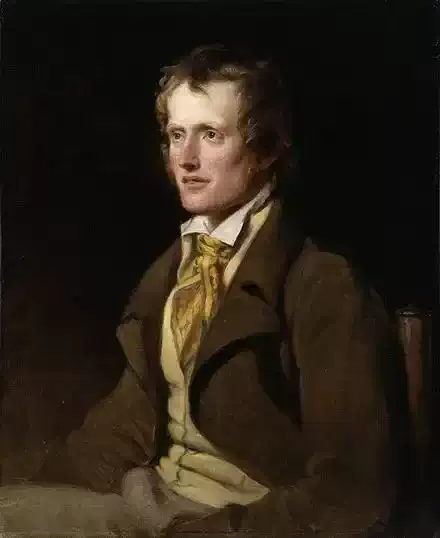
John Clare
Secret Love
I hid my love when young till I
Couldn't bear the buzzing of a fly;
I hid my love to my despite
Till I could not bear to look at light:
I dare not gaze upon her face
But left her memory in each place;
Where eer I saw a wild flower lie
I kissed and bade my love good bye.
I met her in the greenest dells
Where dewdrops pearl the wood blue bells
The lost breeze kissed her bright blue eye,
The bee kissed and went singing by,
A sunbeam found a passage there,
A gold chain round her neck so fair;
As secret as the wild bee's song
She lay there all the summer long.
I hid my love in field and town
Till een the breeze would knock me down,
The bees seemed singing ballads oer,
The fly's bass turned a lion's roar;
And even silence found a tongue,
To haunt me all the summer long;
The riddle nature could not prove
Was nothing else but secret love.
423
John Clare
Market Day
With arms and legs at work and gentle stroke
That urges switching tail nor mends his pace,
On an old ribbed and weather beaten horse,
The farmer goes jogtrotting to the fair.
Both keep their pace that nothing can provoke
Followed by brindled dog that snuffs the ground
With urging bark and hurries at his heels.
His hat slouched down, and great coat buttoned close
Bellied like hooped keg, and chuffy face
Red as the morning sun, he takes his round
And talks of stock: and when his jobs are done
And Dobbin's hay is eaten from the rack,
He drinks success to corn in language hoarse,
And claps old Dobbin's hide, and potters back.
422
Rudyard Kipling
Tiger--Tiger!
What of the hunting, hunter bold?
Brother, the watch was long and cold.
What of the quarry ye went to kill?
Brother, he crops in the jungle still.
Where is the power that made your pride?
Brother, it ebbs from my flank and side.
Where is the haste that ye hurry by?
Brother, I go to my lair to die!
Brother, the watch was long and cold.
What of the quarry ye went to kill?
Brother, he crops in the jungle still.
Where is the power that made your pride?
Brother, it ebbs from my flank and side.
Where is the haste that ye hurry by?
Brother, I go to my lair to die!
424
John Clare
Early Spring
The Spring is come, and Spring flowers coming too,
The crocus, patty kay, the rich hearts' ease;
The polyanthus peeps with blebs of dew,
And daisy flowers; the buds swell on the trees;
While oer the odd flowers swim grandfather bees
In the old homestead rests the cottage cow;
The dogs sit on their haunches near the pail,
The least one to the stranger growls 'bow wow,'
Then hurries to the door and cocks his tail,
To knaw the unfinished bone; the placid cow
Looks oer the gate; the thresher's lumping flail
Is all the noise the spring encounters now.
423
John Clare
Farmer's Boy
He waits all day beside his little flock
And asks the passing stranger what's o'clock,
But those who often pass his daily tasks
Look at their watch and tell before he asks.
He mutters stories to himself and lies
Where the thick hedge the warmest house supplies,
And when he hears the hunters far and wide
He climbs the highest tree to see them ride--
He climbs till all the fields are blea and bare
And makes the old crow's nest an easy chair.
And soon his sheep are got in other grounds--
He hastens down and fears his master come,
He stops the gap and keeps them all in bounds
And tends them closely till it's time for home.
424
Ella Wheeler Wilcox
The Swan Of Dijon
I was in Dijon when the war's wild blast
Was at its loudest; when there was no sound
From dawn to dawn, save soldiers marching past,
Or rattle of their wagons in the street.
When every engine whistle would repeat
Persistently, with meaning tense, profound,
'We carry men to slaughter' or 'we bring
Remnants of men back as war's offering.'
And there in Dijon, the out-gazing eye
Grew weary of the strife-suggesting scene;
But, searching, found one quiet spot hard by
Where war was not; a little lake whereon
Moved leisurely a stately, tranquil swan,
Majestic and imposing, yet serene.
I was in Dijon, when no sound or sight
Woke thoughts of peace, save this one speck of white,
Sailing 'neath skies of menace, unafraid
While silver fountains for his pleasure played.
Dear Swan of Dijon, it was your good part
To rest a tired heart.
419
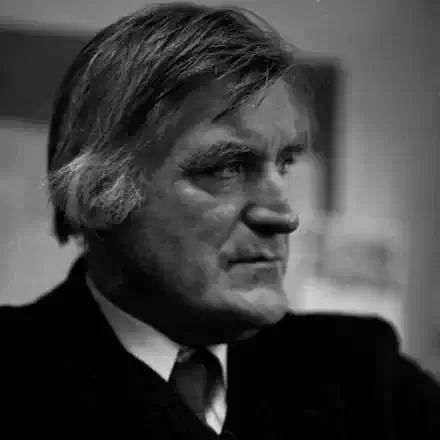
Ted Hughes
Macaw and Little Miss
In a cage of wire-ribs
The size of a man's head, the macaw bristles in a staring
Combustion, suffers the stoking devils of his eyes.
In the old lady's parlour, where an aspidistra succumbs
To the musk of faded velvet, he hangs in clear flames,
Like a torturer's iron instrument preparing
With dense slow shudderings of greens, yellows, blues,
Crimsoning into the barbs:
Or like the smouldering head that hung
In Killdevil's brass kitchen, in irons, who had been
Volcano swearing to vomit the world away in black ash,
And would, one day; or a fugitive aristocrat
From some thunderous mythological hierarchy, caught
By a little boy with a crust and a bent pin,
Or snare of horsehair set for a song-thrush,
And put in a cage to sing.
The old lady who feeds him seeds
Has a grand-daughter. The girl calls him 'Poor Polly', pokes fun.
'Jolly Mop.' But lies under every full moon,
The spun glass of her body bared and so gleam-still
Her brimming eyes do not tremble or spill
The dream where the warrior comes, lightning and iron,
Smashing and burning and rending towards her loin:
Deep into her pillow her silence pleads.
All day he stares at his furnace
With eyes red-raw, but when she comes they close.
'Polly. Pretty Poll', she cajoles, and rocks him gently.
She caresses, whispers kisses. The blue lids stay shut.
She strikes the cage in a tantrum and swirls out:
Instantly beak, wings, talons crash
The bars in conflagration and frenzy,
And his shriek shakes the house.
419

Christina Rossetti
A Pin Has A Head, But Has No Hair
A pin has a head, but has no hair;
A clock has a face, but no mouth there;
Needles have eyes, but they cannot see;
A fly has a trunk without lock or key;
A timepiece may lose, but cannot win;
A corn-field dimples without a chin;
A hill has no leg, but has a foot;
A wine-glass a stem, but not a root;
A watch has hands, but no thumb or finger;
A boot has a tongue, but is no singer;
Rivers run, though they have no feet;
A saw has teeth, but it does not eat;
Ash-trees have keys, yet never a lock;
And baby crows, without being a cock.
418
Rudyard Kipling
False Dawn
To-night, God knows what thing shall tide,
The Earth is racked and fain--
Expectant, sleepless, open-eyed;
And we, who from the Earth were made,
Thrill with our Mother's pain.
The Earth is racked and fain--
Expectant, sleepless, open-eyed;
And we, who from the Earth were made,
Thrill with our Mother's pain.
420

Emily Dickinson
In Winter in my Room
In Winter in my Room
I came upon a Worm-
Pink, lank and warm-
But as he was a worm
And worms presume
Not quite with him at home-
Secured him by a string
To something neighboring
And went along.
A Trifle afterward
A thing occurred
I'd not believe it if I heard
But state with creeping blood-
A snake with mottles rare
Surveyed my chamber floor
In feature as the worm before
But ringed with power-
The very string with which
I tied him-too
When he was mean and new
That string was there-
I shrank-"How fair you are"!
Propitiation's claw"
Afraid," he hissed
"Of me"?
"No cordiality"-
He fathomed me-
Then to a Rhythm Slim
Secreted in his Form
As Patterns swim
Projected him.
That time I flew
Both eyes his way
Lest he pursue
Nor ever ceased to run
Till in a distant Town
Towns on from mine
I set me down
This was a dream.
416
John Clare
The Shepherd's Calendar - June
Now summer is in flower and natures hum
Is never silent round her sultry bloom
Insects as small as dust are never done
Wi' glittering dance and reeling in the sun
And green wood fly and blossom haunting bee
Are never weary of their melody
Round field hedge now flowers in full glory twine
Large bindweed bells wild hop and streakd woodbine
That lift athirst their slender throated flowers
Agape for dew falls and for honey showers
These round each bush in sweet disorder run
And spread their wild hues to the sultry sun
Where its silk netting lace on twigs and leaves
The mottld spider at eves leisure weaves
That every morning meet the poets eye
Like faireys dew wet dresses hung to dry
The wheat swells into ear and leaves below
The may month wild flowers and their gaudy show
Bright carlock bluecap and corn poppy red
Which in such clouds of colors wid [e] ly spread
That at the sun rise might to fancys eye
Seem to reflect the many colord sky
And leverets seat and lark and partridge nest
It leaves a schoolboys height in snugger rest
And oer the weeders labour overgrows
Who now in merry groups each morning goes
To willow skirted meads wi fork and rake
The scented hay cocks in long rows to make
Where their old visitors in russet brown
The haytime butterflyes dance up and down
And gads that teaze like whasps the timid maid
And drive the herdboys cows to pond and shade
Who when his dogs assistance fails to stop
Is forcd his half made oaten pipes to drop
And start and hallo thro the dancing heat
To keep their gadding tumult from the wheat
Who in their rage will dangers overlook
And leap like hunters oer the pasture brook
Brushing thro blossomd beans in maddening haste
And 'stroying corn they scarce can stop to taste
Labour pursues its toil in weary mood
And feign woud rest wi shadows in the wood
The mowing gangs bend oer the beeded grass
Where oft the gipseys hungry journeying ass
Will turn its wishes from the meadow paths
Listning the rustle of the falling swaths
The ploughman sweats along the fallow vales
And down the suncrackt furrow slowly trails
Oft seeking when athirst the brooks supply
Where brushing eager the brinks bushes bye
For coolest water he oft brakes the rest
Of ring dove brooding oer its idle nest
And there as loath to leave the swaily place
He'll stand to breath and whipe his burning face
The shepherds idle hours are over now
Nor longer leaves him neath the hedgrow bough
On shadow pillowd banks and lolling stile
Wilds looses now their summer friends awhile
Shrill whistles barking dogs and chiding scold
Drive bleating sheep each morn from fallow fold
To wash pits where the willow shadows lean
Dashing them in their fold staind coats to clean
Then turnd on sunning sward to dry agen
They drove them homeward to the clipping pen
In hurdles pent where elm or sycamore
Shut out the sun-or in some threshing floor
There they wi scraps of songs and laugh and tale
Lighten their anual toils while merry ale
Goes round and gladdens old mens hearts to praise
The thread bare customs of old farmers days
Who while the sturting sheep wi trembling fears
Lies neath the snipping of his harmless sheers
Recalls full many a thing by bards unsung
And pride forgot-that reignd when he was young
How the hugh bowl was in the middle set
At breakfast time as clippers yearly met
Filld full of frumity where yearly swum
The streaking sugar and the spotting plumb
Which maids coud never to the table bring
Without one rising from the merry ring
To lend a hand who if twas taen amiss
Woud sell his kindness for a stolen kiss
The large stone pitcher in its homly trim
And clouded pint horn wi its copper rim
Oer which rude healths was drank in spirits high
From the best broach the cellar woud supply
While sung the ancient swains in homly ryhmes
Songs that were pictures of the good old times
When leathern bottles held the beer nut brown
That wakd the sun wi songs and sung him down
Thus will the old man ancient ways bewail
Till toiling sheers gain ground upon the tale
And brakes it off-when from the timid sheep
The fleece is shorn and wi a fearfull leap
He starts-while wi a pressing hand
His sides are printed by the tarry brand
Shaking his naked skin wi wondering joys
And fresh ones are tugd in by sturdy boys
Who when theyre thrown down neath the sheering swain
Will wipe his brow and start his tale again
Tho fashions haughtv frown hath thrown aside
Half the old forms simplicity supplyd
Yet their are some prides winter deigns to spare
Left like green ivy when the trees are bare
And now when sheering of the flocks are done
Some ancient customs mixd wi harmless fun
Crowns the swains merry toils-the timid maid
Pleasd to be praisd and yet of praise affraid
Seeks her best flowers not those of woods and fields
But such as every farmers garden yield
Fine cabbage roses painted like her face
And shining pansys trimmd in golden lace
And tall tuft larkheels featherd thick wi flowers
And woodbines climbing oer the door in bowers
And London tufts of many a mottld hue
And pale pink pea and monkshood darkly blue
And white and purple jiliflowers that stay
Lingering in blossom summer half away
And single blood walls of a lucious smell
Old fashiond flowers which huswives love so well
And columbines stone blue or deep night brown
Their honey-comb-like blossoms hanging down
Each cottage gardens fond adopted child
Tho heaths still claim them where they yet grow wild
Mong their old wild companions summer blooms
Furze brake and mozzling ling and golden broom
Snap dragons gaping like to sleeping clowns
And 'clipping pinks' (which maidens sunday gowns
Full often wear catcht at by tozing chaps)
Pink as the ribbons round their snowy caps
'Bess in her bravery' too of glowing dyes
As deep as sunsets crimson pillowd skyes
And majoram notts sweet briar and ribbon grass
And lavender the choice of every lass
And sprigs of lads love all familiar names
Which every garden thro the village claims
These the maid gathers wi a coy delight
And tyes them up in readiness for night
Giving to every swain tween love and shame
Her 'clipping poseys' as their yearly claim
And turning as he claims the custom kiss
Wi stifld smiles half ankering after bliss
She shrinks away and blushing calls it rude
But turns to smile and hopes to be pursued
While one to whom the seeming hint applied
Follows to claim it and is not denyd
No doubt a lover for within his coat
His nosegay owns each flower of better sort
And when the envious mutter oer their beer
And nodd the secret to his neighbor near
Raising the laugh to make the mutter known
She blushes silent and will not disown
And ale and songs and healths and merry ways
Keeps up a shadow of old farmers days
But the old beachen bowl that once supplyd
Its feast of frumity is thrown aside
And the old freedom that was living then
When masters made them merry wi their men
Whose coat was like his neighbors russet brown
And whose rude speech was vulgar as his clown
Who in the same horn drank the rest among
And joind the chorus while a labourer sung
All this is past-and soon may pass away
The time torn remnant of the holiday
As proud distinction makes a wider space
Between the genteel and the vulgar race
Then must they fade as pride oer custom showers
Its blighting mildew on her feeble flowers
416
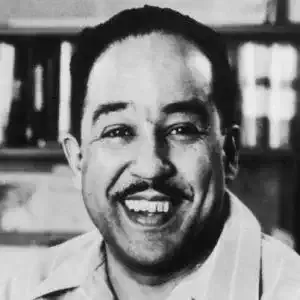
Langston Hughes
In Time Of Silver Rain
In time of silver rain
The earth puts forth new life again,
Green grasses grow
And flowers lift their heads,
And over all the plain
The wonder spreads
Of Life,
Of Life,
Of life!
In time of silver rain
The butterflies lift silken wings
To catch a rainbow cry,
And trees put forth new leaves to sing
In joy beneath the sky
As down the roadway
Passing boys and girls
Go singing, too,
In time of silver rain When spring
And life
Are new.
416

Henry Wadsworth Longfellow
The Brook. (From The Spanish)
Laugh of the mountain! -- lyre of bird and tree!
Pomp of the meadow! mirror of the morn!
The soul of April, unto whom are born
The rose and jessamine, leaps wild in thee!
Although, where'er thy devious current strays,
The lap of earth with gold and silver teems,
To me thy clear proceeding brighter seems
Than golden sands, that charm each shepherd's gaze.
How without guile thy bosom, all transparent
As the pure crystal, lets the curious eye
Thy secrets scan, thy smooth, round pebbles count!
How, without malice murmuring, glides thy current!
O sweet simplicity of days gone by!
Thou shun'st the haunts of man, to dwell in limpid fount!
415

William Shakespeare
Hark! Hark! The Lark
Hark! hark! the lark at heaven's gate sings,
And Phoebus 'gins arise,
His steeds to water at those springs
On chalic'd flowers that lies;
And winking Mary-buds begin
To ope their golden eyes;
With everything that pretty is,
My lady sweet, arise:
Arise, arise!
And Phoebus 'gins arise,
His steeds to water at those springs
On chalic'd flowers that lies;
And winking Mary-buds begin
To ope their golden eyes;
With everything that pretty is,
My lady sweet, arise:
Arise, arise!
417
John Clare
Dyke Side
The frog croaks loud, and maidens dare not pass
But fear the noisome toad and shun the grass;
And on the sunny banks they dare not go
Where hissing snakes run to the flood below.
The nuthatch noises loud in wood and wild,
Like women turning skreeking to a child.
The schoolboy hears and brushes through the trees
And runs about till drabbled to the knees.
The old hawk winnows round the old crow's nest;
The schoolboy hears and wonder fills his breast.
He throws his basket down to climb the tree
And wonders what the red blotched eggs can be:
The green woodpecker bounces from the view
And hollos as he buzzes bye 'kew kew.'
417
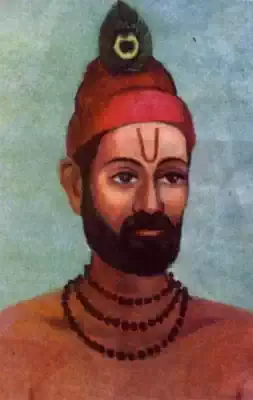
Kabir
When The Day Came
When the Day came -
The Day I had lived and died for -
The Day that is not in any calendar -
Clouds heavy with love
Showered me with wild abundance.
Inside me, my soul was drenched.
Around me, even the desert grew green.
The Day I had lived and died for -
The Day that is not in any calendar -
Clouds heavy with love
Showered me with wild abundance.
Inside me, my soul was drenched.
Around me, even the desert grew green.
416
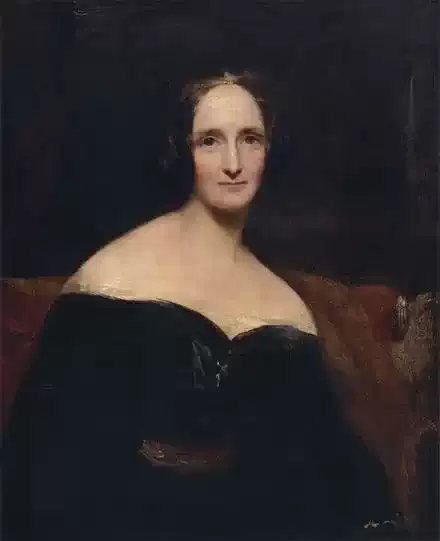
Percy Bysshe Shelley
The Invitation
BEST and brightest, come away!
Fairer far than this fair Day,
Which, like thee to those in sorrow,
Comes to bid a sweet good-morrow
To the rough Year just awake
In its cradle on the brake.
The brightest hour of unborn Spring,
Through the winter wandering,
Found, it seems, the halcyon Morn
To hoar February born.
Bending from heaven, in azure mirth,
It kiss'd the forehead of the Earth;
And smiled upon the silent sea;
And bade the frozen streams be free;
And waked to music all their fountains;
And breathed upon the frozen mountains;
And like a prophetess of May
Strew'd flowers upon the barren way,
Making the wintry world appear
Like one on whom thou smilest, dear.
Away, away, from men and towns,
To the wild wood and the downs--
To the silent wilderness
Where the soul need not repress
Its music lest it should not find
An echo in another's mind,
While the touch of Nature's art
Harmonizes heart to heart.
I leave this notice on my door
For each accustom'd visitor:--
'I am gone into the fields
To take what this sweet hour yields.
Reflection, you may come to-morrow;
Sit by the fireside with Sorrow.
You with the unpaid bill, Despair,--
You, tiresome verse-reciter, Care,--
I will pay you in the grave,--
Death will listen to your stave.
Expectation too, be off!
To-day is for itself enough.
Hope, in pity mock not Woe
With smiles, nor follow where I go;
Long having lived on your sweet food,
At length I find one moment's good
After long pain: with all your love,
This you never told me of.'
Radiant Sister of the Day,
Awake! arise! and come away!
To the wild woods and the plains;
And the pools where winter rains
Image all their roof of leaves;
Where the pine its garland weaves
Of sapless green and ivy dun
Round stems that never kiss the sun;
Where the lawns and pastures be,
And the sandhills of the sea;
Where the melting hoar-frost wets
The daisy-star that never sets,
And wind-flowers, and violets
Which yet join not scent to hue,
Crown the pale year weak and new;
When the night is left behind
In the deep east, dun and blind,
And the blue noon is over us,
And the multitudinous
Billows murmur at our feet
Where the earth and ocean meet,
And all things seem only one
In the universal sun.
416

William Blake
Nurse's Song (Innocence)
When voices of children are heard on the green
And laughing is heard on the hill,
My heart is at rest within my breast
And everything else is still
Then come home my children the sun is gone down
And the dews of night arise
Come come leave off play, and let us away
Till the morning appears in the skies
No no let us play, for it is yet day
And we cannot go to sleep
Besides in the sky, the little birds fly
And the hills are all covered with sheep
Well well go & play till the light fades away
And then go home to bed
The little ones leaped & shouted & laugh'd
And all the hills echoed
418
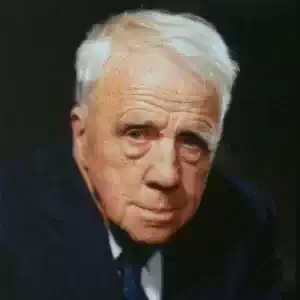
Robert Frost
Fireflies in the Garden
Here come real stars to fill the upper skies,
And here on earth come emulating flies,
That though they never equal stars in size,
(And they were never really stars at heart)
Achieve at times a very star-like start.
Only, of course, they can't sustain the part.
And here on earth come emulating flies,
That though they never equal stars in size,
(And they were never really stars at heart)
Achieve at times a very star-like start.
Only, of course, they can't sustain the part.
415
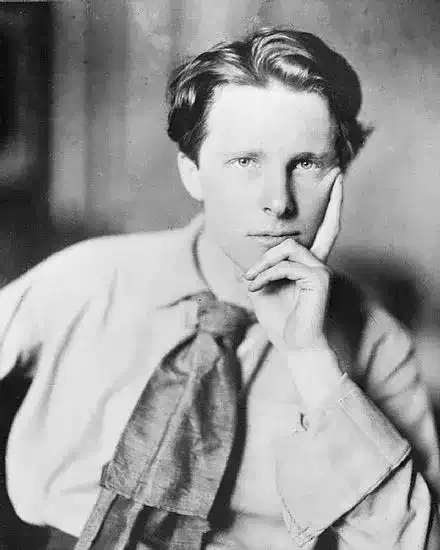
Rupert Brooke
The Goddess in the Wood
In a flowered dell the Lady Venus stood,
Amazed with sorrow. Down the morning one
Far golden horn in the gold of trees and sun
Rang out; and held; and died.… She thought the wood
Grew quieter. Wing, and leaf, and pool of light
Forgot to dance. Dumb lay the unfalling stream;
Life one eternal instant rose in dream
Clear out of time, poised on a golden height.…
Till a swift terror broke the abrupt hour.
The gold waves purled amidst the green above her;
And a bird sang. With one sharp-taken breath,
By sunlit branches and unshaken flower,
The immortal limbs flashed to the human lover,
And the immortal eyes to look on death.
413

William Wordsworth
The Green Linnet
BENEATH these fruit-tree boughs that shed
Their snow-white blossoms on my head,
With brightest sunshine round me spread
Of spring's unclouded weather,
In this sequestered nook how sweet
To sit upon my orchard-seat!
And birds and flowers once more to greet,
My last year's friends together.
One have I marked, the happiest guest
In all this covert of the blest:
Hail to Thee, far above the rest
In joy of voice and pinion!
Thou, Linnet! in thy green array,
Presiding Spirit here today,
Dost lead the revels of the May;
And this is thy dominion.
While bird, and butterflies, and flowers,
Make all one band of paramours,
Thou, ranging up and down the bowers,
Art sole in thy employment:
A Life, a Presence like the Air,
Scattering thy gladness without care,
Too blest with any one to pair;
Thyself thy own enjoyment.
Amid yon tuft of hazel trees,
That twinkle to the gusty breeze,
Behold him perched in ecstasies,
Yet seeming still to hover;
There! where the flutter of his wings
Upon his back and body flings
Shadows and sunny glimmerings,
That cover him all over.
My dazzled sight he oft deceives,
A Brother of the dancing leaves;
Then flits, and from the cottage eaves
Pours forth his song in gushes;
As if by that exulting strain
He mocked and treated with disdain
The voiceless Form he chose to feign,
While fluttering in the bushes.
415