
Animals and Nature
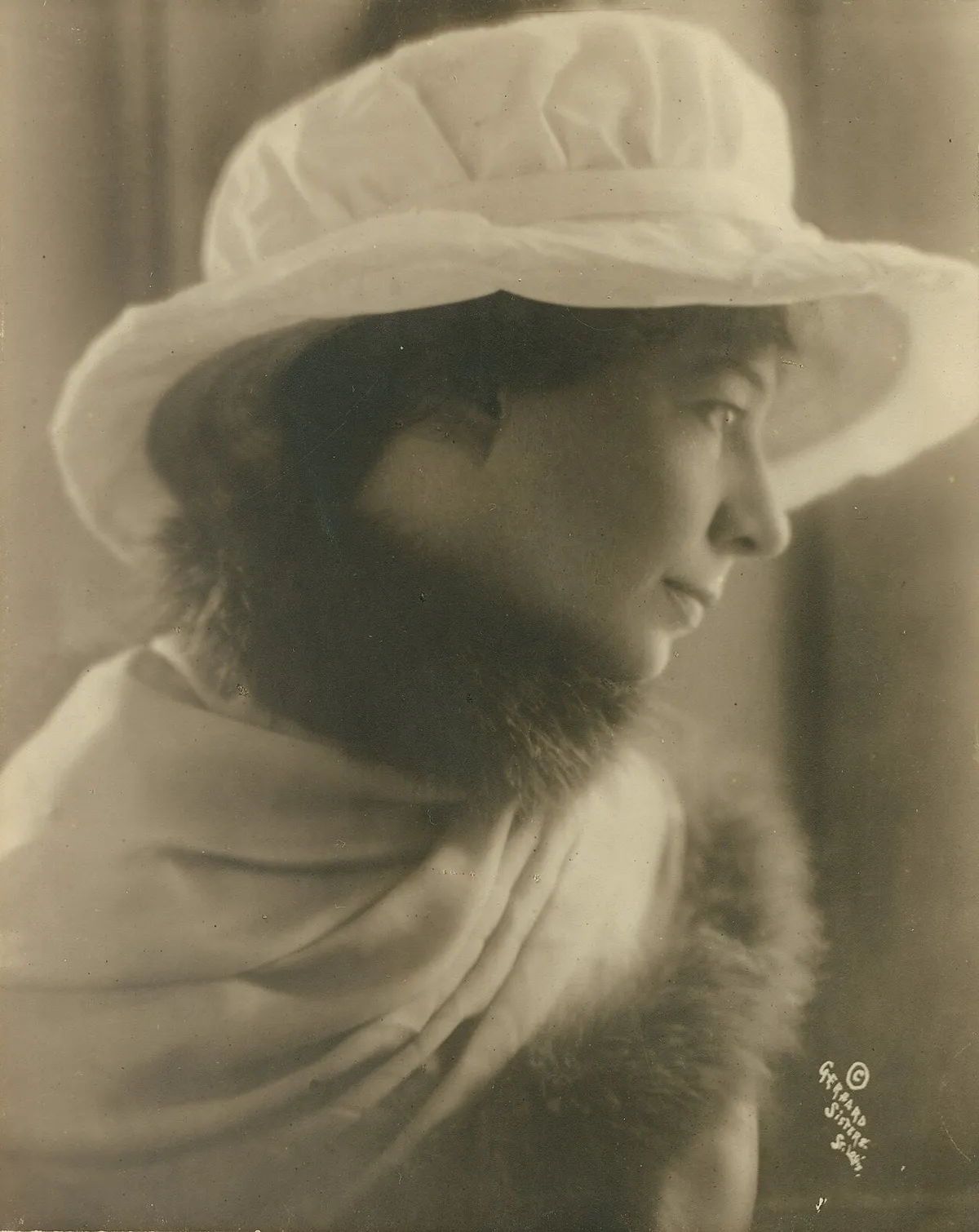
Sara Teasdale
Redbirds
Redbirds, redbirds,
Long and long ago,
What a honey-call you had
In hills I used to know;
Redbud, buckberry,
Wild plum-tree
And proud river sweeping
Southward to the sea,
Brown and gold in the sun
Sparkling far below,
Trailing stately round her bluffs
Where the poplars grow --
Redbirds, redbirds,
Are you singing still
As you sang one May day
On Saxton's Hill?
413

William Butler Yeats
The Fairy Pendant
Scene: A circle of Druidic stones
First Fairy: Afar from our lawn and our levee,
O sister of sorrowful gaze!
Where the roses in scarlet are heavy
And dream of the end of their days,
You move in another dominion
And hang o'er the historied stone:
Unpruned in your beautiful pinion
Who wander and whisper alone.
All: Come away while the moon's in the woodland,
We'll dance and then feast in a dairy.
Though youngest of all in our good band,
You are wasting away, little fairy.
Second Fairy: Ah! cruel ones, leave me alone now
While I murmur a little and ponder
The history here in the stone now;
Then away and away I will wander,
And measure the minds of the flowers,
And gaze on the meadow-mice wary,
And number their days and their hours--
All: You're wasting away, little fairy.
Second Fairy: O shining ones, lightly with song pass,
Ah! leave me, I pray you and beg.
My mother drew forth from the long grass
A piece of a nightingle's egg,
And cradled me here where are sung,
Of birds even, longings for aery
Wild wisdoms of spirit and tongue.
All: You're wasting away, little fairy.
First Fairy [turning away]: Though the tenderest roses were round you,
The soul of this pitiless place
With pitiless magic has bound you--
Ah! woe for the loss of your face,
And the loss of your laugh with its lightness--
Ah! woe for your wings and your head--
Ah! woe for your eyes and their brightness--
Ah! woe for your slippers of red.
We'll dance and then feast in a dairy.
Though youngest of all in our good band,
She's wasting away, little fairy.
415

Rudyard Kipling
Red Dog
For our white and our excellent nights--for the nights of swift
running,
Fair ranging, far seeing, good hunting, sure cunning!
For the smells of the dawning, untainted, ere dew has departed!
For the rush through the mist, and the quarry blind-started!
For the cry of our mates when the sambhur has wheeled and is
standing at bay!
For the risk and the riot of night!
For the sleep at the lair-mouth by day!
It is met, and we go to the fight.
Bay! O bay!
415
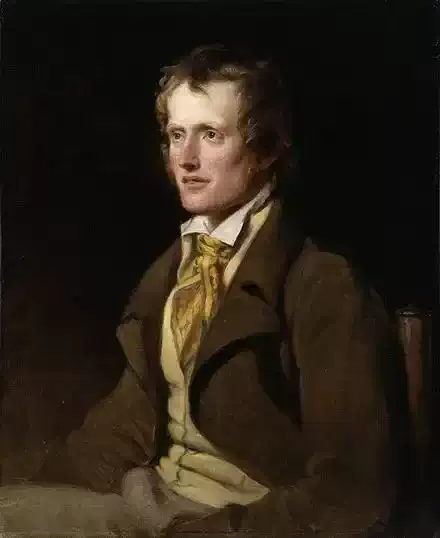
John Clare
Wood Rides
Who hath not felt the influence that so calms
The weary mind in summers sultry hours
When wandering thickest woods beneath the arms
Of ancient oaks and brushing nameless flowers
That verge the little ride who hath not made
A minutes waste of time and sat him down
Upon a pleasant swell to gaze awhile
On crowding ferns bluebells and hazel leaves
And showers of lady smocks so called by toil
When boys sprote gathering sit on stulps and weave
Garlands while barkmen pill the fallen tree
-Then mid the green variety to start
Who hath (not) met that mood from turmoil free
And felt a placid joy refreshed at heart
412

Emily Dickinson
I robbed the Woods
I robbed the Woods-
The trusting Woods.
The unsuspecting Trees
Brought out their Burs and mosses
My fantasy to please.
I scanned their trinkets curious-I grasped-I bore away-
What will the solemn Hemlock-
What will the Oak tree say?
The trusting Woods.
The unsuspecting Trees
Brought out their Burs and mosses
My fantasy to please.
I scanned their trinkets curious-I grasped-I bore away-
What will the solemn Hemlock-
What will the Oak tree say?
410

Walt Whitman
The Torch
ON my northwest coast in the midst of the night, a fishermen's group
stands watching;
Out on the lake, that expands before them, others are spearing
salmon;
The canoe, a dim shadowy thing, moves across the black water,
Bearing a Torch a-blaze at the prow.
stands watching;
Out on the lake, that expands before them, others are spearing
salmon;
The canoe, a dim shadowy thing, moves across the black water,
Bearing a Torch a-blaze at the prow.
411

Henry Wadsworth Longfellow
Hiawatha's Fishing
Forth upon the Gitche Gumee,
On the shining Big-Sea-Water,
With his fishing-line of cedar,
Of the twisted bark of cedar,
Forth to catch the sturgeon Nahma,
Mishe-Nahma, King of Fishes,
In his birch canoe exulting
All alone went Hiawatha.
Through the clear, transparent water
He could see the fishes swimming
Far down in the depths below him;
See the yellow perch, the Sahwa,
Like a sunbeam in the water,
See the Shawgashee, the craw-fish,
Like a spider on the bottom,
On the white and sandy bottom.
At the stern sat Hiawatha,
With his fishing-line of cedar;
In his plumes the breeze of morning
Played as in the hemlock branches;
On the bows, with tail erected,
Sat the squirrel, Adjidaumo;
In his fur the breeze of morning
Played as in the prairie grasses.
On the white sand of the bottom
Lay the monster Mishe-Nahma,
Lay the sturgeon, King of Fishes;
Through his gills he breathed the water,
With his fins he fanned and winnowed,
With his tail he swept the sand-floor.
There he lay in all his armor;
On each side a shield to guard him,
Plates of bone upon his forehead,
Down his sides and back and shoulders
Plates of bone with spines projecting
Painted was he with his war-paints,
Stripes of yellow, red, and azure,
Spots of brown and spots of sable;
And he lay there on the bottom,
Fanning with his fins of purple,
As above him Hiawatha
In his birch canoe came sailing,
With his fishing-line of cedar.
"Take my bait," cried Hiawatha,
Dawn into the depths beneath him,
"Take my bait, O Sturgeon, Nahma!
Come up from below the water,
Let us see which is the stronger!"
And he dropped his line of cedar
Through the clear, transparent water,
Waited vainly for an answer,
Long sat waiting for an answer,
And repeating loud and louder,
"Take my bait, O King of Fishes!"
Quiet lay the sturgeon, Nahma,
Fanning slowly in the water,
Looking up at Hiawatha,
Listening to his call and clamor,
His unnecessary tumult,
Till he wearied of the shouting;
And he said to the Kenozha,
To the pike, the Maskenozha,
"Take the bait of this rude fellow,
Break the line of Hiawatha!"
In his fingers Hiawatha
Felt the loose line jerk and tighten,
As he drew it in, it tugged so
That the birch canoe stood endwise,
Like a birch log in the water,
With the squirrel, Adjidaumo,
Perched and frisking on the summit.
Full of scorn was Hiawatha
When he saw the fish rise upward,
Saw the pike, the Maskenozha,
Coming nearer, nearer to him,
And he shouted through the water,
"Esa! esa! shame upon you!
You are but the pike, Kenozha,
You are not the fish I wanted,
You are not the King of Fishes!"
Reeling downward to the bottom
Sank the pike in great confusion,
And the mighty sturgeon, Nahma,
Said to Ugudwash, the sun-fish,
To the bream, with scales of crimson,
"Take the bait of this great boaster,
Break the line of Hiawatha!"
Slowly upward, wavering, gleaming,
Rose the Ugudwash, the sun-fish,
Seized the line of Hiawatha,
Swung with all his weight upon it,
Made a whirlpool in the water,
Whirled the birch canoe in circles,
Round and round in gurgling eddies,
Till the circles in the water
Reached the far-off sandy beaches,
Till the water-flags and rushes
Nodded on the distant margins.
But when Hiawatha saw him
Slowly rising through the water,
Lifting up his disk refulgent,
Loud he shouted in derision,
"Esa! esa! shame upon you!
You are Ugudwash, the sun-fish,
You are not the fish I wanted,
You are not the King of Fishes!"
Slowly downward, wavering, gleaming,
Sank the Ugudwash, the sun-fish,
And again the sturgeon, Nahma,
Heard the shout of Hiawatha,
Heard his challenge of defiance,
The unnecessary tumult,
Ringing far across the water.
From the white sand of the bottom
Up he rose with angry gesture,
Quivering in each nerve and fibre,
Clashing all his plates of armor,
Gleaming bright with all his war-paint;
In his wrath he darted upward,
Flashing leaped into the sunshine,
Opened his great jaws, and swallowed
Both canoe and Hiawatha.
Down into that darksome cavern
Plunged the headlong Hiawatha,
As a log on some black river
Shoots and plunges down the rapids,
Found himself in utter darkness,
Groped about in helpless wonder,
Till he felt a great heart beating,
Throbbing in that utter darkness.
And he smote it in his anger,
With his fist, the heart of Nahma,
Felt the mighty King of Fishes
Shudder through each nerve and fibre,
Heard the water gurgle round him
As he leaped and staggered through it,
Sick at heart, and faint and weary.
Crosswise then did Hiawatha
Drag his birch-canoe for safety,
Lest from out the jaws of Nahma,
In the turmoil and confusion,
Forth he might be hurled and perish.
And the squirrel, Adjidaumo,
Frisked and chatted very gayly,
Toiled and tugged with Hiawatha
Till the labor was completed.
Then said Hiawatha to him,
"O my little friend, the squirrel,
Bravely have you toiled to help me;
Take the thanks of Hiawatha,
And the name which now he gives you;
For hereafter and forever
Boys shall call you Adjidaumo,
Tail-in-air the boys shall call you!"
And again the sturgeon, Nahma,
Gasped and quivered in the water,
Then was still, and drifted landward
Till he grated on the pebbles,
Till the listening Hiawatha
Heard him grate upon the margin,
Felt him strand upon the pebbles,
Knew that Nahma, King of Fishes,
Lay there dead upon the margin.
Then he heard a clang and flapping,
As of many wings assembling,
Heard a screaming and confusion,
As of birds of prey contending,
Saw a gleam of light above him,
Shining through the ribs of Nahma,
Saw the glittering eyes of sea-gulls,
Of Kayoshk, the sea-gulls, peering,
Gazing at him through the opening,
Heard them saying to each other,
"'T is our brother, Hiawatha!"
And he shouted from below them,
Cried exulting from the caverns:
"O ye sea-gulls! O my brothers!
I have slain the sturgeon, Nahma;
Make the rifts a little larger,
With your claws the openings widen,
Set me free from this dark prison,
And henceforward and forever
Men shall speak of your achievements,
Calling you Kayoshk, the sea-gulls,
Yes, Kayoshk, the Noble Scratchers!"
And the wild and clamorous sea-gulls
Toiled with beak and claws together,
Made the rifts and openings wider
In the mighty ribs of Nahma,
And from peril and from prison,
From the body of the sturgeon,
From the peril of the water,
They released my Hiawatha.
He was standing near his wigwam,
On the margin of the water,
And he called to old Nokomis,
Called and beckoned to Nokomis,
Pointed to the sturgeon, Nahma,
Lying lifeless on the pebbles,
With the sea-gulls feeding on him.
"I have slain the Mishe-Nahma,
Slain the King of Fishes!" said he'
"Look! the sea-gulls feed upon him,
Yes, my friends Kayoshk, the sea-gulls;
Drive them not away, Nokomis,
They have saved me from great peril
In the body of the sturgeon,
Wait until their meal is ended,
Till their craws are full with feasting,
Till they homeward fly, at sunset,
To their nests among the marshes;
Then bring all your pots and kettles,
And make oil for us in Winter."
And she waited till the sun set,
Till the pallid moon, the Night-sun,
Rose above the tranquil water,
Till Kayoshk, the sated sea-gulls,
From their banquet rose with clamor,
And across the fiery sunset
Winged their way to far-off islands,
To their nests among the rushes.
To his sleep went Hiawatha,
And Nokomis to her labor,
Toiling patient in the moonlight,
Till the sun and moon changed places,
Till the sky was red with sunrise,
And Kayoshk, the hungry sea-gulls,
Came back from the reedy islands,
Clamorous for their morning banquet.
Three whole days and nights alternate
Old Nokomis and the sea-gulls
Stripped the oily flesh of Nahma,
Till the waves washed through the rib-bones,
Till the sea-gulls came no longer,
And upon the sands lay nothing
But the skeleton of Nahma.
410
John Clare
The Lout
For Sunday's play he never makes excuse,
But plays at taw, and buys his Spanish juice.
Hard as his toil, and ever slow to speak,
Yet he gives maidens many a burning cheek;
For none can pass him but his witless grace
Of bawdry brings the blushes in her face.
As vulgar as the dirt he treads upon
He calls his cows or drives his horses on;
He knows the lamest cow and strokes her side
And often tries to mount her back and ride,
And takes her tail at night in idle play,
And makes her drag him homeward all the way.
He knows of nothing but the football match,
And where hens lay, and when the duck will hatch.
411

Ezra Pound
Canto XLIX: For the Seven Lakes
For the seven lakes, and by no man these verses:
Rain; empty river; a voyage,
Fire from frozen cloud, heavy rain in the twilight
Under the cabin roof was one lantern.
The reeds are heavy; bent;
and the bamboos speak as if weeping.
Autumn moon; hills rise about lakes
against sunset
Evening is like a curtain of cloud,
a blurr above ripples; and through it
sharp long spikes of the cinnamon,
a cold tune amid reeds.
Behind hill the monk's bell
borne on the wind.
Sail passed here in April; may return in October
Boat fades in silver; slowly;
Sun blaze alone on the river.
Where wine flag catches the sunset
Sparse chimneys smoke in the cross light
Comes then snow scur on the river
And a world is covered with jade
Small boat floats like a lanthorn,
The flowing water closts as with cold. And at San Yin
they are a people of leisure.
Wild geese swoop to the sand-bar,
Clouds gather about the hole of the window
Broad water; geese line out with the autumn
Rooks clatter over the fishermen's lanthorns,
A light moves on the north sky line;
where the young boys prod stones for shrimp.
In seventeen hundred came Tsing to these hill lakes.
A light moves on the South sky line.
State by creating riches shd. thereby get into debt?
This is infamy; this is Geryon.
This canal goes still to TenShi
Though the old king built it for pleasure
K E I M E N R A N K E I
K I U M A N M A N K E I
JITSU GETSU K O K W A
T A N FUKU T A N K A I
Sun up; work
sundown; to rest
dig well and drink of the water
dig field; eat of the grain
Imperial power is? and to us what is it?
The fourth; the dimension of stillness.
And the power over wild beasts.
407

John Greenleaf Whittier
Wordsworth
WRITTEN ON A BLANK LEAF OF HIS MEMOIRS.
Dear friends, who read the world aright,
And in its common forms discern
A beauty and a harmony
The many never learn!
Kindred in soul of him who found
In simple flower and leaf and stone
The impulse of the sweetest lays
Our Saxon tongue has known,-
Accept this record of a life
As sweet and pure, as calm and good,
As a long day of blandest June
In green field and in wood.
How welcome to our ears, long pained
By strife of sect and party noise,
The brook-like murmur of his song
Of nature's simple joys!
The violet' by its mossy stone,
The primrose by the river's brim,
And chance-sown daffodil, have found
Immortal life through him.
The sunrise on his breezy lake,
The rosy tints his sunset brought,
World-seen, are gladdening all the vales
And mountain-peaks of thought.
Art builds on sand; the works of pride
And human passion change and fall;
But that which shares the life of God
With Him surviveth all.
409

Robert Louis Stevenson
In Lupum
BEYOND the gates thou gav'st a field to till;
I have a larger on my window-sill.
A farm, d'ye say? Is this a farm to you,
Where for all woods I spay one tuft of rue,
And that so rusty, and so small a thing,
One shrill cicada hides it with a wing;
Where one cucumber covers all the plain;
And where one serpent rings himself in vain
To enter wholly; and a single snail
Eats all and exit fasting to the pool?
Here shall my gardener be the dusty mole.
My only ploughman the . . . mole.
Here shall I wait in vain till figs be set,
And till the spring disclose the violet.
Through all my wilds a tameless mouse careers,
And in that narrow boundary appears,
Huge as the stalking lion of Algiers,
Huge as the fabled boar of Calydon.
And all my hay is at one swoop impresst
By one low-flying swallow for her nest,
Strip god Priapus of each attribute
Here finds he scarce a pedestal to foot.
The gathered harvest scarcely brims a spoon;
And all my vintage drips in a cocoon.
Generous are you, but I more generous still:
Take back your farm and stand me half a gill!
408
John Clare
The Ants
What wonder strikes the curious, while he views
The black ant's city, by a rotten tree,
Or woodland bank! In ignorance we muse:
Pausing, annoyed,--we know not what we see,
Such government and thought there seem to be;
Some looking on, and urging some to toil,
Dragging their loads of bent-stalks slavishly:
And what's more wonderful, when big loads foil
One ant or two to carry, quickly then
A swarm flock round to help their fellow-men.
Surely they speak a language whisperingly,
Too fine for us to hear; and sure their ways
Prove they have kings and laws, and that they be
Deformed remnants of the Fairy-days.
408
John Clare
The Fens
Wandering by the river's edge,
I love to rustle through the sedge
And through the woods of reed to tear
Almost as high as bushes are.
Yet, turning quick with shudder chill,
As danger ever does from ill,
Fear's moment ague quakes the blood,
While plop the snake coils in the flood
And, hissing with a forked tongue,
Across the river winds along.
In coat of orange, green, and blue
Now on a willow branch I view,
Grey waving to the sunny gleam,
Kingfishers watch the ripple stream
For little fish that nimble bye
And in the gravel shallows lie.
Eddies run before the boats,
Gurgling where the fisher floats,
Who takes advantage of the gale
And hoists his handkerchief for sail
On osier twigs that form a mast--
While idly lies, nor wanted more,
The spirit that pushed him on before.
There's not a hill in all the view,
Save that a forked cloud or two
Upon the verge of distance lies
And into mountains cheats the eyes.
And as to trees the willows wear
Lopped heads as high as bushes are;
Some taller things the distance shrouds
That may be trees or stacks or clouds
Or may be nothing; still they wear
A semblance where there's nought to spare.
Among the tawny tasselled reed
The ducks and ducklings float and feed.
With head oft dabbing in the flood
They fish all day the weedy mud,
And tumbler-like are bobbing there,
Heels topsy turvy in the air.
The geese in troops come droving up,
Nibble the weeds, and take a sup;
And, closely puzzled to agree,
Chatter like gossips over tea.
The gander with his scarlet nose
When strife's at height will interpose;
And, stretching neck to that and this,
With now a mutter, now a hiss,
A nibble at the feathers too,
A sort of 'pray be quiet do,'
And turning as the matter mends,
He stills them into mutual friends;
Then in a sort of triumph sings
And throws the water oer his wings.
Ah, could I see a spinney nigh,
A puddock riding in the sky
Above the oaks with easy sail
On stilly wings and forked tail,
Or meet a heath of furze in flower,
I might enjoy a quiet hour,
Sit down at rest, and walk at ease,
And find a many things to please.
But here my fancy's moods admire
The naked levels till they tire,
Nor een a molehill cushion meet
To rest on when I want a seat.
Here's little save the river scene
And grounds of oats in rustling green
And crowded growth of wheat and beans,
That with the hope of plenty leans
And cheers the farmer's gazing brow,
Who lives and triumphs in the plough--
One sometimes meets a pleasant sward
Of swarthy grass; and quickly marred
The plough soon turns it into brown,
And, when again one rambles down
The path, small hillocks burning lie
And smoke beneath a burning sky.
Green paddocks have but little charms
With gain the merchandise of farms;
And, muse and marvel where we may,
Gain mars the landscape every day--
The meadow grass turned up and copt,
The trees to stumpy dotterels lopt,
The hearth with fuel to supply
For rest to smoke and chatter bye;
Giving the joy of home delights,
The warmest mirth on coldest nights.
And so for gain, that joy's repay,
Change cheats the landscape every day,
Nor trees nor bush about it grows
That from the hatchet can repose,
And the horizon stooping smiles
Oer treeless fens of many miles.
Spring comes and goes and comes again
And all is nakedness and fen.
406
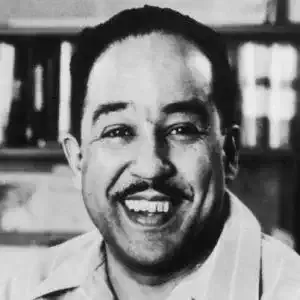
Langston Hughes
Snake
He glides so swiftly
Back into the grass-
Gives me the courtesy of road
To let me pass,
That I am half ashamed
To seek a stone
To kill him.
Back into the grass-
Gives me the courtesy of road
To let me pass,
That I am half ashamed
To seek a stone
To kill him.
405
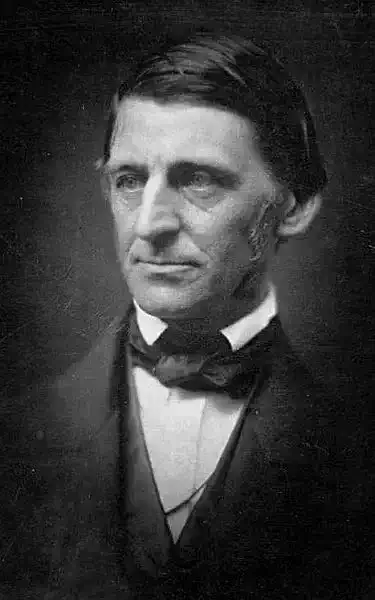
Ralph Waldo Emerson
Seashore
I heard or seemed to hear the chiding Sea
Say, Pilgrim, why so late and slow to come?
Am I not always here, thy summer home?
Is not my voice thy music, morn and eve?
My breath thy healthful climate in the heats,
My touch thy antidote, my bay thy bath?
Was ever building like my terraces?
Was ever couch magnificent as mine?
Lie on the warm rock-ledges, and there learn
A little hut suffices like a town.
I make your sculptured architecture vain,
Vain beside mine. I drive my wedges home,
And carve the coastwise mountain into caves.
Lo! here is Rome and Nineveh and Thebes,
Karnak and Pyramid and Giant's Stairs
Half piled or prostrate; and my newest slab
Older than all thy race.
Behold the Sea,
The opaline, the plentiful and strong,
Yet beautiful as is the rose in June,
Fresh as the trickling rainbow of July;
Sea full of food, the nourisher of kinds,
Purger of earth, and medicine of men;
Creating a sweet climate by my breath,
Washing out harms and griefs from memory,
And, in my mathematic ebb and flow,
Giving a hint of that which changes not.
Rich are the sea-gods:--who gives gifts but they?
They grope the sea for pearls, but more than pearls:
They pluck Force thence, and give it to the wise.
For every wave is wealth to Dædalus,
Wealth to the cunning artist who can work
This matchless strength. Where shall he find, O waves!
A load your Atlas shoulders cannot lift?
I with my hammer pounding evermore
The rocky coast, smite Andes into dust,
Strewing my bed, and, in another age,
Rebuild a continent of better men.
Then I unbar the doors: my paths lead out
The exodus of nations: I dispersed
Men to all shores that front the hoary main.
I too have arts and sorceries;
Illusion dwells forever with the wave.
I know what spells are laid. Leave me to deal
With credulous and imaginative man;
For, though he scoop my water in his palm,
A few rods off he deems it gems and clouds.
Planting strange fruits and sunshine on the shore,
I make some coast alluring, some lone isle,
To distant men, who must go there, or die.
405
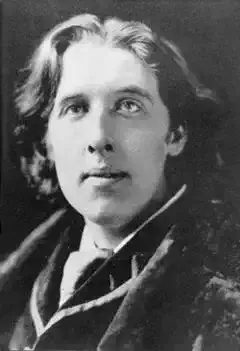
Oscar Wilde
Impression - Le Reveillon
The sky is laced with fitful red,
The circling mists and shadows flee,
The dawn is rising from the sea,
Like a white lady from her bed.
And jagged brazen arrows fall
Athwart the feathers of the night,
And a long wave of yellow light
Breaks silently on tower and hall,
And spreading wide across the wold
Wakes into flight some fluttering bird,
And all the chestnut tops are stirred,
And all the branches streaked with gold.
405

Johann Wolfgang von Goethe
The Dilettante And The Critic
A BOY a pigeon once possess'd,
In gay and brilliant plumage dress'd;
He loved it well, and in boyish sport
Its food to take from his mouth he taught,
And in his pigeon he took such pride,
That his joy to others he needs must confide.
An aged fox near the place chanc'd to dwell,
Talkative, clever, and learned as well;
The boy his society used to prize,
Hearing with pleasure his wonders and lies.
"My friend the fox my pigeon must see
He ran, and stretch'd 'mongst the bushes lay he
"Look, fox, at my pigeon, my pigeon so fair!
His equal I'm sure thou hast look'd upon ne'er!"
"Let's see!"--The boy gave it.--"'Tis really not bad;
And yet, it is far from complete, I must add.
The feathers, for, instance, how short! 'Tis absurd!"
So he set to work straightway to pluck the poor bird.
The boy screamed.--"Thou must now stronger pinions supply,
Or else 'twill be ugly, unable to fly."--
Soon 'twas stripp'd--oh, the villain!--and torn all to pieces.
The boy was heart-broken,--and so my tale ceases.
He who sees in the boy shadow'd forth his own case,
Should be on his guard 'gainst the fox's whole race.
403
Johann Wolfgang von Goethe
The Fox And The Crane
ONCE two persons uninvited
Came to join my dinner table;
For the nonce they lived united,
Fox and crane yclept in fable.
Civil greetings pass'd between us
Then I pluck'd some pigeons tender
For the fox of jackal-genius,
Adding grapes in full-grown splendour.
Long-neck'd flasks I put as dishes
For the crane, without delaying,
Fill'd with gold and silver fishes,
In the limpid water playing.
Had ye witness'd Reynard planted
At his flat plate, all demurely,
Ye with envy must have granted:
"Ne'er was such a gourmand, surely!"
While the bird with circumspection
On one foot, as usual, cradled,
From the flasks his fish-refection
With his bill and long neck ladled.
One the pigeons praised,--the other,
As they went, extoll'd the fishes,
Each one scoffing at his brother
For preferring vulgar dishes.
*
If thou wouldst preserve thy credit,
When thou askest folks to guzzle
At thy hoard, take care to spread it
Suited both for bill and muzzle.
403
William Butler Yeats
Anashuya And Vijaya
A little Indian temple in the Golden Age. Around it a garden;
around that the forest. Anashuya, the young priestess, kneelinq
within the temple.
Anashuya. Send peace on all the lands and flickering
corn. --
O, may tranquillity walk by his elbow
When wandering in the forest, if he love
No other. -- Hear, and may the indolent flocks
Be plentiful. -- And if he love another,
May panthers end him. -- Hear, and load our king
With wisdom hour by hour. -- May we two stand,
When we are dead, beyond the setting suns,
A little from the other shades apart,
With mingling hair, and play upon one lute.
Vijaya [entering and throwing a lily at her]. Hail! hail, my
Anashuya.
Anashuya. No: be still.
I, priestess of this temple, offer up
prayers for the land.
Vijaya. I will wait here, Amrita.
Anashuya. By mighty Brahma's ever-rustling robe,
Who is Amrita? Sorrow of all sorrows!
Another fills your mind.
Vijaya. My mother's name.
Anashuya [sings, coming out of the temple].
A sad, sad thought went by me slowly:
Sigh, O you little stars.! O sigh and shake your blue
apparel.!
The sad, sad thought has gone from me now wholly:
Sing, O you little stars.! O sing and raise your rapturous
carol
To mighty Brahma, be who made you many as the sands,
And laid you on the gates of evening with his quiet hands.
(Sits down on the steps of the temple.j
Vijaya, I have brought my evening rice;
The sun has laid his chin on the grey wood,
Weary, with all his poppies gathered round him.
Vijaya. The hour when Kama, full of sleepy laughter,
Rises, and showers abroad his fragrant arrows,
Piercing the twilight with their murmuring barbs.
Anashuya. See-how the sacred old flamingoes come.
Painting with shadow all the marble steps:
Aged and wise, they seek their wonted perches
Within the temple, devious walking, made
To wander by their melancholy minds.
Yon tall one eyes my supper; chase him away,
Far, far away. I named him after you.
He is a famous fisher; hour by hour
He ruffles with his bill the minnowed streams.
Ah! there he snaps my rice. I told you so.
Now cuff him off. He's off! A kiss for you,
Because you saved my rice. Have you no thanks?
Vijaya [sings]. Sing you of her, O first few stars,
Whom Brahma, touching with his finger, praises, for you
hold
The van of wandering quiet; ere you be too calm and old,
Sing, turning in your cars,
Sing, till you raise your hands and sigh, and from your carheads
peer,
With all your whirling hair, and drop many an azure tear.
Anashuya. What know the pilots of the stars of tears?
Vijaya. Their faces are all worn, and in their eyes
Flashes the fire of sadness, for they see
The icicles that famish all the North,
Where men lie frozen in the glimmering snow;
And in the flaming forests cower the lion
And lioness, with all their whimpering cubs;
And, ever pacing on the verge of things,
The phantom, Beauty, in a mist of tears;
While we alone have round us woven woods,
And feel the softness of each other's hand,
Amrita, while -- -
Anashuya [going away from him].
Ah me! you love another,
[Bursting into tears.]
And may some sudden dreadful ill befall her!
Vijaya. I loved another; now I love no other.
Among the mouldering of ancient woods
You live, and on the village border she,
With her old father the blind wood-cutter;
I saw her standing in her door but now.
Anashuya. Vijaya, swear to love her never more.
Vijaya. Ay, ay.
Anashuya. Swear by the parents of the gods,
Dread oath, who dwell on sacred Himalay,
On the far Golden peak; enormous shapes,
Who still were old when the great sea was young;
On their vast faces mystery and dreams;
Their hair along the mountains rolled and filled
From year to year by the unnumbered nests
Of aweless birds, and round their stirless feet
The joyous flocks of deer and antelope,
Who never hear the unforgiving hound.
Swear!
Vijaya. By the parents of the gods, I swear.
Anashuya [sings]. I have forgiven, O new star!
Maybe you have not heard of us, you have come forth so
newly,
You hunter of the fields afar!
Ah, you will know my loved one by his hunter's arrows
truly,
Shoot on him shafts of quietness, that he may ever keep
A lonely laughter, and may kiss his hands to me in sleep.
Farewell, Vijaya. Nay, no word, no word;
I, priestess of this temple, offer up
Prayers for the land.
[Vijaya goes.]
O Brahma, guard in sleep
The merry lambs and the complacent kine,
The flies below the leaves, and the young mice
In the tree roots, and all the sacred flocks
Of red flamingoes; and my love, Vijaya;
And may no restless fay with fidget finger
Trouble his sleeping: give him dreams of me.
401

Nazim Hikmet
Things I Didn't Know I Loved
it's March th
I'm sitting by the window on the Prague-Berlin train
night is falling
I never knew I liked
night descending like a tired bird on a smoky wet plain
I don't like
comparing nightfall to a tired bird
I didn't know I loved the earth
can someone who hasn't worked the earth love it
I've never worked the earth
it must be my only Platonic love
and here I've loved rivers all this time
whether motionless like this they curl skirting the hills
European hills crowned with chateaus
or whether stretched out flat as far as the eye can see
I know you can't wash in the same river even once
I know the river will bring new lights you'll never see
I know we live slightly longer than a horse but not nearly as long as a crow
I know this has troubled people before
and will trouble those after me
I know all this has been said a thousand times before
and will be said after me
I didn't know I loved the sky
cloudy or clear
the blue vault Andrei studied on his back at Borodino
in prison I translated both volumes of War and Peace into Turkish
I hear voices
not from the blue vault but from the yard
the guards are beating someone again
I didn't know I loved trees
bare beeches near Moscow in Peredelkino
they come upon me in winter noble and modest
beeches are Russian the way poplars are Turkish
"the poplars of Izmir
losing their leaves. . .
they call me The Knife. . .
lover like a young tree. . .
I blow stately mansions sky-high"
in the Ilgaz woods in I tied an embroidered linen handkerchief
to a pine bough for luck
I never knew I loved roads
even the asphalt kind
Vera's behind the wheel we're driving from Moscow to the Crimea
Koktebele
formerly "Goktepé ili" in Turkish
the two of us inside a closed box
the world flows past on both sides distant and mute
I was never so close to anyone in my life
bandits stopped me on the red road between Bolu and Geredé
when I was eighteen
apart from my life I didn't have anything in the wagon they could take
and at eighteen our lives are what we value least
I've written this somewhere before
wading through a dark muddy street I'm going to the shadow play
Ramazan night
a paper lantern leading the way
maybe nothing like this ever happened
maybe I read it somewhere an eight-year-old boy
going to the shadow play
Ramazan night in Istanbul holding his grandfather's hand
his grandfather has on a fez and is wearing the fur coat
with a sable collar over his robe
and there's a lantern in the servant's hand
and I can't contain myself for joy
flowers come to mind for some reason
poppies cactuses jonquils
in the jonquil garden in Kadikoy Istanbul I kissed Marika
fresh almonds on her breath
I was seventeen
my heart on a swing touched the sky
I didn't know I loved flowers
friends sent me three red carnations in prison
I just remembered the stars
I love them too
whether I'm floored watching them from below
or whether I'm flying at their side
I have some questions for the cosmonauts
were the stars much bigger
did they look like huge jewels on black velvet
or apricots on orange
did you feel proud to get closer to the stars
I saw color photos of the cosmos in Ogonek magazine now don't
be upset comrades but nonfigurative shall we say or abstract
well some of them looked just like such paintings which is to
say they were terribly figurative and concrete
my heart was in my mouth looking at them
they are our endless desire to grasp things
seeing them I could even think of death and not feel at all sad
I never knew I loved the cosmos
snow flashes in front of my eyes
both heavy wet steady snow and the dry whirling kind
I didn't know I liked snow
I never knew I loved the sun
even when setting cherry-red as now
in Istanbul too it sometimes sets in postcard colors
but you aren't about to paint it that way
I didn't know I loved the sea
except the Sea of Azov
or how much
I didn't know I loved clouds
whether I'm under or up above them
whether they look like giants or shaggy white beasts
moonlight the falsest the most languid the most petit-bourgeois
strikes me
I like it
I didn't know I liked rain
whether it falls like a fine net or splatters against the glass my
heart leaves me tangled up in a net or trapped inside a drop
and takes off for uncharted countries I didn't know I loved
rain but why did I suddenly discover all these passions sitting
by the window on the Prague-Berlin train
is it because I lit my sixth cigarette
one alone could kill me
is it because I'm half dead from thinking about someone back in Moscow
her hair straw-blond eyelashes blue
the train plunges on through the pitch-black night
I never knew I liked the night pitch-black
sparks fly from the engine
I didn't know I loved sparks
I didn't know I loved so many things and I had to wait until sixty
to find it out sitting by the window on the Prague-Berlin train
watching the world disappear as if on a journey of no return
April
Moscow
Trans. by Randy Blasing and Mutlu Konuk ()
400
Ralph Waldo Emerson
My Garden
If I could put my woods in song
And tell what's there enjoyed,
All men would to my gardens throng,
And leave the cities void.
In my plot no tulips blow,--
Snow-loving pines and oaks instead;
And rank the savage maples grow
From Spring's faint flush to Autumn red.
My garden is a forest ledge
Which older forests bound;
The banks slope down to the blue lake-edge,
Then plunge to depths profound.
Here once the Deluge ploughed,
Laid the terraces, one by one;
Ebbing later whence it flowed,
They bleach and dry in the sun.
The sowers made haste to depart,--
The wind and the birds which sowed it;
Not for fame, nor by rules of art,
Planted these, and tempests flowed it.
Waters that wash my garden-side
Play not in Nature's lawful web,
They heed not moon or solar tide,--
Five years elapse from flood to ebb.
Hither hasted, in old time, Jove,
And every god,--none did refuse;
And be sure at last came Love,
And after Love, the Muse.
Keen ears can catch a syllable,
As if one spake to another,
In the hemlocks tall, untamable,
And what the whispering grasses smother.
Æolian harps in the pine
Ring with the song of the Fates;
Infant Bacchus in the vine,--
Far distant yet his chorus waits.
Canst thou copy in verse one chime
Of the wood-bell's peal and cry,
Write in a book the morning's prime,
Or match with words that tender sky?
Wonderful verse of the gods,
Of one import, of varied tone;
They chant the bliss of their abodes
To man imprisoned in his own.
Ever the words of the gods resound;
But the porches of man's ear
Seldom in this low life's round
Are unsealed, that he may hear.
Wandering voices in the air
And murmurs in the wold
Speak what I cannot declare,
Yet cannot all withhold.
When the shadow fell on the lake,
The whirlwind in ripples wrote
Air-bells of fortune that shine and break,
And omens above thought.
But the meanings cleave to the lake,
Cannot be carried in book or urn;
Go thy ways now, come later back,
On waves and hedges still they burn.
These the fates of men forecast,
Of better men than live to-day;
If who can read them comes at last
He will spell in the sculpture,'Stay.'
400
Emily Dickinson
I had been hungry all the years-
I had been hungry all the years-
My noon had come, to dine-
I, trembling, drew the table near
And touched the curious wine.
'T was this on tables I had seen
When turning, hungry, lone,
I looked in windows, for the wealth
I could not hope to own.
I did not know the ample bread,
'T was so unlike the crumb
The birds and I had often shared
In Nature's dining-room.
The plenty hurt me, 't was so new,--
Myself felt ill and odd,
As berry of a mountain bush
Transplanted to the road.
Nor was I hungry; so I found
That hunger was a way
Of persons outside windows,
The entering takes away.
400

William Wordsworth
There was a Boy
There was a Boy; ye knew him well, ye cliffs
And islands of Winander!--many a time,
At evening, when the earliest stars began
To move along the edges of the hills,
Rising or setting, would he stand alone,
Beneath the trees, or by the glimmering lake;
And there, with fingers interwoven, both hands
Pressed closely palm to palm and to his mouth
Uplifted, he, as through an instrument,
Blew mimic hootings to the silent owls,
That they might answer him.--And they would shout
Across the watery vale, and shout again,
Responsive to his call,--with quivering peals,
And long halloos, and screams, and echoes loud
Redoubled and redoubled; concourse wild
Of jocund din! And, when there came a pause
Of silence such as baffled his best skill:
Then, sometimes, in that silence, while he hung
Listening, a gentle shock of mild surprise
Has carried far into his heart the voice
Of mountain-torrents; or the visible scene
Would enter unawares into his mind
With all its solemn imagery, its rocks,
Its woods, and that uncertain heaven received
Into the bosom of the steady lake.
This boy was taken from his mates, and died
In childhood, ere he was full twelve years old.
Pre-eminent in beauty is the vale
Where he was born and bred: the churchyard hangs
Upon a slope above the village-school;
And, through that church-yard when my way has led
On summer-evenings, I believe, that there
A long half-hour together I have stood
Mute--looking at the grave in which he lies!
400
Walt Whitman
Roots And Leaves Themselves Alone
ROOTS and leaves themselves alone are these;
Scents brought to men and women from the wild woods, and from the
pond-side,
Breast-sorrel and pinks of love--fingers that wind around tighter
than vines,
Gushes from the throats of birds, hid in the foliage of trees, as the
sun is risen;
Breezes of land and love--breezes set from living shores out to you
on the living sea--to you, O sailors!
Frost-mellow'd berries, and Third-month twigs, offer'd fresh to young
persons wandering out in the fields when the winter breaks up,
Love-buds, put before you and within you, whoever you are,
Buds to be unfolded on the old terms;
If you bring the warmth of the sun to them, they will open, and bring
form, color, perfume, to you;
If you become the aliment and the wet, they will become flowers,
fruits, tall blanches and trees.
401