
Animals and Nature

Emily Dickinson
All these my banners be
I sow my pageantry
In May-
It rises train by train-
Then sleeps in state again-
My chancel-all the plain
Today.
To lose-if one can find again-
To miss-if one shall meet-
The Burglar cannot rob-then-
The Broker cannot cheat.
So build the hillocks gaily
Thou little spade of mine
Leaving nooks for Daisy
And for Columbine-
You and I the secret
Of the Crocus know-
Let us chant it softly"
There is no more snow!"
To him who keeps an Orchis' heart-
The swamps are pink with June.

James Whitcomb Riley
A Home-Made Fairy Tale
And I'll tell you something you mustn't tell--
For it's a secret and shore-'nuf true,
And maybe I oughtn't to tell it to you--!
But out in the garden, under the shade
Of the apple-trees, where we romped and played
Till the moon was up, and you thought I'd gone
Fast asleep--, That was all put on!
For I was a-watchin' something queer
Goin' on there in the grass, my dear--!
'Way down deep in it, there I see
A little dude-Fairy who winked at me,
And snapped his fingers, and laughed as low
And fine as the whine of a mus-kee-to!
I kept still-- watchin' him closer-- and
I noticed a little guitar in his hand,
Which he leant 'ginst a little dead bee-- and laid
His cigarette down on a clean grass-blade,
And then climbed up on the shell of a snail--
Carefully dusting his swallowtail--
And pulling up, by a waxed web-thread,
This little guitar, you remember. I said!
And there he trinkled and trilled a tune--,
'My Love, so Fair, Tans in the Moon!'
Till presently, out of the clover-top
He seemed to be singing to, came k'pop!
The purtiest, daintiest Fairy face
In all this world, or any place!
Then the little ser'nader waved his hand,
As much as to say, 'We'll excuse you!' and
I heard, as I squinted my eyelids to,
A kiss like the drip of a drop of dew!

Henry Wadsworth Longfellow
Songo River. (Birds Of Passage. Flight The Fourth)
Save in fancy or in dream,
Winding slow through bush and brake,
Links together lake and lake.
Walled with woods or sandy shelf,
Ever doubling on itself
Flows the stream, so still and slow
That it hardly seems to flow.
Never errant knight of old,
Lost in woodland or on wold,
Such a winding path pursued
Through the sylvan solitude.
Never school-boy, in his quest
After hazel-nut or nest,
Through the forest in and out
Wandered loitering thus about.
In the mirror of its tide
Tangled thickets on each side
Hang inverted, and between
Floating cloud or sky serene.
Swift or swallow on the wing
Seems the only living thing,
Or the loon, that laughs and flies
Down to those reflected skies.
Silent stream! thy Indian name
Unfamiliar is to fame;
For thou hidest here alone,
Well content to be unknown.
But thy tranquil waters teach
Wisdom deep as human speech,
Moving without haste or noise
In unbroken equipoise.
Though thou turnest no busy mill,
And art ever calm and still,
Even thy silence seems to say
To the traveller on his way:-
'Traveller, hurrying from the heat
Of the city, stay thy feet!
Rest awhile, nor longer waste
Life with inconsiderate haste!
'Be not like a stream that brawls
Loud with shallow waterfalls,
But in quiet self-control
Link together soul and soul.'

Dorothy Parker
Thought For A Sunshiny Morning
To tread by chance upon a worm.
"Aha, my little dear," I say,
"Your clan will pay me back one day."
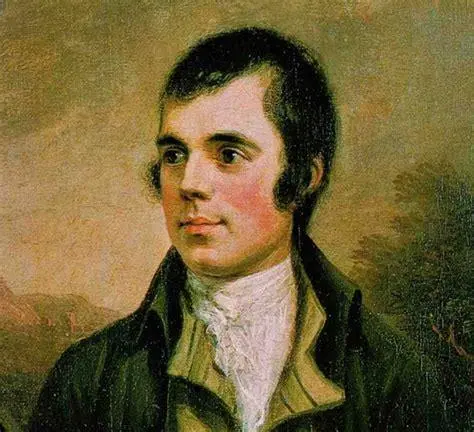
Robert Burns
Peggy
Bring autumn's pleasant weather;
And the moorcock springs, on whirring wings,
Amang the blooming heather;
Now waving grain, wide o'er the plain,
Delights the weary farmer;
And the moon shines bright, when I rove at night.
To muse upou my charmer.
The partridge loves the fruitful fells;
The plover loves the mountains;
The woodcock haunts tbe lonely dell;
The soaring hern the fountains:
Thro' lofty groves the cushat roves,
The path of man to shun it;
The hazel bush o'erhangs the thrush,
The spreading thorn the linnet.
Thus ev'ry kind their pleasure find,
The savage and the tender;
Some social join, and leagues combine
Some solitary wander:
Avaunt, away, the cruel sway!
Tyrannic man's dominion;
The sportsman's joy, the murd'ring cry,
The flutt'ring, gory pinion!
But Peggy dear, the evening's clear,
Thick flies the skimming swallow;
The sky is blue, the fields in view,
All fading-green and yellow:
Come let us stray our gladsome way,
And view the charms of nature;
The rustling corn, the fruited thorn,
And every happy creature.
We'll gently walk, and sweetly talk,
Till the silent moon shine clearly;
I'll grasp thy waist, and, fondly prest,
Swear how I love thee dearly:
Not vernal show'rs to budding flow'rs,
Not autumn to the farmer,
So dear can be as thou to me,
My fair, my lovely charmer!
My Love is Like a Red, Red Rose
O, my luve is like a red, red rose,
That's newly sprung in June.
O, my love is like a melodie,
That's sweetly play'd in tune.
As fair thou art, my bonnie lass,
So deep in luve am I,
And I will luve thee still, my dear,
Till a' the seas gang dry.
Till a' the seas gang dry, my dear,
And the rocks melt wi' the sun!
And I will luve thee still, my dear,
While the sands of life shall run.
And fare the weel, my only luve!
And fare the well awhile!
And I will come again, my love.
Tho' it were ten thousand mile!

William Shakespeare
Spring
And lady-smocks all silver-white,
And cuckoo-buds of yellow hue
Do paint the meadows with delight,
The cuckoo then, on every tree,
Mocks married men, for thus sings he:
'Cuckoo!
Cuckoo, cuckoo!' O word of fear,
Unpleasing to a married ear.
When shepherds pipe on oaten straws,
And merry larks are ploughmen's clocks,
When turtles tread, and rooks, and daws,
And maidens bleach their summer smocks,
The cuckoo then, on every tree,
Mocks married men, for thus sings he:
'Cuckoo!
Cuckoo, cuckoo!' O word of fear,
Unpleasing to a married ear.

Robert W. Service
The Ballad Of The Ice-Worm Cocktail
A pane of glass was in his eye, and stockings on his stems.
Upon the shoulder of his coat a leather pad he wore,
To rest his deadly rifle when it wasn't seeking gore;
The which it must have often been, for Major Percy Brown,
According to his story was a hunter of renown,
Who in the Murrumbidgee wilds had stalked the kangaroo
And killed the cassowary on the plains of Timbuctoo.
And now the Arctic fox he meant to follow to its lair,
And it was also his intent to beard the Artic hare...
Which facts concerning Major Brown I merely tell because
I fain would have you know him for the Nimrod that he was.
Now Skipper Grey and Deacon White were sitting in the shack,
And sampling of the whisky that pertained to Sheriff Black.
Said Skipper Grey: "I want to say a word about this Brown:
The piker's sticking out his chest as if he owned the town."
Said Sheriff Black: "he has no lack of frigorated cheek;
He called himself a Sourdough when he'd just been here a week."
Said Deacon White: "Methinks you're right, and so I have a plan
By which I hope to prove to-night the mettle of the man.
Just meet me where the hooch-bird sings, and though our ways be rude
We'll make a proper Sourdough of this Piccadilly dude."
Within the Malamute Saloon were gathered all the gang;
The fun was fast and furious, and the loud hooch-bird sang.
In fact the night's hilarity had almost reached its crown,
When into its storm-centre breezed the gallant Major Brown.
And at the apparation, whith its glass eye and plus-fours,
From fifty alcoholic throats responded fifty roars.
With shouts of stark amazement and with whoops of sheer delight,
They surged around the stranger, but the first was Deacon White.
"We welcome you," he cried aloud, "to this the Great White Land.
The Artic Brotherhood is proud to grip you by the hand.
Yea, sportsman of the bull-dog breed, from trails of far away,
To Yukoners this is indeed a memorable day.
Our jubilation to express, vocabularies fail...
Boys, hail the Great Cheechako!" And the boys responded: "Hail!"
"And now," continued Deacon White to blushing Major Brown,
"Behold assembled the eelight and cream of Dawson Town,
And one ambition fills their hearts and makes their bosoms glow -
They want to make you, honoured sir, a bony feed Sourdough.
The same, some say, is one who's seen the Yukon ice go out,
But most profound authorities the definition doubt,
And to the genial notion of this meeting, Major Brown,
A Sourdough is a guy who drinks ... an ice-worm cocktail down."
"By Gad!" responded Major Brown, "that's ripping, don't you know.
I've always felt I'd like to be a certified Sourdough.
And though I haven't any doubt your Winter's awf'ly nice,
Mayfair, I fear, may miss me ere the break-up of your ice.
Yet (pray excuse my ignorance of matters such as these)
A cocktail I can understand - but what's an ice-worm, please?"
Said Deacon White: "It is not strange that you should fail to know,
Since ice-worms are peculiar to the Mountain of Blue Snow.
Within the Polar rim it rears, a solitary peak,
And in the smoke of early Spring (a spectacle unique)
Like flame it leaps upon the sight and thrills you through and through,
For though its cone is piercing white, its base is blazing blue.
Yet all is clear as you draw near - for coyley peering out
Are hosts and hosts of tiny worms, each indigo of snout.
And as no nourishment they find, to keep themselves alive
They masticate each other's tails, till just the Tough survive.
Yet on this stern and Spartan fare so-rapidly they grow,
That some attain six inches by the melting of the snow.
Then when the tundra glows to green and nigger heads appear,
They burrow down and are not seen until another year."
"A toughish yarn," laughed Major Brown, "as well you may admit.
I'd like to see this little beast before I swallow it."
"'Tis easy done," said Deacon White, "Ho! Barman, haste and bring
Us forth some pickled ice-worms of the vintage of last Spring."
But sadly still was Barman Bill, then sighed as one bereft:
"There's been a run on cocktails, Boss; there ain't an ice-worm left.
Yet wait . . . By gosh! it seems to me that some of extra size
Were picked and put away to show the scientific guys."
Then deeply in a drawer he sought, and there he found a jar,
The which with due and proper pride he put upon the bar;
And in it, wreathed in queasy rings, or rolled into a ball,
A score of grey and greasy things, were drowned in alcohol.
Their bellies were a bilious blue, their eyes a bulbous red;
Their back were grey, and gross were they, and hideous of head.
And when with gusto and a fork the barman speared one out,
It must have gone four inches from its tail-tip to its snout.
Cried Deacon White with deep delight: "Say, isn't that a beaut?"
"I think it is," sniffed Major Brown, "a most disgustin' brute.
Its very sight gives me the pip. I'll bet my bally hat,
You're only spoofin' me, old chap. You'll never swallow that."
"The hell I won't!" said Deacon White. "Hey! Bill, that fellows fine.
Fix up four ice-worm cocktails, and just put that wop in mine."
So Barman Bill got busy, and with sacerdotal air
His art's supreme achievement he proceeded to prepare.
His silver cups, like sickle moon, went waving to and fro,
And four celestial cocktails soon were shining in a row.
And in the starry depths of each, artistically piled,
A fat and juicy ice-worm raised its mottled mug and smiled.
Then closer pressed the peering crown, suspended was the fun,
As Skipper Grey in courteous way said: "Stranger, please take one."
But with a gesture of disgust the Major shook his head.
"You can't bluff me. You'll never drink that gastly thing," he said.
"You'll see all right," said Deacon White, and held his cocktail high,
Till its ice-worm seemed to wiggle, and to wink a wicked eye.
Then Skipper Grey and Sheriff Black each lifted up a glass,
While through the tense and quiet crown a tremor seemed to pass.
"Drink, Stranger, drink," boomed Deacon White. "proclaim you're of the best,
A doughty Sourdough who has passed the Ice-worm Cocktail Test."
And at these words, with all eyes fixed on gaping Major Brown,
Like a libation to the gods, each dashed his cocktail down.
The Major gasped with horror as the trio smacked their lips.
He twiddled at his eye-glass with unsteady finger-tips.
Into his starry cocktail with a look of woe he peered,
And its ice-worm, to his thinking, mosy incontinently leered.
Yet on him were a hundred eyes, though no one spoke aloud,
For hushed with expectation was the waiting, watching crowd.
The Major's fumbling hand went forth - the gang prepared to cheer;
The Major's falt'ring hand went back, the mob prepared to jeer,
The Major gripped his gleaming glass and laid it to his lips,
And as despairfully he took some nauseated sips,
From out its coil of crapulence the ice-worm raised its head,
Its muzzle was a murky blue, its eyes a ruby red.
And then a roughneck bellowed fourth: "This stiff comes here and struts,
As if he bought the blasted North - jest let him show his guts."
And with a roar the mob proclaimed: "Cheechako, Major Brown,
Reveal that you're of Sourdough stuff, and drink your cocktail down."
The Major took another look, then quickly closed his eyes,
For even as he raised his glass he felt his gorge arise.
Aye, even though his sight was sealed, in fancy he could see
That grey and greasy thing that reared and sneered in mockery.
Yet round him ringed the callous crowd - and how they seemed to gloat!
It must be done . . . He swallowed hard . . . The brute was at his throat.
He choked. . . he gulped . . . Thank God! at last he'd got the horror down.
Then from the crowd went up a roar: "Hooray for Sourdough Brown!"
With shouts they raised him shoulder high, and gave a rousing cheer,
But though they praised him to the sky the Major did not hear.
Amid their demonstrative glee delight he seemed to lack;
Indeed it almost seemed that he - was "keeping something back."
A clammy sweat was on his brow, and pallid as a sheet:
"I feel I must be going now," he'd plaintively repeat.
Aye, though with drinks and smokes galore, they tempted him to stay,
With sudden bolt he gained the door, and made his get-away.
And ere next night his story was the talk of Dawson Town,
But gone and reft of glory was the wrathful Major Brown;
For that ice-worm (so they told him) of such formidable size
Was - a stick of stained spaghetti with two red ink spots for eyes.

Matsuo Bashō
The oak tree
not interested
in cherry blossoms.
Translated by Robert Hass
Henry Wadsworth Longfellow
To The Driving Cloud
Gloomy and dark as the driving cloud, whose name thou hast taken!
Wrapped in thy scarlet blanket, I see thee stalk through the city's
Narrow and populous streets, as once by the margin of rivers
Stalked those birds unknown, that have left us only their
footprints.
What, in a few short years, will remain of thy race but the
footprints?
How canst thou walk these streets, who hast trod the green turf
of the prairies!
How canst thou breathe this air, who hast breathed the sweet air
of the mountains!
Ah! 'tis in vain that with lordly looks of disdain thou dost
challenge
Looks of disdain in return, and question these walls and these
pavements,
Claiming the soil for thy hunting-grounds, while down-trodden
millions
Starve in the garrets of Europe, and cry from its caverns that
they, too,
Have been created heirs of the earth, and claim its division!
Back, then, back to thy woods in the regions west of the Wabash!
There as a monarch thou reignest. In autumn the leaves of the
maple
Pave the floors of thy palace-halls with gold, and in summer
Pine-trees waft through its chambers the odorous breath of their
branches.
There thou art strong and great, a hero, a tamer of horses!
There thou chasest the stately stag on the banks of the Elkhorn,
Or by the roar of the Running-Water, or where the Omaha
Calls thee, and leaps through the wild ravine like a brave of the
Blackfeet!
Hark! what murmurs arise from the heart of those mountainous
deserts?
Is it the cry of the Foxes and Crows, or the mighty Behemoth,
Who, unharmed, on his tusks once caught the bolts of the thunder,
And now lurks in his lair to destroy the race of the red man?
Far more fatal to thee and thy race than the Crows and the Foxes,
Far more fatal to thee and thy race than the tread of Behemoth,
Lo! the big thunder-canoe, that steadily breasts the Missouri's
Merciless current! and yonder, afar on the prairies, the
camp-fires
Gleam through the night; and the cloud of dust in the gray of the
daybreak
Marks not the buffalo's track, nor the Mandan's dexterous
horse-race;
It is a caravan, whitening the desert where dwell the Camanches!
Ha! how the breath of these Saxons and Celts, like the blast of
the east-wind,
Drifts evermore to the west the scanty smokes of thy wigwams!
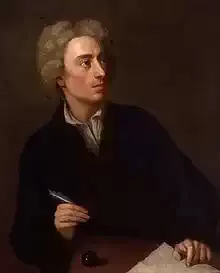
Alexander Pope
Translation of a Prayer of Brutus
To mountain wolves and all the savage race,
Wide o'er the aerial vault extend thy sway,
And o'er the infernal regions void of day.
On thy third reign look down; disclose our fate,
In what new station shall we fix our seat?
When shall we next thy hallow'd altars raise,
And choirs of virgins celebrate thy praise?

Rudyard Kipling
Letting in the Jungle
Blossom, and creeper, and weed--
Let us forget the sight and the sound,
The smell and the touch of the breed!
Fat black ash by the altar-stone,
Here is the white-foot rain
And the does bring forth in the fields unsown,
And none shall affright them again;
And the blind walls crumble, unknown, o'erthrown,
And none shall inhabit again!

John Greenleaf Whittier
The Trailing Arbutus
Against the bitter East their barricade,
And, guided by its sweet
Perfume, I found, within a narrow dell,
The trailing spring flower tinted like a shell
Amid dry leaves and mosses at my feet.
From under dead boughs, for whose loss the pines
Moaned ceaseless overhead, the blossoming vines
Lifted their glad surprise,
While yet the bluebird smoothed in leafless trees
His feathers ruffled by the chill sea-breeze,
And snow-drifts lingered under April skies.
As, pausing, o'er the lonely flower I bent,
I thought of lives thus lowly, clogged and pent,
Which yet find room,
Through care and cumber, coldness and decay,
To lend a sweetness to the ungenial day
And make the sad earth happier for their bloom.
Emily Dickinson
With thee, in the Desert
With thee in the thirst-
With thee in the Tamarind wood-
Leopard breathes-at last!
Emily Dickinson
Nature rarer uses yellow
Than another hue;
Saves she all of that for sunsets,--
Prodigal of blue,
Spending scarlet like a woman,
Yellow she affords
Only scantly and selectly,
Like a lover's words.

Robert Louis Stevenson
To Ottilie
How the August sun arose,
And how his face
Woke to trill and carolette
All the cages that were set
About the place.
In the tender morning light
All around lay strange and bright
And still and sweet,
And the gray doves unafraid
Went their morning promenade
Along the street.
Henry Wadsworth Longfellow
Nature
Leads by the hand her little child to bed,
Half willing, half reluctant to be led,
And leave his broken playthings on the floor,
Still gazing at them through the open door,
Nor wholly reassured and comforted
By promises of others in their stead,
Which though more splendid, may not please him more;
So Nature deals with us, and takes away
Our playthings one by one, and by the hand
Leads us to rest so gently, that we go
Scarce knowing if we wish to go or stay,
Being too full of sleep to understand
How far the unknown transcends the what we know.

Carl Sandburg
Plowboy
Black on the line of a low hill rise,
Formed into moving shadows, I saw
A plowboy and two horses lined against the gray,
Plowing in the dusk the last furrow.
The turf had a gleam of brown,
And smell of soil was in the air,
And, cool and moist, a haze of April.
I shall remember you long,
Plowboy and horses against the sky in shadow.
I shall remember you and the picture
You made for me,
Turning the turf in the dusk
And haze of an April gloaming.

John Clare
Ploughman Singing
Ere yet one footstep shows in all the sky,
And twilight in the east, a doubt as yet,
Shows not her sleeve of grey to know her bye.
Woke early, I arose and thought that first
In winter time of all the world was I.
The old owls might have hallooed if they durst,
But joy just then was up and whistled bye
A merry tune which I had known full long,
But could not to my memory wake it back,
Until the ploughman changed it to the song.
O happiness, how simple is thy track.
--Tinged like the willow shoots, the east's young brow
Glows red and finds thee singing at the plough.
James Whitcomb Riley
A Canary At The Farm
Fetched 'er home a pet canary--,
And of all the blame', contrary,
Aggervatin' things alive!
I love music-- that I love it
When it's free-- and plenty of it--;
But I kindo' git above it,
At a dollar-eighty-five!
Reason's plain as I'm a-sayin'--,
Jes' the idy, now, o' layin'
Out yer money, and a-payin'
Fer a willer-cage and bird,
When the medder-larks is wingin'
Round you, and the woods is ringin'
With the beautifullest singin'
That a mortal ever heard!
Sahry's sot, tho'--. So I tell her
He's a purty little feller,
With his wings o' creamy-yeller,
And his eyes keen as a cat;
And the twitter o' the critter
'Pears to absolutely glitter!
Guess I'll haf to go and git her
A high-priceter cage 'n that!
Carl Sandburg
Nocturne in a Deserted Brickyard
Runs on the lapping sand
Out to the longest shadows.
Under the curving willows,
And round the creep of the wave line,
Fluxions of yellow and dusk on the waters
Make a wide dreaming pansy of an old pond in the night.
Carl Sandburg
Young Bullfrogs
Jimmy Wimbleton listened a first week in June.
Ditches along prairie roads of Northern Illinois
Filled the arch of night with young bullfrog songs.
Infinite mathematical metronomic croaks rose and spoke,
Rose and sang, rose in a choir of puzzles.
They made his head ache with riddles of music.
They rested his head with beaten cadence.
Jimmy Wimbledon listened.

Robert Browning
Thus the Mayne glideth
Where my Love abideth;
Sleep 's no softer: it proceeds
On through lawns, on through meads,
On and on, whate'er befall,
Meandering and musical,
Though the niggard pasturage
Bears not on its shaven ledge
Aught but weeds and waving grasses
To view the river as it passes,
Save here and there a scanty patch
Of primroses too faint to catch
A weary bee.... And scarce it pushes
Its gentle way through strangling rushes
Where the glossy kingfisher
Flutters when noon-heats are near,
Glad the shelving banks to shun,
Red and steaming in the sun,
Where the shrew-mouse with pale throat
Burrows, and the speckled stoat;
Where the quick sandpipers flit
In and out the marl and grit
That seems to breed them, brown as they:
Naught disturbs its quiet way,
Save some lazy stork that springs,
Trailing it with legs and wings,
Whom the shy fox from the hill
Rouses, creep he ne'er so still.
Robert Burns
To A Louse
Ha! whare ye gaun' ye crowlin ferlie?
Your impudence protects you sairly;
I canna say but ye strunt rarely
Owre gauze and lace,
Tho faith! I fear ye dine but sparely
On sic a place.
Ye ugly, creepin, blastit wonner,
Detested, shunn'd by saunt an sinner,
How daur ye set your fit upon her---
Sae fine a lady!
Gae somewhere else and seek your dinner
On some poor body.
Swith! in some beggar's hauffet squattle;
There ye may creep, and sprawl, and sprattle;
Wi' ither kindred, jumping cattle;
In shoals and nations;
Whare horn nor bane ne'er daur unsettle
Your thick plantations.
Now haud you there! ye're out o' sight,
Below the fatt'rils, snug an tight,
Na, faith ye yet! ye'll no be right,
Till ye've got on it---
The vera tapmost, tow'rin height
O' Miss's bonnet.
My sooth! right bauld ye set your nose out,
As plump an grey as onie grozet:
O for some rank, mercurial rozet,
Or fell, red smeddum,
I'd gie you sic a hearty dose o't,
Wad dress your droddum!
I wad na been surpris'd to spy
You on an auld wife's flainen toy
Or aiblins some bit duddie boy,
On's wyliecoat;
But Miss's fine Lunardi! fye!
How daur ye do't?
O Jeany, dinna toss your head,
An set your beauties a' abread!
Ye little ken what cursed speed
The blastie's makin!
Thae winks an finger-ends, I dread,
Are notice takin!
O wad some Power the giftie gie us
To see oursels as ithers see us!
It wad frae monie a blunder free us
An foolish notion:
What airs in dress an gait wad lea'es us,
An ev'n devotion!

Edward Lear
The Two Old Bachelors
One caught a Muffin, the other caught a Mouse.
Said he who caught the Muffin to him who caught the Mouse,-'
This happens just in time! For we've nothing in the house,
'Save a tiny slice of lemon nd a teaspoonful of honey,
'And what to do for dinner -- since we haven't any money?
'And what can we expect if we haven't any dinner,
'But to loose our teeth and eyelashes and keep on growing thinner?'
Said he who caught the Mouse to him who caught the Muffin,-'
We might cook this little Mouse, if we had only some Stuffin'!
'If we had but Sage and
Onion we could do extremely well,
'But how to get that Stuffin' it is difficult to tell'--
Those two old Bachelors ran quickly to the town
And asked for Sage and Onions as they wandered up and down;
They borrowed two large Onions, but no Sage was to be found
In the Shops, or in the Market, or in all the Gardens round.
But some one said, -- 'A hill there is, a little to the north,
'And to its purpledicular top a narrow way leads forth;-'
And there among the rugged rocks abides an ancient Sage,-'
An earnest Man, who reads all day a most perplexing page.
'Climb up, and seize him by the toes! -- all studious as he sits,-'
And pull him down, -- and chop him into endless little bits!
'Then mix him with your Onion, (cut up likewise into Scraps,)-'
When your Stuffin' will be ready -- and very good: perhaps.'
Those two old Bachelors without loss of time
The nearly purpledicular crags at once began to climb;
And at the top, among the rocks, all seated in a nook,
They saw that Sage, a reading of a most enormous book.
'You earnest Sage!' aloud they cried, 'your book you've read enough in!-'
We wish to chop you into bits to mix you into Stuffin'!'--
But that old Sage looked calmly up, and with his awful book,
At those two Bachelors' bald heads a certain aim he took;-and
over crag and precipice they rolled promiscuous down,--
At once they rolled, and never stopped in lane or field or town,--
And when they reached their house, they found (besides their want
of Stuffin',)
The Mouse had fled; -- and, previously, had eaten up the Muffin.
They left their home in silence by the once convivial door.
And from that hour those Bachelors were never heard of more.