
Silence
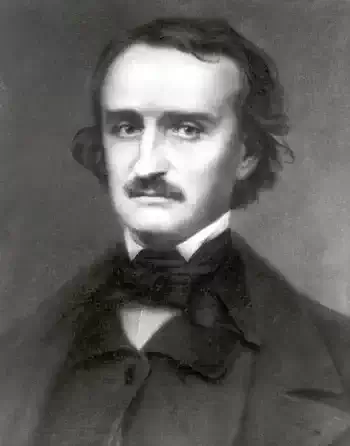
Edgar Allan Poe
The Coliseum
Lone ampitheatre ! Grey Coliseum !
Type of the antique Rome ! Rich reliquary
Of lofty contemplation left to Time
By buried centuries of pomp and power !
At length, at length — after so many days
Of weary pilgrimage, and burning thirst,
(Thirst for the springs of love [lore] that in thee lie,)
I kneel, an altered, and an humble man,
Amid thy shadows, and so drink within
My very soul thy grandeur, gloom, and glory.
Vastness ! and Age ! and Memories of Eld !
Silence and Desolation! and dim Night!
Gaunt vestibules! and phantom-peopled aisles !
I feel ye now: I feel ye in your strength!
O spells more sure then [than] e'er Judæan king
Taught in the gardens of Gethsemane !
O charms more potent than the rapt Chaldee
Ever drew down from out the quiet stars !
Here, where a hero fell, a column falls :
Here, where the mimic eagle glared in gold,
A midnight vigil holds the swarthy bat:
Here, where the dames of Rome their yellow hair
Wav'd to the wind, now wave the reed and thistle :
Here, where on ivory couch the Cæsar sate,
On bed of moss lies gloating the foul adder :
Here, where on golden throne the monarch loll'd,
Glides spectre-like unto his marble home,
Lit by the wan light of the horned moon,
The swift and silent lizard of the stones.
These crumbling walls; these tottering arcades ;
These mouldering plinths; these sad, and blacken'd shafts ;
These vague entablatures; this broken frieze ;
These shattered cornices; this wreck; this ruin ;
These stones, alas! — these grey stones — are they all ;
All of the great and the colossal left
By the corrosive hours to Fate and me ?
"Not all," — the echoes answer me; "not all :
Prophetic sounds, and loud, arise forever
From us, and from all ruin, unto the wise,
As in old days from Memnon to the sun.
We rule the hearts of mightiest men: — we rule
With a despotic sway all giant minds.
We are not desolate — we pallid stones ;
Not all our power is gone; not all our Fame ;
Not all the magic of our high renown ;
Not all the wonder that encircles us ;
Not all the mysteries that in us lie;
Not all the memories that hang upon,
And cling around about us now and ever,
And clothe us in a robe of more than glory."
1833
1,569
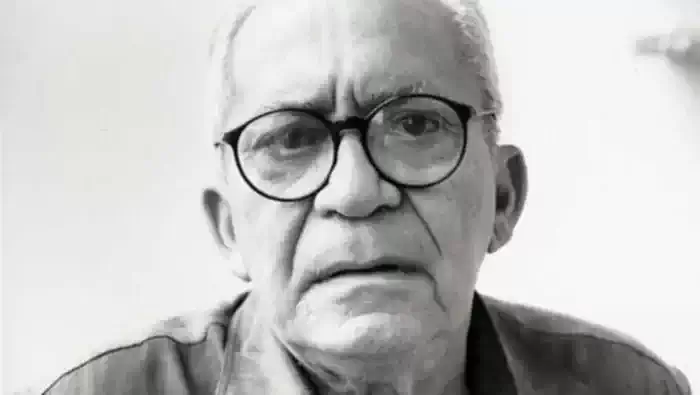
Lêdo Ivo
The Gate
The gate is open all day long
but at night, I myself go to close it.
I expect no nocturnal visitor
except the thief who jumps over the wall of dreams.
The night is so quiet that it makes me hear
the birth of fountains in the forests.
My bed, white as the Milky Way,
is too smau for me in the black night.
I occupy all the space in the world. My distracted hand
knocks down a star and frightens a bat.
The beating of my heart fascinares the owls
in the branches of the cedars, pondering the mystery
of day and night, born of tbe waters.
In my stonelike sleep I stay stifl and travel.
I am the wind that caresses artichokes
and rusts the harness hanging in the stable.
I am the ant that, guided by the constellations,
breathes the perfume of land and sea.
A man who dreams is everything that he isnt:
the sea that ships have damaged,
the black whistle of the train passing through trestles,
the soot that darkens the kerosene drum.
If I shut my gate before I sleep,
in dreams it opens itself.
And he who didnt come during the day,
stepping on dry, eucalyptus leaves,
comes at night and knows the way, like the dead,
who havent yet come, but know where I am,
covered by a winding sheet, like all who dream
and stir in the darkness, and shout the words
that escaped the dictionary and went to smell
the night air scented with jasmine and sweet, fermenting manure.
The undesirable visitors cross through the locked doors
and the Venetian blinds that filter the passage of the breeze,
and encircle me.
Oh, mystery of the world! No lock shuts the gate of night.
In vain at nightfall I thought to sleep
alone protected by the barbed wire that circles my fields
and by my dogs that dream with open eyes.
At night, a simple breeze destroys the walls of men.
Although my gate will be locked in the moming,
I know that someone opened it in the silence of night,
and, in the darkness, watched over my restless sleep.
O Portão Poema em Portugês
2,316
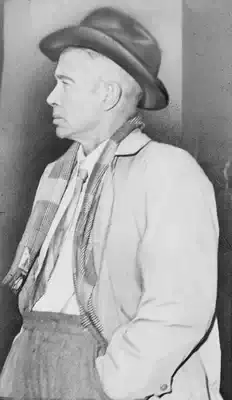
E. E. Cummings
somewhere i have never travelled, gladly beyond
any experience,your eyes have their silence:
in your most frail gesture are things which enclose me,
or which i cannot touch because they are too near
your slightest look will easily unclose me
though i have closed myself as fingers,
you open always petal by petal myself as Spring opens
(touching skilfully,mysteriously)her first rose
or if your wish be to close me, i and
my life will shut very beautifully ,suddenly,
as when the heart of this flower imagines
the snow carefully everywhere descending;
nothing which we are to perceive in this world equals
the power of your intense fragility:whose texture
compels me with the color of its countries,
rendering death and forever with each breathing
(i do not know what it is about you that closes
and opens;only something in me understands
the voice of your eyes is deeper than all roses)
nobody,not even the rain,has such small hands
1,279

Derek Walcott
In The Virgins
In The Virgins
You can't put in the ground swell of the organ
from the Christiansted, St.Croix, Anglican Church
behind the paratrooper's voice: 'Turned cop
after Vietnam. I made thirty jumps.'
Bells punish the dead street and pigeons lurch
from the stone belfry, opening their chutes,
circling until the rings of ringing stop.
'Salud!' The paratrooper's glass is raised.
The congregation rises to its feet
like a patrol, with scuffling shoes and boots,
repeating orders as the organ thumps:
'Praise Ye the Lord. The Lord's name be praised.'
You cannot hear, beyond the quiet harbor,
the breakers cannonading on the bruised
horizon, or the charter engines gunning for
Buck Island. The only war here is a war
of silence between blue sky and sea,
and just one voice, the marching choir's, is raised
to draft new conscripts with the ancient cry
of 'Onward, Christian Soldiers,' into pews
half-empty still, or like a glass, half-full.
Pinning itself to a cornice, a gull
hangs like a medal from the serge-blue sky.
Are these boats all? Is the blue water all?
The rocks surpliced with lace where they are moored,
dinghy, catamaran, and racing yawl,
nodding to the ground swell of 'Praise the Lord'?
Wesley and Watts, their evangelical light
lanced down the mine shafts to our chapel pew,
its beam gritted with motes of anthracite
that drifted on us in our chapel benches:
from God's slow-grinding mills in Lancashire,
ash on the dead mired in Flanders' trenches,
as a gray drizzle now defiles the view
of this blue harbor, framed in windows where
two yellow palm fronds, jerked by the wind's rain,
agree like horses' necks, and nodding bear,
slow as a hearse, a haze of tasseled rain,
and, as the weather changes in a child,
the paradisal day outside grows dark,
the yachts flutter like moths in a gray jar,
the martial voices fade in thunder, while
across the harbor, like a timid lure,
a rainbow casts its seven-colored arc.
Tonight, now Sunday has been put to rest.
Altar lights ride the black glass where the yachts
stiffly repeat themselves and phosphoresce
with every ripple - the wide parking-lots
of tidal affluence - and every mast
sways the night's dial as its needle veers
to find the station which is truly peace.
Like neon lasers shot across the bars
discos blast out the music of the spheres,
and, one by one, science infects the stars.
1,244
E. E. Cummings
(a... (a leaf falls on loneliness)
(a... (a leaf falls on loneliness)
1(a
le
af
fa
ll
s)
one
l
iness
1(a
le
af
fa
ll
s)
one
l
iness
952

Antonio Roberval Miketen
Lesson of Light
I
Suddenly the silence turns into light,
as if strains of music, as if a subject in blue.
II
To find light within phrases,
the harmony, the sound of the universe,
so that we can hear the silence,
our own human silence,
so that we can, poet,
step on a page of blood.
III
Almost visible touchable pink of the poem,
an ogive, bewitched, on the shoulders of a dove.
IV
We forsake many things
because we grow towards the sun.
Amongst what we leave behind,
without piety, without remorse,
exists the innocence, the child;
like a sad little bird,
which sings in the bare light
the elegy of conscience.
V
What music, what music fades away in the distance,
ruled by the wings of the bird on the horizon?
VI
Write only what is brief,
in the short light of our life,
that never disturbs the children
and does not wet the margins of one’s vision.
So we need your notebooks,
to dive among the seaweeds,
within the deepest roots
that will light the green of the sea.
VII
Comes from the lucidness, the shine, the breast,
the slow puberty, within the center of scare.
VIII
The pupil of a gazelle
tears the rocks in the horizon.
Violet, the reflexion of the light,
to the east side of the sky,
where the deepest blue hides within the womb.
IX
In Autumn: the flicks of dry pulps;
on the remains of the life blood, the richness of the fruit.
X
In the silence which opens among the bell knell,
there is a dead little bird, to replace the child.
989

Rabindranath Tagore
Stray Birds 11- 20
Stray Birds 11- 20
11
SOME unseen fingers, like idle breeze,
are playing upon my heart the music of the ripples.
12
'WHAT language is thine, O sea?'
'The language of eternal question.'
'What language is thy answer, O sky?
'The language of eternal silence.'
13
LISTEN,
my heart,
to the whispers of the world
with which it makes love to you.
14
THE mystery of creation
is like the darkness of night-it
is great.
Delusions of knowledge are like
the fog of the morning.
15
DO not seat your love upon a precipice because it is high.
16
I SIT at my window this morning
where the world like a passer-by stops for a moment,
nods to me and goes.
17
THESE little thoughts are the rustle of leaves;
they have their whisper of
joy in my mind.
18
WHAT you are you do not see,
what you see is your shadow.
19
MY wishes are fools, they shout across thy songs, my Master.
Let me but listen.
20
I CANNOT choose the best.
The best chooses me.
926

John Milton
Il Penseroso
Il Penseroso
HENCE, vain deluding Joys,
............The brood of Folly without father bred!
How little you bested
............Or fill the fixed mind with all your toys!
Dwell in some idle brain,
............And fancies fond with gaudy shapes possess,
As thick and numberless
............As the gay motes that people the sun-beams,
Or likest hovering dreams,
............The fickle pensioners of Morpheus' train.
But, hail! thou Goddess sage and holy!
Hail, divinest Melancholy!
Whose saintly visage is too bright
To hit the sense of human sight,
And therefore to our weaker view
O'erlaid with black, staid Wisdom's hue;
Black, but such as in esteem
Prince Memnon's sister might beseem,
Or that starred Ethiop queen that strove
To set her beauty's praise above
The Sea-Nymphs, and their powers offended.
Yet thou art higher far descended:
Thee bright-haired Vesta long of yore
To solitary Saturn bore;
His daughter she; in Saturn's reign
Such mixture was not held a stain.
Oft in glimmering bowers and glades
He met her, and in secret shades
Of woody Ida's inmost grove,
Whilst yet there was no fear of Jove.
Come, pensive Nun, devout and pure,
Sober, steadfast, and demure,
All in a robe of darkest grain,
Flowing with majestic train,
And sable stole of cypress lawn
Over thy decent shoulders drawn.
Come; but keep thy wonted state,
With even step, and musing gait,
And looks commercing with the skies,
Thy rapt soul sitting in thine eyes:
There, held in holy passion still,
Forget thyself to marble, till
With a sad leaden downward cast
Thou fix them on the earth as fast.
And join with thee calm Peace and Quiet,
Spare Fast, that oft with gods doth diet,
And hears the Muses in a ring
Aye round about Jove's altar sing;
And add to these retired Leisure,
That in trim gardens takes his pleasure;
But, first and chiefest, with thee bring
Him that yon soars on golden wing,
Guiding the fiery-wheeled throne,
The Cherub Contemplation;
And the mute Silence hist along,
'Less Philomel will deign a song,
In her sweetest saddest plight,
Smoothing the rugged brow of Night,
While Cynthia checks her dragon yoke
Gently o'er the accustomed oak.
Sweet bird, that shunn'st the noise of folly,
Most musical, most melancholy!
Thee, chauntress, oft the woods among
I woo, to hear thy even-song;
And, missing thee,I walk unseen
On the dry smooth-shaven green,
To behold the wandering moon,
Riding near her highest noon,
Like one that had been led astray
Through the heaven's wide pathless way,
And oft, as if her head she bowed,
Stooping through a fleecy cloud.
Oft, on a plat of rising ground,
I hear the far-off curfew sound,
Over some wide-watered shore,
Swinging slow with sullen roar;
Or, if the air will not permit,
Some still removed place will fit,
Where glowing embers through the room
Teach light to counterfeit a gloom,
Far from all resort of mirth,
Save the cricket on the hearth,
Or the bellman's drowsy charm
To bless the doors from nightly harm.
Or let my lamp, at midnight hour,
Be seen in some high lonely tower,
Where I may oft outwatch the Bear,
With thrice great Hermes, or unsphere
The spirit of Plato, to unfold
What worlds or what vast regions hold
The immortal mind that hath forsook
Her mansion in this fleshly nook;
And of those demons that are found
In fire, air, flood, or underground,
Whose power hath a true consent
With planet or with element.
Sometime let gorgeous Tragedy
In sceptred pall come sweeping by,
Presenting Thebes, or Pelops' line,
Or the tale of Troy divine,
Or what (though rare) of later age
Ennobled hath the buskined stage.
But, O sad Virgin! that thy power
Might raise Musaeus from his bower;
Or bid the soul of Orpheus sing
Such notes as, warbled to the string,
Drew iron tears down Pluto's cheek,
And made Hell grant what love did seek;
Or call up him that left half-told
The story of Cambuscan bold,
Of Camball, and of Algarsife,
And who had Canace to wife,
That owned the virtuous ring and glass,
And of the wondrous horse of brass
On which the Tartar king did ride;
And if aught else great bards beside
In sage and solemn tunes have sung,
Of turneys, and of trophies hung,
Of forests, and enchantments drear,
Where more is meant than meets the ear.
Thus, Night, oft see me in thy pale career,
Till civil-suited Morn appear,
Not tricked and frounced, as she was wont
With the Attic boy to hunt,
But kerchieft in a comely cloud
While rocking winds are piping loud,
Or ushered with a shower still,
When the gust hath blown his fill,
Ending on the rustling leaves,
With minute-drops from off the eaves.
And, when the sun begins to fling
His flaring beams, me, Goddess, bring
To arched walks of twilight groves,
And shadows brown, that Sylvan loves,
Of pine, or monumental oak,
Where the rude axe with heaved stroke
Was never heard the nymphs to daunt,
Or fright them from their hallowed haunt.
There, in close covert, by some brook,
Where no profaner eye may look,
Hide me from day's garish eye,
While the bee with honeyed thigh,
That at her flowery work doth sing,
And the waters murmuring,
With such consort as they keep,
Entice the dewy-feathered Sleep.
And let some strange mysterious dream
Wave at his wings, in airy stream
Of lively portraiture displayed,
Softly on my eyelids laid;
And, as I wake, sweet music breathe
Above, about, or underneath,
Sent by some Spirit to mortals good,
Or the unseen Genius of the wood.
But let my due feet never fail
To walk the studious cloister's pale,
And love the high embowed roof,
With antique pillars massy proof,
And storied windows richly dight,
Casting a dim religious light.
There let the pealing organ blow,
To the full-voiced quire below,
In service high and anthems clear,
As may with sweetness, through mine ear,
Dissolve me into ecstasies,
And bring all Heaven before mine eyes.
And may at last my weary age
Find out the peaceful hermitage,
The hairy gown and mossy cell,
Where I may sit and rightly spell
Of every star that heaven doth shew,
And every herb that sips the dew,
Till old experience do attain
To something like prophetic strain.
These pleasures, Melancholy, give;
And I with thee will choose to live.
786

Boris Pasternak
The Weeping Garden
The Weeping Garden
It’s terrible! – all drip and listening.
Whether, as ever, it’s loneliness,
splashing a branch, like lace, on the window,
or whether perhaps there’s a witness.
Choked there beneath its swollen
burden – earth’s nostrils, and audibly,
like August, far off in the distance,
midnight, ripening slow with the fields.
No sound. No one’s in hiding.
Confirming its pure desolation,
it returns to its game – slipping
from roof, to gutter, slides on.
I’ll moisten my lips, listening:
whether, as ever, I’m loneliness,
and ready maybe for weeping,
or whether perhaps there’s a witness.
But, silence. No leaves trembling.
Nothing to see: sobs, and cries
being swallowed, slippers splashing,
between them, tears and sighs.
758
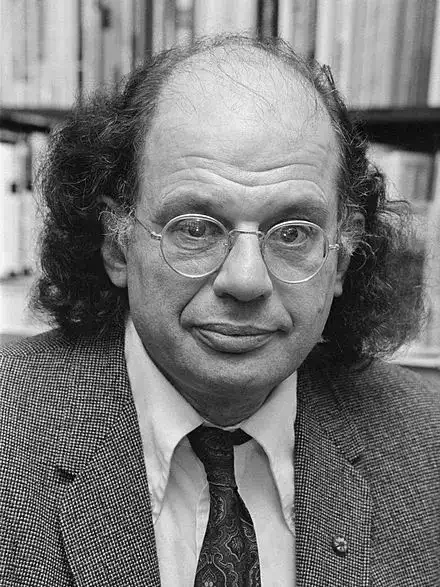
Allen Ginsberg
Syllables at Rocky Mountain Dharma Center
Syllables at Rocky Mountain Dharma Center
Tail turned to red sunset on a juniper crown a lone magpie cawks.
Mad at Oryoki in the shrine-room -- Thistles blossomed late afternoon.
Put on my shirt and took it off in the sun walking the path to lunch.
A dandelion seed floats above the marsh grass with the mosquitos.
At 4 A.M. the two middleaged men sleeping together holding hands.
In the half-light of dawn a few birds warble under the Pleiades.
Sky reddens behind fir trees, larks twitter, sparrows cheep cheep cheep
cheep cheep.
646
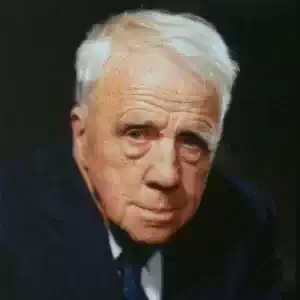
Robert Frost
Ghost House
Ghost House
I dwell in a lonely house I know
That vanished many a summer ago,
And left no trace but the cellar walls,
And a cellar in which the daylight falls,
And the purple-stemmed wild raspberries grow.
O'er ruined fences the grape-vines shield
The woods come back to the mowing field;
The orchard tree has grown one copse
Of new wood and old where the woodpecker chops;
The footpath down to the well is healed.
I dwell with a strangely aching heart
In that vanished abode there far apart
On that disused and forgotten road
That has no dust-bath now for the toad.
Night comes; the black bats tumble and dart;
The whippoorwill is coming to shout
And hush and cluck and flutter about:
I hear him begin far enough away
Full many a time to say his say
Before he arrives to say it out.
It is under the small, dim, summer star.
I know not who these mute folk are
Who share the unlit place with me--
Those stones out under the low-limbed tree
Doubtless bear names that the mosses mar.
They are tireless folk, but slow and sad,
Though two, close-keeping, are lass and lad,--
With none among them that ever sings,
And yet, in view of how many things,
As sweet companions as might be had.
584

Ezra Pound
Night Litany
Night Litany
O Dieu, purifiez nos cceurs!
Purifiez nos coeurs !
Yea the lines hast thou laid unto me
in pleasant places,
And the beauty of this thy Venice
hast thou shown unto me
Until is its loveliness become unto me
a thing of tears.
O God, what great kindness
have we done in times past
and forgotten it,
That thou givest this wonder unto us,
O God of waters?
O God of the night,
What great sorrow
Cometh unto us,
That thou thus repayest us
Before the time of its coming?
O God of silence,
Purifiez nos coeurs,
Purifiez nos coeurs,
For we have seen
The glory of the shadow of the
likeness of thine handmaid,
Yea, the glory of the shadow
of thy Beauty hath walked
Upon the shadow of the waters
In this thy Venice.
And before the holiness
Of the shadow of thy handmaid
Have I hidden mine eyes,
O God of waters.
O God of silence,
Purifiez nos coeurs,
Purifiez nos coeurs,
O God of waters,
make clean our hearts within us,
For I have seen the
Shadow of this thy Venice
Floating upon the waters,
And thy stars
Have seen this thing, out of their far courses
Have they seen this thing,
O God of waters,
Even as are thy stars
Silent unto us in their far-coursing,
Even so is mine heart
become silent within me.
Purifiez nos coeurs,
O God of the silence,
Purifiez nos coeurs,
O God of waters.
534

Muhammad Iqbal
A Longing
A Longing
O Lord! I have become weary of human assemblages!
When the heart is sad no pleasure in assemblages can be
I seek escape from tumult, my heart desires
The silence which speech may ardently love!
I vehemently desire silence, I strongly long that
A small hut in the mountain's side may there be
Freed from worry I may live in retirement
Freed from the cares of the world I may be
Birds chirping may give the pleasure of the lyre
In the spring's noise may the orchestra's melody be
The flower bud bursting may give God's message to me
Showing the whole world 1 to me this small wine-cup may be
My arm may be my pillow, and the green grass my bed be
Putting the congregation to shame my solitude's quality be
The nightingale be so familiar with my face that
Her little heart harboring no fear from me may be
Avenues of green trees standing on both sides be
The spring's clear water providing a beautiful picture be
The view of the mountain range may be so beautiful
To see it the waves of water again and again rising be
The verdure may be asleep in the lap of the earth
Water running through the bushes may glistening be
Again and again the flowered boughs touching the water be
As if some beauty looking at itself in mirror be
When the sun apply myrtle to the evening's bride
The tunic of every flower may pinkish golden be
When night's travellers falter behind with fatigue
Their only hope my broken earthenware lamp may be
May the lightning lead them to my hut
When clouds hovering over the whole sky be.
The early dawn's cuckoo, that morning's mu'adhdhin2
May my confidante he be, and may his confidante I be
May I not be obligated to the temple or to the mosque
May the hut's hole alone herald of morning's arrival be
When the dew may come to perform the flowers' ablution
May wailing my supplication, weeping my ablution be
In this silence may my heart's wailing rise so high
That for stars' caravan the clarion's call my wailing be
May every compassionate heart weeping with me be
Perhaps it may awaken those who may unconscious be
523
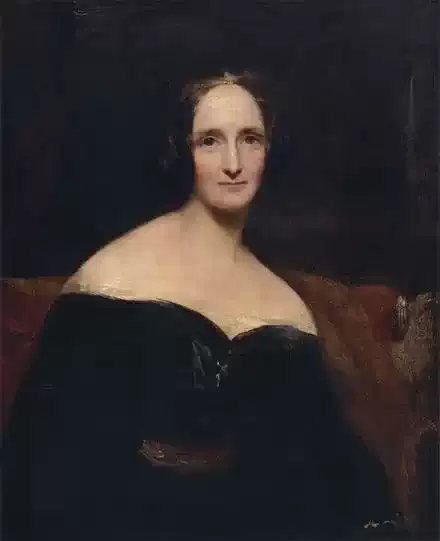
Percy Bysshe Shelley
A Summer Evening Churchyard, Lechlade, Gloucestershire
A Summer Evening Churchyard, Lechlade, Gloucestershire
THE wind has swept from the wide atmosphere
Each vapour that obscured the sunset's ray,
And pallid Evening twines its beaming hair
In duskier braids around the languid eyes of Day:
Silence and Twilight, unbeloved of men,
Creep hand in hand from yon obscurest glen.
They breathe their spells towards the departing day,
Encompassing the earth, air, stars, and sea;
Light, sound, and motion, own the potent sway,
Responding to the charm with its own mystery.
The winds are still, or the dry church-tower grass
Knows not their gentle motions as they pass.
Thou too, aerial pile, whose pinnacles
Point from one shrine like pyramids of fire,
Obey'st I in silence their sweet solemn spells,
Clothing in hues of heaven thy dim and distant spire,
Around whose lessening and invisible height
Gather among the stars the clouds of night.
The dead are sleeping in their sepulchres:
And, mouldering as they sleep, a thrilling sound,
Half sense half thought, among the darkness stirs,
Breathed from their wormy beds all living things around,
And, mingling with the still night and mute sky,
Its awful hush is felt inaudibly.
Thus solemnized and softened, death is mild
And terrorless as this serenest night.
Here could I hope, like some enquiring child
Sporting on graves, that death did hide from human sight
Sweet secrets, or beside its breathless sleep
That loveliest dreams perpetual watch did keep.
523
Rabindranath Tagore
The Gardener XXIX: Speak To Me My Love
The Gardener XXIX: Speak To Me My Love
Speak to me, my love! Tell me in
words what you sang.
The night is dark. The stars are
lost in clouds. The wind is sighing
through the leaves.
I will let loose my hair. My blue
cloak will cling round me like night. I
will clasp your head to my bosom; and
there in the sweet loneliness murmur
on your heart. I will shut my eyes
and listen. I will not look in your face.
When your words are ended, we will
sit still and silent. Only the trees will
whisper in the dark.
The night will pale. The day will
dawn. We shall look at each other's
eyes and go on our different paths.
Speak to me, my love! Tell me in
words what you sang.
Speak to me, my love! Tell me in
words what you sang.
The night is dark. The stars are
lost in clouds. The wind is sighing
through the leaves.
I will let loose my hair. My blue
cloak will cling round me like night. I
will clasp your head to my bosom; and
there in the sweet loneliness murmur
on your heart. I will shut my eyes
and listen. I will not look in your face.
When your words are ended, we will
sit still and silent. Only the trees will
whisper in the dark.
The night will pale. The day will
dawn. We shall look at each other's
eyes and go on our different paths.
Speak to me, my love! Tell me in
words what you sang.
482

Elizabeth Barrett Browning
XX
XX
And wilt thou have me fashion into speech
The love I bear thee, finding words enough,
And hold the torch out, while the winds are rough,
Between our faces, to cast light on each ?--
I drop it at thy feet. I cannot teach
My hand to hold my spirit so far off
From myself--me--that I should bring thee proof
In words, of love hid in me out of reach.
Nay, let the silence of my womanhood
Commend my woman-love to thy belief,--
Seeing that I stand unwon, however wooed,
And rend the garment of my life, in brief,
By a most dauntless, voiceless fortitude,
Lest one touch of this heart convey its grief
474

Matsuo Bashō
A monk sips morning tea
A monk sips morning tea
A monk sips morning tea,
it's quiet,
the chrysanthemum's flowering.
Translated by Robert Hass
A monk sips morning tea,
it's quiet,
the chrysanthemum's flowering.
Translated by Robert Hass
473
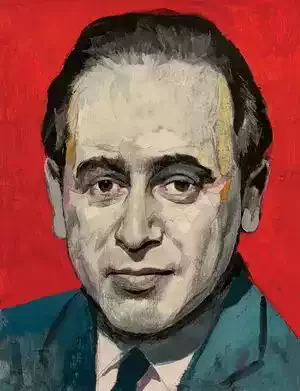
Paul Celan
Alchemical
Alchemical
Silence, like Gold cooked in
charred
Hands.
Vast, grey,
near as all that is Lost
Sisterly-Shape:
All the Names, all the with-
Burnt up
Names. So much
Ash to be blessed. So much
Land gained
above
the light, so light
Soul-
Rings.
Vast. Grey. Clinkerless.
You, then.
You with the pale
bitten-out bud,
You in the Wine-Flood.
(Did it not discharge
us too, this Hour?
Good,
Good, that your Word died away here.)
Silence, like Gold cooked, in
charred, charred
Hands.
Fingers, smoke-thin. Like Crowns, Air-Crowns
around – –
Vast. Grey. Trackless.
Queenlike.
467

Sara Teasdale
Night Song at Amalfi
Night Song at Amalfi
I asked the heaven of stars
What I should give my love --
It answered me with silence,
Silence above.
I asked the darkened sea
Down where the fishers go --
It answered me with silence,
Silence below.
Oh, I could give him weeping,
Or I could give him song --
But how can I give silence,
My whole life long?
455

Johann Wolfgang von Goethe
Sameness
Sameness
Over all hilltops
is peace
in all the treetops
you feel
barely a breeze;
The birds in the forest have
stopped their song
Wait, before long
you too will be still.
Over all hilltops
is peace
in all the treetops
you feel
barely a breeze;
The birds in the forest have
stopped their song
Wait, before long
you too will be still.
449
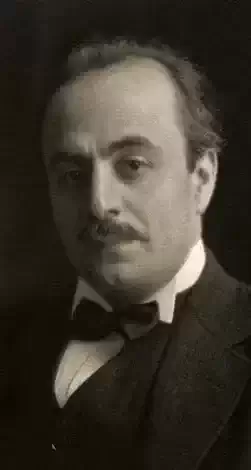
Khalil Gibran
Talking XX
Talking XX
And then a scholar said, "Speak of Talking."
And he answered, saying:
You talk when you cease to be at peace with your thoughts;
And when you can no longer dwell in the solitude of your heart you live in your lips,
and sound is a diversion and a pastime.
And in much of your talking, thinking is half murdered.
For thought is a bird of space, that in a cage of words many indeed unfold its wings but
cannot fly.
There are those among you who seek the talkative through fear of being alone.
The silence of aloneness reveals to their eyes their naked selves and they would
escape.
And there are those who talk, and without knowledge or forethought reveal a truth
which they themselves do not understand.
And there are those who have the truth within them, but they tell it not in words.
In the bosom of such as these the spirit dwells in rhythmic silence.
When you meet your friend on the roadside or in the market place, let the spirit in you
move your lips and direct your tongue.
Let the voice within your voice speak to the ear of his ear;
For his soul will keep the truth of your heart as the taste of the wine is remembered
When the color is forgotten and the vessel is no more.
440

Carl Sandburg
Aprons of Silence
Aprons of Silence
Many things I might have said today.
And I kept my mouth shut.
So many times I was asked
To come and say the same things
Everybody was saying, no end
To the yes-yes, yes-yes,
me-too, me-too.
The aprons of silence covered me.
A wire and hatch held my tongue.
I spit nails into an abyss and listened.
I shut off the gable of Jones, Johnson, Smith,
All whose names take pages in the city directory.
I fixed up a padded cell and lugged it around.
I locked myself in and nobody knew it.
Only the keeper and the kept in the hoosegow
Knew it--on the streets, in the post office,
On the cars, into the railroad station
Where the caller was calling, "All a-board,
All a-board for . . . Blaa-blaa . . . Blaa-blaa,
Blaa-blaa . . . and all points northwest . . .all a-board."
Here I took along my own hoosegow
And did business with my own thoughts.
Do you see? It must be the aprons of silence.
427
Page 1
Next