
Sadness and Melancholy

Ella Wheeler Wilcox
Pardoned Out
I’m pardoned out. Again the stars
Shine on me with their myriad eyes.
So long I’ve peered ‘twixt iron bars,
I’m awed by this expanse of skies.
The world is wider than I thought,
And yet ‘tis not so wide, I know,
But into its remotest spot
My tale of shame can go.
I’m pardoned out. Old Father Time
Who seemed to halt in horror, when
I strained my manhood by a crime,
With steady step moves on again,
And through the black appalling night,
That walled me in a gloom accurst,
The wonder of the morning light
In sudden glory burst.
I’m pardoned out. I shall be knows
No more by number, but by name.
And yet each whispering wind has blown
Abroad the story of my shame.
I dread to see men shrink away
With startled looks of scorn or fear,
When in life’s crowded marts some day,
That name falls on their ear.
I’m pardoned out, ah God! to roam
Like some whipped dog among my kind.
I have no friends, I have no home,
Save these bleak walls I leave behind.
How can I face the world of men,
My comrades in the days of yore?
Oh! hide me in my cell again,
And, warden lock the door.
410

Elizabeth Barrett Browning
Irreparableness
I HAVE been in the meadows all the day
And gathered there the nosegay that you see
Singing within myself as bird or bee
When such do field-work on a morn of May.
But, now I look upon my flowers, decay
Has met them in my hands more fatally
Because more warmly clasped,--and sobs are free
To come instead of songs. What do you say,
Sweet counsellors, dear friends ? that I should go
Back straightway to the fields and gather more ?
Another, sooth, may do it, but not I !
My heart is very tired, my strength is low,
My hands are full of blossoms plucked before,
Held dead within them till myself shall die.
408

Johann Wolfgang von Goethe
Blindman's Buff
OH, my Theresa dear!
Thine eyes, I greatly fear,
Can through the bandage see!
Although thine eyes are bound,
By thee I'm quickly found,
And wherefore shouldst thou catch but me?
Ere long thou held'st me fast,
With arms around me cast,
Upon thy breast I fell;
Scarce was thy bandage gone,
When all my joy was flown,
Thou coldly didst the blind repel.
He groped on ev'ry side,
His limbs he sorely tried,
While scoffs arose all round;
If thou no love wilt give,
In sadness I shall live,
As if mine eyes remain'd still bound.
406

Lord Byron
Stanzas For Music: There's Not A Joy The World Can Give
There's not a joy the world can give like that it takes away
When the glow of early thought declines in feeling's dull decay;
'Tis not on youth's smooth cheek the blush alone, which fades so fast,
But the tender bloom of heart is gone, ere youth itself be past.
Then the few whose spirits float above the wreck of happiness
Are driven o'er the shoals of guilt, or ocean of excess:
The magnet of their course is gone, or only points in vain
The shore to which their shivered sail shall never stretch again.
Then the mortal coldness of the soul like death itself comes down;
It cannot feel for others' woes, it dare not dream its own;
That heavy chill has frozen o'er the fountain of our tears,
And though the eye may sparkle still, 'tis where the ice appears.
Though wit may flash from fluent lips, and mirth distract the breast,
Through midnight hours that yield no more their former hope of rest,
'Tis but as ivyleaves
around the ruined turret wreath—
All green and wildly fresh without, but worn and grey beneath.
Oh, could I feel as I have felt, or be what I have been,
Or weep as I could once have wept, o'er many a vanished scene;
As springs in deserts found seem sweet, all brackish though they be,
So, midst the withered waste of life, those tears would flow to me.
406

William Butler Yeats
The Sad Shepherd
THERE was a man whom Sorrow named his Friend,
And he, of his high comrade Sorrow dreaming,
Went walking with slow steps along the gleaming
And humming Sands, where windy surges wend:
And he called loudly to the stars to bend
From their pale thrones and comfort him, but they
Among themselves laugh on and sing alway:
And then the man whom Sorrow named his friend
Cried out, Dim sea, hear my most piteous story.!
The sea Swept on and cried her old cry still,
Rolling along in dreams from hill to hill.
He fled the persecution of her glory
And, in a far-off, gentle valley stopping,
Cried all his story to the dewdrops glistening.
But naught they heard, for they are always listening,
The dewdrops, for the sound of their own dropping.
And then the man whom Sorrow named his friend
Sought once again the shore, and found a shell,
And thought, I will my heavy story tell
Till my own words, re-echoing, shall send
Their sadness through a hollow, pearly heart;
And my own talc again for me shall sing,
And my own whispering words be comforting,
And lo! my ancient burden may depart.
Then he sang softly nigh the pearly rim;
But the sad dweller by the sea-ways lone
Changed all he sang to inarticulate moan
Among her wildering whirls, forgetting him.
405
Johann Wolfgang von Goethe
The Farewell
LET mine eye the farewell say,
That my lips can utter ne'er;
Fain I'd be a man to-day,
Yet 'tis hard, oh, hard to bear!
Mournful in an hour like this
Is love's sweetest pledge, I ween;
Cold upon thy mouth the kiss,
Faint thy fingers' pressure e'en.
Oh what rapture to my heart
Used each stolen kiss to bring!
As the violets joy impart,
Gather'd in the early spring.
Now no garlands I entwine,
Now no roses pluck. for thee,
Though 'tis springtime, Fanny mine,
Dreary autumn 'tis to me!
393

Emily Dickinson
Poor little Heart!
Poor little Heart!
Did they forget thee?
Then dinna care! Then dinna care!
Proud little Heart!
Did they forsake thee?
Be debonnaire! Be debonnaire!
Frail little Heart!
I would not break thee
Could'st
credit me? Could'st credit me?
Gay little Heart-
Like Morning Glory!
Wind and Sun-wilt thee array!
Did they forget thee?
Then dinna care! Then dinna care!
Proud little Heart!
Did they forsake thee?
Be debonnaire! Be debonnaire!
Frail little Heart!
I would not break thee
Could'st
credit me? Could'st credit me?
Gay little Heart-
Like Morning Glory!
Wind and Sun-wilt thee array!
391

Henry Wadsworth Longfellow
In The Harbour: Autumn Within
It is autumn; not without
But within me is the cold.
Youth and spring are all about;
It is I that have grown old.
Birds are darting through the air,
Singing, building without rest;
Life is stirring everywhere,
Save within my lonely breast.
There is silence: the dead leaves
Fall and rustle and are still;
Beats no flail upon the sheaves,
Comes no murmur from the mill.
392
Henry Wadsworth Longfellow
Afternoon in February
The day is ending,
The night is descending;
The marsh is frozen,
The river dead.
Through clouds like ashes
The red sun flashes
On village windows
That glimmer red.
The snow recommences;
The buried fences
Mark no longer
The road o'er the plain;
While through the meadows,
Like fearful shadows,
Slowly passes
A funeral train.
The bell is pealing,
And every feeling
Within me responds
To the dismal knell;
Shadows are trailing,
My heart is bewailing
And tolling within
Like a funeral bell.
391
Ella Wheeler Wilcox
A Pin
Oh, I know a certain lady who is reckoned with the good,
Yet she fills me with more terror than a raging lion would.
The little chills run up and down my spine whene’er we meet,
Though she seems a gentle creature, and she’s very trim and neat.
And she has a thousand virtues and not one acknowledged sin,
But she is the sort of person you could liken to a pin.
And she pricks you and she sticks you in a way that can’t be said.
If you seek for what has hurt you – why, you cannot find the head.
But she fills you with discomfort and exasperating pain.
If anybody asks you why, you really can’t explain!
A pin is such a tiny thing, of that there is no doubt,
Yet when it’s sticking in your flesh you’re wretched till it’s out.
She’s wonderfully observing – when she meets a pretty girl,
She is always sure to tell her if her hair is out of curl;
And she is so sympathetic to her friend who’s much admires,
She is often heard remarking, ‘Dear, you look so worn and tired.’
And she is an honest critic, for on yesterday she eyed
The new dress I was airing with a woman’s natural pride,
And she said, ‘Oh, how becoming! ’ and then gently added, ‘it
Is really a misfortune that the basque is such a fit.’
Then she said, ‘If you heard me yester eve, I’m sure, my friend,
You would say I was a champion who knows how to defend.’
And she left me with the feeling – most unpleasant, I aver –
That the whole world would despise me is it hadn’t been for her.
Whenever I encounter her, in such a nameless way
She gives me the impression I am at my worst that day.
And the hat that was imported (and cost me half a sonnet) ,
With just one glance from her round eyes becomes a Bowery bonnet.
She is always bright and smiling, sharp and pointed for a thrust;
Use does not seem to blunt her point, nor does she gather rust.
Oh! I wish some hapless specimen of mankind would begin
To tidy up the world for me, by picking up this pin!
392
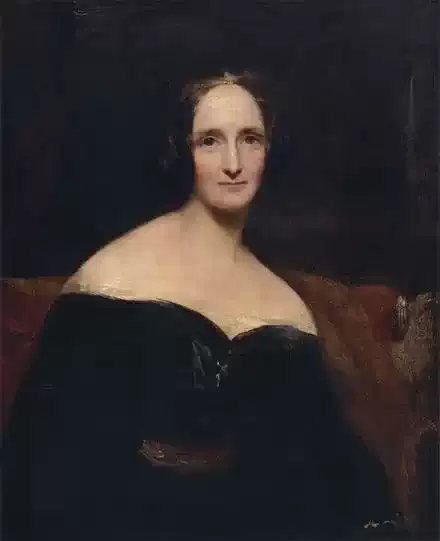
Percy Bysshe Shelley
Stanzas Written In Dejection Near Naples
The sun is warm, the sky is clear,
The waves are dancing fast and bright,
Blue isles and snowy mountains wear
The purple noon's transparent might,
The breath of the moist earth is light,
Around its unexpanded buds;
Like many a voice of one delight
The winds, the birds, the ocean floods,
The city's voice itself, is soft like Solitude's.
I see the deep's untrampled floor
With green and purple seaweeds strown;
I see the waves upon the shore,
Like light dissolved in star-showers, thrown:
I sit upon the sands alone,--
The lightning of the noontide ocean
Is flashing round me, and a tone
Arises from its measured motion,
How sweet! did any heart now share in my emotion.
Alas! I have nor hope nor health,
Nor peace within nor calm around,
Nor that content surpassing wealth
The sage in meditation found,
And walked with inward glory crowned--
Nor fame nor power, nor love, nor leisure,
Others I see whom these surround--
Smiling they live, and call life pleasure;--
To me that cup has been dealt in another measure.
Yet now despair itself is mild,
Even as the winds and waters are;
I could lie down like a tired child,
And weep away the life of care
Which I have born and yet must bear,
Till death like sleep might steal on me,
And I might feel in the warm air
My cheek grow cold, and hear the sea
Breathe o'er my dying brain its last monotony.
Some might lament that I were cold,
As I, when this sweet day is gone,
Which my lost heart, too soon grown old,
Insults with this untimely moan;
They might lament--for I am one
Whom men love not,--and yet regret,
Unlike this day, which, when the sun
Shall on its stainless glory set,
Will linger, though enjoyed, like joy in memory yet.
388
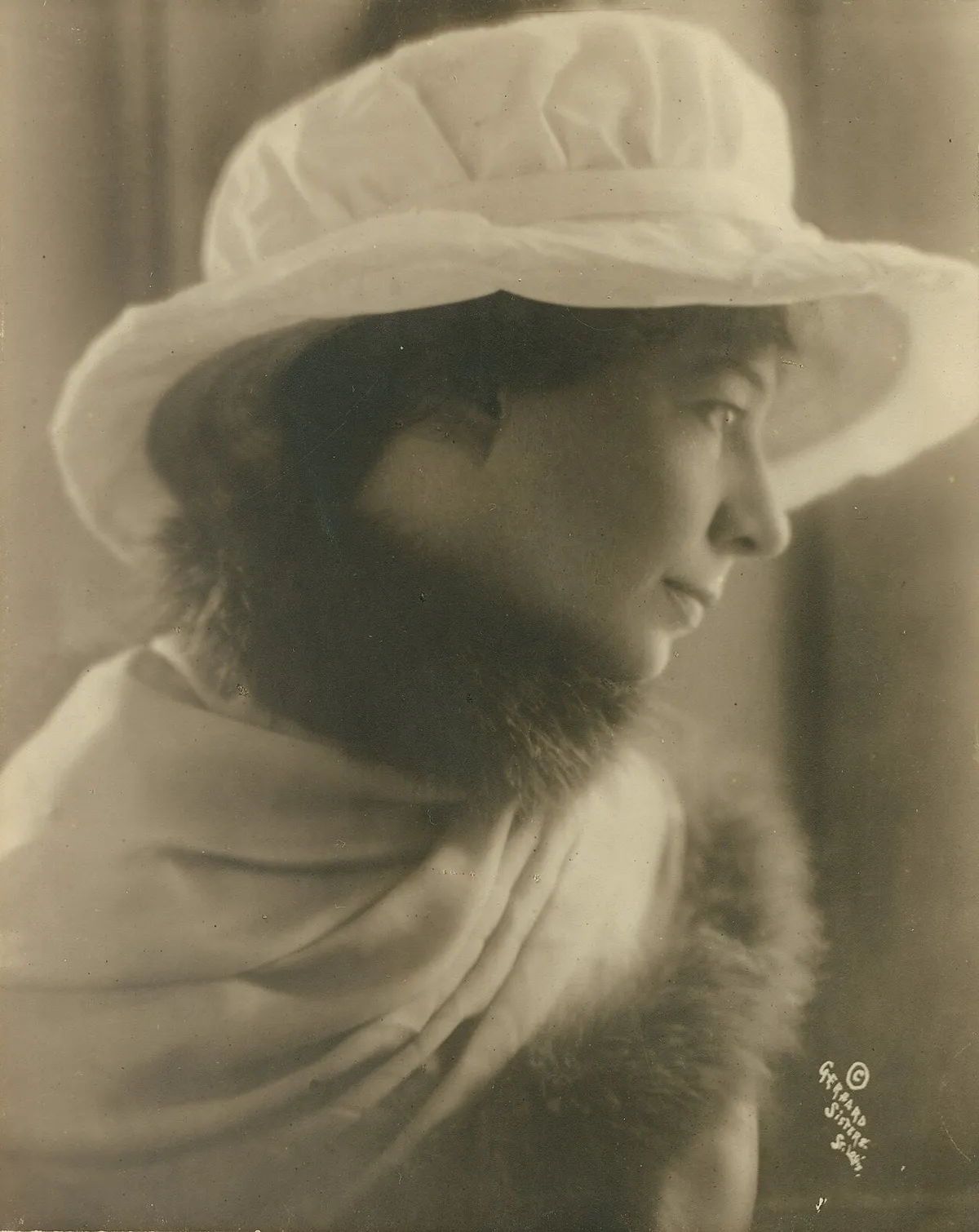
Sara Teasdale
Faces
People that I meet and pass
In the city's broken roar,
Faces that I lose so soon
And have never found before,
Do you know how much you tell
In the meeting of our eyes,
How ashamed I am, and sad
To have pierced your poor disguise?
Secrets rushing without sound
Crying from your hiding places --
Let me go, I cannot bear
The sorrow of the passing faces.
-- People in the restless street,
Can it be, oh can it be
In the meeting of our eyes
That you know as much of me?
390

Ezra Pound
The City Of Choan
The phoenix are at play on their terrace.
The phoenix are gone, the river Hows on alone.
Flowers and grass
Cover over the dark path
where lay the dynastic house of the Go.
The bright cloths and bright caps of Shin
Are now the base of old hills.
The Three Mountains fall through the far heaven,
The isle of White Heron
splits the two streams apart.
Now the high clouds cover the sun
And I can not see Choan afar
And I am sad.
387
Ella Wheeler Wilcox
The Beautiful Blue Danube
They drift down the hall together;
He smiles in her lifted eyes.
Like waves of that mighty river
The strains of the ‘Danube’ rise.
They float on its rhythmic measure,
Like leaves on a summer stream;
And here, in this scene of pleasure,
I bury my sweet dead dream.
Through the cloud of her dusky tresses,
Like a star, shines out her face;
And the form of his strong arm presses
Is sylph-like in its grace.
As a leaf on the bounding river
Is lost in the seething sea,
I know that for ever and ever
My dream is lost to me.
And still the viols are playing
That grand old wordless rhyme;
And still those two are swaying
In perfect tune and time.
If the great bassoons that mutter,
If the clarinets that blow,
Were given the chance to utter
The secret things they know.
Would the lists of the slain who slumber
On the Danube’s battle-plains
The unknown hosts outnumber
Who die ‘neath the ‘Danube’s’ strains?
Those fall where the cannons rattle,
‘Mid the rain of shot and shell;
But these, in a fiercer battle,
Find death in the music’s swell.
With the river’s roar of passion
Is blended the dying groan;
But here, in the halls of fashion,
Hearts break, and make no moan.
And the music, swelling and sweeping,
Like the river, knows it all;
But none are counting or keeping
The lists of those who fall.
386
Dorothy Parker
Pattern
Leave me to my lonely pillow.
Go, and take your silly posies
Who has vowed to wear the willow
Looks a fool, tricked out in roses.
Who are you, my lad, to ease me?
Leave your pretty words unspoken.
Tinkling echoes little please me,
Now my heart is freshly broken.
Over young are you to guide me,
And your blood is slow and sleeping.
If you must, then sit beside me....
Tell me, why have I been weeping?
386
William Butler Yeats
The Cloak, The Boat And The Shoes
'What do you make so fair and bright?'
'I make the cloak of Sorrow:
O lovely to see in all men's sight
Shall be the cloak of Sorrow,
In all men's sight.'
'What do you build with sails for flight?'
'I build a boat for Sorrow:
O swift on the seas all day and night
Saileth the rover Sorrow,
All day and night.'
What do you weave with wool so white?'
'I weave the shoes of Sorrow:
Soundless shall be the footfall light
In all men's ears of Sorrow,
Sudden and light.'
385
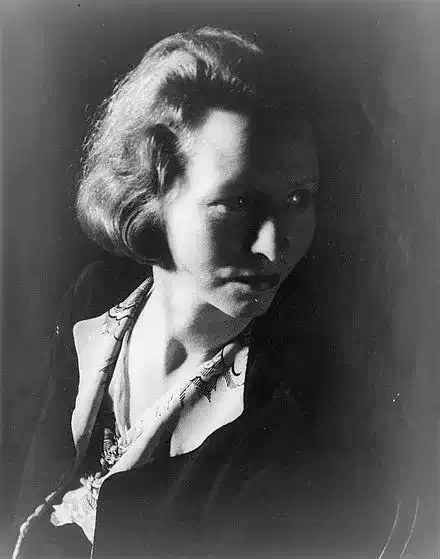
Edna St. Vincent Millay
A Visit To The Asylum
Once from a big, big building,
When I was small, small,
The queer folk in the windows
Would smile at me and call.
And in the hard wee gardens
Such pleasant men would hoe:
"Sir, may we touch the little girl's hair!"—
It was so red, you know.
They cut me coloured asters
With shears so sharp and neat,
They brought me grapes and plums and pears
And pretty cakes to eat.
And out of all the windows,
No matter where we went,
The merriest eyes would follow me
And make me compliment.
There were a thousand windows,
All latticed up and down.
And up to all the windows,
When we went back to town,
The queer folk put their faces,
As gentle as could be;
"Come again, little girl!" they called, and I
Called back, "You come see me!"
381

John Keats
Think Of It Not, Sweet One
THINK not of it, sweet one, so;--Give
it not a tear;
Sigh thou mayst, and bid it go
Any---anywhere.
Do not lool so sad, sweet one,--Sad
and fadingly;
Shed one drop then,---it is gone--O
'twas born to die!
Still so pale? then, dearest, weep;
Weep, I'll count the tears,
And each one shall be a bliss
For thee in after years.
Brighter has it left thine eyes
Than a sunny rill;
And thy whispering melodies
Are tenderer still.
Yet---as all things mourn awhile
At fleeting blisses,
E'en let us too! but be our dirge
A dirge of kisses.
381
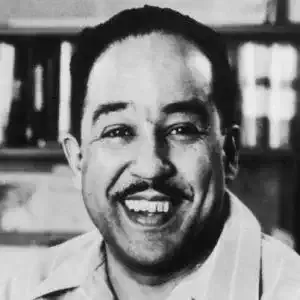
Langston Hughes
The Blues
When the shoe strings break
On both your shoes
And you're in a hurry
That's
the blues.
When you go to buy a candy bar
And you've lost the dime you had-
Slipped through a hole in your pocket somewhere
That's
the blues, too, and bad!
On both your shoes
And you're in a hurry
That's
the blues.
When you go to buy a candy bar
And you've lost the dime you had-
Slipped through a hole in your pocket somewhere
That's
the blues, too, and bad!
379
Langston Hughes
Po' Boy Blues
When I was home de
Sunshine seemed like gold.
When I was home de
Sunshine seemed like gold.
Since I come up North de
Whole damn world's turned cold.
I was a good boy,
Never done no wrong.
Yes, I was a good boy,
Never done no wrong,
But this world is weary
An' de road is hard an' long.
I fell in love with
A gal I thought was kind.
Fell in love with
A gal I thought was kind.
She made me lose ma money
An' almost lose ma mind.
Weary, weary,
Weary early in de morn.
Weary, weary,
Early, early in de morn.
I's so weary
I wish I'd never been born.
Sunshine seemed like gold.
When I was home de
Sunshine seemed like gold.
Since I come up North de
Whole damn world's turned cold.
I was a good boy,
Never done no wrong.
Yes, I was a good boy,
Never done no wrong,
But this world is weary
An' de road is hard an' long.
I fell in love with
A gal I thought was kind.
Fell in love with
A gal I thought was kind.
She made me lose ma money
An' almost lose ma mind.
Weary, weary,
Weary early in de morn.
Weary, weary,
Early, early in de morn.
I's so weary
I wish I'd never been born.
378

Carl Sandburg
Lost
Desolate and lone
All night long on the lake
Where fog trails and mist creeps,
The whistle of a boat
Calls and cries unendingly,
Like some lost child
In tears and trouble
Hunting the harbor's breast
And the harbor's eyes.
All night long on the lake
Where fog trails and mist creeps,
The whistle of a boat
Calls and cries unendingly,
Like some lost child
In tears and trouble
Hunting the harbor's breast
And the harbor's eyes.
376
Dorothy Parker
Rondeau Redoublé
[and scarcely worth the trouble, at that]
The same to me are somber days and gay.
Though Joyous dawns the rosy morn, and bright,
Because my dearest love is gone away
Within my heart is melancholy night.
My heart beats low in loneliness, despite
That riotous Summer holds the earth in sway.
In cerements my spirit is bedight;
The same to me are somber days and gay.
Though breezes in the rippling grasses play,
And waves dash high and far in glorious might,
I thrill no longer to the sparkling day,
Though joyous dawns the rosy morn, and bright.
Ungraceful seems to me the swallow's flight;
As well might heaven's blue be sullen gray;
My soul discerns no beauty in their sight
Because my dearest love is gone away.
Let roses fling afar their crimson spray,
And virgin daisies splash the fields with white,
Let bloom the poppy hotly as it may,
Within my heart is melancholy night.
And this, O love, my pitiable plight
Whenever from my circling arms you stray;
This little world of mine has lost its light....
I hope to God, my dear, that you can say
The same to me.
The same to me are somber days and gay.
Though Joyous dawns the rosy morn, and bright,
Because my dearest love is gone away
Within my heart is melancholy night.
My heart beats low in loneliness, despite
That riotous Summer holds the earth in sway.
In cerements my spirit is bedight;
The same to me are somber days and gay.
Though breezes in the rippling grasses play,
And waves dash high and far in glorious might,
I thrill no longer to the sparkling day,
Though joyous dawns the rosy morn, and bright.
Ungraceful seems to me the swallow's flight;
As well might heaven's blue be sullen gray;
My soul discerns no beauty in their sight
Because my dearest love is gone away.
Let roses fling afar their crimson spray,
And virgin daisies splash the fields with white,
Let bloom the poppy hotly as it may,
Within my heart is melancholy night.
And this, O love, my pitiable plight
Whenever from my circling arms you stray;
This little world of mine has lost its light....
I hope to God, my dear, that you can say
The same to me.
375
Edna St. Vincent Millay
Sonnets (1923)
VIII8.
Oh, oh, you will be sorry for that word!
.
Give back my book and take my kiss instead.
.
Was it my enemy or my friend I heard,
.
"What a big book for such a little head!"
.
Come, I will show you now my newest hat,
.
And you may watch me purse my mouth and prink!
.
Oh, I shall love you still, and all of that.
.
I never again shall tell you what I think.
.
I shall be sweet and crafty, soft and sly;
.
You will not catch me reading any more:
.
I shall be called a wife to pattern by;
.
And some day when you knock and push the door,
.
Some sane day, not too bright and not too stormy,
.
I shall be gone, and you may whistle for me. IX9.
Here is a wound that never will heal, I know,
.
Being wrought not of a dearness and a death,
.
But of a love turned ashes and the breath
.
Gone out of beauty; never again will grow
.
The grass on that scarred acre, though I sow
.
Young seed there yearly and the sky bequeath
.
Its friendly weathers down, far underneath
.
Shall be such bitterness of an old woe.
.
That April should be shattered by a gust,
.
That August should be levelled by a rain,
.
I can endure, and that the lifted dust
.
Of man should settle to the earth again;
.
But that a dream can die, will be a thrust
.
Between my ribs forever of hot pain. XVIII18.
I, being born a woman and distressed
.
By all the needs and notions of my kind,
.
Am urged by your propinquity to find
.
Your person fair, and feel a certain zest
.
To bear your body's weight upon my breast:
.
So subtly is the fume of life designed,
.
To clarify the pulse and cloud the mind,
.
And leave me once again undone, possessed.
.
Think not for this, however, the poor treason
.
Of my stout blood against my staggering brain,
.
I shall remember you with love, or season
.
My scorn with pity, -- let me make it plain:
.
I find this frenzy insufficient reason
.
For conversation when we meet again. XIX19.
What lips my lips have kissed, and where, and why,
.
I have forgotten, and what arms have lain
.
Under my head till morning; but the rain
.
Is full of ghosts to-night, that tap and sigh
.
Upon the glass and listen for reply,
.
And in my heart there stirs a quiet pain
.
For unremembered lads that not again
.
Will turn to me at midnight with a cry.
.
Thus in the winter stands the lonely tree,
.
Nor knows what birds have vanished one by one,
.
Yet knows its boughs more silent than before:
.
I cannot say what loves have come and gone,
.
I only know that summer sang in me
.
A little while, that in me sings no more.
372
Ella Wheeler Wilcox
The Common Lot
It is a common fate – a woman’s lot –
To waste on one the riches of her soul,
Who takes the wealth she gives him, but cannot
Repay the interest, and much less the whole.
As I look up into your eyes, and wait
For some response to my fond gaze and touch,
It seems to me there is no sadder fate
Than to be doomed to loving overmuch.
Are you not kind? Ah, yes, so very kind –
So thoughtful of my comfort, and so true.
Yes, yes, dear heart; but I, not being blind,
Know that I am not loved, as I love you.
One tenderer word, a little longer kiss,
Will fill my soul with music and with song;
And if you seem abstracted, or I miss
The heart-tone from your voice, my world goes wrong.
And oftentimes you think me childish – weak –
When at some thoughtless word the tears will start;
You cannot understand how aught you speak
Has power to stir the deapths of my poor heart.
I cannot help it, dear – I wish I could,
Or feign indifference where I now adore;
For if I seemed to love you less, you would,
Manlike, I have no doubt, love me the more.
‘Tis a sad gift, that much applauded thing,
A constant heart; for fact doth daily prove
That constancy finds oft a cruel sting,
While fickle natures win the deeper love.
370