
Sadness and Melancholy
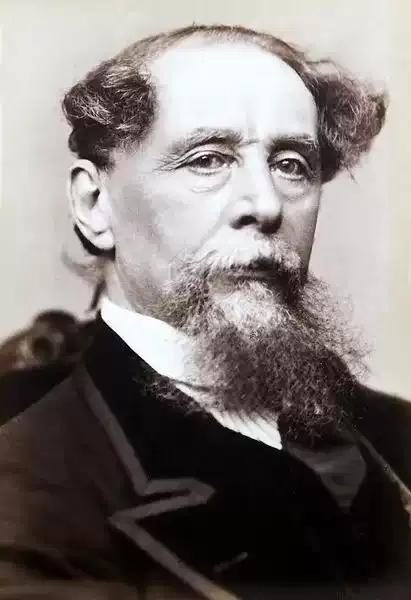
Charles Dickens
Lucy's Song
How beautiful at eventide
To see the twilight shadows pale,
Steal o'er the landscape, far and wide,
O'er stream and meadow, mound and dale!
How soft is Nature's calm repose
When ev'ning skies their cool dews weep:
The gentlest wind more gently blows,
As if to soothe her in her sleep!
The gay morn breaks,
Mists roll away,
All Nature awakes
To glorious day.
In my breast alone
Dark shadows remain;
The peace it has known
It can never regain.
466

Dorothy Parker
Light Of Love
Joy stayed with me a night --
Young and free and fair --
And in the morning light
He left me there.
Then Sorrow came to stay,
And lay upon my breast
He walked with me in the day.
And knew me best.
I'll never be a bride,
Nor yet celibate,
So I'm living now with Pride --
A cold bedmate.
He must not hear nor see,
Nor could he forgive
That Sorrow still visits me
Each day I live.
459

John Keats
In Drear-Nighted December
IN drear-nighted December,
Too happy, happy tree,
Thy branches ne'er remember
Their green felicity:
The north cannot undo them
With a sleety whistle through them;
Nor frozen thawings glue them
From budding at the prime.
In drear-nighted December,
Too happy, happy brook,
Thy bubblings ne'er remember
Apollo's summer look;
But with a sweet forgetting,
They stay their crystal fretting,
Never, never petting
About the frozen time.
Ah! would 'twere so with many
A gentle girl and boy!
But were there ever any
Writhed not at passed joy?
The feel of not to feel it,
When there is none to heal it
Nor numbed sense to steel it,
Was never said in rhyme.
458

Wilfred Owen
The Send-off
Down the close, darkening lanes they sang their way
To the siding-shed,
And lined the train with faces grimly gay.
Their breasts were stuck all white with wreath and spray
As men's are, dead.
Dull porters watched them, and a casual tramp
Stood staring hard,
Sorry to miss them from the upland camp.
Then, unmoved, signals nodded, and a lamp
Winked to the guard.
So secretly, like wrongs hushed-up, they went.
They were not ours:
We never heard to which front these were sent.
Nor there if they yet mock what women meant
Who gave them flowers.
Shall they return to beatings of great bells
In wild trainloads?
A few, a few, too few for drums and yells,
May creep back, silent, to still village wells
Up half-known roads.
456

Ezra Pound
Song in the Manner of Housman
O woe, woe,
People are born and die,
We also shall be dead pretty soon
Therefore let us act as if we were
dead already.
The bird sits on the hawthorn tree
But he dies also, presently.
Some lads get hung, and some get shot.
Woeful is this human lot.
Woe! woe, etcetera . . . .
London is a woeful place,
Shropshire is much pleasanter.
Then let us smile a little space
Upon fond nature's morbid grace.
Oh, Woe, woe, woe, etcetera . . .
452
Dorothy Parker
A Fairly Sad Tale
I think that I shall never know
Why I am thus, and I am so.
Around me, other girls inspire
In men the rush and roar of fire,
The sweet transparency of glass,
The tenderness of April grass,
The durability of granite;
But me- I don't know how to plan it.
The lads I've met in Cupid's deadlock
Were- shall we say?- born out of wedlock.
They broke my heart, they stilled my song,
And said they had to run along,
Explaining, so to sop my tears,
First came their parents or careers.
But ever does experience
Deny me wisdom, calm, and sense!
Though she's a fool who seeks to capture
The twenty-first fine, careless rapture,
I must go on, till ends my rope,
Who from my birth was cursed with hope.
A heart in half is chaste, archaic;
But mine resembles a mosaic-
The thing's become ridiculous!
Why am I so? Why am I thus?
451

Elizabeth Barrett Browning
The Weakest Thing
Which is the weakest thing of all
Mine heart can ponder?
The sun, a little cloud can pall
With darkness yonder?
The cloud, a little wind can move
Where'er it listeth?
The wind, a little leaf above,
Though sere, resisteth?
What time that yellow leaf was green,
My days were gladder;
But now, whatever Spring may mean,
I must grow sadder.
Ah me! a leaf with sighs can wring
My lips asunder -
Then is mine heart the weakest thing
Itself can ponder.
Yet, Heart, when sun and cloud are pined
And drop together,
And at a blast, which is not wind,
The forests wither,
Thou, from the darkening deathly curse
To glory breakest, -
The Strongest of the universe
Guarding the weakest!
449

Boris Pasternak
‘February. Take ink and weep,’
February. Take ink and weep,
write February as you’re sobbing,
while black Spring burns deep
through the slush and throbbing.
Take a cab. For a clutch of copecks,
through bell-towers’ and wheel noise,
go where the rain-storm’s din breaks,
greater than crying or ink employs.
Where rooks in thousands falling,
like charred pears from the skies,
drop down into puddles, bringing
cold grief to the depths of eyes.
Below, the black shows through,
and the wind’s furrowed with cries:
the more freely, the more truly
then, sobbing verse is realised.
447

Claude Mckay
The Castaways
The vivid grass with visible delight
Springing triumphant from the pregnant earth,
The butterflies, and sparrows in brief flight
Chirping and dancing for the season's birth,
The dandelions and rare daffodils
That touch the deep-stirred heart with hands of gold,
The thrushes sending forth their joyous trills,--
Not these, not these did I at first behold!
But seated on the benches daubed with green,
The castaways of life, a few asleep,
Some withered women desolate and mean,
And over all, life's shadows dark and deep.
Moaning I turned away, for misery
I have the strength to bear but not to see.
442

Matsuo Bashō
In this world of ours
Yo no naka wa kutte hako shite nete okite
Sate sono ato wa shinuru bakari zo
In this world of ours,
We eat only to cast out,
Sleep only to wake,
And what comes after all that
Is simply to die at last.
Sate sono ato wa shinuru bakari zo
In this world of ours,
We eat only to cast out,
Sleep only to wake,
And what comes after all that
Is simply to die at last.
438

Johann Wolfgang von Goethe
After-Sensations
WHEN the vine again is blowing,
Then the wine moves in the cask;
When the rose again is glowing,
Wherefore should I feel oppress'd?
Down my cheeks run tears all-burning,
If I do, or leave my task;
I but feel a speechless yearning,
That pervades my inmost breast.
But at length I see the reason,
When the question I would ask:
'Twas in such a beauteous season,
Doris glowed to make me blest!
440
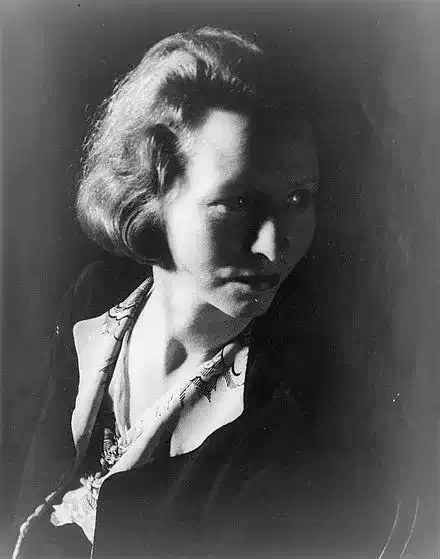
Edna St. Vincent Millay
Three Songs Of Shattering
I
The first rose on my rose-tree
Budded, bloomed, and shattered,
During sad days when to me
Nothing mattered.
Grief of grief has drained me clean;
Still it seems a pity
No one saw,—it must have been
Very pretty.
II
Let the little birds sing;
Let the little lambs play;
Spring is here; and so 'tis spring;—
But not in the old way!
I recall a place
Where a plum-tree grew;
There you lifted up your face,
And blossoms covered you.
If the little birds sing,
And the little lambs play,
Spring is here; and so 'tis spring—
But not in the old way!
III
All the dog-wood blossoms are underneath the tree!
Ere spring was going—ah, spring is gone!
And there comes no summer to the like of you and me,—
Blossom time is early, but no fruit sets on.
All the dog-wood blossoms are underneath the tree,
Browned at the edges, turned in a day;
And I would with all my heart they trimmed a mound for me,
And weeds were tall on all the paths that led that way!
438

Sara Teasdale
My Heart Is Heavy
My heart is heavy with many a song
Like ripe fruit bearing down the tree,
But I can never give you one --
My songs do not belong to me.
Yet in the evening, in the dusk
When moths go to and fro,
In the gray hour if the fruit has fallen,
Take it, no one will know.
Like ripe fruit bearing down the tree,
But I can never give you one --
My songs do not belong to me.
Yet in the evening, in the dusk
When moths go to and fro,
In the gray hour if the fruit has fallen,
Take it, no one will know.
440

John Clare
Remembrances
Summer pleasures they are gone like to visions every one
And the cloudy days of autumn and of winter cometh on
I tried to call them back but unbidden they are gone
Far away from heart and eye and for ever far away
Dear heart and can it be that such raptures meet decay
I thought them all eternal when by Langley Bush I lay
I thought them joys eternal when I used to shout and play
On its bank at 'clink and bandy' 'chock' and 'taw' and
ducking stone
Where silence sitteth now on the wild heath as her own
Like a ruin of the past all alone
When I used to lie and sing by old eastwells boiling spring
When I used to tie the willow boughs together for a 'swing'
And fish with crooked pins and thread and never catch a
thing
With heart just like a feather- now as heavy as a stone
When beneath old lea close oak I the bottom branches broke
To make our harvest cart like so many working folk
And then to cut a straw at the brook to have a soak
O I never dreamed of parting or that trouble had a sting
Or that pleasures like a flock of birds would ever take to
wing
Leaving nothing but a little naked spring
When jumping time away on old cross berry way
And eating awes like sugar plumbs ere they had lost the may
And skipping like a leveret before the peep of day
On the rolly polly up and downs of pleasant swordy well
When in round oaks narrow lane as the south got black again
We sought the hollow ash that was shelter from the rain
With our pockets full of peas we had stolen from the grain
How delicious was the dinner time on such a showry day
O words are poor receipts for what time hath stole away
The ancient pulpit trees and the play
When for school oer 'little field' with its brook and wooden
brig
Where I swaggered like a man though I was not half so big
While I held my little plough though twas but a willow twig
And drove my team along made of nothing but a name
'Gee hep' and 'hoit' and 'woi'- O I never call to mind
These pleasant names of places but I leave a sigh behind
While I see the little mouldywharps hang sweeing to the wind
On the only aged willow that in all the field remains
And nature hides her face where theyre sweeing in their
chains
And in a silent murmuring complains
Here was commons for the hills where they seek for
freedom still
Though every commons gone and though traps are set to kill
The little homeless miners- O it turns my bosom chill
When I think of old 'sneap green' puddocks nook and hilly
snow
Where bramble bushes grew and the daisy gemmed in dew
And the hills of silken grass like to cushions to the view
When we threw the pissmire crumbs when we's nothing
else to do
All leveled like a desert by the never weary plough
All vanished like the sun where that cloud is passing now
All settled here for ever on its brow
I never thought that joys would run away from boys
Or that boys would change their minds and forsake such
summer joys
But alack I never dreamed that the world had other toys
To petrify first feelings like the fable into stone
Till I found the pleasure past and a winter come at last
Then the fields were sudden bare and the sky got overcast
And boyhoods pleasing haunts like a blossom in the blast
Was shrivelled to a withered weed and trampled down and
done
Till vanished was the morning spring and set that summer
sun
And winter fought her battle strife and won
By Langley bush I roam but the bush hath left its hill
On cowper green I stray tis a desert strange and chill
And spreading lea close oak ere decay had penned its will
To the axe of the spoiler and self interest fell a prey
And cross berry way and old round oaks narrow lane
With its hollow trees like pulpits I shall never see again
Inclosure like a Buonaparte let not a thing remain
It levelled every bush and tree and levelled every hill
And hung the moles for traitors - though the brook is
running still
It runs a naked brook cold and chill
O had I known as then joy had left the paths of men
I had watched her night and day besure and never slept agen
And when she turned to go O I'd caught her mantle then
And wooed her like a lover by my lonely side to stay
Aye knelt and worshipped on as love in beautys bower
And clung upon her smiles as a bee upon her flower
And gave her heart my poesys all cropt in a sunny hour
As keepsakes and pledges to fade away
But love never heeded to treasure up the may
So it went the comon road with decay.
440
Johann Wolfgang von Goethe
The Exchange
THE stones in the streamlet I make my bright pillow,
And open my arms to the swift-rolling billow,
That lovingly hastens to fall on my breast.
Then fickleness soon bids it onwards be flowing;
A second draws nigh, its caresses bestowing,--
And so by a twofold enjoyment I'm blest.
And yet thou art trailing in sorrow and sadness
The moments that life, as it flies, gave for gladness,
Because by thy love thou'rt remember'd no more!
Oh, call back to mind former days and their blisses!
The lips of the second will give as sweet kisses
As any the lips of the first gave before!
434
Sara Teasdale
A Winter Night
My window-pane is starred with frost,
The world is bitter cold to-night,
The moon is cruel, and the wind
Is like a two-edged sword to smite.
God pity all the homeless ones,
The beggars pacing to and fro,
God pity all the poor to-night
Who walk the lamp-lit streets of snow.
My room is like a bit of June,
Warm and close-curtained fold on fold,
But somewhere, like a homeless child,
My heart is crying in the cold.
432

Rudyard Kipling
The City of Sleep
Over the edge of the purple down,
Where the single lamplight gleams,
Know ye the road to the Merciful Town
That is hard by the Sea of Dreams--
Where the poor may lay their wrongs away,
And the sick may forget to weep?
But we--pity us! Oh, pity us!
We wakeful; ah, pity us! --
We must go back with Policeman Day--
Back from the City of Sleep!
Weary they turn from the scroll and crown,
Fetter and prayer and plough--
They that go up to the Merciful Town,
For her gates are closing now.
It is their right in the Baths of Night
Body and soul to steep,
But we--pity us! ah, pity us!
We wakeful; oh, pity us!--
We must go back with Policeman Day--
Back from the City of Sleep!
Over the edge of the purple down,
Ere the tender dreams begin,
Look--we may look--at the Merciful Town,
But we may not enter in!
Outcasts all, from her guarded wall
Back to our watch we creep:
We--pity us! ah, pity us!
We wakeful; oh, pity us!--
We that go back with Policeman Day--
Back from the City of Sleep!
433

Ella Wheeler Wilcox
When Love Is Lost
When love is lost, the day sets towards the night,
Albeit the morning sun may still be bright,
And not one cloud-ship sails across the sky.
Yet from the places where it used to lie
Gone is the lustrous glory of the light.
No splendour rests in any mountain height,
No scene spreads fair and beauteous to the sight;
All, all seems dull and dreary to the eye
When love is lost.
Love lends to life its grandeur and its might;
Love goes, and leaves behind it gloom and blight;
Like ghosts of time the pallid hours drag by,
And grief's one happy thought is that we die.
Ah, what can recompense us for its flight
When love is lost?
429
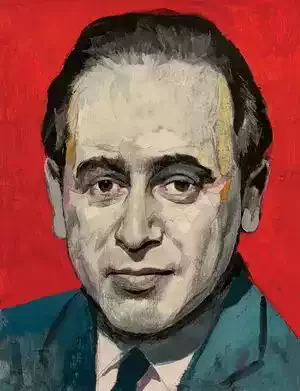
Paul Celan
Your Hand
Your hand full of hours, you came to me – and I said:
‘Your hair is not brown.’
You lifted it, lightly,
on to the balance of grief,
it was heavier than I.
They come to you on their ships, and make it their load,
then put it on sale in the markets of lust.
You smile at me from the deep.
I weep at you from the scale that’s still light.
I weep: Your hair is not brown.
They offer salt-waves of the sea,
and you give them spume.
You whisper: ‘They’re filling the world with me now,
and for you I’m still a hollow way in the heart!
You say: ‘Lay the leaf-work of years by you, it’s time,
that you came here and kissed me.
The leaf-work of years is brown, your hair is not brown.
428

Lord Byron
Impromptu, In Reply To A Friend
When, from the heart where Sorrow sits,
Her dusky shadow mounts too high,
And o'er the changing aspect flits,
And clouds the brow, or fills the eye;
Heed not that gloom, which soon shall sink:
My thoughts their dungeon know too well;
Back to my breast the wanderers shrink,
And droop within their silent cell.
Her dusky shadow mounts too high,
And o'er the changing aspect flits,
And clouds the brow, or fills the eye;
Heed not that gloom, which soon shall sink:
My thoughts their dungeon know too well;
Back to my breast the wanderers shrink,
And droop within their silent cell.
428
Johann Wolfgang von Goethe
The Shepherd's Lament
ON yonder lofty mountain
A thousand times I stand,
And on my staff reclining,
Look down on the smiling land.
My grazing flocks then I follow,
My dog protecting them well;
I find myself in the valley,
But how, I scarcely can tell.
The whole of the meadow is cover'd
With flowers of beauty rare;
I pluck them, but pluck them unknowing
To whom the offering to bear.
In rain and storm and tempest,
I tarry beneath the tree,
But closed remaineth yon portal;
'Tis all but a vision to me.
High over yonder dwelling,
There rises a rainbow gay;
But she from home hath departed
And wander'd far, far away.
Yes, far away bath she wander'd,
Perchance e'en over the sea;
Move onward, ye sheep, then, move onward!
Full sad the shepherd must be.
430
Edna St. Vincent Millay
Alms
My heart is what it was before,
A house where people come and go;
But it is winter with your love,
The sashes are beset with snow.
I light the lamp and lay the cloth,
I blow the coals to blaze again;
But it is winter with your love,
The frost is thick upon the pane..
I know a winter when it comes:
The leaves are listless on the boughs;
I watched your love a little while,
And brought my plants into the house.
I water them and turn them south,
I snap the dead brown from the stem;
But it is winter with your love,
I only tend and water them.
There was a time I stood and watched
The small, ill-natured sparrows' fray;
I loved the beggar that I fed,
I cared for what he had to say,
I stood and watched him out of sight:
Today I reach around the door
And set a bowl upon the step;
My heart is what it was before,
But it is winter with your love;
I scatter crumbs upon the sill,
And close the window, —and the birds
May take or leave them, as they will.
420
Johann Wolfgang von Goethe
To Charlotte
'MIDST the noise of merriment and glee,
'Midst full many a sorrow, many a care,
Charlotte, I remember, we remember thee,
How, at evening's hour so fair,
Thou a kindly hand didst reach us,
When thou, in some happy place
Where more fair is Nature s face,
Many a lightly-hidden trace
Of a spirit loved didst teach us.
Well 'tis that thy worth I rightly knew,--
That I, in the hour when first we met,
While the first impression fill'd me yet,
Call'd thee then a girl both good and true.
Rear'd in silence, calmly, knowing nought,
On the world we suddenly are thrown;
Hundred thousand billows round us sport;
All things charm us--many please alone,
Many grieve us, and as hour on hour is stealing,
To and fro our restless natures sway;
First we feel, and then we find each feeling
By the changeful world-stream borne away.
Well I know, we oft within us find
Many a hope and many a smart.
Charlotte, who can know our mind?
Charlotte, who can know our heart?
Ah! 'twould fain be understood, 'twould fain o'erflow
In some creature's fellow-feelings blest,
And, with trust, in twofold measure know
All the grief and joy in Nature's breast.
Then thine eye is oft around thee cast,
But in vain, for all seems closed for ever.
Thus the fairest part of life is madly pass'd
Free from storm, but resting never:
To thy sorrow thou'rt to-day repell'd
By what yesterday obey'd thee.
Can that world by thee be worthy held
Which so oft betray'd thee?
Which, 'mid all thy pleasures and thy pains,
Lived in selfish, unconcern'd repose?
See, the soul its secret cells regains,
And the heart--makes haste to close.
Thus found I thee, and gladly went to meet thee;
"She's worthy of all love!" I cried,
And pray'd that Heaven with purest bliss might greet thee,
Which in thy friend it richly hath supplied.
419
Ella Wheeler Wilcox
The Saddest Hour
The saddest hour of anguish and of loss
Is not that season of supreme despair
When we can find no least light anywhere
To gild the dread, black shadow of the Cross;
Not in that luxury of sorrow when
We sup on salt of tears, and drink the gall
Of memories of days beyond recall—
Of lost delights that cannot come again.
But when, with eyes that are no longer wet,
We look out on the great, wide world of men,
And, smiling, lean toward a bright to-morrow,
Then backward shrink, with sudden keen regret,
To find that we are learning to forget:
Ah! then we face the saddest hour of sorrow.
410