
Soul

Ezra Pound
A Song Of The Degrees
I
Rest me with Chinese colours,
For I think the glass is evil.
II
The wind moves above the wheat-
With a silver crashing,
A thin war of metal.
I have known the golden disc,
I have seen it melting above me.
I have known the stone-bright place,
The hall of clear colours.
III
O glass subtly evil, O confusion of colours !
O light bound and bent in, soul of the captive,
Why am I warned? Why am I sent away?
Why is your glitter full of curious mistrust?
O glass subtle and cunning, O powdery gold!
O filaments of amber, two-faced iridescence!
Read more →
Rest me with Chinese colours,
For I think the glass is evil.
II
The wind moves above the wheat-
With a silver crashing,
A thin war of metal.
I have known the golden disc,
I have seen it melting above me.
I have known the stone-bright place,
The hall of clear colours.
III
O glass subtly evil, O confusion of colours !
O light bound and bent in, soul of the captive,
Why am I warned? Why am I sent away?
Why is your glitter full of curious mistrust?
O glass subtle and cunning, O powdery gold!
O filaments of amber, two-faced iridescence!
599

Kazi Nazrul Islam
I'll Hide in Song after Song
To-day my pensive mood
I'll hide in song after song
I'll expose my soul turning
the thorny wound into a flower,
To forget your neglect
I will sing all the while
The greater the shocks
the more tuneful my violin.
If absent-mindedly the flower is torn
I'll make a garland of it
And give it to you as a
gift when you arrive
By the fountain of my tunes
I'll compose divine music
You'll bathe in the stream
of those tunes and arise
I'll strike a rhyme out of word after word,
oh poet are you content now.
Your mind is desolate, your empty,
your soul without joy.
[Original: Aji gane gane dhakbo; Translation: Abu Rushd]
Read more →
I'll hide in song after song
I'll expose my soul turning
the thorny wound into a flower,
To forget your neglect
I will sing all the while
The greater the shocks
the more tuneful my violin.
If absent-mindedly the flower is torn
I'll make a garland of it
And give it to you as a
gift when you arrive
By the fountain of my tunes
I'll compose divine music
You'll bathe in the stream
of those tunes and arise
I'll strike a rhyme out of word after word,
oh poet are you content now.
Your mind is desolate, your empty,
your soul without joy.
[Original: Aji gane gane dhakbo; Translation: Abu Rushd]
604

Johann Wolfgang von Goethe
Welcome And Farewell
QUICK throbb'd my heart: to norse! haste, haste,
And lo! 'twas done with speed of light;
The evening soon the world embraced,
And o'er the mountains hung the night.
Soon stood, in robe of mist, the oak,
A tow'ring giant in his size,
Where darkness through the thicket broke,
And glared with hundred gloomy eyes.
From out a hill of clouds the moon
With mournful gaze began to peer:
The winds their soft wings flutter'd soon,
And murmur'd in mine awe-struck ear;
The night a thousand monsters made,
Yet fresh and joyous was my mind;
What fire within my veins then play'd!
What glow was in my bosom shrin'd!
I saw thee, and with tender pride
Felt thy sweet gaze pour joy on me;
While all my heart was at thy side.
And every breath I breath'd for thee.
The roseate hues that spring supplies
Were playing round thy features fair,
And love for me--ye Deities!
I hoped it, I deserved it ne'er!
But, when the morning sun return'd,
Departure filled with grief my heart:
Within thy kiss, what rapture burn'd!
But in thy look, what bitter smart!
I went--thy gaze to earth first roved
Thou follow'dst me with tearful eye:
And yet, what rapture to be loved!
And, Gods, to love--what ecstasy!
Read more →
And lo! 'twas done with speed of light;
The evening soon the world embraced,
And o'er the mountains hung the night.
Soon stood, in robe of mist, the oak,
A tow'ring giant in his size,
Where darkness through the thicket broke,
And glared with hundred gloomy eyes.
From out a hill of clouds the moon
With mournful gaze began to peer:
The winds their soft wings flutter'd soon,
And murmur'd in mine awe-struck ear;
The night a thousand monsters made,
Yet fresh and joyous was my mind;
What fire within my veins then play'd!
What glow was in my bosom shrin'd!
I saw thee, and with tender pride
Felt thy sweet gaze pour joy on me;
While all my heart was at thy side.
And every breath I breath'd for thee.
The roseate hues that spring supplies
Were playing round thy features fair,
And love for me--ye Deities!
I hoped it, I deserved it ne'er!
But, when the morning sun return'd,
Departure filled with grief my heart:
Within thy kiss, what rapture burn'd!
But in thy look, what bitter smart!
I went--thy gaze to earth first roved
Thou follow'dst me with tearful eye:
And yet, what rapture to be loved!
And, Gods, to love--what ecstasy!
604
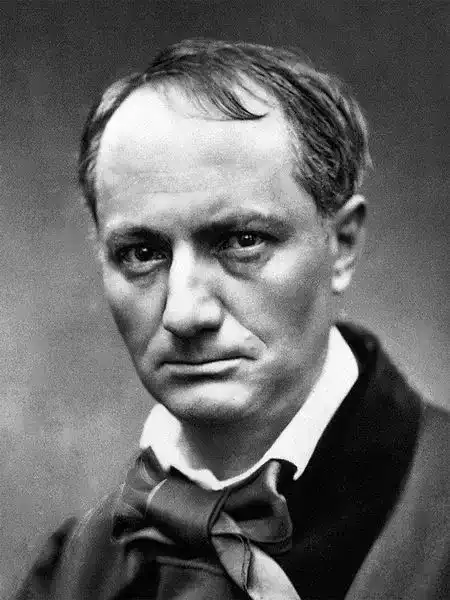
Charles Baudelaire
The Balcony
Mother of memories, mistress of mistresses,
O you, all my pleasures! O you, all my learning!
You will remember the joy of caresses,
the sweetness of home and the beauty of evening,
Mother of memories, mistress of mistresses!
On evenings lit by the glow of the ashes
and on the balcony, veiled, rose-coloured, misted,
how gentle your breast was, how good your heart to me!
We have said things meant for eternity,
on evenings lit by the glow of the ashes.
How lovely the light is on sultry evenings!
How deep the void grows! How powerful the heart is!
As I leaned towards you, queen of adored ones
I thought I breathed perfume from your blood’s kiss.
How lovely the light is on sultry evenings!
The night it was thickening and closing around us,
and my eyes in the dark were divining your glance,
and I drank your nectar. Oh sweetness! Oh poison!
your feet held, here, in these fraternal hands.
The night it was thickening and closing around us.
I know how to summon up happiest moments,
and relive my past, there, curled, touching your knees.
What good to search for your languorous beauties
but in your dear body, and your heart so sweet?
I know how to summon up happiest moments!
Those vows, those perfumes, those infinite kisses,
will they be reborn, from gulfs beyond soundings,
as the suns that are young again climb in the sky,
after they’ve passed through the deepest of drownings?
-O vows! O perfumes! O infinite kisses
Read more →
O you, all my pleasures! O you, all my learning!
You will remember the joy of caresses,
the sweetness of home and the beauty of evening,
Mother of memories, mistress of mistresses!
On evenings lit by the glow of the ashes
and on the balcony, veiled, rose-coloured, misted,
how gentle your breast was, how good your heart to me!
We have said things meant for eternity,
on evenings lit by the glow of the ashes.
How lovely the light is on sultry evenings!
How deep the void grows! How powerful the heart is!
As I leaned towards you, queen of adored ones
I thought I breathed perfume from your blood’s kiss.
How lovely the light is on sultry evenings!
The night it was thickening and closing around us,
and my eyes in the dark were divining your glance,
and I drank your nectar. Oh sweetness! Oh poison!
your feet held, here, in these fraternal hands.
The night it was thickening and closing around us.
I know how to summon up happiest moments,
and relive my past, there, curled, touching your knees.
What good to search for your languorous beauties
but in your dear body, and your heart so sweet?
I know how to summon up happiest moments!
Those vows, those perfumes, those infinite kisses,
will they be reborn, from gulfs beyond soundings,
as the suns that are young again climb in the sky,
after they’ve passed through the deepest of drownings?
-O vows! O perfumes! O infinite kisses
595

Lord Byron
The Prayer Of Nature
Father of Light! great God of Heaven!
Hear'st thou the accents of despair?
Can guilt like man's be e'er forgiven?
Can vice atone for crimes by prayer?
Father of Light, on thee I call!
Thou seest my soul is dark within;
Thou who canst'mark the sparrow's fall,
Avert from me the death of sin.
No shrine I seek, to sects unknown;
Oh, point to me the path of truth!
Thy dread omnipotence I own;
Spare, yet amend, the faults of youth.
Let bigots rear a gloomy fane,
Let superstitition hail the pile,
Let priests, to spread their sable reign,
With tales of mystic rites beguile.
Shall man confine his Maker's sway
To Gothic domes of mouldering stone?
Thy temple is the face of the day;
Earth, ocean, heaven, thy boundless throne.
Shall man condemn his race to hell,
Unless they bend in pompous form?
Tell us that all, of one who fell,
Must perish in the mingling storm?
Shall each pretend to reach the skies,
Yet doom his brother to expire,
Whose soul a different hope supplies,
Or doctrines less severe inspire?
Shall these, by creeds they can't expound,
Prepare a fancied bliss or woe?
Shall reptiles, grovelling on the ground,
Their great Creator's purpose know?
Shall those, who live for self alone,
Whose years float on in a daily crime Shall
they by Faith for guilt atone,
And live beyond the bounds of Time?
Father! no prophet's laws I seek,
Thy
laws in Nature's works appear;
I
own myself corrupt and weak,
Yet will I pray, for thou wilt hear!
Thou, who canst guide the wandering star
Through trackness realms of other's space;
Who calm'st the elemental war,
Whose hand from pole to pole I trace.
Thou, who in wisdom placed me here,
Who, when thou wilt, canst take me hence,
Ah! whilst I tread this earthly sphere,
Extend to me thy wide defence.
To Thee, my God, to thee I call!
Whatever weal or woe betide,
By thy command I rise or fall,
In thy protection I confide.
If, when this dust to dust's restored,
My soul shall float on airy wing,
How shall thy glorious name adored
Inspire her feedle voice to sing!
But, if this fleeting spirit share
With clay the gaves eternal bed,
While life yet throbs I raise my prayer,
Though doom'd no more to quit the dead.
To Thee I breathe my humble strain;
Grateful for all thy mercies past,
And hope, my God, to thee again
This erring life may fly at last.
December 29, 1806
Read more →
Hear'st thou the accents of despair?
Can guilt like man's be e'er forgiven?
Can vice atone for crimes by prayer?
Father of Light, on thee I call!
Thou seest my soul is dark within;
Thou who canst'mark the sparrow's fall,
Avert from me the death of sin.
No shrine I seek, to sects unknown;
Oh, point to me the path of truth!
Thy dread omnipotence I own;
Spare, yet amend, the faults of youth.
Let bigots rear a gloomy fane,
Let superstitition hail the pile,
Let priests, to spread their sable reign,
With tales of mystic rites beguile.
Shall man confine his Maker's sway
To Gothic domes of mouldering stone?
Thy temple is the face of the day;
Earth, ocean, heaven, thy boundless throne.
Shall man condemn his race to hell,
Unless they bend in pompous form?
Tell us that all, of one who fell,
Must perish in the mingling storm?
Shall each pretend to reach the skies,
Yet doom his brother to expire,
Whose soul a different hope supplies,
Or doctrines less severe inspire?
Shall these, by creeds they can't expound,
Prepare a fancied bliss or woe?
Shall reptiles, grovelling on the ground,
Their great Creator's purpose know?
Shall those, who live for self alone,
Whose years float on in a daily crime Shall
they by Faith for guilt atone,
And live beyond the bounds of Time?
Father! no prophet's laws I seek,
Thy
laws in Nature's works appear;
I
own myself corrupt and weak,
Yet will I pray, for thou wilt hear!
Thou, who canst guide the wandering star
Through trackness realms of other's space;
Who calm'st the elemental war,
Whose hand from pole to pole I trace.
Thou, who in wisdom placed me here,
Who, when thou wilt, canst take me hence,
Ah! whilst I tread this earthly sphere,
Extend to me thy wide defence.
To Thee, my God, to thee I call!
Whatever weal or woe betide,
By thy command I rise or fall,
In thy protection I confide.
If, when this dust to dust's restored,
My soul shall float on airy wing,
How shall thy glorious name adored
Inspire her feedle voice to sing!
But, if this fleeting spirit share
With clay the gaves eternal bed,
While life yet throbs I raise my prayer,
Though doom'd no more to quit the dead.
To Thee I breathe my humble strain;
Grateful for all thy mercies past,
And hope, my God, to thee again
This erring life may fly at last.
December 29, 1806
596
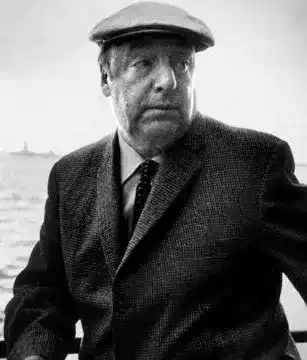
Pablo Neruda
‘Perhaps not to be is to be without your being.’
Perhaps not to be is to be without your being,
without your going, that cuts noon light
like a blue flower, without your passing
later through fog and stones,
without the torch you lift in your hand
that others may not see as golden,
that perhaps no one believed blossomed
the glowing origin of the rose,
without, in the end, your being, your coming
suddenly, inspiringly, to know my life,
blaze of the rose-tree, wheat of the breeze:
and it follows that I am, because you are:
it follows from ‘you are’, that I am, and we:
and, because of love, you will, I will,
We will, come to be.
Read more →
without your going, that cuts noon light
like a blue flower, without your passing
later through fog and stones,
without the torch you lift in your hand
that others may not see as golden,
that perhaps no one believed blossomed
the glowing origin of the rose,
without, in the end, your being, your coming
suddenly, inspiringly, to know my life,
blaze of the rose-tree, wheat of the breeze:
and it follows that I am, because you are:
it follows from ‘you are’, that I am, and we:
and, because of love, you will, I will,
We will, come to be.
606

William Wordsworth
Scorn Not the Sonnet
Scorn not the Sonnet; Critic, you have frowned,
Mindless of its just honours; with this key
Shakspeare unlocked his heart; the melody
Of this small lute gave ease to Petrarch's wound;
A thousand times this pipe did Tasso sound;
With it Camoens soothed an exile's grief;
The Sonnet glittered a gay myrtle leaf
Amid the cypress with which Dante crowned
His visionary brow: a glow-worm lamp,
It cheered mild Spenser, called from Faery-land
To struggle through dark ways; and when a damp
Fell round the path of Milton, in his hand
The Thing became a trumpet; whence he blew
Soul-animating strains--alas, too few!
Read more →
Mindless of its just honours; with this key
Shakspeare unlocked his heart; the melody
Of this small lute gave ease to Petrarch's wound;
A thousand times this pipe did Tasso sound;
With it Camoens soothed an exile's grief;
The Sonnet glittered a gay myrtle leaf
Amid the cypress with which Dante crowned
His visionary brow: a glow-worm lamp,
It cheered mild Spenser, called from Faery-land
To struggle through dark ways; and when a damp
Fell round the path of Milton, in his hand
The Thing became a trumpet; whence he blew
Soul-animating strains--alas, too few!
605
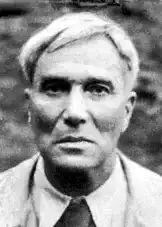
Boris Pasternak
Humble home. But rum, and charcoal...
Humble home. But rum, and charcoal
Grog of sketches on the wall,
And the cell becomes a mansion,
And the garret is a hall.
No more waves of housecoats: questions,
Even footsteps disappear;
Glassy mica fills the latticed
Work-encompassed vault of air.
Voice, commanding as a levy,
Does not leave a thing immune,
Smelting, fusing… In his gullet
Flows the tin of molten spoons.
What is fame for him, and glory,
Name, position in the world,
When the sudden breath of fusion
Blends his words into the Word?
He will burn for it his chattels,
Friendship, reason, daily round.
On his desk-a glass, unfinished,
World forgotten, clock unwound.
Clustered stanzas change like seething
Wax at fortune-telling times.
He will bless the sleeping children
With the steam of molten rhymes.
Read more →
Grog of sketches on the wall,
And the cell becomes a mansion,
And the garret is a hall.
No more waves of housecoats: questions,
Even footsteps disappear;
Glassy mica fills the latticed
Work-encompassed vault of air.
Voice, commanding as a levy,
Does not leave a thing immune,
Smelting, fusing… In his gullet
Flows the tin of molten spoons.
What is fame for him, and glory,
Name, position in the world,
When the sudden breath of fusion
Blends his words into the Word?
He will burn for it his chattels,
Friendship, reason, daily round.
On his desk-a glass, unfinished,
World forgotten, clock unwound.
Clustered stanzas change like seething
Wax at fortune-telling times.
He will bless the sleeping children
With the steam of molten rhymes.
587
Kazi Nazrul Islam
Life
An awakening pervades
The meadows and wilderness
Let not your slumber
Make it go in vain.
The lightning is beckoning
With thunder and rain.
The heaven is awake
The earth is awake
Oh, wake up for heaven's sake.
Beneath the earth
And under the feet
Those who lay dead
They shall now sprout
Like the green grass
With new blades.
A verdant earth is awaiting
The advent of a spring-shower.
The bud that the thunder
Failed to burst into new blossom
Out of joy, it will now bloom.
[Original: Jibon; Translation: Syed Mujibul Huq]
Read more →
The meadows and wilderness
Let not your slumber
Make it go in vain.
The lightning is beckoning
With thunder and rain.
The heaven is awake
The earth is awake
Oh, wake up for heaven's sake.
Beneath the earth
And under the feet
Those who lay dead
They shall now sprout
Like the green grass
With new blades.
A verdant earth is awaiting
The advent of a spring-shower.
The bud that the thunder
Failed to burst into new blossom
Out of joy, it will now bloom.
[Original: Jibon; Translation: Syed Mujibul Huq]
592

Rudyard Kipling
The Ballad of Bolivar
Seven men from all the world, back to Docks again,
Rolling down the Ratcliffe Road drunk and raising Cain:
Give the girls another drink 'fore we sign away --
We that took the Bolivar out across the Bay!
We put out from Sunderland loaded down with rails;
We put back to Sunderland 'cause our cargo shifted;
We put out from Sunderland -- met the winter gales --
Seven days and seven nights to the Start we drifted.
Racketing her rivets loose, smoke-stack white as snow,
All the coals adrift adeck, half the rails below,
Leaking like a lobster-pot, steering like a dray --
Out we took the Bolivar, out across the Bay!
One by one the Lights came up, winked and let us by;
Mile by mile we waddled on, coal and fo'c'sle short;
Met a blow that laid us down, heard a bulkhead fly;
Left the Wolf behind us with a two-foot list to port.
Trailing like a wounded duck, working out her soul;
Clanging like a smithy-shop after every roll;
Just a funnel and a mast lurching through the spray --
So we threshed the Bolivar out across the Bay!
'Felt her hog and felt her sag, betted when she'd break;
Wondered every time she raced if she'd stand the shock;
Heard the seas like drunken men pounding at her strake;
Hoped the Lord 'ud keep his thumb on the plummer-block.
Banged against the iron decks, bilges choked with coal;
Flayed and frozen foot and hand, sick of heart and soul;
Last we prayed she'd buck herself into judgment Day --
Hi! we cursed the Bolivar knocking round the Bay!
O her nose flung up to sky, groaning to be still --
Up and down and back we went, never time for breath;
Then the money paid at Lloyd's caught her by the heel,
And the stars ran round and round dancin' at our death.
Aching for an hour's sleep, dozing off between;
'Heard the rotten rivets draw when she took it green;
'Watched the compass chase its tail like a cat at play --
That was on the Bolivar, south across the Bay.
Once we saw between the squalls, lyin' head to swell --
Mad with work and weariness, wishin' they was we --
Some damned Liner's lights go by like a long hotel;
Cheered her from the Bolivar swampin' in the sea.
Then a grayback cleared us out, then the skipper laughed;
"Boys, the wheel has gone to Hell -- rig the winches aft!
Yoke the kicking rudder-head -- get her under way!"
So we steered her, pulley-haul, out across the Bay!
Just a pack o' rotten plates puttied up with tar,
In we came, an' time enough, 'cross Bilbao Bar.
Overloaded, undermanned, meant to founder, we
Euchred God Almighty's storm, bluffed the Eternal Sea!
Seven men from all the world, back to town again,
Rollin' down the Ratcliffe Road drunk and raising Cain:
Seven men from out of Hell. Ain't the owners gay,
'Cause we took the "Bolivar" safe across the Bay?
Read more →
Rolling down the Ratcliffe Road drunk and raising Cain:
Give the girls another drink 'fore we sign away --
We that took the Bolivar out across the Bay!
We put out from Sunderland loaded down with rails;
We put back to Sunderland 'cause our cargo shifted;
We put out from Sunderland -- met the winter gales --
Seven days and seven nights to the Start we drifted.
Racketing her rivets loose, smoke-stack white as snow,
All the coals adrift adeck, half the rails below,
Leaking like a lobster-pot, steering like a dray --
Out we took the Bolivar, out across the Bay!
One by one the Lights came up, winked and let us by;
Mile by mile we waddled on, coal and fo'c'sle short;
Met a blow that laid us down, heard a bulkhead fly;
Left the Wolf behind us with a two-foot list to port.
Trailing like a wounded duck, working out her soul;
Clanging like a smithy-shop after every roll;
Just a funnel and a mast lurching through the spray --
So we threshed the Bolivar out across the Bay!
'Felt her hog and felt her sag, betted when she'd break;
Wondered every time she raced if she'd stand the shock;
Heard the seas like drunken men pounding at her strake;
Hoped the Lord 'ud keep his thumb on the plummer-block.
Banged against the iron decks, bilges choked with coal;
Flayed and frozen foot and hand, sick of heart and soul;
Last we prayed she'd buck herself into judgment Day --
Hi! we cursed the Bolivar knocking round the Bay!
O her nose flung up to sky, groaning to be still --
Up and down and back we went, never time for breath;
Then the money paid at Lloyd's caught her by the heel,
And the stars ran round and round dancin' at our death.
Aching for an hour's sleep, dozing off between;
'Heard the rotten rivets draw when she took it green;
'Watched the compass chase its tail like a cat at play --
That was on the Bolivar, south across the Bay.
Once we saw between the squalls, lyin' head to swell --
Mad with work and weariness, wishin' they was we --
Some damned Liner's lights go by like a long hotel;
Cheered her from the Bolivar swampin' in the sea.
Then a grayback cleared us out, then the skipper laughed;
"Boys, the wheel has gone to Hell -- rig the winches aft!
Yoke the kicking rudder-head -- get her under way!"
So we steered her, pulley-haul, out across the Bay!
Just a pack o' rotten plates puttied up with tar,
In we came, an' time enough, 'cross Bilbao Bar.
Overloaded, undermanned, meant to founder, we
Euchred God Almighty's storm, bluffed the Eternal Sea!
Seven men from all the world, back to town again,
Rollin' down the Ratcliffe Road drunk and raising Cain:
Seven men from out of Hell. Ain't the owners gay,
'Cause we took the "Bolivar" safe across the Bay?
588
Rudyard Kipling
The Sea and the Hills
Who hath desired the Sea? -- the sight of salt water unbounded --
The heave and the halt and the hurl and the crash of the comber wind-hounded?
The sleek-barrelled swell before storm, grey, foamless, enormous, and growing --
Stark calm on the lap of the Line or the crazy-eyed hurricane blowing --
His Sea in no showing the same his Sea and the same 'neath each showing:
His Sea as she slackens or thrills?
So and no otherwise -- so and no otherwise -- hillmen desire their Hills!
Who hath desired the Sea? -- the immense and contemptuous surges?
The shudder, the stumble, the swerve, as the star-stabbing bow-sprit emerges?
The orderly clouds of the Trades, the ridged, roaring sapphire thereunder --
Unheralded cliff-haunting flaws and the headsail's low-volleying thunder --
His Sea in no wonder the same his Sea and the same through each wonder:
His Sea as she rages or stills?
So and no otherwise -- so and no otherwise -- hillmen desire their Hills.
Who hath desired the Sea? Her menaces swift as her mercies?
The in-rolling walls of the fog and the silver-winged breeze that disperses?
The unstable mined berg going South and the calvings and groans that declare it --
White water half-guessed overside and the moon breaking timely to bare it --
His Sea as his fathers have dared -- his Sea as his children shall dare it:
His Sea as she serves him or kills?
So and no otherwise -- so and no otherwise -- hillmen desire their Hills.
Who hath desired the Sea? Her excellent loneliness rather
Than forecourts of kings, and her outermost pits than the streets where men gather
Inland, among dust, under trees -- inland where the slayer may slay him --
Inland, out of reach of her arms, and the bosom whereon he must lay him
His Sea from the first that betrayed -- at the last that shall never betray him:
His Sea that his being fulfils?
So and no otherwise -- so and no otherwise -- hillmen desire their Hills.
Read more →
The heave and the halt and the hurl and the crash of the comber wind-hounded?
The sleek-barrelled swell before storm, grey, foamless, enormous, and growing --
Stark calm on the lap of the Line or the crazy-eyed hurricane blowing --
His Sea in no showing the same his Sea and the same 'neath each showing:
His Sea as she slackens or thrills?
So and no otherwise -- so and no otherwise -- hillmen desire their Hills!
Who hath desired the Sea? -- the immense and contemptuous surges?
The shudder, the stumble, the swerve, as the star-stabbing bow-sprit emerges?
The orderly clouds of the Trades, the ridged, roaring sapphire thereunder --
Unheralded cliff-haunting flaws and the headsail's low-volleying thunder --
His Sea in no wonder the same his Sea and the same through each wonder:
His Sea as she rages or stills?
So and no otherwise -- so and no otherwise -- hillmen desire their Hills.
Who hath desired the Sea? Her menaces swift as her mercies?
The in-rolling walls of the fog and the silver-winged breeze that disperses?
The unstable mined berg going South and the calvings and groans that declare it --
White water half-guessed overside and the moon breaking timely to bare it --
His Sea as his fathers have dared -- his Sea as his children shall dare it:
His Sea as she serves him or kills?
So and no otherwise -- so and no otherwise -- hillmen desire their Hills.
Who hath desired the Sea? Her excellent loneliness rather
Than forecourts of kings, and her outermost pits than the streets where men gather
Inland, among dust, under trees -- inland where the slayer may slay him --
Inland, out of reach of her arms, and the bosom whereon he must lay him
His Sea from the first that betrayed -- at the last that shall never betray him:
His Sea that his being fulfils?
So and no otherwise -- so and no otherwise -- hillmen desire their Hills.
593
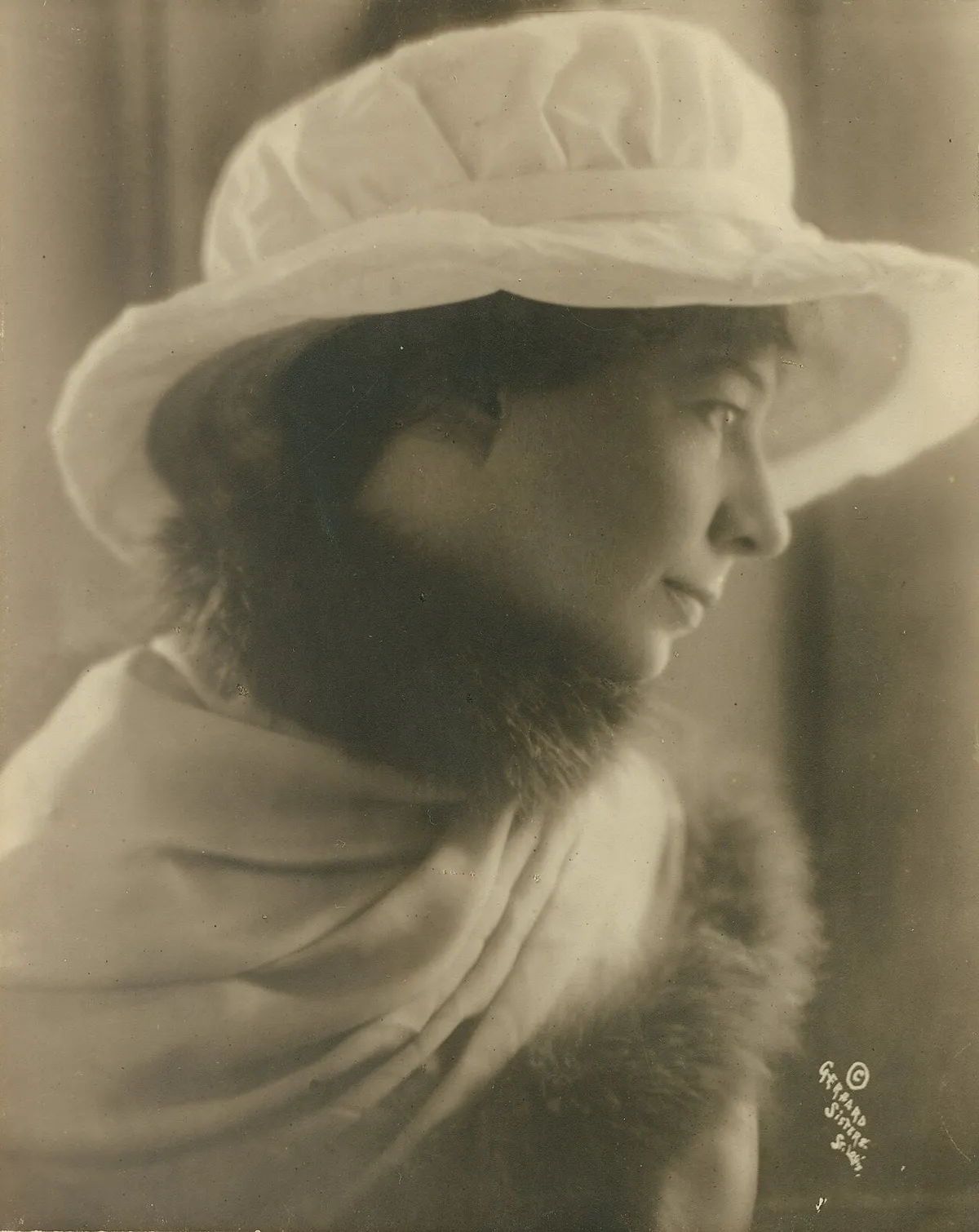
Sara Teasdale
Buried Love
I have come to bury Love
Beneath a tree,
In the forest tall and black
Where none can see.
I shall put no flowers at his head,
Nor stone at his feet,
For the mouth I loved so much
Was bittersweet.
I shall go no more to his grave,
For the woods are cold.
I shall gather as much of joy
As my hands can hold.
I shall stay all day in the sun
Where the wide winds blow, --
But oh, I shall cry at night
When none will know.
Read more →
Beneath a tree,
In the forest tall and black
Where none can see.
I shall put no flowers at his head,
Nor stone at his feet,
For the mouth I loved so much
Was bittersweet.
I shall go no more to his grave,
For the woods are cold.
I shall gather as much of joy
As my hands can hold.
I shall stay all day in the sun
Where the wide winds blow, --
But oh, I shall cry at night
When none will know.
587

John Keats
Endymion: Book II
O Sovereign power of love! O grief! O balm!
All records, saving thine, come cool, and calm,
And shadowy, through the mist of passed years:
For others, good or bad, hatred and tears
Have become indolent; but touching thine,
One sigh doth echo, one poor sob doth pine,
One kiss brings honey-dew from buried days.
The woes of Troy, towers smothering o'er their blaze,
Stiff-holden shields, far-piercing spears, keen blades,
Struggling, and blood, and shrieks--all dimly fades
Into some backward corner of the brain;
Yet, in our very souls, we feel amain
The close of Troilus and Cressid sweet.
Hence, pageant history! hence, gilded cheat!
Swart planet in the universe of deeds!
Wide sea, that one continuous murmur breeds
Along the pebbled shore of memory!
Many old rotten-timber'd boats there be
Upon thy vaporous bosom, magnified
To goodly vessels; many a sail of pride,
And golden keel'd, is left unlaunch'd and dry.
But wherefore this? What care, though owl did fly
About the great Athenian admiral's mast?
What care, though striding Alexander past
The Indus with his Macedonian numbers?
Though old Ulysses tortured from his slumbers
The glutted Cyclops, what care?--Juliet leaning
Amid her window-flowers,--sighing,--weaning
Tenderly her fancy from its maiden snow,
Doth more avail than these: the silver flow
Of Hero's tears, the swoon of Imogen,
Fair Pastorella in the bandit's den,
Are things to brood on with more ardency
Than the death-day of empires. Fearfully
Must such conviction come upon his head,
Who, thus far, discontent, has dared to tread,
Without one muse's smile, or kind behest,
The path of love and poesy. But rest,
In chaffing restlessness, is yet more drear
Than to be crush'd, in striving to uprear
Love's standard on the battlements of song.
So once more days and nights aid me along,
Like legion'd soldiers.
Brain-sick shepherd-prince,
What promise hast thou faithful guarded since
The day of sacrifice? Or, have new sorrows
Come with the constant dawn upon thy morrows?
Alas! 'tis his old grief. For many days,
Has he been wandering in uncertain ways:
Through wilderness, and woods of mossed oaks;
Counting his woe-worn minutes, by the strokes
Of the lone woodcutter; and listening still,
Hour after hour, to each lush-leav'd rill.
Now he is sitting by a shady spring,
And elbow-deep with feverous fingering
Stems the upbursting cold: a wild rose tree
Pavilions him in bloom, and he doth see
A bud which snares his fancy: lo! but now
He plucks it, dips its stalk in the water: how!
It swells, it buds, it flowers beneath his sight;
And, in the middle, there is softly pight
A golden butterfly; upon whose wings
There must be surely character'd strange things,
For with wide eye he wonders, and smiles oft.
Lightly this little herald flew aloft,
Follow'd by glad Endymion's clasped hands:
Onward it flies. From languor's sullen bands
His limbs are loos'd, and eager, on he hies
Dazzled to trace it in the sunny skies.
It seem'd he flew, the way so easy was;
And like a new-born spirit did he pass
Through the green evening quiet in the sun,
O'er many a heath, through many a woodland dun,
Through buried paths, where sleepy twilight dreams
The summer time away. One track unseams
A wooded cleft, and, far away, the blue
Of ocean fades upon him; then, anew,
He sinks adown a solitary glen,
Where there was never sound of mortal men,
Saving, perhaps, some snow-light cadences
Melting to silence, when upon the breeze
Some holy bark let forth an anthem sweet,
To cheer itself to Delphi. Still his feet
Went swift beneath the merry-winged guide,
Until it reached a splashing fountain's side
That, near a cavern's mouth, for ever pour'd
Unto the temperate air: then high it soar'd,
And, downward, suddenly began to dip,
As if, athirst with so much toil, 'twould sip
The crystal spout-head: so it did, with touch
Most delicate, as though afraid to smutch
Even with mealy gold the waters clear.
But, at that very touch, to disappear
So fairy-quick, was strange! Bewildered,
Endymion sought around, and shook each bed
Of covert flowers in vain; and then he flung
Himself along the grass. What gentle tongue,
What whisperer disturb'd his gloomy rest?
It was a nymph uprisen to the breast
In the fountain's pebbly margin, and she stood
'Mong lilies, like the youngest of the brood.
To him her dripping hand she softly kist,
And anxiously began to plait and twist
Her ringlets round her fingers, saying: "Youth!
Too long, alas, hast thou starv'd on the ruth,
The bitterness of love: too long indeed,
Seeing thou art so gentle. Could I weed
Thy soul of care, by heavens, I would offer
All the bright riches of my crystal coffer
To Amphitrite; all my clear-eyed fish,
Golden, or rainbow-sided, or purplish,
Vermilion-tail'd, or finn'd with silvery gauze;
Yea, or my veined pebble-floor, that draws
A virgin light to the deep; my grotto-sands
Tawny and gold, ooz'd slowly from far lands
By my diligent springs; my level lilies, shells,
My charming rod, my potent river spells;
Yes, every thing, even to the pearly cup
Meander gave me,--for I bubbled up
To fainting creatures in a desert wild.
But woe is me, I am but as a child
To gladden thee; and all I dare to say,
Is, that I pity thee; that on this day
I've been thy guide; that thou must wander far
In other regions, past the scanty bar
To mortal steps, before thou cans't be ta'en
From every wasting sigh, from every pain,
Into the gentle bosom of thy love.
Why it is thus, one knows in heaven above:
But, a poor Naiad, I guess not. Farewel!
I have a ditty for my hollow cell."
Hereat, she vanished from Endymion's gaze,
Who brooded o'er the water in amaze:
The dashing fount pour'd on, and where its pool
Lay, half asleep, in grass and rushes cool,
Quick waterflies and gnats were sporting still,
And fish were dimpling, as if good nor ill
Had fallen out that hour. The wanderer,
Holding his forehead, to keep off the burr
Of smothering fancies, patiently sat down;
And, while beneath the evening's sleepy frown
Glow-worms began to trim their starry lamps,
Thus breath'd he to himself: "Whoso encamps
To take a fancied city of delight,
O what a wretch is he! and when 'tis his,
After long toil and travelling, to miss
The kernel of his hopes, how more than vile:
Yet, for him there's refreshment even in toil;
Another city doth he set about,
Free from the smallest pebble-bead of doubt
That he will seize on trickling honey-combs:
Alas, he finds them dry; and then he foams,
And onward to another city speeds.
But this is human life: the war, the deeds,
The disappointment, the anxiety,
Imagination's struggles, far and nigh,
All human; bearing in themselves this good,
That they are sill the air, the subtle food,
To make us feel existence, and to shew
How quiet death is. Where soil is men grow,
Whether to weeds or flowers; but for me,
There is no depth to strike in: I can see
Nought earthly worth my compassing; so stand
Upon a misty, jutting head of land--
Alone? No, no; and by the Orphean lute,
When mad Eurydice is listening to 't;
I'd rather stand upon this misty peak,
With not a thing to sigh for, or to seek,
But the soft shadow of my thrice-seen love,
Than be--I care not what. O meekest dove
Of heaven! O Cynthia, ten-times bright and fair!
From thy blue throne, now filling all the air,
Glance but one little beam of temper'd light
Into my bosom, that the dreadful might
And tyranny of love be somewhat scar'd!
Yet do not so, sweet queen; one torment spar'd,
Would give a pang to jealous misery,
Worse than the torment's self: but rather tie
Large wings upon my shoulders, and point out
My love's far dwelling. Though the playful rout
Of Cupids shun thee, too divine art thou,
Too keen in beauty, for thy silver prow
Not to have dipp'd in love's most gentle stream.
O be propitious, nor severely deem
My madness impious; for, by all the stars
That tend thy bidding, I do think the bars
That kept my spirit in are burst--that I
Am sailing with thee through the dizzy sky!
How beautiful thou art! The world how deep!
How tremulous-dazzlingly the wheels sweep
Around their axle! Then these gleaming reins,
How lithe! When this thy chariot attains
Is airy goal, haply some bower veils
Those twilight eyes? Those eyes!--my spirit fails--
Dear goddess, help! or the wide-gaping air
Will gulph me--help!"--At this with madden'd stare,
And lifted hands, and trembling lips he stood;
Like old Deucalion mountain'd o'er the flood,
Or blind Orion hungry for the morn.
And, but from the deep cavern there was borne
A voice, he had been froze to senseless stone;
Nor sigh of his, nor plaint, nor passion'd moan
Had more been heard. Thus swell'd it forth: "Descend,
Young mountaineer! descend where alleys bend
Into the sparry hollows of the world!
Oft hast thou seen bolts of the thunder hurl'd
As from thy threshold, day by day hast been
A little lower than the chilly sheen
Of icy pinnacles, and dipp'dst thine arms
Into the deadening ether that still charms
Their marble being: now, as deep profound
As those are high, descend! He ne'er is crown'd
With immortality, who fears to follow
Where airy voices lead: so through the hollow,
The silent mysteries of earth, descend!"
He heard but the last words, nor could contend
One moment in reflection: for he fled
Into the fearful deep, to hide his head
From the clear moon, the trees, and coming madness.
'Twas far too strange, and wonderful for sadness;
Sharpening, by degrees, his appetite
To dive into the deepest. Dark, nor light,
The region; nor bright, nor sombre wholly,
But mingled up; a gleaming melancholy;
A dusky empire and its diadems;
One faint eternal eventide of gems.
Aye, millions sparkled on a vein of gold,
Along whose track the prince quick footsteps told,
With all its lines abrupt and angular:
Out-shooting sometimes, like a meteor-star,
Through a vast antre; then the metal woof,
Like Vulcan's rainbow, with some monstrous roof
Curves hugely: now, far in the deep abyss,
It seems an angry lightning, and doth hiss
Fancy into belief: anon it leads
Through winding passages, where sameness breeds
Vexing conceptions of some sudden change;
Whether to silver grots, or giant range
Of sapphire columns, or fantastic bridge
Athwart a flood of crystal. On a ridge
Now fareth he, that o'er the vast beneath
Towers like an ocean-cliff, and whence he seeth
A hundred waterfalls, whose voices come
But as the murmuring surge. Chilly and numb
His bosom grew, when first he, far away,
Descried an orbed diamond, set to fray
Old darkness from his throne: 'twas like the sun
Uprisen o'er chaos: and with such a stun
Came the amazement, that, absorb'd in it,
He saw not fiercer wonders--past the wit
Of any spirit to tell, but one of those
Who, when this planet's sphering time doth close,
Will be its high remembrancers: who they?
The mighty ones who have made eternal day
For Greece and England. While astonishment
With deep-drawn sighs was quieting, he went
Into a marble gallery, passing through
A mimic temple, so complete and true
In sacred custom, that he well nigh fear'd
To search it inwards, whence far off appear'd,
Through a long pillar'd vista, a fair shrine,
And, just beyond, on light tiptoe divine,
A quiver'd Dian. Stepping awfully,
The youth approach'd; oft turning his veil'd eye
Down sidelong aisles, and into niches old.
And when, more near against the marble cold
He had touch'd his forehead, he began to thread
All courts and passages, where silence dead
Rous'd by his whispering footsteps murmured faint:
And long he travers'd to and fro, to acquaint
Himself with every mystery, and awe;
Till, weary, he sat down before the maw
Of a wide outlet, fathomless and dim
To wild uncertainty and shadows grim.
There, when new wonders ceas'd to float before,
And thoughts of self came on, how crude and sore
The journey homeward to habitual self!
A mad-pursuing of the fog-born elf,
Whose flitting lantern, through rude nettle-briar,
Cheats us into a swamp, into a fire,
Into the bosom of a hated thing.
What misery most drowningly doth sing
In lone Endymion's ear, now he has caught
The goal of consciousness? Ah, 'tis the thought,
The deadly feel of solitude: for lo!
He cannot see the heavens, nor the flow
Of rivers, nor hill-flowers running wild
In pink and purple chequer, nor, up-pil'd,
The cloudy rack slow journeying in the west,
Like herded elephants; nor felt, nor prest
Cool grass, nor tasted the fresh slumberous air;
But far from such companionship to wear
An unknown time, surcharg'd with grief, away,
Was now his lot. And must he patient stay,
Tracing fantastic figures with his spear?
"No!" exclaimed he, "why should I tarry here?"
No! loudly echoed times innumerable.
At which he straightway started, and 'gan tell
His paces back into the temple's chief;
Warming and glowing strong in the belief
Of help from Dian: so that when again
He caught her airy form, thus did he plain,
Moving more near the while. "O Haunter chaste
Of river sides, and woods, and heathy waste,
Where with thy silver bow and arrows keen
Art thou now forested? O woodland Queen,
What smoothest air thy smoother forehead woos?
Where dost thou listen to the wide halloos
Of thy disparted nymphs? Through what dark tree
Glimmers thy crescent? Wheresoe'er it be,
'Tis in the breath of heaven: thou dost taste
Freedom as none can taste it, nor dost waste
Thy loveliness in dismal elements;
But, finding in our green earth sweet contents,
There livest blissfully. Ah, if to thee
It feels Elysian, how rich to me,
An exil'd mortal, sounds its pleasant name!
Within my breast there lives a choking flame--
O let me cool it among the zephyr-boughs!
A homeward fever parches up my tongue--
O let me slake it at the running springs!
Upon my ear a noisy nothing rings--
O let me once more hear the linnet's note!
Before mine eyes thick films and shadows float--
O let me 'noint them with the heaven's light!
Dost thou now lave thy feet and ankles white?
O think how sweet to me the freshening sluice!
Dost thou now please thy thirst with berry-juice?
O think how this dry palate would rejoice!
If in soft slumber thou dost hear my voice,
Oh think how I should love a bed of flowers!--
Young goddess! let me see my native bowers!
Deliver me from this rapacious deep!"
Thus ending loudly, as he would o'erleap
His destiny, alert he stood: but when
Obstinate silence came heavily again,
Feeling about for its old couch of space
And airy cradle, lowly bow'd his face
Desponding, o'er the marble floor's cold thrill.
But 'twas not long; for, sweeter than the rill
To its old channel, or a swollen tide
To margin sallows, were the leaves he spied,
And flowers, and wreaths, and ready myrtle crowns
Up heaping through the slab: refreshment drowns
Itself, and strives its own delights to hide--
Nor in one spot alone; the floral pride
In a long whispering birth enchanted grew
Before his footsteps; as when heav'd anew
Old ocean rolls a lengthened wave to the shore,
Down whose green back the short-liv'd foam, all hoar,
Bursts gradual, with a wayward indolence.
Increasing still in heart, and pleasant sense,
Upon his fairy journey on he hastes;
So anxious for the end, he scarcely wastes
One moment with his hand among the sweets:
Onward he goes--he stops--his bosom beats
As plainly in his ear, as the faint charm
Of which the throbs were born. This still alarm,
This sleepy music, forc'd him walk tiptoe:
For it came more softly than the east could blow
Arion's magic to the Atlantic isles;
Or than the west, made jealous by the smiles
Of thron'd Apollo, could breathe back the lyre
To seas Ionian and Tyrian.
O did he ever live, that lonely man,
Who lov'd--and music slew not? 'Tis the pest
Of love, that fairest joys give most unrest;
That things of delicate and tenderest worth
Are swallow'd all, and made a seared dearth,
By one consuming flame: it doth immerse
And suffocate true blessings in a curse.
Half-happy, by comparison of bliss,
Is miserable. 'Twas even so with this
Dew-dropping melody, in the Carian's ear;
First heaven, then hell, and then forgotten clear,
Vanish'd in elemental passion.
And down some swart abysm he had gone,
Had not a heavenly guide benignant led
To where thick myrtle branches, 'gainst his head
Brushing, awakened: then the sounds again
Went noiseless as a passing noontide rain
Over a bower, where little space he stood;
For as the sunset peeps into a wood
So saw he panting light, and towards it went
Through winding alleys; and lo, wonderment!
Upon soft verdure saw, one here, one there,
Cupids a slumbering on their pinions fair.
After a thousand mazes overgone,
At last, with sudden step, he came upon
A chamber, myrtle wall'd, embowered high,
Full of light, incense, tender minstrelsy,
And more of beautiful and strange beside:
For on a silken couch of rosy pride,
In midst of all, there lay a sleeping youth
Of fondest beauty; fonder, in fair sooth,
Than sighs could fathom, or contentment reach:
And coverlids gold-tinted like the peach,
Or ripe October's faded marigolds,
Fell sleek about him in a thousand folds--
Not hiding up an Apollonian curve
Of neck and shoulder, nor the tenting swerve
Of knee from knee, nor ankles pointing light;
But rather, giving them to the filled sight
Officiously. Sideway his face repos'd
On one white arm, and tenderly unclos'd,
By tenderest pressure, a faint damask mouth
To slumbery pout; just as the morning south
Disparts a dew-lipp'd rose. Above his head,
Four lily stalks did their white honours wed
To make a coronal; and round him grew
All tendrils green, of every bloom and hue,
Together intertwin'd and trammel'd fresh:
The vine of glossy sprout; the ivy mesh,
Shading its Ethiop berries; and woodbine,
Of velvet leaves and bugle-blooms divine;
Convolvulus in streaked vases flush;
The creeper, mellowing for an autumn blush;
And virgin's bower, trailing airily;
With others of the sisterhood. Hard by,
Stood serene Cupids watching silently.
One, kneeling to a lyre, touch'd the strings,
Muffling to death the pathos with his wings;
And, ever and anon, uprose to look
At the youth's slumber; while another took
A willow-bough, distilling odorous dew,
And shook it on his hair; another flew
In through the woven roof, and fluttering-wise
Rain'd violets upon his sleeping eyes.
At these enchantments, and yet many more,
The breathless Latmian wonder'd o'er and o'er;
Until, impatient in embarrassment,
He forthright pass'd, and lightly treading went
To that same feather'd lyrist, who straightway,
Smiling, thus whisper'd: "Though from upper day
Thou art a wanderer, and thy presence here
Might seem unholy, be of happy cheer!
For 'tis the nicest touch of human honour,
When some ethereal and high-favouring donor
Presents immortal bowers to mortal sense;
As now 'tis done to thee, Endymion. Hence
Was I in no wise startled. So recline
Upon these living flowers. Here is wine,
Alive with sparkles--never, I aver,
Since Ariadne was a vintager,
So cool a purple: taste these juicy pears,
Sent me by sad Vertumnus, when his fears
Were high about Pomona: here is cream,
Deepening to richness from a snowy gleam;
Sweeter than that nurse Amalthea skimm'd
For the boy Jupiter: and here, undimm'd
By any touch, a bunch of blooming plums
Ready to melt between an infant's gums:
And here is manna pick'd from Syrian trees,
In starlight, by the three Hesperides.
Feast on, and meanwhile I will let thee know
Of all these things around us." He did so,
Still brooding o'er the cadence of his lyre;
And thus: "I need not any hearing tire
By telling how the sea-born goddess pin'd
For a mortal youth, and how she strove to bind
Him all in all unto her doting self.
Who would not be so prison'd? but, fond elf,
He was content to let her amorous plea
Faint through his careless arms; content to see
An unseiz'd heaven dying at his feet;
Content, O fool! to make a cold retreat,
When on the pleasant grass such love, lovelorn,
Lay sorrowing; when every tear was born
Of diverse passion; when her lips and eyes
Were clos'd in sullen moisture, and quick sighs
Came vex'd and pettish through her nostrils small.
Hush! no exclaim--yet, justly mightst thou call
Curses upon his head.--I was half glad,
But my poor mistress went distract and mad,
When the boar tusk'd him: so away she flew
To Jove's high throne, and by her plainings drew
Immortal tear-drops down the thunderer's beard;
Whereon, it was decreed he should be rear'd
Each summer time to life. Lo! this is he,
That same Adonis, safe in the privacy
Of this still region all his winter-sleep.
Aye, sleep; for when our love-sick queen did weep
Over his waned corse, the tremulous shower
Heal'd up the wound, and, with a balmy power,
Medicined death to a lengthened drowsiness:
The which she fills with visions, and doth dress
In all this quiet luxury; and hath set
Us young immortals, without any let,
To watch his slumber through. 'Tis well nigh pass'd,
Even to a moment's filling up, and fast
She scuds with summer breezes, to pant through
The first long kiss, warm firstling, to renew
Embower'd sports in Cytherea's isle.
Look! how those winged listeners all this while
Stand anxious: see! behold!"--This clamant word
Broke through the careful silence; for they heard
A rustling noise of leaves, and out there flutter'd
Pigeons and doves: Adonis something mutter'd,
The while one hand, that erst upon his thigh
Lay dormant, mov'd convuls'd and gradually
Up to his forehead. Then there was a hum
Of sudden voices, echoing, "Come! come!
Arise! awake! Clear summer has forth walk'd
Unto the clover-sward, and she has talk'd
Full soothingly to every nested finch:
Rise, Cupids! or we'll give the blue-bell pinch
To your dimpled arms. Once more sweet life begin!"
At this, from every side they hurried in,
Rubbing their sleepy eyes with lazy wrists,
And doubling overhead their little fists
In backward yawns. But all were soon alive:
For as delicious wine doth, sparkling, dive
In nectar'd clouds and curls through water fair,
So from the arbour roof down swell'd an air
Odorous and enlivening; making all
To laugh, and play, and sing, and loudly call
For their sweet queen: when lo! the wreathed green
Disparted, and far upward could be seen
Blue heaven, and a silver car, air-borne,
Whose silent wheels, fresh wet from clouds of morn,
Spun off a drizzling dew,--which falling chill
On soft Adonis' shoulders, made him still
Nestle and turn uneasily about.
Soon were the white doves plain, with necks stretch'd out,
And silken traces lighten'd in descent;
And soon, returning from love's banishment,
Queen Venus leaning downward open arm'd:
Her shadow fell upon his breast, and charm'd
A tumult to his heart, and a new life
Into his eyes. Ah, miserable strife,
But for her comforting! unhappy sight,
But meeting her blue orbs! Who, who can write
Of these first minutes? The unchariest muse
To embracements warm as theirs makes coy excuse.
O it has ruffled every spirit there,
Saving love's self, who stands superb to share
The general gladness: awfully he stands;
A sovereign quell is in his waving hands;
No sight can bear the lightning of his bow;
His quiver is mysterious, none can know
What themselves think of it; from forth his eyes
There darts strange light of varied hues and dyes:
A scowl is sometimes on his brow, but who
Look full upon it feel anon the blue
Of his fair eyes run liquid through their souls.
Endymion feels it, and no more controls
The burning prayer within him; so, bent low,
He had begun a plaining of his woe.
But Venus, bending forward, said: "My child,
Favour this gentle youth; his days are wild
With love--he--but alas! too well I see
Thou know'st the deepness of his misery.
Ah, smile not so, my son: I tell thee true,
That when through heavy hours I used to rue
The endless sleep of this new-born Adon',
This stranger ay I pitied. For upon
A dreary morning once I fled away
Into the breezy clouds, to weep and pray
For this my love: for vexing Mars had teaz'd
Me even to tears: thence, when a little eas'd,
Down-looking, vacant, through a hazy wood,
I saw this youth as he despairing stood:
Those same dark curls blown vagrant in the wind:
Those same full fringed lids a constant blind
Over his sullen eyes: I saw him throw
Himself on wither'd leaves, even as though
Death had come sudden; for no jot he mov'd,
Yet mutter'd wildly. I could hear he lov'd
Some fair immortal, and that his embrace
Had zoned her through the night. There is no trace
Of this in heaven: I have mark'd each cheek,
And find it is the vainest thing to seek;
And that of all things 'tis kept secretest.
Endymion! one day thou wilt be blest:
So still obey the guiding hand that fends
Thee safely through these wonders for sweet ends.
'Tis a concealment needful in extreme;
And if I guess'd not so, the sunny beam
Thou shouldst mount up to with me. Now adieu!
Here must we leave thee."--At these words up flew
The impatient doves, up rose the floating car,
Up went the hum celestial. High afar
The Latmian saw them minish into nought;
And, when all were clear vanish'd, still he caught
A vivid lightning from that dreadful bow.
When all was darkened, with Etnean throe
The earth clos'd--gave a solitary moan--
And left him once again in twilight lone.
He did not rave, he did not stare aghast,
For all those visions were o'ergone, and past,
And he in loneliness: he felt assur'd
Of happy times, when all he had endur'd
Would seem a feather to the mighty prize.
So, with unusual gladness, on he hies
Through caves, and palaces of mottled ore,
Gold dome, and crystal wall, and turquois floor,
Black polish'd porticos of awful shade,
And, at the last, a diamond balustrade,
Leading afar past wild magnificence,
Spiral through ruggedest loopholes, and thence
Stretching across a void, then guiding o'er
Enormous chasms, where, all foam and roar,
Streams subterranean tease their granite beds;
Then heighten'd just above the silvery heads
Of a thousand fountains, so that he could dash
The waters with his spear; but at the splash,
Done heedlessly, those spouting columns rose
Sudden a poplar's height, and 'gan to enclose
His diamond path with fretwork, streaming round
Alive, and dazzling cool, and with a sound,
Haply, like dolphin tumults, when sweet shells
Welcome the float of Thetis. Long he dwells
On this delight; for, every minute's space,
The streams with changed magic interlace:
Sometimes like delicatest lattices,
Cover'd with crystal vines; then weeping trees,
Moving about as in a gentle wind,
Which, in a wink, to watery gauze refin'd,
Pour'd into shapes of curtain'd canopies,
Spangled, and rich with liquid broideries
Of flowers, peacocks, swans, and naiads fair.
Swifter than lightning went these wonders rare;
And then the water, into stubborn streams
Collecting, mimick'd the wrought oaken beams,
Pillars, and frieze, and high fantastic roof,
Of those dusk places in times far aloof
Cathedrals call'd. He bade a loth farewel
To these founts Protean, passing gulph, and dell,
And torrent, and ten thousand jutting shapes,
Half seen through deepest gloom, and griesly gapes,
Blackening on every side, and overhead
A vaulted dome like Heaven's, far bespread
With starlight gems: aye, all so huge and strange,
The solitary felt a hurried change
Working within him into something dreary,-Vex'd
like a morning eagle, lost, and weary,
And purblind amid foggy, midnight wolds.
But he revives at once: for who beholds
New sudden things, nor casts his mental slough?
Forth from a rugged arch, in the dusk below,
Came mother Cybele! alone--alone--
In sombre chariot; dark foldings thrown
About her majesty, and front death-pale,
With turrets crown'd. Four maned lions hale
The sluggish wheels; solemn their toothed maws,
Their surly eyes brow-hidden, heavy paws
Uplifted drowsily, and nervy tails
Cowering their tawny brushes. Silent sails
This shadowy queen athwart, and faints away
In another gloomy arch.
Wherefore delay,
Young traveller, in such a mournful place?
Art thou wayworn, or canst not further trace
The diamond path? And does it indeed end
Abrupt in middle air? Yet earthward bend
Thy forehead, and to Jupiter cloud-borne
Call ardently! He was indeed wayworn;
Abrupt, in middle air, his way was lost;
To cloud-borne Jove he bowed, and there crost
Towards him a large eagle, 'twixt whose wings,
Without one impious word, himself he flings,
Committed to the darkness and the gloom:
Down, down, uncertain to what pleasant doom,
Swift as a fathoming plummet down he fell
Through unknown things; till exhaled asphodel,
And rose, with spicy fannings interbreath'd,
Came swelling forth where little caves were wreath'd
So thick with leaves and mosses, that they seem'd
Large honey-combs of green, and freshly teem'd
With airs delicious. In the greenest nook
The eagle landed him, and farewel took.
It was a jasmine bower, all bestrown
With golden moss. His every sense had grown
Ethereal for pleasure; 'bove his head
Flew a delight half-graspable; his tread
Was Hesperean; to his capable ears
Silence was music from the holy spheres;
A dewy luxury was in his eyes;
The little flowers felt his pleasant sighs
And stirr'd them faintly. Verdant cave and cell
He wander'd through, oft wondering at such swell
Of sudden exaltation: but, "Alas!
Said he, "will all this gush of feeling pass
Away in solitude? And must they wane,
Like melodies upon a sandy plain,
Without an echo? Then shall I be left
So sad, so melancholy, so bereft!
Yet still I feel immortal! O my love,
My breath of life, where art thou? High above,
Dancing before the morning gates of heaven?
Or keeping watch among those starry seven,
Old Atlas' children? Art a maid of the waters,
One of shell-winding Triton's bright-hair'd daughters?
Or art, impossible! a nymph of Dian's,
Weaving a coronal of tender scions
For very idleness? Where'er thou art,
Methinks it now is at my will to start
Into thine arms; to scare Aurora's train,
And snatch thee from the morning; o'er the main
To scud like a wild bird, and take thee off
From thy sea-foamy cradle; or to doff
Thy shepherd vest, and woo thee mid fresh leaves.
No, no, too eagerly my soul deceives
Its powerless self: I know this cannot be.
O let me then by some sweet dreaming flee
To her entrancements: hither sleep awhile!
Hither most gentle sleep! and soothing foil
For some few hours the coming solitude."
Thus spake he, and that moment felt endued
With power to dream deliciously; so wound
Through a dim passage, searching till he found
The smoothest mossy bed and deepest, where
He threw himself, and just into the air
Stretching his indolent arms, he took, O bliss!
A naked waist: "Fair Cupid, whence is this?"
A well-known voice sigh'd, "Sweetest, here am I!"
At which soft ravishment, with doating cry
They trembled to each other.--Helicon!
O fountain'd hill! Old Homer's Helicon!
That thou wouldst spout a little streamlet o'er
These sorry pages; then the verse would soar
And sing above this gentle pair, like lark
Over his nested young: but all is dark
Around thine aged top, and thy clear fount
Exhales in mists to heaven. Aye, the count
Of mighty Poets is made up; the scroll
Is folded by the Muses; the bright roll
Is in Apollo's hand: our dazed eyes
Have seen a new tinge in the western skies:
The world has done its duty. Yet, oh yet,
Although the sun of poesy is set,
These lovers did embrace, and we must weep
That there is no old power left to steep
A quill immortal in their joyous tears.
Long time in silence did their anxious fears
Question that thus it was; long time they lay
Fondling and kissing every doubt away;
Long time ere soft caressing sobs began
To mellow into words, and then there ran
Two bubbling springs of talk from their sweet lips.
"O known Unknown! from whom my being sips
Such darling essence, wherefore may I not
Be ever in these arms? in this sweet spot
Pillow my chin for ever? ever press
These toying hands and kiss their smooth excess?
Why not for ever and for ever feel
That breath about my eyes? Ah, thou wilt steal
Away from me again, indeed, indeed--
Thou wilt be gone away, and wilt not heed
My lonely madness. Speak, my kindest fair!
Is--is it to be so? No! Who will dare
To pluck thee from me? And, of thine own will,
Full well I feel thou wouldst not leave me. Still
Let me entwine thee surer, surer--now
How can we part? Elysium! who art thou?
Who, that thou canst not be for ever here,
Or lift me with thee to some starry sphere?
Enchantress! tell me by this soft embrace,
By the most soft completion of thy face,
Those lips, O slippery blisses, twinkling eyes,
And by these tenderest, milky sovereignties--
These tenderest, and by the nectar-wine,
The passion"--------"O lov'd Ida the divine!
Endymion! dearest! Ah, unhappy me!
His soul will 'scape us--O felicity!
How he does love me! His poor temples beat
To the very tune of love--how sweet, sweet, sweet.
Revive, dear youth, or I shall faint and die;
Revive, or these soft hours will hurry by
In tranced dulness; speak, and let that spell
Affright this lethargy! I cannot quell
Its heavy pressure, and will press at least
My lips to thine, that they may richly feast
Until we taste the life of love again.
What! dost thou move? dost kiss? O bliss! O pain!
I love thee, youth, more than I can conceive;
And so long absence from thee doth bereave
My soul of any rest: yet must I hence:
Yet, can I not to starry eminence
Uplift thee; nor for very shame can own
Myself to thee. Ah, dearest, do not groan
Or thou wilt force me from this secrecy,
And I must blush in heaven. O that I
Had done it already; that the dreadful smiles
At my lost brightness, my impassion'd wiles,
Had waned from Olympus' solemn height,
And from all serious Gods; that our delight
Was quite forgotten, save of us alone!
And wherefore so ashamed? 'Tis but to atone
For endless pleasure, by some coward blushes:
Yet must I be a coward!--Horror rushes
Too palpable before me--the sad look
Of Jove--Minerva's start--no bosom shook
With awe of purity--no Cupid pinion
In reverence veiled--my crystaline dominion
Half lost, and all old hymns made nullity!
But what is this to love? O I could fly
With thee into the ken of heavenly powers,
So thou wouldst thus, for many sequent hours,
Press me so sweetly. Now I swear at once
That I am wise, that Pallas is a dunce--
Perhaps her love like mine is but unknown--
O I do think that I have been alone
In chastity: yes, Pallas has been sighing,
While every eve saw me my hair uptying
With fingers cool as aspen leaves. Sweet love,
I was as vague as solitary dove,
Nor knew that nests were built. Now a soft kiss--
Aye, by that kiss, I vow an endless bliss,
An immortality of passion's thine:
Ere long I will exalt thee to the shine
Of heaven ambrosial; and we will shade
Ourselves whole summers by a river glade;
And I will tell thee stories of the sky,
And breathe thee whispers of its minstrelsy.
My happy love will overwing all bounds!
O let me melt into thee; let the sounds
Of our close voices marry at their birth;
Let us entwine hoveringly--O dearth
Of human words! roughness of mortal speech!
Lispings empyrean will I sometime teach
Thine honied tongue--lute-breathings, which I gasp
To have thee understand, now while I clasp
Thee thus, and weep for fondness--I am pain'd,
Endymion: woe! woe! is grief contain'd
In the very deeps of pleasure, my sole life?"--
Hereat, with many sobs, her gentle strife
Melted into a languor. He return'd
Entranced vows and tears.
Ye who have yearn'd
With too much passion, will here stay and pity,
For the mere sake of truth; as 'tis a ditty
Not of these days, but long ago 'twas told
By a cavern wind unto a forest old;
And then the forest told it in a dream
To a sleeping lake, whose cool and level gleam
A poet caught as he was journeying
To Phoebus' shrine; and in it he did fling
His weary limbs, bathing an hour's space,
And after, straight in that inspired place
He sang the story up into the air,
Giving it universal freedom. There
Has it been ever sounding for those ears
Whose tips are glowing hot. The legend cheers
Yon centinel stars; and he who listens to it
Must surely be self-doomed or he will rue it:
For quenchless burnings come upon the heart,
Made fiercer by a fear lest any part
Should be engulphed in the eddying wind.
As much as here is penn'd doth always find
A resting place, thus much comes clear and plain;
Anon the strange voice is upon the wane--
And 'tis but echo'd from departing sound,
That the fair visitant at last unwound
Her gentle limbs, and left the youth asleep.--
Thus the tradition of the gusty deep.
Now turn we to our former chroniclers.--
Endymion awoke, that grief of hers
Sweet paining on his ear: he sickly guess'd
How lone he was once more, and sadly press'd
His empty arms together, hung his head,
And most forlorn upon that widow'd bed
Sat silently. Love's madness he had known:
Often with more than tortured lion's groan
Moanings had burst from him; but now that rage
Had pass'd away: no longer did he wage
A rough-voic'd war against the dooming stars.
No, he had felt too much for such harsh jars:
The lyre of his soul Eolian tun'd
Forgot all violence, and but commun'd
With melancholy thought: O he had swoon'd
Drunken from pleasure's nipple; and his love
Henceforth was dove-like.--Loth was he to move
From the imprinted couch, and when he did,
'Twas with slow, languid paces, and face hid
In muffling hands. So temper'd, out he stray'd
Half seeing visions that might have dismay'd
Alecto's serpents; ravishments more keen
Than Hermes' pipe, when anxious he did lean
Over eclipsing eyes: and at the last
It was a sounding grotto, vaulted, vast,
O'er studded with a thousand, thousand pearls,
And crimson mouthed shells with stubborn curls,
Of every shape and size, even to the bulk
In which whales arbour close, to brood and sulk
Against an endless storm. Moreover too,
Fish-semblances, of green and azure hue,
Ready to snort their streams. In this cool wonder
Endymion sat down, and 'gan to ponder
On all his life: his youth, up to the day
When 'mid acclaim, and feasts, and garlands gay,
He stept upon his shepherd throne: the look
Of his white palace in wild forest nook,
And all the revels he had lorded there:
Each tender maiden whom he once thought fair,
With every friend and fellow-woodlander-Pass'd
like a dream before him. Then the spur
Of the old bards to mighty deeds: his plans
To nurse the golden age 'mong shepherd clans:
That wondrous night: the great Pan-festival:
His sister's sorrow; and his wanderings all,
Until into the earth's deep maw he rush'd:
Then all its buried magic, till it flush'd
High with excessive love. "And now," thought he,
"How long must I remain in jeopardy
Of blank amazements that amaze no more?
Now I have tasted her sweet soul to the core
All other depths are shallow: essences,
Once spiritual, are like muddy lees,
Meant but to fertilize my earthly root,
And make my branches lift a golden fruit
Into the bloom of heaven: other light,
Though it be quick and sharp enough to blight
The Olympian eagle's vision, is dark,
Dark as the parentage of chaos. Hark!
My silent thoughts are echoing from these shells;
Or they are but the ghosts, the dying swells
Of noises far away?--list!"--Hereupon
He kept an anxious ear. The humming tone
Came louder, and behold, there as he lay,
On either side outgush'd, with misty spray,
A copious spring; and both together dash'd
Swift, mad, fantastic round the rocks, and lash'd
Among the conchs and shells of the lofty grot,
Leaving a trickling dew. At last they shot
Down from the ceiling's height, pouring a noise
As of some breathless racers whose hopes poize
Upon the last few steps, and with spent force
Along the ground they took a winding course.
Endymion follow'd--for it seem'd that one
Ever pursued, the other strove to shun-Follow'd
their languid mazes, till well nigh
He had left thinking of the mystery,--
And was now rapt in tender hoverings
Over the vanish'd bliss. Ah! what is it sings
His dream away? What melodies are these?
They sound as through the whispering of trees,
Not native in such barren vaults. Give ear!
"O Arethusa, peerless nymph! why fear
Such tenderness as mine? Great Dian, why,
Why didst thou hear her prayer? O that I
Were rippling round her dainty fairness now,
Circling about her waist, and striving how
To entice her to a dive! then stealing in
Between her luscious lips and eyelids thin.
O that her shining hair was in the sun,
And I distilling from it thence to run
In amorous rillets down her shrinking form!
To linger on her lily shoulders, warm
Between her kissing breasts, and every charm
Touch raptur'd!--See how painfully I flow:
Fair maid, be pitiful to my great woe.
Stay, stay thy weary course, and let me lead,
A happy wooer, to the flowery mead
Where all that beauty snar'd me."--"Cruel god,
Desist! or my offended mistress' nod
Will stagnate all thy fountains:--tease me not
With syren words--Ah, have I really got
Such power to madden thee? And is it true--
Away, away, or I shall dearly rue
My very thoughts: in mercy then away,
Kindest Alpheus for should I obey
My own dear will, 'twould be a deadly bane."-"
O, Oread-Queen! would that thou hadst a pain
Like this of mine, then would I fearless turn
And be a criminal."--"Alas, I burn,
I shudder--gentle river, get thee hence.
Alpheus! thou enchanter! every sense
Of mine was once made perfect in these woods.
Fresh breezes, bowery lawns, and innocent floods,
Ripe fruits, and lonely couch, contentment gave;
But ever since I heedlessly did lave
In thy deceitful stream, a panting glow
Grew strong within me: wherefore serve me so,
And call it love? Alas, 'twas cruelty.
Not once more did I close my happy eyes
Amid the thrush's song. Away! Avaunt!
O 'twas a cruel thing."--"Now thou dost taunt
So softly, Arethusa, that I think
If thou wast playing on my shady brink,
Thou wouldst bathe once again. Innocent maid!
Stifle thine heart no more;--nor be afraid
Of angry powers: there are deities
Will shade us with their wings. Those fitful sighs
'Tis almost death to hear: O let me pour
A dewy balm upon them!--fear no more,
Sweet Arethusa! Dian's self must feel
Sometimes these very pangs. Dear maiden, steal
Blushing into my soul, and let us fly
These dreary caverns for the open sky.
I will delight thee all my winding course,
From the green sea up to my hidden source
About Arcadian forests; and will shew
The channels where my coolest waters flow
Through mossy rocks; where, 'mid exuberant green,
I roam in pleasant darkness, more unseen
Than Saturn in his exile; where I brim
Round flowery islands, and take thence a skim
Of mealy sweets, which myriads of bees
Buzz from their honied wings: and thou shouldst please
Thyself to choose the richest, where we might
Be incense-pillow'd every summer night.
Doff all sad fears, thou white deliciousness,
And let us be thus comforted; unless
Thou couldst rejoice to see my hopeless stream
Hurry distracted from Sol's temperate beam,
And pour to death along some hungry sands."-"
What can I do, Alpheus? Dian stands
Severe before me: persecuting fate!
Unhappy Arethusa! thou wast late
A huntress free in"--At this, sudden fell
Those two sad streams adown a fearful dell.
The Latmian listen'd, but he heard no more,
Save echo, faint repeating o'er and o'er
The name of Arethusa. On the verge
Of that dark gulph he wept, and said: "I urge
Thee, gentle Goddess of my pilgrimage,
By our eternal hopes, to soothe, to assuage,
If thou art powerful, these lovers pains;
And make them happy in some happy plains.
He turn'd--there was a whelming sound--he stept,
There was a cooler light; and so he kept
Towards it by a sandy path, and lo!
More suddenly than doth a moment go,
The visions of the earth were gone and fled--
He saw the giant sea above his head.
Read more →
All records, saving thine, come cool, and calm,
And shadowy, through the mist of passed years:
For others, good or bad, hatred and tears
Have become indolent; but touching thine,
One sigh doth echo, one poor sob doth pine,
One kiss brings honey-dew from buried days.
The woes of Troy, towers smothering o'er their blaze,
Stiff-holden shields, far-piercing spears, keen blades,
Struggling, and blood, and shrieks--all dimly fades
Into some backward corner of the brain;
Yet, in our very souls, we feel amain
The close of Troilus and Cressid sweet.
Hence, pageant history! hence, gilded cheat!
Swart planet in the universe of deeds!
Wide sea, that one continuous murmur breeds
Along the pebbled shore of memory!
Many old rotten-timber'd boats there be
Upon thy vaporous bosom, magnified
To goodly vessels; many a sail of pride,
And golden keel'd, is left unlaunch'd and dry.
But wherefore this? What care, though owl did fly
About the great Athenian admiral's mast?
What care, though striding Alexander past
The Indus with his Macedonian numbers?
Though old Ulysses tortured from his slumbers
The glutted Cyclops, what care?--Juliet leaning
Amid her window-flowers,--sighing,--weaning
Tenderly her fancy from its maiden snow,
Doth more avail than these: the silver flow
Of Hero's tears, the swoon of Imogen,
Fair Pastorella in the bandit's den,
Are things to brood on with more ardency
Than the death-day of empires. Fearfully
Must such conviction come upon his head,
Who, thus far, discontent, has dared to tread,
Without one muse's smile, or kind behest,
The path of love and poesy. But rest,
In chaffing restlessness, is yet more drear
Than to be crush'd, in striving to uprear
Love's standard on the battlements of song.
So once more days and nights aid me along,
Like legion'd soldiers.
Brain-sick shepherd-prince,
What promise hast thou faithful guarded since
The day of sacrifice? Or, have new sorrows
Come with the constant dawn upon thy morrows?
Alas! 'tis his old grief. For many days,
Has he been wandering in uncertain ways:
Through wilderness, and woods of mossed oaks;
Counting his woe-worn minutes, by the strokes
Of the lone woodcutter; and listening still,
Hour after hour, to each lush-leav'd rill.
Now he is sitting by a shady spring,
And elbow-deep with feverous fingering
Stems the upbursting cold: a wild rose tree
Pavilions him in bloom, and he doth see
A bud which snares his fancy: lo! but now
He plucks it, dips its stalk in the water: how!
It swells, it buds, it flowers beneath his sight;
And, in the middle, there is softly pight
A golden butterfly; upon whose wings
There must be surely character'd strange things,
For with wide eye he wonders, and smiles oft.
Lightly this little herald flew aloft,
Follow'd by glad Endymion's clasped hands:
Onward it flies. From languor's sullen bands
His limbs are loos'd, and eager, on he hies
Dazzled to trace it in the sunny skies.
It seem'd he flew, the way so easy was;
And like a new-born spirit did he pass
Through the green evening quiet in the sun,
O'er many a heath, through many a woodland dun,
Through buried paths, where sleepy twilight dreams
The summer time away. One track unseams
A wooded cleft, and, far away, the blue
Of ocean fades upon him; then, anew,
He sinks adown a solitary glen,
Where there was never sound of mortal men,
Saving, perhaps, some snow-light cadences
Melting to silence, when upon the breeze
Some holy bark let forth an anthem sweet,
To cheer itself to Delphi. Still his feet
Went swift beneath the merry-winged guide,
Until it reached a splashing fountain's side
That, near a cavern's mouth, for ever pour'd
Unto the temperate air: then high it soar'd,
And, downward, suddenly began to dip,
As if, athirst with so much toil, 'twould sip
The crystal spout-head: so it did, with touch
Most delicate, as though afraid to smutch
Even with mealy gold the waters clear.
But, at that very touch, to disappear
So fairy-quick, was strange! Bewildered,
Endymion sought around, and shook each bed
Of covert flowers in vain; and then he flung
Himself along the grass. What gentle tongue,
What whisperer disturb'd his gloomy rest?
It was a nymph uprisen to the breast
In the fountain's pebbly margin, and she stood
'Mong lilies, like the youngest of the brood.
To him her dripping hand she softly kist,
And anxiously began to plait and twist
Her ringlets round her fingers, saying: "Youth!
Too long, alas, hast thou starv'd on the ruth,
The bitterness of love: too long indeed,
Seeing thou art so gentle. Could I weed
Thy soul of care, by heavens, I would offer
All the bright riches of my crystal coffer
To Amphitrite; all my clear-eyed fish,
Golden, or rainbow-sided, or purplish,
Vermilion-tail'd, or finn'd with silvery gauze;
Yea, or my veined pebble-floor, that draws
A virgin light to the deep; my grotto-sands
Tawny and gold, ooz'd slowly from far lands
By my diligent springs; my level lilies, shells,
My charming rod, my potent river spells;
Yes, every thing, even to the pearly cup
Meander gave me,--for I bubbled up
To fainting creatures in a desert wild.
But woe is me, I am but as a child
To gladden thee; and all I dare to say,
Is, that I pity thee; that on this day
I've been thy guide; that thou must wander far
In other regions, past the scanty bar
To mortal steps, before thou cans't be ta'en
From every wasting sigh, from every pain,
Into the gentle bosom of thy love.
Why it is thus, one knows in heaven above:
But, a poor Naiad, I guess not. Farewel!
I have a ditty for my hollow cell."
Hereat, she vanished from Endymion's gaze,
Who brooded o'er the water in amaze:
The dashing fount pour'd on, and where its pool
Lay, half asleep, in grass and rushes cool,
Quick waterflies and gnats were sporting still,
And fish were dimpling, as if good nor ill
Had fallen out that hour. The wanderer,
Holding his forehead, to keep off the burr
Of smothering fancies, patiently sat down;
And, while beneath the evening's sleepy frown
Glow-worms began to trim their starry lamps,
Thus breath'd he to himself: "Whoso encamps
To take a fancied city of delight,
O what a wretch is he! and when 'tis his,
After long toil and travelling, to miss
The kernel of his hopes, how more than vile:
Yet, for him there's refreshment even in toil;
Another city doth he set about,
Free from the smallest pebble-bead of doubt
That he will seize on trickling honey-combs:
Alas, he finds them dry; and then he foams,
And onward to another city speeds.
But this is human life: the war, the deeds,
The disappointment, the anxiety,
Imagination's struggles, far and nigh,
All human; bearing in themselves this good,
That they are sill the air, the subtle food,
To make us feel existence, and to shew
How quiet death is. Where soil is men grow,
Whether to weeds or flowers; but for me,
There is no depth to strike in: I can see
Nought earthly worth my compassing; so stand
Upon a misty, jutting head of land--
Alone? No, no; and by the Orphean lute,
When mad Eurydice is listening to 't;
I'd rather stand upon this misty peak,
With not a thing to sigh for, or to seek,
But the soft shadow of my thrice-seen love,
Than be--I care not what. O meekest dove
Of heaven! O Cynthia, ten-times bright and fair!
From thy blue throne, now filling all the air,
Glance but one little beam of temper'd light
Into my bosom, that the dreadful might
And tyranny of love be somewhat scar'd!
Yet do not so, sweet queen; one torment spar'd,
Would give a pang to jealous misery,
Worse than the torment's self: but rather tie
Large wings upon my shoulders, and point out
My love's far dwelling. Though the playful rout
Of Cupids shun thee, too divine art thou,
Too keen in beauty, for thy silver prow
Not to have dipp'd in love's most gentle stream.
O be propitious, nor severely deem
My madness impious; for, by all the stars
That tend thy bidding, I do think the bars
That kept my spirit in are burst--that I
Am sailing with thee through the dizzy sky!
How beautiful thou art! The world how deep!
How tremulous-dazzlingly the wheels sweep
Around their axle! Then these gleaming reins,
How lithe! When this thy chariot attains
Is airy goal, haply some bower veils
Those twilight eyes? Those eyes!--my spirit fails--
Dear goddess, help! or the wide-gaping air
Will gulph me--help!"--At this with madden'd stare,
And lifted hands, and trembling lips he stood;
Like old Deucalion mountain'd o'er the flood,
Or blind Orion hungry for the morn.
And, but from the deep cavern there was borne
A voice, he had been froze to senseless stone;
Nor sigh of his, nor plaint, nor passion'd moan
Had more been heard. Thus swell'd it forth: "Descend,
Young mountaineer! descend where alleys bend
Into the sparry hollows of the world!
Oft hast thou seen bolts of the thunder hurl'd
As from thy threshold, day by day hast been
A little lower than the chilly sheen
Of icy pinnacles, and dipp'dst thine arms
Into the deadening ether that still charms
Their marble being: now, as deep profound
As those are high, descend! He ne'er is crown'd
With immortality, who fears to follow
Where airy voices lead: so through the hollow,
The silent mysteries of earth, descend!"
He heard but the last words, nor could contend
One moment in reflection: for he fled
Into the fearful deep, to hide his head
From the clear moon, the trees, and coming madness.
'Twas far too strange, and wonderful for sadness;
Sharpening, by degrees, his appetite
To dive into the deepest. Dark, nor light,
The region; nor bright, nor sombre wholly,
But mingled up; a gleaming melancholy;
A dusky empire and its diadems;
One faint eternal eventide of gems.
Aye, millions sparkled on a vein of gold,
Along whose track the prince quick footsteps told,
With all its lines abrupt and angular:
Out-shooting sometimes, like a meteor-star,
Through a vast antre; then the metal woof,
Like Vulcan's rainbow, with some monstrous roof
Curves hugely: now, far in the deep abyss,
It seems an angry lightning, and doth hiss
Fancy into belief: anon it leads
Through winding passages, where sameness breeds
Vexing conceptions of some sudden change;
Whether to silver grots, or giant range
Of sapphire columns, or fantastic bridge
Athwart a flood of crystal. On a ridge
Now fareth he, that o'er the vast beneath
Towers like an ocean-cliff, and whence he seeth
A hundred waterfalls, whose voices come
But as the murmuring surge. Chilly and numb
His bosom grew, when first he, far away,
Descried an orbed diamond, set to fray
Old darkness from his throne: 'twas like the sun
Uprisen o'er chaos: and with such a stun
Came the amazement, that, absorb'd in it,
He saw not fiercer wonders--past the wit
Of any spirit to tell, but one of those
Who, when this planet's sphering time doth close,
Will be its high remembrancers: who they?
The mighty ones who have made eternal day
For Greece and England. While astonishment
With deep-drawn sighs was quieting, he went
Into a marble gallery, passing through
A mimic temple, so complete and true
In sacred custom, that he well nigh fear'd
To search it inwards, whence far off appear'd,
Through a long pillar'd vista, a fair shrine,
And, just beyond, on light tiptoe divine,
A quiver'd Dian. Stepping awfully,
The youth approach'd; oft turning his veil'd eye
Down sidelong aisles, and into niches old.
And when, more near against the marble cold
He had touch'd his forehead, he began to thread
All courts and passages, where silence dead
Rous'd by his whispering footsteps murmured faint:
And long he travers'd to and fro, to acquaint
Himself with every mystery, and awe;
Till, weary, he sat down before the maw
Of a wide outlet, fathomless and dim
To wild uncertainty and shadows grim.
There, when new wonders ceas'd to float before,
And thoughts of self came on, how crude and sore
The journey homeward to habitual self!
A mad-pursuing of the fog-born elf,
Whose flitting lantern, through rude nettle-briar,
Cheats us into a swamp, into a fire,
Into the bosom of a hated thing.
What misery most drowningly doth sing
In lone Endymion's ear, now he has caught
The goal of consciousness? Ah, 'tis the thought,
The deadly feel of solitude: for lo!
He cannot see the heavens, nor the flow
Of rivers, nor hill-flowers running wild
In pink and purple chequer, nor, up-pil'd,
The cloudy rack slow journeying in the west,
Like herded elephants; nor felt, nor prest
Cool grass, nor tasted the fresh slumberous air;
But far from such companionship to wear
An unknown time, surcharg'd with grief, away,
Was now his lot. And must he patient stay,
Tracing fantastic figures with his spear?
"No!" exclaimed he, "why should I tarry here?"
No! loudly echoed times innumerable.
At which he straightway started, and 'gan tell
His paces back into the temple's chief;
Warming and glowing strong in the belief
Of help from Dian: so that when again
He caught her airy form, thus did he plain,
Moving more near the while. "O Haunter chaste
Of river sides, and woods, and heathy waste,
Where with thy silver bow and arrows keen
Art thou now forested? O woodland Queen,
What smoothest air thy smoother forehead woos?
Where dost thou listen to the wide halloos
Of thy disparted nymphs? Through what dark tree
Glimmers thy crescent? Wheresoe'er it be,
'Tis in the breath of heaven: thou dost taste
Freedom as none can taste it, nor dost waste
Thy loveliness in dismal elements;
But, finding in our green earth sweet contents,
There livest blissfully. Ah, if to thee
It feels Elysian, how rich to me,
An exil'd mortal, sounds its pleasant name!
Within my breast there lives a choking flame--
O let me cool it among the zephyr-boughs!
A homeward fever parches up my tongue--
O let me slake it at the running springs!
Upon my ear a noisy nothing rings--
O let me once more hear the linnet's note!
Before mine eyes thick films and shadows float--
O let me 'noint them with the heaven's light!
Dost thou now lave thy feet and ankles white?
O think how sweet to me the freshening sluice!
Dost thou now please thy thirst with berry-juice?
O think how this dry palate would rejoice!
If in soft slumber thou dost hear my voice,
Oh think how I should love a bed of flowers!--
Young goddess! let me see my native bowers!
Deliver me from this rapacious deep!"
Thus ending loudly, as he would o'erleap
His destiny, alert he stood: but when
Obstinate silence came heavily again,
Feeling about for its old couch of space
And airy cradle, lowly bow'd his face
Desponding, o'er the marble floor's cold thrill.
But 'twas not long; for, sweeter than the rill
To its old channel, or a swollen tide
To margin sallows, were the leaves he spied,
And flowers, and wreaths, and ready myrtle crowns
Up heaping through the slab: refreshment drowns
Itself, and strives its own delights to hide--
Nor in one spot alone; the floral pride
In a long whispering birth enchanted grew
Before his footsteps; as when heav'd anew
Old ocean rolls a lengthened wave to the shore,
Down whose green back the short-liv'd foam, all hoar,
Bursts gradual, with a wayward indolence.
Increasing still in heart, and pleasant sense,
Upon his fairy journey on he hastes;
So anxious for the end, he scarcely wastes
One moment with his hand among the sweets:
Onward he goes--he stops--his bosom beats
As plainly in his ear, as the faint charm
Of which the throbs were born. This still alarm,
This sleepy music, forc'd him walk tiptoe:
For it came more softly than the east could blow
Arion's magic to the Atlantic isles;
Or than the west, made jealous by the smiles
Of thron'd Apollo, could breathe back the lyre
To seas Ionian and Tyrian.
O did he ever live, that lonely man,
Who lov'd--and music slew not? 'Tis the pest
Of love, that fairest joys give most unrest;
That things of delicate and tenderest worth
Are swallow'd all, and made a seared dearth,
By one consuming flame: it doth immerse
And suffocate true blessings in a curse.
Half-happy, by comparison of bliss,
Is miserable. 'Twas even so with this
Dew-dropping melody, in the Carian's ear;
First heaven, then hell, and then forgotten clear,
Vanish'd in elemental passion.
And down some swart abysm he had gone,
Had not a heavenly guide benignant led
To where thick myrtle branches, 'gainst his head
Brushing, awakened: then the sounds again
Went noiseless as a passing noontide rain
Over a bower, where little space he stood;
For as the sunset peeps into a wood
So saw he panting light, and towards it went
Through winding alleys; and lo, wonderment!
Upon soft verdure saw, one here, one there,
Cupids a slumbering on their pinions fair.
After a thousand mazes overgone,
At last, with sudden step, he came upon
A chamber, myrtle wall'd, embowered high,
Full of light, incense, tender minstrelsy,
And more of beautiful and strange beside:
For on a silken couch of rosy pride,
In midst of all, there lay a sleeping youth
Of fondest beauty; fonder, in fair sooth,
Than sighs could fathom, or contentment reach:
And coverlids gold-tinted like the peach,
Or ripe October's faded marigolds,
Fell sleek about him in a thousand folds--
Not hiding up an Apollonian curve
Of neck and shoulder, nor the tenting swerve
Of knee from knee, nor ankles pointing light;
But rather, giving them to the filled sight
Officiously. Sideway his face repos'd
On one white arm, and tenderly unclos'd,
By tenderest pressure, a faint damask mouth
To slumbery pout; just as the morning south
Disparts a dew-lipp'd rose. Above his head,
Four lily stalks did their white honours wed
To make a coronal; and round him grew
All tendrils green, of every bloom and hue,
Together intertwin'd and trammel'd fresh:
The vine of glossy sprout; the ivy mesh,
Shading its Ethiop berries; and woodbine,
Of velvet leaves and bugle-blooms divine;
Convolvulus in streaked vases flush;
The creeper, mellowing for an autumn blush;
And virgin's bower, trailing airily;
With others of the sisterhood. Hard by,
Stood serene Cupids watching silently.
One, kneeling to a lyre, touch'd the strings,
Muffling to death the pathos with his wings;
And, ever and anon, uprose to look
At the youth's slumber; while another took
A willow-bough, distilling odorous dew,
And shook it on his hair; another flew
In through the woven roof, and fluttering-wise
Rain'd violets upon his sleeping eyes.
At these enchantments, and yet many more,
The breathless Latmian wonder'd o'er and o'er;
Until, impatient in embarrassment,
He forthright pass'd, and lightly treading went
To that same feather'd lyrist, who straightway,
Smiling, thus whisper'd: "Though from upper day
Thou art a wanderer, and thy presence here
Might seem unholy, be of happy cheer!
For 'tis the nicest touch of human honour,
When some ethereal and high-favouring donor
Presents immortal bowers to mortal sense;
As now 'tis done to thee, Endymion. Hence
Was I in no wise startled. So recline
Upon these living flowers. Here is wine,
Alive with sparkles--never, I aver,
Since Ariadne was a vintager,
So cool a purple: taste these juicy pears,
Sent me by sad Vertumnus, when his fears
Were high about Pomona: here is cream,
Deepening to richness from a snowy gleam;
Sweeter than that nurse Amalthea skimm'd
For the boy Jupiter: and here, undimm'd
By any touch, a bunch of blooming plums
Ready to melt between an infant's gums:
And here is manna pick'd from Syrian trees,
In starlight, by the three Hesperides.
Feast on, and meanwhile I will let thee know
Of all these things around us." He did so,
Still brooding o'er the cadence of his lyre;
And thus: "I need not any hearing tire
By telling how the sea-born goddess pin'd
For a mortal youth, and how she strove to bind
Him all in all unto her doting self.
Who would not be so prison'd? but, fond elf,
He was content to let her amorous plea
Faint through his careless arms; content to see
An unseiz'd heaven dying at his feet;
Content, O fool! to make a cold retreat,
When on the pleasant grass such love, lovelorn,
Lay sorrowing; when every tear was born
Of diverse passion; when her lips and eyes
Were clos'd in sullen moisture, and quick sighs
Came vex'd and pettish through her nostrils small.
Hush! no exclaim--yet, justly mightst thou call
Curses upon his head.--I was half glad,
But my poor mistress went distract and mad,
When the boar tusk'd him: so away she flew
To Jove's high throne, and by her plainings drew
Immortal tear-drops down the thunderer's beard;
Whereon, it was decreed he should be rear'd
Each summer time to life. Lo! this is he,
That same Adonis, safe in the privacy
Of this still region all his winter-sleep.
Aye, sleep; for when our love-sick queen did weep
Over his waned corse, the tremulous shower
Heal'd up the wound, and, with a balmy power,
Medicined death to a lengthened drowsiness:
The which she fills with visions, and doth dress
In all this quiet luxury; and hath set
Us young immortals, without any let,
To watch his slumber through. 'Tis well nigh pass'd,
Even to a moment's filling up, and fast
She scuds with summer breezes, to pant through
The first long kiss, warm firstling, to renew
Embower'd sports in Cytherea's isle.
Look! how those winged listeners all this while
Stand anxious: see! behold!"--This clamant word
Broke through the careful silence; for they heard
A rustling noise of leaves, and out there flutter'd
Pigeons and doves: Adonis something mutter'd,
The while one hand, that erst upon his thigh
Lay dormant, mov'd convuls'd and gradually
Up to his forehead. Then there was a hum
Of sudden voices, echoing, "Come! come!
Arise! awake! Clear summer has forth walk'd
Unto the clover-sward, and she has talk'd
Full soothingly to every nested finch:
Rise, Cupids! or we'll give the blue-bell pinch
To your dimpled arms. Once more sweet life begin!"
At this, from every side they hurried in,
Rubbing their sleepy eyes with lazy wrists,
And doubling overhead their little fists
In backward yawns. But all were soon alive:
For as delicious wine doth, sparkling, dive
In nectar'd clouds and curls through water fair,
So from the arbour roof down swell'd an air
Odorous and enlivening; making all
To laugh, and play, and sing, and loudly call
For their sweet queen: when lo! the wreathed green
Disparted, and far upward could be seen
Blue heaven, and a silver car, air-borne,
Whose silent wheels, fresh wet from clouds of morn,
Spun off a drizzling dew,--which falling chill
On soft Adonis' shoulders, made him still
Nestle and turn uneasily about.
Soon were the white doves plain, with necks stretch'd out,
And silken traces lighten'd in descent;
And soon, returning from love's banishment,
Queen Venus leaning downward open arm'd:
Her shadow fell upon his breast, and charm'd
A tumult to his heart, and a new life
Into his eyes. Ah, miserable strife,
But for her comforting! unhappy sight,
But meeting her blue orbs! Who, who can write
Of these first minutes? The unchariest muse
To embracements warm as theirs makes coy excuse.
O it has ruffled every spirit there,
Saving love's self, who stands superb to share
The general gladness: awfully he stands;
A sovereign quell is in his waving hands;
No sight can bear the lightning of his bow;
His quiver is mysterious, none can know
What themselves think of it; from forth his eyes
There darts strange light of varied hues and dyes:
A scowl is sometimes on his brow, but who
Look full upon it feel anon the blue
Of his fair eyes run liquid through their souls.
Endymion feels it, and no more controls
The burning prayer within him; so, bent low,
He had begun a plaining of his woe.
But Venus, bending forward, said: "My child,
Favour this gentle youth; his days are wild
With love--he--but alas! too well I see
Thou know'st the deepness of his misery.
Ah, smile not so, my son: I tell thee true,
That when through heavy hours I used to rue
The endless sleep of this new-born Adon',
This stranger ay I pitied. For upon
A dreary morning once I fled away
Into the breezy clouds, to weep and pray
For this my love: for vexing Mars had teaz'd
Me even to tears: thence, when a little eas'd,
Down-looking, vacant, through a hazy wood,
I saw this youth as he despairing stood:
Those same dark curls blown vagrant in the wind:
Those same full fringed lids a constant blind
Over his sullen eyes: I saw him throw
Himself on wither'd leaves, even as though
Death had come sudden; for no jot he mov'd,
Yet mutter'd wildly. I could hear he lov'd
Some fair immortal, and that his embrace
Had zoned her through the night. There is no trace
Of this in heaven: I have mark'd each cheek,
And find it is the vainest thing to seek;
And that of all things 'tis kept secretest.
Endymion! one day thou wilt be blest:
So still obey the guiding hand that fends
Thee safely through these wonders for sweet ends.
'Tis a concealment needful in extreme;
And if I guess'd not so, the sunny beam
Thou shouldst mount up to with me. Now adieu!
Here must we leave thee."--At these words up flew
The impatient doves, up rose the floating car,
Up went the hum celestial. High afar
The Latmian saw them minish into nought;
And, when all were clear vanish'd, still he caught
A vivid lightning from that dreadful bow.
When all was darkened, with Etnean throe
The earth clos'd--gave a solitary moan--
And left him once again in twilight lone.
He did not rave, he did not stare aghast,
For all those visions were o'ergone, and past,
And he in loneliness: he felt assur'd
Of happy times, when all he had endur'd
Would seem a feather to the mighty prize.
So, with unusual gladness, on he hies
Through caves, and palaces of mottled ore,
Gold dome, and crystal wall, and turquois floor,
Black polish'd porticos of awful shade,
And, at the last, a diamond balustrade,
Leading afar past wild magnificence,
Spiral through ruggedest loopholes, and thence
Stretching across a void, then guiding o'er
Enormous chasms, where, all foam and roar,
Streams subterranean tease their granite beds;
Then heighten'd just above the silvery heads
Of a thousand fountains, so that he could dash
The waters with his spear; but at the splash,
Done heedlessly, those spouting columns rose
Sudden a poplar's height, and 'gan to enclose
His diamond path with fretwork, streaming round
Alive, and dazzling cool, and with a sound,
Haply, like dolphin tumults, when sweet shells
Welcome the float of Thetis. Long he dwells
On this delight; for, every minute's space,
The streams with changed magic interlace:
Sometimes like delicatest lattices,
Cover'd with crystal vines; then weeping trees,
Moving about as in a gentle wind,
Which, in a wink, to watery gauze refin'd,
Pour'd into shapes of curtain'd canopies,
Spangled, and rich with liquid broideries
Of flowers, peacocks, swans, and naiads fair.
Swifter than lightning went these wonders rare;
And then the water, into stubborn streams
Collecting, mimick'd the wrought oaken beams,
Pillars, and frieze, and high fantastic roof,
Of those dusk places in times far aloof
Cathedrals call'd. He bade a loth farewel
To these founts Protean, passing gulph, and dell,
And torrent, and ten thousand jutting shapes,
Half seen through deepest gloom, and griesly gapes,
Blackening on every side, and overhead
A vaulted dome like Heaven's, far bespread
With starlight gems: aye, all so huge and strange,
The solitary felt a hurried change
Working within him into something dreary,-Vex'd
like a morning eagle, lost, and weary,
And purblind amid foggy, midnight wolds.
But he revives at once: for who beholds
New sudden things, nor casts his mental slough?
Forth from a rugged arch, in the dusk below,
Came mother Cybele! alone--alone--
In sombre chariot; dark foldings thrown
About her majesty, and front death-pale,
With turrets crown'd. Four maned lions hale
The sluggish wheels; solemn their toothed maws,
Their surly eyes brow-hidden, heavy paws
Uplifted drowsily, and nervy tails
Cowering their tawny brushes. Silent sails
This shadowy queen athwart, and faints away
In another gloomy arch.
Wherefore delay,
Young traveller, in such a mournful place?
Art thou wayworn, or canst not further trace
The diamond path? And does it indeed end
Abrupt in middle air? Yet earthward bend
Thy forehead, and to Jupiter cloud-borne
Call ardently! He was indeed wayworn;
Abrupt, in middle air, his way was lost;
To cloud-borne Jove he bowed, and there crost
Towards him a large eagle, 'twixt whose wings,
Without one impious word, himself he flings,
Committed to the darkness and the gloom:
Down, down, uncertain to what pleasant doom,
Swift as a fathoming plummet down he fell
Through unknown things; till exhaled asphodel,
And rose, with spicy fannings interbreath'd,
Came swelling forth where little caves were wreath'd
So thick with leaves and mosses, that they seem'd
Large honey-combs of green, and freshly teem'd
With airs delicious. In the greenest nook
The eagle landed him, and farewel took.
It was a jasmine bower, all bestrown
With golden moss. His every sense had grown
Ethereal for pleasure; 'bove his head
Flew a delight half-graspable; his tread
Was Hesperean; to his capable ears
Silence was music from the holy spheres;
A dewy luxury was in his eyes;
The little flowers felt his pleasant sighs
And stirr'd them faintly. Verdant cave and cell
He wander'd through, oft wondering at such swell
Of sudden exaltation: but, "Alas!
Said he, "will all this gush of feeling pass
Away in solitude? And must they wane,
Like melodies upon a sandy plain,
Without an echo? Then shall I be left
So sad, so melancholy, so bereft!
Yet still I feel immortal! O my love,
My breath of life, where art thou? High above,
Dancing before the morning gates of heaven?
Or keeping watch among those starry seven,
Old Atlas' children? Art a maid of the waters,
One of shell-winding Triton's bright-hair'd daughters?
Or art, impossible! a nymph of Dian's,
Weaving a coronal of tender scions
For very idleness? Where'er thou art,
Methinks it now is at my will to start
Into thine arms; to scare Aurora's train,
And snatch thee from the morning; o'er the main
To scud like a wild bird, and take thee off
From thy sea-foamy cradle; or to doff
Thy shepherd vest, and woo thee mid fresh leaves.
No, no, too eagerly my soul deceives
Its powerless self: I know this cannot be.
O let me then by some sweet dreaming flee
To her entrancements: hither sleep awhile!
Hither most gentle sleep! and soothing foil
For some few hours the coming solitude."
Thus spake he, and that moment felt endued
With power to dream deliciously; so wound
Through a dim passage, searching till he found
The smoothest mossy bed and deepest, where
He threw himself, and just into the air
Stretching his indolent arms, he took, O bliss!
A naked waist: "Fair Cupid, whence is this?"
A well-known voice sigh'd, "Sweetest, here am I!"
At which soft ravishment, with doating cry
They trembled to each other.--Helicon!
O fountain'd hill! Old Homer's Helicon!
That thou wouldst spout a little streamlet o'er
These sorry pages; then the verse would soar
And sing above this gentle pair, like lark
Over his nested young: but all is dark
Around thine aged top, and thy clear fount
Exhales in mists to heaven. Aye, the count
Of mighty Poets is made up; the scroll
Is folded by the Muses; the bright roll
Is in Apollo's hand: our dazed eyes
Have seen a new tinge in the western skies:
The world has done its duty. Yet, oh yet,
Although the sun of poesy is set,
These lovers did embrace, and we must weep
That there is no old power left to steep
A quill immortal in their joyous tears.
Long time in silence did their anxious fears
Question that thus it was; long time they lay
Fondling and kissing every doubt away;
Long time ere soft caressing sobs began
To mellow into words, and then there ran
Two bubbling springs of talk from their sweet lips.
"O known Unknown! from whom my being sips
Such darling essence, wherefore may I not
Be ever in these arms? in this sweet spot
Pillow my chin for ever? ever press
These toying hands and kiss their smooth excess?
Why not for ever and for ever feel
That breath about my eyes? Ah, thou wilt steal
Away from me again, indeed, indeed--
Thou wilt be gone away, and wilt not heed
My lonely madness. Speak, my kindest fair!
Is--is it to be so? No! Who will dare
To pluck thee from me? And, of thine own will,
Full well I feel thou wouldst not leave me. Still
Let me entwine thee surer, surer--now
How can we part? Elysium! who art thou?
Who, that thou canst not be for ever here,
Or lift me with thee to some starry sphere?
Enchantress! tell me by this soft embrace,
By the most soft completion of thy face,
Those lips, O slippery blisses, twinkling eyes,
And by these tenderest, milky sovereignties--
These tenderest, and by the nectar-wine,
The passion"--------"O lov'd Ida the divine!
Endymion! dearest! Ah, unhappy me!
His soul will 'scape us--O felicity!
How he does love me! His poor temples beat
To the very tune of love--how sweet, sweet, sweet.
Revive, dear youth, or I shall faint and die;
Revive, or these soft hours will hurry by
In tranced dulness; speak, and let that spell
Affright this lethargy! I cannot quell
Its heavy pressure, and will press at least
My lips to thine, that they may richly feast
Until we taste the life of love again.
What! dost thou move? dost kiss? O bliss! O pain!
I love thee, youth, more than I can conceive;
And so long absence from thee doth bereave
My soul of any rest: yet must I hence:
Yet, can I not to starry eminence
Uplift thee; nor for very shame can own
Myself to thee. Ah, dearest, do not groan
Or thou wilt force me from this secrecy,
And I must blush in heaven. O that I
Had done it already; that the dreadful smiles
At my lost brightness, my impassion'd wiles,
Had waned from Olympus' solemn height,
And from all serious Gods; that our delight
Was quite forgotten, save of us alone!
And wherefore so ashamed? 'Tis but to atone
For endless pleasure, by some coward blushes:
Yet must I be a coward!--Horror rushes
Too palpable before me--the sad look
Of Jove--Minerva's start--no bosom shook
With awe of purity--no Cupid pinion
In reverence veiled--my crystaline dominion
Half lost, and all old hymns made nullity!
But what is this to love? O I could fly
With thee into the ken of heavenly powers,
So thou wouldst thus, for many sequent hours,
Press me so sweetly. Now I swear at once
That I am wise, that Pallas is a dunce--
Perhaps her love like mine is but unknown--
O I do think that I have been alone
In chastity: yes, Pallas has been sighing,
While every eve saw me my hair uptying
With fingers cool as aspen leaves. Sweet love,
I was as vague as solitary dove,
Nor knew that nests were built. Now a soft kiss--
Aye, by that kiss, I vow an endless bliss,
An immortality of passion's thine:
Ere long I will exalt thee to the shine
Of heaven ambrosial; and we will shade
Ourselves whole summers by a river glade;
And I will tell thee stories of the sky,
And breathe thee whispers of its minstrelsy.
My happy love will overwing all bounds!
O let me melt into thee; let the sounds
Of our close voices marry at their birth;
Let us entwine hoveringly--O dearth
Of human words! roughness of mortal speech!
Lispings empyrean will I sometime teach
Thine honied tongue--lute-breathings, which I gasp
To have thee understand, now while I clasp
Thee thus, and weep for fondness--I am pain'd,
Endymion: woe! woe! is grief contain'd
In the very deeps of pleasure, my sole life?"--
Hereat, with many sobs, her gentle strife
Melted into a languor. He return'd
Entranced vows and tears.
Ye who have yearn'd
With too much passion, will here stay and pity,
For the mere sake of truth; as 'tis a ditty
Not of these days, but long ago 'twas told
By a cavern wind unto a forest old;
And then the forest told it in a dream
To a sleeping lake, whose cool and level gleam
A poet caught as he was journeying
To Phoebus' shrine; and in it he did fling
His weary limbs, bathing an hour's space,
And after, straight in that inspired place
He sang the story up into the air,
Giving it universal freedom. There
Has it been ever sounding for those ears
Whose tips are glowing hot. The legend cheers
Yon centinel stars; and he who listens to it
Must surely be self-doomed or he will rue it:
For quenchless burnings come upon the heart,
Made fiercer by a fear lest any part
Should be engulphed in the eddying wind.
As much as here is penn'd doth always find
A resting place, thus much comes clear and plain;
Anon the strange voice is upon the wane--
And 'tis but echo'd from departing sound,
That the fair visitant at last unwound
Her gentle limbs, and left the youth asleep.--
Thus the tradition of the gusty deep.
Now turn we to our former chroniclers.--
Endymion awoke, that grief of hers
Sweet paining on his ear: he sickly guess'd
How lone he was once more, and sadly press'd
His empty arms together, hung his head,
And most forlorn upon that widow'd bed
Sat silently. Love's madness he had known:
Often with more than tortured lion's groan
Moanings had burst from him; but now that rage
Had pass'd away: no longer did he wage
A rough-voic'd war against the dooming stars.
No, he had felt too much for such harsh jars:
The lyre of his soul Eolian tun'd
Forgot all violence, and but commun'd
With melancholy thought: O he had swoon'd
Drunken from pleasure's nipple; and his love
Henceforth was dove-like.--Loth was he to move
From the imprinted couch, and when he did,
'Twas with slow, languid paces, and face hid
In muffling hands. So temper'd, out he stray'd
Half seeing visions that might have dismay'd
Alecto's serpents; ravishments more keen
Than Hermes' pipe, when anxious he did lean
Over eclipsing eyes: and at the last
It was a sounding grotto, vaulted, vast,
O'er studded with a thousand, thousand pearls,
And crimson mouthed shells with stubborn curls,
Of every shape and size, even to the bulk
In which whales arbour close, to brood and sulk
Against an endless storm. Moreover too,
Fish-semblances, of green and azure hue,
Ready to snort their streams. In this cool wonder
Endymion sat down, and 'gan to ponder
On all his life: his youth, up to the day
When 'mid acclaim, and feasts, and garlands gay,
He stept upon his shepherd throne: the look
Of his white palace in wild forest nook,
And all the revels he had lorded there:
Each tender maiden whom he once thought fair,
With every friend and fellow-woodlander-Pass'd
like a dream before him. Then the spur
Of the old bards to mighty deeds: his plans
To nurse the golden age 'mong shepherd clans:
That wondrous night: the great Pan-festival:
His sister's sorrow; and his wanderings all,
Until into the earth's deep maw he rush'd:
Then all its buried magic, till it flush'd
High with excessive love. "And now," thought he,
"How long must I remain in jeopardy
Of blank amazements that amaze no more?
Now I have tasted her sweet soul to the core
All other depths are shallow: essences,
Once spiritual, are like muddy lees,
Meant but to fertilize my earthly root,
And make my branches lift a golden fruit
Into the bloom of heaven: other light,
Though it be quick and sharp enough to blight
The Olympian eagle's vision, is dark,
Dark as the parentage of chaos. Hark!
My silent thoughts are echoing from these shells;
Or they are but the ghosts, the dying swells
Of noises far away?--list!"--Hereupon
He kept an anxious ear. The humming tone
Came louder, and behold, there as he lay,
On either side outgush'd, with misty spray,
A copious spring; and both together dash'd
Swift, mad, fantastic round the rocks, and lash'd
Among the conchs and shells of the lofty grot,
Leaving a trickling dew. At last they shot
Down from the ceiling's height, pouring a noise
As of some breathless racers whose hopes poize
Upon the last few steps, and with spent force
Along the ground they took a winding course.
Endymion follow'd--for it seem'd that one
Ever pursued, the other strove to shun-Follow'd
their languid mazes, till well nigh
He had left thinking of the mystery,--
And was now rapt in tender hoverings
Over the vanish'd bliss. Ah! what is it sings
His dream away? What melodies are these?
They sound as through the whispering of trees,
Not native in such barren vaults. Give ear!
"O Arethusa, peerless nymph! why fear
Such tenderness as mine? Great Dian, why,
Why didst thou hear her prayer? O that I
Were rippling round her dainty fairness now,
Circling about her waist, and striving how
To entice her to a dive! then stealing in
Between her luscious lips and eyelids thin.
O that her shining hair was in the sun,
And I distilling from it thence to run
In amorous rillets down her shrinking form!
To linger on her lily shoulders, warm
Between her kissing breasts, and every charm
Touch raptur'd!--See how painfully I flow:
Fair maid, be pitiful to my great woe.
Stay, stay thy weary course, and let me lead,
A happy wooer, to the flowery mead
Where all that beauty snar'd me."--"Cruel god,
Desist! or my offended mistress' nod
Will stagnate all thy fountains:--tease me not
With syren words--Ah, have I really got
Such power to madden thee? And is it true--
Away, away, or I shall dearly rue
My very thoughts: in mercy then away,
Kindest Alpheus for should I obey
My own dear will, 'twould be a deadly bane."-"
O, Oread-Queen! would that thou hadst a pain
Like this of mine, then would I fearless turn
And be a criminal."--"Alas, I burn,
I shudder--gentle river, get thee hence.
Alpheus! thou enchanter! every sense
Of mine was once made perfect in these woods.
Fresh breezes, bowery lawns, and innocent floods,
Ripe fruits, and lonely couch, contentment gave;
But ever since I heedlessly did lave
In thy deceitful stream, a panting glow
Grew strong within me: wherefore serve me so,
And call it love? Alas, 'twas cruelty.
Not once more did I close my happy eyes
Amid the thrush's song. Away! Avaunt!
O 'twas a cruel thing."--"Now thou dost taunt
So softly, Arethusa, that I think
If thou wast playing on my shady brink,
Thou wouldst bathe once again. Innocent maid!
Stifle thine heart no more;--nor be afraid
Of angry powers: there are deities
Will shade us with their wings. Those fitful sighs
'Tis almost death to hear: O let me pour
A dewy balm upon them!--fear no more,
Sweet Arethusa! Dian's self must feel
Sometimes these very pangs. Dear maiden, steal
Blushing into my soul, and let us fly
These dreary caverns for the open sky.
I will delight thee all my winding course,
From the green sea up to my hidden source
About Arcadian forests; and will shew
The channels where my coolest waters flow
Through mossy rocks; where, 'mid exuberant green,
I roam in pleasant darkness, more unseen
Than Saturn in his exile; where I brim
Round flowery islands, and take thence a skim
Of mealy sweets, which myriads of bees
Buzz from their honied wings: and thou shouldst please
Thyself to choose the richest, where we might
Be incense-pillow'd every summer night.
Doff all sad fears, thou white deliciousness,
And let us be thus comforted; unless
Thou couldst rejoice to see my hopeless stream
Hurry distracted from Sol's temperate beam,
And pour to death along some hungry sands."-"
What can I do, Alpheus? Dian stands
Severe before me: persecuting fate!
Unhappy Arethusa! thou wast late
A huntress free in"--At this, sudden fell
Those two sad streams adown a fearful dell.
The Latmian listen'd, but he heard no more,
Save echo, faint repeating o'er and o'er
The name of Arethusa. On the verge
Of that dark gulph he wept, and said: "I urge
Thee, gentle Goddess of my pilgrimage,
By our eternal hopes, to soothe, to assuage,
If thou art powerful, these lovers pains;
And make them happy in some happy plains.
He turn'd--there was a whelming sound--he stept,
There was a cooler light; and so he kept
Towards it by a sandy path, and lo!
More suddenly than doth a moment go,
The visions of the earth were gone and fled--
He saw the giant sea above his head.
591
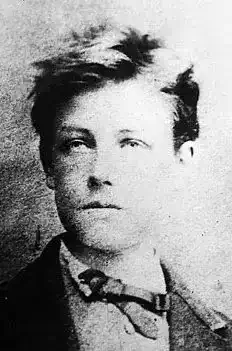
Arthur Rimbaud
O Seasons, O Chateaux
1. (From: Fetes de la Patience)
O seasons, O chateaux,
Where is the flawless soul?
O seasons, O chateaux,
The magic study I pursued,
Of happiness, none can elude.
O may it live, each time
The Gallic cock makes rhyme.
Nothing else I desire,
It’s possessed my life entire.
That charm! It’s taken heart and soul
Scattered all my effort so.
Where’s the sense in what I say?
It makes the whole thing fly away!
O seasons, O chateaux!
O Seasons, O Chateaux
2. (From: Une Saison en Enfer)
O seasons, O chateaux!
Where is the flawless soul?
The magic study I pursued,
Of happiness, none can elude.
A health to it, each time
The Gallic cock makes rhyme.
Ah! There’s nothing I desire,
It’s possessed my life entire.
That charm has taken heart and soul
Scattered all my efforts so.
O seasons, O chateaux!
The hour of its flight, alas!
Will be the hour I pass.
O seasons, O chateaux!
Read more →
O seasons, O chateaux,
Where is the flawless soul?
O seasons, O chateaux,
The magic study I pursued,
Of happiness, none can elude.
O may it live, each time
The Gallic cock makes rhyme.
Nothing else I desire,
It’s possessed my life entire.
That charm! It’s taken heart and soul
Scattered all my effort so.
Where’s the sense in what I say?
It makes the whole thing fly away!
O seasons, O chateaux!
O Seasons, O Chateaux
2. (From: Une Saison en Enfer)
O seasons, O chateaux!
Where is the flawless soul?
The magic study I pursued,
Of happiness, none can elude.
A health to it, each time
The Gallic cock makes rhyme.
Ah! There’s nothing I desire,
It’s possessed my life entire.
That charm has taken heart and soul
Scattered all my efforts so.
O seasons, O chateaux!
The hour of its flight, alas!
Will be the hour I pass.
O seasons, O chateaux!
585
William Wordsworth
The Rainbow
My heart leaps up when I behold
A Rainbow in the sky:
So was it when my life began;
So is it now I am a man;
So be it when I shall grow old,
Or let me die!
The Child is father of the man;
And I wish my days to be
Bound each to each by natural piety.
Read more →
A Rainbow in the sky:
So was it when my life began;
So is it now I am a man;
So be it when I shall grow old,
Or let me die!
The Child is father of the man;
And I wish my days to be
Bound each to each by natural piety.
588
Boris Pasternak
Fairy Tale
Once, in times forgotten,
In a fairy place,
Through the steppe, a rider
Made his way apace.
While he sped to battle,
Nearing from the dim
Distance, a dark forest
Rose ahead of him.
Something kept repeating,
Seemed his heart to graze:
Tighten up the saddle,
Fear the watering-place.
But he did not listen.
Heeding but his will,
At full speed he bounded
Up the wooded hill;
Rode into a valley,
Turning from the mound,
Galloped through a meadow,
Skirted higher ground;
Reached a gloomy hollow,
Found a trail to trace
Down the woodland pathway
To the watering-place.
Deaf to voice of warning,
And without remorse,
Down the slope, the rider
Led his thirsty horse.
Where the stream grew shallow,
Winding through the glen,
Eerie flames lit up the
Entrance to a den.
Through thick clouds of crimson
Smoke above the spring,
An uncanny calling
Made the forest ring.
And the rider started,
And with peering eye
Urged his horse in answer
To the haunting cry.
Then he saw the dragon,
And he gripped his lance;
And his horse stood breathless
Fearing to advance.
Thrice around a maiden
Was the serpent wound;
Fire-breathing nostrils
Cast a glare around.
And the dragon's body
Moved his scaly neck,
At her shoulder snaking
Whiplike forth and back.
By that country's custom
Was a young and fair
Captive brought as ransom
To the dragon's lair.
This then was the tribute
That the people owed
To the worm-protection
For a poor abode.
Now the dragon hugged his
Victim in alarm,
And the coils grew tighter
Round her throat and arm.
Skyward looked the horseman
With imploring glance,
And for the impending
Fight he couched his lance.
Tightly closing eyelids.
Heights and cloudy spheres.
Rivers. Waters. Boulders.
Centuries and years.
Helmetless, the wounded
Lies, his life at stake.
With his hooves the charger
Tramples down the snake.
On the sand, together-
Dragon, steed, and lance;
In a swoon the rider,
The maiden-in a trance.
Blue the sky; soft breezes
Tender noon caress.
Who is she? A lady?
Peasant girl? Princess?
Now in joyous wonder
Cannot cease to weep;
Now again abandoned
To unending sleep.
Now, his strength returning,
Opens up his eyes;
Now anew the wounded
Limp and listless lies.
But their hearts are beating.
Waves surge up, die down;
Carry them, and waken,
And in slumber drown.
Tightly closing eyelids.
Heights and cloudy spheres.
Rivers. Waters. Boulders.
Centuries and years.
Read more →
In a fairy place,
Through the steppe, a rider
Made his way apace.
While he sped to battle,
Nearing from the dim
Distance, a dark forest
Rose ahead of him.
Something kept repeating,
Seemed his heart to graze:
Tighten up the saddle,
Fear the watering-place.
But he did not listen.
Heeding but his will,
At full speed he bounded
Up the wooded hill;
Rode into a valley,
Turning from the mound,
Galloped through a meadow,
Skirted higher ground;
Reached a gloomy hollow,
Found a trail to trace
Down the woodland pathway
To the watering-place.
Deaf to voice of warning,
And without remorse,
Down the slope, the rider
Led his thirsty horse.
Where the stream grew shallow,
Winding through the glen,
Eerie flames lit up the
Entrance to a den.
Through thick clouds of crimson
Smoke above the spring,
An uncanny calling
Made the forest ring.
And the rider started,
And with peering eye
Urged his horse in answer
To the haunting cry.
Then he saw the dragon,
And he gripped his lance;
And his horse stood breathless
Fearing to advance.
Thrice around a maiden
Was the serpent wound;
Fire-breathing nostrils
Cast a glare around.
And the dragon's body
Moved his scaly neck,
At her shoulder snaking
Whiplike forth and back.
By that country's custom
Was a young and fair
Captive brought as ransom
To the dragon's lair.
This then was the tribute
That the people owed
To the worm-protection
For a poor abode.
Now the dragon hugged his
Victim in alarm,
And the coils grew tighter
Round her throat and arm.
Skyward looked the horseman
With imploring glance,
And for the impending
Fight he couched his lance.
Tightly closing eyelids.
Heights and cloudy spheres.
Rivers. Waters. Boulders.
Centuries and years.
Helmetless, the wounded
Lies, his life at stake.
With his hooves the charger
Tramples down the snake.
On the sand, together-
Dragon, steed, and lance;
In a swoon the rider,
The maiden-in a trance.
Blue the sky; soft breezes
Tender noon caress.
Who is she? A lady?
Peasant girl? Princess?
Now in joyous wonder
Cannot cease to weep;
Now again abandoned
To unending sleep.
Now, his strength returning,
Opens up his eyes;
Now anew the wounded
Limp and listless lies.
But their hearts are beating.
Waves surge up, die down;
Carry them, and waken,
And in slumber drown.
Tightly closing eyelids.
Heights and cloudy spheres.
Rivers. Waters. Boulders.
Centuries and years.
593
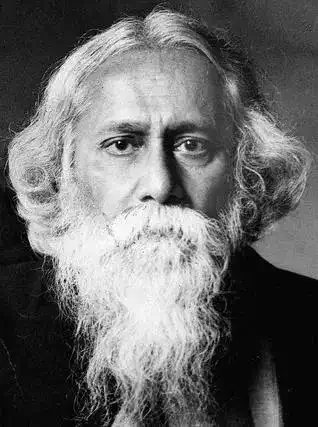
Rabindranath Tagore
A Moments Indulgence
I ask for a moment's indulgence to sit by thy side. The works
that I have in hand I will finish afterwards.
Away from the sight of thy face my heart knows no rest nor respite,
and my work becomes an endless toil in a shoreless sea of toil.
Today the summer has come at my window with its sighs and murmurs; and
the bees are plying their minstrelsy at the court of the flowering grove.
Now it is time to sit quite, face to face with thee, and to sing
dedication of life in this silent and overflowing leisure.
Read more →
that I have in hand I will finish afterwards.
Away from the sight of thy face my heart knows no rest nor respite,
and my work becomes an endless toil in a shoreless sea of toil.
Today the summer has come at my window with its sighs and murmurs; and
the bees are plying their minstrelsy at the court of the flowering grove.
Now it is time to sit quite, face to face with thee, and to sing
dedication of life in this silent and overflowing leisure.
588
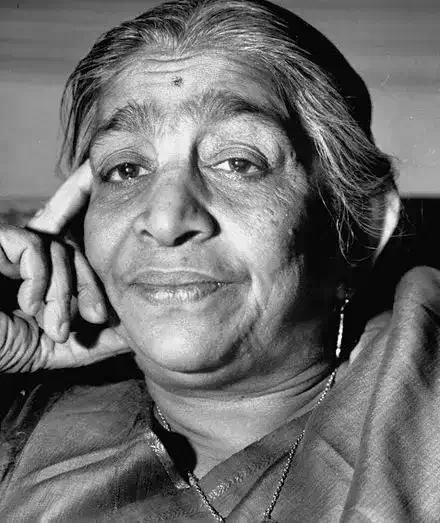
Sarojini Naidu
To The God of Pain
UNWILLING priestess in thy cruel fane,
Long hast thou held me, pitiless god of Pain,
Bound to thy worship by reluctant vows,
My tired breast girt with suffering, and my brows
Anointed with perpetual weariness.
Long have I borne thy service, through the stress
Of rigorous years, sad days and slumberless nights,
Performing thine inexorable rites.
For thy dark altars, balm nor milk nor rice,
But mine own soul thou'st ta'en for sacrifice:
All the rich honey of my youth's desire,
And all the sweet oils from my crushed life drawn,
And all my flower-like dreams and gem-like fire
Of hopes up-leaping like the light of dawn.
I have no more to give, all that was mine
Is laid, a wrested tribute, at thy shrine;
Let me depart, for my whole soul is wrung,
And all my cheerless orisons are sung;
Let me depart, with faint limbs let me creep
To some dim shade and sink me down to sleep.
Read more →
Long hast thou held me, pitiless god of Pain,
Bound to thy worship by reluctant vows,
My tired breast girt with suffering, and my brows
Anointed with perpetual weariness.
Long have I borne thy service, through the stress
Of rigorous years, sad days and slumberless nights,
Performing thine inexorable rites.
For thy dark altars, balm nor milk nor rice,
But mine own soul thou'st ta'en for sacrifice:
All the rich honey of my youth's desire,
And all the sweet oils from my crushed life drawn,
And all my flower-like dreams and gem-like fire
Of hopes up-leaping like the light of dawn.
I have no more to give, all that was mine
Is laid, a wrested tribute, at thy shrine;
Let me depart, for my whole soul is wrung,
And all my cheerless orisons are sung;
Let me depart, with faint limbs let me creep
To some dim shade and sink me down to sleep.
587

William Shakespeare
Sonnet 107: Not mine own fears, nor the prophetic soul
Not mine own fears, nor the prophetic soul
Of the wide world dreaming on things to come,
Can yet the lease of my true love control,
Suppos'd as forfeit to a confin'd doom.
The mortal moon hath her eclipse endur'd
And the sad augurs mock their own presage;
Incertainties now crown themselves assur'd
And peace proclaims olives of endless age.
Now with the drops of this most balmy time
My love looks fresh, and Death to me subscribes,
Since, spite of him, I'll live in this poor rhyme,
While he insults o'er dull and speechless tribes;
And thou in this shalt find thy monument,
When tyrants' crests and tombs of brass are spent.
Read more →
Of the wide world dreaming on things to come,
Can yet the lease of my true love control,
Suppos'd as forfeit to a confin'd doom.
The mortal moon hath her eclipse endur'd
And the sad augurs mock their own presage;
Incertainties now crown themselves assur'd
And peace proclaims olives of endless age.
Now with the drops of this most balmy time
My love looks fresh, and Death to me subscribes,
Since, spite of him, I'll live in this poor rhyme,
While he insults o'er dull and speechless tribes;
And thou in this shalt find thy monument,
When tyrants' crests and tombs of brass are spent.
589
Sarojini Naidu
The Poet's Love-Song
In noon-tide hours, O Love, secure and strong,
I need thee not; mad dreams are mine to bind
The world to my desire, and hold the wind
A voiceless captive to my conquering song.
I need thee not, I am content with these:
Keep silence in thy soul, beyond the seas!
But in the desolate hour of midnight, when
An ectasy of starry silence sleeps
And my soul hungers for thy voice, O then,
Love, like the magic of wild melodies,
Let thy soul answer mine across the seas.
Read more →
I need thee not; mad dreams are mine to bind
The world to my desire, and hold the wind
A voiceless captive to my conquering song.
I need thee not, I am content with these:
Keep silence in thy soul, beyond the seas!
But in the desolate hour of midnight, when
An ectasy of starry silence sleeps
And my soul hungers for thy voice, O then,
Love, like the magic of wild melodies,
Let thy soul answer mine across the seas.
588
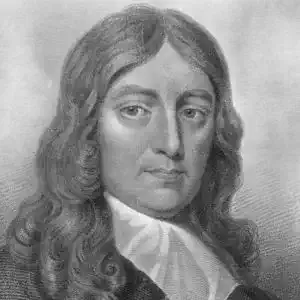
John Milton
On the Morning of Christ’s Nativity
I
This is the month, and this the happy morn,
Wherein the Son of Heaven’s eternal King,
Of wedded maid and Virgin Mother born,
Our great redemption from above did bring;
For so the holy sages once did sing,
That he our deadly forfeit should release,
And with his Father work us a perpetual peace.
II
That glorious Form, that Light unsufferable,
And that far-beaming blaze of majesty,
Wherewith he wont at Heaven’s high council-table
To sit the midst of Trinal Unity,
He laid aside, and, here with us to be,
Forsook the Courts of everlasting Day,
And chose with us a darksome house of mortal clay.
III
Say, Heavenly Muse, shall not thy sacred vein
Afford a present to the Infant God?
Hast thou no verse, no hymn, or solemn strain,
To welcome him to this his new abode,
Now while the heaven, by the Sun’s team untrod,
Hath took no print of the approaching light,
And all the spangled host keep watch in squadrons bright?
IV
See how from far upon the Eastern road
The star-led Wisards haste with odours sweet!
Oh! run; prevent them with thy humble ode,
And lay it lowly at his blessèd feet;
Have thou the honour first thy Lord to greet,
And join thy voice unto the Angel Quire,
From out his secret altar touched with hallowed fire.
The Hymn
I
It was the winter wild,
While the heaven-born child
All meanly wrapt in the rude manger lies;
Nature, in awe to him,
Had doffed her gaudy trim,
With her great Master so to sympathize:
It was no season then for her
To wanton with the Sun, her lusty Paramour.
II
Only with speeches fair
She woos the gentle air
To hide her guilty front with innocent snow,
And on her naked shame,
Pollute with sinful blame,
The saintly veil of maiden white to throw;
Confounded, that her Maker’s eyes
Should look so near upon her foul deformities.
III
But he, her fears to cease,
Sent down the meek-eyed Peace:
She, crowned with olive green, came softly sliding
Down through the turning sphere,
His ready Harbinger,
With turtle wing the amorous clouds dividing;
And, waving wide her myrtle wand,
She strikes a universal peace through sea and land.
IV
No war, or battail’s sound,
Was heard the world around;
The idle spear and shield were high uphung;
The hookèd chariot stood,
Unstained with hostile blood;
The trumpet spake not to the armèd throng;
And Kings sat still with awful eye,
As if they surely knew their sovran Lord was by.
V
But peaceful was the night
Wherein the Prince of Light
His reign of peace upon the earth began.
The winds, with wonder whist,
Smoothly the waters kissed,
Whispering new joys to the mild Ocean,
Who now hath quite forgot to rave,
While birds of calm sit brooding on the charmed wave.
VI
The stars, with deep amaze,
Stand fixed in steadfast gaze,
Bending one way their precious influence,
And will not take their flight,
For all the morning light,
Or Lucifer that often warned them thence;
But in their glimmering orbs did glow,
Until their Lord himself bespake, and bid them go.
VII
And, though the shady gloom
Had given day her room,
The Sun himself withheld his wonted speed,
And hid his head of shame,
As his inferior flame
The new-enlightened world no more should need:
He saw a greater Sun appear
Than his bright Throne or burning axletree could bear.
VIII
The Shepherds on the lawn,
Or ere the point of dawn,
Sat simply chatting in a rustic row;
Full little thought they than
That the mighty Pan
Was kindly come to live with them below:
Perhaps their loves, or else their sheep,
Was all that did their silly thoughts so busy keep.
IX
When such music sweet
Their hearts and ears did greet
As never was by mortal finger strook,
Divinely-warbled voice
Answering the stringèd noise,
As all their souls in blissful rapture took:
The air, such pleasure loth to lose,
With thousand echoes still prolongs each heavenly close.
X
Nature, that heard such sound
Beneath the hollow round
Of Cynthia’s seat the airy Region thrilling,
Now was almost won
To think her part was done,
And that her reign had here its last fulfilling:
She knew such harmony alone
Could hold all Heaven and Earth in happier union.
XI
At last surrounds their sight
A globe of circular light,
That with long beams the shamefaced Night arrayed;
The helmèd Cherubim
And sworded Seraphim
Are seen in glittering ranks with wings displayed,
Harping in loud and solemn quire,
With unexpressive notes, to Heaven’s newborn Heir.
XII
Such music (as ’tis said)
Before was never made,
But when of old the Sons of Morning sung,
While the Creator great
His constellations set,
And the well-balanced World on hinges hung,
And cast the dark foundations deep,
And bid the weltering waves their oozy channel keep.
XIII
Ring out, ye crystal spheres!
Once bless our human ears,
If ye have power to touch our senses so;
And let your silver chime
Move in melodious time;
And let the bass of heaven’s deep organ blow;
And with your ninefold harmony
Make up full consort of the angelic symphony.
XIV
For, if such holy song
Enwrap our fancy long,
Time will run back and fetch the Age of Gold;
And speckled Vanity
Will sicken soon and die,
And leprous Sin will melt from earthly mould;
And Hell itself will pass away,
And leave her dolorous mansions of the peering day.
XV
Yes, Truth and Justice then
Will down return to men,
The enamelled arras of the rainbow wearing;
And Mercy set between,
Throned in celestial sheen,
With radiant feet the tissued clouds down steering;
And Heaven, as at some festival,
Will open wide the gates of her high palace-hall.
XVI
But wisest Fate says No,
This must not yet be so;
The Babe lies yet in smiling infancy
That on the bitter cross
Must redeem our loss,
So both himself and us to glorify:
Yet first, to those chained in sleep,
The wakeful trump of doom must thunder through the deep,
XVII
With such a horrid clang
As on Mount Sinai rang,
While the red fire and smouldering clouds outbrake:
The aged Earth, aghast
With terror of that blast,
Shall from the surface to the centre shake,
When, at the world’s last sessiön,
The dreadful Judge in middle air shall spread his throne.
XVIII
And then at last our bliss
Full and perfect is,
But now begins; for from this happy day
The Old Dragon under ground,
In straiter limits bound,
Not half so far casts his usurpèd sway,
And, wroth to see his Kingdom fail,
Swindges the scaly horror of his folded tail.
XIX
The Oracles are dumb;
No voice or hideous hum
Runs through the archèd roof in words deceiving.
Apollo from his shrine
Can no more divine,
Will hollow shriek the steep of Delphos leaving.
No nightly trance, or breathèd spell,
Inspires the pale-eyed Priest from the prophetic cell.
XX
The lonely mountains o’er,
And the resounding shore,
A voice of weeping heard and loud lament;
Edgèd with poplar pale,
From haunted spring, and dale
The parting Genius is with sighing sent;
With flower-inwoven tresses torn
The Nymphs in twilight shade of tangled thickets mourn.
XXI
In consecrated earth,
And on the holy hearth,
The Lars and Lemures moan with midnight plaint;
In urns, and altars round,
A drear and dying sound
Affrights the Flamens at their service quaint;
And the chill marble seems to sweat,
While each peculiar power forgoes his wonted seat.
XXII
Peor and Baälim
Forsake their temples dim,
With that twice-battered god of Palestine;
And moonèd Ashtaroth,
Heaven’s Queen and Mother both,
Now sits not girt with tapers’ holy shine:
The Libyc Hammon shrinks his horn;
In vain the Tyrian maids their wounded Thammuz mourn.
XXIII
And sullen Moloch, fled,
Hath left in shadows dread
His burning idol all of blackest hue;
In vain with cymbals’ ring
They call the grisly king,
In dismal dance about the furnace blue;
The brutish gods of Nile as fast,
Isis, and Orus, and the dog Anubis, haste.
XXIV
Nor is Osiris seen
In Memphian grove or green,
Trampling the unshowered grass with lowings loud;
Nor can he be at rest
Within his sacred chest;
Nought but profoundest Hell can be his shroud;
In vain, with timbreled anthems dark,
The sable-stolèd Sorcerers bear his worshiped ark.
XXV
He feels from Juda’s land
The dreaded Infant’s hand;
The rays of Bethlehem blind his dusky eyn;
Nor all the gods beside
Longer dare abide,
Not Typhon huge ending in snaky twine:
Our Babe, to show his Godhead true,
Can in his swaddling bands control the damnèd crew.
XXVI
So, when the Sun in bed,
Curtained with cloudy red,
Pillows his chin upon an orient wave,
The flocking shadows pale
Troop to the infernal jail,
Each fettered ghost slips to his several grave,
And the yellow-skirted Fays
Fly after the night-steeds, leaving their moon-loved maze.
XXVII
But see! the Virgin blest
Hath laid her Babe to rest,
Time is our tedious song should here have ending:
Heaven’s youngest-teemèd star
Hath fixed her polished car,
Her sleeping Lord with handmaid lamp attending;
And all about the courtly stable
Bright-harnessed Angels sit in order serviceable.
Read more →
This is the month, and this the happy morn,
Wherein the Son of Heaven’s eternal King,
Of wedded maid and Virgin Mother born,
Our great redemption from above did bring;
For so the holy sages once did sing,
That he our deadly forfeit should release,
And with his Father work us a perpetual peace.
II
That glorious Form, that Light unsufferable,
And that far-beaming blaze of majesty,
Wherewith he wont at Heaven’s high council-table
To sit the midst of Trinal Unity,
He laid aside, and, here with us to be,
Forsook the Courts of everlasting Day,
And chose with us a darksome house of mortal clay.
III
Say, Heavenly Muse, shall not thy sacred vein
Afford a present to the Infant God?
Hast thou no verse, no hymn, or solemn strain,
To welcome him to this his new abode,
Now while the heaven, by the Sun’s team untrod,
Hath took no print of the approaching light,
And all the spangled host keep watch in squadrons bright?
IV
See how from far upon the Eastern road
The star-led Wisards haste with odours sweet!
Oh! run; prevent them with thy humble ode,
And lay it lowly at his blessèd feet;
Have thou the honour first thy Lord to greet,
And join thy voice unto the Angel Quire,
From out his secret altar touched with hallowed fire.
The Hymn
I
It was the winter wild,
While the heaven-born child
All meanly wrapt in the rude manger lies;
Nature, in awe to him,
Had doffed her gaudy trim,
With her great Master so to sympathize:
It was no season then for her
To wanton with the Sun, her lusty Paramour.
II
Only with speeches fair
She woos the gentle air
To hide her guilty front with innocent snow,
And on her naked shame,
Pollute with sinful blame,
The saintly veil of maiden white to throw;
Confounded, that her Maker’s eyes
Should look so near upon her foul deformities.
III
But he, her fears to cease,
Sent down the meek-eyed Peace:
She, crowned with olive green, came softly sliding
Down through the turning sphere,
His ready Harbinger,
With turtle wing the amorous clouds dividing;
And, waving wide her myrtle wand,
She strikes a universal peace through sea and land.
IV
No war, or battail’s sound,
Was heard the world around;
The idle spear and shield were high uphung;
The hookèd chariot stood,
Unstained with hostile blood;
The trumpet spake not to the armèd throng;
And Kings sat still with awful eye,
As if they surely knew their sovran Lord was by.
V
But peaceful was the night
Wherein the Prince of Light
His reign of peace upon the earth began.
The winds, with wonder whist,
Smoothly the waters kissed,
Whispering new joys to the mild Ocean,
Who now hath quite forgot to rave,
While birds of calm sit brooding on the charmed wave.
VI
The stars, with deep amaze,
Stand fixed in steadfast gaze,
Bending one way their precious influence,
And will not take their flight,
For all the morning light,
Or Lucifer that often warned them thence;
But in their glimmering orbs did glow,
Until their Lord himself bespake, and bid them go.
VII
And, though the shady gloom
Had given day her room,
The Sun himself withheld his wonted speed,
And hid his head of shame,
As his inferior flame
The new-enlightened world no more should need:
He saw a greater Sun appear
Than his bright Throne or burning axletree could bear.
VIII
The Shepherds on the lawn,
Or ere the point of dawn,
Sat simply chatting in a rustic row;
Full little thought they than
That the mighty Pan
Was kindly come to live with them below:
Perhaps their loves, or else their sheep,
Was all that did their silly thoughts so busy keep.
IX
When such music sweet
Their hearts and ears did greet
As never was by mortal finger strook,
Divinely-warbled voice
Answering the stringèd noise,
As all their souls in blissful rapture took:
The air, such pleasure loth to lose,
With thousand echoes still prolongs each heavenly close.
X
Nature, that heard such sound
Beneath the hollow round
Of Cynthia’s seat the airy Region thrilling,
Now was almost won
To think her part was done,
And that her reign had here its last fulfilling:
She knew such harmony alone
Could hold all Heaven and Earth in happier union.
XI
At last surrounds their sight
A globe of circular light,
That with long beams the shamefaced Night arrayed;
The helmèd Cherubim
And sworded Seraphim
Are seen in glittering ranks with wings displayed,
Harping in loud and solemn quire,
With unexpressive notes, to Heaven’s newborn Heir.
XII
Such music (as ’tis said)
Before was never made,
But when of old the Sons of Morning sung,
While the Creator great
His constellations set,
And the well-balanced World on hinges hung,
And cast the dark foundations deep,
And bid the weltering waves their oozy channel keep.
XIII
Ring out, ye crystal spheres!
Once bless our human ears,
If ye have power to touch our senses so;
And let your silver chime
Move in melodious time;
And let the bass of heaven’s deep organ blow;
And with your ninefold harmony
Make up full consort of the angelic symphony.
XIV
For, if such holy song
Enwrap our fancy long,
Time will run back and fetch the Age of Gold;
And speckled Vanity
Will sicken soon and die,
And leprous Sin will melt from earthly mould;
And Hell itself will pass away,
And leave her dolorous mansions of the peering day.
XV
Yes, Truth and Justice then
Will down return to men,
The enamelled arras of the rainbow wearing;
And Mercy set between,
Throned in celestial sheen,
With radiant feet the tissued clouds down steering;
And Heaven, as at some festival,
Will open wide the gates of her high palace-hall.
XVI
But wisest Fate says No,
This must not yet be so;
The Babe lies yet in smiling infancy
That on the bitter cross
Must redeem our loss,
So both himself and us to glorify:
Yet first, to those chained in sleep,
The wakeful trump of doom must thunder through the deep,
XVII
With such a horrid clang
As on Mount Sinai rang,
While the red fire and smouldering clouds outbrake:
The aged Earth, aghast
With terror of that blast,
Shall from the surface to the centre shake,
When, at the world’s last sessiön,
The dreadful Judge in middle air shall spread his throne.
XVIII
And then at last our bliss
Full and perfect is,
But now begins; for from this happy day
The Old Dragon under ground,
In straiter limits bound,
Not half so far casts his usurpèd sway,
And, wroth to see his Kingdom fail,
Swindges the scaly horror of his folded tail.
XIX
The Oracles are dumb;
No voice or hideous hum
Runs through the archèd roof in words deceiving.
Apollo from his shrine
Can no more divine,
Will hollow shriek the steep of Delphos leaving.
No nightly trance, or breathèd spell,
Inspires the pale-eyed Priest from the prophetic cell.
XX
The lonely mountains o’er,
And the resounding shore,
A voice of weeping heard and loud lament;
Edgèd with poplar pale,
From haunted spring, and dale
The parting Genius is with sighing sent;
With flower-inwoven tresses torn
The Nymphs in twilight shade of tangled thickets mourn.
XXI
In consecrated earth,
And on the holy hearth,
The Lars and Lemures moan with midnight plaint;
In urns, and altars round,
A drear and dying sound
Affrights the Flamens at their service quaint;
And the chill marble seems to sweat,
While each peculiar power forgoes his wonted seat.
XXII
Peor and Baälim
Forsake their temples dim,
With that twice-battered god of Palestine;
And moonèd Ashtaroth,
Heaven’s Queen and Mother both,
Now sits not girt with tapers’ holy shine:
The Libyc Hammon shrinks his horn;
In vain the Tyrian maids their wounded Thammuz mourn.
XXIII
And sullen Moloch, fled,
Hath left in shadows dread
His burning idol all of blackest hue;
In vain with cymbals’ ring
They call the grisly king,
In dismal dance about the furnace blue;
The brutish gods of Nile as fast,
Isis, and Orus, and the dog Anubis, haste.
XXIV
Nor is Osiris seen
In Memphian grove or green,
Trampling the unshowered grass with lowings loud;
Nor can he be at rest
Within his sacred chest;
Nought but profoundest Hell can be his shroud;
In vain, with timbreled anthems dark,
The sable-stolèd Sorcerers bear his worshiped ark.
XXV
He feels from Juda’s land
The dreaded Infant’s hand;
The rays of Bethlehem blind his dusky eyn;
Nor all the gods beside
Longer dare abide,
Not Typhon huge ending in snaky twine:
Our Babe, to show his Godhead true,
Can in his swaddling bands control the damnèd crew.
XXVI
So, when the Sun in bed,
Curtained with cloudy red,
Pillows his chin upon an orient wave,
The flocking shadows pale
Troop to the infernal jail,
Each fettered ghost slips to his several grave,
And the yellow-skirted Fays
Fly after the night-steeds, leaving their moon-loved maze.
XXVII
But see! the Virgin blest
Hath laid her Babe to rest,
Time is our tedious song should here have ending:
Heaven’s youngest-teemèd star
Hath fixed her polished car,
Her sleeping Lord with handmaid lamp attending;
And all about the courtly stable
Bright-harnessed Angels sit in order serviceable.
592
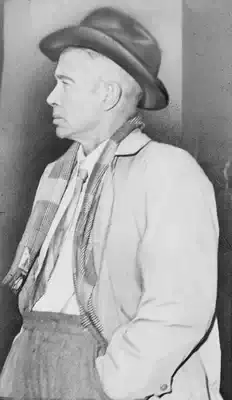
E. E. Cummings
If I have made, my lady, intricate
If I have made, my lady, intricate
imperfect various things chiefly which wrong
your eyes (frailer than most deep dreams are frail)
songs less firm than your body's whitest song
upon my mind - if I have failed to snare
the glance too shy - if through my singing slips
the very skillful strangeness of your smile
the keen primeval silence of your hair
-let the world say "his most wise music stole
nothing from death" you
will only create
(who are so perfectly alive) my shame:
lady whose profound and fragile lips
the sweet small clumsy feet of April came
into the ragged meadow of my soul.
Read more →
imperfect various things chiefly which wrong
your eyes (frailer than most deep dreams are frail)
songs less firm than your body's whitest song
upon my mind - if I have failed to snare
the glance too shy - if through my singing slips
the very skillful strangeness of your smile
the keen primeval silence of your hair
-let the world say "his most wise music stole
nothing from death" you
will only create
(who are so perfectly alive) my shame:
lady whose profound and fragile lips
the sweet small clumsy feet of April came
into the ragged meadow of my soul.
589
E. E. Cummings
Sometimes I Am Alive Because With
sometimes i am alive because with
me her alert treelike body sleeps
which i will feel slowly sharpening
becoming distinct with love slowly,
who in my shoulder sinks sweetly teeth
until we shall attain the Springsmelling
intense large togethercoloured instant
the moment pleasantly frightful
when, her mouth suddenly rising, wholly
begins with mine fiercely to fool
(and from my thighs which shrug and pant
a murdering rain leapingly reaches the upward singular deepest flower which she
carries in a gesture of her hips)
Read more →
me her alert treelike body sleeps
which i will feel slowly sharpening
becoming distinct with love slowly,
who in my shoulder sinks sweetly teeth
until we shall attain the Springsmelling
intense large togethercoloured instant
the moment pleasantly frightful
when, her mouth suddenly rising, wholly
begins with mine fiercely to fool
(and from my thighs which shrug and pant
a murdering rain leapingly reaches the upward singular deepest flower which she
carries in a gesture of her hips)
586
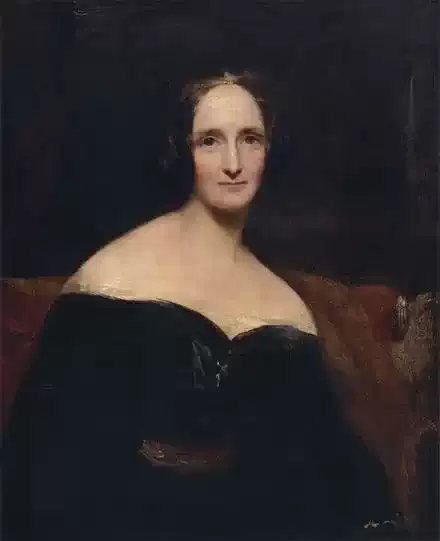
Percy Bysshe Shelley
The Witch Of Atlas
Before those cruel twins whom at one birth
Incestuous Change bore to her father Time,
Error and Truth, had hunted from the earth
All those bright natures which adorned its prime,
And left us nothing to believe in, worth
The pains of putting into learn?d rhyme,
A Lady Witch there lived on Atlas mountain
Within a cavern by a secret fountain.
Her mother was one of the Atlantides.
The all-beholding Sun had ne'er beholden
In his wide voyage o'er continents and seas
So fair a creature, as she lay enfolden
In the warm shadow of her loveliness;
He kissed her with his beams, and made all golden
The chamber of gray rock in which she lay.
She, in that dream of joy, dissolved away.
'Tis said she first was changed into a vapor;
And then into a cloud,--such clouds as flit
(Like splendor-winged moths about a taper)
Round the red west when the Sun dies in it;
And then into a meteor, such as caper
On hill-tops when the Moon is in a fit;
Then into one of those mysterious stars
Which hide themselves between the Earth and Mars.
Ten times the Mother of the Months had ben
Her bow beside the folding-star, and bidden
With that bright sign the billows to indent
The sea-deserted sand--(like children chidden,
At her command they ever came and went)--
Since in that cave a dewy splendor hidden
Took shape and motion. With the living form
Of this embodied Power the cave grew warm.
A lovely Lady garmented in light
From her own beauty: deep her eyes as are
Two openings of unfathomable night
Seen through a temple's cloven roof; her hair
Dark; the dim brain whirls dizzy with delight,
Picturing her form. Her soft smiles shone afar;
And her low voice was heard like love, and drew
All living things towards this wonder new.
And first the spotted cameleopard came;
And then the wise and fearless elephant;
Then the sly serpent, in the golden flame
Of his own volumes intervolved. All gaunt
And sanguine beasts her gentle looks made tame,--
They drank before her at her sacred fount;
And every beast of beating heart grew bold,
Such gentleness and power even to behold.
The brinded lioness led forth her young,
That she might teach them how they should forego
Their inborn thirst of death; the pard unstrung
His sinews at her feet, and sought to know,
With looks whose motions spoke without a tongue,
How he might be as gentle as the doe.
The magic circle of her voice and eyes
All savage natures did imparadise.
And old Silenus, shaking a green stick
Of lilies, and the Wood-gods in a crew,
Came blithe as in the olive-copses thick
Cicade are, drunk with the noonday dew;
And Dryope and Faunus followed quick,
Teazing the God to sing them something new;
Till in this cave they found the Lady lone,
Sitting upon a seat of emerald stone.
And universal Pan, 'tis said, was there.
And, though none saw him,--through the adamant
Of the deep mountains, through the trackless air,
And through those living spirits like a want,--
He passed out of his everlasting lair
Where the quick heart of the great world doth pant,
And felt that wondrous Lady all alone,--
And she felt him upon her emerald throne.
And every Nymph of stream and spreading tree,
And every Shepherdess of Ocean's flocks
Who drives her white waves over the green sea,
And Ocean with the brine on his grey locks,
And quaint Priapus with his company,--
All came, much wondering how the enwombed rocks
Could have brought forth so beautiful a birth:
Her love subdued their wonder and their mirth.
The herdsmen and the mountain-maidens came,
And the rude kings of pastoral Garamant--
Their spirits shook within them, as a flame
Stirred by the air under a cavern gaunt:
Pygmies and Polyphemes, by many a name,
Centaurs and Satyrs, and such shapes as haunt
Wet clefts,--and lumps neither alive nor dead,
Dog-headed, bosom-eyed, and bird-footed.
For she was beautiful. Her beauty made
The bright world dim, and everything beside
Seemed like the fleeting image of a shade.
No thought of living spirit could abide
(Which to her looks had ever been betrayed)
On any object in the world so wide,
On any hope within the circling skies,--
But on her form, and in her inmost eyes.
Which when the Lady knew; she took her spindle,
And twined three threads of fleecy mist, and three
Long lines of light, such as the dawn may kindle
The clouds and waves and mountains with, and she
As many starbeams, ere their lamps could dwindle
In the belated moon, wound skilfully;
And with these threads a subtle veil she wove--
A shadow for the splendour of her love.
The deep recesses of her odorous dwelling
Were stored with magic treasures:--sounds of air
Which had the power all spirits of compelling,
Folded in cells of crystal silence there;
Such as we hear in youth, and think the feeling
will never die--yet, ere we are aware,
The feeling and the sound are fled and gone
And the regret they leave remains alone.
And there lay Visions swift and sweet and quaint,
Each in its thin sheath like a chrysalis;--
Some eager to burst forth; some weak and faint
With the soft burden of intensest bliss
It is their work to bear to many a saint
Whose heart adores the shrine which holiest is,
Even Love's; and others, white, green, grey, and black,
And of all shapes:--and each was at her beck.
And odours in a kind of aviary
Of ever-blooming Eden-trees she kept,
Clipped in a floating net a love-sick Fairy
Had woven from dew-beams while the moon yet slept.
As bats at the wired window of a dairy,
They beat their vans; and each was an adept--
When loosed and missioned, making wings of winds--
To stir sweet thoughts or sad in destined minds.
And liquors clear and sweet, whose healthful might
Could medicine the sick soul to happy sleep,
And change eternal death into a night
Of glorious dreams--or, if eyes needs must weep,
Could make their tears all wonder and delight--
She in her crystal phials did closely keep:
If men could drink of those clear phials, 'tis said
The living were not envied of the dead.
Her cave was stored with scrolls of strange device,
The works of some Saturnian Archimage,
Which taught the expiations at whose price
Men from the Gods might win that happy age
Too lightly lost, redeeming native vice,--
And which might quench the earth-consuming rage
Of gold and blood, till men should live and move
Harmonious as the sacred stars above:--
And how all things that seem untameable,
Not to be checked and not to be confined,
Obey the spells of Wisdom's wizard skill;
Time, earth, and fire, the ocean and the wind,
And all their shapes, and man's imperial will;--
And other scrolls whose writings did unbind
The inmost lore of love--let the profane
Tremble to ask what secrets they contain.
And wondrous works of substances unknown,
To which the enchantment of her Father's power
Had changed those ragged blocks of savage stone,
Were heaped in the recesses of her bower;
Carved lamps and chalices, and phials which shone
In their own golden beams--each like a flower
Out of whose depth a firefly shakes his light
Under a cypress in a starless night.
At first she lived alone in this wild home,
And her own thoughts were each a minister,
Clothing themselves or with the ocean-foam,
Or with the wind, or with the speed of fire,
To work whatever purposes might come
Into her mind: such power her mighty Sire
Had girt them with, whether to fly or run
Through all the regions which he shines upon.
The Ocean-nymphs and Hamadryades,
Oreads, and Naiads with long weedy locks,
Offered to do her bidding through the seas,
Under the earth, and in the hollow rocks,
And far beneath the matted roots of trees,
And in the gnarled heart of stubborn oaks;
So they might live for ever in the light
Of her sweet presence--each a satellite.
"This may not be," the Wizard Maid replied.
"The fountains where the Naiades bedew
Their shining hair at length are drained and dried;
The solid oaks forget their strength, and strew
Their latest leaf upon the mountains wide;
The boundless ocean like a drop of dew
Will be consumed; the stubborn centre must
Be scattered like a cloud of summer dust.
"And ye, with them, will perish one by one.
If I must sigh to think that this shall be,
If I must weep when the surviving Sun
Shall smile on your decay--oh ask not me
To love you till your little race is run;
I cannot die as ye must.--Over me
Your leaves shall glance--the streams in which ye dwell
Shall be my paths henceforth; and so farewell."
She spoke and wept. The dark and azure well
Sparkled beneath the shower of her bright tears,
And every little circlet where they fell
Flung to the cavern-roof inconstant spheres
And intertangled lines of light. A knell
Of sobbing voices came upon her ears
From those departing forms, o'er the serene
Of the white streams and of the forest green.
All day the Wizard Lady sat aloof;
Spelling out scrolls of dread antiquity
Under the cavern's fountain-lighted roof;
Or broidering the pictured poesy
Of some high tale upon her growing woof,
Which the sweet splendor of her smiles could dye
In hues outshining heaven--and ever she
Added some grace to the wrought poesy:--
While on her hearth lay blazing many a piece
Of sandal-wood, rare gums, and cinnamon.
Men scarcely know how beautiful fire is;
Each flame of it is as a precious stone
Dissolved in ever-moving light, and this
Belongs to each and all who gaze thereon.'
The Witch beheld it not, for in her hand
She held a woof that dimmed the burning brand.
This Lady never slept, but lay in trance
All night within the fountain--as in sleep.
Its emerald crags glowed in her beauty's glance:
Through the green splendour of the water deep
She saw the constellations reel and dance
Like fireflies--and withal did ever keep
The tenor of her contemplations calm,
With open eyes, closed feet, and folded palm.
And, when the whirlwinds and the clouds descended
From the white pinnacles of that cold hill,
She passed at dewfall to a space extended,
Where, in a lawn of flowering asphodel
Amid a wood of pines and cedars blended,
There yawned an inextinguishable well
Of crimson fire, full even to the brim,
And overflowing all the margin trim:--
Within the which she lay when the fierce war
Of wintry winds shook that innocuous liquor,
In many a mimic moon and bearded star,
O'er woods and lawns. The serpent heard it flicker
In sleep, and, dreaming still, he crept afar.
And, when the windless snow descended thicker
Than autumn-leaves, she watched it as it came
Melt on the surface of the level flame.
She had a boat which some say Vulcan wrought
For Venus, as the chariot of her star;
But it was found too feeble to be fraught
With all the ardours in that sphere which are,
And so she sold it, and Apollo bought
And gave it to this daughter: from a car,
Changed to the fairest and the lightest boat
Which ever upon mortal stream did float.
And others say that, when but three hours old,
The firstborn Love out of his cradle leapt,
And clove dun chaos with his wings of gold,
And, like a horticultural adept,
Stole a strange seed, and wrapped it up in mould,
And sowed it in his mother's star, and kept
Watering it all the summer with sweet dew,
And with his wings fanning it as it grew.
The plant grew strong and green--the snowy flower
Fell, and the long and gourd-like fruit began
To turn the light and dew by inward power
To its own substance: woven tracery ran
Of light firm texture, ribbed and branching, o'er
The solid rind, like a leaf's veined fan,--
Of which Love scooped this boat, and with soft motion
Piloted it round the circumfluous ocean.
This boat she moored upon her fount, and lit
A living spirit within all its frame,
Breathing the soul of swiftness into it.
Couched on the fountain--like a panther tame
(One of the twain at Evan's feet that sit,
Or as on Vesta's sceptre a swift flame,
Or on blind Homer's heart a winged thought--
In joyous expectation lay the boat.
Then by strange art she kneaded fire and snow
Together, tempering the repugnant mass
With liquid love--all things together grow
Through which the harmony of love can pass;
And a fair Shape out of her hands did flow--
A living image which did far surpass
In beauty that bright shape of vital stone
Which drew the heart out of Pygmalion.
A sexless thing it was, and in its growth
It seemed to have developed no defect
Of either sex, yet all the grace of both.
In gentleness and strength its limbs were decked;
The bosom lightly swelled with its full youth;
The countenance was such as might select
Some artist that his skill should never die,
lmaging forth such perfect purity.
From its smooth shoulders hung two rapid wings
Fit to have borne it to the seventh sphere,
Tipped with the speed of liquid lightenings,
Dyed in the ardours of the atmosphere.
She led her creature to the boiling springs
Where the light boat was moored, and said "Sit here,"
And pointed to the prow, and took her seat
Beside the rudder with opposing feet.
And down the streams which clove those mountains vast,
Around their inland islets, and amid
The panther-peopled forests (whose shade cast
Darkness and odors, and a pleasure hid
In melancholy gloom) the pinnace passed;
By many a star-surrounded pyramid
Of icy crag cleaving the purple sky,
And caverns yawning round unfathomably.
The silver noon into that winding dell,
With slanted gleam athwart the forest-tops,
Tempered like golden evening, feebly fell;
A green and glowing light, like that which drops
From folded lilies in which glow-worms dwell
When Earth over her face Night's mantle wraps;
Between the severed mountains lay on high,
Over the stream, a narrow rift of sky.
And, ever as she went, the Image lay
With folded wings and unawakened eyes;
And o'er its gentle countenance did play
The busy dreams, as thick as summer flies,
Chasing the rapid smiles that would not stay,
And drinking the warm tears, and the sweet sighs
Inhaling, which with busy murmur vain
They has aroused from that full heart and brain.
And ever down the prone vale, like a cloud
Upon a stream of wind, the pinnace went:
Now lingering on the pools, in which abode
The calm and darkness of the deep content
In which they paused; now o'er the shallow road
Of white and dancing waters, all besprent
With sand and polished pebbles:--mortal boat
In such a shallow rapid could not float.
And down the earthquaking cataracts, which shivcr
Their snow-like waters into golden air,
Or under chasms unfathomable ever
Sepulchre them, till in their rage they tear
A subterranean portal for the river,
It fled. The circling sunbows did upbear
Its fall down the hoar precipice of spray,
Lighting it far upon its lampless way.
And, when the Wizard Lady would ascend
The labyrinths of some many-winding vale
Which to the inmost mountain upward tend,
She called "Hermaphroditus!"--and the pale
And heavy hue which slumber could extend
Over its lips and eyes, as on the gale
A rapid shadow from a slope of grass,
Into the darkness of the stream did pass
And it unfurled its heaven-coloured pinions;
With stars of fire spotting the stream below,
And from above into the Sun's dominions
Flinging a glory like the golden glow
In which Spring clothes her emerald-winged minions,
All interwoven with fine feathery snow,
And moonlight splendour of intensest rime
With which frost paints the pines in winter-time.
And then it winnowed the elysian air
Which ever hung about that Lady bright,
With its etherial vans: and, speeding there,
Like a star up the torrent of the night,
Or a swift eagle in the morning glare
Breasting the whirlwind with impetuous flight,
The pinnace, oared by those enchanted wings,
Clove the fierce streams towards their upper springs.
The water flashed,--like sunlight, by the prow
Of a noon-wandering meteor flung to heaven;
The still air seemed as if its waves did flow
In tempest down the mountains; loosely driven,
The Lady's radiant hair streamed to and fro;
Beneath, the billows, having vainly striven
Indignant and impetuous, roared to feel
The swift and steady motion of the keel.
Or, when the weary moon was in the wane,
Or in the noon of interlunar night,
The Lady Witch in visions could not chain
Her spirit; but sailed forth under the light
Of shooting stars, and bade extend amain
Its storm-outspeeding wings the Hermaphrodite;
She to the austral waters took her way,
Beyond the fabulous Thamondocana.
Where, like a meadow which no scythe has shaven,
Which rain could never bend or whirlblast shake,
With the antarctic constellations paven,
Canopus and his crew, lay the austral lake--
There she would build herself a windless haven
Out of the clouds whose moving turrets make
The bastions of the storm, when through the sky
The spirits of the tempest thundered by:--
A haven beneath whose translucent floor
The tremulous stars sparkled unfathomably;
And around which the solid vapours hoar,
Based on the level waters, to the sky
Lifted their dreadful crags, and, like a shore
Of wintry mountains, inaccessibly
Hemmed-in with rifts and precipices grey,
And hanging crags, many a cove and bay.
And, whilst the outer lake beneath the lash
Of the wind's scourge foamed like a wounded thing
And the incessant hail with stony clash
Ploughed up the waters, and the flagging wing
Of the roused cormorant in the lightningflash
Looked like the wreck of some wind-wandering
Fragment of inky thunder-smoke--this haven
Was as a gem to copy heaven engraven.
On which that Lady played her many pranks,
Circling the image of a shooting star
(Even as a tiger on Hydaspes' banks
Outspeeds the antelopes which speediest are)
In her light boat; and many quips and cranks
She played upon the water; till the car
Of the late moon, like a sick matron wan,
To journey from the misty east began.
And then she called out of the hollow turrets
Of those high clouds, white, golden, and vermilion,
The armies of her ministering spirits.
In mighty legions million after million
They came, each troop emblazoning its merits
On meteor flags; and many a proud pavilion
Of the intertexture of the atmosphere
They pitched upon the plain of the calm mere.
They framed the imperial tent of their great Queen
Of woven exhalations, underlaid
With lambent lightning-fire, as may be seen
A dome of thin and open ivory inlaid
With crimson silk. Cressets from the serene
Hung there, and on the water for her tread
A tapestry of fleece-like mist was strewn,
Dyed in the beams of the ascending moon.
And on a throne o'erlaid with starlight, caught
Upon those wandering isles of aery dew
Which highest shoals of mountain shipwreck not,
She sate, and heard all that had happened new
Between the earth and moon since they had brought
The last intelligence: and now she grew
Pale as that moon lost in the watery night,
And now she wept, and now she laughed outright.
These were tame pleasures.--She would often climb
The steepest ladder of the crudded rack
Up to some beaked cape of cloud sublime,
And like Arion on the dolphin's back
Ride singing through the shoreless air. Oft-time,
Following the serpent lightning's winding track,
She ran upon the platforms of the wind,
And laughed to hear the fireballs roar behid.
And sometimes to those streams of upper air
Which whirl the earth in its diurnal round
She would ascend, and win the Spirits there
To let her join their chorus. Mortals found
That on those days the sky was calm and fair,
And mystic snatches of harmonious sound
Wandered upon the earth where'er she passed,
And happy thoughts of hope, too sweet to last.
But her choice sport was, in the hours of sleep,
To glide adown old Nilus, where he threads
Egypt and Ethiopia from the steep
Of utmost Axume until he spreads,
Like a calm flock of silver-fleeced sheep,
His waters on the plain,--and crested heads
Of cities and proud temples gleam amid,
And many a vapour-belted pyramid:--
By MÏris and the Mareotid lakes,
Strewn with faint blooms like bridal-chamber floors,
Where naked boys bridling tame water-snakes,
Or charioteering ghastly alligators,
Had left on the sweet waters mighty wakes
Of those huge forms;--within the brazen doors
Of the Great Labyrinth slept both boy and beast,
Tired with the pomp of their Osirian feast.
And where within the surface of the river
The shadows of the massy temples lie,
And never are erased, but tremble ever
Like things which every cloud can doom to die,--
Through lotus-paven canals, and wheresoever
The works of man pierced that serenest sky
With tombs and towers and fanes,--'twas her delight
To wander in the shadow of the night.
With motion like the spirit of that wind
Whose soft step deepens slumber, her light feet
Passed through the peopled haunts of humankind,
Scattering sweet visions from her presence sweet,--
Through fane and palace-court, and labyrinth mined
With many a dark and subterranean street
Under the Nile; through chambers high and deep
She passed, observing mortals in their sleep.
A pleasure sweet doubtless it was to see
Mortals subdued in all the shapes of sleep.
Here lay two sister-twins in infancy;
There a lone youth who in his dreams did weep;
Within, two lovers linked innocently
In their loose locks which over both did creep
Like ivy from one stem; and there lay calm
Old age with snow-bright hair and folded palm.
But other troubled forms of sleep she saw,
Not to be mirrored in a holy song,--
Distortions foul of supernatural awe,
And pale imaginings of visioned wrong,
And all the code of Custom's lawless law
Written upon the brows of old and young.
"This," said the Wizard Maiden, "is the strife
Which stirs the liquid surface of man's life."
And little did the sight disturb her soul.
We, the weak mariners of that wide lake,
Where'er its shores extend or billows roll,
Our course unpiloted and starless make
O'er its wild surface to an unknown goal;
But she in the calm depths her way could take,
Where in bright bowers immortal forms abide
Beneath the weltering of the restless tide.
And she saw princes couched under the glow
Of sunlike gems; and round each temple-court
In dormitories ranged, row after row,
She saw the priests asleep,--all of one sort,
For all were educated to be so.
The peasants in their huts, and in the port
The sailors she saw cradled on the waves,
And the dead lulled within their dreamless graves.
And all the forms in which those spirits lay
Were to her sight like the diaphanous
Veils in which those sweet ladies oft array
Their delicate limbs who would conceal from us
Only their scorn of all concealment: they
Move in the light of their own beauty thus.
But these and all now lay with sleep upon them,
And little thought a Witch was looking on them.
She all those human figures breathing there
Beheld as living spirits. To her eyes
The naked beauty of the soul lay bare,
And often through a rude and worn disguise
She saw the inner form most bright and fair:
And then she had a charm of strange device,
Which, murmured on mute lips with tender tone,
Could make that spirit mingle with her own.
Alas! Aurora, what wouldst thou have given
For such a charm, when Tithon became grey--
Or how much, Venus, of thy silver heaven
Wouldst thou have yielded, ere Proserpina
Had half (oh why not all?) the debt forgiven
Which dear Adonis had been doomed to pay--
To any witch who would have taught you it
The Heliad doth not know its value yet.
'Tis said in after times her spirit free
Knew what love was, and felt itself alone.
But holy Dian could not chaster be
Before she stooped to kiss Endymion
Than now this Lady,--like a sexless bee,
Tasting all blossoms and confined to none:
Among those mortal forms the Wizard Maiden
Passed with an eye serene and heart unladen.
To those she saw most beautiful she gave
Strange panacea in a crystal bowl.
They drank in their deep sleep of that sweet wave,
And lived thenceforward as if some control,
Mightier than life, were in them; and the grave
Of such, when death oppressed the weary soul,
Was as a green and overarching bower
Lit by the gems of many a starry flower.
For, on the night when they were buried, she
Restored the embalmer's ruining, and shook
The light out of the funeral-lamps, to be
A mimic day within that deathy nook;
And she unwound the woven imagery
Of second childhood's swaddling-bands, and took
The coffin, its last cradle, from its niche,
And threw it with contempt into a ditch,
And there the body lay, age after age,
Mute, breathing, beating, warm, and undecaying,
Like one asleep in a green hermitage,--
With gentle smiles about its eyelids playing,
And living in its dreams beyond the rage
Of death or life; while they were still arraying
In liveries ever new the rapid, blind,
And fleeting generations of mankind.
And she would write strange dreams upon the brain
Of those who were less beautiful, and make
All harsh and crooked purposes more vain
Than in the desert is the serpent's wake
Which the sand covers. All his evil gain
The miser, in such dreams, would rise and shake
Into a beggar's lap; the lying scribe
Would his own lies betray without a bribe.
The priests would write an explanation full,
Translating hieroglyphics into Greek,
How the God Apis really was a bull,
And nothing more; and bid the herald stick
The same against the temple-doors, and pull
The old cant down: they licensed all to speak
Whate'er they thought of hawks and cats and geese,
By pastoral letters to each diocese.
The king would dress an ape up in his crown
And robes, and seat him on his glorious seat,
And on the right hand of the sunlike throne
Would place a gaudy mock-bird to repeat
The chatterings of the monkey. Every one
Of the prone courtiers crawled to kiss the feet
Of their great emperor when the morning came;
And kissed--alas, how many kiss the same!
The soldiers dreamed that they were blacksmiths, and
Walked out of quarters in somnambulism;
Round the red anvils you might see them stand
Like Cyclopses in Vulcan's sooty abysm,
Beating their swords to ploughshares:--in a band
The jailors sent those of the liberal schism
Free through the streets of Memphis--much, I wis,
To the annoyance of king Amasis.
And timid lovers, who had been so coy
They hardly knew whether they loved or not,
Would rise out of their rest, and take sweet joy,
To the fulfilment of their inmost thought;
And, when next day the maiden and the boy
Met one another, both, like sinners caught,
Blushed at the thing which each believed was done
Only in fancy--till the tenth moon shone;
And then the Witch would let them take no ill;
Of many thousand schemes which lovers find,
The Witch found one,--and so they took their fill
Of happiness in marriage warm and kind.
Friends who, by practice of some envious skill,
Were torn apart (a wide wound, mind from mind)
She did unite again with visions clear
Of deep affection and of truth sincere.
These were the pranks she played among the cities
Of mortal men. And what she did to Sprites
And Gods, entangling them in her sweet ditties,
To do her will, and show their subtle sleights,
I will declare another time; for it is
A tale more fit for the weird winter-nights
Than for these garish summer-days, when we
Scarcely believe much more than we can see.
Read more →
Incestuous Change bore to her father Time,
Error and Truth, had hunted from the earth
All those bright natures which adorned its prime,
And left us nothing to believe in, worth
The pains of putting into learn?d rhyme,
A Lady Witch there lived on Atlas mountain
Within a cavern by a secret fountain.
Her mother was one of the Atlantides.
The all-beholding Sun had ne'er beholden
In his wide voyage o'er continents and seas
So fair a creature, as she lay enfolden
In the warm shadow of her loveliness;
He kissed her with his beams, and made all golden
The chamber of gray rock in which she lay.
She, in that dream of joy, dissolved away.
'Tis said she first was changed into a vapor;
And then into a cloud,--such clouds as flit
(Like splendor-winged moths about a taper)
Round the red west when the Sun dies in it;
And then into a meteor, such as caper
On hill-tops when the Moon is in a fit;
Then into one of those mysterious stars
Which hide themselves between the Earth and Mars.
Ten times the Mother of the Months had ben
Her bow beside the folding-star, and bidden
With that bright sign the billows to indent
The sea-deserted sand--(like children chidden,
At her command they ever came and went)--
Since in that cave a dewy splendor hidden
Took shape and motion. With the living form
Of this embodied Power the cave grew warm.
A lovely Lady garmented in light
From her own beauty: deep her eyes as are
Two openings of unfathomable night
Seen through a temple's cloven roof; her hair
Dark; the dim brain whirls dizzy with delight,
Picturing her form. Her soft smiles shone afar;
And her low voice was heard like love, and drew
All living things towards this wonder new.
And first the spotted cameleopard came;
And then the wise and fearless elephant;
Then the sly serpent, in the golden flame
Of his own volumes intervolved. All gaunt
And sanguine beasts her gentle looks made tame,--
They drank before her at her sacred fount;
And every beast of beating heart grew bold,
Such gentleness and power even to behold.
The brinded lioness led forth her young,
That she might teach them how they should forego
Their inborn thirst of death; the pard unstrung
His sinews at her feet, and sought to know,
With looks whose motions spoke without a tongue,
How he might be as gentle as the doe.
The magic circle of her voice and eyes
All savage natures did imparadise.
And old Silenus, shaking a green stick
Of lilies, and the Wood-gods in a crew,
Came blithe as in the olive-copses thick
Cicade are, drunk with the noonday dew;
And Dryope and Faunus followed quick,
Teazing the God to sing them something new;
Till in this cave they found the Lady lone,
Sitting upon a seat of emerald stone.
And universal Pan, 'tis said, was there.
And, though none saw him,--through the adamant
Of the deep mountains, through the trackless air,
And through those living spirits like a want,--
He passed out of his everlasting lair
Where the quick heart of the great world doth pant,
And felt that wondrous Lady all alone,--
And she felt him upon her emerald throne.
And every Nymph of stream and spreading tree,
And every Shepherdess of Ocean's flocks
Who drives her white waves over the green sea,
And Ocean with the brine on his grey locks,
And quaint Priapus with his company,--
All came, much wondering how the enwombed rocks
Could have brought forth so beautiful a birth:
Her love subdued their wonder and their mirth.
The herdsmen and the mountain-maidens came,
And the rude kings of pastoral Garamant--
Their spirits shook within them, as a flame
Stirred by the air under a cavern gaunt:
Pygmies and Polyphemes, by many a name,
Centaurs and Satyrs, and such shapes as haunt
Wet clefts,--and lumps neither alive nor dead,
Dog-headed, bosom-eyed, and bird-footed.
For she was beautiful. Her beauty made
The bright world dim, and everything beside
Seemed like the fleeting image of a shade.
No thought of living spirit could abide
(Which to her looks had ever been betrayed)
On any object in the world so wide,
On any hope within the circling skies,--
But on her form, and in her inmost eyes.
Which when the Lady knew; she took her spindle,
And twined three threads of fleecy mist, and three
Long lines of light, such as the dawn may kindle
The clouds and waves and mountains with, and she
As many starbeams, ere their lamps could dwindle
In the belated moon, wound skilfully;
And with these threads a subtle veil she wove--
A shadow for the splendour of her love.
The deep recesses of her odorous dwelling
Were stored with magic treasures:--sounds of air
Which had the power all spirits of compelling,
Folded in cells of crystal silence there;
Such as we hear in youth, and think the feeling
will never die--yet, ere we are aware,
The feeling and the sound are fled and gone
And the regret they leave remains alone.
And there lay Visions swift and sweet and quaint,
Each in its thin sheath like a chrysalis;--
Some eager to burst forth; some weak and faint
With the soft burden of intensest bliss
It is their work to bear to many a saint
Whose heart adores the shrine which holiest is,
Even Love's; and others, white, green, grey, and black,
And of all shapes:--and each was at her beck.
And odours in a kind of aviary
Of ever-blooming Eden-trees she kept,
Clipped in a floating net a love-sick Fairy
Had woven from dew-beams while the moon yet slept.
As bats at the wired window of a dairy,
They beat their vans; and each was an adept--
When loosed and missioned, making wings of winds--
To stir sweet thoughts or sad in destined minds.
And liquors clear and sweet, whose healthful might
Could medicine the sick soul to happy sleep,
And change eternal death into a night
Of glorious dreams--or, if eyes needs must weep,
Could make their tears all wonder and delight--
She in her crystal phials did closely keep:
If men could drink of those clear phials, 'tis said
The living were not envied of the dead.
Her cave was stored with scrolls of strange device,
The works of some Saturnian Archimage,
Which taught the expiations at whose price
Men from the Gods might win that happy age
Too lightly lost, redeeming native vice,--
And which might quench the earth-consuming rage
Of gold and blood, till men should live and move
Harmonious as the sacred stars above:--
And how all things that seem untameable,
Not to be checked and not to be confined,
Obey the spells of Wisdom's wizard skill;
Time, earth, and fire, the ocean and the wind,
And all their shapes, and man's imperial will;--
And other scrolls whose writings did unbind
The inmost lore of love--let the profane
Tremble to ask what secrets they contain.
And wondrous works of substances unknown,
To which the enchantment of her Father's power
Had changed those ragged blocks of savage stone,
Were heaped in the recesses of her bower;
Carved lamps and chalices, and phials which shone
In their own golden beams--each like a flower
Out of whose depth a firefly shakes his light
Under a cypress in a starless night.
At first she lived alone in this wild home,
And her own thoughts were each a minister,
Clothing themselves or with the ocean-foam,
Or with the wind, or with the speed of fire,
To work whatever purposes might come
Into her mind: such power her mighty Sire
Had girt them with, whether to fly or run
Through all the regions which he shines upon.
The Ocean-nymphs and Hamadryades,
Oreads, and Naiads with long weedy locks,
Offered to do her bidding through the seas,
Under the earth, and in the hollow rocks,
And far beneath the matted roots of trees,
And in the gnarled heart of stubborn oaks;
So they might live for ever in the light
Of her sweet presence--each a satellite.
"This may not be," the Wizard Maid replied.
"The fountains where the Naiades bedew
Their shining hair at length are drained and dried;
The solid oaks forget their strength, and strew
Their latest leaf upon the mountains wide;
The boundless ocean like a drop of dew
Will be consumed; the stubborn centre must
Be scattered like a cloud of summer dust.
"And ye, with them, will perish one by one.
If I must sigh to think that this shall be,
If I must weep when the surviving Sun
Shall smile on your decay--oh ask not me
To love you till your little race is run;
I cannot die as ye must.--Over me
Your leaves shall glance--the streams in which ye dwell
Shall be my paths henceforth; and so farewell."
She spoke and wept. The dark and azure well
Sparkled beneath the shower of her bright tears,
And every little circlet where they fell
Flung to the cavern-roof inconstant spheres
And intertangled lines of light. A knell
Of sobbing voices came upon her ears
From those departing forms, o'er the serene
Of the white streams and of the forest green.
All day the Wizard Lady sat aloof;
Spelling out scrolls of dread antiquity
Under the cavern's fountain-lighted roof;
Or broidering the pictured poesy
Of some high tale upon her growing woof,
Which the sweet splendor of her smiles could dye
In hues outshining heaven--and ever she
Added some grace to the wrought poesy:--
While on her hearth lay blazing many a piece
Of sandal-wood, rare gums, and cinnamon.
Men scarcely know how beautiful fire is;
Each flame of it is as a precious stone
Dissolved in ever-moving light, and this
Belongs to each and all who gaze thereon.'
The Witch beheld it not, for in her hand
She held a woof that dimmed the burning brand.
This Lady never slept, but lay in trance
All night within the fountain--as in sleep.
Its emerald crags glowed in her beauty's glance:
Through the green splendour of the water deep
She saw the constellations reel and dance
Like fireflies--and withal did ever keep
The tenor of her contemplations calm,
With open eyes, closed feet, and folded palm.
And, when the whirlwinds and the clouds descended
From the white pinnacles of that cold hill,
She passed at dewfall to a space extended,
Where, in a lawn of flowering asphodel
Amid a wood of pines and cedars blended,
There yawned an inextinguishable well
Of crimson fire, full even to the brim,
And overflowing all the margin trim:--
Within the which she lay when the fierce war
Of wintry winds shook that innocuous liquor,
In many a mimic moon and bearded star,
O'er woods and lawns. The serpent heard it flicker
In sleep, and, dreaming still, he crept afar.
And, when the windless snow descended thicker
Than autumn-leaves, she watched it as it came
Melt on the surface of the level flame.
She had a boat which some say Vulcan wrought
For Venus, as the chariot of her star;
But it was found too feeble to be fraught
With all the ardours in that sphere which are,
And so she sold it, and Apollo bought
And gave it to this daughter: from a car,
Changed to the fairest and the lightest boat
Which ever upon mortal stream did float.
And others say that, when but three hours old,
The firstborn Love out of his cradle leapt,
And clove dun chaos with his wings of gold,
And, like a horticultural adept,
Stole a strange seed, and wrapped it up in mould,
And sowed it in his mother's star, and kept
Watering it all the summer with sweet dew,
And with his wings fanning it as it grew.
The plant grew strong and green--the snowy flower
Fell, and the long and gourd-like fruit began
To turn the light and dew by inward power
To its own substance: woven tracery ran
Of light firm texture, ribbed and branching, o'er
The solid rind, like a leaf's veined fan,--
Of which Love scooped this boat, and with soft motion
Piloted it round the circumfluous ocean.
This boat she moored upon her fount, and lit
A living spirit within all its frame,
Breathing the soul of swiftness into it.
Couched on the fountain--like a panther tame
(One of the twain at Evan's feet that sit,
Or as on Vesta's sceptre a swift flame,
Or on blind Homer's heart a winged thought--
In joyous expectation lay the boat.
Then by strange art she kneaded fire and snow
Together, tempering the repugnant mass
With liquid love--all things together grow
Through which the harmony of love can pass;
And a fair Shape out of her hands did flow--
A living image which did far surpass
In beauty that bright shape of vital stone
Which drew the heart out of Pygmalion.
A sexless thing it was, and in its growth
It seemed to have developed no defect
Of either sex, yet all the grace of both.
In gentleness and strength its limbs were decked;
The bosom lightly swelled with its full youth;
The countenance was such as might select
Some artist that his skill should never die,
lmaging forth such perfect purity.
From its smooth shoulders hung two rapid wings
Fit to have borne it to the seventh sphere,
Tipped with the speed of liquid lightenings,
Dyed in the ardours of the atmosphere.
She led her creature to the boiling springs
Where the light boat was moored, and said "Sit here,"
And pointed to the prow, and took her seat
Beside the rudder with opposing feet.
And down the streams which clove those mountains vast,
Around their inland islets, and amid
The panther-peopled forests (whose shade cast
Darkness and odors, and a pleasure hid
In melancholy gloom) the pinnace passed;
By many a star-surrounded pyramid
Of icy crag cleaving the purple sky,
And caverns yawning round unfathomably.
The silver noon into that winding dell,
With slanted gleam athwart the forest-tops,
Tempered like golden evening, feebly fell;
A green and glowing light, like that which drops
From folded lilies in which glow-worms dwell
When Earth over her face Night's mantle wraps;
Between the severed mountains lay on high,
Over the stream, a narrow rift of sky.
And, ever as she went, the Image lay
With folded wings and unawakened eyes;
And o'er its gentle countenance did play
The busy dreams, as thick as summer flies,
Chasing the rapid smiles that would not stay,
And drinking the warm tears, and the sweet sighs
Inhaling, which with busy murmur vain
They has aroused from that full heart and brain.
And ever down the prone vale, like a cloud
Upon a stream of wind, the pinnace went:
Now lingering on the pools, in which abode
The calm and darkness of the deep content
In which they paused; now o'er the shallow road
Of white and dancing waters, all besprent
With sand and polished pebbles:--mortal boat
In such a shallow rapid could not float.
And down the earthquaking cataracts, which shivcr
Their snow-like waters into golden air,
Or under chasms unfathomable ever
Sepulchre them, till in their rage they tear
A subterranean portal for the river,
It fled. The circling sunbows did upbear
Its fall down the hoar precipice of spray,
Lighting it far upon its lampless way.
And, when the Wizard Lady would ascend
The labyrinths of some many-winding vale
Which to the inmost mountain upward tend,
She called "Hermaphroditus!"--and the pale
And heavy hue which slumber could extend
Over its lips and eyes, as on the gale
A rapid shadow from a slope of grass,
Into the darkness of the stream did pass
And it unfurled its heaven-coloured pinions;
With stars of fire spotting the stream below,
And from above into the Sun's dominions
Flinging a glory like the golden glow
In which Spring clothes her emerald-winged minions,
All interwoven with fine feathery snow,
And moonlight splendour of intensest rime
With which frost paints the pines in winter-time.
And then it winnowed the elysian air
Which ever hung about that Lady bright,
With its etherial vans: and, speeding there,
Like a star up the torrent of the night,
Or a swift eagle in the morning glare
Breasting the whirlwind with impetuous flight,
The pinnace, oared by those enchanted wings,
Clove the fierce streams towards their upper springs.
The water flashed,--like sunlight, by the prow
Of a noon-wandering meteor flung to heaven;
The still air seemed as if its waves did flow
In tempest down the mountains; loosely driven,
The Lady's radiant hair streamed to and fro;
Beneath, the billows, having vainly striven
Indignant and impetuous, roared to feel
The swift and steady motion of the keel.
Or, when the weary moon was in the wane,
Or in the noon of interlunar night,
The Lady Witch in visions could not chain
Her spirit; but sailed forth under the light
Of shooting stars, and bade extend amain
Its storm-outspeeding wings the Hermaphrodite;
She to the austral waters took her way,
Beyond the fabulous Thamondocana.
Where, like a meadow which no scythe has shaven,
Which rain could never bend or whirlblast shake,
With the antarctic constellations paven,
Canopus and his crew, lay the austral lake--
There she would build herself a windless haven
Out of the clouds whose moving turrets make
The bastions of the storm, when through the sky
The spirits of the tempest thundered by:--
A haven beneath whose translucent floor
The tremulous stars sparkled unfathomably;
And around which the solid vapours hoar,
Based on the level waters, to the sky
Lifted their dreadful crags, and, like a shore
Of wintry mountains, inaccessibly
Hemmed-in with rifts and precipices grey,
And hanging crags, many a cove and bay.
And, whilst the outer lake beneath the lash
Of the wind's scourge foamed like a wounded thing
And the incessant hail with stony clash
Ploughed up the waters, and the flagging wing
Of the roused cormorant in the lightningflash
Looked like the wreck of some wind-wandering
Fragment of inky thunder-smoke--this haven
Was as a gem to copy heaven engraven.
On which that Lady played her many pranks,
Circling the image of a shooting star
(Even as a tiger on Hydaspes' banks
Outspeeds the antelopes which speediest are)
In her light boat; and many quips and cranks
She played upon the water; till the car
Of the late moon, like a sick matron wan,
To journey from the misty east began.
And then she called out of the hollow turrets
Of those high clouds, white, golden, and vermilion,
The armies of her ministering spirits.
In mighty legions million after million
They came, each troop emblazoning its merits
On meteor flags; and many a proud pavilion
Of the intertexture of the atmosphere
They pitched upon the plain of the calm mere.
They framed the imperial tent of their great Queen
Of woven exhalations, underlaid
With lambent lightning-fire, as may be seen
A dome of thin and open ivory inlaid
With crimson silk. Cressets from the serene
Hung there, and on the water for her tread
A tapestry of fleece-like mist was strewn,
Dyed in the beams of the ascending moon.
And on a throne o'erlaid with starlight, caught
Upon those wandering isles of aery dew
Which highest shoals of mountain shipwreck not,
She sate, and heard all that had happened new
Between the earth and moon since they had brought
The last intelligence: and now she grew
Pale as that moon lost in the watery night,
And now she wept, and now she laughed outright.
These were tame pleasures.--She would often climb
The steepest ladder of the crudded rack
Up to some beaked cape of cloud sublime,
And like Arion on the dolphin's back
Ride singing through the shoreless air. Oft-time,
Following the serpent lightning's winding track,
She ran upon the platforms of the wind,
And laughed to hear the fireballs roar behid.
And sometimes to those streams of upper air
Which whirl the earth in its diurnal round
She would ascend, and win the Spirits there
To let her join their chorus. Mortals found
That on those days the sky was calm and fair,
And mystic snatches of harmonious sound
Wandered upon the earth where'er she passed,
And happy thoughts of hope, too sweet to last.
But her choice sport was, in the hours of sleep,
To glide adown old Nilus, where he threads
Egypt and Ethiopia from the steep
Of utmost Axume until he spreads,
Like a calm flock of silver-fleeced sheep,
His waters on the plain,--and crested heads
Of cities and proud temples gleam amid,
And many a vapour-belted pyramid:--
By MÏris and the Mareotid lakes,
Strewn with faint blooms like bridal-chamber floors,
Where naked boys bridling tame water-snakes,
Or charioteering ghastly alligators,
Had left on the sweet waters mighty wakes
Of those huge forms;--within the brazen doors
Of the Great Labyrinth slept both boy and beast,
Tired with the pomp of their Osirian feast.
And where within the surface of the river
The shadows of the massy temples lie,
And never are erased, but tremble ever
Like things which every cloud can doom to die,--
Through lotus-paven canals, and wheresoever
The works of man pierced that serenest sky
With tombs and towers and fanes,--'twas her delight
To wander in the shadow of the night.
With motion like the spirit of that wind
Whose soft step deepens slumber, her light feet
Passed through the peopled haunts of humankind,
Scattering sweet visions from her presence sweet,--
Through fane and palace-court, and labyrinth mined
With many a dark and subterranean street
Under the Nile; through chambers high and deep
She passed, observing mortals in their sleep.
A pleasure sweet doubtless it was to see
Mortals subdued in all the shapes of sleep.
Here lay two sister-twins in infancy;
There a lone youth who in his dreams did weep;
Within, two lovers linked innocently
In their loose locks which over both did creep
Like ivy from one stem; and there lay calm
Old age with snow-bright hair and folded palm.
But other troubled forms of sleep she saw,
Not to be mirrored in a holy song,--
Distortions foul of supernatural awe,
And pale imaginings of visioned wrong,
And all the code of Custom's lawless law
Written upon the brows of old and young.
"This," said the Wizard Maiden, "is the strife
Which stirs the liquid surface of man's life."
And little did the sight disturb her soul.
We, the weak mariners of that wide lake,
Where'er its shores extend or billows roll,
Our course unpiloted and starless make
O'er its wild surface to an unknown goal;
But she in the calm depths her way could take,
Where in bright bowers immortal forms abide
Beneath the weltering of the restless tide.
And she saw princes couched under the glow
Of sunlike gems; and round each temple-court
In dormitories ranged, row after row,
She saw the priests asleep,--all of one sort,
For all were educated to be so.
The peasants in their huts, and in the port
The sailors she saw cradled on the waves,
And the dead lulled within their dreamless graves.
And all the forms in which those spirits lay
Were to her sight like the diaphanous
Veils in which those sweet ladies oft array
Their delicate limbs who would conceal from us
Only their scorn of all concealment: they
Move in the light of their own beauty thus.
But these and all now lay with sleep upon them,
And little thought a Witch was looking on them.
She all those human figures breathing there
Beheld as living spirits. To her eyes
The naked beauty of the soul lay bare,
And often through a rude and worn disguise
She saw the inner form most bright and fair:
And then she had a charm of strange device,
Which, murmured on mute lips with tender tone,
Could make that spirit mingle with her own.
Alas! Aurora, what wouldst thou have given
For such a charm, when Tithon became grey--
Or how much, Venus, of thy silver heaven
Wouldst thou have yielded, ere Proserpina
Had half (oh why not all?) the debt forgiven
Which dear Adonis had been doomed to pay--
To any witch who would have taught you it
The Heliad doth not know its value yet.
'Tis said in after times her spirit free
Knew what love was, and felt itself alone.
But holy Dian could not chaster be
Before she stooped to kiss Endymion
Than now this Lady,--like a sexless bee,
Tasting all blossoms and confined to none:
Among those mortal forms the Wizard Maiden
Passed with an eye serene and heart unladen.
To those she saw most beautiful she gave
Strange panacea in a crystal bowl.
They drank in their deep sleep of that sweet wave,
And lived thenceforward as if some control,
Mightier than life, were in them; and the grave
Of such, when death oppressed the weary soul,
Was as a green and overarching bower
Lit by the gems of many a starry flower.
For, on the night when they were buried, she
Restored the embalmer's ruining, and shook
The light out of the funeral-lamps, to be
A mimic day within that deathy nook;
And she unwound the woven imagery
Of second childhood's swaddling-bands, and took
The coffin, its last cradle, from its niche,
And threw it with contempt into a ditch,
And there the body lay, age after age,
Mute, breathing, beating, warm, and undecaying,
Like one asleep in a green hermitage,--
With gentle smiles about its eyelids playing,
And living in its dreams beyond the rage
Of death or life; while they were still arraying
In liveries ever new the rapid, blind,
And fleeting generations of mankind.
And she would write strange dreams upon the brain
Of those who were less beautiful, and make
All harsh and crooked purposes more vain
Than in the desert is the serpent's wake
Which the sand covers. All his evil gain
The miser, in such dreams, would rise and shake
Into a beggar's lap; the lying scribe
Would his own lies betray without a bribe.
The priests would write an explanation full,
Translating hieroglyphics into Greek,
How the God Apis really was a bull,
And nothing more; and bid the herald stick
The same against the temple-doors, and pull
The old cant down: they licensed all to speak
Whate'er they thought of hawks and cats and geese,
By pastoral letters to each diocese.
The king would dress an ape up in his crown
And robes, and seat him on his glorious seat,
And on the right hand of the sunlike throne
Would place a gaudy mock-bird to repeat
The chatterings of the monkey. Every one
Of the prone courtiers crawled to kiss the feet
Of their great emperor when the morning came;
And kissed--alas, how many kiss the same!
The soldiers dreamed that they were blacksmiths, and
Walked out of quarters in somnambulism;
Round the red anvils you might see them stand
Like Cyclopses in Vulcan's sooty abysm,
Beating their swords to ploughshares:--in a band
The jailors sent those of the liberal schism
Free through the streets of Memphis--much, I wis,
To the annoyance of king Amasis.
And timid lovers, who had been so coy
They hardly knew whether they loved or not,
Would rise out of their rest, and take sweet joy,
To the fulfilment of their inmost thought;
And, when next day the maiden and the boy
Met one another, both, like sinners caught,
Blushed at the thing which each believed was done
Only in fancy--till the tenth moon shone;
And then the Witch would let them take no ill;
Of many thousand schemes which lovers find,
The Witch found one,--and so they took their fill
Of happiness in marriage warm and kind.
Friends who, by practice of some envious skill,
Were torn apart (a wide wound, mind from mind)
She did unite again with visions clear
Of deep affection and of truth sincere.
These were the pranks she played among the cities
Of mortal men. And what she did to Sprites
And Gods, entangling them in her sweet ditties,
To do her will, and show their subtle sleights,
I will declare another time; for it is
A tale more fit for the weird winter-nights
Than for these garish summer-days, when we
Scarcely believe much more than we can see.
586