
Soul
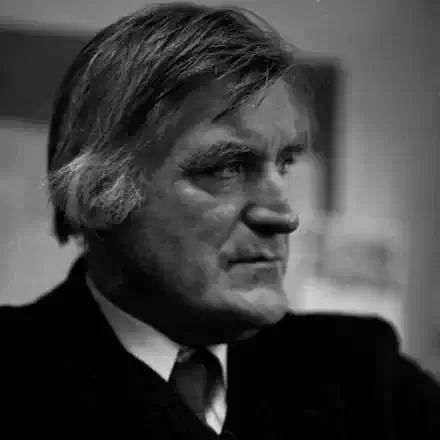
Ted Hughes
Bride and Groom Lie Hidden for Three Days
She gives him his eyes, she found them
Among some rubble, among some beetles
He gives her her skin
He just seemed to pull it down out of the air and lay it over her
She weeps with fearfulness and astonishment
She has found his hands for him, and fitted them freshly at the wrists
They are amazed at themselves, they go feeling all over her
He has assembled her spine, he cleaned each piece carefully
And sets them in perfect order
A superhuman puzzle but he is inspired
She leans back twisting this way and that, using it and laughing
Incredulous
Now she has brought his feet, she is connecting them
So that his whole body lights up
And he has fashioned her new hips
With all fittings complete and with newly wound coils, all shiningly oiled
He is polishing every part, he himself can hardly believe it
They keep taking each other to the sun, they find they can easily
To test each new thing at each new step
And now she smoothes over him the plates of his skull
So that the joints are invisible
And now he connects her throat, her breasts and the pit of her stomach
With a single wire
She gives him his teeth, tying the the roots to the centrepin of his body
He sets the little circlets on her fingertips
She stiches his body here and there with steely purple silk
He oils the delicate cogs of her mouth
She inlays with deep cut scrolls the nape of his neck
He sinks into place the inside of her thighs
So, gasping with joy, with cries of wonderment
Like two gods of mud
Sprawling in the dirt, but with infinite care
They bring each other to perfection.
Read more →
346

Henry Wadsworth Longfellow
A Day Of Sunshine. (Birds Of Passage. Flight The Second)
O gift of God! O perfect day:
Whereon shall no man work, but play;
Whereon it is enough for me,
Not to be doing, but to be!
Through every fibre of my brain,
Through every nerve, through every vein,
I feel the electric thrill, the touch
Of life, that seems almost too much.
I hear the wind among the trees
Playing celestial symphonies;
I see the branches downward bent,
Like keys of some great instrument.
And over me unrolls on high
The splendid scenery of the sky,
Where though a sapphire sea the sun
Sails like a golden galleon,
Towards yonder cloud-land in the West,
Towards yonder Islands of the Blest,
Whose steep sierra far uplifts
Its craggy summits white with drifts.
Blow, winds! and waft through all the rooms
The snow-flakes of the cherry-blooms!
Blow, winds! and bend within my reach
The fiery blossoms of the peach!
O Life and Love! O happy throng
Of thoughts, whose only speech is song!
O heart of man! canst thou not be
Blithe as the air is, and as free?
Read more →
344
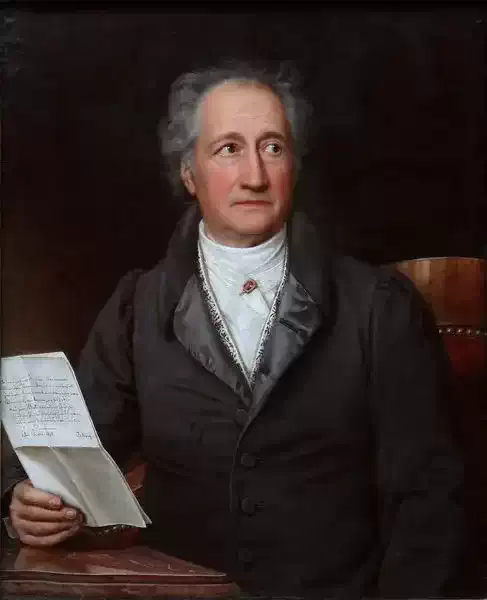
Johann Wolfgang von Goethe
To The Chosen One
HAND in hand! and lip to lip!
Oh, be faithful, maiden dear!
Fare thee well! thy lover's ship
Past full many a rock must steers
But should he the haven see,
When the storm has ceased to break,
And be happy, reft of thee,--
May the Gods fierce vengeance take!
Boldly dared is well nigh won!
Half my task is solved aright;
Ev'ry star's to me a sun,
Only cowards deem it night.
Stood I idly by thy side,
Sorrow still would sadden me;
But when seas our paths divide,
Gladly toil I,--toil for thee!
Now the valley I perceive,
Where together we will go,
And the streamlet watch each eve,
Gliding peacefully below
Oh, the poplars on yon spot!
Oh, the beech trees in yon grove!
And behind we'll build a cot,
Where to taste the joys of love!
Read more →
344

William Shakespeare
The Blossom
ON a day--alack the day!--
Love, whose month is ever May,
Spied a blossom passing fair
Playing in the wanton air:
Through the velvet leaves the wind
All unseen 'gan passage find;
That the lover, sick to death,
Wish'd himself the heaven's breath.
Air, quoth he, thy cheeks may blow;
Air, would I might triumph so!
But, alack, my hand is sworn
Ne'er to pluck thee from thy thorn:
Vow, alack, for youth unmeet;
Youth so apt to pluck a sweet!
Do not call it sin in me
That I am forsworn for thee;
Thou for whom e'en Jove would swear
Juno but an Ethiop were;
And deny himself for Jove,
Turning mortal for thy love.
Read more →
346

John Greenleaf Whittier
Thy Will Be Done
WE see not, know not; all our way
Is night, — with Thee alone is day:
From out the torrent's troubled drift,
Above the storm our prayers we lift,
Thy will be done!
The flesh may fail, the heart may faint,
But who are we to make complaint,
Or dare to plead, in times like these,
The weakness of our love of ease?
Thy will be done!
We take with solemn thankfulness
Our burden up, nor ask it less,
And count it joy that even we
May suffer, serve, or wait for Thee,
Whose will be done!
Though dim as yet in tint and line,
We trace Thy picture's wise design,
And thank Thee that our age supplies
Its dark relief of sacrifice.
Thy will be done!
And if, in our unworthiness,
Thy sacrificial wine we press;
If from Thy ordeal's heated bars
Our feet are seamed with crimson scars,
Thy will be done!
If, for the age to come, this hour
Of trial hath vicarious power,
And, blest by Thee, our present pain,
Be Liberty's eternal gain,
Thy will be done!
Strike, Thou the Master, we Thy keys,
The anthem of the destinies!
The minor of Thy loftier strain,
Our hearts shall breathe the old refrain,
Thy will be done!
Read more →
345

Robert Browning
The Guardian-Angel
A PICTURE AT FANO.
I.
Dear and great Angel, wouldst thou only leave
That child, when thou hast done with him, for me!
Let me sit all the day here, that when eve
Shall find performed thy special ministry,
And time come for departure, thou, suspending
Thy flight, mayst see another child for tending,
Another still, to quiet and retrieve.
II.
Then I shall feel thee step one step, no more,
From where thou standest now, to where I gaze,
---And suddenly my head is covered o'er
With those wings, white above the child who prays
Now on that tomb---and I shall feel thee guarding
Me, out of all the world; for me, discarding
Yon heaven thy home, that waits and opes its door.
III.
I would not look up thither past thy head
Because the door opes, like that child, I know,
For I should have thy gracious face instead,
Thou bird of God! And wilt thou bend me low
Like him, and lay, like his, my hands together,
And lift them up to pray, and gently tether
Me, as thy lamb there, with thy garment's spread?
IV.
If this was ever granted, I would rest
My bead beneath thine, while thy healing hands
Close-covered both my eyes beside thy breast,
Pressing the brain, which too much thought expands,
Back to its proper size again, and smoothing
Distortion down till every nerve had soothing,
And all lay quiet, happy and suppressed.
V.
How soon all worldly wrong would be repaired!
I think how I should view the earth and skies
And sea, when once again my brow was bared
After thy healing, with such different eyes.
O world, as God has made it! All is beauty:
And knowing this, is love, and love is duty.
What further may be sought for or declared?
VI.
Guercino drew this angel I saw teach
(Alfred, dear friend!)---that little child to pray,
Holding the little hands up, each to each
Pressed gently,---with his own head turned away
Over the earth where so much lay before him
Of work to do, though heaven was opening o'er him,
And he was left at Fano by the beach.
VII.
We were at Fano, and three times we went
To sit and see him in his chapel there,
And drink his beauty to our soul's content
---My angel with me too: and since I care
For dear Guercino's fame (to which in power
And glory comes this picture for a dower,
Fraught with a pathos so magnificent)---
VIII.
And since he did not work thus earnestly
At all times, and has else endured some wrong---
I took one thought his picture struck from me,
And spread it out, translating it to song.
My love is here. Where are you, dear old friend?
How rolls the Wairoa at your world's far end?
This is Ancona, yonder is the sea.
Read more →
343
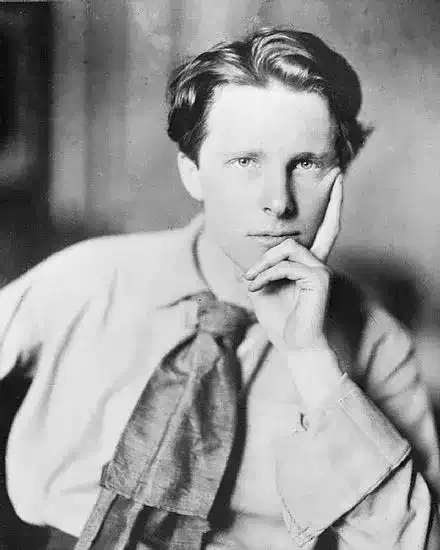
Rupert Brooke
Oh! Death Will Find Me, Long Before I Tire
Oh! Death will find me, long before I tire
Of watching you; and swing me suddenly
Into the shade and loneliness and mire
Of the last land! There, waiting patiently,
One day, I think, I'll feel a cool wind blowing,
See a slow light across the Stygian tide,
And hear the Dead about me stir, unknowing,
And tremble. And I shall know that you have died,
And watch you, a broad-browed and smiling dream,
Pass, light as ever, through the lightless host,
Quietly ponder, start, and sway, and gleam --
Most individual and bewildering ghost! --
And turn, and toss your brown delightful head
Amusedly, among the ancient Dead.
Read more →
343

Emily Dickinson
Two butterflies went out at noon
Two butterflies went out at noon
And waltzed above a stream,
Then stepped straight through the firmament
And rested on a beam;
And then together bore away
Upon a shining sea,--
Though never yet, in any port
Their coming mentioned be.
If spoken by the distant bird,
If met in ether sea
By frigate or by merchantman,
Report was not to me.
Read more →
345
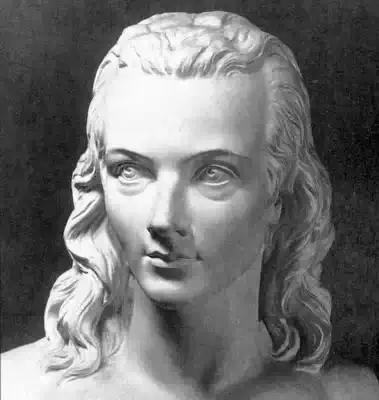
Novalis
Hymns to the Night
Must the morning always return? Will the despotism of the earthly never cease? Unholy
activity consumes the angel-visit of the Night. Will the time never come when Love's
hidden sacrifice shall burn eternally? To the Light a season was set; but everlasting and
boundless is the dominion of the Night. -- Endless is the duration of sleep. Holy Sleep
-- gladden not too seldom in this earthly day-labor, the devoted servant of the Night.
Fools alone mistake thee, knowing nought of sleep but the shadow which, in the
twilight of the real Night, thou pitifully castest over us. They feel thee not in the golden
flood of the grapes -- in the magic oil of the almond tree -- and the brown juice of the
poppy. They know not that it is thou who hauntest the bosom of the tender maiden,
and makest a heaven of her lap -- never suspect it is thou, opening the doors to
Heaven, that steppest to meet them out of ancient stories, bearing the key to the
dwellings of the blessed, silent messenger of secrets infinite.
Read more →
345
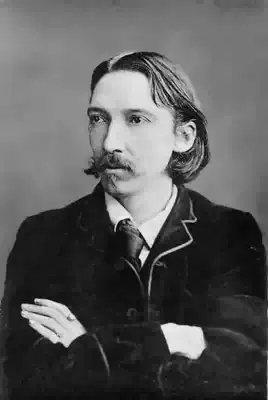
Robert Louis Stevenson
I Am Like One That For Long Days Had Sate
I AM like one that for long days had sate,
With seaward eyes set keen against the gale,
On some lone foreland, watching sail by sail,
The portbound ships for one ship that was late;
And sail by sail, his heart burned up with joy,
And cruelly was quenched, until at last
One ship, the looked-for pennant at its mast,
Bore gaily, and dropt safely past the buoy;
And lo! the loved one was not there - was dead.
Then would he watch no more; no more the sea
With myriad vessels, sail by sail, perplex
His eyes and mock his longing. Weary head,
Take now thy rest; eyes, close; for no more me
Shall hopes untried elate, or ruined vex.
For thus on love I waited; thus for love
Strained all my senses eagerly and long;
Thus for her coming ever trimmed my song;
Till in the far skies coloured as a dove,
A bird gold-coloured flickered far and fled
Over the pathless waterwaste for me;
And with spread hands I watched the bright bird flee
And waited, till before me she dropped dead.
O golden bird in these dove-coloured skies
How long I sought, how long with wearied eyes
I sought, O bird, the promise of thy flight!
And now the morn has dawned, the morn has died,
The day has come and gone; and once more night
About my lone life settles, wild and wide.
Read more →
343
John Greenleaf Whittier
The Reunion
The gulf of seven and fifty years
We stretch our welcoming hands across;
The distance but a pebble's toss
Between us and our youth appears.
For in life's school we linger on
The remnant of a once full list;
Conning our lessons, undismissed,
With faces to the setting sun.
And some have gone the unknown way,
And some await the call to rest;
Who knoweth whether it is best
For those who went or those who stay?
And yet despite of loss and ill,
If faith and love and hope remain,
Our length of days is not in vain,
And life is well worth living still.
Still to a gracious Providence
The thanks of grateful hearts are due,
For blessings when our lives were new,
For all the good vouchsafed us since.
The pain that spared us sorer hurt,
The wish denied, the purpose crossed,
And pleasure's fond occasions lost,
Were mercies to our small desert.
'T is something that we wander back,
Gray pilgrims, to our ancient ways,
And tender memories of old days
Walk with us by the Merrimac;
That even in life's afternoon
A sense of youth comes back again,
As through this cool September rain
The still green woodlands dream of June.
The eyes grown dim to present things
Have keener sight for bygone years,
And sweet and clear, in deafening ears,
The bird that sang at morning sings.
Dear comrades, scattered wide and far,
Send from their homes their kindly word,
And dearer ones, unseen, unheard,
Smile on us from some heavenly star.
For life and death with God are one,
Unchanged by seeming change His care
And love are round us here and there;
He breaks no thread His hand has spun.
Soul touches soul, the muster roll
Of life eternal has no gaps;
And after half a century's lapse
Our school-day ranks are closed and whole.
Hail and farewell! We go our way;
Where shadows end, we trust in light;
The star that ushers in the night
Is herald also of the day!
Read more →
343

Muhammad Iqbal
The One I Was Searching For On the Earth and in Heaven
The one I was searching for on the earth and in heaven
Appeared residing in the recesses of my own heart
When the reality of the self became evident to my eyes
The house appeared among residents of my own heart
If it were somewhat familiar with taste of rubbing foreheads
The stone of Ka’ba’s threshold would have joined the foreheads
O Majnun! Have you ever glanced at yourself
That like Layla you are also sitting in the litter
The months of the union continue flying like moments
But the moments of separation linger for months!
O seaman, how will you protect me from being drowned
As those destined to drowning get drowned in the boats also
The one who concealed His Beauty from Kalim Allah
The same Beloved is manifest among beloveds
The breath of Lovers can light up the extinguished candle
O God! What is kept concealed in the breast of the Lovers?
Serve the fakirs if you have the longing for Love
This pearl is not available in the treasures of kings
Do not ask of these Devotees, if you have faith, you should look at them
They have the illuminated palm up their sleeves
The insightful eye for whose spectacle is tantalized
That elegance of congregation is in these very recluses
Burn the produce of your heart with some such spark
That the Last Day’s sun may also be among your gleaners
For Love search for some heart which would become mortified
This is the wine which is not kept in delicate wine glasses
The Beauty itself becomes the Lover of whose Beauty
O Heart! Does someone among the beautiful has that beauty?
Someone became highly excited at your grace of Ma’arafna
Your rank remained among the most elegant of all the Lovers
Manifest Thyself and show them Thy Beauty some time
Talks have continued among the sagacious since long time
Silent, O Heart! Crying in the full assembly is not good
Decorum is the most important etiquette among the ways of Love
It is not possible for me to deem my critics bad
Because Iqbal, I am myself among my critics
Read more →
340
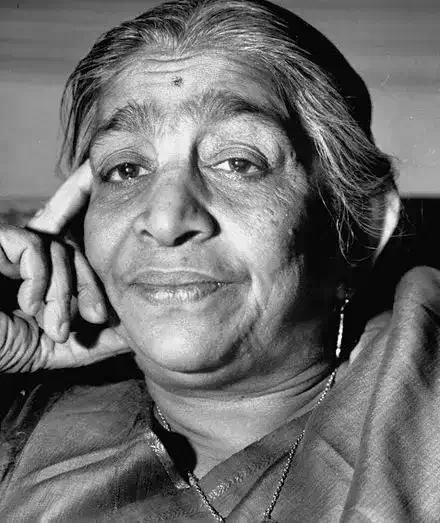
Sarojini Naidu
In The Forest
HERE, O my heart, let us burn the dear dreams that are dead,
Here in this wood let us fashion a funeral pyre
Of fallen white petals and leaves that are mellow and red,
Here let us burn them in noon's flaming torches of fire.
We are weary, my heart, we are weary, so long we have borne
The heavy loved burden of dreams that are dead, let us rest,
Let us scatter their ashes away, for a while let us mourn;
We will rest, O my heart, till the shadows are gray in the west.
But soon we must rise, O my heart, we must wander again
Into the war of the world and the strife of the throng;
Let us rise, O my heart, let us gather the dreams that remain,
We will conquer the sorrow of life with the sorrow of song.
Read more →
340
John Greenleaf Whittier
Burning Drift-Wood
Before my drift-wood fire I sit,
And see, with every waif I burn,
Old dreams and fancies coloring it,
And folly's unlaid ghosts return.
O ships of mine, whose swift keels cleft
The enchanted sea on which they sailed,
Are these poor fragments only left
Of vain desires and hopes that failed?
Did I not watch from them the light
Of sunset on my towers in Spain,
And see, far off, uploom in sight
The Fortunate Isles I might not gain?
Did sudden lift of fog reveal
Arcadia's vales of song and spring,
And did I pass, with grazing keel,
The rocks whereon the sirens sing?
Have I not drifted hard upon
The unmapped regions lost to man,
The cloud-pitched tents of Prester John,
The palace domes of Kubla Khan?
Did land winds blow from jasmine flowers,
Where Youth the ageless Fountain fills?
Did Love make sign from rose blown bowers,
And gold from Eldorado's hills?
Alas! the gallant ships, that sailed
On blind Adventure's errand sent,
Howe'er they laid their courses, failed
To reach the haven of Content.
And of my ventures, those alone
Which Love had freighted, safely sped,
Seeking a good beyond my own,
By clear-eyed Duty piloted.
O mariners, hoping still to meet
The luck Arabian voyagers met,
And find in Bagdad's moonlit street,
Haroun al Raschid walking yet,
Take with you, on your Sea of Dreams,
The fair, fond fancies dear to youth.
I turn from all that only seems,
And seek the sober grounds of truth.
What matter that it is not May,
That birds have flown, and trees are bare,
That darker grows the shortening day,
And colder blows the wintry air!
The wrecks of passion and desire,
The castles I no more rebuild,
May fitly feed my drift-wood fire,
And warm the hands that age has chilled.
Whatever perished with my ships,
I only know the best remains;
A song of praise is on my lips
For losses which are now my gains.
Heap high my hearth! No worth is lost;
No wisdom with the folly dies.
Burn on, poor shreds, your holocaust
Shall be my evening sacrifice!
Far more than all I dared to dream,
Unsought before my door I see;
On wings of fire and steeds of steam
The world's great wonders come to me,
And holier signs, unmarked before,
Of Love to seek and Power to save, -The
righting of the wronged and poor,
The man evolving from the slave;
And life, no longer chance or fate,
Safe in the gracious Fatherhood.
I fold o'er-wearied hands and wait,
In full assurance of the good.
And well the waiting time must be,
Though brief or long its granted days,
If Faith and Hope and Charity
Sit by my evening hearth-fire's blaze.
And with them, friends whom Heaven has spared,
Whose love my heart has comforted,
And, sharing all my joys, has shared
My tender memories of the dead, -
Dear souls who left us lonely here,
Bound on their last, long voyage, to whom
We, day by day, are drawing near,
Where every bark has sailing room.
I know the solemn monotone
Of waters calling unto me;
I know from whence the airs have blown
That whisper of the Eternal Sea.
As low my fires of drift-wood burn,
I hear that sea's deep sounds increase,
And, fair in sunset light, discern
Its mirage-lifted Isles of Peace.
Read more →
342
Henry Van Dyke
Robert Browning
How blind the toil that burrows like the mole,
In winding graveyard pathways underground,
For Browning's lineage! What if men have found
Poor footmen or rich merchants on the roll
Of his forbears? Did they beget his soul?
Nay, for he came of ancestry renowned
Through all the world, -- the poets laurel-crowned
With wreaths from which the autumn takes no toll.
The blazons on his coat-of-arms are these:
The flaming sign of Shelley's heart on fire,
The golden globe of Shakespeare's human stage,
The staff and scrip of Chaucer's pilgrimage,
The rose of Dante's deep, divine desire,
The tragic mask of wise Euripides.
Read more →
341
Emily Dickinson
Death is a Dialogue between
Death is a Dialogue between
The Spirit and the Dust.
"Dissolve" says Death-The Spirit "Sir
I have another Trust"-
Death doubts it-Argues from the Ground-
The Spirit turns away
Just laying off for evidence
An Overcoat of Clay.
Read more →
342

John Donne
On The Progress Of The Soul...
Forget this rotten world, and unto thee
Let thine own times as an old story be.
Be not concern'd; study not why, nor when;
Do not so much as not believe a man.
For though to err, be worst, to try truths forth
Is far more business than this world is worth.
I'he world is but a carcass; thou art fed
By it, but as a worm, that carcass bred;
And why shouldst thou, poor worm, consider more,
When this world will grow better than before,
Than those thy fellow-worms do think upon
That carcass's last resurrection?
Forget this world, and scarce think of it so,
As of old clothes, cast off a year ago.
To be thus stupid is alacrity;
Men thus lethargic have best memory.
Look upward; that's towards her, whose happy state
We now lament not, but congratulate.
She, to whom all this world was but a stage,
Where all sat heark'ning how her youthful age
Should be employ'd, because in all she did
Some figure of the golden times was hid.
Who could not lack, what'er this world could give,
Because she was the form, that made it live;
Nor could complain that this world was unfit
To be stay'd in, then when she was in it;
She, that first tried indifferent desires
By virtue, and virtue by religious fires;
She, to whose person paradise adher'd,
As courts to princes; she, whose eyes enspher'd
Star-light enough t' have made the South control,
(Had she been there) the star-full Northern Pole;
She, she is gone; she is gone; when thou knowest this,
What fragmentary rubbish this world is
Thou knowest, and that it is not worth a thought;
He honours it too much that thinks it nought.
Think then, my soul, that death is but a groom,
Which brings a taper to the outward room,
Whence thou spiest first a little glimmering light,
And after brings it nearer to thy sight;
For such approaches doth heaven make in death.
Think thyself labouring now with broken breath,
And think those broken and soft notes to be
Division, and thy happiest harmony.
Think thee laid on thy death-bed, loose and slack,
And think that but unbinding of a pack,
To take one precious thing, thy soul, from thence.
Think thyself parch'd with fever's violence;
Anger thine ague more, by calling it
Thy physic; chide the slackness of the fit.
Think that thou hear'st thy knell, and think no more,
But that, as bells call'd thee to church before,
So this to the Triumphant Church calls thee.
Think Satan's sergeants round about thee be,
And think that but for legacies they thrust;
Give one thy pride, to'another give thy lust;
Give them those sins which they gave thee before,
And trust th' immaculate blood to wash thy score.
Think thy friends weeping round, and think that they
Weep but because they go not yet thy way.
Think that they close thine eyes, and think in this,
That they confess much in the world amiss,
Who dare not trust a dead man's eye with that
Which they from God and angels cover not.
Think that they shroud thee up, and think from thence
They reinvest thee in white innocence.
Think that thy body rots, and (if so low,
Thy soul exalted so, thy thoughts can go)
Think thee a prince, who of themselves create
Worms, which insensibly devour their state.
Think that they bury thee, and think that rite
Lays thee to sleep but a Saint Lucy's night.
....
Read more →
342
John Greenleaf Whittier
My Dream
In my dream, methought I trod,
Yesternight, a mountain road;
Narrow as Al Sirat's span,
High as eagle's flight, it ran.
Overhead, a roof of cloud
With its weight of thunder bowed;
Underneath, to left and right,
Blankness and abysmal night.
Here and there a wild-flower blushed,
Now and then a bird-song gushed;
Now and then, through rifts of shade,
Stars shone out, and sunbeams played.
But the goodly company,
Walking in that path with me,
One by one the brink o'erslid,
One by one the darkness hid.
Some with wailing and lament,
Some with cheerful courage went;
But, of all who smiled or mourned,
Never one to us returned.
Anxiously, with eye and ear,
Questioning that shadow drear,
Never hand in token stirred,
Never answering voice I heard!
Steeper, darker!--lo! I felt
From my feet the pathway melt.
Swallowed by the black despair,
And the hungry jaws of air,
Past the stony-throated caves,
Strangled by the wash of waves,
Past the splintered crags, I sank
On a green and flowery bank,-
Soft as fall of thistle-down,
Lightly as a cloud is blown,
Soothingly as childhood pressed
To the bosom of its rest.
Of the sharp-horned rocks instead,
Green the grassy meadows spread,
Bright with waters singing by
Trees that propped a golden sky.
Painless, trustful, sorrow-free,
Old lost faces welcomed me,
With whose sweetness of content
Still expectant hope was blent.
Waking while the dawning gray
Slowly brightened into day,
Pondering that vision fled,
Thus unto myself I said:-
'Steep and hung with clouds of strife
Is our narrow path of life;
And our death the dreaded fall
Through the dark, awaiting all.
'So, with painful steps we climb
Up the dizzy ways of time,
Ever in the shadow shed
By the forecast of our dread.
'Dread of mystery solved alone,
Of the untried and unknown;
Yet the end thereof may seem
Like the falling of my dream.
'And this heart-consuming care,
All our fears of here or there,
Change and absence, loss and death,
Prove but simple lack of faith.'
Thou, O Most Compassionate!
Who didst stoop to our estate,
Drinking of the cup we drain,
Treading in our path of pain,-
Through the doubt and mystery,
Grant to us thy steps to see,
And the grace to draw from thence
Larger hope and confidence.
Show thy vacant tomb, and let,
As of old, the angels sit,
Whispering, by its open door
'Fear not! He hath gone before!'
Read more →
340
John Donne
That Time and Absence proves Rather helps than hurts to loves
ABSENCE, hear thou my protestation
Against thy strength,
Distance and length:
Do what thou canst for alteration,
For hearts of truest mettle
Absence doth join and Time doth settle.
Who loves a mistress of such quality,
His mind hath found
Affection's ground
Beyond time, place, and all mortality.
To hearts that cannot vary
Absence is present, Time doth tarry.
My senses want their outward motion
Which now within
Reason doth win,
Redoubled by her secret notion:
Like rich men that take pleasure
In hiding more than handling treasure.
By Absence this good means I gain,
That I can catch her
Where none can watch her,
In some close corner of my brain:
There I embrace and kiss her,
And so enjoy her and none miss her.
Read more →
341
John Greenleaf Whittier
Banished from Massachusetts
Over the threshold of his pleasant home
Set in green clearings passed the exiled Friend,
In simple trust, misdoubting not the end.
'Dear heart of mine!' he said, 'the time has come
To trust the Lord for shelter.' One long gaze
The goodwife turned on each familiar thing,
The
lowing kine, the orchard blossoming,
The open door that showed the hearth-fire's blaze,
And
calmly answered, 'Yes, He will provide.'
Silent and slow they crossed the homestead's bound,
Lingering the longest by their child's grave-mound.
'Move on, or stay and hang!' the sheriff cried.
They left behind them more than home or land,
And set sad faces to an alien strand.
Safer with winds and waves than human wrath,
With ravening wolves than those whose zeal for God
Was cruelty to man, the exiles trod
Drear leagues of forest without guide or path,
Or launching frail boats on the uncharted sea,
Round storm-vexed capes, whose teeth of granite ground
The waves to foam, their perilous way they wound,
Enduring all things so their souls were free.
Oh, true confessors, shaming them who did
Anew the wrong their Pilgrim Fathers bore
For you the Mayflower spread her sail once more,
Freighted with souls, to all that duty bid
Faithful as they who sought an unknown land,
O'er wintry seas, from Holland's Hook of Sand!
So from his lost home to the darkening main,
Bodeful of storm, stout Macy held his way,
And, when the green shore blended with the gray,
His poor wife moaned: 'Let us turn back again.'
'Nay, woman, weak of faith, kneel down,' said he,
And say thy prayers: the Lord himself will steer;
And led by Him, nor man nor devils I fear!
So the gray Southwicks, from a rainy sea,
Saw, far and faint, the loom of land, and gave
With feeble voices thanks for friendly ground
Whereon to rest their weary feet, and found
A peaceful death-bed and a quiet grave
Where, ocean-walled, and wiser than his age,
The lord of Shelter scorned the bigot's rage.
Aquidneck's isle, Nantucket's lonely shores,
And Indian-haunted Narragansett saw
The way-worn travellers round their camp-fire draw,
Or heard the plashing of their weary oars.
And every place whereon they rested grew
Happier for pure and gracious womanhood,
And men whose names for stainless honor stood,
Founders of States and rulers wise and true.
The Muse of history yet shall make amends
To those who freedom, peace, and justice taught,
Beyond their dark age led the van of thought,
And left unforfeited the name of Friends.
O mother State, how foiled was thy design
The gain was theirs, the loss alone was thine.
Read more →
342
William Shakespeare
Sonnet 147: My love is as a fever, longing still
My love is as a fever, longing still
For that which longer nurseth the disease,
Feeding on that which doth preserve the ill,
Th' uncertain sickly appetite to please.
My reason, the physician to my love,
Angry that his prescriptions are not kept,
Hath left me, and I desperate now approve
Desire is death, which physic did except.
Past cure I am, now reason is past care,
And frantic-mad with evermore unrest;
My thoughts and my discourse as mad men's are,
At random from the truth vainly expressed.
For I have sworn thee fair, and thought thee bright,
Who art as black as hell, as dark as night.
Read more →
343

Kabir
The Word
Find the word, understand the word,
Depend on the word;
The word is heaven and space, the word the earth,
The word the universe.
The word is in our ears, the word is on our tongues,
The word the idol.
The word is the holy book, the word is harmony,
The word is music.
The word is magic, the word the Guru.
The word is the body, the word is the spirit, the word is being,
The word Not-being.
The word is man, the word is woman,
The Worshipped Great.
The word is the seen and unseen, the word is the existent
And the non-existent.
Know the word, says Kabir,
The word is All-powerful.
Read more →
341
Robert Browning
From 'Pauline'
O God, where does this tend—these struggling aims?
What would I have? What is this ‘sleep’, which seems
To bound all? can there be a ‘waking’ point
Of crowning life? The soul would never rule—
It would be first in all things—it would have
Its utmost pleasure filled,—but that complete
Commanding for commanding sickens it.
The last point I can trace is, rest beneath
Some better essence than itself—in weakness;
This is ‘myself’—not what I think should be
And what is that I hunger for but God?
My God, my God! let me for once look on thee
As tho’ nought else existed: we alone.
And as creation crumbles, my soul’s spark
Expands till I can say, ‘Even from myself
I need thee, and I feel thee, and I love thee;
I do not plead my rapture in thy works
For love of thee—or that I feel as one
Who cannot die—but there is that in me
Which turns to thee, which loves, or which should love.’
Why have I girt myself with this hell-dress?
Why have I laboured to put out my life?
Is it not in my nature to adore,
And e’en for all my reason do I not
Feel him, and thank him, and pray to him—now?
Can I forgo the trust that he loves me?
Do I not feel a love which only ONE…
O thou pale form, so dimly seen, deep-eyed,
I have denied thee calmly—do I not
Pant when I read of thy consummate deeds,
And burn to see thy calm pure truths out-flash
The brightest gleams of earth’s philosophy?
Do I not shake to hear aught question thee?
If I am erring save me, madden me,
Take from me powers and pleasures—let me die.
Ages, so I see thee: I am knit round
As with a charm, by sin and lust and pride,
Yet tho’ my wandering dreams have seen all shapes
Of strange delight, oft have I stood by thee—
Have I been keeping lonely watch with thee
In the damp night by weeping Olivet,
Or leaning on thy bosom, proudly less—
Or dying with thee on the lonely cross—
Or witnessing thy bursting from the tomb!
Read more →
341
