
Soul

William Butler Yeats
A Woman homer Sung
IF any man drew near
When I was young,
I thought, 'He holds her dear,'
And shook with hate and fear.
But O! 'twas bitter wrong
If he could pass her by
With an indifferent eye.
Whereon I wrote and wrought,
And now, being grey,
I dream that I have brought
To such a pitch my thought
That coming time can say,
'He shadowed in a glass
What thing her body was.'
For she had fiery blood
When I was young,
And trod so sweetly proud
As 'twere upon a cloud,
A woman Homer sung,
That life and letters seem
But an heroic dream.
Read more →
342
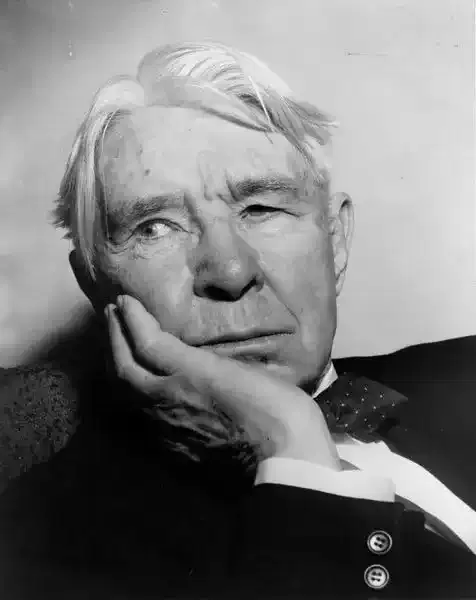
Carl Sandburg
Under A Hat Rim
While the hum and the hurry
Of passing footfalls
Beat in my ear like the restless surf
Of a wind-blown sea,
A soul came to me
Out of the look on a face.
Eyes like a lake
Where a storm-wind roams
Caught me from under
The rim of a hat.
I thought of a midsea wreck
and bruised fingers clinging
to a broken state-room door.
Read more →
341

Robert Browning
Rabbi Ben Ezra
Grow old along with me!
The best is yet to be,
The last of life, for which the first was made:
Our times are in His hand
Who saith 'A whole I planned,
Youth shows but half; trust God: see all, nor be afraid!'
Not that, amassing flowers,
Youth sighed 'Which rose make ours,
Which lily leave and then as best recall?'
Not that, admiring stars,
It yearned 'Nor Jove, nor Mars;
Mine be some figured flame which blends, transcends them all!'
Not for such hopes and fears
Annulling youth's brief years,
Do I remonstrate: folly wide the mark!
Rather I prize the doubt
Low kinds exist without,
Finished and finite clods, untroubled by a spark.
Poor vaunt of life indeed,
Were man but formed to feed
On joy, to solely seek and find and feast:
Such feasting ended, then
As sure an end to men;
Irks care the crop-full bird? Frets doubt the maw-crammed beast?
Rejoice we are allied
To That which doth provide
And not partake, effect and not receive!
A spark disturbs our clod;
Nearer we hold of God
Who gives, than of His tribes that take, I must believe.
Then, welcome each rebuff
That turns earth's smoothness rough,
Each sting that bids nor sit nor stand but go!
Be our joys three-parts pain!
Strive, and hold cheap the strain;
Learn, nor account the pang; dare, never grudge the throe!
For thence,--a paradox
Which comforts while it mocks,--
Shall life succeed in that it seems to fail:
What I aspired to be,
And was not, comforts me:
A brute I might have been, but would not sink i' the scale.
What is he but a brute
Whose flesh has soul to suit,
Whose spirit works lest arms and legs want play?
To man, propose this test--
Thy body at its best,
How far can that project thy soul on its lone way?
Yet gifts should prove their use:
I own the Past profuse
Of power each side, perfection every turn:
Eyes, ears took in their dole,
Brain treasured up the whole;
Should not the heart beat once 'How good to live and learn?'
Not once beat 'Praise be Thine!
I see the whole design,
I, who saw power, see now love perfect too:
Perfect I call Thy plan:
Thanks that I was a man!
Maker, remake, complete,--I trust what Thou shalt do!'
For pleasant is this flesh;
Our soul, in its rose-mesh
Pulled ever to the earth, still yearns for rest;
Would we some prize might hold
To match those manifold
Possessions of the brute,--gain most, as we did best!
Let us not always say,
'Spite of this flesh to-day
I strove, made head, gained ground upon the whole!'
As the bird wings and sings,
Let us cry 'All good things
Are ours, nor soul helps flesh more, now, than flesh helps soul!'
Therefore I summon age
To grant youth's heritage,
Life's struggle having so far reached its term:
Thence shall I pass, approved
A man, for aye removed
From the developed brute; a god though in the germ.
And I shall thereupon
Take rest, ere I be gone
Once more on my adventure brave and new:
Fearless and unperplexed,
When I wage battle next,
What weapons to select, what armour to indue.
Youth ended, I shall try
My gain or loss thereby;
Leave the fire ashes, what survives is gold:
And I shall weigh the same,
Give life its praise or blame:
Young, all lay in dispute; I shall know, being old.
For note, when evening shuts,
A certain moment cuts
The deed off, calls the glory from the grey:
A whisper from the west
Shoots--'Add this to the rest,
Take it and try its worth: here dies another day.'
So, still within this life,
Though lifted o'er its strife,
Let me discern, compare, pronounce at last,
This rage was right i' the main,
That acquiescence vain:
The Future I may face now I have proved the Past.'
For more is not reserved
To man, with soul just nerved
To act to-morrow what he learns to-day:
Here, work enough to watch
The Master work, and catch
Hints of the proper craft, tricks of the tool's true play.
As it was better, youth
Should strive, through acts uncouth,
Toward making, than repose on aught found made:
So, better, age, exempt
From strife, should know, than tempt
Further. Thou waitedst age: wait death nor be afraid!
Enough now, if the Right
And Good and Infinite
Be named here, as thou callest thy hand thine own
With knowledge absolute,
Subject to no dispute
From fools that crowded youth, nor let thee feel alone.
Be there, for once and all,
Severed great minds from small,
Announced to each his station in the Past!
Was I, the world arraigned,
Were they, my soul disdained,
Right? Let age speak the truth and give us peace at last!
Now, who shall arbitrate?
Ten men love what I hate,
Shun what I follow, slight what I receive;
Ten, who in ears and eyes
Match me: we all surmise,
They this thing, and I that: whom shall my soul believe?
Not on the vulgar mass
Called 'work,' must sentence pass,
Things done, that took the eye and had the price;
O'er which, from level stand,
The low world laid its hand,
Found straightway to its mind, could value in a trice:
But all, the world's coarse thumb
And finger failed to plumb,
So passed in making up the main account;
All instincts immature,
All purposes unsure,
That weighed not as his work, yet swelled the man's amount:
Thoughts hardly to be packed
Into a narrow act,
Fancies that broke through language and escaped;
All I could never be,
All, men ignored in me,
This, I was worth to God, whose wheel the pitcher shaped.
Ay, note that Potter's wheel,
That metaphor! and feel
Why time spins fast, why passive lies our clay,--
Thou, to whom fools propound,
When the wine makes its round,
'Since life fleets, all is change; the Past gone, seize to-day!'
Fool! All that is, at all,
Lasts ever, past recall;
Earth changes, but thy soul and God stand sure:
What entered into thee,
That was, is, and shall be:
Time's wheel runs back or stops: Potter and clay endure.
He fixed thee mid this dance
Of plastic circumstance,
This Present, thou, forsooth, wouldst fain arrest:
Machinery just meant
To give thy soul its bent,
Try thee and turn thee forth, sufficiently impressed.
What though the earlier grooves,
Which ran the laughing loves
Around thy base, no longer pause and press?
What though, about thy rim,
Skull-things in order grim
Grow out, in graver mood, obey the sterner stress?
Look not thou down but up!
To uses of a cup,
The festal board, lamp's flash and trumpet's peal,
The new wine's foaming flow,
The Master's lips a-glow!
Thou, heaven's consummate cup, what need'st thou with earth's wheel?
But I need, now as then,
Thee, God, who mouldest men;
And since, not even while the whirl was worst,
Did I,--to the wheel of life
With shapes and colours rife,
Bound dizzily,--mistake my end, to slake Thy thirst:
So, take and use Thy work:
Amend what flaws may lurk,
What strain o' the stuff, what warpings past the aim!
My times be in Thy hand!
Perfect the cup as planned!
Let age approve of youth, and death complete the same!
Read more →
341

Ella Wheeler Wilcox
Queries
Well, how has it been with you since we met
That last strange time of a hundred times?
When we met to swear that we could forget—
I your caresses, and you my rhymes—
The rhyme of my lays that rang like a bell,
And the rhyme of my heart with yours, as well?
How has it been since we drank that last kiss,
That was bitter with lees of the wasted wine,
When the tattered remains of a threadbare bliss,
And the worn-out shreds of a joy divine,
With a year's best dreams and hopes, were cast
Into the rag-bag of the Past?
Since Time, the rag-buyer, hurried away,
With a chuckle of glee at a bargain made,
Did you discover, like me, one day,
That, hid in the folds of those garments frayed,
Were priceless jewels and diadems—
The soul's best treasures, the heart's best gems?
Have you, too, found that you could not supply
The place of those jewels so rare and chaste?
Do all that you borrow or beg or buy
Prove to be nothing but skilful paste?
Have you found pleasure, as I found art,
Not all-sufficient to fill your heart?
Do you sometimes sigh for the tattered shreds
Of the old delight that we cast away,
And find no worth in the silken threads
Of newer fabrics we wear to-day?
Have you thought the bitter of that last kiss
Better than sweets of a later bliss?
What idle queries!—or yes or no—
Whatever your answer, I understand
That there is no pathway by which we can go
Back to the dead past's wonderland;
And the gems he purchased from me, from you,
There is no rebuying from Time, the Jew
Read more →
342

John Donne
The Broken Heart
He is stark mad, who ever says,
That he hath been in love an hour,
Yet not that love so soon decays,
But that it can ten in less space devour;
Who will believe me, if I swear
That I have had the plague a year ?
Who would not laugh at me, if I should say,
I saw a flask of powder burn a day ?
Ah, what trifle is a heart,
If once into Love’s hands it come!
All other griefs allow a part
To other griefs, and ask themselves but some,
They come to us, but us Love draws,
He swallows us, and never chaws:
By him, as by chain-shot, whole ranks do die,
He is the tyrant pike, our hearts the fry.
If`twere not so, what did become
Of my heart, when I first saw thee ?
I brought a heart into the room,
But from the room, I carried non with me;
If it had gone to thee, I know
Mine would have taught thy heart to show
More pity unto me: but Love, alas,
At one first blow did shiver it as glass.
Yet nothing can to nothing fall,
Nor any place be empty quite,
Therefore I think my breast hath all
Those pieces still, though they be not unite;
And now as broken glasses show
A hundred lesser faces, so
My rags of heart can like, wish, and adore,
But after one such love, can love no more.
Read more →
340

William Shakespeare
Sonnet 151: Love is too young to know what conscience is
Love is too young to know what conscience is;
Yet who knows not conscience is born of love?
Then, gentle cheater, urge not my amiss,
Lest guilty of my faults thy sweet self prove.
For thou betraying me, I do betray
My nobler part to my gross body's treason;
My soul doth tell my body that he may
Triumph in love; flesh stays no farther reason,
But, rising at thy name, doth point out thee
As his triumphant prize. Proud of this pride,
He is contented thy poor drudge to be,
To stand in thy affairs, fall by thy side.
No want of conscience hold it that I call,
Her "love" for whose dear love I rise and fall.
Read more →
342
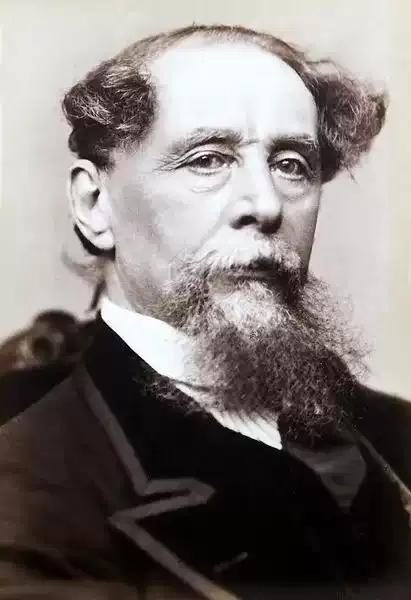
Charles Dickens
George Edmunds' Song
Autumn leaves, autumn leaves, lie strewn around he here;
Autumn leaves, autumn leaves, how sad, how cold, how drear!
How like the hopes of childhood's day,
Thick clust'ring on the bough!
How like those hopes in their decay-
How faded are they now!
Autumn leaves, autumn leaves, lie strewn around me here;
Autumn leaves, autumn leaves, how sad, how cold, how drear!
Wither'd leaves, wither'd leaves, that fly before the gale:
Withered leaves, withered leaves, ye tell a mournful tale,
Of love once true, and friends once kind,
And happy moments fled:
Dispersed by every breath of wind,
Forgotten, changed, or dead!
Autumn leaves, autumn leaves, lie strewn around me here!
Autumn leaves, autumn leaves, how sad, how cold, how drear!
Read more →
341
William Shakespeare
Sonnet 154: The little Love-god lying once asleep
The little Love-god lying once asleep
Laid by his side his heart-inflaming brand,
Whilst many nymphs that vow'd chaste life to keep
Came tripping by; but in her maiden hand
The fairest votary took up that fire
Which many legions of true hearts had warm'd;
And so the general of hot desire
Was sleeping by a virgin hand disarm'd.
This brand she quenched in a cool well by,
Which from Love's fire took heat perpetual,
Growing a bath and healthful remedy
For men diseased; but I, my mistress' thrall,
Came there for cure, and this by that I prove,
Love's fire heats water, water cools not love.
Read more →
340

Henry Wadsworth Longfellow
A Song Of Savoy
As the dim twilight shrouds
The mountain's purple crest,
And Summer's white and folded clouds
Are glowing in the west,
Loud shouts come up the rocky dell,
And voices hail the evening-bell.
Faint is the goatherd's song,
And sighing comes the breeze;
The silent river sweeps along
Amid its bending trees -
And the full moon shines faintly there,
And music fills the evening air.
Beneath the waving firs
The tinkling cymbals sound;
And as the wind the foliage stirs,
I see the dancers bound
Where the green branches, arched above,
Bend over this fair scene of love.
And he is there, that sought
My young heart long ago!
But he has left me - though I thought
He ne'er could leave me so.
Ah! lover's vows - how frail are they!
And his - were made but yesterday.
Why comes he not? I call
In tears upon him yet;
'Twere better ne'er to love at all,
Than love, and then forget!
Why comes he not? Alas! I should
Reclaim him still, if weeping could.
But see - he leaves the glade,
And beckons me away:
He comes to seek his mountain maid!
I cannot chide his stay.
Glad sounds along the valley swell,
And voices hail the evening-bell.
Read more →
342

John Greenleaf Whittier
Divine Compassion
Long since, a dream of heaven I had,
And still the vision haunts me oft;
I see the saints in white robes clad,
The martyrs with their palms aloft;
But hearing still, in middle song,
The ceaseless dissonance of wrong;
And shrinking, with hid faces, from the strain
Of sad, beseeching eyes, full of remorse and pain.
The glad song falters to a wail,
The harping sinks to low lament;
Before the still unlifted veil
I see the crowned foreheads bent,
Making more sweet the heavenly air,
With breathings of unselfish prayer;
And a Voice saith: 'O Pity which is pain,
O Love that weeps, fill up my sufferings which remain!
'Shall souls redeemed by me refuse
To share my sorrow in their turn?
Or, sin-forgiven, my gift abuse
Of peace with selfish unconcern?
Has saintly ease no pitying care?
Has faith no work, and love no prayer?
While sin remains, and souls in darkness dwell,
Can heaven itself be heaven, and look unmoved on hell?'
Then through the Gates of Pain, I dream,
A wind of heaven blows coolly in;
Fainter the awful discords seem,
The smoke of torment grows more thin,
Tears quench the burning soil, and thence
Spring sweet, pale flowers of penitence
And through the dreary realm of man's despair,
Star-crowned an angel walks, and to! God's hope is there!
Is it a dream? Is heaven so high
That pity cannot breathe its air?
Its happy eyes forever dry,
Its holy lips without a prayer!
My God! my God! if thither led
By Thy free grace unmerited,
No crown nor palm be mine, but let me keep
A heart that still can feel, and eyes that still can weep.
Read more →
342
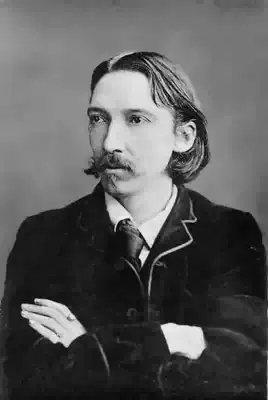
Robert Louis Stevenson
I Dreamed Of Forest Alleys fair
I.
I DREAMED of forest alleys fair
And fields of gray-flowered grass,
Where by the yellow summer moon
My Jenny seemed to pass.
I dreamed the yellow summer moon,
Behind a cedar wood,
Lay white on fields of rippling grass
Where I and Jenny stood.
I dreamed - but fallen through my dream,
In a rainy land I lie
Where wan wet morning crowns the hills
Of grim reality.
II.
I am as one that keeps awake
All night in the month of June,
That lies awake in bed to watch
The trees and great white moon.
For memories of love are more
Than the white moon there above,
And dearer than quiet moonshine
Are the thoughts of her I love.
III.
Last night I lingered long without
My last of loves to see.
Alas! the moon-white window-panes
Stared blindly back on me.
To-day I hold her very hand,
Her very waist embrace -
Like clouds across a pool, I read
Her thoughts upon her face.
And yet, as now, through her clear eyes
I seek the inner shrine -
I stoop to read her virgin heart
In doubt if it be mine -
O looking long and fondly thus,
What vision should I see?
No vision, but my own white face
That grins and mimics me.
IV.
Once more upon the same old seat
In the same sunshiny weather,
The elm-trees' shadows at their feet
And foliage move together.
The shadows shift upon the grass,
The dial point creeps on;
The clear sun shines, the loiterers pass,
As then they passed and shone.
But now deep sleep is on my heart,
Deep sleep and perfect rest.
Hope's flutterings now disturb no more
The quiet of my breast.
Read more →
342

Anonymous
Amergin
I AM the wind which breathes upon the sea,
I am the wave of the ocean,
I am the murmur of the billows,
I am the ox of the seven combats,
I am the vulture upon the rocks,
I am a beam of the sun,
I am the fairest of plants,
I am a wild boar in valour,
I am a salmon in the water,
I am a lake in the plain,
I am a word of science,
I am the point of the lance in battle,
I am the God who creates in the head the fire.
Who is it who throws light into the meeting on the mountain?
Who announces the ages of the moon?
Who teaches the place where couches the sun?
Read more →
340
William Shakespeare
Sonnet 115: Those lines that I before have writ do lie
Those lines that I before have writ do lie,
Even those that said I could not love you dearer;
Yet then my judgment knew no reason why
My most full flame should afterwards burn clearer,
But reckoning Time, whose millioned accidents
Creep in 'twixt vows, and change decrees of kings,
Tan sacred beauty, blunt the sharp'st intents,
Divert strong minds to the course of alt'ring things—
Alas, why, fearing of Time's tyranny,
Might I not then say, "Now I love you best,"
When I was certain o'er incertainty,
Crowning the present, doubting of the rest?
Love is a babe; then might I not say so,
To give full growth to that which still doth grow.
Read more →
339

Claude Mckay
Dawn in New York
The Dawn! The Dawn! The crimson-tinted, comes
Out of the low still skies, over the hills,
Manhattan's roofs and spires and cheerless domes!
The Dawn! My spirit to its spirit thrills.
Almost the mighty city is asleep,
No pushing crowd, no tramping, tramping feet.
But here and there a few cars groaning creep
Along, above, and underneath the street,
Bearing their strangely-ghostly burdens by,
The women and the men of garish nights,
Their eyes wine-weakened and their clothes awry,
Grotesques beneath the strong electric lights.
The shadows wane. The Dawn comes to New York.
And I go darkly-rebel to my work.
Read more →
339

Walter de la Mare
The Scribe
What lovely things
Thy hand hath made:
The smooth-plumed bird
In its emerald shade,
The seed of the grass,
The speck of the stone
Which the wayfaring ant
Stirs -- and hastes on!
Though I should sit
By some tarn in thy hills,
Using its ink
As the spirit wills
To write of Earth's wonders,
Its live, willed things,
Flit would the ages
On soundless wings
Ere unto Z
My pen drew nigh
Leviathan told,
And the honey-fly:
And still would remain
My wit to try --
My worn reeds broken,
The dark tarn dry,
All words forgotten --
Thou, Lord, and I.
Read more →
339
Anonymous
Blow, Northern Wind
ICHOT a burde in boure bryht,
That fully semly is on syht,
Menskful maiden of myht;
Feir ant fre to fonde;
In al this wurhliche won
A burde of blod ant of bon
Never yete y nuste non
Lussomore in londe.
Blou northerne wynd!
Send thou me my suetyng!
Blou northerne wynd! blou, blou, blou!
With lokkes lefliche ant longe,
With frount ant face feir to fonge,
With murthes monie mote heo monge,
That brid so breme in boure.
With lossom eye grete ant gode,
With browen blysfol under hode,
He that reste him on the Rode,
That leflych lyf honoure.
Blou northerne wynd, etc.
Hire lure lumes liht,
Ase a launterne a nyht,
Hire bleo blykyeth so bryht.
So feyr heo is ant fyn.
A suetly swyre heo hath to holde,
With armes shuldre ase mon wolde,
Ant fingres feyre forte folde,
God wolde hue were myn!
Blou northerne wynd, etc.
Heo is coral of godnesse,
Heo is rubie of ryhtfulnesse,
Heo is cristal of clannesse,
Ant baner of bealte.
Heo is lilie of largesse,
Heo is parvenke of prouesse,
Heo is solsecle of suetnesse,
Ant lady of lealte.
For hire love y carke ant care,
For hire love y droupne ant dare,
For hire love my blisse is bare
Ant al ich waxe won,
For hire love in slep y slake,
For hire love al nyht ich wake,
For hire love mournynge y make
More then eny mon.
Blou northerne wynd!
Send thou me my suetyng!
Blou northerne wynd! blou, blou, blou!
Read more →
337
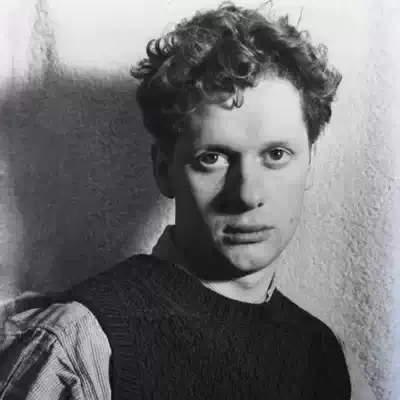
Dylan Thomas
If my head hurt a hair's foot
'If my head hurt a hair's foot
Pack back the downed bone. If the unpricked ball of my breath
Bump on a spout let the bubbles jump out.
Sooner drop with the worm of the ropes round my throat
Than bully ill love in the clouted scene.
'All game phrases fit your ring of a cockfight:
I'll comb the snared woods with a glove on a lamp,
Peck, sprint, dance on fountains and duck time
Before I rush in a crouch the ghost with a hammer, air,
Strike light, and bloody a loud room.
'If my bunched, monkey coming is cruel
Rage me back to the making house. My hand unravel
When you sew the deep door. The bed is a cross place.
Bend, if my journey ache, direction like an arc or make
A limp and riderless shape to leap nine thinning months.'
'No. Not for Christ's dazzling bed
Or a nacreous sleep among soft particles and charms
My dear would I change my tears or your iron head.
Thrust, my daughter or son, to escape, there is none, none, none,
Nor when all ponderous heaven's host of waters breaks.
'Now to awake husked of gestures and my joy like a cave
To the anguish and carrion, to the infant forever unfree,
O my lost love bounced from a good home;
The grain that hurries this way from the rim of the grave
Has a voice and a house, and there and here you must couch and cry.
'Rest beyond choice in the dust-appointed grain,
At the breast stored with seas. No return
Through the waves of the fat streets nor the skeleton's thin ways.
The grave and my calm body are shut to your coming as stone,
And the endless beginning of prodigies suffers open.'
Read more →
338
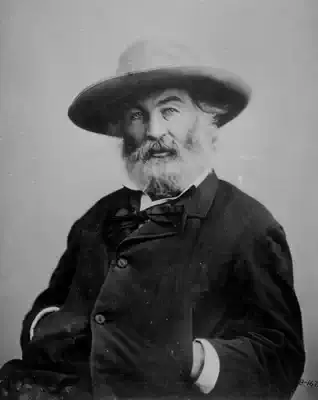
Walt Whitman
One's Self I Sing
ONE'S-SELF I sing--a simple, separate Person;
Yet utter the word Democratic, the word En-masse.
Of Physiology from top to toe I sing;
Not physiognomy alone, nor brain alone, is worthy for the muse--I say
the Form complete is worthier far;
The Female equally with the male I sing.
Of Life immense in passion, pulse, and power,
Cheerful--for freest action form'd, under the laws divine,
The Modern Man I sing.
Read more →
339
Henry Van Dyke
Inscriptions for a Friend's House
THE HOUSE
The cornerstone in Truth is laid,
The guardian walls of Honour made,
The roof of Faith is built above,
The fire upon the hearth is Love:
Though rains descend and loud winds call,
This happy house shall never fall.
THE DOORSTEAD
The lintel low enough to keep out pomp and pride:
The threshold high enough to turn deceit aside:
The doorband strong enough from robbers to defend:
This door will open at a touch to welcome every friend.
THE HEARTHSTONE
When the logs are burning free,
Then the fire is full of glee:
When each heart gives out its best,
Then the talk is full of zest:
Light your fire and never fear,
Life was made for love and cheer.
THE SUN-DIAL
Time can never take
What Time did not give;
When my shadows have all passed,
You shall live.
Read more →
339
Henry Van Dyke
Hide and Seek
All the trees are sleeping, all the winds are still,
All the flocks of fleecy clouds have wandered past the hill;
Through the noonday silence, down the woods of June,
Hark, a little hunter's voice comes running with a tune.
"Hide and seek!
"When I speak,
"You must answer me:
"Call again,
"Merry men,
"Coo-ee, coo-ee, coo-ee!"
Now I hear his footsteps, rustling through the grass:
Hidden in my leafy nook, shall I let him pass?
Just a low, soft whistle,--quick the hunter turns,
Leaps upon me laughing, rolls me in the ferns.
"Hold him fast,
"Caught at last!
"Now you're it, you see.
"Hide your eye,
"Till I cry,
"Coo-ee, coo-ee, coo-ee!"
II
Long ago he left me, long and long ago:
Now I wander through the world and seek him high and low;
Hidden safe and happy, in some pleasant place,--
Ah, if I could hear his voice, I soon should find his face.
Far away,
Many a day,
Where can Barney be?
Answer, dear,
Don't you hear?
Coo-ee, coo-ee, coo-ee!
Birds that in the spring-time thrilled his heart with joy,
Flowers he loved to pick for me, mind me of my boy.
Surely he is waiting till my steps come nigh;
Love may hide itself awhile, but love can never die.
Heart, be glad,
The little lad
Will call some day to thee:
"Father dear,
"Heaven is here,
"Coo-ee, coo-ee, coo-ee!"
Read more →
337
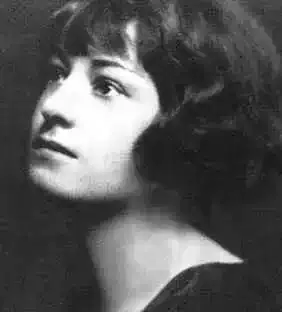
Dorothy Parker
Second Love
"So surely is she mine," you say, and turn
Your quick and steady mind to harder things-
To bills and bonds and talk of what men earn-
And whistle up the stair, of evenings.
And do you see a dream behind my eyes,
Or ask a simple question twice of me"
Thus women are," you say; for men are wise
And tolerant, in their security.
How shall I count the midnights I have known
When calm you turn to me, nor feel me start,
To find my easy lips upon your own
And know my breast beneath your rhythmic heart.
Your god defer the day I tell you this:
My lad, my lad, it is not you I kiss!
Read more →
337

Emily Dickinson
The Tint I cannot take—is best
The Tint I cannot take—is best—
The Color too remote
That I could show it in Bazaar—
A Guinea at a sight—
The fine—impalpable Array—
That swaggers on the eye
Like Cleopatra's Company—
Repeated—in the sky—
The Moments of Dominion
That happen on the Soul
And leave it with a Discontent
Too exquisite—to tell—
The eager look—on Landscapes—
As if they just repressed
Some Secret—that was pushing
Like Chariots—in the Vest—
The Pleading of the Summer—
That other Prank—of Snow—
That Cushions Mystery with Tulle,
For fear the Squirrels—know.
Their Graspless manners—mock us—
Until the Cheated Eye
Shuts arrogantly—in the Grave—
Another way—to see—
Read more →
338
Robert Browning
Two In The Campagna
.
I wonder do you feel to-day
As I have felt since, hand in hand,
We sat down on the grass, to stray
In spirit better through the land,
This morn of Rome and May?
II.
For me, I touched a thought, I know,
Has tantalized me many times,
(Like turns of thread the spiders throw
Mocking across our path) for rhymes
To catch at and let go.
III.
Help me to hold it! First it left
The yellowing fennel,<*> run to seed
There, branching from the brickwork's cleft,
Some old tomb's ruin: yonder weed
Took up the floating wet,
IV.
Where one small orange cup amassed
Five beetles,---blind and green they grope
Among the honey-meal: and last,
Everywhere on the grassy slope
I traced it. Hold it fast!
V.
The champaign with its endless fleece
Of feathery grasses everywhere!
Silence and passion, joy and peace,
An everlasting wash of air---
Rome's ghost since her decease.
VI.
Such life here, through such lengths of hours,
Such miracles performed in play,
Such primal naked forms of flowers,
Such letting nature have her way
While heaven looks from its towers!
VII.
How say you? Let us, O my dove,
Let us be unashamed of soul,
As earth lies bare to heaven above!
How is it under our control
To love or not to love?
VIII.
I would that you were all to me,
You that are just so much, no more.
Nor yours nor mine, nor slave nor free!
Where does the fault lie? What the core
O' the wound, since wound must be?
IX.
I would I could adopt your will,
See with your eyes, and set my heart
Beating by yours, and drink my fill
At your soul's springs,---your part my part
In life, for good and ill.
X.
No. I yearn upward, touch you close,
Then stand away. I kiss your cheek,
Catch your soul's warmth,---I pluck the rose
And love it more than tongue can speak---
Then the good minute goes.
XI.
Already how am I so far
Out of that minute? Must I go
Still like the thistle-ball, no bar,
Onward, whenever light winds blow,
Fixed by no friendly star?
XII.
Just when I seemed about to learn!
Where is the thread now? Off again!
The old trick! Only I discern---
Infinite passion, and the pain
Of finite hearts that yearn.
* Herb with yellow flowers and seeds supposed
* to be medicinal.
Read more →
338
Henry Wadsworth Longfellow
Ultima Thule: Elegiac
Dark is the morning with mist; in the narrow mouth of the harbor
Motionless lies the sea, under its curtain of cloud;
Dreamily glimmer the sails of ships on the distant horizon,
Like to the towers of a town, built on the verge of the sea.
Slowly and stately and still, they sail forth into the ocean;
With them sail my thoughts over the limitless deep,
Farther and farther away, borne on by unsatisfied longings,
Unto Hesperian isles, unto Ausonian shores.
Now they have vanished away, have disappeared in the ocean;
Sunk are the towers of the town into the depths of the sea!
All have vanished but those that, moored in the neighboring
roadstead,
Sailless at anchor ride, looming so large in the mist.
Vanished, too, are the thoughts, the dim, unsatisfied longings;
Sunk are the turrets of cloud into the ocean of dreams;
While in a haven of rest my heart is riding at anchor,
Held by the chains of love, held by the anchors of trust!
Read more →
337