
Soul

Emily Dickinson
These tested Our Horizon
These tested Our Horizon-
Then disappeared
As Birds before achieving
A Latitude.
Our Retrospection of Them
A fixed Delight,
But our Anticipation
A Dice-a Doubt-
Read more →
339
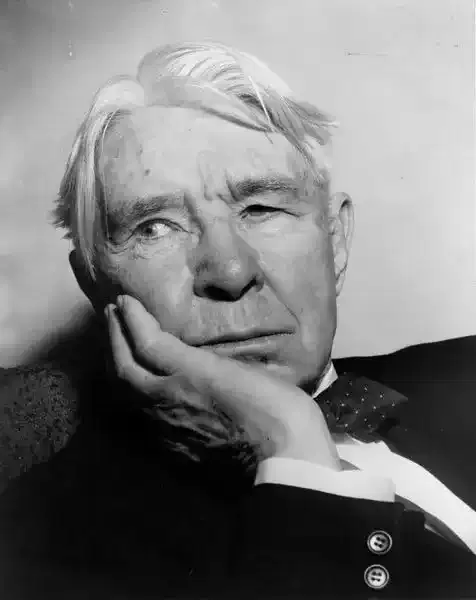
Carl Sandburg
Dusty Doors
Child of the Aztec gods,
how long must we listen here,
how long before we go?
The dust is deep on the lintels.
The dust is dark on the doors.
If the dreams shake our bones,
what can we say or do?
Since early morning we waited.
Since early, early morning, child.
There must be dreams on the way now.
There must be a song for our bones.
The dust gets deeper and darker.
Do the doors and lintels shudder?
How long must we listen here?
How long before we go?
Read more →
338
Emily Dickinson
A Murmur in the Trees-to note
A Murmur in the Trees-to note-
Not loud enough-for Wind-
A Star-not far enough to seek-
Nor near enough-to find-
A long-long Yellow-on the Lawn-
A Hubbub-as of feet-
Not audible-as Ours-to Us-
But dapperer-More Sweet-
A Hurrying Home of little Men
To Houses unperceived-
All this-and more-if I should tell-
Would never be believed-
Of Robins in the Trundle bed
How many I espy
Whose Nightgowns could not hide the Wings-
Although I heard them try-
But then I promised ne'er to tell-
How could I break My Word?
So go your Way-and I'll go Mine-
No fear you'll miss the Road.
Read more →
338

Ella Wheeler Wilcox
The Wheel of the Breast
Through rivers of veins on the nameless quest
The tide of my life goes hurriedly sweeping,
Till it reaches that curious wheel o' the breast,
The human heart, which is never at rest.
Faster, faster, it cries, and leaping,
Plunging, dashing, speeding away,
The wheel and the river work night and day.
I know not wherefore, I know not whither,
This strange tide rushes with such mad force:
It glides on hither, it slides on thither,
Over and over the selfsame course,
With never an outlet and never a source;
And it lashes itself to the heat of passion
And whirls the heart in a mill-wheel fashion.
I can hear in the hush of the still, still night,
The ceaseless sound of that mighty river;
I can hear it gushing, gurgling, rushing,
With a wild, delirious, strange delight,
And a conscious pride in its sense of might,
As it hurries and worries my heart forever.
And I wonder oft as I lie awake,
And list to the river that seethes and surges
Over the wheel that it chides and urges—
I wonder oft if that wheel will break
With the mighty pressure it bears, some day,
Or slowly and wearily wear away.
For little by little the heart is wearing,
Like the wheel of the mill, as the tide goes tearing
And plunging hurriedly through my breast,
In a network of veins on a nameless quet,
From and forth, unto unknown oceans,
Bringing its cargoes of fierce emotions,
With never a pause or an hour for rest.
Read more →
339

John Greenleaf Whittier
Immortal love, forever full
Immortal love, forever full,
Forever flowing free,
Forever shared, forever whole,
A never ebbing sea!
Our outward lips confess the name
All other names above;
Love only knoweth whence it came,
And comprehendeth love.
Blow, winds of God, awake and blow
The mists of earth away:
Shine out, O Light divine, and show
How wide and far we stray.
We may not climb the heavenly steeps
To bring the Lord Christ down;
In vain we search the lowest deeps,
For Him no depths can drown.
But warm, sweet, tender, even yet,
A present help is He;
And faith still has its Olivet,
And love its Galilee.
The healing of His seamless dress
Is by our beds of pain;
We touch Him in life’s throng and press,
And we are whole again.
Through Him the first fond prayers are said
Our lips of childhood frame,
The last low whispers of our dead
Are burdened with His Name.
O Lord and Master of us all,
Whate’er our name or sign,
We own Thy sway, we hear Thy call,
We test our lives by Thine.
The letter fails, the systems fall,
And every symbol wanes;
The Spirit over brooding all,
Eternal Love remains.
Read more →
339

Henry Wadsworth Longfellow
Voices Of The Night : Prelude
Pleasant it was, when woods were green,
And winds were soft and low,
To lie amid some sylvan scene,
Where, the long drooping boughs between
Shadows dark and sunlight sheen
Alternate come and go;
Or where the denser grove receives
No sunlight from above
But the dark foliage interweaves
In one unbroken roof of leaves,
Underneath whose sloping eaves
The shadows hardly move.
Beneath some patriarchal tree
I lay upon the ground;
His hoary arms uplifted he,
And all the broad leaves over me
Clapped their little hands in glee,
With one continuous sound;--
A slumberous sound,--a sound that brings
The feelings of a dream,--
As of innumerable wings,
As, when a bell no longer swings,
Faint the hollow murmur rings
O'er meadow, lake, and stream.
And dreams of that which cannot die,
Bright visins, came to me,
As lapped in thought I used to lie,
And gaze into the summer sky,
Where the sailing clouds went by,
Like ships upon the sea;
Dreams that the soul of youth engage
Ere Fancy has been quelled;
Old legends of the monkish page.
Traditions of the saint and sage,
Tales that have the rime of age,
And chronicles of Eld.
And, loving still these quaint old themes,
Even in the city's throng
I feel the freshness of the streams,
That, crossed by shades and sunny gleams,
Water the green land of dreams,
The holy land of song.
Therefore, at Pentecost, which brings
The Spring, clothed like a bride,
When nestling buds unfold their wings,
And bishop's-caps have golden rings,
Musing upon many things,
I sought the woodlands wide.
The green trees whispered low and mild,
It was a sound of joy!
They were my playmates when a child
And rocked me in their arms so wild!
Still they looked at me and smiled
As if I were a boy;
And ever whispered, mild and low,
'Come, be a child once more!'
And waved their long arms to and fro,
And beckoned solemnly and slow;
O, I could not choose but go
Into the woodlands hoar;
Into the blithe and breathing air,
Into the solemn wood.
Solemn and silent everywhere!
Nature with folded hands seemed there,
Kneeling at her evening prayer!
Like one in prayer I stood.
Before me rose an avenue
Of tall and sombrous pines;
Abroad their fan-like branches grew,
And, where the sunshine darted throught
Spread a vapor soft and blue,
In long and sloping lines.
And, falling on my weary brain,
Like a fast-falling shower,
The dreams of youth came back again,
Low lispings of the summer rain,
Dropping on the ripened grain,
As once upon the flower.
Visions of childhood! Stay, O stay!
Ye were so sweet and wild!
And distant voices seemed to say,
'It cannot be! They pass away!
Other themes demand thy lay;
Thou art no more a child!
'The land of Song within thee lies,
Watered by living springs;
The lids of Fancy's sleepless eyes
Are gates unto that Paradise;
Holy thoughts, like stars, arise,
Its clouds are angels' wings.
'Learn, that henceforth thy song shall be
Not mountains capped with snow,
Nor forests sounding like the sea,
Nor rivers flowing ceaselessly,
Where the woodlands bend to see
The bending heavens below.
'There is a forest where the din
Of iron branches sounds!
A mighty river roara between,
And whosoever looks therein,
Sees the heavens all black with sin,--
Sees not ita depths, nor bounds.
'Athwart the swinging branches cast,
Soft rays of sunshine pour;
Then comes the fearful wintry blast;
Our hopes, like withered leaves, fall fast;
Pallid lips say, 'It is past!
We can return no more!'
'Look, then, into thine heart, and write!
Yes, into Life's deep stream!
All forms of sorrow and delight,
All solemn Voices of the Night,
That can soothe thee, or affright,--
Be these henceforth thy theme.'
Read more →
339

Edna St. Vincent Millay
To A Poet That Died Young
Minstrel, what have you to do
With this man that, after you,
Sharing not your happy fate,
Sat as England's Laureate?
Vainly, in these iron days,
Strives the poet in your praise,
Minstrel, by whose singing side
Beauty walked, until you died.
Still, though none should hark again,
Drones the blue-fly in the pane,
Thickly crusts the blackest moss,
Blows the rose its musk across,
Floats the boat that is forgot
None the less to Camelot.
Many a bard's untimely death
Lends unto his verses breath;
Here's a song was never sung:
Growing old is dying young.
Minstrel, what is this to you:
That a man you never knew,
When your grave was far and green,
Sat and gossipped with a queen?
Thalia knows how rare a thing
Is it, to grow old and sing;
When a brown and tepid tide
Closes in on every side.
Who shall say if Shelley's gold
Had withstood it to grow old?
Read more →
337
Henry Wadsworth Longfellow
The Castle-Builder. (Birds Of Passage. Flight The Third)
A gentle boy, with soft and silken locks,
A dreamy boy, with brown and tender eyes,
A castle-builder, with his wooden blocks,
And towers that touch imaginary skies.
A fearless rider on his father's knee,
An eager listener unto stories told
At the Round Table of the nursery,
Of heroes and adventures manifold.
There will be other towers for thee to build;
There will be other steeds for thee to ride;
There will be other legends, and all filled
With greater marvels and more glorified.
Build on, and make thy castles high and fair,
Rising and reaching upward to the skies;
Listen to voices in the upper air,
Nor lose thy simple faith in mysteries.
Read more →
337
Ella Wheeler Wilcox
Perfectness
All perfect things are saddening in effect.
The autumn wood robed in its scarlet clothes,
The matchless tinting on the royal rose
Whose velvet leaf by no least flaw is flecked,
Love's supreme moment, when the soul unchecked
Soars high as heaven, and its best rapture knows—
These hold a deeper pathos than our woes,
Since they leave nothing better to expect.
Resistless change, when powerless to improve,
Can only mar. The gold will pale to gray;
Nothing remains tomorrow as to-day;
The lose will not seem quite so fait, and love
Must find its measures of delight made less.
Ah, how imperfect is all Perfectness!
Read more →
337
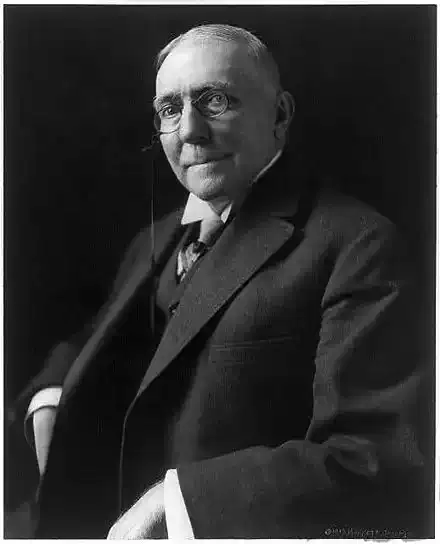
James Whitcomb Riley
The Quest
I am looking for Love. Has he passed this way,
With eyes as blue as the skies of May,
And a face as fair as the summer dawn?--
You answer back, but I wander on,--
For you say: 'Oh, yes; but his eyes were gray,
And his face as dim as a rainy day.'
Good friends, I query, I search for Love;
His eyes are as blue as the skies above,
And his smile as bright as the midst of May
When the truce-bird pipes: Has he passed this way?
And one says: 'Ay; but his face, alack!
Frowned as he passed, and his eyes were black.'
O who will tell me of Love? I cry!
His eyes are as blue as the mid-May sky,
And his face as bright as the morning sun;
And you answer and mock me, every one,
That his eyes were dark, and his face was wan,
And he passed you frowning and wandered on.
But stout of heart will I onward fare,
Knowing _my_ Love is beyond--somewhere,--
The Love I seek, with the eyes of blue,
And the bright, sweet smile unknown of you;
And on from the hour his trail is found
I shall sing sonnets the whole year round.
Read more →
337

Robert W. Service
Atoll
The woes of men beyond my ken
Mean nothing more to me.
Behold my world, and Eden hurled
From Heaven to the Sea;
A jeweled home, in fending foam
Tempestuously tossed;
A virgin isle none dare defile,
Far-flung, forgotten, lost.
And here I dwell, where none may tell
Me tales of mortal strife;
Let millions die, immune am I,
And radiant with life.
No echo comes of evil drums,
To vex my dawns divine;
Aloof, alone I hold my throne,
And Majesty is mine.
Ghost ships pass by, and glad am I
They make no sign to me.
The green corn springs, the gilt vine clings,
The net is in the sea.
My paradise around me lies,
Remote from wrath and wrong;
My isle is clean, unsought, unseen,
And innocent with song.
Here let me dwell in beauty's spell,
As tranquil as a tree;
Here let me bide, where wind and tide
Bourdon that I am free;
Here let me know from human woe
The rapture of release:
The rich caress of Loveliness,
The plenitude of Peace.
Read more →
338
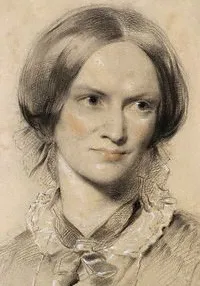
Charlotte Brontë
Regret
Long ago I wished to leave
" The house where I was born; "
Long ago I used to grieve,
My home seemed so forlorn.
In other years, its silent rooms
Were filled with haunting fears;
Now, their very memory comes
O'ercharged with tender tears.
Life and marriage I have known,
Things once deemed so bright;
Now, how utterly is flown
Every ray of light !
'Mid the unknown sea of life
I no blest isle have found;
At last, through all its wild wave's strife,
My bark is homeward bound.
Farewell, dark and rolling deep !
Farewell, foreign shore !
Open, in unclouded sweep,
Thou glorious realm before !
Yet, though I had safely pass'd
That weary, vexed main,
One loved voice, through surge and blast,
Could call me back again.
Though the soul's bright morning rose
O'er Paradise for me,
William ! even from Heaven's repose
I'd turn, invoked by thee !
Storm nor surge should e'er arrest
My soul, exulting then:
All my heaven was once thy breast,
Would it were mine again !
Read more →
335
Henry Van Dyke
The Hermit Thrush
O wonderful! How liquid clear
The molten gold of that ethereal tone,
Floating and falling through the wood alone,
A hermit-hymn poured out for God to hear!
0 holy, holy, holy! Hyaline,
Long light, low light, glory of eventide!
Love far away, far up. -- up, -- love divine!
Little love, too, for ever, ever, near,
Warm love, earth love, tender love of mine,
In the leafy dark where you hide,
You are mine, -- mine, -- mine!
Ah, my belovèd, do you feel with me
The hidden virtue of that melody,
The rapture and the purity of love,
The heavenly joy that can not find the word?
Then, while we wait again to hear the bird,
Come very near to me, and do not move, --
Now, hermit of the woodland, fill anew
The cool, green cup of air with harmony,
And we will drink the wine of love with you.
Read more →
336
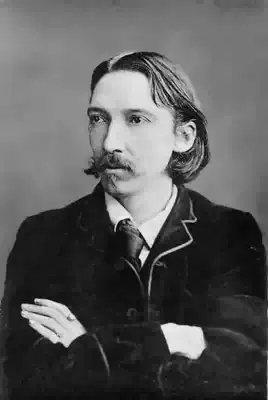
Robert Louis Stevenson
As In Their Flight The Birds Of Song
AS in their flight the birds of song
Halt here and there in sweet and sunny dales,
But halt not overlong;
The time one rural song to sing
They pause; then following bounteous gales
Steer forward on the wing:
Sun-servers they, from first to last,
Upon the sun they wait
To ride the sailing blast.
So he awhile in our contested state,
Awhile abode, not longer, for his Sun -
Mother we say, no tenderer name we know -
With whose diviner glow
His early days had shone,
Now to withdraw her radiance had begun.
Or lest a wrong I say, not she withdrew,
But the loud stream of men day after day
And great dust columns of the common way
Between them grew and grew:
And he and she for evermore might yearn,
But to the spring the rivulets not return
Nor to the bosom comes the child again.
And he (O may we fancy so!),
He, feeling time forever flow
And flowing bear him forth and far away
From that dear ingle where his life began
And all his treasure lay -
He, waxing into man,
And ever farther, ever closer wound
In this obstreperous world's ignoble round,
From that poor prospect turned his face away.
Read more →
337

Alexander Pope
The Dying Christian to His Soul
Vital spark of heav’nly flame!
Quit, O quit this mortal frame:
Trembling, hoping, ling’ring, flying,
O the pain, the bliss of dying!
Cease, fond Nature, cease thy strife,
And let me languish into life.
Hark! they whisper; angels say,
Sister Spirit, come away!
What is this absorbs me quite?
Steals my senses, shuts my sight,
Drowns my spirits, draws my breath?
Tell me, my soul, can this be death?
The world recedes; it disappears!
Heav’n opens on my eyes! my ears
With sounds seraphic ring!
Lend, lend your wings! I mount! I fly!
O Grave! where is thy victory?
O Death! where is thy sting?
Read more →
336
John Greenleaf Whittier
To Charles Sumner
If I have seemed more prompt to censure wrong
Than praise the right; if seldom to thine ear
My voice hath mingled with the exultant cheer
Borne upon all our Northern winds along;
If I have failed to join the fickle throng
In wide-eyed wonder, that thou standest strong
In victory, surprised in thee to find
Brougham's scathing power with Canning's grace combined;
That he, for whom the ninefold Muses sang,
From their twined arms a giant athlete sprang,
Barbing the arrows of his native tongue
With the spent shafts Latona's archer flung,
To smite the Python of our land and time,
Fell as the monster born of Crissa's slime,
Like the blind bard who in Castalian springs
Tempered the steel that clove the crest of kings,
And on the shrine of England's freedom laid
The gifts of Cumve and of Delphi's' shade,-Small
need hast thou of words of praise from me.
Thou knowest my heart, dear friend, and well canst guess
That, even though silent, I have not the less
Rejoiced to see thy actual life agree
With the large future which I shaped for thee,
When, years ago, beside the summer sea,
White in the moon, we saw the long waves fall
Baffled and broken from the rocky wall,
That, to the menace of the brawling flood,
Opposed alone its massive quietude,
Calm as a fate; with not a leaf nor vine
Nor birch-spray trembling in the still moonshine,
Crowning it like God's peace. I sometimes think
That night-scene by the sea prophetical,
(For Nature speaks in symbols and in signs,
And through her pictures human fate divines),
That rock, wherefrom we saw the billows sink
In murmuring rout, uprising clear and tall
In the white light of heaven, the type of one
Who, momently by Error's host assailed,
Stands strong as Truth, in greaves of granite mailed;
And, tranquil-fronted, listening over all
The tumult, hears the angels say, Well done!
Read more →
336
Emily Dickinson
I ment to find her when I came
I meant to find her when I came;
Death had the same design;
But the success was his, it seems,
And the discomfit mine.
I meant to tell her how I longed
For just this single time;
But Death had told her so the first,
And she had hearkened him.
To wander now is my abode;
To rest,--to rest would be
A privilege of hurricane
To memory and me.
Read more →
336
Henry Wadsworth Longfellow
Evangeline: Part The Second. V.
IN that delightful land, which is washed by the Delaware's waters,
Guarding in sylvan shades the name of Penn the apostle.
Stands on the banks of its beautiful stream the city he founded.
There all the air is balm, and the peach is the emblem of beauty,
And the streets still re-echo the names of the trees of the forest,
As if they fain would appease the Dryads whose haunts they molested.
There from the troubled sea had Evangeline landed, an exile,
Finding among the children of Penn a home and a country.
There old René Leblanc had died; and when he departed,
Saw at his side only one of all his hundred descendants.
Something at least there was in the friendly streets of the city,
Something that spake to her heart, and made her no longer a stranger;
And her ear was pleased with the Thee and Thou of the Quakers,
For it recalled the past, the old Acadian country,
Where all men were equal, and all were brothers and sisters.
So, when the fruitless search, the disappointed endeavor,
Ended, to recommence no more upon earth, uncomplaining,
Thither, as leaves to the light, were turned her thoughts and her footsteps.
As from a mountain's top the rainy mists of the morning
Roll away, and afar we behold the landscape below us,
Sun-illumined, with shining rivers and cities and hamlets,
So fell the mists from her mind, and she saw the world far below her,
Dark no longer, but all illumined with love; and the pathway
Which she had climbed so far, lying smooth and fair in the distance.
Gabriel was not forgotten. Within her heart was his image,
Clothed in the beauty of love and youth, as last she beheld him,
Only more beautiful made by his deathlike silence and absence.
Into her thoughts of him time entered not, for it was not.
Over him years had no power; he was not changed, but transfigured;
He had become to her heart as one who is dead, and not absent;
Patience and abnegation of self, and devotion to others,
This was the lesson a life of trial and sorrow had taught her.
So was her love diffused, but, like to some odorous spices,
Suffered no waste nor loss, though filling the air with aroma.
Other hope had she none, nor wish in life, but to follow
Meekly, with reverent steps, the sacred feet of her Saviour.
Thus many years she lived as a Sister of Mercy; frequenting
Lonely and wretched roofs in the crowded lanes of the city,
Where distress and want concealed themselves from the sunlight,
Where disease and sorrow in garrets languished neglected.
Night after night, when the world was asleep, as the watchman repeated
Loud, through the gusty streets, that all was well in the city,
High at some lonely window he saw the light of her taper.
Day after day, in the gray of the dawn, as slow through the suburbs
Plodded the German farmer, with flowers and fruits for the market,
Met he that meek, pale face, returning home from its watchings.
Then it came to pass that a pestilence fell on the city,
Presaged by wondrous signs, and mostly by flocks of wild pigeons,
Darkening the sun in their flight, with naught in their craws but an acorn.
And, as the tides of the sea arise in the month of September,
Flooding some silver stream, till it spreads to a lake in the meadow,
So death flooded life, and, o'erflowing its natural margin,
Spread to a brackish lake, the silver stream of existence.
Wealth had no power to bribe, nor beauty to charm, the oppressor;
But all perished alike beneath the scourge of his anger;-
Only, alas! the poor, who had neither friends nor attendants,
Crept away to die in the almshouse, home of the homeless.
Then in the suburbs it stood, in the midst of meadows and woodlands;-
Now the city surrounds it; but still, with its gateway and wicket
Meek, in the midst of splendor, its humble walls seem to echo
Softly the words of the Lord:-'The poor ye always have with you.'
Thither, by night and by day, came the Sister of Mercy. The dying
Looked up into her face, and thought, indeed, to behold there
Gleams of celestial light encircle her forehead with splendor,
Such as the artist paints o'er the brows of saints and apostles,
Or such as hangs by night o'er a city seen at a distance.
Unto their eyes it seemed the lamps of the city celestial,
Into whose shining gates erelong their spirits would enter.
Thus, on a Sabbath morn, through the streets, deserted and silent,
Wending her quiet way, she entered the door of the almshouse.
Sweet on the summer air was the odor of flowers in the garden;
And she paused on her way to gather the fairest among them,
That the dying once more might rejoice in their fragrance and beauty.
Then, as she mounted the stairs to the corridors, cooled by the east wind,
Distant and soft on her ear fell the chimes from the belfry of Christ Church,
While, intermingled with these, across the meadows were wafted
Sounds of psalms, that were sung by the Swedes in their church at Wicaco.
Soft as descending wings fell the calm of the hour on her spirit;
Something within her said, 'At length thy trials are ended';
And, with light in her looks, she entered the chambers of sickness.
Noiselessly moved about the assiduous, careful attendants,
Moistening the feverish lip, and the aching brow, and in silence
Closing the sightless eyes of the dead, and concealing their faces,
Where on their pallets they lay, like drifts of snow by the roadside.
Many a languid head, upraised as Evangeline entered,
Turned on its pillow of pain to gaze while she passed, for her presence
Fell on their hearts like a ray of the sun on the walls of a prison.
And, as she looked around, she saw how Death, the consoler,
Laying his hand upon many a heart, had healed it forever.
Many familiar forms had disappeared in the night-time;
Vacant their places were, or filled already by strangers.
Suddenly, as if arrested by fear or a feeling of wonder,
Still she stood, with her colorless lips apart, while a shudder
Ran through her frame, and, forgotten, the flowerets dropped from her fingers,
And from her eyes and cheeks the light and bloom of the morning.
Then there escaped from her lips a cry of such terrible anguish,
That the dying heard it, and started up from their pillows.
On the pallet before her was stretched the form of an old man.
Long, and thin, and gray were the locks that shaded his temples;
But, as he lay in the morning light, his face for a moment
Seemed to assume once more the forms of its earlier manhood;
So are wont to be changed the faces of those who are dying.
Hot and red on his lips still burned the flush of the fever,
As if life, like the Hebrew, with blood had besprinkled its portals,
That the Angel of Death might see the sign, and pass over.
Motionless, senseless, dying, he lay, and his spirit exhausted
Seemed to be sinking down through infinite depths in the darkness,
Darkness of slumber and death, forever sinking and sinking.
Then through those realms of shade, in multiplied reverberations,
Heard he that cry of pain, and through the hush that succeeded
Whispered a gentle voice, in accents tender and saint-like,
'Gabriel! O my beloved!' and died away into silence.
Then he beheld, in a dream, once more the home of his childhood;
Green Acadian meadows, with sylvan rivers among them,
Village, and mountain, and woodlands; and, walking under their shadow,
As in the days of her youth, Evangeline rose in his vision.
Tears came into his eyes; and as slowly he lifted his eyelids,
Vanished the vision away, but Evangeline knelt by his bedside.
Vainly he strove to whisper her name, for the accents unuttered
Died on his lips, and their motion revealed what his tongue would have spoken.
Vainly he strove to rise; and Evangeline, kneeling beside him,
Kissed his dying lips, and laid his head on her bosom.
Sweet was the light of his eyes; but it suddenly sank into darkness,
As when a lamp is blown out by a gust of wind at a casement.
All was ended now, the hope, and the fear, and the sorrow,
All the aching of heart, the restless, unsatisfied longing,
All the dull, deep pain, and constant anguish of patience!
And, as she pressed once more the lifeless head to her bosom,
Meekly she bowed her own, and murmured, 'Father, I thank thee!'
STILL stands the forest primeval; but far away from its shadow,
Side by side, in their nameless graves, the lovers are sleeping.
Under the humble walls of the little Catholic churchyard,
In the heart of the city, they lie, unknown and unnoticed.
Daily the tides of life go ebbing and flowing beside them,
Thousands of throbbing hearts, where theirs are at rest and forever,
Thousands of aching brains, where theirs no longer are busy,
Thousands of toiling hands, where theirs have ceased from their labors,
Thousands of weary feet, where theirs have completed their journey!
Still stands the forest primeval; but under the shade of its branches
Dwells another race, with other customs and language.
Only along the shore of the mournful and misty Atlantic
Linger a few Acadian peasants, whose fathers from exile
Wandered back to their native land to die in its bosom.
In the fisherman's cot the wheel and the loom are still busy;
Maidens still wear their Norman caps and their kirtles of homespun,
And by the evening fire repeat Evangeline's story.
While from its rocky caverns the deep-voiced, neighboring ocean
Speaks, and in accents disconsolate answers the wail of the forest.
Read more →
336
John Greenleaf Whittier
A Sea Dream
We saw the slow tides go and come,
The curving surf-lines lightly drawn,
The gray rocks touched with tender bloom
Beneath the fresh-blown rose of dawn.
We saw in richer sunsets lost
The sombre pomp of showery noons;
And signalled spectral sails that crossed
The weird, low light of rising moons.
On stormy eves from cliff and head
We saw the white spray tossed and spurned;
While over all, in gold and red,
Its face of fire the lighthouse turned.
The rail-car brought its daily crowds,
Half curious, half indifferent,
Like passing sails or floating clouds,
We saw them as they came and went.
But, one calm morning, as we lay
And watched the mirage-lifted wall
Of coast, across the dreamy bay,
And heard afar the curlew call,
And nearer voices, wild or tame,
Of airy flock and childish throng,
Up from the water's edge there came
Faint snatches of familiar song.
Careless we heard the singer's choice
Of old and common airs; at last
The tender pathos of his voice
In one low chanson held us fast.
A song that mingled joy and pain,
And memories old and sadly sweet;
While, timing to its minor strain,
The waves in lapsing cadence beat.
. . . . .
The waves are glad in breeze and sun;
The rocks are fringed with foam;
I walk once more a haunted shore,
A stranger, yet at home,
A land of dreams I roam.
Is this the wind, the soft sea wind
That stirred thy locks of brown?
Are these the rocks whose mosses knew
The trail of thy light gown,
Where boy and girl sat down?
I see the gray fort's broken wall,
The boats that rock below;
And, out at sea, the passing sails
We saw so long ago
Rose-red in morning's glow.
The freshness of the early time
On every breeze is blown;
As glad the sea, as blue the sky,-The
change is ours alone;
The saddest is my own.
A stranger now, a world-worn man,
Is he who bears my name;
But thou, methinks, whose mortal life
Immortal youth became,
Art evermore the same.
Thou art not here, thou art not there,
Thy place I cannot see;
I only know that where thou art
The blessed angels be,
And heaven is glad for thee.
Forgive me if the evil years
Have left on me their sign;
Wash out, O soul so beautiful,
The many stains of mine
In tears of love divine!
I could not look on thee and live,
If thou wert by my side;
The vision of a shining one,
The white and heavenly bride,
Is well to me denied.
But turn to me thy dear girl-face
Without the angel's crown,
The wedded roses of thy lips,
Thy loose hair rippling down
In waves of golden brown.
Look forth once more through space and time,
And let thy sweet shade fall
In tenderest grace of soul and form
On memory's frescoed wall,
A shadow, and yet all!
Draw near, more near, forever dear!
Where'er I rest or roam,
Or in the city's crowded streets,
Or by the blown sea foam,
The thought of thee is home!
. . . . .
At breakfast hour the singer read
The city news, with comment wise,
Like one who felt the pulse of trade
Beneath his finger fall and rise.
His look, his air, his curt speech, told
The man of action, not of books,
To whom the corners made in gold
And stocks were more than seaside nooks.
Of life beneath the life confessed
His song had hinted unawares;
Of flowers in traffic's ledgers pressed,
Of human hearts in bulls and bears.
But eyes in vain were turned to watch
That face so hard and shrewd and strong;
And ears in vain grew sharp to catch
The meaning of that morning song.
In vain some sweet-voiced querist sought
To sound him, leaving as she came;
Her baited album only caught
A common, unromantic name.
No word betrayed the mystery fine,
That trembled on the singer's tongue;
He came and went, and left no sign
Behind him save the song he sung.
Read more →
335
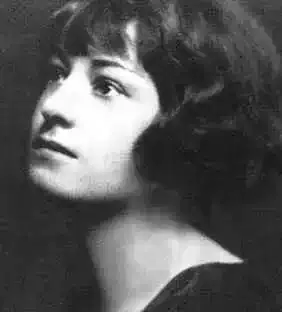
Dorothy Parker
Portrait of the Artist
Oh, lead me to a quiet cell
Where never footfall rankles,
And bar the window passing well,
And gyve my wrists and ankles.
Oh, wrap my eyes with linen fair,
With hempen cord go bind me,
And, of your mercy, leave me there,
Nor tell them where to find me.
Oh, lock the portal as you go,
And see its bolts be double....
Come back in half an hour or so,
And I will be in trouble.
Read more →
336
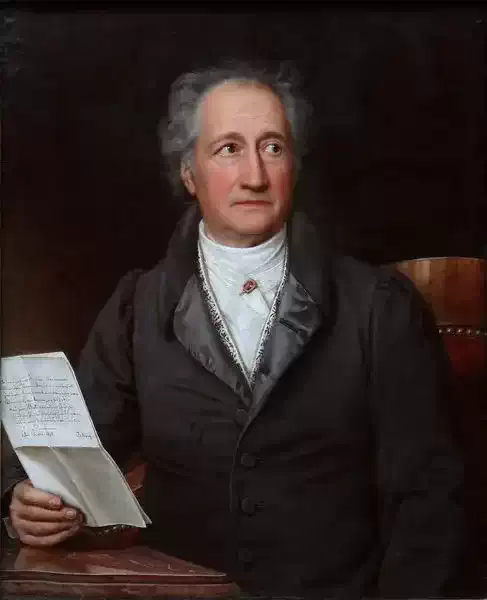
Johann Wolfgang von Goethe
From Faust - V. Margaret At Her Spinning-Wheel
MY heart is sad,
My peace is o'er;
I find it never
And nevermore.
When gone is he,
The grave I see;
The world's wide all
Is turned to gall.
Alas, my head
Is well-nigh crazed;
My feeble mind
Is sore amazed.
My heart is sad,
My peace is o'er;
I find it never
And nevermore.
For him from the window
Alone I spy;
For him alone
From home go I.
His lofty step,
His noble form,
His mouth's sweet smile,
His glances warm,
His voice so fraught
With magic bliss,
His hand's soft pressure,
And, ah, his kiss!
My heart is sad,
My peace is o'er;
I find it never
And nevermore.
My bosom yearns
For his form so fair;
Ah, could I clasp him
And hold him there!
My kisses sweet
Should stop his breath,
And 'neath his kisses
I'd sink in death!
Read more →
334

Billy Collins
Man Listening To Disc
This is not bad -ambling
along 44th Street
with Sonny Rollins for company,
his music flowing through the soft calipers
of these earphones,
as if he were right beside me
on this clear day in March,
the pavement sparkling with sunlight,
pigeons fluttering off the curb,
nodding over a profusion of bread crumbs.
In fact, I would say
my delight at being suffused
with phrases from his saxophone -some
like honey, some like vinegar -is
surpassed only by my gratitude
to Tommy Potter for taking the time
to join us on this breezy afternoon
with his most unwieldy bass
and to the esteemed Arthur Taylor
who is somehow managing to navigate
this crowd with his cumbersome drums.
And I bow deeply to Thelonious Monk
for figuring out a way
to motorize -- or whatever -- his huge piano
so he could be with us today.
This music is loud yet so confidential.
I cannot help feeling even more
like the center of the universe
than usual as I walk along to a rapid
little version of "The Way You Look Tonight,"
and all I can say to my fellow pedestrians,
to the woman in the white sweater,
the man in the tan raincoat and the heavy glasses,
who mistake themselves for the center of the universe -all
I can say is watch your step,
because the five of us, instruments and all,
are about to angle over
to the south side of the street
and then, in our own tightly knit way,
turn the corner at Sixth Avenue.
And if any of you are curious
about where this aggregation,
this whole battery-powered crew,
is headed, let us just say
that the real center of the universe,
the only true point of view,
is full of hope that he,
the hub of the cosmos
with his hair blown sideways,
will eventually make it all the way downtown.
Read more →
335
Emily Dickinson
For each ecstatic instant
For each ecstatic instant
We must an anguish pay
In keen and quivering ratio
To the ectasty.
For each beloved hour
Sharp pittances of years,
Bitter contested farthings
And coffers heaped with tears.
Read more →
334
Johann Wolfgang von Goethe
Happiness And Vision
TOGETHER at the altar we
In vision oft were seen by thee,
Thyself as bride, as bridegroom I.
Oft from thy mouth full many a kiss
In an unguarded hour of bliss
I then would steal, while none were by.
The purest rapture we then knew,
The joy those happy hours gave too,
When tasted, fled, as time fleets on.
What now avails my joy to me?
Like dreams the warmest kisses flee,
Like kisses, soon all joys are gone.
Read more →
334