
Soul
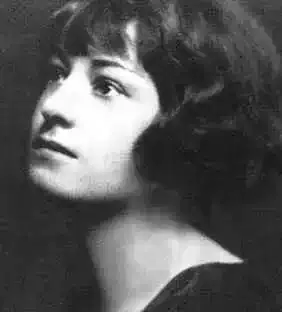
Dorothy Parker
The White Lady
I cannot rest, I cannot rest
In straight and shiny wood,
My woven hands upon my breast-The
dead are all so good!
The earth is cool across their eyes;
They lie there quietly.
But I am neither old nor wise;
They do not welcome me.
Where never I walked alone before,
I wander in the weeds;
And people scream and bar the door,
And rattle at their beads.
We cannot rest, we never rest
Within a narrow bed
Who still must love the living best-Who
hate the pompous dead!
Read more →
334
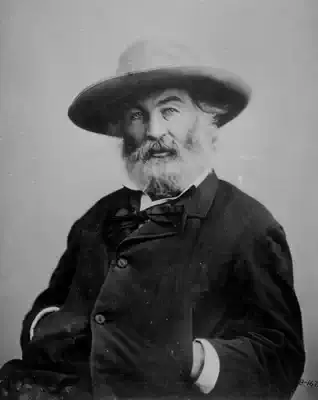
Walt Whitman
I Heard You, Solemn-sweep Pipes Of The Organ
I HEARD you, solemn-sweet pipes of the organ, as last Sunday morn I
pass'd the church;
Winds of autumn!--as I walk'd the woods at dusk, I heard your longstretch'd
sighs, up above, so mournful;
I heard the perfect Italian tenor, singing at the opera--I heard the
soprano in the midst of the quartet singing;
... Heart of my love!--you too I heard, murmuring low, through one of
the wrists around my head;
Heard the pulse of you, when all was still, ringing little bells last
night under my ear.
Read more →
336
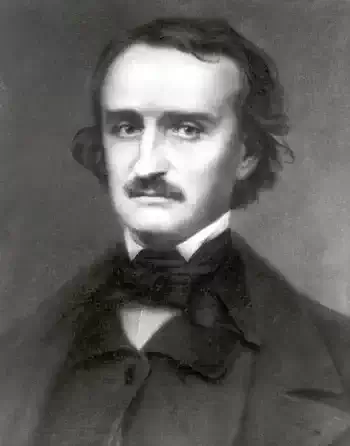
Edgar Allan Poe
In Youth I have Known One
How often we forget all time, when lone
Admiring Nature's universal throne;
Her woods - her winds - her mountains - the intense
Reply of Hers to Our intelligence!
I.
In youth I have known one with whom the Earth
In secret communing held - as he with it,
In daylight, and in beauty, from his birth:
Whose fervid, flickering torch of life was lit
From the sun and stars, whence he had drawn forth
A passionate light - such for his spirit was fit -
And yet that spirit knew - not in the hour
Of its own fervour - what had o'er it power.
II.
Perhaps it may be that my mind is wrought
To a fever by the moonbeam that hangs o'er,
But I will half believe that wild light fraught
With more of sovereignty than ancient lore
Hath ever told - or is it of a thought
The unembodied essence, and no more
That with a quickening spell doth o'er us pass
As dew of the night time, o'er the summer grass?
III.
Doth o'er us pass, when as th' expanding eye
To the loved object - so the tear to the lid
Will start, which lately slept in apathy?
And yet it need not be - (that object) hid
From us in life - but common - which doth lie
Each hour before us - but then only bid
With a strange sound, as of a harpstring broken
T' awake us - 'Tis a symbol and a token
IV.
Of what in other worlds shall be - and given
In beauty by our God, to those alone
Who otherwise would fall from life and Heaven
Drawn by their heart's passion, and that tone,
That high tone of the spirit which hath striven
Though not with Faith - with godliness - whose throne
With desperate energy 't hath beaten down;
Wearing its own deep feeling as a crown.
Read more →
336
Henry Van Dyke
A Child in the Garden
When to the garden of untroubled thought
I came of late, and saw the open door,
And wished again to enter, and explore
The sweet, wild ways with stainless bloom inwrought,
And bowers of innocence with beauty fraught,
It seemed some purer voice must speak before
I dared to tread that garden loved of yore,
That Eden lost unknown and found unsought.
Then just within the gate I saw a child, --
A stranger-child, yet to my heart most dear;
He held his hands to me, and softly smiled
With eyes that knew no shade of sin or fear:
"Come in," he said, "and play awhile with me;"
"I am the little child you used to be."
Read more →
334

John Donne
Holy Sonnet VI: This Is My Playes Last Scene
This is my playes last scene, here heavens appoint
My pilgrimages last mile; and my race
Idly, yet quickly runne, hath this last pace,
My spans last inch, my minutes latest point,
And gluttonous death, will instantly unjoynt
My body, and soule, and I shall sleepe a space,
But my'ever-waking part shall see that face,
Whose feare already shakes my every joynt;
Then, as my soule, to'heaven her first seate, takes flight,
And earth-borne body, in the earth shall dwell,
So, fall my sinnes, that all may have their right,
To where they're bred, and would presse me, to hell.
Impute me righteous, thus purg'd of evill,
For thus I leave the world, the flesh, the devill.
Read more →
334

John Greenleaf Whittier
Hymn II
O HOLY FATHER! just and true
Are all Thy works and words and ways,
And unto Thee alone are due
Thanksgiving and eternal praise!
As children of Thy gracious care,
We veil the eye, we bend the knee,
With broken words of praise and prayer,
Father and God, we come to Thee.
For Thou hast heard, O God of Right,
The sighing of the island slave;
And stretched for him the arm of might,
Not shortened that it could not save.
The laborer sits beneath his vine,
The shackled soul and hand are free;
Thanksgiving! for the work is Thine!
Praise! for the blessing is of Thee!
And oh, we feel Thy presence here,
Thy awful arm in judgment bare!
Thine eye hath seen the bondman's tear;
Thine ear hath heard the bondman's prayer.
Praise! for the pride of man is low,
The counsels of the wise are naught,
The fountains of repentance flow;
What hath our God in mercy wrought?
Speed on Thy work, Lord God of Hosts!
And when the bondman's chain is riven,
And swells from all our guilty coasts
The anthem of the free to Heaven,
Oh, not to those whom Thou hast led,
As with Thy cloud and fire before,
But. unto Thee, in fear and dread,
Be praise and glory evermore.
Read more →
337

Emily Dickinson
Mine—by the Right of the White Election!
Mine—by the Right of the White Election!
Mine—by the Royal Seal!
Mine—by the Sign in the Scarlet prison—
Bars—cannot conceal!
Mine—here—in Vision—and in Veto!
Mine—by the Grave's Repeal—
Tilted—Confirmed—
Delirious Charter!
Mine—long as Ages steal!
Read more →
336
John Greenleaf Whittier
The Disenthralled
HE had bowed down to drunkenness,
An abject worshipper:
The pride of manhood's pulse had grown
Too faint and cold to stir;
And he had given his spirit up
To the unblessëd thrall,
And bowing to the poison cup,
He gloried in his fall!
There came a change —the cloud rolled off,
And light fell on his brain —
And like the passing of a dream
That cometh not again,
The shadow of the spirit fled.
He saw the gulf before,
He shuddered at the waste behind,
And was a man once more.
He shook the serpent folds away,
That gathered round his heart,
As shakes the swaying forest-oak
Its poison vine apart;
He stood erect; returning pride
Grew terrible within,
And conscience sat in judgment, on
His most familiar sin.
The light of Intellect again
Along his pathway shone;
And Reason like a monarch sat
Upon his olden throne.
The honored and the wise once more
Within his presence came;
And lingered oft on lovely lips
His once forbidden name.
There may be glory in the might,
That treadeth nations down;
Wreaths for the crimson conqueror,
Pride for the kingly crown;
But nobler is that triumph hour,
The disenthralled shall find,
When evil passion boweth down,
Unto the Godlike mind!
Read more →
337
James Whitcomb Riley
A Passing Hail
Let us rest ourselves a bit!
Worry?-- wave your hand to it --
Kiss your finger-tips and smile
It farewell a little while.
Weary of the weary way
We have come from Yesterday,
Let us fret not, instead,
Of the wary way ahead.
Let us pause and catch our breath
On the hither side of death,
While we see the tender shoots
Of the grasses -- not the roots,--
While we yet look down -- not up --
To seek out the buttercup
And the daisy where they wave
O'er the green home of the grave.
Let us launch us smoothly on
The soft billows of the lawn,
And drift out across the main
Of our childish dreams again:
Voyage off, beneath the trees,
O'er the field's enchanted seas,
Where the lilies are our sails,
And our sea-gulls, nightingales:
Where no wilder storm shall beat
Than the wind that waves the wheat,
And no tempest-burst above
The old laughs we used to love:
Lose all troubles -- gain release,
Languor, and exceeding peace,
Cruising idly o'er the vast,
Calm mid-ocean of the Past.
Let us rest ourselves a bit!
Worry? -- Wave your hand to it --
Kiss your finger-tips and smile
It fare well a little while.
Read more →
335

Henry Wadsworth Longfellow
Boston
St. Botolph's Town! Hither across the plains
And fens of Lincolnshire, in garb austere,
There came a Saxon monk, and founded here
A Priory, pillaged by marauding Danes,
So that thereof no vestige now remains;
Only a name, that, spoken loud and clear,
And echoed in another hemisphere,
Survives the sculptured walls and painted panes.
St. Botolph's Town! Far over leagues of land
And leagues of sea looks forth its noble tower,
And far around the chiming bells are heard;
So may that sacred name forever stand
A landmark, and a symbol of the power,
That lies concentred in a single word.
Read more →
332
Edgar Allan Poe
Evening Star
'Twas noontide of summer,
And mid-time of night;
And stars, in their orbits,
Shone pale, thro' the light
Of the brighter, cold moon,
'Mid planets her slaves,
Herself in the Heavens,
Her beam on the waves.
I gazed awhile
On her cold smile;
Too cold- too cold for me
There
pass'd, as a shroud,
A fleecy cloud,
And I turned away to thee,
Proud Evening Star,
In thy glory afar,
And dearer thy beam shall be;
For joy to my heart
Is the proud part
Thou bearest in Heaven at night,
And more I admire
Thy distant fire,
Than that colder, lowly light.
Read more →
331
Emily Dickinson
Remorse
Remorse -- is Memory -- awake --
Her Parties all astir --
A Presence of Departed Acts --
At window -- and at Door --
Its Past -- set down before the Soul
And lighted with a Match --
Perusal -- to facilitate --
And help Belief to stretch --
Remorse is cureless -- the Disease
Not even God -- can heal --
For 'tis His institution -- and
The Adequate of Hell --
Read more →
332
Robert Louis Stevenson
At Last She Comes
AT last she comes, O never more
In this dear patience of my pain
To leave me lonely as before,
Or leave my soul alone again.
Read more →
332
John Greenleaf Whittier
The Meeting
The elder folks shook hands at last,
Down seat by seat the signal passed.
To simple ways like ours unused,
Half solemnized and half amused,
With long-drawn breath and shrug, my guest
His sense of glad relief expressed.
Outside, the hills lay warm in sun;
The cattle in the meadow-run
Stood half-leg deep; a single bird
The green repose above us stirred.
'What part or lot have you,' he said,
'In these dull rites of drowsy-head?
Is silence worship? Seek it where
It soothes with dreams the summer air,
Not in this close and rude-benched hall,
But where soft lights and shadows fall,
And all the slow, sleep-walking hours
Glide soundless over grass and flowers!
From time and place and form apart,
Its holy ground the human heart,
Nor ritual-bound nor templeward
Walks the free spirit of the Lord!
Our common Master did not pen
His followers up from other men;
His service liberty indeed,
He built no church, He framed no creed;
But while the saintly Pharisee
Made broader his phylactery,
As from the synagogue was seen
The dusty-sandalled Nazarene
Through ripening cornfields lead the way
Upon the awful Sabbath day,
His sermons were the healthful talk
That shorter made the mountain-walk,
His wayside texts were flowers and birds,
Where mingled with His gracious words
The rustle of the tamarisk-tree
And ripple-wash of Galilee.'
'Thy words are well, O friend,' I said;
'Unmeasured and unlimited,
With noiseless slide of stone to stone,
The mystic Church of God has grown.
Invisible and silent stands
The temple never made with hands,
Unheard the voices still and small
Of its unseen confessional.
He needs no special place of prayer
Whose hearing ear is everywhere;
He brings not back the childish days
That ringed the earth with stones of praise,
Roofed Karnak's hall of gods, and laid
The plinths of Phil e's colonnade.
Still less He owns the selfish good
And sickly growth of solitude,-The
worthless grace that, out of sight,
Flowers in the desert anchorite;
Dissevered from the suffering whole,
Love hath no power to save a soul.
Not out of Self, the origin
And native air and soil of sin,
The living waters spring and flow,
The trees with leaves of healing grow.
'Dream not, O friend, because I seek
This quiet shelter twice a week,
I better deem its pine-laid floor
Than breezy hill or sea-sung shore;
But nature is not solitude
She crowds us with her thronging wood;
Her many hands reach out to us,
Her many tongues are garrulous;
Perpetual riddles of surprise
She offers to our ears and eyes;
She will not leave our senses still,
But drags them captive at her will
And, making earth too great for heaven,
She hides the Giver in the given.
'And so, I find it well to come
For deeper rest to this still room,
For here the habit of the soul
Feels less the outer world's control;
The strength of mutual purpose pleads
More earnestly our common needs;
And from the silence multiplied
By these still forms on either side,
The world that time and sense have known
Falls off and leaves us God alone.
'Yet rarely through the charmed repose
Unmixed the stream of motive flows,
A flavor of its many springs,
The tints of earth and sky it brings;
In the still waters needs must be
Some shade of human sympathy;
And here, in its accustomed place,
I look on memory's dearest face;
The blind by-sitter guesseth not
What shadow haunts that vacant spot;
No eyes save mine alone can see
The love wherewith it welcomes me!
And still, with those alone my kin,
In doubt and weakness, want and sin,
I bow my head, my heart I bare
As when that face was living there,
And strive (too oft, alas! in vain)
The peace of simple trust to gain,
Fold fancy's restless wings, and lay
The idols of my heart away.
'Welcome the silence all unbroken,
Nor less the words of fitness spoken,-Such
golden words as hers for whom
Our autumn flowers have just made room;
Whose hopeful utterance through and through
The freshness of the morning blew;
Who loved not less the earth that light
Fell on it from the heavens in sight,
But saw in all fair forms more fair
The Eternal beauty mirrored there.
Whose eighty years but added grace
And saintlier meaning to her face,-The
look of one who bore away
Glad tidings from the hills of day,
While all our hearts went forth to meet
The coming of her beautiful feet!
Or haply hers, whose pilgrim tread
Is in the paths where Jesus led;
Who dreams her childhood's Sabbath dream
By Jordan's willow-shaded stream,
And, of the hymns of hope and faith,
Sung by the monks of Nazareth,
Hears pious echoes, in the call
To prayer, from Moslem minarets fall,
Repeating where His works were wrought
The lesson that her Master taught,
Of whom an elder Sibyl gave,
The prophecies of Cuma 's cave.
'I ask no organ's soulless breath
To drone the themes of life and death,
No altar candle-lit by day,
No ornate wordsman's rhetoric-play,
No cool philosophy to teach
Its bland audacities of speech
To double-tasked idolaters
Themselves their gods and worshippers,
No pulpit hammered by the fist
Of loud-asserting dogmatist,
Who borrows for the Hand of love
The smoking thunderbolts of Jove.
I know how well the fathers taught,
What work the later schoolmen wrought;
I reverence old-time faith and men,
But God is near us now as then;
His force of love is still unspent,
His hate of sin as imminent;
And still the measure of our needs
Outgrows the cramping bounds of creeds;
The manna gathered yesterday
Already savors of decay;
Doubts to the world's child-heart unknown
Question us now from star and stone;
Too little or too much we know,
And sight is swift and faith is slow;
The power is lost to self-deceive
With shallow forms of make-believe.
W e walk at high noon, and the bells
Call to a thousand oracles,
But the sound deafens, and the light
Is stronger than our dazzled sight;
The letters of the sacred Book
Glimmer and swim beneath our look;
Still struggles in the Age's breast
With deepening agony of quest
The old entreaty: 'Art thou He,
Or look we for the Christ to be?'
'God should be most where man is least
So, where is neither church nor priest,
And never rag of form or creed
To clothe the nakedness of need,-Where
farmer-folk in silence meet,-I
turn my bell-unsummoned feet;'
I lay the critic's glass aside,
I tread upon my lettered pride,
And, lowest-seated, testify
To the oneness of humanity;
Confess the universal want,
And share whatever Heaven may grant.
He findeth not who seeks his own,
The soul is lost that's saved alone.
Not on one favored forehead fell
Of old the fire-tongued miracle,
But flamed o'er all the thronging host
The baptism of the Holy Ghost;
Heart answers heart: in one desire
The blending lines of prayer aspire;
'Where, in my name, meet two or three,'
Our Lord hath said, 'I there will be!'
'So sometimes comes to soul and sense
The feeling which is evidence
That very near about us lies
The realm of spiritual mysteries.
The sphere of the supernal powers
Impinges on this world of ours.
The low and dark horizon lifts,
To light the scenic terror shifts;
The breath of a diviner air
Blows down the answer of a prayer
That all our sorrow, pain, and doubt
A great compassion clasps about,
And law and goodness, love and force,
Are wedded fast beyond divorce.
Then duty leaves to love its task,
The beggar Self forgets to ask;
With smile of trust and folded hands,
The passive soul in waiting stands
To feel, as flowers the sun and dew,
The One true Life its own renew.
'So, to the calmly gathered thought
The innermost of truth is taught,
The mystery dimly understood,
That love of God is love of good,
And, chiefly, its divinest trace
In Him of Nazareth's holy face;
That to be saved is only this,-Salvation
from our selfishness,
From more than elemental fire,
The soul's unsanetified desire,
From sin itself, and not the pain
That warns us of its chafing chain;
That worship's deeper meaning lies
In mercy, and not sacrifice,
Not proud humilities of sense
And posturing of penitence,
But love's unforced obedience;
That Book and Church and Day are given
For man, not God,--for earth, not heaven,-The
blessed means to holiest ends,
Not masters, but benignant friends;
That the dear Christ dwells not afar,
The king of some remoter star,
Listening, at times, with flattered ear
To homage wrung from selfish fear,
But here, amidst the poor and blind,
The bound and suffering of our kind,
In works we do, in prayers we pray,
Life of our life, He lives to-day.'
Read more →
333
Emily Dickinson
Some things that fly there be
Some things that fly there be
Birds-
Hours-the Bumblebee-
Of these no Elegy.
Some things that stay there be
Grief-
Hills-Eternity-
Nor this behooveth me.
There are that resting, rise.
Can I expound the skies?
How still the Riddle lies!
Read more →
332
James Whitcomb Riley
The Watches Of The Night
O the waiting in the watches of the night!
In the darkness, desolation, and contrition and affright;
The awful hush that holds us shut away from all delight:
The ever weary memory that ever weary goes
Recounting ever over every aching loss it knows--
The ever weary eyelids gasping ever for repose--
In the dreary, weary watches of the night!
Dark--stifling dark--the watches of the night!
With tingling nerves at tension, how the blackness flashes white
With spectral visitations smitten past the inner sight!--
What shuddering sense of wrongs we've wrought
that may not be redressed--
Of tears we did not brush away--of lips we left unpressed,
And hands that we let fall, with all their loyalty unguessed!
Ah! the empty, empty watches of the night!
What solace in the watches of the night?--
What frailest staff of hope to stay--what faintest shaft of light?
Do we _dream_ and dare _believe_ it, that by never weight of right
Of our own poor weak deservings, we shall win the dawn at last--
Our famished souls find freedom from this penance for the past,
In a faith that leaps and lightens from the gloom
that flees aghast--
Shall we survive the watches of the night?
One leads us through the watches of the night--
By the ceaseless intercession of our loved ones lost to sight
He is with us through all trials, in His mercy and His might;--
With our mothers there about Him, all our sorrow disappears,
Till the silence of our sobbing is the prayer the Master hears,
And His hand is laid upon us with the tenderness of tears
In the waning of the watches of the night.
Read more →
332

Ella Wheeler Wilcox
Unanswered Prayers
Like some school master, kind in being stern,
Who hears the children crying o’er their slates
And calling, “Help me master! ” yet helps not,
Since in his silence and refusal lies
Their self-development, so God abides
Unheeding many prayers. He is not deaf
To any cry sent up from earnest hearts,
He hears and strengthens when He must deny.
He sees us weeping over life’s hard sums
But should He give us the key and dry our tears
What would it profit us when school were done
And not one lesson mastered?
What a world
Where this if all our prayers were answered. Not
In famed Pandora’s box were such vast ills
As lie in human hearts. Should our desires
Voiced one by one in prayer ascend to God
And come back as events shaped to our wish
What chaos would result!
In my fierce youth
I sighed out a breath enough to move a fleet
Voicing wild prayers to heaven for fancied boons
Which were denied; and that denial bends
My knee to prayers of gratitude each day
Of my maturer years. Yet from those prayers
I rose always regirded for the strife
And conscious of new strength. Pray on, sad heart,
That which thou pleadest for may not be given
But in the lofty altitude where souls
Who supplicate God’s grace are lifted there
Thou shalt find help to bear thy daily lot
Which is not elsewhere found.
Read more →
332
Ella Wheeler Wilcox
When
I dwell in the western inland,
Afar from the sounding sea,
But I seem to hear it sobbing
And calling aloud to me,
And my heart cries out for the ocean
As a child for its mother's breast,
And I long to lie on its waters
And be lulled in its arms to rest.
I can close my eyes and fancy
That I hear its mighty roar,
And I see its blue waves splashing
And plunging against the shore;
And the white foam caps the billow,
And the sea-gulls wheel and cry,
And the cool wild wind is blowing,
And the ships go sailing by.
Oh, wonderful, mighty ocean!
When shall I ever stand,
Where my heart has gone already,
There on thy gleaming strand!
When shall I ever wander
Away from the inland west,
And strand by thy side, dear ocean,
And rock on thy heaving breast?
Read more →
332
Johann Wolfgang von Goethe
The Beauteous Flower - Son Of The Imprisioned Count
COUNT.
I KNOW a flower of beauty rare,
Ah, how I hold it dear!
To seek it I would fain repair,
Were I not prison'd here.
My sorrow sore oppresses me,
For when I was at liberty,
I had it close beside me.
Though from this castle's walls so steep
I cast mine eyes around,
And gaze oft from the lofty keep,
The flower can not be found.
Whoe'er would bring it to my sight,
Whether a vassal he, or knight,
My dearest friend I'd deem him.
THE ROSE.
I blossom fair,--thy tale of woes
I hear from 'neath thy grate.
Thou doubtless meanest me, the rose.
Poor knight of high estate!
Thou hast in truth a lofty mind;
The queen of flowers is then enshrin'd,
I doubt not, in thy bosom.
COUNT.
Thy red, in dress of green array'd,
As worth all praise I hold;
And so thou'rt treasured by each maid
Like precious stones or gold.
Thy wreath adorns the fairest face
But still thou'rt not the flower whose grace
I honour here in silence.
THE LILY.
The rose is wont with pride to swell,
And ever seeks to rise;
But gentle sweethearts love full well
The lily's charms to prize,
The heart that fills a bosom true,
That is, like me, unsullied too,
My merit values duly.
COUNT.
In truth, I hope myself unstain'd,
And free from grievous crime;
Yet I am here a prisoner chain'd,
And pass in grief my time,
To me thou art an image sure
Of many a maiden, mild and pure,
And yet I know a dearer.
THE PINK.
That must be me, the pink, who scent
The warder's garden here;
Or wherefore is he so intent
My charms with care to rear?
My petals stand in beauteous ring,
Sweet incense all around I fling,
And boast a thousand colours.
COUNT.
The pink in truth we should not slight,
It is the gardener's pride
It now must stand exposed to light,
Now in the shade abide.
Yet what can make the Count's heart glow
Is no mere pomp of outward show;
It is a silent flower.
THE VIOLET.
Here stand I, modestly half hid,
And fain would silence keep;
Yet since to speak I now am bid,
I'll break my silence deep.
If, worthy Knight, I am that flower,
It grieves me that I have not power
To breathe forth all my sweetness.
COUNT.
The violet's charms I prize indeed,
So modest 'tis, and fair,
And smells so sweet; yet more I need
To ease my heavy care.
The truth I'll whisper in thine ear:
Upon these rocky heights so drear,
I cannot find the loved one.
The truest maiden 'neath the sky
Roams near the stream below,
And breathes forth many a gentle sigh,
Till I from hence can go.
And when she plucks a flow'ret blue,
And says "Forget-me-not!"--I, too,
Though far away, can feel it.
Ay, distance only swells love's might,
When fondly love a pair;
Though prison'd in the dungeon's night,
In life I linger there
And when my heart is breaking nigh,
"Forget-me-not!" is all I cry,
And straightway life returneth.
Read more →
333
Emily Dickinson
One Blessing had I than the rest
One Blessing had I than the rest
So larger to my Eyes
That I stopped gauging-satisfied-
For this enchanted size-
It was the limit of my Dream-
The focus of my Prayer-
A perfect-paralyzing Bliss-
Contented as Despair-
I knew no more of Want-or Cold-
Phantasms both become
For this new Value in the Soul-
Supremest Earthly Sum-
The Heaven below the Heaven above-
Obscured with ruddier BlueLife's
Latitudes leant over-full-
The Judgment perished-too-
Why Bliss so scantily disburse-
Why Paradise defer-
Why Floods be served to Us-in Bowls-
I speculate no more-
Read more →
333

William Butler Yeats
He Tells Of The Perfect Beauty
O CLOUD-PALE eyelids, dream-dimmed eyes,
The poets labouring all their days
To build a perfect beauty in rhyme
Are overthrown by a woman's gaze
And by the unlabouring brood of the skies:
And therefore my heart will bow, when dew
Is dropping sleep, until God burn time,
Before the unlabouring stars and you.
Read more →
334
Carl Sandburg
Skyscraper
By day the skyscraper looms in the smoke and sun and
has a soul.
Prairie and valley, streets of the city, pour people into
it and they mingle among its twenty floors and are
poured out again back to the streets, prairies and
valleys.
It is the men and women, boys and girls so poured in and
out all day that give the building a soul of dreams
and thoughts and memories.
(Dumped in the sea or fixed in a desert, who would care
for the building or speak its name or ask a policeman
the way to it?)
Elevators slide on their cables and tubes catch letters and
parcels and iron pipes carry gas and water in and
sewage out.
Wires climb with secrets, carry light and carry words,
and tell terrors and profits and loves--curses of men
grappling plans of business and questions of women
in plots of love.
Hour by hour the caissons reach down to the rock of the
earth and hold the building to a turning planet.
Hour by hour the girders play as ribs and reach out and
hold together the stone walls and floors.
Hour by hour the hand of the mason and the stuff of the
mortar clinch the pieces and parts to the shape an
architect voted.
Hour by hour the sun and the rain, the air and the rust,
and the press of time running into centuries, play
on the building inside and out and use it.
Men who sunk the pilings and mixed the mortar are laid
in graves where the wind whistles a wild song
without words
And so are men who strung the wires and fixed the pipes
and tubes and those who saw it rise floor by floor.
Souls of them all are here, even the hod carrier begging
at back doors hundreds of miles away and the bricklayer
who went to state's prison for shooting another
man while drunk.
(One man fell from a girder and broke his neck at the
end of a straight plunge--he is here--his soul has
gone into the stones of the building.)
On the office doors from tier to tier--hundreds of names
and each name standing for a face written across
with a dead child, a passionate lover, a driving
ambition for a million dollar business or a lobster's
ease of life.
Behind the signs on the doors they work and the walls
tell nothing from room to room.
Ten-dollar-a-week stenographers take letters from
corporation officers, lawyers, efficiency engineers,
and tons of letters go bundled from the building to all
ends of the earth.
Smiles and tears of each office girl go into the soul of
the building just the same as the master-men who
rule the building.
Hands of clocks turn to noon hours and each floor
empties its men and women who go away and eat
and come back to work.
Toward the end of the afternoon all work slackens and
all jobs go slower as the people feel day closing on
them.
One by one the floors are emptied. . . The uniformed
elevator men are gone. Pails clang. . . Scrubbers
work, talking in foreign tongues. Broom and water
and mop clean from the floors human dust and spit,
and machine grime of the day.
Spelled in electric fire on the roof are words telling
miles of houses and people where to buy a thing for
money. The sign speaks till midnight.
Darkness on the hallways. Voices echo. Silence
holds. . . Watchmen walk slow from floor to floor
and try the doors. Revolvers bulge from their hip
pockets. . . Steel safes stand in corners. Money
is stacked in them.
A young watchman leans at a window and sees the lights
of barges butting their way across a harbor, nets of
red and white lanterns in a railroad yard, and a span
of glooms splashed with lines of white and blurs of
crosses and clusters over the sleeping city.
By night the skyscraper looms in the smoke and the stars
and has a soul.
Read more →
331
Ella Wheeler Wilcox
The Tulip Bed At Greeley Square
You know that oasis, fresh and fair
In the city desert, as Greeley square?
That bright triangle of scented bloom
That lies surrounded by grime and gloom?
Right in the breast of the seething town
Like a gleaming gem or a wanton’s gown?
Ah, wonderful things that tulip bed
Unto my listening soul has said.
Over the rattle and roar of the street
I hear a chorus of voices sweet,
Day and night, when I pass that way,
And these are the things the voices say:
“Here, in the heart of the foolish strife,
We live a simple and natural life.
“Here, in the midst of the clash and din,
We know what it is to be calm within.
“Here, environed by sin and shame,
We do what we can with our pure white flame.
“We do what we can with our bloom and grace,
To make the city a fairer place.
“It is well to be good though the world is vile,
And so through the dust and the smoke we smile,
“We are but atoms in chaos tossed,
Yet never a purpose for truth was lost.”
Ah, many a sermon is uttered there
By the bed of blossoms in Greeley square.
And he who listens and hears aright,
Is better equipped for the world’s hard fight.
Read more →
332
Emily Dickinson
Heaven-is what I cannot reach!
"Heaven"-is what I cannot reach!
The Apple on the Tree-
Provided it do hopeless-hang
That-"
Heaven" is-to Me!
The Color, on the Cruising Cloud-
The interdicted Land-
Behind the Hill-the House behind
There-
Paradise-is found!
Her teasing Purples-Afternoons-
The credulous-decoy
Enamored-
of the Conjuror-
That spurned us-Yesterday!
Read more →
333