
Soul
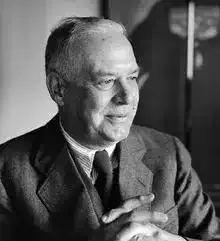
Wallace Stevens
Two Figures in Dense Violet Light
I had as lief be embraced by the portier of the hotel
As to get no more from the moonlight
Than your moist hand.
Be the voice of the night and Florida in my ear.
Use dasky words and dusky images.
Darken your speech.
Speak, even, as if I did not hear you speaking,
But spoke for you perfectly in my thoughts,
Conceiving words,
As the night conceives the sea-sound in silence,
And out of the droning sibilants makes
A serenade.
Say, puerile, that the buzzards crouch on the ridge-pole
and sleep with one eye watching the stars fall
Beyond Key West.
Say that the palms are clear in the total blue.
Are clear and are obscure; that it is night;
That the moon shines.
Read more →
332

Emily Dickinson
It is a lonesome Glee
It is a lonesome Glee-
Yet sanctifies the Mind-
With fair association-
Afar upon the Wind
A Bird to overhear
Delight without a Cause-
Arrestless as invisible-
A matter of the Skies.
Read more →
332
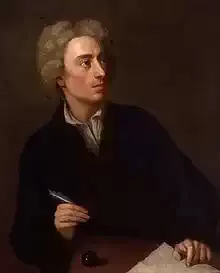
Alexander Pope
The Rape of the Lock: Canto 1
Nolueram, Belinda, tuos violare capillos;
Sedjuvat, hoc precibus me tribuisse tuis.
(Martial, Epigrams 12.84)
What dire offence from am'rous causes springs,
What mighty contests rise from trivial things,
I sing--This verse to Caryl, Muse! is due:
This, ev'n Belinda may vouchsafe to view:
Slight is the subject, but not so the praise,
If she inspire, and he approve my lays.
Say what strange motive, Goddess! could compel
A well-bred lord t' assault a gentle belle?
O say what stranger cause, yet unexplor'd,
Could make a gentle belle reject a lord?
In tasks so bold, can little men engage,
And in soft bosoms dwells such mighty rage?
Sol thro' white curtains shot a tim'rous ray,
And op'd those eyes that must eclipse the day;
Now lap-dogs give themselves the rousing shake,
And sleepless lovers, just at twelve, awake:
Thrice rung the bell, the slipper knock'd the ground,
And the press'd watch return'd a silver sound.
Belinda still her downy pillow press'd,
Her guardian sylph prolong'd the balmy rest:
'Twas he had summon'd to her silent bed
The morning dream that hover'd o'er her head;
A youth more glitt'ring than a birthnight beau,
(That ev'n in slumber caus'd her cheek to glow)
Seem'd to her ear his winning lips to lay,
And thus in whispers said, or seem'd to say.
"Fairest of mortals, thou distinguish'd care
Of thousand bright inhabitants of air!
If e'er one vision touch'd thy infant thought,
Of all the nurse and all the priest have taught,
Of airy elves by moonlight shadows seen,
The silver token, and the circled green,
Or virgins visited by angel pow'rs,
With golden crowns and wreaths of heav'nly flow'rs,
Hear and believe! thy own importance know,
Nor bound thy narrow views to things below.
Some secret truths from learned pride conceal'd,
To maids alone and children are reveal'd:
What tho' no credit doubting wits may give?
The fair and innocent shall still believe.
Know then, unnumber'd spirits round thee fly,
The light militia of the lower sky;
These, though unseen, are ever on theg,
Hang o'er the box, and hover round the Ring.
Think what an equipage thou hast in air,
And view with scorn two pages and a chair.
As now your own, our beings were of old,
And once inclos'd in woman's beauteous mould;
Thence, by a soft transition, we repair
From earthly vehicles to these of air.
Think not, when woman's transient breath is fled,
That all her vanities at once are dead;
Succeeding vanities she still regards,
And tho' she plays no more, o'erlooks the cards.
Her joy in gilded chariots, when alive,
And love of ombre, after death survive.
For when the fair in all their pride expire,
To their first elements their souls retire:
The sprites of fiery termagants in flame
Mount up, and take a Salamander's name.
Soft yielding minds to water glide away,
And sip with Nymphs, their elemental tea.
The graver prude sinks downward to a Gnome,
In search of mischief still on earth to roam.
The light coquettes in Sylphs aloft repair,
And sport and flutter in the fields of air.
Know further yet; whoever fair and chaste
Rejects mankind, is by some sylph embrac'd:
For spirits, freed from mortal laws, with ease
Assume what sexes and what shapes they please.
What guards the purity of melting maids,
In courtly balls, and midnight masquerades,
Safe from the treach'rous friend, the daring spark,
The glance by day, the whisper in the dark,
When kind occasion prompts their warm desires,
When music softens, and when dancing fires?
'Tis but their sylph, the wise celestials know,
Though honour is the word with men below.
Some nymphs there are, too conscious of their face,
For life predestin'd to the gnomes' embrace.
These swell their prospects and exalt their pride,
When offers are disdain'd, and love denied:
Then gay ideas crowd the vacant brain,
While peers, and dukes, and all their sweeping train,
And garters, stars, and coronets appear,
And in soft sounds 'Your Grace' salutes their ear.
'Tis these that early taint the female soul,
Instruct the eyes of young coquettes to roll,
Teach infant cheeks a bidden blush to know,
And little hearts to flutter at a beau.
Oft, when the world imagine women stray,
The Sylphs through mystic mazes guide their way,
Thro' all the giddy circle they pursue,
And old impertinence expel by new.
What tender maid but must a victim fall
To one man's treat, but for another's ball?
When Florio speaks, what virgin could withstand,
If gentle Damon did not squeeze her hand?
With varying vanities, from ev'ry part,
They shift the moving toyshop of their heart;
Where wigs with wigs, with sword-knots sword-knots strive,
Beaux banish beaux, and coaches coaches drive.
This erring mortals levity may call,
Oh blind to truth! the Sylphs contrive it all.
Of these am I, who thy protection claim,
A watchful sprite, and Ariel is my name.
Late, as I rang'd the crystal wilds of air,
In the clear mirror of thy ruling star
I saw, alas! some dread event impend,
Ere to the main this morning sun descend,
But Heav'n reveals not what, or how, or where:
Warn'd by the Sylph, oh pious maid, beware!
This to disclose is all thy guardian can.
Beware of all, but most beware of man!"
He said; when Shock, who thought she slept too long,
Leap'd up, and wak'd his mistress with his tongue.
'Twas then, Belinda, if report say true,
Thy eyes first open'd on a billet-doux;
Wounds, charms, and ardors were no sooner read,
But all the vision vanish'd from thy head.
And now, unveil'd, the toilet stands display'd,
Each silver vase in mystic order laid.
First, rob'd in white, the nymph intent adores
With head uncover'd, the cosmetic pow'rs.
A heav'nly image in the glass appears,
To that she bends, to that her eyes she rears;
Th' inferior priestess, at her altar's side,
Trembling, begins the sacred rites of pride.
Unnumber'd treasures ope at once, and here
The various off'rings of the world appear;
From each she nicely culls with curious toil,
And decks the goddess with the glitt'ring spoil.
This casket India's glowing gems unlocks,
And all Arabia breathes from yonder box.
The tortoise here and elephant unite,
Transform'd to combs, the speckled and the white.
Here files of pins extend their shining rows,
Puffs, powders, patches, bibles, billet-doux.
Now awful beauty puts on all its arms;
The fair each moment rises in her charms,
Repairs her smiles, awakens ev'ry grace,
And calls forth all the wonders of her face;
Sees by degrees a purer blush arise,
And keener lightnings quicken in her eyes.
The busy Sylphs surround their darling care;
These set the head, and those divide the hair,
Some fold the sleeve, whilst others plait the gown;
And Betty's prais'd for labours not her own.
Read more →
331
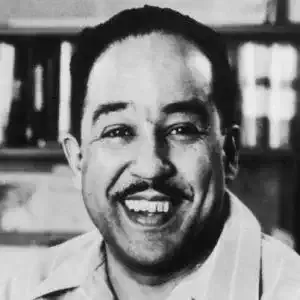
Langston Hughes
Still Here
I been scared and battered.
My hopes the wind done scattered.
Snow has friz me,
Sun has baked me,
Looks like between 'em they done
Tried to make me
Stop laughin', stop lovin', stop livin'--
But I don't care!
I'm still here!
Read more →
333
Emily Dickinson
If your Nerve, deny you
If your Nerve, deny you-
Go above your Nerve-
He can lean against the Grave,
If he fear to swerve
That's a steady posture-
Never any bend
Held of those Brass arms-
Best Giant made-
If your Soul seesaw-
Lift the Flesh door-
The Poltroon wants Oxygen-
Nothing more-
Read more →
331
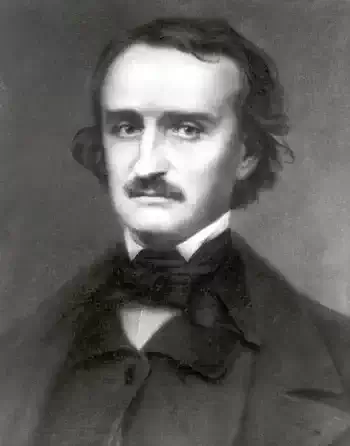
Edgar Allan Poe
To -- -- --. Ulalume: A Ballad
The skies they were ashen and sober;
The leaves they were crisped and sere
The
leaves they were withering and sere;
It was night in the lonesome October
Of my most immemorial year;
It was hard by the dim lake of Auber,
In the misty mid region of WeirIt
was down by the dank tarn of Auber,
In the ghoul-haunted woodland of Weir.
Here once, through an alley Titanic,
Of cypress, I roamed with my SoulOf
cypress, with Psyche, my Soul.
There were days when my heart was volcanic
As the scoriac rivers that roll
As
the lavas that restlessly roll
Their sulphurous currents down Yaanek
In the ultimate climes of the pole
That
groan as they roll down Mount Yaanek
In the realms of the boreal pole.
Our talk had been serious and sober,
But our thoughts they were palsied and sere
Our
memories were treacherous and sere
For we knew not the month was October,
And we marked not the night of the year(
Ah, night of all nights in the year!)
We noted not the dim lake of Auber(
Though once we had journeyed down here),
Remembered not the dank tarn of Auber,
Nor the ghoul-haunted woodland of Weir.
And now, as the night was senescent,
And star-dials pointed to morn
As
the star-dials hinted of morn
At the end of our path a liquescent
And nebulous lustre was born,
Out of which a miraculous crescent
Arose with a duplicate horn
Astarte's
bediamonded crescent
Distinct with its duplicate horn.
And I said- 'She is warmer than Dian:
She rolls through an ether of sighs
She
revels in a region of sighs:
She has seen that the tears are not dry on
These cheeks, where the worm never dies,
And has come past the stars of the Lion,
To point us the path to the skies
To
the Lethean peace of the skies
Come up, in despite of the Lion,
To shine on us with her bright eyes
Come up through the lair of the Lion,
With love in her luminous eyes.'
But Psyche, uplifting her finger,
Said- 'Sadly this star I mistrust
Her
pallor I strangely mistrust:
Oh, hasten!- oh, let us not linger!
Oh, fly!- let us fly!- for we must.'
In terror she spoke, letting sink her
Wings until they trailed in the dust
In agony sobbed, letting sink her
Plumes till they trailed in the dust
Till
they sorrowfully trailed in the dust.
I replied- 'This is nothing but dreaming:
Let us on by this tremulous light!
Let us bathe in this crystalline light!
Its Sybilic splendor is beaming
With Hope and in Beauty to-night:
See!-
it flickers up the sky through the night!
Ah, we safely may trust to its gleaming,
And be sure it will lead us aright
We safely may trust to a gleaming
That cannot but guide us aright,
Since it flickers up to Heaven through the night.'
Thus I pacified Psyche and kissed her,
And tempted her out of her gloom
And
conquered her scruples and gloom;
And we passed to the end of the vista,
But were stopped by the door of a tomb
By
the door of a legended tomb;
And I said- 'What is written, sweet sister,
On the door of this legended tomb?'
She replied- 'Ulalume- Ulalume'
Tis the vault of thy lost Ulalume!'
Then my heart it grew ashen and sober
As the leaves that were crisped and sere
As
the leaves that were withering and sere
And I cried- 'It was surely October
On this very night of last year
That I journeyed- I journeyed down here
That
I brought a dread burden down here
On
this night of all nights in the year,
Ah, what demon has tempted me here?
Well I know, now, this dim lake of AuberThis
misty mid region of WeirWell
I know, now, this dank tarn of Auber,
This ghoul-haunted woodland of Weir.'
Read more →
331
Emily Dickinson
If I should die
If I should die,
And you should live-
And time should gurgle on-
And morn should beam-
And noon should burn-
As it has usual done-
If Birds should build as early
And Bees as bustling go-
One might depart at option
From enterprise below!
'Tis sweet to know that stocks will stand
When we with Daisies lie-
That Commerce will continue-
And Trades as briskly fly-
It makes the parting tranquil
And keeps the soul serene-
That gentlemen so sprightly
Conduct the pleasing scene!
Read more →
329
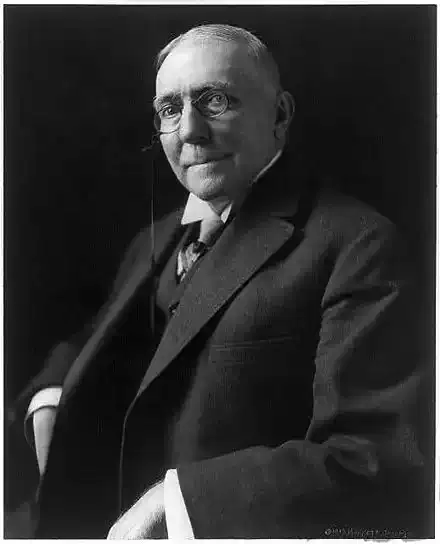
James Whitcomb Riley
My Bride That Is To Be
O soul of mine, look out and see
My bride, my bride that is to be!
Reach out with mad, impatient hands,
And draw aside futurity
As one might draw a veil aside--
And so unveil her where she stands
Madonna-like and glorified--
The queen of undiscovered lands
Of love, to where she beckons me--
My bride--my bride that is to be.
The shadow of a willow-tree
That wavers on a garden-wall
In summertime may never fall
In attitude as gracefully
As my fair bride that is to be;--
Nor ever Autumn's leaves of brown
As lightly flutter to the lawn
As fall her fairy-feet upon
The path of love she loiters down.-O'er
drops of dew she walks, and yet
Not one may stain her sandal wet--
Aye, she might _dance_ upon the way
Nor crush a single drop to spray,
So airy-like she seems to me,--
My bride, my bride that is to be.
I know not if her eyes are light
As summer skies or dark as night,--
I only know that they are dim
With mystery: In vain I peer
To make their hidden meaning clear,
While o'er their surface, like a tear
That ripples to the silken brim,
A look of longing seems to swim
All worn and wearylike to me;
And then, as suddenly, my sight
Is blinded with a smile so bright,
Through folded lids I still may see
My bride, my bride that is to be.
Her face is like a night of June
Upon whose brow the crescent-moon
Hangs pendant in a diadem
Of stars, with envy lighting them.--
And, like a wild cascade, her hair
Floods neck and shoulder, arm and wrist,
Till only through a gleaming mist
I seem to see a siren there,
With lips of love and melody
And open arms and heaving breast
Wherein I fling myself to rest,
The while my heart cries hopelessly
For my fair bride that is to be....
Nay, foolish heart and blinded eyes!
My bride hath need of no disguise.--
But, rather, let her come to me
In such a form as bent above
My pillow when in infancy
I knew not anything but love.--
O let her come from out the lands
Of Womanhood--not fairy isles,--
And let her come with Woman's hands
And Woman's eyes of tears and smiles,--
With Woman's hopefulness and grace
Of patience lighting up her face:
And let her diadem be wrought
Of kindly deed and prayerful thought,
That ever over all distress
May beam the light of cheerfulness.--
And let her feet be brave to fare
The labyrinths of doubt and care,
That, following, my own may find
The path to Heaven God designed.--
O let her come like this to me--
My bride--my bride that is to be.
Read more →
329

John Greenleaf Whittier
What The Voice Said
MADDENED by Earth's wrong and evil,
'Lord!' I cried in sudden ire,
'From Thy right hand, clothed with thunder,
Shake the bolted fire!
'Love is lost, and Faith is dying;
With the brute the man is sold;
And the dropping blood of labor
Hardens into gold.
'Here the dying wail of Famine,
There the battle's groan of pain;
And, in silence, smooth-faced Mammon
Reaping men like grain.
''Where is God, that we should fear Him?'
Thus the earth-born Titans say
'God! if Thou art living, hear us!'
Thus the weak ones pray.'
'Thou, the patient Heaven upbraiding,'
Spake a solemn Voice within;
'Weary of our Lord's forbearance,
Art thou free from sin?
'Fearless brow to Him uplifting,
Canst thou for His thunders call,
Knowing that to guilt's attraction
Evermore they fall?
'Know'st thou not all germs of evil
In thy heart await their time?
Not thyself, but God's restraining,
Stays their growth of crime.
'Couldst thou boast, O child of weakness!
O'er the sons of wrong and strife,
Were their strong temptations planted
In thy path of life?
'Thou hast seen two streamlets gushing
From one fountain, clear and free,
But by widely varying channels
Searching for the sea.
'Glideth one through greenest valleys,
Kissing them with lips still sweet;
One, mad roaring down the mountains,
Stagnates at their feet.
'Is it choice whereby the Parsee
Kneels before his mother's fire?
In his black tent did the Tartar
Choose his wandering sire?
'He alone, whose hand is bounding
Human power and human will,
Looking through each soul's surrounding,
Knows its good or ill.
'For thyself, while wrong and sorrow
Make to thee their strong appeal,
Coward wert thou not to utter
What the heart must feel.
'Earnest words must needs be spoken
When the warm heart bleeds or burns
With its scorn of wrong, or pity
For the wronged, by turns.
'But, by all thy nature's weakness,
Hidden faults and follies known,
Be thou, in rebuking evil,
Conscious of thine own.
'Not the less shall stern-eyed Duty
To thy lips her trumpet set,
But with harsher blasts shall mingle
Wailings of regret.'
Cease not, Voice of holy speaking,
Teacher sent of God, be near,
Whispering through the day's cool silence,
Let my spirit hear!
So, when thoughts of evil-doers
Waken scorn, or hatred move,
Shall a mournful fellow-feeling
Temper all with love.
Read more →
330
John Greenleaf Whittier
The Prayer-Seeker
Along the aisle where prayer was made,
A woman, all in black arrayed,
Close-veiled, between the kneeling host,
With gliding motion of a ghost,
Passed to the desk, and laid thereon
A scroll which bore these words alone,
_Pray for me_!
Back from the place of worshipping
She glided like a guilty thing
The rustle of her draperies, stirred
By hurrying feet, alone was heard;
While, full of awe, the preacher read,
As out into the dark she sped:
'_Pray for me_!'
Back to the night from whence she came,
To unimagined grief or shame!
Across the threshold of that door
None knew the burden that she bore;
Alone she left the written scroll,
The legend of a troubled soul,-_
Pray for me_!
Glide on, poor ghost of woe or sin!
Thou leav'st a common need within;
Each bears, like thee, some nameless weight,
Some misery inarticulate,
Some secret sin, some shrouded dread,
Some household sorrow all unsaid.
_Pray for us_!
Pass on! The type of all thou art,
Sad witness to the common heart!
With face in veil and seal on lip,
In mute and strange companionship,
Like thee we wander to and fro,
Dumbly imploring as we go
_Pray for us_!
Ah, who shall pray, since he who pleads
Our want perchance hath greater needs?
Yet they who make their loss the gain
Of others shall not ask in vain,
And Heaven bends low to hear the prayer
Of love from lips of self-despair
_Pray for us_!
In vain remorse and fear and hate
Beat with bruised bands against a fate
Whose walls of iron only move
And open to the touch of love.
He only feels his burdens fall
Who, taught by suffering, pities all.
_Pray for us_!
He prayeth best who leaves unguessed
The mystery of another's breast.
Why cheeks grow pale, why eyes o'erflow,
Or heads are white, thou need'st not know.
Enough to note by many a sign
That every heart hath needs like thine.
_Pray for us_!
Read more →
330
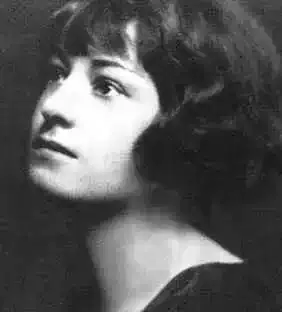
Dorothy Parker
Requiescat
Tonight my love is sleeping cold
Where none may see and none shall pass.
The daisies quicken in the mold,
And richer fares the meadow grass.
The warding cypress pleads the skies,
The mound goes level in the rain.
My love all cold and silent lies
Pray God it will not rise again!
Read more →
330
James Whitcomb Riley
The Rainy Morning
The dawn of the day was dreary,
And the lowering clouds o'erhead
Wept in a silent sorrow
Where the sweet sunshine lay dead;
And a wind came out of the eastward
Like an endless sigh of pain,
And the leaves fell down in the pathway
And writhed in the falling rain.
I had tried in a brave endeavor
To chord my harp with the sun,
But the strings would slacken ever,
And the task was a weary one:
And so, like a child impatient
And sick of a discontent,
I bowed in a shower of tear-drops
And mourned with the instrument.
And lo! as I bowed, the splendor
Of the sun bent over me,
With a touch as warm and tender
As a father's hand might be:
And, even as I felt its presence,
My clouded soul grew bright,
And the tears, like the rain of morning,
Melted in mists of light.
Read more →
330

Gwendolyn Brooks
the rites for Cousin Vit
Carried her unprotesting out the door.
Kicked back the casket-stand. But it can't hold her,
That stuff and satin aiming to enfold her,
The lid's contrition nor the bolts before.
Oh oh. Too much. Too much. Even now, surmise,
She rises in the sunshine. There she goes,
Back to the bars she knew and the repose
In love-rooms and the things in people's eyes.
Too vital and too squeaking. Must emerge.
Even now she does the snake-hips with a hiss,
Slops the bad wine across her shantung, talks
Of pregnancy, guitars and bridgework, walks
In parks or alleys, comes haply on the verge
Of happiness, haply hysterics. Is.
Read more →
329

William Butler Yeats
Veronica's Napkin
THE Heavenly Circuit; Berenice's Hair;
Tent-pole of Eden; the tent's drapery;
Symbolical glory of thc earth and air!
The Father and His angelic hierarchy
That made the magnitude and glory there
Stood in the circuit of a needle's eye.
Some found a different pole, and where it stood
A pattern on a napkin dipped in blood.
Read more →
331
Emily Dickinson
My life had stood
My life had stood--a Loaded Gun--
In Corners--till a Day
The Owner passed--identified--
And carried Me away--
And now We roam in Sovereign Woods--
And now We hunt the Doe--
And every time I speak for Him--
The Mountains straight reply--
And do I smile, such cordial light
Upon the Valley glow--
It is as a Vesuvian face
Had let its pleasure through--
And when at Night--Our good Day done--
I guard My Master's Head-'
Tis better than the Eider-Duck's
Deep Pillow--to have shared--
To foe of His--I'm deadly foe--
None stir the second time--
On whom I lay a Yellow Eye--
Or an emphatic Thumb--
Though I than He--may longer live
He longer must--than I--
For I have but the power to kill,
Without--the power to die--
Read more →
329
John Greenleaf Whittier
Benedicite
God's love and peace be with thee, where
Soe'er this soft autumnal air
Lifts the dark tresses of thy hair.
Whether through city casements comes
Its kiss to thee, in crowded rooms,
Or, out among the woodland blooms,
It freshens o'er thy thoughtful face,
Imparting, in its glad embrace,
Beauty to beauty, grace to grace!
Fair Nature's book together read,
The old wood-paths that knew our tread,
The maple shadows overhead,-
The hills we climbed, the river seen
By gleams along its deep ravine,-All
keep thy memory fresh and green.
Where'er I look, where'er I stray,
Thy thought goes with me on my way,
And hence the prayer I breathe to-day;
O'er lapse of time and change of scene,
The weary waste which lies between
Thyself and me, my heart I lean.
Thou lack'st not Friendship's spell-word, nor
The half-unconscious power to draw
All hearts to thine by Love's sweet law.
With these good gifts of God is cast
Thy lot, and many a charm thou hast
To hold the blessed angels fast.
If, then, a fervent wish for thee
The gracious heavens will heed from me,
What should, dear heart, its burden be?
The sighing of a shaken reed,-What
can I more than meekly plead
The greatness of our common need?
God's love,--unchanging, pure, and true,-The
Paraclete white-shining through
His peace,--the fall of Hermon's dew!
With such a prayer, on this sweet day,
As thou mayst hear and I may say,
I greet thee, dearest, far away!
Read more →
331

Henry Wadsworth Longfellow
The Golden Legend: IV. The Road To Hirschau
PRINCE HENRY _and_ ELSIE, _with their attendants, on
horseback._
_Elsie._ Onward and onward the highway runs
to the distant city, impatiently bearing
Tidings of human joy and disaster, of love and of
hate, of doing and daring!
_Prince Henry._ This life of ours is a wild aeolian
harp of many a joyous strain,
But under them all there runs a loud perpetual wail,
as of souls in pain.
_Elsie._ Faith alone can interpret life, and the heart
that aches and bleeds with the stigma
Of pain, alone bears the likeness of Christ, and can
comprehend its dark enigma.
_Prince Henry._ Man is selfish, and seeketh pleasure
with little care of what may betide;
Else why am I travelling here beside thee, a demon
that rides by an angel's side?
_Elsie._ All the hedges are white with dust, and
the great dog under the creaking wain
Hangs his head in the lazy heat, while onward the
horses toil and strain
_Prince Henry._ Now they stop at the wayside inn,
and the wagoner laughs with the landlord's daughter,
While out of the dripping trough the horses distend
their leathern sides with water.
_Elsie._ All through life there are wayside inns,
where man may refresh his soul with love;
Even the lowest may quench his thirst at rivulets fed
by springs from above.
_Prince Henry._ Yonder, where rises the cross of
stone, our journey along the highway ends,
And over the fields, by a bridle path, down into the
broad green valley descends.
_Elsie._ I am not sorry to leave behind the beaten
road with its dust and heat;
The air will be sweeter far, and the turf will be softer
under our horses' feet.
(_They turn down a green lane._)
_Elsie._ Sweet is the air with the budding haws,
and the valley stretching for miles below
Is white with blossoming cheery trees, as if just covered
with lightest snow.
_Prince Henry._ Over our heads a white cascade is
gleaming against the distant hill;
We cannot hear it, nor see it move, but it hangs like
a banner when winds are still.
_Elsie._ Damp and cool is this deep ravine, and
cool the sound of the brook by our side!
What is this castle that rises above us, and lords it
over a land so wide?
_Prince Henry._ It is the home of the Counts of
Calva; well have I known these scenes of old,
Well I remember each tower and turret, remember the
brooklet, the wood, and the wold.
_Elsie._ Hark! from the little village below us the
bells of the church are ringing for rain!
Priests and peasants in long procession come forth
and kneel on the arid plain.
_Prince Henry._ They have not long to wait, for I
see in the south uprising a little cloud,
That before the sun shall be set will cover the sky
above us as with a shroud.
(_They pass on._)
* * * * *
THE CONVENT OF HIRSCHAU IN THE BLACK FOREST.
* * * * *
_The Convent cellar._ FRIAR CLAUS _comes in with a
light and a basket of empty flagons._
_Friar Claus._ I always enter this sacred place
With a thoughtful, solemn, and reverent pace,
Pausing long enough on each stair
To breathe an ejaculatory prayer,
And a benediction on the vines
That produce these various sorts of wines!
For my part, I am well content
That we have got through with the tedious Lent!
Fasting is all very well for those
Who have to contend with invisible foes;
But I am quite sure it does not agree
With a quiet, peaceable man like me,
Who am not of that nervous and meagre kind
That are always distressed in body and mind!
And at times it really does me good
To come down among this brotherhood,
Dwelling forever under ground,
Silent, contemplative, round and sound;
Each one old, and brown with mould,
But filled to the lips with the ardor of youth,
With the latent power and love of truth,
And with virtues fervent and manifold.
I have heard it said, that at Easter-tide,
When buds are swelling on every side,
And the sap begins to move in the vine.
Then in all the cellars, far and wide,
The oldest, as well as the newest, wine
Begins to stir itself, and ferment,
With a kind of revolt and discontent
At being so long in darkness pent,
And fain would burst from its sombre tun
To bask on the hillside in the sun;
As in the bosom of us poor friars,
The tumult of half-subdued desires
For the world that we have left behind
Disturbs at times all peace of mind!
And now that we have lived through Lent,
My duty it is, as often before,
To open awhile the prison-door,
And give these restless spirits vent.
Now here is a cask that stands alone,
And has stood a hundred years or more,
Its beard of cobwebs, long and hoar,
Trailing and sweeping along the floor,
Like Barbarossa, who sits in his cave,
Taciturn, sombre, sedate, and grave,
Till his beard has grown through the table of stone!
It is of the quick and not of the dead!
In its veins the blood is hot and red,
And a heart still beats in those ribs of oak
That time may have tamed, but has not broke;
It comes from Bacharach on the Rhine,
Is one of the three best kinds of wine,
And costs some hundred florins the ohm;
But that I do not consider dear,
When I remember that every year
Four butts are sent to the Pope of Rome.
And whenever a goblet thereof I drain,
The old rhyme keeps running in my brain:
At Bacharach on the Rhine,
At Hochheim on the Main,
And at Wuerzburg on the Stein,
Grow the three best kinds of wine!
They are all good wines, and better far
Than those of the Neckar, or those of the Ahr
In particular, Wuerzburg well may boast
Of its blessed wine of the Holy Ghost,
Which of all wines I like the most.
This I shall draw for the Abbot's drinking,
Who seems to be much of my way of thinking.
(_Fills a flagon._)
Ah! how the streamlet laughs and sings!
What a delicious fragrance springs
From the deep flagon, while it fills,
As of hyacinths and daffodils!
Between this cask and the Abbot's lips
Many have been the sips and slips;
Many have been the draughts of wine,
On their way to his, that have stopped at mine;
And many a time my soul has hankered
For a deep draught out of his silver tankard,
When it should have been busy with other affairs,
Less with its longings and more with its prayers.
But now there is no such awkward condition,
No danger of death and eternal perdition;
So here's to the Abbot and Brothers all,
Who dwell in this convent of Peter and Paul!
(_He drinks._)
O cordial delicious! O soother of pain!
It flashes like sunshine into my brain!
A benison rest on the Bishop who sends
Such a fudder of wine as this to his friends!
And now a flagon for such as may ask
A draught from the noble Bacharach cask,
And I will be gone, though I know full well
The cellar's a cheerfuller place than the cell.
Behold where he stands, all sound and good,
Brown and old in his oaken hood;
Silent he seems externally
As any Carthusian monk may be;
But within, what a spirit of deep unrest!
What a seething and simmering in his breast!
As if the heaving of his great heart
Would burst his belt of oak apart!
Let me unloose this button of wood,
And quiet a little his turbulent mood.
(_Sets it running._)
See! how its currents gleam and shine,
As if they had caught the purple hues
Of autumn sunsets on the Rhine,
Descending and mingling with the dews;
Or as if the grapes were stained with the blood
Of the innocent boy, who, some years back,
Was taken and crucified by the Jews,
In that ancient town of Bacharach;
Perdition upon those infidel Jews,
In that ancient town of Bacharach!
The beautiful town, that gives us wine
With the fragrant odor of Muscadine!
I should deem it wrong to let this pass
Without first touching my lips to the glass,
For here in the midst of the current I stand,
Like the stone Pfalz in the midst of the river
Taking toll upon either hand,
And much more grateful to the giver.
(_He drinks._)
Here, now, is a very inferior kind,
Such as in any town you may find,
Such as one might imagine would suit
The rascal who drank wine out of a boot,
And, after all, it was not a crime,
For he won thereby Dorf Hueffelsheim.
A jolly old toper! who at a pull
Could drink a postilion's jack boot full,
And ask with a laugh, when that was done,
If the fellow had left the other one!
This wine is as good as we can afford
To the friars, who sit at the lower board,
And cannot distinguish bad from good,
And are far better off than if they could,
Being rather the rude disciples of beer
Than of anything more refined and dear!
(_Fills the other flagon and departs._)
* * * * *
THE SCRIPTORIUM.
FRIAR PACIFICUS _transcribing and illuminating._
_Friar Pacificus_ It is growing dark! Yet one line more,
And then my work for today is o'er.
I come again to the name of the Lord!
Ere I that awful name record,
That is spoken so lightly among men,
Let me pause awhile, and wash my pen;
Pure from blemish and blot must it be
When it writes that word of mystery!
Thus have I labored on and on,
Nearly through the Gospel of John.
Can it be that from the lips
Of this same gentle Evangelist,
That Christ himself perhaps has kissed,
Came the dread Apocalypse!
It has a very awful look,
As it stands there at the end of the book,
Like the sun in an eclipse.
Ah me! when I think of that vision divine,
Think of writing it, line by line,
I stand in awe of the terrible curse,
Like the trump of doom, in the closing verse!
God forgive me! if ever I
Take aught from the book of that Prophecy,
Lest my part too should be taken away
From the Book of Life on the Judgment Day.
This is well written, though I say it!
I should not be afraid to display it,
In open day, on the selfsame shelf
With the writings of St Thecla herself,
Or of Theodosius, who of old
Wrote the Gospels in letters of gold!
That goodly folio standing yonder,
Without a single blot or blunder,
Would not bear away the palm from mine,
If we should compare them line for line.
There, now, is an initial letter!
King Rene himself never made a better!
Finished down to the leaf and the snail,
Down to the eyes on the peacock's tail!
And now, as I turn the volume over,
And see what lies between cover and cover,
What treasures of art these pages hold,
All ablaze with crimson and gold,
God forgive me! I seem to feel
A certain satisfaction steal
Into my heart, and into my brain,
As if my talent had not lain
Wrapped in a napkin, and all in vain.
Yes, I might almost say to the Lord,
Here is a copy of thy Word,
Written out with much toil and pain;
Take it, O Lord, and let it be
As something I have done for thee!
(_He looks from the window._)
How sweet the air is! How fair the scene!
I wish I had as lovely a green
To paint my landscapes and my leaves!
How the swallows twitter under the eaves!
There, now, there is one in her nest;
I can just catch a glimpse of her head and breast,
And will sketch her thus, in her quiet nook,
In the margin of my Gospel book.
(_He makes a sketch._)
I can see no more. Through the valley yonder
A shower is passing; I hear the thunder
Mutter its curses in the air,
The Devil's own and only prayer!
The dusty road is brown with rain,
And speeding on with might and main,
Hitherward rides a gallant train.
They do not parley, they cannot wait,
But hurry in at the convent gate.
What a fair lady! and beside her
What a handsome, graceful, noble rider!
Now she gives him her hand to alight;
They will beg a shelter for the night.
I will go down to the corridor,
And try to see that face once more;
It will do for the face of some beautiful Saint,
Or for one of the Maries I shall paint.
(_Goes out._)
* * * * *
THE CLOISTERS.
* * * * *
_The_ ABBOT ERNESTUS _pacing to and fro._
_Abbot._ Slowly, slowly up the wall
Steals the sunshine, steals the shade;
Evening damps begin to fall,
Evening shadows are displayed.
Round me, o'er me, everywhere,
All the sky is grand with clouds,
And athwart the evening air
Wheel the swallows home in crowds.
Shafts of sunshine from the west
Paint the dusky windows red;
Darker shadows, deeper rest,
Underneath and overhead.
Darker, darker, and more wan,
In my breast the shadows fall;
Upward steals the life of man,
As the sunshine from the wall.
From the wall into the sky,
From the roof along the spire;
Ah, the souls of those that die
Are but sunbeams lifted higher.
(_Enter_ PRINCE HENRY.)
_Prince Henry._ Christ is arisen!
_Abbot._ Amen! he is arisen!
His peace be with you!
_Prince Henry._ Here it reigns forever!
The peace of God, that passeth understanding,
Reigns in these cloisters and these corridors,
Are you Ernestus, Abbot of the convent?
_Abbot._ I am.
_Prince Henry._ And I Prince Henry of Hoheneck,
Who crave your hospitality to-night.
_Abbot._ You are thrice welcome to our humble walls.
You do us honor; and we shall requite it,
I fear, but poorly, entertaining you
With Paschal eggs, and our poor convent wine,
The remnants of our Easter holidays.
_Prince Henry._ How fares it with the holy monks of Hirschau?
Are all things well with them?
_Abbot._ All things are well.
_Prince Henry._ A noble convent! I have known it long
By the report of travellers. I now see
Their commendations lag behind the truth.
You lie here in the valley of the Nagold
As in a nest: and the still river, gliding
Along its bed, is like an admonition
How all things pass. Your lands are rich and ample,
And your revenues large. God's benediction
Rests on your convent.
_Abbot._ By our charities
We strive to merit it. Our Lord and Master,
When he departed, left us in his will,
As our best legacy on earth, the poor!
These we have always with us; had we not,
Our hearts would grow as hard as are these stones.
_Prince Henry._ If I remember right, the Counts of Calva
Founded your convent.
_Abbot._ Even as you say.
_Prince Henry._ And, if I err not, it is very old.
_Abbot._ Within these cloisters lie already buried
Twelve holy Abbots. Underneath the flags
On which we stand, the Abbot William lies,
Of blessed memory.
_Prince Henry._ And whose tomb is that,
Which bears the brass escutcheon?
_Abbot._ A benefactor's.
Conrad, a Count of Calva, he who stood
Godfather to our bells.
_Prince Henry._ Your monks are learned
And holy men, I trust.
_Abbot._ There are among them
Learned and holy men. Yet in this age
We need another Hildebrand, to shake
And purify us like a mighty wind.
The world is wicked, and sometimes I wonder
God does not lose his patience with it wholly,
And shatter it like glass! Even here, at times,
Within these walls, where all should be at peace,
I have my trials. Time has laid his hand
Upon my heart, gently, not smiting it,
But as a harper lays his open palm
Upon his harp, to deaden its vibrations.
Ashes are on my head, and on my lips
Sackcloth, and in my breast a heaviness
And weariness of life, that makes me ready
To say to the dead Abbots under us,
'Make room for me!' Only I see the dusk
Of evening twilight coming, and have not
Completed half my task; and so at times
The thought of my shortcomings in this life
Falls like a shadow on the life to come.
_Prince Henry._ We must all die, and not the old alone;
The young have no exemption from that doom.
_Abbot._ Ah, yes! the young may die, but the old must!
That is the difference.
_Prince Henry._ I have heard much laud
Of your transcribers. Your Scriptorium
Is famous among all, your manuscripts
Praised for their beauty and their excellence.
_Abbot._ That is indeed our boast. If you desire it,
You shall behold these treasures. And meanwhile
Shall the Refectorarius bestow
Your horses and attendants for the night.
(_They go in. The Vesper-bell rings._)
* * * * *
THE CHAPEL.
* * * * *
_Vespers; after which the monks retire, a chorister
leading an old monk who is blind_.
_Prince Henry._ They are all gone, save one who lingers,
Absorbed in deep and silent prayer.
As if his heart could find no rest,
At times he beats his heaving breast
With clenched and convulsive fingers,
Then lifts them trembling in the air.
A chorister, with golden hair,
Guides hitherward his heavy pace.
Can it be so? Or does my sight
Deceive me in the uncertain light?
Ah no! I recognize that face,
Though Time has touched it in his flight,
And changed the auburn hair to white.
It is Count Hugo of the Rhine,
The deadliest foe of all our race,
And hateful unto me and mine!
_The Blind Monk_. Who is it that doth stand so near
His whispered words I almost hear?
_Prince Henry_. I am Prince Henry of Hoheneck,
And you, Count Hugo of the Rhine!
I know you, and I see the scar,
The brand upon your forehead, shine
And redden like a baleful star!
_The Blind Monk_. Count Hugo once, but now the wreck
Of what I was. O Hoheneck!
The passionate will, the pride, the wrath
That bore me headlong on my path,
Stumbled and staggered into fear,
And failed me in my mad career,
As a tired steed some evil-doer,
Alone upon a desolate moor,
Bewildered, lost, deserted, blind,
And hearing loud and close behind
The o'ertaking steps of his pursuer.
Then suddenly, from the dark there came
A voice that called me by my name,
And said to me, 'Kneel down and pray!'
And so my terror passed away,
Passed utterly away forever.
Contrition, penitence, remorse,
Came on me, with o'erwhelming force;
A hope, a longing, an endeavor,
By days of penance and nights of prayer,
To frustrate and defeat despair!
Calm, deep, and still is now my heart.
With tranquil waters overflowed;
A lake whose unseen fountains start,
Where once the hot volcano glowed.
And you, O Prince of Hoheneck!
Have known me in that earlier time,
A man of violence and crime,
Whose passions brooked no curb nor check.
Behold me now, in gentler mood,
One of this holy brotherhood.
Give me your hand; here let me kneel;
Make your reproaches sharp as steel;
Spurn me, and smite me on each cheek;
No violence can harm the meek,
There is no wound Christ cannot heal!
Yes; lift your princely hand, and take
Revenge, if 't is revenge you seek,
Then pardon me, for Jesus' sake!
_Prince Henry._ Arise, Count Hugo! let there be
No farther strife nor enmity
Between us twain; we both have erred!
Too rash in act, too wroth in word,
From the beginning have we stood
In fierce, defiant attitude,
Each thoughtless of the other's right,
And each reliant on his might.
But now our souls are more subdued;
The hand of God, and not in vain,
Has touched us with the fire of pain.
Let us kneel down, and side by side
Pray, till our souls are purified,
And pardon will not be denied!
(_They kneel._)
* * * * *
THE REFECTORY.
* * * * *
_Gaudiolum of Monks at midnight. LUCIFER disguised
as a Friar._
_Friar Paul (sings)._ Ave! color vini clari,
Dulcis potus, non aman,
Tua nos inebriari
Digneris potentia!
_Friar Cuthbert._ Not so much noise, my worthy freres,
You'll disturb the Abbot at his prayers.
_Friar Paul (sings)._ O! quam placens in colore!
O! quam fragrans in odore!
O! quam sapidum in ore!
Dulce linguse vinculum!
_Friar Cuthbert._ I should think your tongue had
broken its chain!
_Friar Paul (sings)._ Felix venter quern intrabis!
Felix guttur quod rigabis!
Felix os quod tu lavabis!
Et beata labia!
_Friar Cuthbert._ Peace! I say, peace!
Will you never cease!
You will rouse up the Abbot, I tell you again!
_Friar John._ No danger! to-night he will let us alone,
As I happen to know he has guests of his own.
_Friar Cuthbert._ Who are they?
_Friar John._ A German Prince and his train,
Who arrived here just before the rain.
There is with him a damsel fair to see,
As slender and graceful as a reed!
When she alighted from her steed,
It seemed like a blossom blown from a tree.
_Friar Cuthbert._ None of your pale-faced girls for me!
(_Kisses the girl at his side_.)
_Friar John._ Come, old fellow, drink down to your peg!
do not drink any farther, I beg!
_Friar Paul (sings)._ In the days of gold,
The days of old,
Cross of wood
And bishop of gold!
_Friar Cuthbert (to the girl)._ What an infernal racket and din!
No need not blush so, that's no sin.
You look very holy in this disguise,
Though there's something wicked in your eyes!
_Friar Paul (continues.)_ Now we have changed
That law so good,
To cross of gold
And bishop of wood!
_Friar Cuthbert._ I like your sweet face under a hood.
Sister! how came you into this way?
_Girl._ It was you, Friar Cuthbert, who led me astray.
Have you forgotten that day in June,
When the church was so cool in the afternoon,
And I came in to confess my sins?
That is where my ruin begins.
_Friar John._ What is the name of yonder friar,
With an eye that glows like a coal of fire,
And such a black mass of tangled hair?
_Friar Paul._ He who is sitting there,
With a rollicking,
Devil may care,
Free and easy look and air,
As if he were used to such feasting and frollicking?
_Friar John._ The same.
_Friar Paul._ He's a stranger. You had better ask his name,
And where he is going, and whence he came.
_Friar John._ Hallo! Sir Friar!
_Friar Paul._ You must raise your voice a little higher,
He does not seem to hear what you say.
Now, try again! He is looking this way.
_Friar John._ Hallo! Sir Friar,
We wish to inquire
Whence you came, and where you are going,
And anything else that is worth the knowing.
So be so good as to open your head.
_Lucifer._ I am a Frenchman born and bred,
Going on a pilgrimage to Rome.
My home
Is the convent of St. Gildas de Rhuys,
Of which, very like, you never have heard.
_Monks._ Never a word!
_Lucifer._ You must know, then, it is in the diocese
Called the Diocese of Vannes,
In the province of Brittany.
From the gray rocks of Morbihan
It overlooks the angry sea;
The very seashore where,
In his great despair,
Abbot Abelard walked to and fro,
Filling the night with woe,
And wailing aloud to the merciless seas
The name of his sweet Heloise!
Whilst overhead
The convent windows gleamed as red
As the fiery eyes of the monks within,
Who with jovial din
Gave themselves up to all kinds of sin!
Ha! that is a convent! that is an abbey!
Over the doors,
None of your death-heads carved in wood,
None of your Saints looking pious and good,
None of your Patriarchs old and shabby!
But the heads and tusks of boars,
And the cells
Hung all round with the fells
of the fallow-deer,
And then what cheer!
What jolly, fat friars,
Sitting round the great, roaring fires,
Roaring louder than they,
With their strong wines,
And their concubines,
And never a bell,
With its swagger and swell,
Calling you up with a start of affright
In the dead of night,
To send you grumbling down dark stairs,
To mumble your prayers,
But the cheery crow
Of cocks in the yard below,
After daybreak, an hour or so,
And the barking of deep-mouthed hounds,
These are the sounds
That, instead of bells, salute the ear.
And then all day
Up and away
Through the forest, hunting the deer!
Ah, my friends! I'm afraid that here
You are a little too pious, a little too tame,
And the more is the shame,
It is the greatest folly
Not to be jolly;
That's what I think!
Come, drink, drink,
Drink, and die game!
_Monks,_ And your Abbot What's-his-name?
_Lucifer._ Abelard!
_Monks._ Did he drink hard?
_Lucifer._ O, no! Not he!
He was a dry old fellow,
Without juice enough to get thoroughly mellow.
There he stood,
Lowering at us in sullen mood,
As if he had come into Brittany
Just to reform our brotherhood!
(_A roar of laughter_.)
But you see
It never would do!
For some of us knew a thing or two,
In the Abbey of St. Gildas de Rhuys!
For instance, the great ado
With old Fulbert's niece,
The young and lovely Heloise!
_Friar John._ Stop there, if you please,
Till we drink to the fair Heloise.
_All (drinking and shouting)._ Heloise! Heloise!
(_The Chapel-bell tolls_.)
_Lucifer (starting)._ What is that bell for? Are you such asses
As to keep up the fashion of midnight masses?
_Friar Cuthbert._ It is only a poor, unfortunate brother,
Who is gifted with most miraculous powers
Of getting up at all sorts of hours,
And, by way of penance and Christian meekness,
Of creeping silently out of his cell
To take a pull at that hideous bell;
So that all the monks who are lying awake
May murmur some kind of prayer for his sake,
And adapted to his peculiar weakness!
_Friar John._ From frailty and fall-
_All._ Good Lord, deliver us all!
_Friar Cuthbert._ And before the bell for matins sounds,
He takes his lantern, and goes the rounds,
Flashing it into our sleepy eyes,
Merely to say it is time to arise.
But enough of that. Go on, if you please,
With your story about St. Gildas de Rhuys.
_Lucifer._ Well, it finally came to pass
That, half in fun and half in malice,
One Sunday at Mass
We put some poison into the chalice.
But, either by accident or design,
Peter Abelard kept away
From the chapel that day,
And a poor, young friar, who in his stead
Drank the sacramental wine,
Fell on the steps of the altar, dead!
But look! do you see at the window there
That face, with a look of grief and despair,
That ghastly face, as of one in pain?
_Monks._ Who? where?
_Lucifer._ As I spoke, it vanished away again.
_Friar Cuthbert._ It is that nefarious
Siebald the Refectorarius.
That fellow is always playing the scout,
Creeping and peeping and prowling about;
And then he regales
The Abbot with Scandalous tales.
_Lucifer_. A spy in the convent? One of the brothers
Telling scandalous tales of the others?
Out upon him, the lazy loon!
I would put a stop to that pretty soon,
In a way he should rue it.
_Monks_. How shall we do it?
_Lucifer_. Do you, brother Paul,
Creep under the window, close to the wall,
And open it suddenly when I call.
Then seize the villain by the hair,
And hold him there,
And punish him soundly, once for all.
_Friar Cuthbert_. As St. Dustan of old,
We are told,
Once caught the Devil by the nose!
_Lucifer_. Ha! ha! that story is very clever,
But has no foundation whatsoever.
Quick! for I see his face again
Glaring in at the window pane;
Now! now! and do not spare your blows.
(FRIAR PAUL _opens the window suddenly, and seizes_
SIEBALD. _They beat him._)
_Friar Siebald_. Help! help! are you going to slay me?
_Friar Paul_. That will teach you again to betray me!
_Friar Siebald_. Mercy! mercy!
_Friar Paul_ (_shouting and beating_). Rumpas bellorum lorum,
Vim confer amorum
Morum verorum, rorun.
Tu plena polorum!
_Lucifer_. Who stands in the doorway yonder,
Stretching out his trembling hand,
Just as Abelard used to stand,
The flash of his keen, black eyes
Forerunning the thunder?
_The Monks (in confusion)_. The Abbot! the
Abbot!
_Friar Cuthbert (to the girl)_. Put on your disguise!
_Friar Francis_. Hide the great flagon
From the eyes of the dragon!
_Friar Cuthbert_. Pull the brown hood over your face,
Lest you bring me into disgrace!
_Abbot_. What means this revel and carouse?
Is this a tavern and drinking-house?
Are you Christian monks, or heathen devils,
To pollute this convent with your revels?
Were Peter Damian still upon earth,
To be shocked by such ungodly mirth,
He would write your names, with pen of gall,
In his Book of Gomorrah, one and all!
Away, you drunkards! to your cells,
And pray till you hear the matin-bells;
You, Brother Francis, and you, Brother Paul!
And as a penance mark each prayer
With the scourge upon your shoulders bare;
Nothing atones for such a sin
But the blood that follows the discipline.
And you, Brother Cuthbert, come with me
Alone into the sacristy;
You, who should be a guide to your brothers,
And are ten times worse than all the others,
For you I've a draught that has long been brewing
You shall do a penance worth the doing!
Away to your prayers, then, one and all!
I wonder the very, convent wall
Does not crumble and crush you in its fall!
* * * * *
THE NEIGHBORING NUNNERY.
* * * * *
_The_ ABBESS IRMINGARD _sitting with_ ELSIE _in the
moonlight._
_Irmingard_ The night is silent, the wind is still,
The moon is looking from yonder hill
Down upon convent, and grove, and garden;
The clouds have passed away from her face,
Leaving behind them no sorrowful trace,
Only the tender and quiet grace
Of one, whose heart had been healed with pardon!
And such am I. My soul within
Was dark with passion and soiled with sin.
But now its wounds are healed again;
Gone are the anguish, the terror, and pain;
For across that desolate land of woe,
O'er whose burning sands I was forced to go,
A wind from heaven began to blow;
And all my being trembled and shook,
As the leaves of the tree, or the grass of the field,
And I was healed, as the sick are healed,
When fanned by the leaves of the Holy Book!
As thou sittest in the moonlight there,
Its glory flooding thy golden hair,
And the only darkness that which lies
In the haunted chambers of thine eyes,
I feel my soul drawn unto thee,
Strangely, and strongly, and more and more,
As to one I have known and loved before;
For every soul is akin to me
That dwells in the land of mystery!
I am the Lady Irmingard,
Born of a noble race and name!
Many a wandering Suabian bard,
Whose life was dreary, and bleak, and hard,
Has found through me the way to fame.
Brief and bright were those days, and the night
Which followed was full of a lurid light.
Love, that of every woman's heart
Will have the whole, and not a part,
That is to her, in Nature's plan,
More than ambition is to man,
Her light, her life, her very breath,
With no alternative but death,
Found me a maiden soft and young,
Just from the convent's cloistered school,
And seated on my lowly stool,
Attentive while the minstrels sung.
Gallant, graceful, gentle, tall,
Fairest, noblest, best of all,
Was Walter of the Vogelweid,
And, whatsoever may betide,
Still I think of him with pride!
His song was of the summer-time
The very birds sang in his rhyme;
The sunshine, the delicious air,
The fragrance of the flowers, were there,
And I grew restless as I heard,
Restless and buoyant as a bird,
Down soft, aerial currents sailing,
O'er blossomed orchards, and fields in bloom,
And through the momentary gloom
Of shadows o'er the landscape trailing,
Yielding and borne I knew not where,
But feeling resistance unavailing.
And thus, unnoticed and apart,
And more by accident than choice.
I listened to that single voice
Until the chambers of my heart
Were filled with it by night and day,
One night,--it was a night in May,--
Within the garden, unawares,
Under the blossoms in the gloom,
I heard it utter my own name
With protestations and wild prayers;
And it rang through me, and became
Like the archangel's trump of doom,
Which the soul hears, and must obey;
And mine arose as from a tomb.
My former life now seemed to me
Such as hereafter death may be,
When in the great Eternity
We shall awake and find it day.
It was a dream, and would not stay;
A dream, that in a single night
Faded and vanished out of sight.
My father's anger followed fast
This passion, as a freshening blast
Seeks out and fans the fire, whose rage
It may increase, but not assuage.
And he exclaimed: 'No wandering bard
Shall win thy hand, O Irmingard!
For which Prince Henry of Hoheneck
By messenger and letter sues.'
Gently, but firmly, I replied:
'Henry of Hoheneck I discard!
Never the hand of Irmingard
Shall lie in his as the hand of a bride!'
This said I, Walter, for thy sake:
This said I, for I could not choose.
After a pause, my father spake
In that cold and deliberate tone
Which turns the hearer into stone,
And seems itself the act to be
That follows with such dread certainty;
'This, or the cloister and the veil!'
No other words than these he said,
But they were like a funeral wail;
My life was ended, my heart was dead.
That night from the castle-gate went down,
With silent, slow, and stealthy pace,
Two shadows, mounted on shadowy steeds,
Taking the narrow path that leads
Into the forest dense and brown,
In the leafy darkness of the place,
One could not distinguish form nor face,
Only a bulk without a shape,
A darker shadow in the shade;
One scarce could say it moved or stayed,
Thus it was we made our escape!
A foaming brook, with many a bound,
Followed us like a playful hound;
Then leaped before us, and in the hollow
Paused, and waited for us to follow,
And seemed impatient, and afraid
That our tardy flight should be betrayed
By the sound our horses' hoof-beats made,
And when we reached the plain below,
He paused a moment and drew rein
To look back at the castle again;
And we saw the windows all aglow
With lights, that were passing to and fro;
Our hearts with terror ceased to beat;
The brook crept silent to our feet;
We knew what most we feared to know.
Then suddenly horns began to blow;
And we heard a shout, and a heavy tramp,
And our horses snorted in the damp
Night-air of the meadows green and wide,
And in a moment, side by side,
So close, they must have seemed but one,
The shadows across the moonlight run,
And another came, and swept behind,
Like the shadow of clouds before the wind!
How I remember that breathless flight
Across the moors, in the summer night!
How under our feet the long, white road
Backward like a river flowed,
Sweeping with it fences and hedges,
Whilst farther away, and overhead,
Paler than I, with fear and dread,
The moon fled with us, as we fled
Along the forest's jagged edges!
All this I can remember well;
But of what afterward befell
I nothing farther can recall
Than a blind, desperate, headlong fall;
The rest is a blank and darkness all.
When I awoke out of this swoon,
The sun was shining, not the moon,
Making a cross upon the wall
With the bars of my windows narrow and tall;
And I prayed to it, as I had been wont to pray,
From early childhood, day by day,
Each morning, as in bed I lay!
I was lying again in my own room!
And I thanked God, in my fever and pain,
That those shadows on the midnight plain
Were gone, and could not come again!
I struggled no longer with my doom!
This happened many years ago.
I left my father's home to come
Like Catherine to her martyrdom,
For blindly I esteemed it so.
And when I heard the convent door
Behind me close, to ope no more,
I felt it smite me like a blow,
Through all my limbs a shudder ran,
And on my bruised spirit fell
The dampness of my narrow cell
As night-air on a wounded man,
Giving intolerable pain.
But now a better life began,
I felt the agony decrease
By slow degrees, then wholly cease,
Ending in perfect rest and peace!
It was not apathy, nor dulness,
That weighed and pressed upon my brain,
But the same passion I had given
To earth before, now turned to heaven
With all its overflowing fulness.
Alas! the world is full of peril!
The path that runs through the fairest meads,
On the sunniest side of the valley, leads
Into a region bleak and sterile!
Alike in the high-born and the lowly,
The will is feeble, and passion strong.
We cannot sever right from wrong;
Some falsehood mingles with all truth;
Nor is it strange the heart of youth
Should waver and comprehend but slowly
The things that are holy and unholy!
But in this sacred and calm retreat,
We are all well and safely shielded
From winds that blow, and waves that beat,
From the cold, and rain, and blighting heat,
To which the strongest hearts have yielded.
Here we stand as the Virgins Seven,
For our celestial bridegroom yearning;
Our hearts are lamps forever burning,
With a steady and unwavering flame,
Pointing upward, forever the same,
Steadily upward toward the Heaven!
The moon is hidden behind a cloud;
A sudden darkness fills the room,
And thy deep eyes, amid the gloom,
Shine like jewels in a shroud.
On the leaves is a sound of falling rain;
A bird, awakened in its nest,
Gives a faint twitter of unrest,
Then smoothes its plumes and sleeps again.
No other sounds than these I hear;
The hour of midnight must be near.
Thou art o'erspent with the day's fatigue
Of riding many a dusty league;
Sink, then, gently to thy slumber;
Me so many cares encumber,
So many ghosts, and forms of fright,
Have started from their graves to-night,
They have driven sleep from mine eyes away:
I will go down to the chapel and pray.
Read more →
332

Mirza Ghalib
In Her Every Indication
Although in her every indication, the aim is something else
If she shows her affection(with me) , then different suspicion arises
Oh Lord, 'they' have not understood, nor will [they] understand, my speech
Give 'them' another heart, if you don't give me a different tongue
Does that glance of coquetry have a connection with the eyebrow?
It is certainly an arrow- perhaps it has a different bow
If you're in the city, then what grief do I have? when we get up
I will go and bring back from the bazaar a different heart and life
Although [I /we] became quick-handed / deft in idol-breaking
If I am alive, then in my path there will be many heavy-stones
The blood of the liver is in turmoil—or I would have wept to my heart's content
If I had had a number of different pure-blood-scattering eyes
I will die [of love] for that voice, although my head may fly off!
But let her keep saying to the executioner,'Yes, more/another! '
People are deceived about the world-{heating/burning} sun
Every day I show one different hidden scar/wound
There are many good poets in this world.
But it is said that Ghalib is in a league of his own.
Read more →
331
Emily Dickinson
A single Screw of Flesh
Is all that pins the Soul
That stands for Deity, to Mine,
Upon my side the Veil-
Once witnessed of the Gauze-
Its name is put away
As far from mine, as if no plight
Had printed yesterday,
In tender-solemn Alphabet,
My eyes just turned to see,
When it was smuggled by my sight
Into Eternity-
More Hands-to hold-These are but Two-
One more new-mailed Nerve
Just granted, for the Peril's sake-
Some striding-Giant-Love-
So greater than the Gods can show,
They slink before the Clay,
That not for all their Heaven can boast
Will let its Keepsake-go
Read more →
329
James Whitcomb Riley
Grant At Rest-- August 8, 1885
Sir Launcelot rode overthwart and endlong in a wide forest, and held no
path but as wild adventure led him... And he returned and came again to his
horse, and took off his saddle and his bridle, and let him pasture; and
unlaced his helm, and ungirdled his sword, and laid him down to sleep upon
his shield before the cross. --Age of Chivalary
_Grant_
What shall we say of the soldier. Grant,
His sword put by and his great soul free?
How shall we cheer him now or chant
His requiem befittingly?
The fields of his conquest now are seen
Ranged no more with his armed men--
But the rank and file of the gold and green
Of the waving grain is there again.
Though his valiant life is a nation's pride,
And his death heroic and half divine,
And our grief as great as the world is wide,
There breaks in speech but a single line--:
We loved him living, revere him dead--!
A silence then on our lips is laid:
We can say no thing that has not been said,
Nor pray one prayer that has not been prayed.
But a spirit within us speaks: and lo,
We lean and listen to wondrous words
That have a sound as of winds that blow,
And the voice of waters and low of herds;
And we hear, as the song flows on serene,
The neigh of horses, and then the beat
Of hooves that skurry o'er pastures green,
And the patter and pad of a boy's bare feet.
A brave lad, wearing a manly brow,
Knit as with problems of grave dispute,
And a face, like the bloom of the orchard bough,
Pink and pallid, but resolute;
And flushed it grows as the clover-bloom,
And fresh it gleams as the morning dew,
As he reins his steed where the quick quails boom
Up from the grasses he races through.
And ho! As he rides what dreams are his?
And what have the breezes to suggest--?
Do they whisper to him of shells that whiz
O'er fields made ruddy with wrongs redressed?
Does the hawk above him an Eagle float?
Does he thrill and his boyish heart beat high,
Hearing the ribbon about his throat
Flap as a Flag as the winds go by?
And does he dream of the Warrior's fame--
This Western boy in his rustic dress?
For in miniature, this is the man that came
Riding out of the Wilderness--!
The selfsame figure-- the knitted brow--
The eyes full steady-- the lips full mute--
And the face, like the bloom of the orchard bough,
Pink and pallid, but resolute.
Ay, this is the man, with features grim
And stoical as the Sphinx's own,
That heard the harsh guns calling him,
As musical as the bugle blown,
When the sweet spring heavens were clouded o'er
With a tempest, glowering and wild,
And our country's flag bowed down before
Its bursting wrath as a stricken child.
Thus, ready mounted and booted and spurred,
He loosed his bridle and dashed away--!
Like a roll of drums were his hoof-beats heard,
Like the shriek of the fife his charger's neigh!
And over his shoulder and backward blown,
We heard his voice, and we saw the sod
Reel, as our wild steeds chased his own
As though hurled on by the hand of God!
And still, in fancy, we see him ride
In the blood-red front of a hundred frays,
His face set stolid, but glorified
As a knight's of the old Arthurian days:
And victor ever as courtly too,
Gently lifting the vanquished foe,
And staying him with a hand as true
As dealt the deadly avenging blow.
So brighter than all of the cluster of stars
Of the flag enshrouding his form to-day,
His face shines forth from the grime of wars
With a glory that shall not pass away:
He rests at last: he has borne his part
Of salutes and salvos and cheers on cheers--
But O the sobs of his country's heart,
And the driving rain of a nations tears!
Read more →
331
James Whitcomb Riley
The Sermon Of The Rose
Wilful we are in our infirmity
Of childish questioning and discontent.
Whate'er befalls us is divinely meant--
Thou Truth the clearer for thy mystery!
Make us to meet what is or is to be
With fervid welcome, knowing it is sent
To serve us in some way full excellent,
Though we discern it all belatedly.
The rose buds, and the rose blooms and the rose
Bows in the dews, and in its fulness, lo,
Is in the lover's hand,--then on the breast
Of her he loves,--and there dies.--And who knows
Which fate of all a rose may undergo
Is fairest, dearest, sweetest, loveliest?
Nay, we are children: we will not mature.
A blessed gift must seem a theft; and tears
Must storm our eyes when but a joy appears
In drear disguise of sorrow; and how poor
We seem when we are richest,--most secure
Against all poverty the lifelong years
We yet must waste in childish doubts and fears
That, in despite of reason, still endure!
Alas! the sermon of the rose we will
Not wisely ponder; nor the sobs of grief
Lulled into sighs of rapture; nor the cry
Of fierce defiance that again is still.
Be patient--patient with our frail belief,
And stay it yet a little ere we die.
O opulent life of ours, though dispossessed
Of treasure after treasure! Youth most fair
Went first, but left its priceless coil of hair--
Moaned over sleepless nights, kissed and caressed
Through drip and blur of tears the tenderest.
And next went Love--the ripe rose glowing there
Her very sister!... It is here; but where
Is she, of all the world the first and best?
And yet how sweet the sweet earth after rain--
How sweet the sunlight on the garden wall
Across the roses--and how sweetly flows
The limpid yodel of the brook again!
And yet--and yet how sweeter after all,
The smouldering sweetness of a dead red rose!
Read more →
331
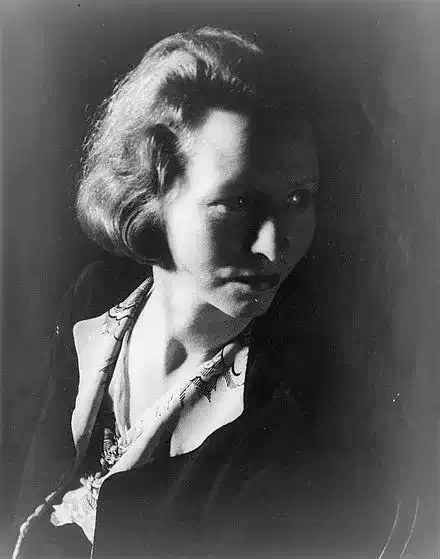
Edna St. Vincent Millay
Sorrow
Sorrow like a ceaseless rain
Beats upon my heart.
People twist and scream in pain,—
Dawn will find them still again;
This has neither wax nor wane,
Neither stop nor start.
People dress and go to town;
I sit in my chair.
All my thoughts are slow and brown:
Standing up or sitting down
Little matters, or what gown
Or what shoes I wear.
Read more →
330
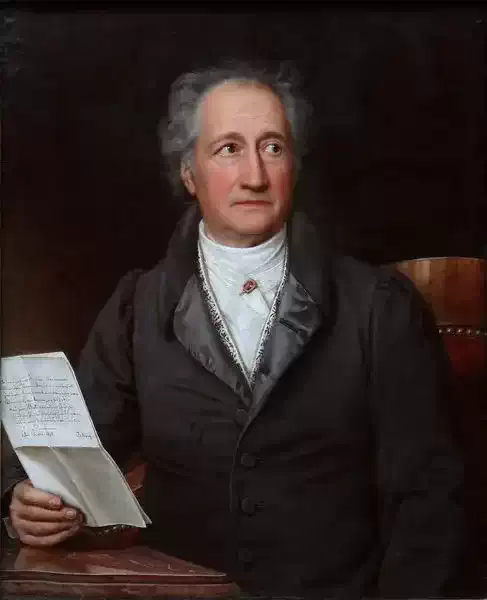
Johann Wolfgang von Goethe
When The Fox Dies, His Skin Counts
WE young people in the shade
Sat one sultry day;
Cupid came, and "Dies the Fox"
With us sought to play.
Each one of my friends then sat
By his mistress dear;
Cupid, blowing out the torch,
Said: "The taper's here!"
Then we quickly sent around
The expiring brand;
Each one put it hastily
ln his neighbour's hand.
Dorilis then gave it me,
With a scoffing jest;
Sudden into flame it broke,
By my fingers press'd.
And it singed my eyes and face,
Set my breast on fire;
Then above my head the blaze
Mounted ever higher.
Vain I sought to put it out;
Ever burned the flame;
Stead of dying, soon the Fox
Livelier still became.
Read more →
330
Emily Dickinson
To interrupt His Yellow Plan
To interrupt His Yellow Plan
The Sun does not allow
Caprices of the Atmosphere-
And even when the Snow
Heaves Balls of Specks, like Vicious Boy
Directly in His Eye-
Does not so much as turn His Head
Busy with Majesty
'Tis His to stimulate the Earth-
And magnetize the Sea-
And bind Astronomy, in place,
Yet Any passing by
Would deem Ourselves-the busier
As the Minutest Bee
That rides-emits a Thunder-
A Bomb-to justify-
Read more →
331