

Poems in this topic
New Beginnings and Rebirth
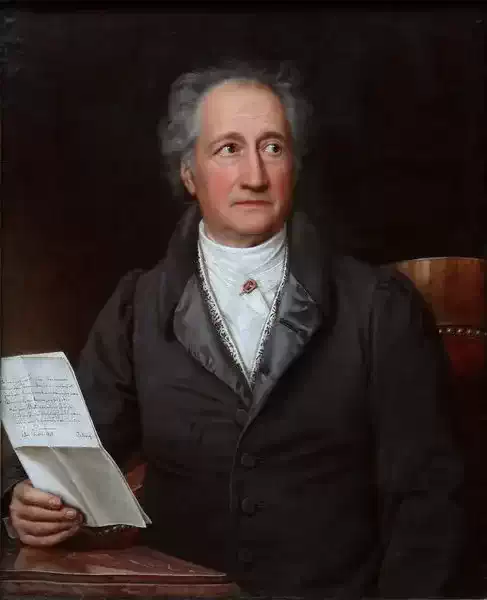
Johann Wolfgang von Goethe
Book Of Suleika - The Reunion
Book Of Suleika - The Reunion
CAN it be! of stars the star,
Do I press thee to my heart?
In the night of distance far,
What deep gulf, what bitter smart!
Yes, 'tis thou, indeed, at last,
Of my joys the partner dear!
Mindful, though, of sorrows past,
I the present needs must fear.
When the still-unfashion'd earth
Lay on God's eternal breast,
He ordain'd its hour of birth,
With creative joy possess'd.
Then a heavy sigh arose,
When He spake the sentence:--"Be!"
And the All, with mighty throes,
Burst into reality.
And when thus was born the light,
Darkness near it fear'd to stay,
And the elements with might
Fled on every side away;
Each on some far-distant trace,
Each with visions wild employ,
Numb, in boundless realm of space,
Harmony and feeling-void.
Dumb was all, all still and dead,
For the first time, God alone!
Then He form'd the morning-red,
Which soon made its kindness known:
It unravelled from the waste,
Bright and glowing harmony,
And once more with love was grac'd
What contended formerly.
And with earnest, noble strife,
Each its own Peculiar sought;
Back to full, unbounded life
Sight and feeling soon were brought.
Wherefore, if 'tis done, explore
How? why give the manner, name?
Allah need create no more,
We his world ourselves can frame.
So, with morning pinions bright,
To thy mouth was I impell'd;
Stamped with thousand seals by night,
Star-clear is the bond fast held.
Paragons on earth are we
Both of grief and joy sublime,
And a second sentence:--"Be!"
Parts us not a second time.
CAN it be! of stars the star,
Do I press thee to my heart?
In the night of distance far,
What deep gulf, what bitter smart!
Yes, 'tis thou, indeed, at last,
Of my joys the partner dear!
Mindful, though, of sorrows past,
I the present needs must fear.
When the still-unfashion'd earth
Lay on God's eternal breast,
He ordain'd its hour of birth,
With creative joy possess'd.
Then a heavy sigh arose,
When He spake the sentence:--"Be!"
And the All, with mighty throes,
Burst into reality.
And when thus was born the light,
Darkness near it fear'd to stay,
And the elements with might
Fled on every side away;
Each on some far-distant trace,
Each with visions wild employ,
Numb, in boundless realm of space,
Harmony and feeling-void.
Dumb was all, all still and dead,
For the first time, God alone!
Then He form'd the morning-red,
Which soon made its kindness known:
It unravelled from the waste,
Bright and glowing harmony,
And once more with love was grac'd
What contended formerly.
And with earnest, noble strife,
Each its own Peculiar sought;
Back to full, unbounded life
Sight and feeling soon were brought.
Wherefore, if 'tis done, explore
How? why give the manner, name?
Allah need create no more,
We his world ourselves can frame.
So, with morning pinions bright,
To thy mouth was I impell'd;
Stamped with thousand seals by night,
Star-clear is the bond fast held.
Paragons on earth are we
Both of grief and joy sublime,
And a second sentence:--"Be!"
Parts us not a second time.
499
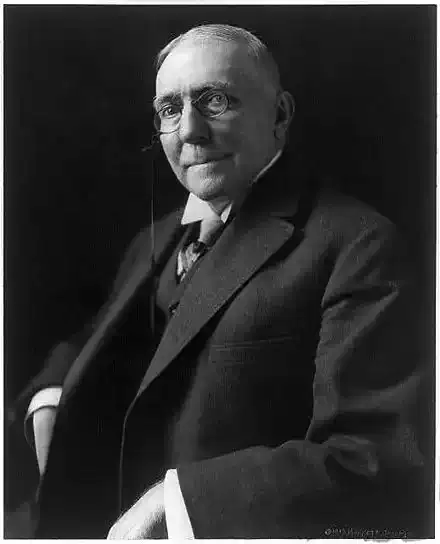
James Whitcomb Riley
When The Hearse Comes Back
When The Hearse Comes Back
A thing 'at's 'bout as tryin' as a healthy man kin meet
Is some poor feller's funeral a-joggin' 'long the street:
The slow hearse and the hosses-- slow enough, to say at least,
Fer to even tax the patience of gentleman deceased!
The low scrunch of the gravel-- and the slow grind of the wheels--,
The slow, slow go of ev'ry woe 'at ev'rybody feels!
So I ruther like the contrast when I hear the whip-lash crack
A quickstep fer the hosses,
When the
Hearse
Comes
Back!
Meet it goin' to'rds the cimet'ry, you'll want to drap yer eyes--
But ef the plumes don't fetch you, it'll ketch you otherwise-You'll
haf to see the caskit, though you'd ort to look away
And 'conomize and save yer sighs fer any other day!
Yer sympathizin' won't wake up the sleeper from his rest--
Yer tears won't thaw them hands o' his 'at's froze acrost his breast!
And this is why-- when airth and sky's a gittin blurred and black--
I like the flash and hurry
When the
Hearse
Comes
Back!
It's not 'cause I don't 'preciate it ain't no time fer jokes,
Ner 'cause I' got no common human feelin' fer the folks--;
I've went to funerals myse'f, and tuk on some, perhaps--
Fer my hearth's 'bout as mal'able as any other chap's--,
I've buried father, mother-- But I'll haf to jes' git you
To 'excuse me,' as the feller says--. The p'int I'm drivin' to
Is simply when we're plum broke down and all knocked out o' whack,
It he'ps to shape us up like,
When the
Hearse
Comes
Back!
The idy! Wadin round here over shoe-mouth deep in woe,
When they's a graded 'pike o' joy and sunshine don't you know!
When evening strikes the pastur', cows'll pull out fer the bars,
And skittish-like from out the night'll prance the happy stars.
And so when my time comes to die, and I've got ary friend
'At wants expressed my last request-- I'll mebby, rickommend
To drive slow, ef they haf to, goin' 'long the out'ard track,
But I'll smile and say, 'You speed 'em
When the
Hearse
Comes
Back!'
A thing 'at's 'bout as tryin' as a healthy man kin meet
Is some poor feller's funeral a-joggin' 'long the street:
The slow hearse and the hosses-- slow enough, to say at least,
Fer to even tax the patience of gentleman deceased!
The low scrunch of the gravel-- and the slow grind of the wheels--,
The slow, slow go of ev'ry woe 'at ev'rybody feels!
So I ruther like the contrast when I hear the whip-lash crack
A quickstep fer the hosses,
When the
Hearse
Comes
Back!
Meet it goin' to'rds the cimet'ry, you'll want to drap yer eyes--
But ef the plumes don't fetch you, it'll ketch you otherwise-You'll
haf to see the caskit, though you'd ort to look away
And 'conomize and save yer sighs fer any other day!
Yer sympathizin' won't wake up the sleeper from his rest--
Yer tears won't thaw them hands o' his 'at's froze acrost his breast!
And this is why-- when airth and sky's a gittin blurred and black--
I like the flash and hurry
When the
Hearse
Comes
Back!
It's not 'cause I don't 'preciate it ain't no time fer jokes,
Ner 'cause I' got no common human feelin' fer the folks--;
I've went to funerals myse'f, and tuk on some, perhaps--
Fer my hearth's 'bout as mal'able as any other chap's--,
I've buried father, mother-- But I'll haf to jes' git you
To 'excuse me,' as the feller says--. The p'int I'm drivin' to
Is simply when we're plum broke down and all knocked out o' whack,
It he'ps to shape us up like,
When the
Hearse
Comes
Back!
The idy! Wadin round here over shoe-mouth deep in woe,
When they's a graded 'pike o' joy and sunshine don't you know!
When evening strikes the pastur', cows'll pull out fer the bars,
And skittish-like from out the night'll prance the happy stars.
And so when my time comes to die, and I've got ary friend
'At wants expressed my last request-- I'll mebby, rickommend
To drive slow, ef they haf to, goin' 'long the out'ard track,
But I'll smile and say, 'You speed 'em
When the
Hearse
Comes
Back!'
294
Horácio
BkIV:XII Spring
BkIV:XII Spring
Now Spring’s companions, the Thracian northerlies,
that quieten the ocean, are swelling the canvas:
now fields are unfrozen, and rivers stop roaring
with their volumes of winter snow.
The sad swallow, tearfully mourning Itys, builds
her nest, she’s the House of Cecrops’ eternal shame,
avenging the barbarous lust of Tereus
with too savage a cruelty.
The shepherds, with indolent sheep, in the soft grass,
sing their songs to the sound of the pipes, and delight
great god, Pan, who is pleased with the flocks, and is pleased
by the dark hills of Arcady.
And, Virgil, the season has brought its thirst to us:
but if you’re eager to sip at a grape that was pressed
at Cales, you follower of noble youth, then
earn your wine with a gift of nard.
One small onyx box of nard elicits a jar
that’s lying there now in Sulpicius’ cellar,
sufficient for granting fresh hope, and effective
at washing away bitter care.
If you’re in a rush for pleasures like this, come quick
with your purchase: since I refuse to consider
dipping a gift-less you, in my wine, as if I’m
rich, my house filled with everything.
But abolish delay, and desire for profit,
and, remembering death’s sombre flames, while you can,
mix a little brief foolishness with your wisdom:
it’s sweet sometimes to play the fool.
Now Spring’s companions, the Thracian northerlies,
that quieten the ocean, are swelling the canvas:
now fields are unfrozen, and rivers stop roaring
with their volumes of winter snow.
The sad swallow, tearfully mourning Itys, builds
her nest, she’s the House of Cecrops’ eternal shame,
avenging the barbarous lust of Tereus
with too savage a cruelty.
The shepherds, with indolent sheep, in the soft grass,
sing their songs to the sound of the pipes, and delight
great god, Pan, who is pleased with the flocks, and is pleased
by the dark hills of Arcady.
And, Virgil, the season has brought its thirst to us:
but if you’re eager to sip at a grape that was pressed
at Cales, you follower of noble youth, then
earn your wine with a gift of nard.
One small onyx box of nard elicits a jar
that’s lying there now in Sulpicius’ cellar,
sufficient for granting fresh hope, and effective
at washing away bitter care.
If you’re in a rush for pleasures like this, come quick
with your purchase: since I refuse to consider
dipping a gift-less you, in my wine, as if I’m
rich, my house filled with everything.
But abolish delay, and desire for profit,
and, remembering death’s sombre flames, while you can,
mix a little brief foolishness with your wisdom:
it’s sweet sometimes to play the fool.
237
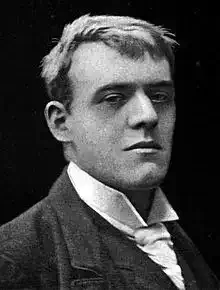
Hilaire Belloc
Cuckoo!
Cuckoo!
In woods so long time bare
Cuckoo!
Up and in the wood, I know not where
Two notes fall.
Yet I do not envy him at all
His phantasy.
Cuckoo!
I too,
Somewhere,
I have sung as merrily as he
Who can dare,
Small and careless love, so to laugh at care,
And who
Can call
Cuckoo!
In woods of winter weary,
In scented woods, of winter weary, call
Cuckoo!
In woods so long time bare.
In woods so long time bare
Cuckoo!
Up and in the wood, I know not where
Two notes fall.
Yet I do not envy him at all
His phantasy.
Cuckoo!
I too,
Somewhere,
I have sung as merrily as he
Who can dare,
Small and careless love, so to laugh at care,
And who
Can call
Cuckoo!
In woods of winter weary,
In scented woods, of winter weary, call
Cuckoo!
In woods so long time bare.
358
Hilaire Belloc
[Month of] September
[Month of] September
I, from a window where the Meuse is wide,
Looked eastward out to the September night;
The men that in the hopeless battle died
Rose, and deployed, and stationed for the fight;
A brumal army, vague and ordered large
For mile on mile by some pale general,-
I saw them lean by companies to the charge,
But no man living heard the bugle-call.
And fading still, and pointing to their scars,
They fled in lessening clouds, where gray and high
Dawn lay along the heaven in misty bars;
But watching from that eastern casement, I
Saw the Republic splendid in the sky,
And round her terrible head the morning stars.
I, from a window where the Meuse is wide,
Looked eastward out to the September night;
The men that in the hopeless battle died
Rose, and deployed, and stationed for the fight;
A brumal army, vague and ordered large
For mile on mile by some pale general,-
I saw them lean by companies to the charge,
But no man living heard the bugle-call.
And fading still, and pointing to their scars,
They fled in lessening clouds, where gray and high
Dawn lay along the heaven in misty bars;
But watching from that eastern casement, I
Saw the Republic splendid in the sky,
And round her terrible head the morning stars.
447
Hermann Hesse
Stages
Stages
As every flower fades and as all youth
Departs, so life at every stage,
So every virtue, so our grasp of truth,
Blooms in its day and may not last forever.
Since life may summon us at every age
Be ready, heart, for parting, new endeavor,
Be ready bravely and without remorse
To find new light that old ties cannot give.
In all beginnings dwells a magic force
For guarding us and helping us to live.
Serenely let us move to distant places
And let no sentiments of home detain us.
The Cosmic Spirit seeks not to restrain us
But lifts us stage by stage to wider spaces.
If we accept a home of our own making,
Familiar habit makes for indolence.
We must prepare for parting and leave-taking
Or else remain the slave of permanence.
Even the hour of our death may send
Us speeding on to fresh and newer spaces,
And life may summon us to newer races.
So be it, heart: bid farewell without end.
As every flower fades and as all youth
Departs, so life at every stage,
So every virtue, so our grasp of truth,
Blooms in its day and may not last forever.
Since life may summon us at every age
Be ready, heart, for parting, new endeavor,
Be ready bravely and without remorse
To find new light that old ties cannot give.
In all beginnings dwells a magic force
For guarding us and helping us to live.
Serenely let us move to distant places
And let no sentiments of home detain us.
The Cosmic Spirit seeks not to restrain us
But lifts us stage by stage to wider spaces.
If we accept a home of our own making,
Familiar habit makes for indolence.
We must prepare for parting and leave-taking
Or else remain the slave of permanence.
Even the hour of our death may send
Us speeding on to fresh and newer spaces,
And life may summon us to newer races.
So be it, heart: bid farewell without end.
910
Henry Wadsworth Longfellow
Voices Of The Night : A Psalm Of Life
Voices Of The Night : A Psalm Of Life
Tell me not, in mournful numbers,
Life is but an empty dream! -
For the soul is dead that slumbers,
And things are not what they seem.
Life is real! Life is earnest!
And the grave is not its goal;
Dust thou art, to dust returnest,
Was not spoken of the soul.
Not enjoyment, and not sorrow,
Is our destined end or way;
But to act, that each to-morrow
Find us farther than to-day.
Art is long, and Time is fleeting,
And our hearts, though stout and brave,
Still, like muffled drums, are beating
Funeral marches to the grave.
In the world's broad field of battle,
In the bivouac of Life,
Be not like dumb, driven cattle!
Be a hero in the strife!
Trust no Future, howe'er pleasant!
Let the dead Past bury its dead!
Act, - act in the living Present!
Heart within, and God o'erhead!
Lives of great men all remind us
We can make our lives sublime,
And, departing, leave behind us
Footprints on the sands of time;
Footprints, that perhaps another,
Sailing o'er life's solemn main,
A forlorn and shipwrecked brother,
Seeing, shall take heart again.
Let us, then, be up and doing,
With a heart for any fate;
Still achieving, still pursuing,
Learn to labor and to wait.
Tell me not, in mournful numbers,
Life is but an empty dream! -
For the soul is dead that slumbers,
And things are not what they seem.
Life is real! Life is earnest!
And the grave is not its goal;
Dust thou art, to dust returnest,
Was not spoken of the soul.
Not enjoyment, and not sorrow,
Is our destined end or way;
But to act, that each to-morrow
Find us farther than to-day.
Art is long, and Time is fleeting,
And our hearts, though stout and brave,
Still, like muffled drums, are beating
Funeral marches to the grave.
In the world's broad field of battle,
In the bivouac of Life,
Be not like dumb, driven cattle!
Be a hero in the strife!
Trust no Future, howe'er pleasant!
Let the dead Past bury its dead!
Act, - act in the living Present!
Heart within, and God o'erhead!
Lives of great men all remind us
We can make our lives sublime,
And, departing, leave behind us
Footprints on the sands of time;
Footprints, that perhaps another,
Sailing o'er life's solemn main,
A forlorn and shipwrecked brother,
Seeing, shall take heart again.
Let us, then, be up and doing,
With a heart for any fate;
Still achieving, still pursuing,
Learn to labor and to wait.
242
Henry Wadsworth Longfellow
The Song Of Hiawatha XXII: Hiawatha's Departure
The Song Of Hiawatha XXII: Hiawatha's Departure
By the shore of Gitche Gumee,
By the shining Big-Sea-Water,
At the doorway of his wigwam,
In the pleasant Summer morning,
Hiawatha stood and waited.
All the air was full of freshness,
All the earth was bright and joyous,
And before him, through the sunshine,
Westward toward the neighboring forest
Passed in golden swarms the Ahmo,
Passed the bees, the honey-makers,
Burning, singing In the sunshine.
Bright above him shone the heavens,
Level spread the lake before him;
From its bosom leaped the sturgeon,
Sparkling, flashing in the sunshine;
On its margin the great forest
Stood reflected in the water,
Every tree-top had its shadow,
Motionless beneath the water.
From the brow of Hiawatha
Gone was every trace of sorrow,
As the fog from off the water,
As the mist from off the meadow.
With a smile of joy and triumph,
With a look of exultation,
As of one who in a vision
Sees what is to be, but is not,
Stood and waited Hiawatha.
Toward the sun his hands were lifted,
Both the palms spread out against it,
And between the parted fingers
Fell the sunshine on his features,
Flecked with light his naked shoulders,
As it falls and flecks an oak-tree
Through the rifted leaves and branches.
O'er the water floating, flying,
Something in the hazy distance,
Something in the mists of morning,
Loomed and lifted from the water,
Now seemed floating, now seemed flying,
Coming nearer, nearer, nearer.
Was it Shingebis the diver?
Or the pelican, the Shada?
Or the heron, the Shuh-shuh-gah?
Or the white goose, Waw-be-wawa,
With the water dripping, flashing,
From its glossy neck and feathers?
It was neither goose nor diver,
Neither pelican nor heron,
O'er the water floating, flying,
Through the shining mist of morning,
But a birch canoe with paddles,
Rising, sinking on the water,
Dripping, flashing in the sunshine;
And within it came a people
From the distant land of Wabun,
From the farthest realms of morning
Came the Black-Robe chief, the Prophet,
He the Priest of Prayer, the Pale-face,
With his guides and his companions.
And the noble Hiawatha,
With his hands aloft extended,
Held aloft in sign of welcome,
Waited, full of exultation,
Till the birch canoe with paddles
Grated on the shining pebbles,
Stranded on the sandy margin,
Till the Black-Robe chief, the Pale-face,
With the cross upon his bosom,
Landed on the sandy margin.
Then the joyous Hiawatha
Cried aloud and spake in this wise:
'Beautiful is the sun, O strangers,
When you come so far to see us!
All our town in peace awaits you,
All our doors stand open for you;
You shall enter all our wigwams,
For the heart's right hand we give you.
'Never bloomed the earth so gayly,
Never shone the sun so brightly,
As to-day they shine and blossom
When you come so far to see us!
Never was our lake so tranquil,
Nor so free from rocks, and sand-bars;
For your birch canoe in passing
Has removed both rock and sand-bar.
'Never before had our tobacco
Such a sweet and pleasant flavor,
Never the broad leaves of our cornfields
Were so beautiful to look on,
As they seem to us this morning,
When you come so far to see us!'
And the Black-Robe chief made answer,
Stammered In his speech a little,
Speaking words yet unfamiliar:
'Peace be with you, Hiawatha,
Peace be with you and your people,
Peace of prayer, and peace of pardon,
Peace of Christ, and joy of Mary!'
Then the generous Hiawatha
Led the strangers to his wigwam,
Seated them on skins of bison,
Seated them on skins of ermine,
And the careful old Nokomis
Brought them food in bowls of basswood,
Water brought in birchen dippers,
And the calumet, the peace-pipe,
Filled and lighted for their smoking.
All the old men of the village,
All the warriors of the nation,
All the Jossakeeds, the Prophets,
The magicians, the Wabenos,
And the Medicine-men, the Medas,
Came to bid the strangers welcome;
'It is well', they said, 'O brothers,
That you come so far to see us!'
In a circle round the doorway,
With their pipes they sat In silence,
Waiting to behold the strangers,
Waiting to receive their message;
Till the Black-Robe chief, the Pale-face,
From the wigwam came to greet them,
Stammering in his speech a little,
Speaking words yet unfamiliar;
'It Is well,' they said, 'O brother,
That you come so far to see us!'
Then the Black-Robe chief, the Prophet,
Told his message to the people,
Told the purport of his mission,
Told them of the Virgin Mary,
And her blessed Son, the Saviour,
How in distant lands and ages
He had lived on earth as we do;
How he fasted, prayed, and labored;
How the Jews, the tribe accursed,
Mocked him, scourged him, crucified him;
How he rose from where they laid him,
Walked again with his disciples,
And ascended into heaven.
And the chiefs made answer, saying:
'We have listened to your message,
We have heard your words of wisdom,
We will think on what you tell us.
It is well for us, O brothers,
That you come so far to see us!'
Then they rose up and departed
Each one homeward to his wigwam,
To the young men and the women
Told the story of the strangers
Whom the Master of Life had sent them
From the shining land of Wabun.
Heavy with the heat and silence
Grew the afternoon of Summer;
With a drowsy sound the forest
Whispered round the sultry wigwam,
With a sound of sleep the water
Rippled on the beach below it;
From the cornfields shrill and ceaseless
Sang the grasshopper, Pah-puk-keena;
And the guests of Hiawatha,
Weary with the heat of Summer,
Slumbered in the sultry wigwam.
Slowly o'er the simmering landscape
Fell the evening's dusk and coolness,
And the long and level sunbeams
Shot their spears into the forest,
Breaking through its shields of shadow,
Rushed into each secret ambush,
Searched each thicket, dingle, hollow;
Still the guests of Hiawatha
Slumbered In the silent wigwam.
From his place rose Hiawatha,
Bade farewell to old Nokomis,
Spake in whispers, spake in this wise,
Did not wake the guests, that slumbered.
'I am going, O Nokomis,
On a long and distant journey,
To the portals of the Sunset.
To the regions of the home-wind,
Of the Northwest-Wind, Keewaydin.
But these guests I leave behind me,
In your watch and ward I leave them;
See that never harm comes near them,
See that never fear molests them,
Never danger nor suspicion,
Never want of food or shelter,
In the lodge of Hiawatha!'
Forth into the village went he,
Bade farewell to all the warriors,
Bade farewell to all the young men,
Spake persuading, spake in this wise:
I am going, O my people,
On a long and distant journey;
Many moons and many winters
Will have come, and will have vanished,
Ere I come again to see you.
But my guests I leave behind me;
Listen to their words of wisdom,
Listen to the truth they tell you,
For the Master of Life has sent them
From the land of light and morning!'
On the shore stood Hiawatha,
Turned and waved his hand at parting;
On the clear and luminous water
Launched his birch canoe for sailing,
From the pebbles of the margin
Shoved it forth into the water;
Whispered to it, 'Westward! westward!'
And with speed it darted forward.
And the evening sun descending
Set the clouds on fire with redness,
Burned the broad sky, like a prairie,
Left upon the level water
One long track and trail of splendor,
Down whose stream, as down a river,
Westward, westward Hiawatha
Sailed into the fiery sunset,
Sailed into the purple vapors,
Sailed into the dusk of evening:
And the people from the margin
Watched him floating, rising, sinking,
Till the birch canoe seemed lifted
High into that sea of splendor,
Till it sank into the vapors
Like the new moon slowly, slowly
Sinking in the purple distance.
And they said, 'Farewell forever!'
Said, 'Farewell, O Hiawatha!'
And the forests, dark and lonely,
Moved through all their depths of darkness,
Sighed, 'Farewell, O Hiawatha!'
And the waves upon the margin
Rising, rippling on the pebbles,
Sobbed, 'Farewell, O Hiawatha!'
And the heron, the Shuh-shuh-gah,
From her haunts among the fen-lands,
Screamed, 'Farewell, O Hiawatha!'
Thus departed Hiawatha,
Hiawatha the Beloved,
In the glory of the sunset,.
In the purple mists of evening,
To the regions of the home-wind,
Of the Northwest-Wind, Keewaydin,
To the Islands of the Blessed,
To the Kingdom of Ponemah,
To the Land of the Hereafter!
By the shore of Gitche Gumee,
By the shining Big-Sea-Water,
At the doorway of his wigwam,
In the pleasant Summer morning,
Hiawatha stood and waited.
All the air was full of freshness,
All the earth was bright and joyous,
And before him, through the sunshine,
Westward toward the neighboring forest
Passed in golden swarms the Ahmo,
Passed the bees, the honey-makers,
Burning, singing In the sunshine.
Bright above him shone the heavens,
Level spread the lake before him;
From its bosom leaped the sturgeon,
Sparkling, flashing in the sunshine;
On its margin the great forest
Stood reflected in the water,
Every tree-top had its shadow,
Motionless beneath the water.
From the brow of Hiawatha
Gone was every trace of sorrow,
As the fog from off the water,
As the mist from off the meadow.
With a smile of joy and triumph,
With a look of exultation,
As of one who in a vision
Sees what is to be, but is not,
Stood and waited Hiawatha.
Toward the sun his hands were lifted,
Both the palms spread out against it,
And between the parted fingers
Fell the sunshine on his features,
Flecked with light his naked shoulders,
As it falls and flecks an oak-tree
Through the rifted leaves and branches.
O'er the water floating, flying,
Something in the hazy distance,
Something in the mists of morning,
Loomed and lifted from the water,
Now seemed floating, now seemed flying,
Coming nearer, nearer, nearer.
Was it Shingebis the diver?
Or the pelican, the Shada?
Or the heron, the Shuh-shuh-gah?
Or the white goose, Waw-be-wawa,
With the water dripping, flashing,
From its glossy neck and feathers?
It was neither goose nor diver,
Neither pelican nor heron,
O'er the water floating, flying,
Through the shining mist of morning,
But a birch canoe with paddles,
Rising, sinking on the water,
Dripping, flashing in the sunshine;
And within it came a people
From the distant land of Wabun,
From the farthest realms of morning
Came the Black-Robe chief, the Prophet,
He the Priest of Prayer, the Pale-face,
With his guides and his companions.
And the noble Hiawatha,
With his hands aloft extended,
Held aloft in sign of welcome,
Waited, full of exultation,
Till the birch canoe with paddles
Grated on the shining pebbles,
Stranded on the sandy margin,
Till the Black-Robe chief, the Pale-face,
With the cross upon his bosom,
Landed on the sandy margin.
Then the joyous Hiawatha
Cried aloud and spake in this wise:
'Beautiful is the sun, O strangers,
When you come so far to see us!
All our town in peace awaits you,
All our doors stand open for you;
You shall enter all our wigwams,
For the heart's right hand we give you.
'Never bloomed the earth so gayly,
Never shone the sun so brightly,
As to-day they shine and blossom
When you come so far to see us!
Never was our lake so tranquil,
Nor so free from rocks, and sand-bars;
For your birch canoe in passing
Has removed both rock and sand-bar.
'Never before had our tobacco
Such a sweet and pleasant flavor,
Never the broad leaves of our cornfields
Were so beautiful to look on,
As they seem to us this morning,
When you come so far to see us!'
And the Black-Robe chief made answer,
Stammered In his speech a little,
Speaking words yet unfamiliar:
'Peace be with you, Hiawatha,
Peace be with you and your people,
Peace of prayer, and peace of pardon,
Peace of Christ, and joy of Mary!'
Then the generous Hiawatha
Led the strangers to his wigwam,
Seated them on skins of bison,
Seated them on skins of ermine,
And the careful old Nokomis
Brought them food in bowls of basswood,
Water brought in birchen dippers,
And the calumet, the peace-pipe,
Filled and lighted for their smoking.
All the old men of the village,
All the warriors of the nation,
All the Jossakeeds, the Prophets,
The magicians, the Wabenos,
And the Medicine-men, the Medas,
Came to bid the strangers welcome;
'It is well', they said, 'O brothers,
That you come so far to see us!'
In a circle round the doorway,
With their pipes they sat In silence,
Waiting to behold the strangers,
Waiting to receive their message;
Till the Black-Robe chief, the Pale-face,
From the wigwam came to greet them,
Stammering in his speech a little,
Speaking words yet unfamiliar;
'It Is well,' they said, 'O brother,
That you come so far to see us!'
Then the Black-Robe chief, the Prophet,
Told his message to the people,
Told the purport of his mission,
Told them of the Virgin Mary,
And her blessed Son, the Saviour,
How in distant lands and ages
He had lived on earth as we do;
How he fasted, prayed, and labored;
How the Jews, the tribe accursed,
Mocked him, scourged him, crucified him;
How he rose from where they laid him,
Walked again with his disciples,
And ascended into heaven.
And the chiefs made answer, saying:
'We have listened to your message,
We have heard your words of wisdom,
We will think on what you tell us.
It is well for us, O brothers,
That you come so far to see us!'
Then they rose up and departed
Each one homeward to his wigwam,
To the young men and the women
Told the story of the strangers
Whom the Master of Life had sent them
From the shining land of Wabun.
Heavy with the heat and silence
Grew the afternoon of Summer;
With a drowsy sound the forest
Whispered round the sultry wigwam,
With a sound of sleep the water
Rippled on the beach below it;
From the cornfields shrill and ceaseless
Sang the grasshopper, Pah-puk-keena;
And the guests of Hiawatha,
Weary with the heat of Summer,
Slumbered in the sultry wigwam.
Slowly o'er the simmering landscape
Fell the evening's dusk and coolness,
And the long and level sunbeams
Shot their spears into the forest,
Breaking through its shields of shadow,
Rushed into each secret ambush,
Searched each thicket, dingle, hollow;
Still the guests of Hiawatha
Slumbered In the silent wigwam.
From his place rose Hiawatha,
Bade farewell to old Nokomis,
Spake in whispers, spake in this wise,
Did not wake the guests, that slumbered.
'I am going, O Nokomis,
On a long and distant journey,
To the portals of the Sunset.
To the regions of the home-wind,
Of the Northwest-Wind, Keewaydin.
But these guests I leave behind me,
In your watch and ward I leave them;
See that never harm comes near them,
See that never fear molests them,
Never danger nor suspicion,
Never want of food or shelter,
In the lodge of Hiawatha!'
Forth into the village went he,
Bade farewell to all the warriors,
Bade farewell to all the young men,
Spake persuading, spake in this wise:
I am going, O my people,
On a long and distant journey;
Many moons and many winters
Will have come, and will have vanished,
Ere I come again to see you.
But my guests I leave behind me;
Listen to their words of wisdom,
Listen to the truth they tell you,
For the Master of Life has sent them
From the land of light and morning!'
On the shore stood Hiawatha,
Turned and waved his hand at parting;
On the clear and luminous water
Launched his birch canoe for sailing,
From the pebbles of the margin
Shoved it forth into the water;
Whispered to it, 'Westward! westward!'
And with speed it darted forward.
And the evening sun descending
Set the clouds on fire with redness,
Burned the broad sky, like a prairie,
Left upon the level water
One long track and trail of splendor,
Down whose stream, as down a river,
Westward, westward Hiawatha
Sailed into the fiery sunset,
Sailed into the purple vapors,
Sailed into the dusk of evening:
And the people from the margin
Watched him floating, rising, sinking,
Till the birch canoe seemed lifted
High into that sea of splendor,
Till it sank into the vapors
Like the new moon slowly, slowly
Sinking in the purple distance.
And they said, 'Farewell forever!'
Said, 'Farewell, O Hiawatha!'
And the forests, dark and lonely,
Moved through all their depths of darkness,
Sighed, 'Farewell, O Hiawatha!'
And the waves upon the margin
Rising, rippling on the pebbles,
Sobbed, 'Farewell, O Hiawatha!'
And the heron, the Shuh-shuh-gah,
From her haunts among the fen-lands,
Screamed, 'Farewell, O Hiawatha!'
Thus departed Hiawatha,
Hiawatha the Beloved,
In the glory of the sunset,.
In the purple mists of evening,
To the regions of the home-wind,
Of the Northwest-Wind, Keewaydin,
To the Islands of the Blessed,
To the Kingdom of Ponemah,
To the Land of the Hereafter!
320
Henry Wadsworth Longfellow
Tales Of A Wayside Inn : Part 1. The Musician's Tale; The Saga of King Olaf
Tales Of A Wayside Inn : Part 1. The Musician's Tale; The Saga of King Olaf
XXII. -- The Nun Of Nidaros
In the convent of Drontheim,
Alone in her chamber
Knelt Astrid the Abbess,
At midnight, adoring,
Beseeching, entreating
The Virgin and Mother.
She heard in the silence
The voice of one speaking,
Without in the darkness,
In gusts of the night-wind,
Now louder, now nearer,
Now lost in the distance.
The voice of a stranger
It seemed as she listened,
Of some one who answered,
Beseeching, imploring,
A cry from afar off
She could not distinguish.
The voice of Saint John,
The beloved disciple,
Who wandered and waited
The Master's appearance,
Alone in the darkness,
Unsheltered and friendless.
'It is accepted
The angry defiance,
The challenge of battle!
It is accepted,
But not with the weapons
Of war that thou wieldest!
'Cross against corselet,
Love against hatred,
Peace-cry for war-cry!
Patience is powerful;
He that o'ercometh
Hath power o'er the nations!
'As torrents in summer,
Half dried in their channels,
Suddenly rise, though the
Sky is still cloudless,
For rain has been falling
Far off at their fountains;
So hearts that are fainting
Grow full to o'erflowing,
And they that behold it
Marvel, and know not
That God at their fountains
Far off has been raining!
'Stronger than steel
Is the sword of the Spirit;
Swifter than arrows
The light of the truth is,
Greater than anger
Is love, and subdueth!
'Thou art a phantom,
A shape of the sea-mist,
A shape of the brumal
Rain, and the darkness
Fearful and formless;
Day dawns and thou art not!
'The dawn is not distant,
Nor is the night starless;
Love is eternal!
God is still God, and
His faith shall not fail us;
Christ is eternal!'
XXII. -- The Nun Of Nidaros
In the convent of Drontheim,
Alone in her chamber
Knelt Astrid the Abbess,
At midnight, adoring,
Beseeching, entreating
The Virgin and Mother.
She heard in the silence
The voice of one speaking,
Without in the darkness,
In gusts of the night-wind,
Now louder, now nearer,
Now lost in the distance.
The voice of a stranger
It seemed as she listened,
Of some one who answered,
Beseeching, imploring,
A cry from afar off
She could not distinguish.
The voice of Saint John,
The beloved disciple,
Who wandered and waited
The Master's appearance,
Alone in the darkness,
Unsheltered and friendless.
'It is accepted
The angry defiance,
The challenge of battle!
It is accepted,
But not with the weapons
Of war that thou wieldest!
'Cross against corselet,
Love against hatred,
Peace-cry for war-cry!
Patience is powerful;
He that o'ercometh
Hath power o'er the nations!
'As torrents in summer,
Half dried in their channels,
Suddenly rise, though the
Sky is still cloudless,
For rain has been falling
Far off at their fountains;
So hearts that are fainting
Grow full to o'erflowing,
And they that behold it
Marvel, and know not
That God at their fountains
Far off has been raining!
'Stronger than steel
Is the sword of the Spirit;
Swifter than arrows
The light of the truth is,
Greater than anger
Is love, and subdueth!
'Thou art a phantom,
A shape of the sea-mist,
A shape of the brumal
Rain, and the darkness
Fearful and formless;
Day dawns and thou art not!
'The dawn is not distant,
Nor is the night starless;
Love is eternal!
God is still God, and
His faith shall not fail us;
Christ is eternal!'
215
Henry Wadsworth Longfellow
In The Harbour: Elegiac Verse
In The Harbour: Elegiac Verse
I.
Peradventure of old, some bard in Ionian Islands,
Walking alone by the sea, hearing the wash of the waves,
Learned the secret from them of the beautiful verse elegiac,
Breathing into his song motion and sound of the sea.
For as the wave of the sea, upheaving in long undulations,
Plunges loud on the sands, pauses, and turns, and retreats,
So the Hexameter, rising and singing, with cadence sonorous,
Falls; and in refluent rhythm back the Pentameter flows.
II.
Not in his youth alone, but in age, may the heart of the poet
Bloom into song, as the gorse blossoms in autumn and spring.
III.
Not in tenderness wanting, yet rough are the rhymes of our poet;
Though it be Jacob's voice, Esau's, alas! are the hands.
IV.
Let us be grateful to writers for what is left in the inkstand;
When to leave off is an art only attained by the few.
V.
How can the Three be One? you ask me; I answer by asking,
Hail and snow and rain, are they not three, and yet one?
VI.
By the mirage uplifted, the land floats vague in the ether,
Ships and the shadows of ships hang in the motionless air;
So by the art of the poet our common life is uplifted,
So, transfigured, the world floats in a luminous haze.
VII.
Like a French poem is Life; being only perfect in structure
When with the masculine rhymes mingled the feminine are.
VIII.
Down from the mountain descends the brooklet, rejoicing in
freedom;
Little it dreams of the mill hid in the valley below;
Glad with the joy of existence, the child goes singing and
laughing,
Little dreaming what toils lie in the future concealed.
IX.
As the ink from our pen, so flow our thoughts and our feelings
When we begin to write, however sluggish before.
X.
Like the Kingdom of Heaven, the Fountain of Youth is within us;
If we seek it elsewhere, old shall we grow in the search.
XI.
If you would hit the mark, you must aim a little above it;
Every arrow that flies feels the attraction of earth.
XII.
Wisely the Hebrews admit no Present tense in their language;
While we are speaking the word, it is is already the Past.
XIII.
In the twilight of age all things seem strange and phantasmal,
As between daylight and dark ghost-like the landscape appears.
XIV.
Great is the art of beginning, but greater the art is of ending;
Many a poem is marred by a superfluous verse.
I.
Peradventure of old, some bard in Ionian Islands,
Walking alone by the sea, hearing the wash of the waves,
Learned the secret from them of the beautiful verse elegiac,
Breathing into his song motion and sound of the sea.
For as the wave of the sea, upheaving in long undulations,
Plunges loud on the sands, pauses, and turns, and retreats,
So the Hexameter, rising and singing, with cadence sonorous,
Falls; and in refluent rhythm back the Pentameter flows.
II.
Not in his youth alone, but in age, may the heart of the poet
Bloom into song, as the gorse blossoms in autumn and spring.
III.
Not in tenderness wanting, yet rough are the rhymes of our poet;
Though it be Jacob's voice, Esau's, alas! are the hands.
IV.
Let us be grateful to writers for what is left in the inkstand;
When to leave off is an art only attained by the few.
V.
How can the Three be One? you ask me; I answer by asking,
Hail and snow and rain, are they not three, and yet one?
VI.
By the mirage uplifted, the land floats vague in the ether,
Ships and the shadows of ships hang in the motionless air;
So by the art of the poet our common life is uplifted,
So, transfigured, the world floats in a luminous haze.
VII.
Like a French poem is Life; being only perfect in structure
When with the masculine rhymes mingled the feminine are.
VIII.
Down from the mountain descends the brooklet, rejoicing in
freedom;
Little it dreams of the mill hid in the valley below;
Glad with the joy of existence, the child goes singing and
laughing,
Little dreaming what toils lie in the future concealed.
IX.
As the ink from our pen, so flow our thoughts and our feelings
When we begin to write, however sluggish before.
X.
Like the Kingdom of Heaven, the Fountain of Youth is within us;
If we seek it elsewhere, old shall we grow in the search.
XI.
If you would hit the mark, you must aim a little above it;
Every arrow that flies feels the attraction of earth.
XII.
Wisely the Hebrews admit no Present tense in their language;
While we are speaking the word, it is is already the Past.
XIII.
In the twilight of age all things seem strange and phantasmal,
As between daylight and dark ghost-like the landscape appears.
XIV.
Great is the art of beginning, but greater the art is of ending;
Many a poem is marred by a superfluous verse.
409
Henry Wadsworth Longfellow
In The Harbour: A Fragment
In The Harbour: A Fragment
Awake! arise! the hour is late!
Angels are knocking at thy door!
They are in haste and cannot wait,
And once departed come no more.
Awake! arise! the athlete's arm
Loses its strength by too much rest;
The fallow land, the untilled farm
Produces only weeds at best.
Awake! arise! the hour is late!
Angels are knocking at thy door!
They are in haste and cannot wait,
And once departed come no more.
Awake! arise! the athlete's arm
Loses its strength by too much rest;
The fallow land, the untilled farm
Produces only weeds at best.
343
Henry Wadsworth Longfellow
Fire. (Sonnet II.)
Fire. (Sonnet II.)
Not without fire can any workman mould
The iron to his preconceived design,
Nor can the artist without fire refine
And purify from all its dross the gold;
Nor can revive the phoenix, we are told,
Except by fire. Hence if such death be mine
I hope to rise again with the divine,
Whom death augments, and time cannot make old.
O sweet, sweet death! O fortunate fire that burns
Within me still to renovate my days,
Though I am almost numbered with the dead!
If by its nature unto heaven returns
This element, me, kindled in its blaze,
Will it bear upward when my life is fled.
Not without fire can any workman mould
The iron to his preconceived design,
Nor can the artist without fire refine
And purify from all its dross the gold;
Nor can revive the phoenix, we are told,
Except by fire. Hence if such death be mine
I hope to rise again with the divine,
Whom death augments, and time cannot make old.
O sweet, sweet death! O fortunate fire that burns
Within me still to renovate my days,
Though I am almost numbered with the dead!
If by its nature unto heaven returns
This element, me, kindled in its blaze,
Will it bear upward when my life is fled.
378
Henry Wadsworth Longfellow
By The Fireside : Tegner's Death (Tegner's Drapa)
By The Fireside : Tegner's Death (Tegner's Drapa)
I heard a voice, that cried,
'Balder the Beautiful
Is dead, is dead!'
And through the misty air
Passed like the mournful cry
Of sunward sailing cranes.
I saw the pallid corpse
Of the dead sun
Borne through the Northern sky.
Blasts from Niffelheim
Lifted the sheeted mists
Around him as he passed.
And the voice forever cried,
'Balder the Beautiful
Is dead, is dead!'
And died away
Through the dreary night,
In accents of despair.
Balder the Beautiful,
God of the summer sun,
Fairest of all the Gods!
Light from his forehead beamed,
Runes were upon his tongue,
As on the warrior's sword.
All things in earth and air
Bound were by magic spell
Never to do him harm;
Even the plants and stones;
All save the mistletoe,
The sacred mistletoe!
Hoeder, the blind old God,
Whose feet are shod with silence,
Pierced through that gentle breast
With his sharp spear, by fraud
Made of the mistletoe,
The accursed mistletoe!
They laid him in his ship,
With horse and harness,
As on a funeral pyre.
Odin placed
A ring upon his finger,
And whispered in his ear.
They launched the burning ship!
It floated far away
Over the misty sea,
Till like the sun it seemed,
Sinking beneath the waves.
Balder returned no more!
So perish the old Gods!
But out of the sea of Time
Rises a new land of song,
Fairer than the old.
Over its meadows green
Walk the young bards and sing.
Build it again,
O ye bards,
Fairer than before!
Ye fathers of the new race,
Feed upon morning dew,
Sing the new Song of Love!
The law of force is dead!
The law of love prevails!
Thor, the thunderer,
Shall rule the earth no more,
No more, with threats,
Challenge the meek Christ.
Sing no more,
O ye bards of the North,
Of Vikings and of Jarls!
Of the days of Eld
Preserve the freedom only,
Not the deeds of blood!
I heard a voice, that cried,
'Balder the Beautiful
Is dead, is dead!'
And through the misty air
Passed like the mournful cry
Of sunward sailing cranes.
I saw the pallid corpse
Of the dead sun
Borne through the Northern sky.
Blasts from Niffelheim
Lifted the sheeted mists
Around him as he passed.
And the voice forever cried,
'Balder the Beautiful
Is dead, is dead!'
And died away
Through the dreary night,
In accents of despair.
Balder the Beautiful,
God of the summer sun,
Fairest of all the Gods!
Light from his forehead beamed,
Runes were upon his tongue,
As on the warrior's sword.
All things in earth and air
Bound were by magic spell
Never to do him harm;
Even the plants and stones;
All save the mistletoe,
The sacred mistletoe!
Hoeder, the blind old God,
Whose feet are shod with silence,
Pierced through that gentle breast
With his sharp spear, by fraud
Made of the mistletoe,
The accursed mistletoe!
They laid him in his ship,
With horse and harness,
As on a funeral pyre.
Odin placed
A ring upon his finger,
And whispered in his ear.
They launched the burning ship!
It floated far away
Over the misty sea,
Till like the sun it seemed,
Sinking beneath the waves.
Balder returned no more!
So perish the old Gods!
But out of the sea of Time
Rises a new land of song,
Fairer than the old.
Over its meadows green
Walk the young bards and sing.
Build it again,
O ye bards,
Fairer than before!
Ye fathers of the new race,
Feed upon morning dew,
Sing the new Song of Love!
The law of force is dead!
The law of love prevails!
Thor, the thunderer,
Shall rule the earth no more,
No more, with threats,
Challenge the meek Christ.
Sing no more,
O ye bards of the North,
Of Vikings and of Jarls!
Of the days of Eld
Preserve the freedom only,
Not the deeds of blood!
354
Henry Van Dyke
Flood-Tide of Flowers
Flood-Tide of Flowers
IN HOLLAND
The laggard winter ebbed so slow
With freezing rain and melting snow,
It seemed as if the earth would stay
Forever where the tide was low,
In sodden green and watery gray.
But now from depths beyond our sight,
The tide is turning in the night,
And floods of color long concealed
Come silent rising toward the light,
Through garden bare and empty field.
And first, along the sheltered nooks,
The crocus runs in little brooks
Of joyance, till by light made bold
They show the gladness of their looks
In shining pools of white and gold.
The tiny scilla, sapphire blue,
Is gently seeping in, to strew
The earth with heaven; and sudden rills
Of sunlit yellow, sweeping through,
Spread into lakes of daffodils.
The hyacinths, with fragrant heads,
Have overflowed their sandy beds,
And fill the earth with faint perfume,
The breath that Spring around her sheds.
And now the tulips break in bloom!
A sea, a rainbow-tinted sea,
A splendor and a mystery,
Floods o'er the fields of faded gray:
The roads are full of folks in glee,
For lo, -- to-day is Easter Day!
IN HOLLAND
The laggard winter ebbed so slow
With freezing rain and melting snow,
It seemed as if the earth would stay
Forever where the tide was low,
In sodden green and watery gray.
But now from depths beyond our sight,
The tide is turning in the night,
And floods of color long concealed
Come silent rising toward the light,
Through garden bare and empty field.
And first, along the sheltered nooks,
The crocus runs in little brooks
Of joyance, till by light made bold
They show the gladness of their looks
In shining pools of white and gold.
The tiny scilla, sapphire blue,
Is gently seeping in, to strew
The earth with heaven; and sudden rills
Of sunlit yellow, sweeping through,
Spread into lakes of daffodils.
The hyacinths, with fragrant heads,
Have overflowed their sandy beds,
And fill the earth with faint perfume,
The breath that Spring around her sheds.
And now the tulips break in bloom!
A sea, a rainbow-tinted sea,
A splendor and a mystery,
Floods o'er the fields of faded gray:
The roads are full of folks in glee,
For lo, -- to-day is Easter Day!
322

Henry Lawson
When the Bush Begins to Speak
When the Bush Begins to Speak
They know us not in England yet, their pens are overbold;
We're seen in fancy pictures that are fifty years too old.
They think we are a careless race - a childish race, and weak;
They'll know us yet in England, when the bush begins to speak;
When the bush begins to speak,
When the bush begins to speak,
When the west by Greed's invaded, and the bush begins to speak.
'The leaders that will be', the men of southern destiny,
Are not all found in cities that are builded by the sea;
They learn to love Australia by many a western creek,
They'll know them yet in England, when the bush begins to speak;
When the bush begins to speak,
When the bush begins to speak,
When the west by Greed's invaded, and the bush begins to speak.
All ready for the struggle, and waiting for the change,
The army of our future lies encamped beyond the range;
Australia, for her patriots, will not have far to seek;
They'll know her yet in England when the bush begins to speak;
When the bush begins to speak,
When the bush begins to speak,
When the west by Greed's invaded, and the bush begins to speak.
We'll find the peace and comfort that our fathers could not find,
Or some shall strike the good old blow that leaves a mark behind.
We'll find the Truth and Liberty our fathers came to seek,
Or let them know in England when the bush begins to speak;
When the bush begins to speak,
When the bush begins to speak,
When the west by Greed's invaded, and the bush begins to speak.
They know us not in England yet, their pens are overbold;
We're seen in fancy pictures that are fifty years too old.
They think we are a careless race - a childish race, and weak;
They'll know us yet in England, when the bush begins to speak;
When the bush begins to speak,
When the bush begins to speak,
When the west by Greed's invaded, and the bush begins to speak.
'The leaders that will be', the men of southern destiny,
Are not all found in cities that are builded by the sea;
They learn to love Australia by many a western creek,
They'll know them yet in England, when the bush begins to speak;
When the bush begins to speak,
When the bush begins to speak,
When the west by Greed's invaded, and the bush begins to speak.
All ready for the struggle, and waiting for the change,
The army of our future lies encamped beyond the range;
Australia, for her patriots, will not have far to seek;
They'll know her yet in England when the bush begins to speak;
When the bush begins to speak,
When the bush begins to speak,
When the west by Greed's invaded, and the bush begins to speak.
We'll find the peace and comfort that our fathers could not find,
Or some shall strike the good old blow that leaves a mark behind.
We'll find the Truth and Liberty our fathers came to seek,
Or let them know in England when the bush begins to speak;
When the bush begins to speak,
When the bush begins to speak,
When the west by Greed's invaded, and the bush begins to speak.
302
Henry Lawson
The Drunkard's Vision
The Drunkard's Vision
A public parlour in the slums,
The haunt of vice and villainy,
Where things are said unfit to hear,
And things are done unfit to see;
’Mid ribald jest and reckless song,
That mock at all that’s pure and right,
The drunkard drinks the whole day long,
And raves through half the dreadful night.
And in the morning now he sits,
With staring eyes and trembling limb;
The harbour in the sunlight laughs,
But morning is as night to him.
And, staring blankly at the wall,
He sees the tragedy complete—
He sees the man he used to be
Go striding proudly up the street.
He turns the corner with a swing,
And, at the vine-framed cottage gate,
The father sees, with laughing eyes,
His little son and daughter wait:
They race to meet him as he comes—
And—Oh! this memory is worst—
Her dimpled arms go round his neck,
She pants, ‘I dot my daddy first!’
He sees his bright-eyed little wife;
He sees the cottage neat and clean—
He sees the wrecking of his life
And all the things that might have been!
And, sunk in hopeless, black despair,
That drink no more has power to drown,
Upon the beer-stained table there
The drunkard’s ruined head goes down.
But even I, a fearful wreck,
Have drifted long before the storm:
I know, when all seems lost on earth,
How hard it can be to reform.
I, too, have sinned, and we have both
Drunk to the dregs the bitter cup—
Give me your hand, Oh brother mine,
And even I might help you up.
A public parlour in the slums,
The haunt of vice and villainy,
Where things are said unfit to hear,
And things are done unfit to see;
’Mid ribald jest and reckless song,
That mock at all that’s pure and right,
The drunkard drinks the whole day long,
And raves through half the dreadful night.
And in the morning now he sits,
With staring eyes and trembling limb;
The harbour in the sunlight laughs,
But morning is as night to him.
And, staring blankly at the wall,
He sees the tragedy complete—
He sees the man he used to be
Go striding proudly up the street.
He turns the corner with a swing,
And, at the vine-framed cottage gate,
The father sees, with laughing eyes,
His little son and daughter wait:
They race to meet him as he comes—
And—Oh! this memory is worst—
Her dimpled arms go round his neck,
She pants, ‘I dot my daddy first!’
He sees his bright-eyed little wife;
He sees the cottage neat and clean—
He sees the wrecking of his life
And all the things that might have been!
And, sunk in hopeless, black despair,
That drink no more has power to drown,
Upon the beer-stained table there
The drunkard’s ruined head goes down.
But even I, a fearful wreck,
Have drifted long before the storm:
I know, when all seems lost on earth,
How hard it can be to reform.
I, too, have sinned, and we have both
Drunk to the dregs the bitter cup—
Give me your hand, Oh brother mine,
And even I might help you up.
221
Henry Lawson
The Cross-Roads
The Cross-Roads
Once more I write a line to you,
While darker shadows fall;
Dear friends of mine who have been true,
And steadfast through it all.
If I have written bitter rhymes,
With many lines that halt,
And if I have been false at times
It was not all my fault.
To Heaven’s decree I would not bow,
And I sank very low—
The bitter things are written now,
And we must let them go.
But I feel softened as I write;
The better spirit springs,
And I am very sad to-night
Because of many things.
The friendships that I have abused,
The trust I did betray,
The talents that I have misused,
The gifts I threw away.
The things that did me little good,
And—well my cheeks might burn—
The kindly letters that I should
Have answered by return.
But you might deem them answered now,
And answered from my heart;
And injured friends will understand
’Tis I who feel the smart.
But I have done with barren strife
And dark imaginings,
And in my future work and life
Will seek the better things.
Once more I write a line to you,
While darker shadows fall;
Dear friends of mine who have been true,
And steadfast through it all.
If I have written bitter rhymes,
With many lines that halt,
And if I have been false at times
It was not all my fault.
To Heaven’s decree I would not bow,
And I sank very low—
The bitter things are written now,
And we must let them go.
But I feel softened as I write;
The better spirit springs,
And I am very sad to-night
Because of many things.
The friendships that I have abused,
The trust I did betray,
The talents that I have misused,
The gifts I threw away.
The things that did me little good,
And—well my cheeks might burn—
The kindly letters that I should
Have answered by return.
But you might deem them answered now,
And answered from my heart;
And injured friends will understand
’Tis I who feel the smart.
But I have done with barren strife
And dark imaginings,
And in my future work and life
Will seek the better things.
268
Henry Lawson
Outside
Outside
I want to be lighting my pipe on deck,
With my baggage safe below—
I want to be free of the crowded quay,
While the steamer’s swinging slow.
I want to be free of treachery,
And of sordid joys and griefs—
To be out of sight of the faces white,
And the waving of handkerchiefs.
I want to be making my ship-board friends,
I want to be free of the past—
I want to be laughing with kindred souls,
While the Heads are opening fast.
I want to be sailing far to-day,
On the tracks where the rovers go,
To feel the heave of the deck, and draw
The breath that the rovers know.
I want to be lighting my pipe on deck,
With my baggage safe below—
I want to be free of the crowded quay,
While the steamer’s swinging slow.
I want to be free of treachery,
And of sordid joys and griefs—
To be out of sight of the faces white,
And the waving of handkerchiefs.
I want to be making my ship-board friends,
I want to be free of the past—
I want to be laughing with kindred souls,
While the Heads are opening fast.
I want to be sailing far to-day,
On the tracks where the rovers go,
To feel the heave of the deck, and draw
The breath that the rovers know.
265
Henry Lawson
Clinging Back
Clinging Back
When you see a man come walking down through George Street loose and free,
Suit of saddle tweed and soft shirt, and a belt and cabbagetree,
With the careless swing and carriage, and the confidence you lack—
There is freedom in Australia! he’s a man that’s clinging back.
Clingin’ back,
Holdin’ back,
To the old things and the bold things clinging back.
When you see a woman riding as I saw one ride to-day
Down the street to Milson’s Ferry on a big, upstanding bay,
With her body gently swaying to the horse-shoes’ click-a-clack,
You might lift your hat (with caution)—she’s a girl who’s clinging back.
Clinging back,
Swinging back.
To the old things and the bold things clinging back.
When you see a rich man pulling on the harbour in a boat,
With the motor launches racing till they scarcely seem to float,
And the little skiff is lifting to his muscles tense and slack,
You say “Go it” to a sane man. He’s a man that’s clinging back.
Clinging back,
Swinging back,
To the old things and the bold things clinging back.
When you see two lovers strolling, arm-in-arm—or round the waist,
And they never seem to loiter, and they never seem to haste,
But indifferent to others take the rock or bush-hid track
You be sure about their future, they’re a pair that’s clinging back.
Clinging back,
Holding back,
To the old things and the bold things clinging back.
I, a weary picture writer in a time that’s cruel plain,
Have been clinging all too sadly to what shall not come again,
To what shall not come and should not! for the silver’s mostly black,
And the gold a dull red copper by the springs where I held back.
Clinging back,
Holding back,
To the old things and the cold things clinging back.
But if you should read a writer sending truths home every time,
While his every “point” goes ringing like the grandest prose in rhyme,
Though he writes the people’s grammar, and he spreads the people’s “clack,”
He is stronger than the Public! and he’ll jerk the mad world back.
Yank it back,
Hold it back,
For the love of little children hold it back.
When you see a man come walking down through George Street loose and free,
Suit of saddle tweed and soft shirt, and a belt and cabbagetree,
With the careless swing and carriage, and the confidence you lack—
There is freedom in Australia! he’s a man that’s clinging back.
Clingin’ back,
Holdin’ back,
To the old things and the bold things clinging back.
When you see a woman riding as I saw one ride to-day
Down the street to Milson’s Ferry on a big, upstanding bay,
With her body gently swaying to the horse-shoes’ click-a-clack,
You might lift your hat (with caution)—she’s a girl who’s clinging back.
Clinging back,
Swinging back.
To the old things and the bold things clinging back.
When you see a rich man pulling on the harbour in a boat,
With the motor launches racing till they scarcely seem to float,
And the little skiff is lifting to his muscles tense and slack,
You say “Go it” to a sane man. He’s a man that’s clinging back.
Clinging back,
Swinging back,
To the old things and the bold things clinging back.
When you see two lovers strolling, arm-in-arm—or round the waist,
And they never seem to loiter, and they never seem to haste,
But indifferent to others take the rock or bush-hid track
You be sure about their future, they’re a pair that’s clinging back.
Clinging back,
Holding back,
To the old things and the bold things clinging back.
I, a weary picture writer in a time that’s cruel plain,
Have been clinging all too sadly to what shall not come again,
To what shall not come and should not! for the silver’s mostly black,
And the gold a dull red copper by the springs where I held back.
Clinging back,
Holding back,
To the old things and the cold things clinging back.
But if you should read a writer sending truths home every time,
While his every “point” goes ringing like the grandest prose in rhyme,
Though he writes the people’s grammar, and he spreads the people’s “clack,”
He is stronger than the Public! and he’ll jerk the mad world back.
Yank it back,
Hold it back,
For the love of little children hold it back.
291
Henry Lawson
An Australian Advertisement
An Australian Advertisement
WE WANT the man who will lead the van,
The man who will pioneer.
We have no use for the gentleman,
Or the cheating Cheap-Jack here;
We have no room for the men who shirk
The sweat of the brow. Condemn
The men who are frightened to look for work
And funk when it looks for them.
We’ll honour the man who can’t afford
To wait for a job that suits,
But sticks a swag on his shoulders broad
And his feet in blucher boots,
And tramps away o’er the ridges far
And over the burning sand
To look for work where the stations are
In the lonely Western land.
He’ll brave the drouth and he’ll brave the rain,
And fight his sorrows down,
And help to garden the inland plain
And build the inland town;
And he’ll be found in the coming years
With a heart as firm and stout,
An honoured man with the pioneers
Who lead the people out.
WE WANT the man who will lead the van,
The man who will pioneer.
We have no use for the gentleman,
Or the cheating Cheap-Jack here;
We have no room for the men who shirk
The sweat of the brow. Condemn
The men who are frightened to look for work
And funk when it looks for them.
We’ll honour the man who can’t afford
To wait for a job that suits,
But sticks a swag on his shoulders broad
And his feet in blucher boots,
And tramps away o’er the ridges far
And over the burning sand
To look for work where the stations are
In the lonely Western land.
He’ll brave the drouth and he’ll brave the rain,
And fight his sorrows down,
And help to garden the inland plain
And build the inland town;
And he’ll be found in the coming years
With a heart as firm and stout,
An honoured man with the pioneers
Who lead the people out.
286
Henry David Thoreau
The Poet's Delay
The Poet's Delay
IN vain I see the morning rise,
In vain observe the western blaze,
Who idly look to other skies,
Expecting life by other ways.
Amidst such boundless wealth without,
I only still am poor within,
The birds have sung their summer out,
But still my spring does not begin.
Shall I then wait the autumn wind,
Compelled to seek a milder day,
And leave no curious nest behind,
No woods still echoing to my lay?
IN vain I see the morning rise,
In vain observe the western blaze,
Who idly look to other skies,
Expecting life by other ways.
Amidst such boundless wealth without,
I only still am poor within,
The birds have sung their summer out,
But still my spring does not begin.
Shall I then wait the autumn wind,
Compelled to seek a milder day,
And leave no curious nest behind,
No woods still echoing to my lay?
221
Henry David Thoreau
Song Of Nature
Song Of Nature
Mine are the night and morning,
The pits of air, the gull of space,
The sportive sun, the gibbous moon,
The innumerable days.
I hide in the solar glory,
I am dumb in the pealing song,
I rest on the pitch of the torrent,
In slumber I am strong.
No numbers have counted my tallies,
No tribes my house can fill,
I sit by the shining Fount of Life
And pour the deluge still;
And ever by delicate powers
Gathering along the centuries
From race on race the rarest flowers,
My wreath shall nothing miss.
And many a thousand summers
My gardens ripened well,
And light from meliorating stars
With firmer glory fell.
I wrote the past in characters
Of rock and fire the scroll,
The building in the coral sea,
The planting of the coal.
And thefts from satellites and rings
And broken stars I drew,
And out of spent and aged things
I formed the world anew;
What time the gods kept carnival,
Tricked out in star and flower,
And in cramp elf and saurian forms
They swathed their too much power.
Time and Thought were my surveyors,
They laid their courses well,
They boiled the sea, and piled the layers
Of granite, marl and shell.
But he, the man-child glorious, -
Where tarries he the while?
The rainbow shines his harbinger,
The sunset gleams his smile.
My boreal lights leap upward,
Forthright my planets roll,
And still the man-child is not born,
The summit of the whole.
Must time and tide forever run?
Will never my winds go sleep in the west?
Will never my wheels which whirl the sun
And satellites have rest?
Too much of donning and doffing,
Too slow the rainbow fades,
I weary of my robe of snow,
My leaves and my cascades;
I tire of globes and races,
Too long the game is played;
What without him is summer's pomp,
Or winter's frozen shade?
I travail in pain for him,
My creatures travail and wait;
His couriers come by squadrons,
He comes not to the gate.
Twice I have moulded an image,
And thrice outstretched my hand,
Made one of day and one of night
And one of the salt sea-sand.
One in a Judaean manger,
And one by Avon stream,
One over against the mouths of Nile,
And one in the Academe.
I moulded kings and saviors,
And bards o'er kings to rule; -
But fell the starry influence short,
The cup was never full.
Yet whirl the glowing wheels once more,
And mix the bowl again;
Seethe, Fate! the ancient elements,
Heat, cold, wet, dry, and peace, and pain.
Let war and trade and creeds and song
Blend, ripen race on race,
The sunburnt world a man shall breed
Of all the zones and countless days.
No ray is dimmed, no atom worn,
My oldest force is good as new,
And the fresh rose on yonder thorn
Gives back the bending heavens in dew.
Mine are the night and morning,
The pits of air, the gull of space,
The sportive sun, the gibbous moon,
The innumerable days.
I hide in the solar glory,
I am dumb in the pealing song,
I rest on the pitch of the torrent,
In slumber I am strong.
No numbers have counted my tallies,
No tribes my house can fill,
I sit by the shining Fount of Life
And pour the deluge still;
And ever by delicate powers
Gathering along the centuries
From race on race the rarest flowers,
My wreath shall nothing miss.
And many a thousand summers
My gardens ripened well,
And light from meliorating stars
With firmer glory fell.
I wrote the past in characters
Of rock and fire the scroll,
The building in the coral sea,
The planting of the coal.
And thefts from satellites and rings
And broken stars I drew,
And out of spent and aged things
I formed the world anew;
What time the gods kept carnival,
Tricked out in star and flower,
And in cramp elf and saurian forms
They swathed their too much power.
Time and Thought were my surveyors,
They laid their courses well,
They boiled the sea, and piled the layers
Of granite, marl and shell.
But he, the man-child glorious, -
Where tarries he the while?
The rainbow shines his harbinger,
The sunset gleams his smile.
My boreal lights leap upward,
Forthright my planets roll,
And still the man-child is not born,
The summit of the whole.
Must time and tide forever run?
Will never my winds go sleep in the west?
Will never my wheels which whirl the sun
And satellites have rest?
Too much of donning and doffing,
Too slow the rainbow fades,
I weary of my robe of snow,
My leaves and my cascades;
I tire of globes and races,
Too long the game is played;
What without him is summer's pomp,
Or winter's frozen shade?
I travail in pain for him,
My creatures travail and wait;
His couriers come by squadrons,
He comes not to the gate.
Twice I have moulded an image,
And thrice outstretched my hand,
Made one of day and one of night
And one of the salt sea-sand.
One in a Judaean manger,
And one by Avon stream,
One over against the mouths of Nile,
And one in the Academe.
I moulded kings and saviors,
And bards o'er kings to rule; -
But fell the starry influence short,
The cup was never full.
Yet whirl the glowing wheels once more,
And mix the bowl again;
Seethe, Fate! the ancient elements,
Heat, cold, wet, dry, and peace, and pain.
Let war and trade and creeds and song
Blend, ripen race on race,
The sunburnt world a man shall breed
Of all the zones and countless days.
No ray is dimmed, no atom worn,
My oldest force is good as new,
And the fresh rose on yonder thorn
Gives back the bending heavens in dew.
269

Gwendolyn Brooks
to the Diaspora
to the Diaspora
you did not know you were Afrika
When you set out for Afrika
you did not know you were going.
Because
you did not know you were Afrika.
You did not know the Black continent
that had to be reached
was you.
I could not have told you then that some sun
would come,
somewhere over the road,
would come evoking the diamonds
of you, the Black continent-somewhere
over the road.
You would not have believed my mouth.
When I told you, meeting you somewhere close
to the heat and youth of the road,
liking my loyalty, liking belief,
you smiled and you thanked me but very little believed me.
Here is some sun. Some.
Now off into the places rough to reach.
Though dry, though drowsy, all unwillingly a-wobble,
into the dissonant and dangerous crescendo.
Your work, that was done, to be done to be done to be done.
you did not know you were Afrika
When you set out for Afrika
you did not know you were going.
Because
you did not know you were Afrika.
You did not know the Black continent
that had to be reached
was you.
I could not have told you then that some sun
would come,
somewhere over the road,
would come evoking the diamonds
of you, the Black continent-somewhere
over the road.
You would not have believed my mouth.
When I told you, meeting you somewhere close
to the heat and youth of the road,
liking my loyalty, liking belief,
you smiled and you thanked me but very little believed me.
Here is some sun. Some.
Now off into the places rough to reach.
Though dry, though drowsy, all unwillingly a-wobble,
into the dissonant and dangerous crescendo.
Your work, that was done, to be done to be done to be done.
336
Gwendolyn Brooks
My Dreams, My Works, Must Wait Till After Hell
My Dreams, My Works, Must Wait Till After Hell
I hold my honey and I store my bread
In little jars and cabinets of my will.
I label clearly, and each latch and lid
I bid, Be firm till I return from hell.
I am very hungry. I am incomplete.
And none can give me any word but Wait,
The puny light. I keep my eyes pointed in;
Hoping that, when the devil days of my hurt
Drag out to their last dregs and I resume
On such legs as are left me, in such heart
As I can manage, remember to go home,
My taste will not have turned insensitive
To honey and bread old purity could love.
I hold my honey and I store my bread
In little jars and cabinets of my will.
I label clearly, and each latch and lid
I bid, Be firm till I return from hell.
I am very hungry. I am incomplete.
And none can give me any word but Wait,
The puny light. I keep my eyes pointed in;
Hoping that, when the devil days of my hurt
Drag out to their last dregs and I resume
On such legs as are left me, in such heart
As I can manage, remember to go home,
My taste will not have turned insensitive
To honey and bread old purity could love.
279