Lista de Poemas

Spirits of the Dead

Thy soul shall find itself alone
'Mid dark thoughts of the grey tomb-stone;
Not one, of all the crowd, to pry
Into thine hour of secrecy.

Be silent in that solitude,
Which is not loneliness- for then
The spirits of the dead, who stood
In life before thee, are again
In death around thee, and their will
Shall overshadow thee; be still.

The night, though clear, shall frown,
And the stars shall not look down
From their high thrones in the Heaven
With light like hope to mortals given,
But their red orbs, without beam,
To thy weariness shall seem
As a burning and a fever
Which would cling to thee for ever.

Now are thoughts thou shalt not banish,
Now are visions ne'er to vanish;
From thy spirit shall they pass
No more, like dew-drop from the grass.

The breeze, the breath of God, is still,
And the mist upon the hill
Shadowy, shadowy, yet unbroken,
Is a symbol and a token.
How it hangs upon the trees,
A mystery of mysteries!


1827

1 414

Hymn

Sancta Maria! turn thine eyes
Upon the sinner's sacrifice
Of fervent prayer and humble love,
From thy holy throne above.

At morn, at noon, at twilight dim
Maria! thou hast heard my hymn.
In joy and wo, in good and ill
Mother of God! be with us still.

When my hours flew gently by,
And no storms were in the sky,
My soul, lest it should truant be —
Thy love did guide to thine and thee.

Now, when clouds of Fate o'ercast
All my Present, and my Past,
Let my Future radiant shine
With sweet hopes of thee and thine.

1 450

To

Fair maiden, let thy generous heart
From its present pathway part not!
Being every thing which now thou art,
Be nothing which thou art not.
So with the world thy gentle ways,
Thy unassuming beauty,
Thy truth — shall be a theme of praise,
Forever — and love a duty.


1839

1 030

To Helen

Helen, thy beauty is to me
Like those Nicean barks of yore,
That gently, o'er a perfum'd sea,
The weary way-worn wanderer bore
To his own native shore.

On desperate seas long wont to roam,
Thy hyacinth hair, thy classic face,
Thy Naiad airs have brought me home
To the beauty of fair Greece,
And the grandeur of old Rome.

Lo ! in that little window-niche
How statue-like I see thee stand!
The folded scroll within thy hand —
A Psyche from the regions which
Are Holy land !


1831

1 534

The Valley of Unrest

Once it smiled a silent dell
Where the people did not dwell;
They had gone unto the wars,
Trusting to the mild-eyed stars,
Nightly, from their azure towers,
To keep watch above the flowers,
In the midst of which all day
The red sunlight lazily lay.
Now each visitor shall confess
The sad valley's restlessness.
Nothing there is motionless-
Nothing save the airs that brood
Over the magic solitude.
Ah, by no wind are stirred those trees
That palpitate like the chill seas
Around the misty Hebrides!
Ah, by no wind those clouds are driven
That rustle through the unquiet Heaven
Uneasily, from morn till even,
Over the violets there that lie
In myriad types of the human eye-
Over the lilies there that wave
And weep above a nameless grave!
They wave: — from out their fragrant tops
Eternal dews come down in drops.
They weep: — from off their delicate stems
Perennial tears descend in gems.


1845

1 229

To M

O! I care not that my earthly lot
Hath little of Earth in it,
That years of love have been forgot
In the fever of a minute:

I heed not that the desolate
Are happier, sweet, than I,
But that you meddle with my fate
Who am a passer by.

It is not that my founts of bliss
Are gushing — strange! with tears—
Or that the thrill of a single kiss
Hath palsied many years—

'Tis not that the flowers of twenty springs
Which have wither'd as they rose
Lie dead on my heart-strings
With the weight of an age of snows.

Not that the grass— O! may it thrive!
On my grave is growing or grown—
But that, while I am dead yet alive
I cannot be, lady, alone.


1828

1 147

To One in Paradise

Thou wast all that to me, love,
For which my soul did pine-
A green isle in the sea, love,
A fountain and a shrine,
All wreathed with fairy fruits and flowers,
And all the flowers were mine.

Ah, dream too bright to last!
Ah, starry Hope! that didst arise
But to be overcast!
A voice from out the Future cries,
"Onward!"- but o'er the Past
(Dim gulf!) my spirit hovering lies
Mute, motionless, aghast!

For, alas! alas! with me
The light of life is o'er!
"No more-- no more-- no more,"
(Such language holds the solemn sea
To the sands upon the shore)
Shall bloom the thunder-blasted tree
Or the stricken eagle soar!

And all my hours are trances,
And all my nightly dreams
Are where thy dark eye glances,
And where thy footstep gleams-
In what ethereal dances,
By what Italian streams.

Alas! for that accursed time
They bore thee o'er the billow,
From Love to titled age and crime,
And an unholy pillow!--
From me, and from our misty clime,
Where weeps the silver willow!


1834

1 303

A Valentine

For her this rhyme is penned, whose luminous eyes,
Brightly expressive as the twins of Leda,
Shall find her own sweet name, that nestling lies
Upon the page, enwrapped from every reader.
Search narrowly the lines!— they hold a treasure
Divine— a talisman— an amulet
That must be worn at heart. Search well the measure—
The words— the syllables! Do not forget
The trivialest point, or you may lose your labor
And yet there is in this no Gordian knot
Which one might not undo without a sabre,
If one could merely comprehend the plot.
Enwritten upon the leaf where now are peering
Eyes scintillating soul, there lie perdus
Three eloquent words oft uttered in the hearing
Of poets, by poets— as the name is a poet's, too,
Its letters, although naturally lying
Like the knight Pinto— Mendez Ferdinando—
Still form a synonym for Truth— Cease trying!
You will not read the riddle,
though you do the best you can do.


1848

1 999

To

For her these lines are penned, whose luminous eyes,
Brightly expressive as the starts of Leda,
Shall find her own sweet name that, nestling, lies
Upon the page, enwrapped from every reader.
Search narrowly these words, which hold a treasure
Divine — a talisman, an amulet
That must be worn at heart. Search well the measure —
The words — the letters themselves. Do not forget
The smallest point, or you may lose your labor.
And yet there is in this no gordian knot
Which one might not undo without a sabre
If one could merely comprehend the plot.
Upon the open page on which are peering
Such sweet eyes now, there lies, I say, perdus,
A musical name oft uttered in the hearing
Of poets, by poets — for the name is a poet's too.
In common sequence set, the letters lying,
Compose a sound delighting all to hear —
Ah, this you'd have no trouble in descrying
Were you not something, of a dunce, my dear —
And now I leave these riddles to their Seer.


1846

1 146

Comentários (0)

ShareOn Facebook WhatsApp X
Iniciar sessão para publicar um comentário.

NoComments

Identificação e contexto básico

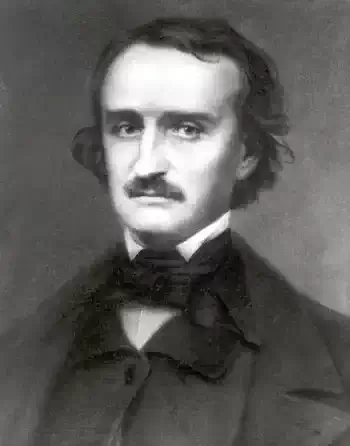
Edgar Allan Poe (nascido Edgar Poe) foi um escritor, poeta, editor e crítico literário americano. É amplamente reconhecido como uma figura central do Romantismo na sua nação e nos Estados Unidos, e como um dos pioneiros da ficção científica e do conto de mistério. Sua escrita, muitas vezes caracterizada pelo macabro e pelo gótico, explorou as profundezas da psique humana, a morte, a perda e o sobrenatural.

Infância e formação

A infância de Poe foi marcada por tragédias precoces. Nascido em Boston, Massachusetts, seus pais atores, David Poe Jr. e Elizabeth Arnold Poe, faleceram quando ele ainda era muito jovem. Órfão aos três anos, foi acolhido por John e Frances Allan, um casal abastado de Richmond, Virgínia. Embora John Allan o tenha educado e financiado seus estudos, a relação entre os dois era frequentemente tensa, especialmente após o casamento de Poe com sua jovem prima, Virginia Clemm. Poe frequentou a Universidade da Virgínia e a Academia Militar de West Point, mas não completou seus estudos em nenhuma das instituições, possivelmente devido a dificuldades financeiras e conflitos pessoais com John Allan.

Percurso literário

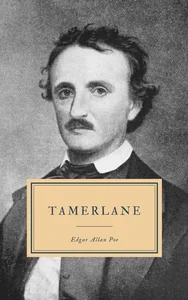
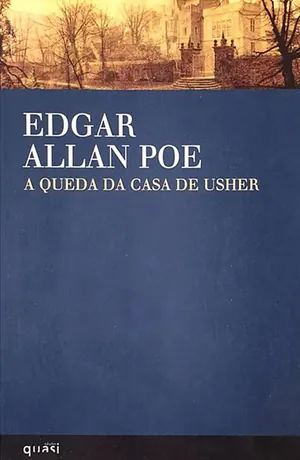
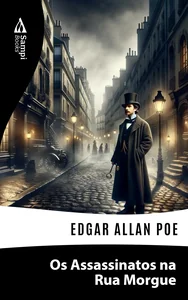
Poe começou a escrever poesia ainda na adolescência. Seu primeiro livro publicado, "Tamerlane and Other Poems", surgiu em 1827, de forma anônima. Após um período de serviço militar, ele se dedicou à escrita e à crítica literária, trabalhando para diversas publicações. Foi como contista que Poe ganhou maior notoriedade com obras como "The Fall of the House of Usher" (A Queda da Casa de Usher) e "The Murders in the Rue Morgue" (Os Assassinatos da Rua Morgue), este último considerado o marco inicial da ficção de detetive. Sua carreira foi marcada por altos e baixos financeiros e pela luta contra o alcoolismo e a dependência.

Obra, estilo e características literárias

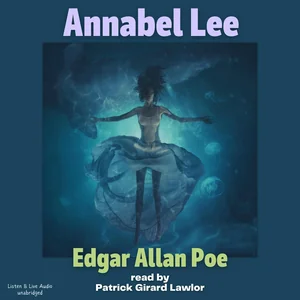
Obra, estilo e características literárias A obra de Poe abrange poesia e prosa. Seus poemas, como "The Raven" (O Corvo) e "Annabel Lee", são conhecidos por sua musicalidade, melancolia e temas como a morte de uma bela mulher. Em sua prosa, Poe explorou o horror psicológico, o mistério e o raciocínio dedutivo. Seus contos de detetive estabeleceram as bases para o gênero, com um protagonista brilhante e um assistente narrador. O estilo de Poe é denso, com vocabulário rico e uma atmosfera carregada. Ele frequentemente utilizava simbolismo e alusões, criando um universo literário sombrio e introspectivo. Sua busca pela "unidade de efeito" em seus contos visava provocar uma única e intensa impressão no leitor.

Obra, estilo e características literárias

Contexto cultural e histórico Poe viveu no século XIX, um período de grandes transformações nos Estados Unidos, incluindo a expansão territorial e debates sobre escravidão. Ele era um crítico ácido da sociedade literária de sua época, especialmente da revista "The Saturday Evening Post", e frequentemente se envolvia em polêmicas. Poe é frequentemente associado ao movimento Romântico Americano, mas seu estilo sombrio e sua exploração do gótico o distinguem de muitos de seus contemporâneos.

Obra, estilo e características literárias

Vida pessoal A vida pessoal de Poe foi profundamente marcada pela perda e pela instabilidade. O falecimento de sua esposa, Virginia Clemm, em 1847, devido à tuberculose, foi um golpe devastador que o afetou imensamente e se refletiu em sua obra. Seus relacionamentos, incluindo com a mãe adotiva, foram complexos e muitas vezes tensos. Poe lutou contra o alcoolismo e problemas financeiros ao longo de sua vida, o que contribuiu para um fim trágico e prematuro.

Obra, estilo e características literárias

Reconhecimento e receção Embora Poe tenha sido uma figura reconhecida em seu tempo, especialmente por seus contos de detetive e poemas como "The Raven", seu legado se consolidou após sua morte. Foi um crítico literário influente, embora muitas vezes mordaz. A recepção de sua obra variou, com alguns admirando sua originalidade e outros criticando seu estilo sombrio. Hoje, é considerado um dos maiores escritores americanos e uma figura seminal na literatura de horror, mistério e ficção científica.

Obra, estilo e características literárias

Influências e legado Poe influenciou inúmeros escritores, tanto na literatura de horror (como H.P. Lovecraft) quanto no gênero de detetive (Arthur Conan Doyle). Seu conceito de "unidade de efeito" e sua técnica narrativa foram amplamente estudados. A exploração da psique humana e o uso de atmosferas sombrias continuam a ressoar na literatura e no cinema contemporâneos. Sua obra foi traduzida para diversas línguas, garantindo sua difusão internacional.

Obra, estilo e características literárias

Interpretação e análise crítica A obra de Poe tem sido objeto de inúmeras interpretações. Alguns veem em seus contos e poemas uma profunda reflexão sobre a mortalidade, a loucura e a fragilidade da mente humana. Outros exploram as influências do romantismo gótico e do transcendentalismo em sua escrita. Debates críticos frequentemente abordam a relação entre sua vida pessoal turbulenta e sua produção literária, e a natureza de seu gênio.

Obra, estilo e características literárias

Curiosidades e aspetos menos conhecidos Poe era conhecido por sua inteligência aguçada e por um certo dândismo em seu comportamento social. Sua relação com seu pai adotivo, John Allan, era notoriamente difícil, chegando a ponto de discussões públicas e cortes. Poe era um leitor ávido e um crítico literário temido, com opiniões fortes e muitas vezes impiedosas sobre seus contemporâneos. A causa exata de sua morte ainda é objeto de especulação, com teorias que vão de alcoolismo a raiva ou envenenamento.

Obra, estilo e características literárias

Morte e memória Edgar Allan Poe morreu em circunstâncias misteriosas em 10 de outubro de 1849, em Baltimore, Maryland. Foi encontrado em um estado de delírio, vestindo roupas que não eram suas. A causa de sua morte nunca foi definitivamente estabelecida. Sua memória perdura através de sua obra imortal, de estudos acadêmicos e de homenagens em locais como o cemitério de Westminster, em Baltimore, onde seu túmulo se tornou um local de peregrinação.