Lista de Poemas

Epigram for Wall Street

I'll tell you a plan for gaining wealth,
Better than banking, trade or leases —
Take a bank note and fold it up,
And then you will find your money in creases!
This wonderful plan, without danger or loss,
Keeps your cash in your hands, where nothing can trouble it;
And every time that you fold it across,
'Tis as plain as the light of the day that you double it!


1845

1 162

The Divine Right Of Kings

The only king by right divine
Is Ellen King, and were she mine
I'd strive for liberty no more,
But hug the glorious chains I wore.

Her bosom is an ivory throne,
Where tyrant virtue reigns alone ;
No subject vice dare interfere,
To check the power that governs here.

O! would she deign to rule my fate,
I'd worship Kings and kingly state,
And hold this maxim all life long,
The King — my King — can do no wrong. P


1845

1 171

Dreams

Oh! that my young life were a lasting dream!
My spirit not awakening, till the beam
Of an Eternity should bring the morrow.
Yes! tho' that long dream were of hopeless sorrow,
'Twere better than the cold reality
Of waking life, to him whose heart must be,
And hath been still, upon the lovely earth,
A chaos of deep passion, from his birth.
But should it be— that dream eternally
Continuing— as dreams have been to me
In my young boyhood— should it thus be given,
'Twere folly still to hope for higher Heaven.
For I have revell'd, when the sun was bright
I' the summer sky, in dreams of living light
And loveliness,— have left my very heart
In climes of my imagining, apart
From mine own home, with beings that have been
Of mine own thought— what more could I have seen?
'Twas once— and only once— and the wild hour
From my remembrance shall not pass— some power
Or spell had bound me— 'twas the chilly wind
Came o'er me in the night, and left behind
Its image on my spirit— or the moon
Shone on my slumbers in her lofty noon
Too coldly— or the stars— howe'er it was
That dream was as that night—wind— let it pass.

I have been happy, tho' in a dream.
I have been happy— and I love the theme:
Dreams! in their vivid coloring of life,
As in that fleeting, shadowy, misty strife
Of semblance with reality, which brings
To the delirious eye, more lovely things
Of Paradise and Love— and all our own!
Than young Hope in his sunniest hour hath known.


1827

1 651

Enigma

The noblest name in Allegory's page,
The hand that traced inexorable rage;
A pleasing moralist whose page refined,
Displays the deepest knowledge of the mind;
A tender poet of a foreign tongue,
(Indited in the language that he sung.)
A bard of brilliant but unlicensed page
At once the shame and glory of our age,
The prince of harmony and stirling sense,
The ancient dramatist of eminence,
The bard that paints imagination's powers,
And him whose song revives departed hours,
Once more an ancient tragic bard recall,
In boldness of design surpassing all.
These names when rightly read, a name [make] known
Which gathers all their glories in its own.


1833

1 984

Eulalie

I dwelt alone
In a world of moan,
And my soul was a stagnant tide,
Till the fair and gentle Eulalie became my blushing bride—
Till the yellow-haired young Eulalie became my smiling bride.

Ah, less— less bright
The stars of the night
Than the eyes of the radiant girl!
That the vapor can make
With the moon-tints of purple and pearl,
Can vie with the modest Eulalie's most unregarded curl—
Can compare with the bright-eyed Eulalie's most humble and careless curl.

Now Doubt- now Pain
Come never again,
For her soul gives me sigh for sigh,
And all day long
Shines, bright and strong,
Astarte within the sky,
While ever to her dear Eulalie upturns her matron eye—
While ever to her young Eulalie upturns her violet eye.


1850

2 176

Fairy-Land

Dim vales— and shadowy floods—
And cloudy—looking woods,
Whose forms we can't discover
For the tears that drip all over!
Huge moons there wax and wane—
Again— again— again—
Every moment of the night—
Forever changing places—
And they put out the star—light
With the breath from their pale faces.
About twelve by the moon—dial,
One more filmy than the rest
(A kind which, upon trial,
They have found to be the best)
Comes down— still down— and down,
With its centre on the crown
Of a mountain's eminence,
While its wide circumference
In easy drapery falls
Over hamlets, over halls,
Wherever they may be—
O'er the strange woods— o'er the sea—
Over spirits on the wing—
Over every drowsy thing—
And buries them up quite
In a labyrinth of light—
And then, how deep!— O, deep!
Is the passion of their sleep.
In the morning they arise,
And their moony covering
Is soaring in the skies,
With the tempests as they toss,
Like— almost anything—
Or a yellow Albatross.
They use that moon no more
For the same end as before—
Videlicet, a tent—
Which I think extravagant:
Its atomies, however,
Into a shower dissever,
Of which those butterflies
Of Earth, who seek the skies,
And so come down again,
(Never—contented things!)
Have brought a specimen
Upon their quivering wings.


1829

1 332

Eldorado

Gaily bedight,
A gallant knight,
In sunshine and in shadow,
Had journeyed long,
Singing a song,
In search of Eldorado.

But he grew old—
This knight so bold—
And o'er his heart a shadow
Fell as he found
No spot of ground
That looked like Eldorado.

And, as his strength
Failed him at length,
He met a pilgrim shadow—
"Shadow," said he,
"Where can it be—
This land of Eldorado?"

"Over the Mountains
Of the Moon,
Down the Valley of the Shadow,
Ride, boldly ride,"
The shade replied—
"If you seek for Eldorado!"


1849

2 151

The Conqueror Worm

Lo! 'tis a gala night
Within the lonesome latter years!
An angel throng, bewinged, bedight
In veils, and drowned in tears,
Sit in a theatre, to see
A play of hopes and fears,
While the orchestra breathes fitfully
The music of the spheres.

Mimes, in the form of God on high,
Mutter and mumble low,
And hither and thither fly --
Mere puppets they, who come and go
At bidding of vast formless things
That shift the scenery to and fro,
Flapping from out their Condor wings
Invisible Wo!

That motley drama! --oh, be sure
It shall not be forgot!
With its Phantom chased forever more,
By a crowd that seize it not,
Through a circle that ever returneth in
To the self-same spot,
And much of Madness and more of Sin
And Horror the soul of the plot.

But see, amid the mimic rout,
A crawling shape intrude!
A blood-red thing that writhes from out
The scenic solitude!
It writhes! --it writhes! --with mortal pangs
The mimes become its food,
And the seraphs sob at vermin fangs
In human gore imbued.

Out --out are the lights --out all!
And over each quivering form,
The curtain, a funeral pall,
Comes down with the rush of a storm,
And the angels, all pallid and wan,
Uprising, unveiling, affirm
That the play is the tragedy, "Man,"
And its hero the Conqueror Worm.


1843

1 281

Evening Star

'Twas noontide of summer,
And mid-time of night;
And stars, in their orbits,
Shone pale, thro' the light
Of the brighter, cold moon,
'Mid planets her slaves,
Herself in the Heavens,
Her beam on the waves.
I gazed awhile
On her cold smile;
Too cold— too cold for me—
There pass'd, as a shroud,
A fleecy cloud,
And I turned away to thee,
Proud Evening Star,
In thy glory afar,
And dearer thy beam shall be;
For joy to my heart
Is the proud part
Thou bearest in Heaven at night,
And more I admire
Thy distant fire,
Than that colder, lowly light.

1 801

Untitled - The happiest day — the happiest hour

The happiest day — the happiest hour
My sear'd and blighted heart hath known,
The highest hope of pride, and power,
I feel hath flown.

Of power! said I? yes! such I ween
But they have vanish'd long alas!
The visions of my youth have been —
But let them pass.

And, pride, what have I now with thee?
Another brow may ev'n inherit
The venom thou hast pour'd on me —
Be still my spirit.

The happiest day — the happiest hour
Mine eyes shall see — have ever seen
The brightest glance of pride and power
I feel — have been:

But were that hope of pride and power
Now offer'd, with the pain
Ev'n then I felt — that brightest hour
I would not live again:

For on its wing wall dark alloy
And as it flutter'd — fell
An essence — powerful to destroy
A soul that knew it well.


1827

1 101

Comentários (0)

ShareOn Facebook WhatsApp X
Iniciar sessão para publicar um comentário.

NoComments

Identificação e contexto básico

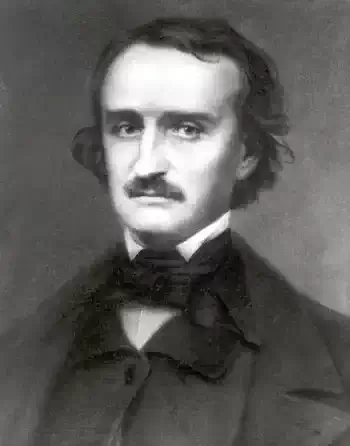
Edgar Allan Poe (nascido Edgar Poe) foi um escritor, poeta, editor e crítico literário americano. É amplamente reconhecido como uma figura central do Romantismo na sua nação e nos Estados Unidos, e como um dos pioneiros da ficção científica e do conto de mistério. Sua escrita, muitas vezes caracterizada pelo macabro e pelo gótico, explorou as profundezas da psique humana, a morte, a perda e o sobrenatural.

Infância e formação

A infância de Poe foi marcada por tragédias precoces. Nascido em Boston, Massachusetts, seus pais atores, David Poe Jr. e Elizabeth Arnold Poe, faleceram quando ele ainda era muito jovem. Órfão aos três anos, foi acolhido por John e Frances Allan, um casal abastado de Richmond, Virgínia. Embora John Allan o tenha educado e financiado seus estudos, a relação entre os dois era frequentemente tensa, especialmente após o casamento de Poe com sua jovem prima, Virginia Clemm. Poe frequentou a Universidade da Virgínia e a Academia Militar de West Point, mas não completou seus estudos em nenhuma das instituições, possivelmente devido a dificuldades financeiras e conflitos pessoais com John Allan.

Percurso literário

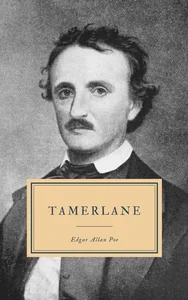
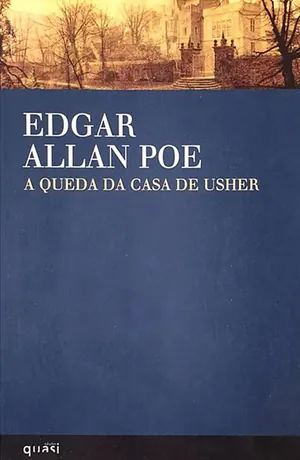
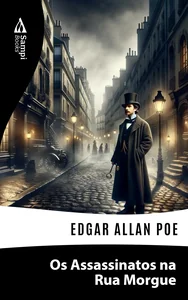
Poe começou a escrever poesia ainda na adolescência. Seu primeiro livro publicado, "Tamerlane and Other Poems", surgiu em 1827, de forma anônima. Após um período de serviço militar, ele se dedicou à escrita e à crítica literária, trabalhando para diversas publicações. Foi como contista que Poe ganhou maior notoriedade com obras como "The Fall of the House of Usher" (A Queda da Casa de Usher) e "The Murders in the Rue Morgue" (Os Assassinatos da Rua Morgue), este último considerado o marco inicial da ficção de detetive. Sua carreira foi marcada por altos e baixos financeiros e pela luta contra o alcoolismo e a dependência.

Obra, estilo e características literárias

Obra, estilo e características literárias A obra de Poe abrange poesia e prosa. Seus poemas, como "The Raven" (O Corvo) e "Annabel Lee", são conhecidos por sua musicalidade, melancolia e temas como a morte de uma bela mulher. Em sua prosa, Poe explorou o horror psicológico, o mistério e o raciocínio dedutivo. Seus contos de detetive estabeleceram as bases para o gênero, com um protagonista brilhante e um assistente narrador. O estilo de Poe é denso, com vocabulário rico e uma atmosfera carregada. Ele frequentemente utilizava simbolismo e alusões, criando um universo literário sombrio e introspectivo. Sua busca pela "unidade de efeito" em seus contos visava provocar uma única e intensa impressão no leitor.

Obra, estilo e características literárias

Contexto cultural e histórico Poe viveu no século XIX, um período de grandes transformações nos Estados Unidos, incluindo a expansão territorial e debates sobre escravidão. Ele era um crítico ácido da sociedade literária de sua época, especialmente da revista "The Saturday Evening Post", e frequentemente se envolvia em polêmicas. Poe é frequentemente associado ao movimento Romântico Americano, mas seu estilo sombrio e sua exploração do gótico o distinguem de muitos de seus contemporâneos.

Obra, estilo e características literárias

Vida pessoal A vida pessoal de Poe foi profundamente marcada pela perda e pela instabilidade. O falecimento de sua esposa, Virginia Clemm, em 1847, devido à tuberculose, foi um golpe devastador que o afetou imensamente e se refletiu em sua obra. Seus relacionamentos, incluindo com a mãe adotiva, foram complexos e muitas vezes tensos. Poe lutou contra o alcoolismo e problemas financeiros ao longo de sua vida, o que contribuiu para um fim trágico e prematuro.

Obra, estilo e características literárias

Reconhecimento e receção Embora Poe tenha sido uma figura reconhecida em seu tempo, especialmente por seus contos de detetive e poemas como "The Raven", seu legado se consolidou após sua morte. Foi um crítico literário influente, embora muitas vezes mordaz. A recepção de sua obra variou, com alguns admirando sua originalidade e outros criticando seu estilo sombrio. Hoje, é considerado um dos maiores escritores americanos e uma figura seminal na literatura de horror, mistério e ficção científica.

Obra, estilo e características literárias

Influências e legado Poe influenciou inúmeros escritores, tanto na literatura de horror (como H.P. Lovecraft) quanto no gênero de detetive (Arthur Conan Doyle). Seu conceito de "unidade de efeito" e sua técnica narrativa foram amplamente estudados. A exploração da psique humana e o uso de atmosferas sombrias continuam a ressoar na literatura e no cinema contemporâneos. Sua obra foi traduzida para diversas línguas, garantindo sua difusão internacional.

Obra, estilo e características literárias

Interpretação e análise crítica A obra de Poe tem sido objeto de inúmeras interpretações. Alguns veem em seus contos e poemas uma profunda reflexão sobre a mortalidade, a loucura e a fragilidade da mente humana. Outros exploram as influências do romantismo gótico e do transcendentalismo em sua escrita. Debates críticos frequentemente abordam a relação entre sua vida pessoal turbulenta e sua produção literária, e a natureza de seu gênio.

Obra, estilo e características literárias

Curiosidades e aspetos menos conhecidos Poe era conhecido por sua inteligência aguçada e por um certo dândismo em seu comportamento social. Sua relação com seu pai adotivo, John Allan, era notoriamente difícil, chegando a ponto de discussões públicas e cortes. Poe era um leitor ávido e um crítico literário temido, com opiniões fortes e muitas vezes impiedosas sobre seus contemporâneos. A causa exata de sua morte ainda é objeto de especulação, com teorias que vão de alcoolismo a raiva ou envenenamento.

Obra, estilo e características literárias

Morte e memória Edgar Allan Poe morreu em circunstâncias misteriosas em 10 de outubro de 1849, em Baltimore, Maryland. Foi encontrado em um estado de delírio, vestindo roupas que não eram suas. A causa de sua morte nunca foi definitivamente estabelecida. Sua memória perdura através de sua obra imortal, de estudos acadêmicos e de homenagens em locais como o cemitério de Westminster, em Baltimore, onde seu túmulo se tornou um local de peregrinação.