Lista de Poemas

Bridal Ballad

The ring is on my hand,
And the wreath is on my brow;
Satin and jewels grand
Are all at my command,
And many a rood of land
And I am happy now.

And my lord he loves me well;
But, when first he breathed his vow,
I felt my bosom swell—
And the voice seemed his who fell
For the words rang as a knell,
In the battle down the dell,
And who is happy now.

But he spoke to re-assure me,
And he kissed my pallid brow,
While a reverie came o'er me,
And to the church-yard bore me,
And I sighed to him before me,
"Oh, I am happy now!"

And thus the words were spoken,
And this the plighted vow,
And, though my faith be broken,
And, though my heart be broken,
Behold the golden token
That proves me happy now!

Would God I could awaken!
For I dream I know not how!
And my soul is sorely shaken
Lest an evil step be taken,—--
Lest the dead who is forsaken
May not be happy now.


1837

1 447

Imitation

A dark unfathom'd tide
Of interminable pride —
A mystery, and a dream,
Should my early life seem;
I say that dream was fraught
With a wild, and waking thought
Of beings that have been,
Which my spirit hath not seen.
Had I let them pass me by,
With a dreaming eye!
Let none of earth inherit
That vision on [of] my spirit;
Those thoughts I would controul,
As a spell upon his soul:
For that bright hope at last
And that light time have past,
And my worldly rest hath gone
With a sight [sigh] as it pass'd on
I care not tho' it perish
With a thought I then did cherish.

1 456

The Coliseum

Lone ampitheatre ! Grey Coliseum !
Type of the antique Rome ! Rich reliquary
Of lofty contemplation left to Time
By buried centuries of pomp and power !
At length, at length — after so many days
Of weary pilgrimage, and burning thirst,
(Thirst for the springs of love [lore] that in thee lie,)
I kneel, an altered, and an humble man,
Amid thy shadows, and so drink within
My very soul thy grandeur, gloom, and glory.

Vastness ! and Age ! and Memories of Eld !
Silence and Desolation! and dim Night!
Gaunt vestibules! and phantom-peopled aisles !
I feel ye now: I feel ye in your strength!
O spells more sure then [than] e'er Judæan king
Taught in the gardens of Gethsemane !
O charms more potent than the rapt Chaldee
Ever drew down from out the quiet stars !

Here, where a hero fell, a column falls :
Here, where the mimic eagle glared in gold,
A midnight vigil holds the swarthy bat:
Here, where the dames of Rome their yellow hair
Wav'd to the wind, now wave the reed and thistle :
Here, where on ivory couch the Cæsar sate,
On bed of moss lies gloating the foul adder :

Here, where on golden throne the monarch loll'd,
Glides spectre-like unto his marble home,
Lit by the wan light of the horned moon,
The swift and silent lizard of the stones.

These crumbling walls; these tottering arcades ;
These mouldering plinths; these sad, and blacken'd shafts ;
These vague entablatures; this broken frieze ;
These shattered cornices; this wreck; this ruin ;
These stones, alas! — these grey stones — are they all ;
All of the great and the colossal left
By the corrosive hours to Fate and me ?

"Not all," — the echoes answer me; "not all :
Prophetic sounds, and loud, arise forever
From us, and from all ruin, unto the wise,
As in old days from Memnon to the sun.
We rule the hearts of mightiest men: — we rule
With a despotic sway all giant minds.
We are not desolate — we pallid stones ;
Not all our power is gone; not all our Fame ;
Not all the magic of our high renown ;
Not all the wonder that encircles us ;
Not all the mysteries that in us lie;
Not all the memories that hang upon,
And cling around about us now and ever,
And clothe us in a robe of more than glory."


1833

1 511

The Bells — A Song

The bells! — hear the bells!
The merry wedding bells!
The little silver bells!
How fairy-like a melody there swells
From the silver tinkling cells
Of the bells, bells, bells!
Of the bells!

The bells! — ah, the bells!
The heavy iron bells!
Hear the tolling of the bells!
Hear the knells!
How horrible a monody there floats
From their throats —
From their deep-toned throats!
How I shudder at the notes
From the melancholy throats
Of the bells, bells, bells —
Of the bells —


1849

1 112

A Dream

In visions of the dark night
I have dreamed of joy departed--
But a waking dream of life and light
Hath left me broken-hearted.

Ah! what is not a dream by day
To him whose eyes are cast
On things around him with a ray
Turned back upon the past?

That holy dream- that holy dream,
While all the world were chiding,
Hath cheered me as a lovely beam
A lonely spirit guiding.

What though that light, thro' storm and night,
So trembled from afar-
What could there be more purely bright
In Truth's day-star?

-The End-

2 184

Alone

From childhood's hour I have not been
As others were; I have not seen
As others saw; I could not bring
My passions from a common spring.
From the same source I have not taken
My sorrow; I could not awaken
My heart to joy at the same tone;
And all I loved, I loved alone.
Then- in my childhood, in the dawn
Of a most stormy life- was drawn
From every depth of good and ill
The mystery which binds me still:
From the torrent, or the fountain,
From the red cliff of the mountain,
From the sun that round me rolled
In its autumn tint of gold,
From the lightning in the sky
As it passed me flying by,
From the thunder and the storm,
And the cloud that took the form
(When the rest of Heaven was blue)
Of a demon in my view.


1829

1 942

Beloved Physician

The pulse beats ten and intermits;
God nerve the soul that ne'er forgets
In calm or storm, by night or day,
Its steady toil, its loyalty.
[. . . ]

[. . . ]
The pulse beats ten and intermits;
God shield the soul that ne'er forgets.
[. . . ]

[. . . ]
The pulse beats ten and intermits;
God guide the soul that ne'er forgets.
[. . . ]

[. . . ] so tired, so weary,
The soft head bows, the sweet eyes close,
The faithful heart yields to repose.

1 258

Untitled - A wilder'd being from my birth

A wilder'd being from my birth
My spirit spurn'd control,
But now, abroad on the wide earth,
Where wand'rest thou my soul?

In visions of the dark night
I have dream'd of joy departed —
But a waking dream of life and light
Hath left me broken-hearted.

And what is not a dream by day
To him whose eyes are cast
On things around him with a ray
Turn'd back upon the past?

That holy dream — that holy dream,
While all the world were chiding,
Hath cheer'd me as a lovely beam
A lonely spirit guiding —

What tho' that light, thro' misty night
So dimly shone afar—
What could there be more purely bright
In Truth's day — star ?

-The End-

1 170

A Campaign Song

See the White Eagle soaring aloft to the sky,
Wakening the broad welkin with his loud battle cry;
Then here's the White Eagle, full daring is he,
As he sails on his pinions o'er valley and sea.


(probably written early in 1844)

1 251

To

Sleep on, sleep on, another hour —
I would not break so calm a sleep,
To wake to sunshine and to show'r,
To smile and weep.

Sleep on, sleep on, like sculptured thing,
Majestic, beautiful art thou;
Sure seraph shields thee with his wing
And fans thy brow —

We would not deem thee child of earth,
For, O, angelic, is thy form!
But, that in heav'n thou had'st thy birth,
Where comes no storm

To mar the bright, the perfect flow'r,
But all is beautiful and still —
And golden sands proclaim the hour
Which brings no ill.

Sleep on, sleep on, some fairy dream
Perchance is woven in thy sleep —
But, O, thy spirit, calm, serene,
Must wake to weep.

Tamerlane


1833

1 087

Comentários (0)

ShareOn Facebook WhatsApp X
Iniciar sessão para publicar um comentário.

NoComments

Identificação e contexto básico

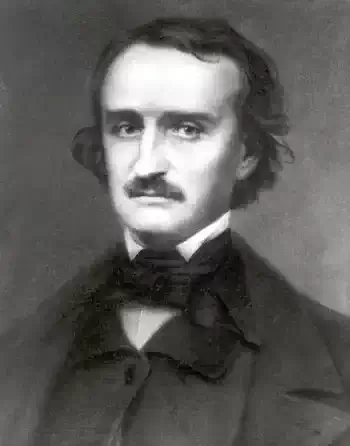
Edgar Allan Poe (nascido Edgar Poe) foi um escritor, poeta, editor e crítico literário americano. É amplamente reconhecido como uma figura central do Romantismo na sua nação e nos Estados Unidos, e como um dos pioneiros da ficção científica e do conto de mistério. Sua escrita, muitas vezes caracterizada pelo macabro e pelo gótico, explorou as profundezas da psique humana, a morte, a perda e o sobrenatural.

Infância e formação

A infância de Poe foi marcada por tragédias precoces. Nascido em Boston, Massachusetts, seus pais atores, David Poe Jr. e Elizabeth Arnold Poe, faleceram quando ele ainda era muito jovem. Órfão aos três anos, foi acolhido por John e Frances Allan, um casal abastado de Richmond, Virgínia. Embora John Allan o tenha educado e financiado seus estudos, a relação entre os dois era frequentemente tensa, especialmente após o casamento de Poe com sua jovem prima, Virginia Clemm. Poe frequentou a Universidade da Virgínia e a Academia Militar de West Point, mas não completou seus estudos em nenhuma das instituições, possivelmente devido a dificuldades financeiras e conflitos pessoais com John Allan.

Percurso literário

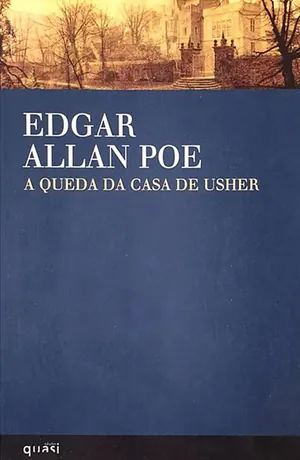
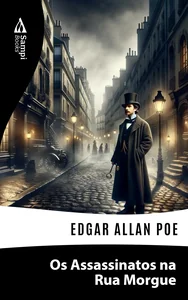
Poe começou a escrever poesia ainda na adolescência. Seu primeiro livro publicado, "Tamerlane and Other Poems", surgiu em 1827, de forma anônima. Após um período de serviço militar, ele se dedicou à escrita e à crítica literária, trabalhando para diversas publicações. Foi como contista que Poe ganhou maior notoriedade com obras como "The Fall of the House of Usher" (A Queda da Casa de Usher) e "The Murders in the Rue Morgue" (Os Assassinatos da Rua Morgue), este último considerado o marco inicial da ficção de detetive. Sua carreira foi marcada por altos e baixos financeiros e pela luta contra o alcoolismo e a dependência.

Obra, estilo e características literárias

Obra, estilo e características literárias A obra de Poe abrange poesia e prosa. Seus poemas, como "The Raven" (O Corvo) e "Annabel Lee", são conhecidos por sua musicalidade, melancolia e temas como a morte de uma bela mulher. Em sua prosa, Poe explorou o horror psicológico, o mistério e o raciocínio dedutivo. Seus contos de detetive estabeleceram as bases para o gênero, com um protagonista brilhante e um assistente narrador. O estilo de Poe é denso, com vocabulário rico e uma atmosfera carregada. Ele frequentemente utilizava simbolismo e alusões, criando um universo literário sombrio e introspectivo. Sua busca pela "unidade de efeito" em seus contos visava provocar uma única e intensa impressão no leitor.

Obra, estilo e características literárias

Contexto cultural e histórico Poe viveu no século XIX, um período de grandes transformações nos Estados Unidos, incluindo a expansão territorial e debates sobre escravidão. Ele era um crítico ácido da sociedade literária de sua época, especialmente da revista "The Saturday Evening Post", e frequentemente se envolvia em polêmicas. Poe é frequentemente associado ao movimento Romântico Americano, mas seu estilo sombrio e sua exploração do gótico o distinguem de muitos de seus contemporâneos.

Obra, estilo e características literárias

Vida pessoal A vida pessoal de Poe foi profundamente marcada pela perda e pela instabilidade. O falecimento de sua esposa, Virginia Clemm, em 1847, devido à tuberculose, foi um golpe devastador que o afetou imensamente e se refletiu em sua obra. Seus relacionamentos, incluindo com a mãe adotiva, foram complexos e muitas vezes tensos. Poe lutou contra o alcoolismo e problemas financeiros ao longo de sua vida, o que contribuiu para um fim trágico e prematuro.

Obra, estilo e características literárias

Reconhecimento e receção Embora Poe tenha sido uma figura reconhecida em seu tempo, especialmente por seus contos de detetive e poemas como "The Raven", seu legado se consolidou após sua morte. Foi um crítico literário influente, embora muitas vezes mordaz. A recepção de sua obra variou, com alguns admirando sua originalidade e outros criticando seu estilo sombrio. Hoje, é considerado um dos maiores escritores americanos e uma figura seminal na literatura de horror, mistério e ficção científica.

Obra, estilo e características literárias

Influências e legado Poe influenciou inúmeros escritores, tanto na literatura de horror (como H.P. Lovecraft) quanto no gênero de detetive (Arthur Conan Doyle). Seu conceito de "unidade de efeito" e sua técnica narrativa foram amplamente estudados. A exploração da psique humana e o uso de atmosferas sombrias continuam a ressoar na literatura e no cinema contemporâneos. Sua obra foi traduzida para diversas línguas, garantindo sua difusão internacional.

Obra, estilo e características literárias

Interpretação e análise crítica A obra de Poe tem sido objeto de inúmeras interpretações. Alguns veem em seus contos e poemas uma profunda reflexão sobre a mortalidade, a loucura e a fragilidade da mente humana. Outros exploram as influências do romantismo gótico e do transcendentalismo em sua escrita. Debates críticos frequentemente abordam a relação entre sua vida pessoal turbulenta e sua produção literária, e a natureza de seu gênio.

Obra, estilo e características literárias

Curiosidades e aspetos menos conhecidos Poe era conhecido por sua inteligência aguçada e por um certo dândismo em seu comportamento social. Sua relação com seu pai adotivo, John Allan, era notoriamente difícil, chegando a ponto de discussões públicas e cortes. Poe era um leitor ávido e um crítico literário temido, com opiniões fortes e muitas vezes impiedosas sobre seus contemporâneos. A causa exata de sua morte ainda é objeto de especulação, com teorias que vão de alcoolismo a raiva ou envenenamento.

Obra, estilo e características literárias

Morte e memória Edgar Allan Poe morreu em circunstâncias misteriosas em 10 de outubro de 1849, em Baltimore, Maryland. Foi encontrado em um estado de delírio, vestindo roupas que não eram suas. A causa de sua morte nunca foi definitivamente estabelecida. Sua memória perdura através de sua obra imortal, de estudos acadêmicos e de homenagens em locais como o cemitério de Westminster, em Baltimore, onde seu túmulo se tornou um local de peregrinação.