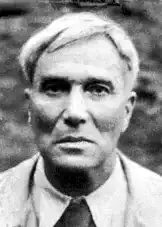
Identification and basic context
Full name: Boris Leonidovich Pasternak. Pseudonyms or heteronyms: Not widely known. Date and place of birth: April 10, 1890, Moscow, Russian Empire. Date and place of death: February 2, 1960, Peredelkino, Moscow Oblast, Russian SFSR, Soviet Union. Family background, social class, and cultural context of origin: Born into an intellectual and artistic family; his father, Leonid Pasternak, was a renowned painter, and his mother, Rosa Kaufman, a concert pianist. The family was of Jewish heritage but later converted to Orthodox Christianity. His upbringing was steeped in art, literature, and intellectual discourse, with frequent visits from prominent cultural figures. Nationality and language(s) of writing: Russian. Historical context in which they lived: Lived through the Russian Revolution, World War I, the Stalinist era, and World War II. His life and work were profoundly shaped by these tumultuous periods, particularly the political and social changes in the Soviet Union.
Childhood and education
Family background and social environment: Grew up in a culturally rich environment in Moscow, influenced by his artist father and pianist mother, surrounded by intellectuals and artists. Formal education and self-education: Initially pursued music, then studied philosophy at Moscow University, followed by philosophy at the University of Marburg in Germany. He also studied law. Early influences (readings, culture, religion, politics): Early influences included Symbolist poetry, German philosophy (especially Kant and Hegel), and Russian classical literature. His father's artistic milieu and his mother's musical background were also significant. Literary, philosophical, or artistic movements absorbed: Initially drawn to Futurism, but later developed his own distinct style. Influenced by Symbolism and by German Expressionism. Significant events in youth: His fascination with music, his philosophical studies in Germany, and his initial alignment with avant-garde movements.
Literary trajectory
Beginning of writing (when and how it started): Began writing poetry in his early twenties, initially influenced by Futurism. His first collection, "A Childish Year," was published in 1917. Development over time (phases, changes in style): His early work was experimental, but he gradually moved towards a more lyrical and personal style. The period of the 1940s and 1950s saw the development of his most mature and celebrated works, including "Doctor Zhivago" and the "Poems of Yuri Zhivago." Chronological evolution of the work: Moved from youthful experimentation to a deeply personal, philosophical, and historically engaged lyrical voice. His prose writing, particularly "Doctor Zhivago," became internationally famous. Contributions to magazines, newspapers, and anthologies: Published extensively in literary journals. Activity as a critic, translator, or editor: Was a prolific and highly respected translator, translating works by Shakespeare, Goethe, Rilke, and others into Russian. His translations were considered literary achievements in themselves.
Works, style, and literary characteristics
Major works with dates and context of production: "A Childish Year" (1917), "My Sister, Life" (1922), "Themes and Variations" (1923), "The Second Birth" (1932), "On Early Trains" (1943), "Doctor Zhivago" (1957), "When the Storm Clears: New Poems" (1959). "Doctor Zhivago" was written during the 1940s and 1950s and published abroad due to censorship. Dominant themes — love, death, time, nature, identity, homeland, spirituality, etc.: Profound exploration of love (romantic and spiritual), the ephemeral nature of time, the beauty and resilience of nature, the search for individual identity amidst historical upheaval, the complex relationship with the homeland, and a deep spiritual quest. Form and structure — use of the sonnet, free verse, fixed forms, metrical experimentation: Masterful use of free verse, but also adept at traditional forms and metrical experimentation, often creating a unique musicality. Poetic devices (metaphor, rhythm, musicality): Renowned for his rich imagery, complex metaphors, striking juxtapositions, and a highly musical, almost song-like quality in his verse. Tone and poetic voice — lyrical, satirical, elegiac, epic, ironic, confessional: Primarily lyrical, confessional, and elegiac, with moments of epic scope and profound philosophical reflection. Poetic voice (personal, universal, fragmented, etc.): Often personal and confessional, yet reaching for universal truths and experiences. Language and style — vocabulary, imagery density, preferred rhetorical devices: Rich, evocative vocabulary, dense imagery, often drawing from nature and everyday life to convey profound meaning. Preferred rhetorical devices include metaphor, simile, personification, and striking contrasts. Formal or thematic innovations introduced into literature: Blended modernist techniques with a deeply humanistic and lyrical sensibility, creating a unique voice that resonated widely. His prose in "Doctor Zhivago" also showcased a poetic approach to narrative. Relationship with tradition and modernity: Sought to reconcile the traditions of Russian poetry with the challenges and innovations of modernism. Associated literary movements (e.g., symbolism, modernism): Associated with Russian Futurism early on, but developed a style that transcended specific movements, often seen as a bridge between Symbolism and later modernist poetry. Lesser-known or unpublished works: Numerous poems, early drafts, and extensive correspondence.
Cultural and historical context
Relationship with historical events (wars, revolutions, regimes): Directly experienced and profoundly depicted the Russian Revolution, the Civil War, and the Stalinist era. His novel "Doctor Zhivago" is a critical portrayal of these events and their impact on individuals. Relationship with other writers or literary circles: Associated with poets like Mayakovsky and Blok in his early career, but also maintained complex relationships with official literary circles, often facing criticism and ostracization. Generation or movement to which they belong (e.g., Romanticism, Modernism, Surrealism): Often considered part of the Silver Age of Russian poetry, straddling Symbolism and Futurism, and a key figure in Russian modernism. Political or philosophical stance: Initially drawn to revolutionary ideals but became increasingly disillusioned with the Soviet regime and its suppression of artistic freedom. His work reflects a deep humanism and a belief in individual conscience over state ideology. Influence of society and culture on the work: Russian society and culture, particularly its turbulent history and rich artistic heritage, were central to his work. Dialogues and tensions with contemporaries: Engaged in debates with other writers, particularly regarding artistic responsibility during times of political change. Critical reception during life vs. posthumous recognition: Received significant critical acclaim during his life, but also faced persecution from the Soviet authorities. Posthumously, his international fame, especially for "Doctor Zhivago," grew immensely.
Personal life
Significant emotional and family relationships and how they shaped the work: His complex relationships, particularly with women like Zinaida Nikolaevna Rikhter and Marina Tsvetaeva, influenced his intensely personal and lyrical poetry. His marriage to Zinaida was a central aspect of his life. Friendships and literary rivalries: Maintained friendships with many prominent cultural figures, but also experienced tensions and rivalries within the literary establishment. Personal experiences and crises, illnesses, or conflicts: Experienced periods of intense creative output interspersed with personal struggles, illness, and the constant pressure of living under a totalitarian regime. Parallel professions (if they did not live solely from poetry): Worked as a translator and, for a period, in various administrative roles within the literary world. Religious, spiritual, or philosophical beliefs: Explored spiritual and philosophical questions deeply, moving from a more secular outlook to a profound engagement with Christian themes, particularly in "Doctor Zhivago." Political positions and civic engagement: Initially sympathetic to the revolution but became a vocal critic of Soviet repression and censorship, leading to his ostracization and exile from the official literary world.
Recognition and reception
Place in national and international literature: Considered one of the greatest Russian poets of the 20th century and an internationally renowned novelist. Awards, distinctions, and institutional recognition: Awarded the Nobel Prize in Literature in 1958 for "Doctor Zhivago." Critical reception at the time and over time: Received mixed reception within the Soviet Union, with official condemnation alongside underground admiration. Internationally, his work, especially "Doctor Zhivago," was widely celebrated. Popularity vs. academic recognition: Highly popular internationally, particularly after the film adaptation of "Doctor Zhivago," and also a subject of extensive academic study.
Influences and legacy
Authors who influenced them: Alexander Pushkin, Mikhail Lermontov, Fyodor Tyutchev, Symbolist poets (e.g., Andrei Bely), Rainer Maria Rilke, Goethe, Shakespeare. Poets and movements they influenced: Greatly influenced subsequent generations of Russian poets, as well as poets internationally, particularly those exploring lyrical depth, complex imagery, and the intersection of personal experience with historical events. Impact on national and world literature and on later generations of poets: His work is a cornerstone of 20th-century Russian literature and has had a lasting impact on world literature through its profound humanism and artistic integrity. Inclusion in the literary canon: Universally included in the canon of Russian and world literature. Translations and international dissemination: Widely translated into numerous languages. Adaptations (music, theater, film): "Doctor Zhivago" has been adapted into a highly successful film (1965) and a television series. Academic studies dedicated to the work: Extensive academic scholarship exists on his poetry, prose, and translations.
Interpretation and critical analysis
Possible readings of the work: "Doctor Zhivago" has been interpreted as a critique of the Soviet system, a celebration of individual spirit and artistic freedom, and a profound meditation on fate and history. His poetry is analyzed for its complex interplay of nature, love, and spirituality. Philosophical and existential themes: Explores themes of free will versus determinism, the search for meaning in a chaotic world, the nature of suffering, and the enduring power of love and beauty. Controversies or critical debates: The most significant controversy surrounded the Nobel Prize and his subsequent denunciation by Soviet authorities, leading to intense debate about artistic freedom and political engagement.
Curiosities and lesser-known aspects
Lesser-known aspects of personality: Despite his profound lyrical gifts, he could be intensely private and sometimes stubborn. Contradictions between life and work: The contrast between the deeply spiritual and humanistic themes in his work and the often harsh, politically charged reality of his life in the Soviet Union. Significant or anecdotal episodes that illuminate the author’s profile: His refusal to participate in the denunciation of Akhmatova, his later difficult relationship with the state, and his eventual forced acceptance of exile in spirit, if not entirely in body. Objects, places, or rituals associated with poetic creation: The dacha at Peredelkino became a symbolic space for his later work. Writing habits: Known for intense periods of work, often revising extensively. Curious episodes: His son, Alexander Pasternak, was a notable artist and art critic. Manuscripts, diaries, or correspondence: His extensive correspondence provides deep insights into his life and thoughts.
Death and memory
Circumstances of death: Died of lung cancer. Posthumous publications: Numerous posthumous collections of his poetry and prose, including further works related to "Doctor Zhivago" and collections of his letters.