

Authors List
Browse our collection of authors

José Luis Cano

1911-12-28 – 1999-02-15
José Luis Cano was a Spanish poet, literary critic, and translator. His poetic work is characterized by a deep and serene gaze upon reality, exploring themes such as memory, the passage of time, nature, and the human condition with precise and evocative language. As a critic, he dedicated himself to the study of contemporary Spanish poetry, standing out for his rigor and analytical sharpness. His work as a translator also enriched the Spanish literary landscape. He is considered a relevant figure in the poetry and criticism of his generation.

Luis Goytisolo
1935-03-17
Luis Goytisolo is a Spanish novelist and poet, whose work is characterized by its psychological depth, formal experimentation, and exploration of themes such as memory, identity, lack of communication, and the human condition. Born in Barcelona, he went into exile in France in 1956, where he developed a large part of his literary career and came into contact with European intellectual circles. His writing is distinguished by a refined and often introspective prose, which addresses the complexity of human relationships and the search for meaning in a contemporary world marked by fragmentation. He is considered a relevant figure in Spanish literature of the second half of the 20th century.

Carlos Germán Belli
1927-09-15 – 2024-08-10
Peruvian poet, one of the most unique and enigmatic voices in 20th-century Spanish-language poetry. His work, marked by an elaborate language and a profound reflection on existence, time, and memory, is characterized by its formal rigor and its often dark and existential tone. Throughout his career, Belli has explored the depths of the human condition, the transience of life, and the persistence of memory, using a poetics that combines tradition with a contemporary and personal vision. He is recognized for the demands of his writing and the intensity of his verses.

Gerardo Deniz
Gerardo Deniz was a Spanish poet, essayist, and translator known for his dense and often hermetic work. His poetry is characterized by deep erudition, rich language, and a constant reflection on the human condition, history, and the nature of language. Throughout his career, he explored themes such as time, memory, identity, and the transience of existence, often using mythological, historical, and philosophical references. His work, though not always easily accessible, is valued for its intellectual rigor and originality.

Salvador Espriu
1913-07-10 – 1985-02-22
Salvador Espriu was a Spanish poet, playwright, and novelist, a central figure in post-war Catalan literature. His work, deeply rooted in the identity and history of Catalonia, is characterized by a reflection on the human condition, collective memory, injustice, and the fragility of existence. Using often symbolic and evocative language, Espriu addressed universal themes from a local perspective, becoming a moral and literary reference.

Roque Dalton
1935-11-24 – 1975-05-10
Roque Dalton García was a Salvadoran poet, journalist, and political activist, a key figure in 20th-century Central American literature. His poetic work is characterized by a deep connection to the social and political reality of his country, addressing themes such as injustice, revolution, and Latin American identity with a vigorous and often ironic language. Despite his intense literary activity, his life was marked by exile and armed struggle, which significantly influenced his writing, imbuing it with a unique urgency and testimonial weight. His legacy endures as a symbol of resistance and the pursuit of social justice through poetic word.
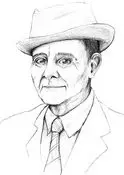
Josep Vicenç Foix
1893-01-28 – 1987-01-29
Josep Vicenç Foix was a Spanish poet, writer, and literary critic, one of the most unique and representative figures of 20th-century Catalan literature. His poetic work, marked by a deep spirituality, personal mysticism, and a constant exploration of identity, is characterized by the fusion of tradition and avant-garde. Foix is known for his aphoristic language, cryptic symbolism, and his vocation to explore the limits of poetic expression. Throughout his extensive career, he remained faithful to his personal universe, becoming an unavoidable reference for contemporary Catalan poetry.

Carmen Boullosa
1954-09-04
Carmen Boullosa is a contemporary Mexican writer whose work spans novels, poetry, and essays. Recognized for her bold and experimental style, Boullosa challenges narrative conventions and explores themes such as identity, gender, history, and memory, often rewriting myths and historical figures from feminist and innovative perspectives. Her writing is characterized by rich imagery, vibrant language, and a deep reflection on the human condition and the complexities of Mexican and Latin American society. She is a fundamental voice in Spanish-language literature, with a body of work that invites the deconstruction of established narratives and the exploration of new forms of expression.

José Manuel Caballero Bonald
1926-11-11 – 2021-05-09
José Manuel Caballero Bonald was a Spanish poet and novelist, a prominent figure of the Generation of '50. His work is characterized by a deep social and existential charge, addressing themes such as injustice, marginalization, historical memory, and the human condition with a powerful and often heartbreaking language. He was a chronicler of the reality of his time, especially of Andalusia, capturing in his writing the harshness of rural life and the aftermath of the war and post-war period. His literary legacy is immense and his recognition encompasses numerous awards and distinctions.

Vicente Gaos
1919-03-27 – 1980-10-17
Vicente Gaos was a Spanish poet, a key figure of the Generation of '50, known for his existential and social poetry, marked by a profound reflection on the human condition and the reality of his time. His work, characterized by direct language and great lyrical sensitivity, addresses themes such as memory, identity, justice, and the search for hope in difficult contexts.

Ramón Díaz Eterovic
1956-07-15
Ramón Díaz Eterovic is a prominent Chilean writer, mainly known for his narrative work, especially his detective novels featuring the detective Heredia. His writing is characterized by a direct, agile style and a keen sense of social observation, which allows him to portray the reality of Chile with rawness and often with black humor. His work has received numerous awards and recognitions, consolidating him as a fundamental figure in contemporary Spanish-language literature, both in Chile and internationally.
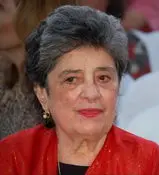
Claribel Alegría
1924-05-12 – 2018-01-25
Claribel Alegría was a Nicaraguan poet, essayist, and novelist whose work is characterized by its profound lyricism and social commitment. Throughout her life, she explored universal themes such as love, death, memory, and identity, often intertwining them with the history and politics of Latin America. Her poetry is distinguished by an intimate yet collective voice, capable of evoking intense emotions and deep reflections. Her literary legacy is vast and internationally recognized, having received numerous awards and distinctions. Alegría established herself as one of the most important poetic voices in 20th and 21st-century Spanish-language literature, leaving an indelible mark on the culture and memory of the region.

Ramón de Garciasol
1913-09-29 – 1994-05-14
Ramón de Garciasol was a Spanish poet whose work is inscribed in the tradition of classical and contemporary poetry, with a marked influence of popular lyricism and Andalusian tradition. His poetry is characterized by the depth of his thought, the musicality of his verses, and a constant reflection on the human being, love, death, and transcendence. Throughout his career, he demonstrated exceptional mastery of poetic forms, exploring both the sonnet and free verse, and leaving a significant mark on Spanish literature.

Eliseo Diego
1923-07-02 – 1994-03-01
Eliseo Diego was a prominent Cuban poet and essayist, a key figure of the Generation of '50 and a lyrical voice of profound introspection and maturity. His work is characterized by apparent simplicity and a conversational tone that hides a complex reflection on time, memory, identity, and the human condition. Linked to a literary tradition of great formal rigor, Diego managed to combine classical heritage with modern sensibility, creating poetry of great subtlety and existential resonance.

Joan Fuster
1922-11-23 – 1992-06-21
Joan Fuster was a highly relevant Spanish essayist, literary critic, and intellectual, fundamental to the understanding of contemporary Catalan culture. His work was characterized by a lucid, ironic, and often provocative prose, which addressed themes such as identity, history, literature, and the human condition from a critical and demystifying perspective. Known for his incisive style and intellectual acumen, Fuster became a central figure in thought and public debate in Catalonia, defending a secular, rationalist vision deeply rooted in its cultural reality. His legacy endures as one of the most influential intellectuals of the 20th century in the Catalan sphere.
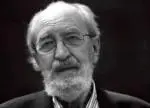
Angel González
1925-09-03 – 2008-01-12
Ángel González was a Spanish poet, one of the most representative figures of the so-called "Generation of the 50s" or "Post-war Generation." His poetry is characterized by a colloquial, ironic, and often critical tone, which addresses daily life, love, memory, and the human condition from a lucid and disillusioned perspective. With direct and accessible language, González managed to connect with a broad audience, distancing himself from grandiloquent rhetoric. His work is a mirror of the social and sentimental reality of his time, with a deep reflection on identity and the fleetingness of existence.

Pablo García Baena
1921-06-29 – 2018-01-14
Pablo García Baena was a distinguished Spanish poet, recognized for his lyrical work of profound sensuality and his connection to surrealism and the Generation of '50. His poetry is characterized by the exploration of themes such as eroticism, the beauty of the body, classical mythology, and decadence, often tinged with a melancholic tone and great verbal plasticity. Baena cultivated a language rich in sensory images and symbolism, creating a poetic universe that is both intimate and universal. His literary career was recognized with important awards, consolidating him as a unique and fundamental figure in contemporary Spanish poetry.

Francisco Cervantes
1938-04-01 – 2005-01-23
Francisco Cervantes, also known by his literary pseudonym 'El Vigía' (The Watchman), is a contemporary Spanish poet whose work belongs to the tradition of meditative and existential poetry. His verses deeply explore themes such as solitude, the passage of time, the search for meaning, and the confrontation with one's inner self. He is characterized by careful language, evocative imagery, and a reflective tone that invites introspection and contemplation of the human condition. His poetry seeks beauty in simplicity and truth in life experience.

Alvaro Cunqueiro
1911-12-22 – 1981-02-28
Alvaro Cunqueiro was a prominent Galician narrator and poet, known for his deep connection with the mythology and folklore of Galicia. His work is characterized by a rich and evocative prose, often tinged with a melancholic lyricism and subtle humor. His literary output encompasses both poetry and narrative, exploring universal themes through a prism deeply rooted in Galician culture, which has earned him a prominent place in Galician and Spanish language literature.

Alejo Carpentier
1904-12-26 – 1980-04-24
Alejo Carpentier was a distinguished Cuban narrator, essayist, and musicologist, a key figure in 20th-century Latin American literature. His work is characterized by the fusion of the real and the marvelous, "marvellous realism," and by a profound exploration of the history, culture, and identity of the American continent. Considered one of the greatest exponents of the Latin American Boom, Carpentier developed a rich and complex narrative style, with exuberant language and profound erudition. His literary legacy is fundamental to understanding contemporary narrative in Spanish.

Coral Bracho
1951-05-22
Coral Bracho is a renowned Mexican poet, essayist, and translator, recognized for her profound connection with nature and her exploration of language as a tool to apprehend the sensible world. Her work is distinguished by lush imagery, enveloping rhythms, and a sensitivity that captures the textures, colors, and movements of the natural and human environment. With a literary career spanning several decades, Bracho has established herself as one of the most original and influential poetic voices in contemporary Mexican literature. Her poetry invites a sensory and reflective experience, revealing the interconnections between being, matter, and the cosmos.

Antonio Gamoneda
1931-05-30
Antonio Gamoneda is a Spanish poet whose work is characterized by a deep inquiry into the human condition, memory, and the passage of time. His poetry, often dense and of great formal rigor, draws on powerful imagery and a refined language that evokes the ancestral and the elemental. He has been recognized with numerous awards, including the Cervantes Prize, establishing himself as one of the most unique and influential voices in contemporary Spanish-language poetry. His writing is distinguished by a persistent reflection on existence, pain, beauty, and the enigma of being, with a sensitivity that connects the lyrical with the tragic and the mystical, inviting the reader on an introspective and existential journey.

Victoriano Crémer
1906-12-18 – 2009-06-27
Victoriano Crémer was a Spanish poet whose work is characterized by profound lyricism and a constant exploration of the human condition. His verses address themes such as love, death, time, and loneliness, with a refined language and great sensitivity. Belonging to the Generation of the 50s, his poetry is distinguished by its emotional honesty and its reflection on existence, often rooted in the experience of landscape and memory.

Rafael Cadenas
1958-09-08
Rafael Cadenas is a Venezuelan poet, essayist, and critic, considered one of the most important voices in contemporary Spanish-language poetry. His work is characterized by a profound reflection on existence, time, memory, and the human condition, often tinged with a serene melancholy and a moving lucidity. Through refined language and apparent simplicity, Cadenas manages to address life's great questions with exceptional intellectual acuity and sensitivity, establishing himself as an indispensable reference for understanding contemporary poetry.