Dylan Thomas
Author of the day

Dylan Thomas

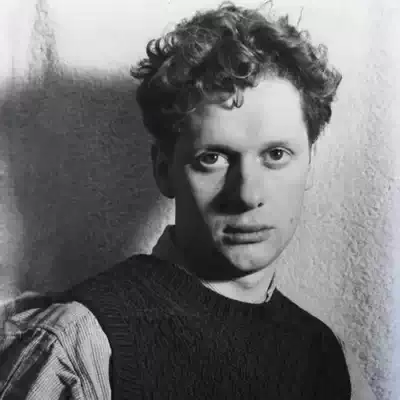
Dylan Thomas was a celebrated Welsh poet whose vivid imagery, lyrical intensity, and unique use of language captivated readers worldwide. His work, often characterized by its passionate exploration of life, death, love, and nature, combined a deep connection to his Welsh heritage with a modernist sensibility. Despite a tragically short and often tumultuous life, his poems possess an enduring power and musicality that have secured his place as one of the 20th century's most important poets.

Poem of the day

Do Not Go Gentle Into That Good Night

Dylan Thomas
Do not go gentle into that good night, 
Old age should burn and rave at close of day; 
Rage, rage against the dying of the light. 

Though wise men at their end know dark is right, 
Because their words had forked no lightning they 
Do not go gentle into that good night. 

Good men, the last wave by, crying how bright 
Their frail deeds might have danced in a green bay, 
Rage, rage against the dying of the light. 

Wild men who caught and sang the sun in flight, 
And learn, too late, they grieved it on its way, 
Do not go gentle into that good night. 

Grave men, near death, who see with blinding sight 
Blind eyes could blaze like meteors and be gay, 
Rage, rage against the dying of the light. 

And you, my father, there on that sad height, 
Curse, bless, me now with your fierce tears, I pray. 
Do not go gentle into that good night. 
Rage, rage against the dying of the light.
Read full poem

Born on this day

9
Mário de Andrade

Mário de Andrade was a Brazilian poet, novelist, short story writer, literary critic, musicologist, and folklorist. He was one of the central figures of Brazilian Modernism, playing a crucial role in the Modern Art Week of 1922. His work sought to define and express Brazilian cultural identity, exploring the country's language, myths, traditions, and diversity. Mário de Andrade left an immense legacy as one of the greatest Brazilian intellectuals of the 20th century, influencing several generations of artists and thinkers.

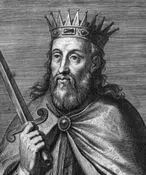
D. Dinis

Dom Dinis was a king of Portugal known as "the Farmer" and "the Poet". During his reign, Portugal experienced a period of significant economic and cultural development. He was a patron of arts and sciences, promoting education and the creation of cultural institutions. His poetic output, mostly composed of "cantigas de amigo" and "cantigas de amor", reflects the troubadour sensibility of the time, addressing themes such as nature, saudade, and the dilemmas of courtly love, with a rich and musical language.

Ismael Nery

Ismael Nery was a Brazilian painter and poet, a singular and enigmatic figure in the 20th-century art scene. His poetic work, although less known than his pictorial production, reveals a deep introspection, a unique lyricism, and an exploration of themes such as identity, spirituality, and androgyny. His writing, marked by delicate and introspective language, reflects the same quest for transcendence and duality that permeates his painting.

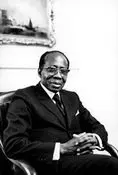
Léopold Sédar Senghor

Léopold Sédar Senghor was a Senegalese poet, writer, and politician, known as one of the greatest African intellectuals of the 20th century. He was one of the founders of the Négritude movement, which celebrated African cultural identity and black heritage. His poetic work is marked by a profound musicality, influences from African oral tradition and French poetry, exploring themes such as the homeland, African identity, love, and spirituality. Senghor played a crucial role in Senegal's independence and became its first president, leading the country for more than two decades. As a statesman, he promoted cultural cooperation between Africa and Europe and advocated for a vision of universal civilization. His vast literary work and political legacy make him an unavoidable figure in the history of Africa and world literature.

Tadeusz Rózewicz

Tadeusz Rózewicz was a prominent Polish poet, playwright, and essayist, whose work profoundly marked 20th-century literature. After experiencing the horrors of World War II, his poetry became a testament to the fragility of the human condition, questioning language itself and the possibility of expressing the ineffable. His writing is characterized by apparent simplicity, an ironic tone, and a deep reflection on morality and existence.

Ivo Andrić

Ivo Andrić was a Yugoslav writer, winner of the Nobel Prize in Literature. His best-known work is 'The Bridge on the Drina', which narrates the story of a bridge in Višegrad, Bosnia, over centuries. Andrić is renowned for his dense and evocative prose, capturing the historical and cultural complexity of the Balkans.

Judith Baumel

Judith Baumel is an American poet recognized for her poetry that combines formal rigor with a profound exploration of the female experience and memory. Her work is marked by intelligence and emotional intensity.

Died on this day

13
Luís Veiga Leitão

Luís Veiga Leitão was a Portuguese poet whose work is part of the literary landscape of the 20th century. Characterized by introspective writing and the exploration of existential themes, his poetic journey, although not extensively published during his lifetime, left a legacy of reflection on the human condition. His poetry is marked by careful language and profound aesthetic sensibility.

João Cabral de Melo Neto

João Cabral de Melo Neto was one of the most important Brazilian poets of the 20th century. His work is marked by objectivity, formal rigor, and the exploration of language as raw material. He addressed themes such as the Northeastern landscape, the human condition, and poetry itself, with a style often described as concrete and architectural. His poetry seeks precision, clarity, and economy of means, distancing itself from sentimentality and rhetorical excesses.

Henriqueta Lisboa

Henrieta Lisboa was a notable Portuguese poet, translator, and essayist, based in Brazil. Her poetic work, deeply lyrical and reflective, explores universal themes such as nature, time, memory, and spirituality with a refined language and a unique sensibility. She is considered one of the most important voices in modern Portuguese-language poetry.

José Paulo Paes

José Paulo Paes was a Brazilian poet, translator, and professor, known for his concise, lyrical, and often playful poetry, especially aimed at children, but with a depth that reaches all audiences. His work stands out for its musicality, experimentation with language, and ability to evoke powerful images with few verses. He was an important promoter of poetry and culture.

Che Guevara

Ernesto 'Che' Guevara was an Argentine Marxist revolutionary, physician, author, guerrilla fighter, diplomat, and military theorist. A prominent figure in the Cuban Revolution, he became an international icon of counterculture and anti-imperialist revolution. His image is widely reproduced in various media, serving as a symbol of resistance and idealism for many. Guevara dedicated a large part of his life to the struggle against what he considered capitalist oppression and exploitation, traveling and intervening in conflicts in various parts of the world. His legacy endures through his writings and the impact of his actions on the political history of the 20th century.

Jacques Brel

Jacques Brel was a Belgian musician, songwriter, and actor, widely regarded as one of the most important French-speaking artists of the 20th century. Although he wrote and performed most of his songs in French, his work transcended linguistic and cultural barriers, making him an iconic figure in popular music and French chanson. His career is marked by raw emotional intensity and a theatrical approach to his performances.

Jean Giono

Jean Giono was a prominent French writer, known for his works that celebrate nature, country life, and simplicity. His stories often depict characters who distance themselves from modern civilization to rediscover a more authentic way of life in harmony with the natural world.

Paulo Colina

Paulo Colina is a contemporary poet whose work is distinguished by the exploration of existential themes and formal experimentation. His writing navigates between lyricism and reflection, addressing the human condition with a careful and imagistic language. With an approach that dialogues with the poetic tradition, but without neglecting the innovations of modern writing, Colina constructs a literary universe that invites introspection and contemplation of life and its complexities.

Liberto Cruz

Liberto Cruz is a Portuguese poet whose work stands out for its lyrical intensity and exploration of themes such as love, solitude, and the search for transcendence. His poetry, often marked by refined language and a strong emotional charge, reflects on the fragility of human existence and the incessant search for meaning. His reflections on the human condition and the passage of time resonate in a writing that combines the intimacy of the confessional with a touching universality.

Paulo Guilherme de Eça Leal

Paulo Guilherme de Eça Leal was a Portuguese poet, essayist, and literary critic. His poetic work is marked by a profound reflection on the human condition, time, and memory, often exploring existentialist themes with a refined language and intrinsic musicality. He actively collaborated in Portuguese cultural life, not only as a creator but also as a disseminator and commentator of literature.

Nikolai Kantchev

Nikolai Kantchev was a Bulgarian poet, a prominent figure in his country's literature, known for his dense, imagistic poetry, often marked by an existential and social tone. His work explores the complexities of modern life, the passage of time, and the human condition, using rich and innovative language. Kantchev is recognized for his ability to create unique poetic universes that reflect both his personal vision and the social and cultural realities of Bulgaria. His poetry continues to be studied and appreciated for its originality and depth.