Lao Zi
Author of the day

Lao Zi

Lao Zi (or Lao Tzu) is traditionally credited as the author of the "Tao Te Ching" and a central figure in Taoist philosophy. His historical existence is debated, but his influence through the teachings on the Tao – the Way – is immeasurable. His philosophy emphasizes harmony with nature, simplicity, non-action (wu wei), and wisdom through introspection and observation of the universe.

Poem of the day

Do Not Go Gentle Into That Good Night

Dylan Thomas
Do not go gentle into that good night, 
Old age should burn and rave at close of day; 
Rage, rage against the dying of the light. 

Though wise men at their end know dark is right, 
Because their words had forked no lightning they 
Do not go gentle into that good night. 

Good men, the last wave by, crying how bright 
Their frail deeds might have danced in a green bay, 
Rage, rage against the dying of the light. 

Wild men who caught and sang the sun in flight, 
And learn, too late, they grieved it on its way, 
Do not go gentle into that good night. 

Grave men, near death, who see with blinding sight 
Blind eyes could blaze like meteors and be gay, 
Rage, rage against the dying of the light. 

And you, my father, there on that sad height, 
Curse, bless, me now with your fierce tears, I pray. 
Do not go gentle into that good night. 
Rage, rage against the dying of the light.
Read full poem

Born on this day

15
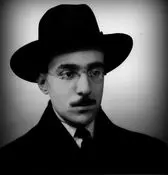
Fernando Pessoa

Fernando Pessoa was a Portuguese poet, writer, literary critic, translator, and philosopher, considered one of the greatest exponents of Portuguese-language literature and one of the most relevant poets of the 20th century. His vast work, marked by the creation of multiple heteronyms with distinct personalities and styles, explores themes such as identity, existential anguish, saudade, and the search for meaning in a constantly changing world. Pessoa left a complex and multifaceted literary legacy, which continues to fascinate and challenge readers and critics.

Fernando Py

Fernando Py is a contemporary Portuguese poet, essayist, and literary critic, whose work stands out for its intellectual depth, formal rigor, and exploration of themes such as identity, memory, art, and the human condition. His poetry is marked by a constant dialogue with literary and philosophical tradition, combined with a keen sensitivity to contemporary issues.

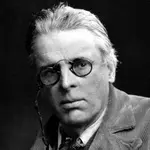
William Butler Yeats

William Butler Yeats was a prominent Irish poet, playwright, and mystic, widely regarded as one of the greatest poets of the 20th century. His early work was deeply influenced by Irish mythology and folklore, and he was a key figure in the Irish Literary Revival. Over his career, his style evolved, becoming more personal, symbolic, and philosophical, grappling with themes of love, aging, politics, and the spiritual life. Yeats's poetry is characterized by its rich imagery, musicality, and intellectual depth. He explored the complexities of the human condition, the nature of art, and the turbulent history of Ireland. His later works, in particular, are known for their aphoristic power and profound meditations on life and mortality. He received the Nobel Prize in Literature in 1923, solidifying his international literary stature.

A Bronze Head
Bernardo Almeida

Bernardo Almeida is a contemporary poet known for his lyrical exploration of existential themes and the human condition. His work stands out for its introspective depth and the musicality of his words, which create vivid and evocative images. Almeida frequently addresses love, the passage of time, and the search for meaning in a constantly changing world, using accessible language that is nonetheless rich in symbolism. With a writing style that flows between the confessional and the universal, the poet invites the reader to reflect on their own experiences and emotions. His poetic compositions are marked by keen sensitivity and a unique perspective on the beauty and melancholy of life.

Antônio Sales

Antônio Sales was a Brazilian poet and professor, known for his work that bridges regionalism and lyrical poetry. His writing often addresses themes related to the Northeastern backlands (sertão), exploring the culture, landscape, and daily life of its people, without neglecting reflections on the human condition.

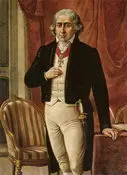
José Bonifácio de Andrada e Silva

José Bonifácio de Andrada e Silva was an influential Brazilian statesman, naturalist, and poet, a central figure in the Independence of Brazil. He stood out for his political and scientific work, being considered the Patriarch of Independence. His poetic work, although less known than his public activity, reflects the spirit of his time and his convictions.

Lígia Andrade

Lígia Andrade was a discreet figure in contemporary Portuguese poetry, known for a body of work that explores introspection and melancholy with a refined and musical language. Her poetry, although not vast in volume, stands out for its emotional depth and its ability to evoke subtle and complex sensations. Without leaving a resounding mark, her writing remains a testament to a refined sensibility and a dedication to the poetic art, marked by restraint and the incessant search for the exact word.

Luís Canelo de Noronha

Luís Canelo de Noronha is a literary figure whose poetic work stands out for its uniqueness and the depth with which it approaches universal themes. His writing reflects a refined sensitivity to the complexities of the human soul and the surrounding world. Noronha's poetry is an invitation to introspection and contemplation, exploring the diverse facets of the existential experience.

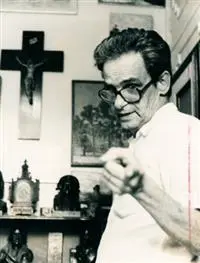
José Paulo Moreira da Fonseca

José Paulo Moreira da Fonseca was a multifaceted Portuguese artist, recognized as a poet, painter, and sculptor. His poetic work is distinguished by its lyrical depth and exploration of universal themes, reflecting a keen sensitivity to the complexities of human existence. As a painter and sculptor, he demonstrated equally remarkable talent, exploring different artistic languages to express his worldview. His artistic production, although not always widely publicized during his lifetime, left an indelible mark on the Portuguese cultural landscape. His poetic work, in particular, continues to be valued for its originality and its ability to touch the reader with its honesty and beauty.

Oscar Cerruto

Oscar Cerruto was a Bolivian poet and diplomat, known for his poetry that explores the dimensions of identity, land, and the human condition with lyrical and introspective language. His work is part of a context of reflection on Latin American reality and the search for meaning in a constantly changing world. His literary journey is marked by a constant search for authentic expression, addressing themes such as memory, time, and spirituality. Cerruto left a body of poems that invite contemplation and appreciation of the beauty and complexity of existence.

José Barbosa

José Barbosa was a Portuguese poet whose works explore the depth of the human condition with careful language and an attentive eye on everyday life. His poetry reflects on universal themes such as love, the passage of time, and the search for meaning, often with a melancholic yet hopeful tone. He addresses nature and feelings introspectively, inviting the reader to reflect on their own existence and the world around them.

Maria da Silva Vieira

Maria da Silva Vieira was a literary figure whose poetic work, although possibly less documented than that of her contemporaries, reflects a particular sensitivity and an authentic voice in the panorama of Portuguese poetry. Her writing, likely influenced by the literary currents of her time, explores universal themes with a perspective that can vary between the introspective and the social. Her contribution, even if sometimes discreet, enriches the tapestry of literature, offering unique insights into the human experience.

Leopoldo Lugones

Leopoldo Lugones was an Argentine poet, journalist, and diplomat, a central figure of literary modernism in Hispanic America. His work is characterized by a profound renovation of poetic language, metrical experimentation, and vast erudition. He explored themes such as the cosmos, mythology, history, and intimacy, with a style that oscillated between musicality, sensuality, and melancholy, leaving an indelible legacy in Spanish-language poetry.

Died on this day

8
Al Berto

Al Berto was a Portuguese poet whose work stands out for its exploration of sensuality, the body, death, and identity, in a dense and imagistic lyricism. His poetry, marked by rigorous language and a constant search for the exact word, reflects a deep existential restlessness and a profound connection with the Mediterranean. Al Berto is considered one of the most unique and important voices in contemporary Portuguese poetry.

Eugénio de Andrade

Eugénio de Andrade was one of the most important Portuguese poets of the 20th century, known for the purity and musicality of his language, and for his deep connection to nature, the body, and sensory experience. His work is characterized by a refined lyricism that celebrates life, light, and beauty, without ignoring the darker dimensions of existence. With poetry distinguished by its conciseness, clarity, and apparent simplicity that hides great reflective depth, Eugénio de Andrade consolidated an unmistakable style and a unique voice in contemporary Portuguese-language poetry.

Viriato da Cruz

Viriato da Cruz was an Angolan poet, journalist, and politician, a central figure in the struggle for Angola's independence. His poetic work, marked by expressive power, engaged lyricism, and social denunciation, reflects the aspirations of the Angolan people and their struggle against colonialism. He was one of the founders of the MPLA.

Domingos dos Reis Quita

Domingos dos Reis Quita was an 18th-century Portuguese poet, associated with Arcadianism, a literary movement that sought simplicity, clarity, and inspiration from nature and classical antiquity. His work is marked by a bucolic and pastoral tone, celebrating country life and the ideals of harmony and serenity. A poet of great sensitivity, Quita dedicated himself to exploring the themes of love, nature, and simple life, using elegant and musical language. His poetry reflects the search for an idealized refuge from the hustle and bustle of the world, finding in nature a source of inspiration and solace. He is considered one of the most significant representatives of Arcadian poetry in Portugal.

Soror Catarina de Cristo

Sister Catarina de Cristo was a 17th-century nun and poet, a prominent figure in Portuguese-language mystical poetry. Her work is profoundly marked by spirituality, the pursuit of union with the divine, and the intense expression of religious feelings, with a style that combines tradition with a personal and passionate voice.

José Antonio Ramos Sucre

José Antonio Ramos Sucre was a Venezuelan poet whose work is part of the modernist current and avant-garde poetry of the early 20th century. His literary production, although brief, is of profound lyrical and reflective quality, exploring themes such as the fleetingness of time, melancholy, death, and the search for transcendence. His style is characterized by careful language, subtle musicality, and evocative imagery, which position him as one of the most important voices in Hispanic American poetry of his time, despite his early demise.