Friedrich Nietzsche
Author of the day

Friedrich Nietzsche

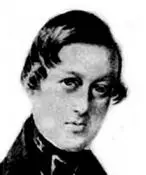
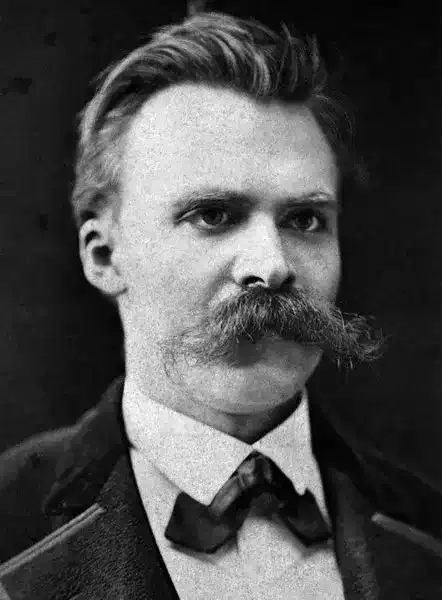
Friedrich Nietzsche was an influential German philosopher, philologist, and cultural critic. His work addresses themes such as morality, religion, truth, art, and the human condition, with a radical critique of traditional Western values. He is known for concepts such as the "death of God", the "superman" (Übermensch), and the "will to power" (Wille zur Macht). His writing is marked by an aphoristic and provocative style, which challenges the reader to rethink their beliefs and values.

Poem of the day

Grass

Carl Sandburg
Pile the bodies high at Austerlitz and Waterloo.
Shovel them under and let me work
-I am the grass; I cover all.

And pile them high at Gettysburg
And pile them high at Ypres and Verdun.
Shovel them under and let me work.
Two years, ten years, and the passengers ask the conductor:

What place is this?
Where are we now?

I am the grass.
Let me work.
Read full poem

Born on this day

15
Giovanna Santos

Giovanna Santos is an emerging figure in the contemporary poetic landscape, whose work is distinguished by the deep exploration of subjectivity and the intrinsic musicality of her verses. Her poetry sensitively addresses universal themes such as the ephemerality of time, the complexity of human relationships, and the search for meaning in a constantly changing world. With accessible yet symbolism-laden language, Santos manages to create bridges between the reader and their own anxieties, offering a mirror to common life experiences. Her work has been gaining an ever-larger audience, attracted by the authenticity and evocative power of her poetic expression.

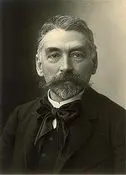
Stéphane Mallarmé

Stéphane Mallarmé was a French poet and critic, a central figure of literary symbolism. His work is known for its complexity, musicality, and for the pursuit of a poetic language that transcended everyday reality, aiming to create an absolute "book." His influence extends throughout modern poetry, impacting movements like surrealism and concrete poetry.

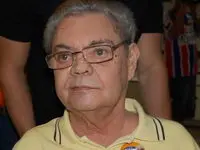
Ronaldo Cunha Lima

Ronaldo Cunha Lima was a prominent Brazilian poet, known for his lyrical and reflective work. His poetry explores themes such as nature, time, the human condition, and spirituality, with an accessible language and unique musicality. Throughout his career, he established himself as an important voice in contemporary Brazilian literature, leaving a legacy of verses that touch the sensitivity of diverse readers.

John Updike

John Updike was an acclaimed American writer, known for his elegant prose and for exploring the lives of the American middle class, focusing on the complexities of human relationships, sexuality, and spirituality. His novels and short stories often portray suburban life and the existential dilemmas of his characters.

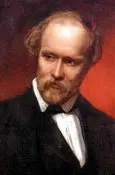
Friedrich Hebbel

Friedrich Hebbel was a German playwright and poet, considered one of the most important figures of German realist drama. His work is characterized by psychological depth and existential themes.

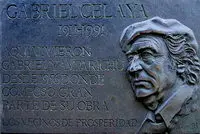
Gabriel Celaya

Gabriel Celaya was an influential Spanish poet, known for his social and existential poetry. His work addresses themes such as the human condition, social injustice, and the search for identity in a changing world.

Marquês de Custine

Astolphe-Louis-Léonor, Marquis de Custine, was a French writer, diplomat, and military man. He is best known for his literary works, including novels and travelogues, which often explored themes of love, society, and social criticism.

António Valdemar

António Valdemar is a contemporary Portuguese poet, whose work is characterized by an intimate lyricism, often marked by musicality and the exploration of themes such as the passage of time, memory, love, and saudade. With a refined style and carefully crafted language, Valdemar constructs poetry that appeals to the reader's sensibility, inviting reflection on the human condition and affections.

Manuel de Faria e Sousa

Manuel de Faria e Sousa was a notable Portuguese poet and historian of the 17th century. Born in Portugal, he dedicated a large part of his life to study and writing, becoming renowned for his extensive prose and verse work, which reflects the spirit of his time. Recognized for his erudition, Faria e Sousa explored historical and literary themes with detail and rigor. His poetry, although less prominent than his historiographical work, contributed to the literary landscape of Portuguese Baroque, demonstrating a mastery of form and language.

Marta Câmara

Marta Câmara is a figure in contemporary poetry, known for her introspective approach and exploration of themes such as identity, memory, and the complexities of human relationships. Her poetic work is distinguished by its intrinsic musicality, subtlety of imagery, and language that oscillates between the colloquial and the most refined lyrical. With a career that has been consolidating in the literary landscape, Marta Câmara has been building a poetic corpus that dialogues with tradition, but simultaneously seeks to express the anxieties and aspirations of the contemporary individual. Her poetry invites reflection on the self and the other, on the passage of time, and on the incessant search for meaning in a constantly changing world.

Amy Bartlett

Amy Bartlett is recognized for her dedication to writing and literature, with a body of work that explores themes relevant to the contemporary experience. Her literary work is characterized by the ability to build engaging narratives and complex characters, inviting readers to reflect on social and existential issues.

Wilfred Owen

Wilfred Owen was a prominent English poet, best known for his powerful and unflinching poems about the realities of trench warfare during World War I. He is considered one of the leading poets of the war, whose work vividly depicted the suffering, horror, and futility of combat. His poems were largely published posthumously but have since become seminal texts in understanding the experience of soldiers in the Great War.

[I Saw His Round Mouth's Crimson]

Died on this day

6
António Nobre

António Nobre was a Portuguese poet, a prominent figure of Symbolism and Decadentism in Portugal, known for his melancholic, musical poetry full of saudade (a deep emotional state of nostalgic longing). His work, marked by strong subjectivity and an elegiac tone, reflects his deep connection to Portugal and a personal, nostalgic view of the world. His poetic work, although relatively scarce in volume, exerted a significant influence on later Portuguese poetry, consolidating him as one of the most emblematic poets of the late 19th and early 20th centuries.

Luis Felipe Angell

Luis Felipe Angell, better known by the pseudonym "Hugo" or "El Loco", was a Peruvian writer, journalist, and caricaturist. He is considered one of the greatest exponents of costumbrista journalism and graphic humor in Peru. His work is marked by sharp observation of society, an irreverent style, and strong social criticism, expressed through iconic characters and everyday situations.

Odysséas Elýtis

Odysséas Elýtis was a Greek poet, awarded the Nobel Prize in Literature in 1979. His work is marked by a strong connection to Greek landscape and culture, exploring themes such as the sea, light, love, and mortality with a lyrical and visually rich language. Elýtis is considered one of the most important modern Greek poets, with poetry that transcends geographical and temporal boundaries.

António Leitão

António Leitão was a Portuguese poet whose work is predominantly associated with Neorealism, although with its own distinct characteristics. His poetry, marked by a strong social and interventionist component, addresses themes such as the human condition, the struggle for freedom, and the dignity of the oppressed. The language is direct and accessible, but imbued with deep sensitivity and lyricism.

Meira Delmar

Meira Delmar was a Cuban poet, essayist, and literary critic. Her work is characterized by deep introspection, the exploration of themes such as time, memory, and identity, and a refined and precise language. Throughout her career, she established herself as one of the most important voices in 20th-century Cuban poetry, distinguished by her formal rigor and intellectual acuity. Her influence extends to several generations of poets in Cuba and Latin America.