Jean-Paul Sartre
Author of the day

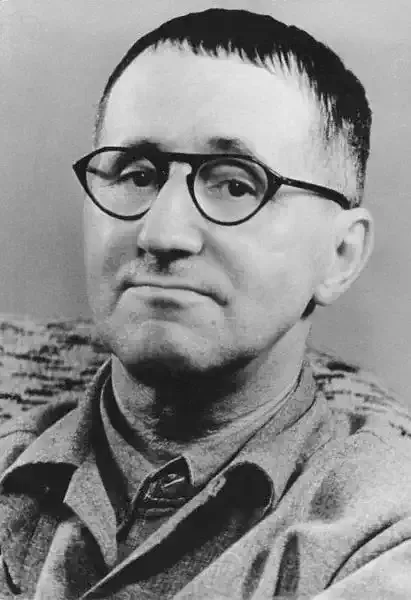
Jean-Paul Sartre

Jean-Paul Sartre was a French philosopher, writer, playwright, and literary critic, a central figure of atheistic existentialism. His vast and multifaceted work explores human freedom, individual responsibility, bad faith, and social commitment. Sartre rejected the Nobel Prize in Literature, advocating for a stance of refusal of bourgeois institutions. His thought profoundly influenced 20th-century philosophy, literature, and political debate, marking a generation with his emphasis on autonomy a…

Poem of the day

Grass

Carl Sandburg
Pile the bodies high at Austerlitz and Waterloo.
Shovel them under and let me work
-I am the grass; I cover all.

And pile them high at Gettysburg
And pile them high at Ypres and Verdun.
Shovel them under and let me work.
Two years, ten years, and the passengers ask the conductor:

What place is this?
Where are we now?

I am the grass.
Let me work.
Read full poem

Born on this day

9
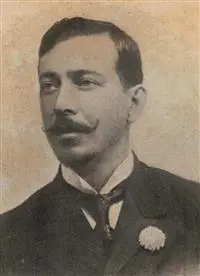
Manuel Bandeira

Manuel Bandeira was a Brazilian poet, literary critic, and professor, considered one of the greatest names in 20th-century Brazilian poetry and one of the pioneers of Modernism. His work, marked by simplicity, musicality, and profound melancholy, addressed themes such as childhood, death, illness, saudade, daily life, and the human condition. Bandeira left a unique poetic legacy, characterized by his intimate lyricism and his ability to find beauty in the simplicity and ephemerality of life.

Regina de Fontenelle

Regina de Fontenelle is a poet whose work stands out for its exploration of identity, memory, and the complexities of the female condition. With a language that combines delicacy and strength, her verses delve into the depths of being, addressing themes such as love, loss, and the search for a place in the world. The author is recognized for her ability to create vivid images and for the psychological depth she brings to her compositions, establishing an intimate and reflective dialogue with the reader.

Osório Duque-Estrada

Brazilian poet and journalist, Osório Duque-Estrada is known for his lyrical and satirical work, marked by a classical style and a strong critical vein. His poetry frequently addresses themes such as love, homeland, and the vicissitudes of life, with a sometimes melancholic and reflective tone. A contemporary of important Brazilian literary movements, Duque-Estrada actively participated in the cultural scene of his time, using his writing to comment on society and politics. His elaborate language and formal rigor are distinctive characteristics of his poetic legacy.

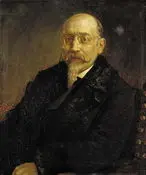
José Echegaray

José Echegaray y Eizaguirre was a prominent Spanish playwright, novelist, and politician, whose work earned him the Nobel Prize in Literature in 1904. Recognized for his contribution to Spanish theater, Echegaray explored moral and social themes with an intense and often dark dramatic style. His plays, marked by passionate conflicts and ethical dilemmas, reflect the concerns of Spanish society of his time, addressing honor, duty, justice, and the consequences of human actions. As a public and intellectual figure, Echegaray played a significant role in Spain's political and cultural life. His vast literary production, which includes both theater and prose, solidified his position as one of the most important authors of the late 19th and early 20th centuries in Spain, influencing later generations of writers and artists.

Yolanda Castaño

Yolanda Castaño is a Galician poet and writer, recognized for her intense lyricism and her ability to address themes such as identity, love, society, and the female condition with a powerful and contemporary voice. With a body of work distinguished by its musicality, expressive force, and depth of reflection, Castaño has established herself as one of the most relevant voices in contemporary Galician poetry, exploring the nuances of existence and the complexities of human relationships.

Lorenzo Montano

Lorenzo Montano is a contemporary Italian writer. His literary work is recognized for experimentation and the exploration of new narrative forms. He is dedicated to investigating the frontiers of language and representation, seeking to break with established conventions. With a career focused on innovation, Montano addresses themes that frequently question the perception of reality and the subjectivity of the individual. His writing is marked by stylistic boldness and a constant search for renewal.

Marc Granell

Marc Granell is a Valencian poet and writer, known for his work in the Catalan language. His poetry is characterized by a lyrical and reflective approach, often exploring themes such as nature, love, memory, and the passage of time. With a language rich in imagery and sensitivity, he stands out in contemporary literature. His poetic work is marked by the ability to capture the beauty of everyday life and transform personal experiences into universal verses. Granell also works in other cultural areas, being an active figure in the artistic scene.

Died on this day

8
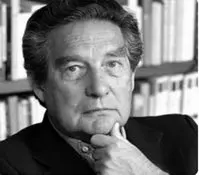
Octavio Paz

Octavio Paz was one of the most important poets and essayists of the 20th century, awarded the Nobel Prize in Literature in 1990. His work is vast and multifaceted, exploring themes such as love, solitude, Mexican identity, the human condition, time, and the search for transcendence. With a rich and innovative language, Paz moved between lyrical poetry, philosophical reflection, and cultural criticism, leaving an invaluable intellectual and artistic legacy.

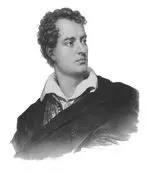
Lord Byron

George Gordon Byron, famously known as Lord Byron, was a leading figure of the Romantic movement in English literature. His life and works were marked by passionate idealism, flamboyant rebellion against social conventions, and intense personal experiences. Byron's poetry often explored themes of love, freedom, and the sublime, characterized by its lyrical power, dramatic intensity, and engagement with classical and contemporary concerns. His adventurous life, including his involvement in the Greek War of Independence, contributed significantly to his enduring image as a heroic and Byronic figure.

A Fragment: When, To Their Airy Hall
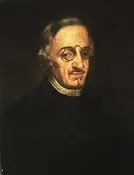
Antonio de Solís y Ribadeneyra

Antonio de Solís y Ribadeneyra was a prominent Spanish writer, playwright, and historian of the Golden Age. Known for his eloquence and historical depth, he left a significant literary legacy.

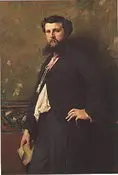
Édouard Pailleron

Édouard Pailleron was a French playwright and journalist, son of the poet Émile Pailleron. He is best known for his comedies of manners that satirized Parisian society of his time. His most famous work, "Le Monde où l'on s'ennuie" (The World Where One is Bored), was a great success and a scathing critique of the superficiality of high society and the intellectualism of the era.

Gloria Gervitz​

Gloria Gervitz is an Argentine poet known for her work that combines a strong lyrical charge with a deep reflection on existence, memory, and language. Her poetry is distinguished by its intensity and musicality, exploring the boundaries between the intimate and the universal. With a career marked by discretion and dedication to art, Gervitz has built a singular body of work that dialogues with the poetic tradition while maintaining an unmistakable voice. Her poems are invitations to unravel the complexities of being and the beauty contained in words.

Reg Saner

Reg Saner was an American poet, professor, and essayist, whose poetic work is known for its contemplative depth and connection to nature and human experience. He taught for many years, inspiring generations of students. His poetry often reflects on the passage of time, memory, landscape, and the search for meaning. Saner combined precise observations of the natural world with philosophical reflections, creating verses that resonate with serene wisdom and a deep appreciation for life.

José María Eguren

Peruvian poet, precursor of modernism and avant-garde in his country. His work is characterized by introspection, melancholy, and the exploration of themes such as time, death, and identity. Eguren is known for his lyrical and musical style, which often evokes dreamlike and mysterious atmospheres. Considered one of the great renovators of Hispanic American poetry, his influence extended to subsequent generations of poets, consolidating him as a fundamental figure of Peruvian and universal literature.