Juan Ramón Jiménez
Author of the day

Juan Ramón Jiménez

Juan Ramón Jiménez was a Spanish poet, awarded the Nobel Prize in Literature in 1956. His work, profoundly marked by symbolism and the desire for "pure poetry," evolved towards an incessant search for beauty and transcendence. His poetry explores themes such as nature, spirituality, love, and the very essence of poetry, with a refined, musical, and visionary style. He is considered one of the great renovators of 20th-century Spanish poetry.

Poem of the day

Do Not Go Gentle Into That Good Night

Dylan Thomas
Do not go gentle into that good night, 
Old age should burn and rave at close of day; 
Rage, rage against the dying of the light. 

Though wise men at their end know dark is right, 
Because their words had forked no lightning they 
Do not go gentle into that good night. 

Good men, the last wave by, crying how bright 
Their frail deeds might have danced in a green bay, 
Rage, rage against the dying of the light. 

Wild men who caught and sang the sun in flight, 
And learn, too late, they grieved it on its way, 
Do not go gentle into that good night. 

Grave men, near death, who see with blinding sight 
Blind eyes could blaze like meteors and be gay, 
Rage, rage against the dying of the light. 

And you, my father, there on that sad height, 
Curse, bless, me now with your fierce tears, I pray. 
Do not go gentle into that good night. 
Rage, rage against the dying of the light.
Read full poem

Born on this day

15
Augusto dos Anjos

Augusto dos Anjos was a Brazilian poet, considered one of the greatest figures in Portuguese-language poetry. His work is marked by profound pessimism, with themes such as death, decomposition, and scientific materialism. He used rigorous language and an erudite vocabulary, often associated with the science of his time, which gave him a unique and innovative style for his era. Despite publishing only one book during his lifetime, "Eu" (I), his influence on Brazilian poetry is undeniable, anticipating many of the concerns and experiments that would mark modernism.

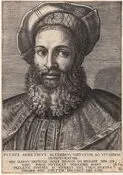
Pietro Aretino

Pietro Aretino was a prominent figure of the Italian Renaissance, known for his wit, satirical writing, and his ability to navigate the intricate power circles of the time. Dubbed the "scourge of princes" due to his scathing criticisms and blackmail, Aretino built a unique literary career based on manipulating his reputation and producing texts that mixed poetry, prose, and correspondence. His work, although sometimes controversial, reflects a deep understanding of Renaissance society, its grandeur and its miseries. Aretino distinguished himself not only as a poet and writer but also as a master of self-promotion, using his pen to obtain patronage and influence public opinion.

Manuel Sérgio

Manuel Sérgio is a Portuguese philosopher and poet, known for his extensive work that bridges philosophy with literature and education. His writing is marked by a deep reflection on the human condition, ethics, education, and the relationship between thought and art. Throughout his career, he explored poetry as a means of expressing complex ideas and profound sensibilities, establishing himself as a significant intellectual figure in the Lusophone cultural landscape. With a multifaceted body of work encompassing philosophical essays, pedagogical texts, and poetry, Manuel Sérgio demonstrates a constant commitment to exploring human knowledge and experience. His poetry, in particular, invites contemplation and dialogue, reflecting a humanistic vision and a deep appreciation for language as a vehicle of wisdom and emotion.

Rosa Lobato de Faria

Rosa Lobato de Faria was a multifaceted figure in Portuguese culture, distinguishing herself as a writer, actress, and fado singer. Her literary work, particularly her poetry, is marked by a strong lyrical vein, exploring themes such as love, solitude, the passage of time, and the female condition, with a language that is simultaneously accessible and profound. Recognized for her sensitivity and her ability to express universal emotions, Rosa Lobato de Faria left an artistic legacy that spans different cultural domains, admired for her authenticity and her unique voice.

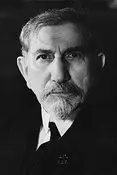
Charles Maurras

Charles Maurras was a French writer, poet, and literary critic, known for his role as the leader of the monarchist and nationalist movement Action Française. His literary work and political activity were marked by strong conservatism, anti-democracy, and anti-Semitism. He advocated for an authoritarian regime and the restoration of the monarchy in France, exerting considerable influence on right-wing political thought in the early 20th century.

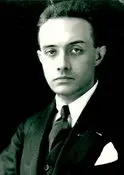
Henry de Montherlant

Henry de Montherlant was a renowned French novelist, playwright, and essayist. Born in Paris, France, on April 20, 1895, he is known for his works that explore themes such as virility, love, honor, and the pursuit of beauty. Montherlant developed a distinct literary style, often lyrical and with a strong emotional charge. His work reflects a melancholic and idealistic view of the world, with characters frequently tormented by internal conflicts and the passage of time.

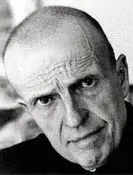
Michel Leiris

Michel Leiris was a French writer, ethnographer, and surrealist poet, known for his autobiographical work and his investigations into the human condition and culture. His writing is characterized by deep introspection, exploration of identity, memory, and the body, and a lyrical, fragmentary style. Leiris was a central figure in the surrealist movement and participated in important ethnographic expeditions.

Daniel Varoujan

Daniel Varoujan was an Armenian poet, known for his lyrical work that celebrated the culture, nature, and soul of his people. His words were an echo of Armenian landscapes and traditions, conveying a deep love for his homeland and identity. Varoujan is remembered as one of the most poignant voices in 20th-century Armenian literature, whose poetic legacy continues to inspire and move.

Maria Aurora C. Homem

Maria Aurora C. Homem is a notable figure in contemporary poetry, known for her exploration of intimate and universal themes. Her work stands out for its lyrical depth and ability to evoke complex emotions through careful and imagistic language. Homem's poetry often addresses the nuances of human relationships, the passage of time, and the search for meaning in a constantly changing world. The author constructs a poetic universe that resonates with individual experience, inviting reflection on the human condition.

Adília Lopes

Adília Lopes was a Portuguese poet whose work, marked by simplicity and existential depth, became a landmark in Lusophone contemporary poetry. Her writing, often melancholic and reflective, addresses themes such as memory, the passage of time, solitude, and the search for meaning, with accessible language, yet laden with subtext and emotion. Adília Lopes's poetry is an invitation to introspection, inviting the reader to contemplate the beauty and fragility of existence through verses that resonate with universal truth.

Daniel Gonçalves

Daniel Gonçalves is a contemporary Portuguese poet, whose work stands out for its exploration of themes such as memory, identity, the city, and the ephemerality of existence. His poetry, marked by careful language and a strong visual and urban component, invites reflection on the complexities of modern life and human relationships. Gonçalves has been asserting himself in the Portuguese literary scene through the originality of his writing and his ability to create bridges between the everyday and the transcendent.

Rafael Laffón

Rafael Laffón is a Spanish writer and poet, known for his contribution to contemporary literature. His literary work encompasses both poetry and prose, exploring themes that reflect on the human condition and society, with a critical and sensitive perspective.

José Luis Padron

José Luis Padrón is a writer who has contributed significantly to literature. His works frequently explore the human condition, the complexities of interpersonal relationships, and the search for meaning in a constantly changing world. With engaging and reflective writing, Padrón manages to capture the essence of his narratives, offering readers unique perspectives on life. His literary legacy is marked by the depth and relevance of his themes.

Germán Espinosa

Germán Espinosa was a prominent Colombian poet and essayist, recognized for his profound lyrical work and his sharp reflection on the human condition, identity, and the social reality of his country. His poetry is characterized by powerful language, vivid imagery, and a constant exploration of the mysteries of existence. Throughout his career, he established himself as an influential voice in Hispanic American literature, addressing universal themes with a unique and committed perspective.

Died on this day

7
Paul Celan

Paul Celan was a prominent German-language poet, widely regarded as one of the most significant European poets of the 20th century. His work is deeply marked by his experiences during the Holocaust and the loss of his parents, leading to themes of memory, trauma, and the unspeakable nature of suffering. Celan's poetry is characterized by its linguistic innovation, fragmented syntax, and a profound engagement with silence and the limits of language to express profound grief. His work continues to be studied for its unique contribution to post-war literature and its exploration of human resilience and despair.

Afternoon Of Circus And Citadel
Carlos Augusto Corrêa

Carlos Augusto Corrêa was a Brazilian poet whose work is recognized for its originality and exploration of themes such as identity, memory, and the passage of time. With careful language and particular sensitivity, Corrêa created poetry that dialogues with the anxieties of modern human beings, using aesthetic resources that lend depth and resonance to his verses. His literary contribution stands out for the ability to transform everyday experience into poetic reflection.

Johan Henrik Kellgren

Johan Henrik Kellgren was a Swedish poet and writer, a prominent figure of the Gustavian era. He was a member of the Swedish Academy and known for his witty and satirical poetry, as well as his contributions to journalism. Kellgren's work often reflected Enlightenment ideals and engaged with contemporary social and political issues. He is considered one of Sweden's most important poets of the 18th century.

Paul Fort

Paul Fort was a French poet, known for his vast work and for having created the "Ballade française" (French ballad), a new poetic genre. His poetry is characterized by musicality, apparent simplicity, and themes that often explore love, nature, and the medieval and fantastic universe. He was one of the most prolific poets of his generation.

Philippe Chabaneix

Philippe Chabaneix was a French poet and literary critic. His poetic work is often associated with an introspective lyricism and a reflection on the human condition, the passage of time, and the search for meaning. Chabaneix also stood out as a keen observer of the literature of his time, writing reviews and essays that reveal a deep knowledge and sharp sensibility. He cultivated a writing style that, although often discreet, possessed an expressive force and a particular elegance. His work as a critic contributed to the dissemination and understanding of contemporary authors, positioning him as an important voice in the French intellectual landscape, especially regarding poetry and introspective prose.

Antonio Abad

Antonio Abad is a Spanish writer whose work stands out for its psychological depth and exploration of themes such as identity, memory, and human relationships. His writing is characterized by a careful prose and a narrative that frequently transitions between realism and introspection.

John Whitworth

John Whitworth is a British poet and writer, known for his witty and often satirical poetry. His work is marked by a keen eye for contemporary life, popular culture, and the peculiarities of the human condition, often with an ironic and humorous tone.