Dylan Thomas
Author of the day

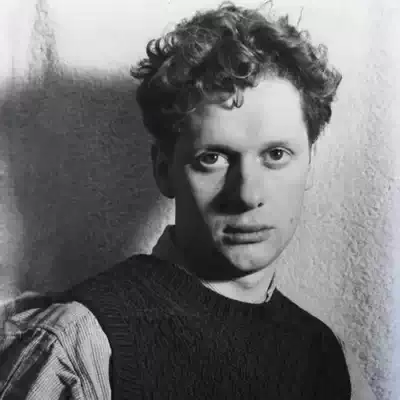
Dylan Thomas

Dylan Thomas was a celebrated Welsh poet whose vivid imagery, lyrical intensity, and unique use of language captivated readers worldwide. His work, often characterized by its passionate exploration of life, death, love, and nature, combined a deep connection to his Welsh heritage with a modernist sensibility. Despite a tragically short and often tumultuous life, his poems possess an enduring power and musicality that have secured his place as one of the 20th century's most important poets.

Poem of the day

Do Not Go Gentle Into That Good Night

Dylan Thomas
Do not go gentle into that good night, 
Old age should burn and rave at close of day; 
Rage, rage against the dying of the light. 

Though wise men at their end know dark is right, 
Because their words had forked no lightning they 
Do not go gentle into that good night. 

Good men, the last wave by, crying how bright 
Their frail deeds might have danced in a green bay, 
Rage, rage against the dying of the light. 

Wild men who caught and sang the sun in flight, 
And learn, too late, they grieved it on its way, 
Do not go gentle into that good night. 

Grave men, near death, who see with blinding sight 
Blind eyes could blaze like meteors and be gay, 
Rage, rage against the dying of the light. 

And you, my father, there on that sad height, 
Curse, bless, me now with your fierce tears, I pray. 
Do not go gentle into that good night. 
Rage, rage against the dying of the light.
Read full poem

Born on this day

11
Isabel Vilhena

Isabel Vilhena is a contemporary Portuguese poet whose work is distinguished by its deep exploration of subjectivity, memory, and the complexities of human relationships. Her poetry, marked by careful language and keen sensibility, addresses themes such as identity, the passage of time, and the search for meaning in a constantly changing world. Vilhena reflects on the female condition and her experiences, using poetry as a means of intimate expression and universal reflection, consolidating her presence in the current Portuguese literary landscape.

José Sarney

José Sarney is a Brazilian politician, lawyer, and writer, known for having been the 31st president of Brazil. His political career spanned various positions, including governor of Maranhão and senator. As a writer, Sarney published novels, short stories, chronicles, and essays, exploring themes such as politics, Brazilian culture, and history. His literary work is marked by an engaging narrative style and by reflection on Brazil's identity and challenges. He also distinguished himself in academia, being a member of the Brazilian Academy of Letters. Sarney is a complex figure, whose actions in politics and literature have generated debates and analyses about his legacy.

Orides Fontela

Orides Fontela was a Brazilian poet whose work stands out for its lyrical intensity and exploration of universal themes. Her poetry is marked by precise language and profound reflection on existence, time, and the human condition. Despite a relatively concise production, she left an indelible mark on Brazilian literature through her originality and the expressive power of her verses.

José Carlos Ferreira

José Carlos Ferreira is a prominent name in contemporary Portuguese poetry, distinguished by his exploration of existential themes, his constant questioning of the human condition, and his incessant search for the word that translates the complexity of feeling. His poetic work is marked by a careful, sometimes dense and fragmented language, which reflects a deep reflection on time, memory, absence, and the very nature of poetry. His poetic compositions, although challenging, offer a space for contemplation and for discovering new perspectives on reality and the self. His writing is characterized by a frequently melancholic and introspective tone, but also by moments of irony and subtle criticism. His contribution to contemporary Portuguese literature is significant, consolidating him as one of the essential poets of his generation, whose work continues to dialogue with readers and critics, inviting rereading and reinterpretation.

Giuseppe Baretti

Giuseppe Baretti (April 24, 1719 - December 5, 1789) was an Italian writer, literary critic, and lexicographer. He is known for his active participation in the cultural debate of his time and for his work "Dizionario delle lingue italiana e inglese".

Carl Spitteler

Carl Spitteler was a prominent German-speaking Swiss poet, awarded the Nobel Prize in Literature in 1919. His work is vast and complex, characterized by a deep interest in mythology, philosophy, and the human condition, exploring universal themes in an epic and symbolic manner. With a grand and often allegorical style, Spitteler created poetic worlds rich in imagination and depth. His best-known works, such as "Der Chung"

Maria da Conceição Campos

Maria da Conceição Campos is a Portuguese writer whose work, predominantly poetic, explores the intimacy of being, the fragility of human relationships, and the search for meaning in a constantly transforming world. Her writing is marked by keen sensitivity, a confessional tone, and a language that combines delicacy with expressive strength. She has participated in various cultural initiatives and anthologies, contributing to the renewal of contemporary Portuguese poetry.

Júlio Alberto da Costa Evangelista

Júlio Alberto da Costa Evangelista was a poet whose writing is characterized by introspective depth and the exploration of existential themes. His poetry reflects a constant search for meaning, addressing the transience of time, the complexity of human relationships, and the melancholic beauty of existence, often with careful language and a confessional tone.

Jorge Ruiz Dueñas

Jorge Ruiz Dueñas is a Mexican poet and professor, whose work stands out for its exploration of identity, spirituality, and landscape. His poetry is marked by clear and evocative language, which transitions between the personal and the universal, often inspired by religious themes and nature. As a professor, Ruiz Dueñas has also dedicated himself to training new generations of writers and promoting literature. His work in the academic and literary sphere consolidates him as an important voice in contemporary Mexican poetry.

Elizabeth Bartlett

Elizabeth Bartlett was an American poet known for her poetry that frequently addressed themes of life, death, faith, and the complexities of human relationships. Her work is characterized by deep reflection and direct, accessible language. She published several books and gained recognition for her honesty and her ability to explore existential questions with sensitivity and clarity.

Died on this day

9
Maria Suely de Oliveira

Maria Suely de Oliveira was a Brazilian writer whose work was distinguished by lyrical depth and the exploration of existential and social themes. Her poetry is marked by an elaborate language and a keen sensibility regarding the complexities of the human condition. Through her verses, the author sought to reflect on identity, time, and interpersonal relationships, leaving a poetic legacy that resonates for its originality and expressive force.

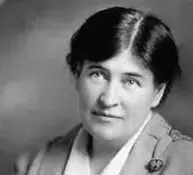
Willa Cather

Willa Sibert Cather was an American novelist, short-story writer, and poet known for her depictions of life on the American frontier and the American West.

Where there is great love there are always miracle
Tadeusz Rózewicz

Tadeusz Rózewicz was a prominent Polish poet, playwright, and essayist, whose work profoundly marked 20th-century literature. After experiencing the horrors of World War II, his poetry became a testament to the fragility of the human condition, questioning language itself and the possibility of expressing the ineffable. His writing is characterized by apparent simplicity, an ironic tone, and a deep reflection on morality and existence.

Abel Botelho

Abel Botelho was a Portuguese novelist and short-story writer, known for his realist and naturalist work. He frequently explored social and psychological themes, depicting the society of his time with a critical and, at times, pessimistic eye. His narratives are distinguished by their deep analysis of human motivations and social conditioning, reflecting the concerns of a period of great transformations in Portugal.

Ricardo Jaimes Freyre

Ricardo Jaimes Freyre was a prominent Bolivian poet, essayist, and diplomat, a key figure in Hispano-American literary Modernism. His poetic work, marked by musicality, subjectivity, and a deep exploration of themes such as love, melancholy, and nature, is fully integrated into the aesthetic currents of the late 19th and early 20th centuries. As an essayist, he addressed literary criticism and social issues of his time, advocating for a renewed vision of literature and culture. His diplomatic work allowed him to disseminate Bolivian culture abroad, consolidating his figure as an intellectual with continental reach.

Emilio Prados

Emilio Prados was a Spanish poet belonging to the Generation of '27. His work is characterized by a deep lyrical sensibility, marked by themes such as love, nature, solitude, and spiritual quest. His poetry, often intimate and reflective, evolved from the influences of modernism towards a more personal and profound expression. After exile, his work acquired an additional dimension of longing and melancholy, consolidating him as an essential voice of 20th-century Spanish lyricism.

Alejo Carpentier

Alejo Carpentier was a distinguished Cuban narrator, essayist, and musicologist, a key figure in 20th-century Latin American literature. His work is characterized by the fusion of the real and the marvelous, "marvellous realism," and by a profound exploration of the history, culture, and identity of the American continent. Considered one of the greatest exponents of the Latin American Boom, Carpentier developed a rich and complex narrative style, with exuberant language and profound erudition. His literary legacy is fundamental to understanding contemporary narrative in Spanish.