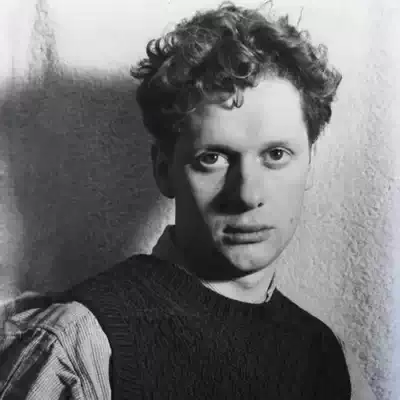
Dylan Thomas
Author of the day

Dylan Thomas

Dylan Thomas was a celebrated Welsh poet whose vivid imagery, lyrical intensity, and unique use of language captivated readers worldwide. His work, often characterized by its passionate exploration of life, death, love, and nature, combined a deep connection to his Welsh heritage with a modernist sensibility. Despite a tragically short and often tumultuous life, his poems possess an enduring power and musicality that have secured his place as one of the 20th century's most important poets.

Poem of the day

Do Not Go Gentle Into That Good Night

Dylan Thomas
Do not go gentle into that good night, 
Old age should burn and rave at close of day; 
Rage, rage against the dying of the light. 

Though wise men at their end know dark is right, 
Because their words had forked no lightning they 
Do not go gentle into that good night. 

Good men, the last wave by, crying how bright 
Their frail deeds might have danced in a green bay, 
Rage, rage against the dying of the light. 

Wild men who caught and sang the sun in flight, 
And learn, too late, they grieved it on its way, 
Do not go gentle into that good night. 

Grave men, near death, who see with blinding sight 
Blind eyes could blaze like meteors and be gay, 
Rage, rage against the dying of the light. 

And you, my father, there on that sad height, 
Curse, bless, me now with your fierce tears, I pray. 
Do not go gentle into that good night. 
Rage, rage against the dying of the light.
Read full poem

Born on this day

16
Affonso Romano de Sant'Anna

Affonso Romano de Sant'Anna was a Brazilian poet, literary critic, and essayist, known for his poetry that explores language, metalanguage, and the human condition, often with a philosophical and ironic tone. His work addresses themes such as time, memory, the city, and the individual's relationship with the modern world, using dense and imagistic language. Distinguished for his contribution to Brazilian literature and culture, Sant'Anna also stood out as a university professor and commentator in various media, disseminating literary knowledge and critical reflection. His poetry is marked by formal experimentation and thematic depth, consolidating him as one of the most relevant voices in contemporary Portuguese-language poetry.

João Borges de Barros

João Borges de Barros is a poet whose work is part of the context of contemporary Portuguese poetry. His writing is marked by a deep reflection on existence, the human condition, and the passage of time, often expressed through lyrical and introspective language. Through themes such as memory, saudade, and the search for meaning, Barros constructs poetry that dialogues with the concerns of the modern reader, establishing himself as a singular voice in literature.

Renato Russo

Renato Russo was a Brazilian singer, songwriter, and multi-instrumentalist, primarily known as the vocalist and leader of the band Legião Urbana. He is considered one of the greatest icons of Brazilian pop/rock music, with lyrics that addressed themes such as love, politics, youth, existentialism, and social criticism. His unmistakable voice and urban poetry marked a generation and continue to influence contemporary Brazilian music.

Alfred de Vigny

Alfred de Vigny was a French poet, playwright, and novelist, one of the prominent figures of French Romanticism. His work is marked by a melancholic tone, by reflection on the human destiny, solitude, and the condition of the artist.

The existence of the soldier, next to capital puni
Francis Ponge

Francis Ponge was a French poet and writer, known for his unique and meditative approach to the material world and language. His work, which defies traditional categorizations, explores everyday objects and natural elements with philosophical depth and meticulous attention to the word. Ponge dedicated himself to deconstructing conventional poetry, focusing on sensory experience and the materiality of existence, which earned him a unique place in 20th-century literature.

Xavier Villaurrutia

Xavier Villaurrutia was a Mexican poet, essayist, and playwright, a central figure in 20th-century Spanish-language literature. His poetic work, marked by existentialism and melancholy, explores themes such as death, solitude, time, and the search for identity. Villaurrutia is known for his refined style, his mysterious atmosphere, and his reflections on the human condition. His plays are also notable for their experimentation and psychological depth.

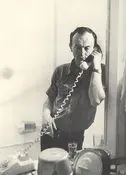
Frank O'Hara

Frank O'Hara was an American poet associated with the New York School movement. His work, characterized by distinctive spontaneity and colloquiality, captures the cultural effervescence of 20th-century New York. A poet of everyday life, the city, and personal relationships, O'Hara explored the urban experience with a lyrical and sometimes ironic gaze, leaving a legacy of vibrant and accessible poetry.

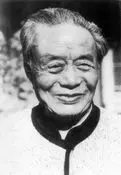
Ai Qing

Ai Qing was a prominent Chinese poet, known for his lyrical and socially conscious poetry. His works address themes such as the lives of ordinary people, the struggle against oppression, and the beauty of nature, reflecting a deep love for his homeland and a humanist spirit. His writing, marked by a direct and emotional style, had a significant influence on modern Chinese poetry, making him a central figure in 20th-century Chinese literature.

Jorge de Oliveira e Sousa

Jorge de Oliveira e Sousa was a poet whose work is distinguished by its strong lyrical component and reflection on the human condition. His poetry, marked by careful language and the exploration of themes such as temporality, memory, and the search for deeper meaning, established him as an important voice in literature. His ability to transfigure the everyday into moments of profound poetic beauty gives his work a timeless character and lasting resonance.

Juan Guzmán Cruchaga

Juan Guzmán Cruchaga was a Chilean poet and professor, known for his lyrical poetry and his contribution to education in his country. His poetic work, although less extensive than that of other contemporaries, is marked by the delicacy and depth of his verses, exploring themes such as nature and spirituality.

Ramón Andrés

Ramón Andrés is a Spanish writer and musician, known for his work that moves between narrative, poetry, and music. His writing is often marked by a refined artistic sensibility, exploring the intersection between different forms of expression and the search for beauty in life.

Antonio Arraíz

Antonio Arraíz was a prominent Venezuelan poet, essayist, and diplomat, recognized for his profound lyricism and his commitment to the social reality of his country. His work is characterized by an intense reflection on the human condition, homeland, and the search for identity. Throughout his career, Arraíz explored various poetic forms, merging tradition with experimentation, and left a significant legacy in Hispano-American literature. He was an influential figure in the intellectual and cultural circles of Venezuela, actively participating in public life through his diplomatic work.

Vicente Gaos

Vicente Gaos was a Spanish poet, a key figure of the Generation of '50, known for his existential and social poetry, marked by a profound reflection on the human condition and the reality of his time. His work, characterized by direct language and great lyrical sensitivity, addresses themes such as memory, identity, justice, and the search for hope in difficult contexts.

Died on this day

10
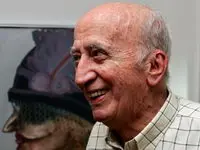
Millôr Fernandes

Millôr Fernandes was a Brazilian writer, humorist, cartoonist, playwright, and journalist. He stood out for his acidic and critical humor, addressing social, political, and existential themes with insight and irreverence. His work spans various genres, including chronicles, poems, plays, and cartoons, always with accessible language and a sharp eye on the human condition. He was one of the founders and collaborators of widely circulated newspapers and magazines, leaving a legacy of intelligence and irreverence in Brazilian culture.

Vicent Andrés Estellés

Vicent Andrés Estellés was a fundamental poet of the Valencian language literature, whose work portrays the identity, history, and daily life of his land with an authentic and deeply rooted voice. Known for his vast production, which ranges from the most intimate lyricism to social and political commentary, Estellés became a symbol of Valencian cultural and linguistic resistance. His poetry, often marked by a colloquial and direct tone, without neglecting depth and expressive force, addresses universal themes such as love, death, time, injustice, and hope, always with a sharp eye on the reality that surrounded him. His figure is indispensable for understanding contemporary Catalan poetry.

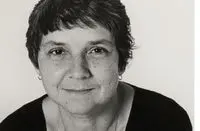
Adrienne Rich

Adrienne Rich was an American poet, essayist, and feminist activist, recognized for her politically engaged poetry and her exploration of identity, sexuality, and social oppression. Throughout her career, her work evolved to address themes of radical feminism, lesbianism, pacifism, and social justice, becoming an influential voice in counterculture movements and gender studies.

Edgar Quinet

Edgar Quinet was a French historian and writer, known for his work on French history and for advocating republican and secular ideals. His works frequently addressed the French Revolution and the religious history of Europe. He was an important figure in the intellectual and political scene of 19th-century France.

Albert Drach

Albert Drach was an Austrian writer, known for his dense and experimental prose. His work frequently explored language and perception, challenging traditional narrative conventions. He stood out in 20th-century German-language literature. His writing is characterized by a deep reflection on existence and the human condition, often in urban and introspective settings. Drach left a legacy as a singular and intellectually rigorous author.

Jorge Manrique

Jorge Manrique was a 15th-century Spanish poet whose work is framed within the transition between medieval lyricism and the Renaissance. He is especially remembered for his "Coplas a la muerte de su padre" (Coplas on the Death of His Father), an elegiac poem that has become a landmark of Castilian language poetry. In this work, Manrique reflects on the transience of life, the vanity of worldly glories, and equality before death, with a sober and profound style that transcends his era.

Let the dozing soul remember, let the mind awake a
Ernestina de Champourcín

Ernestina de Champourcín was a Spanish poet and essayist belonging to the Generation of '27. Her work is characterized by a deep spirituality, lyrical language, and themes focused on love, faith, and transcendence. Despite her talent and early acclaim, her figure has often been overshadowed by that of her male contemporaries, partly due to her exile and the historical circumstances of the Spanish post-war period. Her poetry, while rooted in tradition, also explored the possibilities of free verse and renewed imagery, leaving a poetic legacy of great intimate and reflective value.