Jorge Luis Borges
Author of the day

Jorge Luis Borges

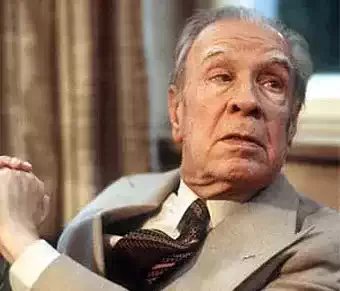
Jorge Luis Borges was an Argentine writer, poet, essayist, and translator. His work is characterized by its philosophical depth, intricate plots, and exploration of themes such as time, infinity, identity, and the nature of reality. Borges is considered one of the most significant literary figures of the 20th century, renowned for his innovative use of literary devices and his profound influence on postmodern literature.

Poem of the day

Grass

Carl Sandburg
Pile the bodies high at Austerlitz and Waterloo.
Shovel them under and let me work
-I am the grass; I cover all.

And pile them high at Gettysburg
And pile them high at Ypres and Verdun.
Shovel them under and let me work.
Two years, ten years, and the passengers ask the conductor:

What place is this?
Where are we now?

I am the grass.
Let me work.
Read full poem

Born on this day

13
Álvaro Cardoso Gomes

Álvaro Cardoso Gomes was a renowned Brazilian writer, with a career marked by literary production focused on the children's and young adult audience, although he also explored other genres. His work is recognized for the quality of its writing, for its sensitivity in addressing relevant themes for young readers, and for its ability to create engaging and educational narratives. Gomes left an important legacy in Brazilian literature, contributing to the formation of readers and to the appreciation of literature for children and adolescents.

António Afonso Bernardino

António Afonso Bernardino is a poet whose work is characterized by a strong connection to the land and roots, exploring themes such as identity, memory, and ancestry. His poetry reflects a keen eye on the landscapes, traditions, and experiences of the rural world, interweaving nostalgia with a celebration of life. With accessible yet meaningful language, Bernardino invites contemplation of the essence of things and the rediscovery of the values that shape human existence, honoring cultural heritage.

Alexandre Herculano

Alexandre Herculano was a prominent Portuguese writer, historian, and journalist, a central figure of Romanticism in Portugal. His literary work, especially his historical novels, is marked by nationalism, mysticism, and the defense of liberal ideals. As a historian, he dedicated himself to the critical investigation of Portugal's history, using rigorous methods and seeking to demystify legends and traditions.

Mirella Márcia

Mirella Márcia is a contemporary poet who explores the depths of the human condition with a language rich in imagery and emotion. Her work oscillates between personal lyricism and universal reflection on themes such as time, memory, and interpersonal relationships. It is characterized by sensitivity in approaching feelings and by the pursuit of an authentic and visceral expression. Mirella Márcia's poetry invites introspection and dialogue with one's own soul, offering a mirror to human experiences and longings.

Alain Bosquet

Alain Bosquet was a Franco-Belgian poet, novelist, art critic, and journalist. Known for his prolific poetic work and his activity as an art critic, Bosquet explored themes such as love, memory, and the human condition in its various facets. His poetic writing is often characterized by its musicality and its ability to evoke vivid images.

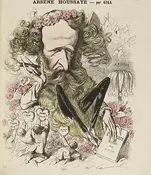
Arsène Houssaye

Arsène Houssaye was a French writer, journalist, and museum curator. Known for his prolific literary output and his management of the Musée Carnavalet in Paris, he was an influential figure in the 19th-century French cultural scene.

Teresa de Ávila

Teresa of Ávila, born Teresa Sánchez de Cepeda y Ahumada, was a Spanish Carmelite nun, mystic, and writer, considered one of the most important figures of the Counter-Reformation. She dedicated her life to the reform of the Carmelite Order, founding numerous convents throughout Spain. Her spiritual works, such as "The Book of Life" and "The Interior Castle," are landmarks of mystical literature, describing her experiences of prayer and union with God with remarkable clarity and depth. Her writing is characterized by authenticity, direct language, and profound religious experience. Teresa of Ávila is venerated as a saint by the Catholic Church and is a Doctor of the Church, a title awarded to theologians and mystics whose writings are considered of great importance to Christian doctrine and spirituality.

Armando Silva Carvalho

Armando Silva Carvalho was a Portuguese poet, essayist, and translator whose work is marked by a profound reflection on the human condition, memory, and the passage of time. His poetry, characterized by careful language and restrained lyricism, explores universal themes with unique sensitivity. A key figure in contemporary Portuguese literature, Silva Carvalho also stood out for his work as a translator, bringing important works of universal literature into Portuguese, and as an essayist, deepening his vision of art and life.

Ada Limón

Ada Limón is a contemporary American poet whose work is marked by a deep connection with nature, the body, and the complexities of human relationships. Her poetry is often described as visceral, honest, and compassionate, exploring themes of healing, loss, and the search for belonging.

Michele Sovente

Michele Sovente was an Italian poet, whose work is recognized for its strong connection with the lyrical tradition and for exploring existential themes. His poetry is marked by careful language and a deep reflection on the human condition, the passage of time, and the search for meaning. His writing invites the reader to contemplate life with an attentive eye to its beauties and contradictions. Sovente contributed to the Italian poetic landscape with an authentic voice and an unmistakable style, which engages with the great questions of existence.

Ignacio de Luzán

Ignacio de Luzán was an influential Spanish writer and intellectual of the 18th century, a key figure of the Enlightenment in Spain. His most important work, "La Poética" (1737), is considered a milestone in Spanish literary criticism, introducing the principles of Neoclassicism and laying the groundwork for a renewal of literary theory and practice in the country. He stood out for his erudition and his defense of reason, clarity, and good taste in art and literature, advocating for the imitation of classical models and the adaptation of aesthetic norms to the Spanish reality.

Died on this day

8
Miguel Hernández

Miguel Hernández was a Spanish poet whose work is part of the Generation of '27. His poetry, marked by expressive force and social themes, evolved from an initially more intimate tone to a deep engagement with the issues of his time. The Spanish Civil War had a devastating impact on his life and literary production, making him one of the fundamental poets of Spanish-language literature.

Christopher Morley

Christopher Darlington Morley (5 May 1890 – 28 March 1957) was an American journalist, novelist, poet and critic. He is perhaps best known for creating the game of Clue (Cluedo).

Eugène Ionesco

Eugène Ionesco was a Romanian-French playwright, one of the main representatives of the Theatre of the Absurd. His work is characterized by illogicality, the breakdown of language, and the exploration of the emptiness of human existence, reflecting the anguish and absurdity of the modern world. Plays such as "The Bald Soprano" and "Rhinoceros" are milestones of 20th-century theatre.

Childhood is the world of miracle and wonder; as i
Maurício Soares

Maurício Soares is a poet whose work is characterized by a strong connection to realism and by careful observation of daily life, exploring the nuances of common human experience. His poetry, while accessible, does not forgo depth and reflection on universal themes such as love, work, and the passage of time, in a clear and direct language.

Rodrigo Emílio

Rodrigo Emílio was a Portuguese poet whose works explore the depths of the human soul and the complexity of relationships. His poetry is characterized by introspection and careful language, reflecting on themes such as love, saudade (longing), and the ephemerality of life. His work, although it may not have achieved the notoriety of other literary figures, is a valuable testament to the lyrical sensitivity of his time.

Raffaello Baldini

Raffaello Baldini was an Italian poet and writer, known for his poetry that delves into the landscapes and culture of Romagna, his native land. His work stands out for its colloquial language, musicality, and ability to evoke daily life with simplicity and depth. Baldini moved between the Romagnol dialect and standard Italian, exploring the nuances of regional identity. His poetry is often marked by a melancholic and ironic tone, addressing themes such as memory, time, the passage of life, and human relationships. Baldini is recognized for giving voice to common experiences, transforming the particular into the universal through his lyrical sensibility and his keen eye for detail.