Friedrich Nietzsche
Author of the day

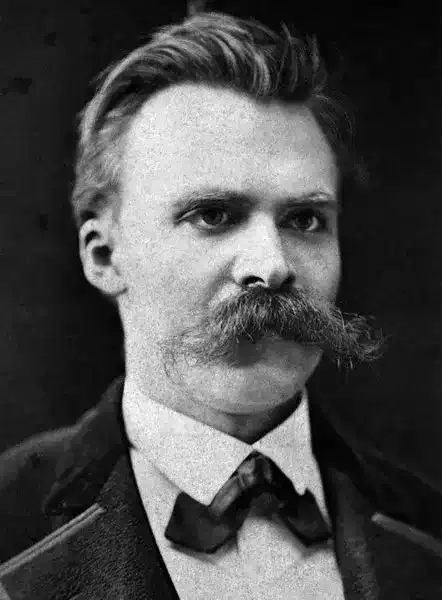
Friedrich Nietzsche

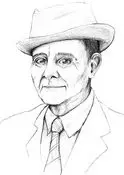
Friedrich Nietzsche was an influential German philosopher, philologist, and cultural critic. His work addresses themes such as morality, religion, truth, art, and the human condition, with a radical critique of traditional Western values. He is known for concepts such as the "death of God", the "superman" (Übermensch), and the "will to power" (Wille zur Macht). His writing is marked by an aphoristic and provocative style, which challenges the reader to rethink their beliefs and values.

Poem of the day

Do Not Go Gentle Into That Good Night

Dylan Thomas
Do not go gentle into that good night, 
Old age should burn and rave at close of day; 
Rage, rage against the dying of the light. 

Though wise men at their end know dark is right, 
Because their words had forked no lightning they 
Do not go gentle into that good night. 

Good men, the last wave by, crying how bright 
Their frail deeds might have danced in a green bay, 
Rage, rage against the dying of the light. 

Wild men who caught and sang the sun in flight, 
And learn, too late, they grieved it on its way, 
Do not go gentle into that good night. 

Grave men, near death, who see with blinding sight 
Blind eyes could blaze like meteors and be gay, 
Rage, rage against the dying of the light. 

And you, my father, there on that sad height, 
Curse, bless, me now with your fierce tears, I pray. 
Do not go gentle into that good night. 
Rage, rage against the dying of the light.
Read full poem

Born on this day

17
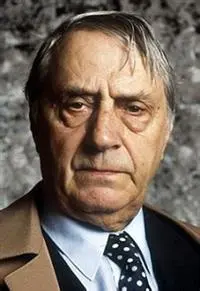
António Arnaut

António Arnaut was a Portuguese jurist, professor, and poet. A Doctor of Law from the University of Coimbra, he dedicated his life to the study and teaching of Law, with a particular emphasis on the areas of Civil Law and Labor Law. Parallel to his academic and legal career, he developed a discreet but notable poetic work, marked by a profound reflection on the human condition, spirituality, and the relationship between man and the cosmos.

Barroso Gomes

Barroso Gomes was a poet whose work is part of the Portuguese literary landscape. His poetry often explores universal themes such as love, the ephemerality of time, and the search for meaning, using a refined and musical language. His writing reflects a unique sensitivity to the human condition, marked by deep introspection and singular lyricism.

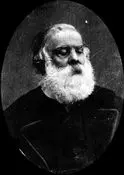
António Feliciano de Castilho

António Feliciano de Castilho was an influential Portuguese writer, poet, and translator, a prominent figure of the 19th century. Known for his vast literary output and his defense of traditionalism and classicism, Castilho played a central role in Portuguese cultural life, both through his original work and his polemical interventions, notably in the orthography debate and his rivalry with Romanticism. His work encompasses poetry, prose, literary criticism, and translation, distinguished by its musicality, formal rigor, and inspiration from classical and Renaissance models. Despite being a controversial figure, especially in his opposition to Romanticism, Castilho left a lasting legacy in Portuguese literature, being studied and debated to this day.

José da Cunha Cardoso

José da Cunha Cardoso was a Portuguese poet known for his contributions to the literature of his time. His poetic work, although sometimes less prominent in terms of massive recognition, reflects a particular sensitivity and a style that engages with Portuguese literary traditions. He explored universal themes through careful language, leaving a legacy that deserves to be rediscovered.

Pablo Simpson

Pablo Simpson is a poet whose work is often placed within the context of contemporary poetry, exploring language and form with a keen sensitivity to the nuances of daily life and human experience. His writing is characterized by an introspective and, at times, melancholic exploration, addressing themes such as the passage of time, memory, and the fragility of relationships. His poetry invites reflection on the human condition in a constantly changing world.

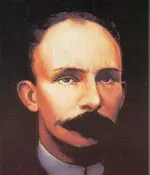
José Martí

José Martí was a Cuban poet, essayist, journalist, translator, and professor. He is considered one of Cuba's greatest intellectuals and politicians, and was one of the main leaders of the movement for Cuban independence from Spanish rule. His literary work is vast and includes poetry, prose, and essays, with a strong patriotic and social tone.

I wish to leave the world By its natural door; In
Vergílio Ferreira

Vergílio António Ferreira was a highly influential Portuguese writer, poet, novelist, playwright, essayist, and literary critic. He is regarded as one of the most significant figures in 20th-century Portuguese literature, known for his intellectual depth and exploration of existential themes. His work often grapples with questions of identity, freedom, and the human condition.

Shinkichi Takahashi

Shinkichi Takahashi was a Japanese poet, known as one of the pioneers of Zen poetry in Japan. His work is characterized by the fusion of Buddhist Zen tradition and modern poetic expression. His verses explore the nature of reality, impermanence, and enlightenment through often paradoxical language and surprising imagery, inviting contemplation and transcendence.

Cláudia de Campos

Cláudia de Campos is a contemporary Portuguese poet, known for her lyrical and introspective writing. Her work frequently explores themes such as the ephemerality of time, memory, nature, and the search for meaning in existence. With careful and evocative language, the author constructs inner landscapes that invite reflection on the human condition. Her poetry is distinguished by its sensitivity in approaching universal feelings, establishing a deep connection with the reader.

Espínola de Mendonça

José de Espínola de Mendonça was a Portuguese poet known for his lyrical and satirical work. His poetry reflects a keen eye on society, exploring themes such as love, morality, and the human condition, often with an ironic and critical tone. His contribution to Portuguese literature lies in the mastery of form and the depth of his observation, leaving a legacy of verses that continue to resonate for their relevance and artistic quality.

José María Millares

José María Millares was a Spanish poet and writer, associated with the post-war generation of poets. His work is marked by a melancholic and reflective tone, exploring loneliness, love, and the search for meaning in an often hostile world. He is recognized for his contribution to 20th-century Spanish poetry.

José Luis Rivas Vélez

José Luis Rivas Vélez is a Mexican poet, short story writer, essayist, and literary critic. His work is recognized for its lyrical quality, for the exploration of themes such as identity, history, and the Mexican landscape, and for a language that combines formal rigor with sensitivity.

Philip Hodgins

Philip Hodgins was an Australian poet known for his lyrical exploration of everyday life and the Australian landscape. His poetry often addressed themes of memory, loss, and the passage of time, with clear and accessible language. He is remembered for his contribution to contemporary Australian poetry, offering an introspective and sensitive perspective on the human experience.

Virgilio Dávila

Virgilio Dávila was a Puerto Rican poet, educator, and politician, primarily known for his lyrical work that evokes the lush nature of his native island and his love for his homeland. His poetry, characterized by great musicality and sensitivity, is part of the Romantic and Modernist tradition, exploring themes such as the Caribbean landscape, national identity, and the deepest human feelings. Dávila played an important role in the cultural and political life of Puerto Rico, leaving a literary legacy that celebrates the beauty and spirit of his land.

Josep Vicenç Foix

Josep Vicenç Foix was a Spanish poet, writer, and literary critic, one of the most unique and representative figures of 20th-century Catalan literature. His poetic work, marked by a deep spirituality, personal mysticism, and a constant exploration of identity, is characterized by the fusion of tradition and avant-garde. Foix is known for his aphoristic language, cryptic symbolism, and his vocation to explore the limits of poetic expression. Throughout his extensive career, he remained faithful to his personal universe, becoming an unavoidable reference for contemporary Catalan poetry.

Died on this day

12
Joseph Brodsky

Joseph Brodsky was a Russian-American poet and essayist, Nobel laureate in Literature. His work is marked by erudition, formal complexity, and profound reflection on themes such as exile, time, memory, and the human condition. His poetry, often dense and challenging, engages with Russian and Western literary tradition, exploring the ambiguities of language and the search for meaning in a constantly changing world. His life, marked by exile and opposition to the Soviet regime, lends an autobiographical and resistant dimension to his literary production.

Marina Colasanti

Marina Colasanti is a renowned Brazilian visual artist and writer, born in Italy. Her poetic work is marked by a unique delicacy and a deep exploration of the feminine universe, dreams, and imagination. With accessible language, yet loaded with symbolism, she moves between the real and the fantastic, inviting the reader to reflect on the complexities of existence and the nuances of human relationships. Her production encompasses poetry, short stories, and illustrated books, consolidating her as a singular voice in contemporary literature.

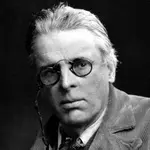
William Butler Yeats

William Butler Yeats was a prominent Irish poet, playwright, and mystic, widely regarded as one of the greatest poets of the 20th century. His early work was deeply influenced by Irish mythology and folklore, and he was a key figure in the Irish Literary Revival. Over his career, his style evolved, becoming more personal, symbolic, and philosophical, grappling with themes of love, aging, politics, and the spiritual life. Yeats's poetry is characterized by its rich imagery, musicality, and intellectual depth. He explored the complexities of the human condition, the nature of art, and the turbulent history of Ireland. His later works, in particular, are known for their aphoristic power and profound meditations on life and mortality. He received the Nobel Prize in Literature in 1923, solidifying his international literary stature.

A Bronze Head
Filinto de Almeida

Filinto de Almeida was a prominent Portuguese poet, playwright, and journalist, a key figure in the development of Parnassianism and Symbolism in Portugal. His poetic work is recognized for its technical mastery, formal rigor, and exploration of themes such as beauty, love, death, and the transcendent, often with unique musicality and sonority. He stood out for his contribution to the renewal of Portuguese lyricism, introducing a more careful and elaborate language, and for his active role in important literary publications. His influence extended across several generations of poets, consolidating him as one of the most important names in Portuguese poetry.

Ilídio Rocha

Ilídio Rocha was a poet whose work was characterized by the exploration of the human condition, with a strong lyrical and reflective component. His poetry addresses universal themes such as love, death, solitude, and the passage of time, always with careful language and refined sensibility. His literary career is marked by a constant search for the expression of authenticity and the depth of human emotions.

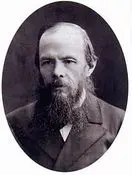
Fiódor Dostoiévski

Fyodor Dostoevsky was one of the greatest Russian novelists and existential thinkers. His work is known for its psychological depth and exploration of the human condition, addressing themes such as faith, doubt, morality, and suffering. Dostoevsky went through dramatic experiences, including a simulated death sentence and years of exile in Siberia. These trials shaped his worldview and permeated his most famous novels, such as "Crime and Punishment" and "The Brothers Karamazov".

I agree that two times two is four is an excellent
Manuel de Moura

Manuel de Moura was a Portuguese poet of the 17th century, known for his lyrical and religious work. His poetry is marked by the influence of the Baroque, with the use of elaborate language, wordplay, and a deep reflection on themes such as faith, the ephemerality of life, and devotion to God. Although integrated into the literary context of the time, his work is distinguished by the intensity of expression and the pursuit of sincere spirituality.

Teófilo Braga

Teófilo Braga was a prolific Portuguese writer, poet, and politician, known for his extensive work that spans poetry, short stories, novels, and essays, with a particular emphasis on his studies of folklore and popular literature. He was a central figure in the transition between Romanticism and Realism in Portugal, and his poetry is marked by deep lyricism and a strong connection to national traditions and identity.

Henrique Guerra

Henrique Guerra was a Portuguese poet whose work is part of the literary context of the 20th century. He stood out for his lyrical and reflective approach to universal themes, using careful language and a style that dialogues with Portuguese poetic tradition, but with a touch of modernity. His poetry is marked by introspection and the exploration of the human condition, addressing love, solitude, and the ephemerality of life with sensitivity and depth.

Community birthdays

1