Poem of the day

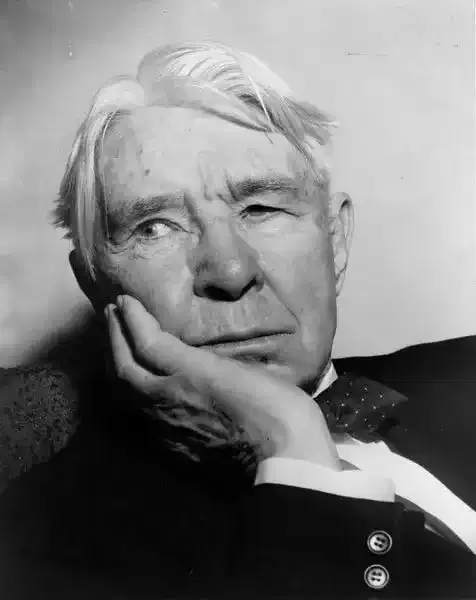
Grass

Carl Sandburg
Pile the bodies high at Austerlitz and Waterloo.
Shovel them under and let me work
-I am the grass; I cover all.

And pile them high at Gettysburg
And pile them high at Ypres and Verdun.
Shovel them under and let me work.
Two years, ten years, and the passengers ask the conductor:

What place is this?
Where are we now?

I am the grass.
Let me work.
Read full poem

Born on this day

6
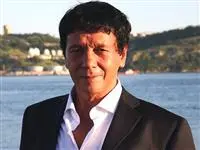
José Manuel Capêlo

José Manuel Capêlo was a Portuguese poet associated with the surrealist movement, whose work is characterized by the exploration of the unconscious, dreams, and the irrational. His writing seeks to break with the conventions of logic and apparent reality, delving into the depths of the human psyche and the freedom of imagination.

António Lampreia

António Lampreia is a Portuguese poet whose work is characterized by lyrical intensity and the exploration of themes such as nature, time, and the human condition. With careful language and strong musicality, his verses invite immersion in a universe of sensations and deep reflections. His poetry, although often anchored in landscapes and everyday observations, transcends the merely descriptive to reach a more universal and existential dimension, touching on the fragility and beauty of existence.

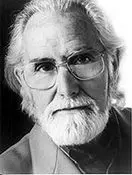
Arménio Vieira

Arménio Vieira is a prominent Cape Verdean poet, whose work is distinguished by the deep exploration of identity, diaspora, the human condition, and the landscape of Cape Verde. His poetry is marked by a forceful language, a sometimes elegiac tone, and a strong connection to the cultural and historical roots of his people. With a consolidated trajectory, Arménio Vieira is an essential voice in Portuguese-language literature, addressing universal themes from a uniquely Cape Verdean perspective, which gives him a prominent place in the Lusophone literary landscape.

Pedro de Calasans

Pedro de Calasans was a poet whose work is part of the panorama of Brazilian poetry. He stood out for his exploration of lyrical and existential themes, using a language that, at times, echoed tradition, but also opened itself to formal experimentation. His poetry is marked by profound sensitivity and a constant search for the expression of the nuances of the human soul. His legacy, although sometimes associated with more restricted circles, represents a valuable contribution to the diversity of Portuguese-language poetry, reflecting a period of literary effervescence and questioning about the art of writing itself.

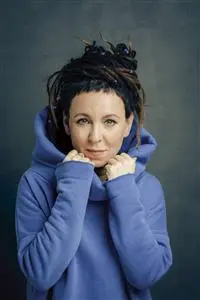
Olga Tokarczuk

Olga Tokarczuk is a prominent Polish writer, awarded the Nobel Prize in Literature in 2018, whose work is recognized for its originality, philosophical depth, and innovative approach to narrative. Her works challenge literary conventions, blending genres and perspectives to create complex universes that reflect on history, identity, nature, and the human condition. Tokarczuk is a powerful voice in contemporary world literature, distinguished by her ability to weave stories that resonate with existential and social issues.

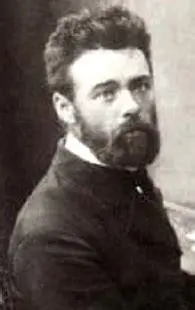
Francisco Gregorio de Salas

Francisco Gregorio de Salas was a Spanish writer and politician of the 19th century. His work is part of late romanticism and incipient realism, addressing social and political issues of his time. He excelled in both poetry and prose, showing a concern for public affairs and a particular sensitivity to the problems of his era. His figure represents an important link in the transition of literary currents of the 19th century in Spain.

Died on this day

12
Egito Gonçalves

Egito Gonçalves was an Angolan poet, short story writer, and essayist, a prominent figure in African Portuguese-language literature. His work, marked by strong social and political engagement, addresses themes such as African identity, colonialism, the struggle for freedom, and the pursuit of a dignified future for his people. With a powerful and evocative poetic language, Egito Gonçalves left a significant legacy in the literature of Angola and other Portuguese-speaking countries.

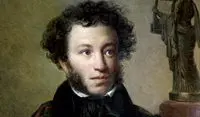
Alexandre Pushkin

Alexander Pushkin is widely regarded as the greatest Russian poet and the founder of modern Russian literature. His work spans a vast range of genres, including lyric, epic, narrative poetry, and drama. With a style that blends the colloquial and the elevated, Pushkin explored themes such as love, freedom, honor, and destiny, leaving an indelible legacy on Russian and world culture.

António Gomes Leal

António Gomes Leal was a Portuguese poet, a prominent figure in 19th-century poetry. His work is marked by intense lyricism, often egocentric and melancholic in nature, exploring themes such as love, death, and existential pain. Gomes Leal is known for his careful language and his exploration of traditional poetic forms, having left a collection of poems that establish him as one of the important names of late Romanticism in Portugal.

Reis Ventura

Reis Ventura was a Portuguese poet whose work is mainly situated within the context of Neorealism and Social Poetry. Characterized by strong civic intervention and the denunciation of social injustices, his work addresses themes such as poverty, oppression, and the struggle for human dignity. His poetry is marked by a tone of protest and a direct, accessible language.

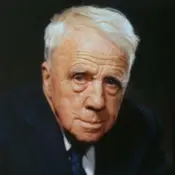
Robert Frost

Robert Frost was an American poet whose work is often associated with the rural life of New England. His poetry is characterized by its accessible language, conversational tone, and exploration of profound themes about nature, human existence, and the choices people make. Despite often being perceived as a simple observer of country life, Frost's poems delve into complex psychological states and philosophical questions, making him one of America's most celebrated and enduring literary figures.

In White: Frost's Early Version Of Design
Francisco José Lahmeyer Bugalho

Francisco José Lahmeyer Bugalho was a Portuguese poet, diplomat, and jurist, whose lyrical work is marked by erudition and a profound reflection on identity, history, and memory. His poetry, which combines formal rigor with dense and evocative language, often addresses themes such as the passage of time, longing for his homeland, and the complexity of human relationships. A career diplomat, Lahmeyer Bugalho lived and worked in several countries, experiences that are reflected in his writing, giving him a cosmopolitan perspective on existential issues. His work is a testament to his sharp intellect and artistic sensitivity, consolidating him as a relevant voice in contemporary Portuguese literature.

Jaime Reyes

Jaime Reyes is a Mexican poet whose work is characterized by the exploration of language and reflection on identity and memory. His poetry moves between personal lyricism and the observation of the contemporary world, seeking new forms of poetic expression.

Martín Adán

Martín Adán, whose real name was Rafael de la Fuente Benavides, was an influential Peruvian poet, recognized as one of the most original and complex voices in 20th-century Hispano-American literature. His poetic work, marked by a deep meditation on identity, modernity, time, and the human condition, is characterized by a dense, hermetic language of great plasticity. Adán explored the tensions between the telluric and the cosmopolitan, the archaic and the modern, creating a poetic universe of great philosophical depth. His literary career, though scarce in publications, left an indelible mark, consolidating him as a cult poet and an enigmatic and fascinating figure in universal poetry.

Edward Lear

Edward Lear was an English artist, illustrator, musician, author, and poet, celebrated primarily for his nonsense poetry. His distinctive style, characterized by limericks and whimsical illustrations, brought him widespread fame. Lear's work often featured eccentric characters, fantastical landscapes, and playful rhymes, offering a unique blend of humor and imagination. He is considered a pioneer of the nonsense genre, influencing generations of writers and artists with his creative spirit.

Unicorny,
Sarah Teasdale

Sara Teasdale was an influential American lyric poet celebrated for her emotionally resonant and accessible verse. Her work often explores themes of love, nature, loss, and the inner life of women with a delicate yet powerful voice. Teasdale's poems, characterized by their musicality and lyrical beauty, garnered significant popularity during her lifetime and continue to be cherished for their timeless exploration of the human heart.

Did You Never Know?
Josep Vicenç Foix

Josep Vicenç Foix was a Spanish poet, writer, and literary critic, one of the most unique and representative figures of 20th-century Catalan literature. His poetic work, marked by a deep spirituality, personal mysticism, and a constant exploration of identity, is characterized by the fusion of tradition and avant-garde. Foix is known for his aphoristic language, cryptic symbolism, and his vocation to explore the limits of poetic expression. Throughout his extensive career, he remained faithful to his personal universe, becoming an unavoidable reference for contemporary Catalan poetry.