Poem of the day

Grass

Carl Sandburg
Pile the bodies high at Austerlitz and Waterloo.
Shovel them under and let me work
-I am the grass; I cover all.

And pile them high at Gettysburg
And pile them high at Ypres and Verdun.
Shovel them under and let me work.
Two years, ten years, and the passengers ask the conductor:

What place is this?
Where are we now?

I am the grass.
Let me work.
Read full poem

Born on this day

11
Manuel Machado

Manuel Machado was a Spanish poet, known for his work that blends modernism with elements of symbolism and Parnassianism. His poetry is marked by intense lyricism, a rich vocabulary, and characteristic musicality, exploring themes such as love, death, time, and the ephemerality of life. Machado developed a unique style, with strong attention to form and the sonority of verses, influencing later generations of poets with his pursuit of beauty and aesthetic perfection in poetic language.

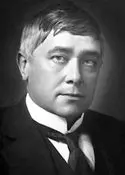
Maurice Maeterlinck

Maurice Maeterlinck was a Belgian poet, playwright, and essayist, a prominent figure of literary symbolism. His work is characterized by an atmosphere of mystery, lyricism, and reflection on the great themes of existence, such as life, death, love, and destiny. Known for his plays, such as 'The Blue Bird', Maeterlinck explored the subconscious and the ineffable, using symbols and allegories to convey his ideas. He was awarded the Nobel Prize in Literature in 1911, in recognition of his vast and influential contribution to world literature.

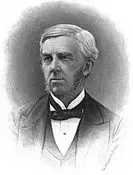
Oliver Wendell Holmes

Oliver Wendell Holmes Sr. was a prominent American physician, professor, and poet, born in Cambridge, Massachusetts, in 1809. He is remembered for his contributions to medicine, particularly in the field of preventing puerperal infections, and also for his prolific literary career. As a poet, Holmes was known for his witty verses and sharp observations on 19th-century American society. He was an important figure in Boston's intellectual life and one of the founders of The Atlantic Monthly. His son, Oliver Wendell Holmes Jr., also became a renowned U.S. Supreme Court justice.

Jean-Baptiste-Louis Gresset

Jean-Baptiste-Louis Gresset was a French poet and playwright. Born in Amiens, he is known for his work 'Vert-Vert', a satirical poem that brought him considerable fame.

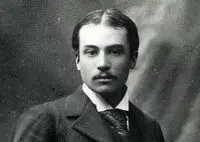
Valéry Larbaud

Valéry Larbaud was a French writer, poet, and translator, known for his lyrical and reflective prose. His work explores themes such as the search for identity, travel, and the very nature of writing, often with an autobiographical and introspective tone. Larbaud cultivated a scholarly and refined style, demonstrating great command of language and literary form, which earned him a distinguished place in 20th-century French literature.

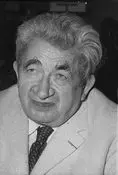
Jean Follain

Jean Follain was a French poet, novelist, and journalist, whose work is recognized for its lyrical quality and exploration of daily life and the rural landscape. With a precise style and keen attention to detail, Follain captured the essence of small things, giving them a deep poetic dimension. His poetry is an invitation to contemplate simplicity, nature, and human relationships, seen through a sensitive and sometimes melancholic gaze. Follain's work is distinguished by its lyrical objectivity, avoiding grand emotional outbursts in favor of meticulous and suggestive description. His poems and novels often portray country life, traditions, the occupations of peasants, and the passage of time, always with formal elegance and intrinsic musicality.

António de Vilas Boas e Sampaio

António de Vilas Boas e Sampaio was a poet whose work is part of the Portuguese literary landscape. He stood out for his lyrical sensitivity and for exploring universal themes through careful and expressive language. His poetry reflects a deep insight into the human condition, affections, and the passage of time, marked by strong musicality and a technical mastery of poetic form.

Francisco Alves da Costa

Francisco Alves da Costa is a poet distinguished by his ability to combine the power of language with a profound reflection on the human condition. His poetry explores themes such as the passage of time, memory, identity, and the complexities of interpersonal relationships. Through a vigorous style and critical vision, Alves da Costa offers a work that challenges the reader, inviting them to confront the truths of existence and the intrinsic beauty of the world, even in its fragilities.

Joaquim Correia da Costa

Joaquim Correia da Costa was a Portuguese poet whose work is part of the context of contemporary poetry. His writing is characterized by a deep reflection on existence, time, and memory, using careful language and a sometimes introspective and melancholic tone. He explored universal themes with sensitivity, leaving a mark of lyricism and depth in his poetic compositions.

Ernesto Rodrigues

Ernesto Rodrigues was a Portuguese poet and essayist known for his introspective and reflective poetry. His work often explores themes such as memory, time, and the human condition, with careful language and a melancholic tone. He was a figure associated with various literary and cultural movements in Portugal.

Chus Pato

Chus Pato is a Galician poet, essayist, and translator, with a body of work distinguished by its strong experimental charge and its exploration of social and political issues. Her writing addresses language as a territory of resistance and construction of new realities, with a critical view on patriarchy and power structures.

Died on this day

5
Ernesto de Melo e Castro

Ernesto de Melo e Castro was a multifaceted figure in Portuguese arts and letters, known for his experimental poetry and his pioneering work in visual and concrete poetry. His work challenges the traditional boundaries of poetic language, exploring the word as form, image, and sound. Throughout his career, Melo e Castro was a tireless promoter of new artistic languages, leaving a significant legacy in contemporary poetry and visual arts. His avant-garde vision and incessant experimentation make him one of the most innovative authors of his generation.

Luiz Pinto d Albuquerque Bello

Luiz Pinto d'Albuquerque Bello was a 19th-century Portuguese diplomat, writer, and poet. His poetic work reflects romantic sensibilities and, at times, a more lyrical and introspective tone, addressing themes such as love, nature, and saudade. As a diplomat, he had a career linked to various consulates, which provided him with varied experiences that may have influenced his worldview and his writing. His production, although not as extensive as that of other contemporaries, contributes to the panorama of Portuguese poetry of his time.

Cruz Filho

Cruz Filho, artistic name of José da Cruz de Paula, was a Brazilian poet and intellectual whose work is part of the context of Minas Gerais modernism. His poetry is marked by a strong regional identity, with themes that explore the landscape, culture, and daily life of Minas Gerais, especially the Viçosa region. With accessible language and a sensitive eye for the particularities of his time and place, Cruz Filho left a legacy of poems that celebrate the identity and life in his homeland. His work is an important record of literary production in Minas Gerais in the 20th century, valuing local roots and traditions with a modernist touch.

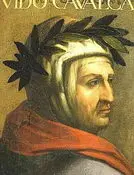
Guido Cavalcanti

Guido Cavalcanti was an Italian poet and philosopher, a prominent figure of the Dolce Stil Novo movement. His poetry is marked by the intensity of love, the psychological analysis of its effects, and the exploration of philosophical and spiritual themes. With an erudite language and an innovative style, Cavalcanti profoundly influenced Italian poetry, including the work of Dante Alighieri, and left a body of writings that continue to be studied for their complexity and depth.

Kazi Nazrul Islam

Kazi Nazrul Islam was a Bengali poet, writer, musician and the national poet of Bangladesh. He was known for his prolific output and his revolutionary spirit, often writing about intense emotional states and socio-political issues. His work championed freedom, equality, and the struggle against oppression, making him a significant voice for the Bengali people during a tumultuous period. Islam's poetry and music continue to inspire and resonate, reflecting a deep connection to his cultural heritage and a universal message of humanism.

The wide ocean of tears overflow,