
Friendship
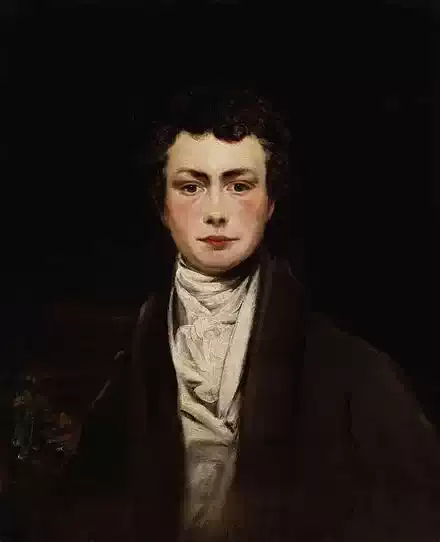
Thomas Moore
Oft, in the Stilly Night
Oft, in the stilly night,
Ere slumber's chain has bound me,
Fond memory brings the light
Of other days around me;
The smiles, the tears,
Of boyhood's years,
The words of love then spoken;
The eyes that shone,
Now dimm'd and gone,
The cheerful hearts now broken!
Thus, in the stilly night,
Ere slumber's chain hath bound me,
Sad memory brings the light
Of other days around me.
When I remember all
The friends, so link'd together,
I've seen around me fall,
Like leaves in wintry weather;
I feel like one
Who treads alone
Some banquet-hall deserted,
Whose lights are fled,
Whose garlands dead,
And all but he departed!
Thus, in the stilly night,
Ere slumber's chain has bound me,
Sad memory brings the light
Of other days around me.
Ere slumber's chain has bound me,
Fond memory brings the light
Of other days around me;
The smiles, the tears,
Of boyhood's years,
The words of love then spoken;
The eyes that shone,
Now dimm'd and gone,
The cheerful hearts now broken!
Thus, in the stilly night,
Ere slumber's chain hath bound me,
Sad memory brings the light
Of other days around me.
When I remember all
The friends, so link'd together,
I've seen around me fall,
Like leaves in wintry weather;
I feel like one
Who treads alone
Some banquet-hall deserted,
Whose lights are fled,
Whose garlands dead,
And all but he departed!
Thus, in the stilly night,
Ere slumber's chain has bound me,
Sad memory brings the light
Of other days around me.
704
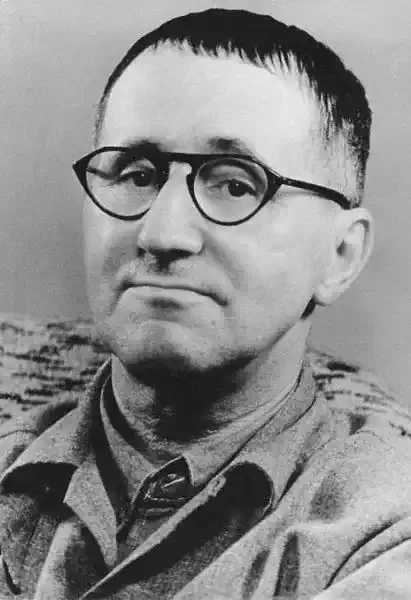
Bertolt Brecht
Parting
We embrace.
Rich cloth under my fingers
While yours touch poor fabric.
A quick embrace
You were invited for dinner
While the minions of law are after me.
We talk about the weather and our
Lasting friendship. Anything else
Would be too bitter.
Rich cloth under my fingers
While yours touch poor fabric.
A quick embrace
You were invited for dinner
While the minions of law are after me.
We talk about the weather and our
Lasting friendship. Anything else
Would be too bitter.
698
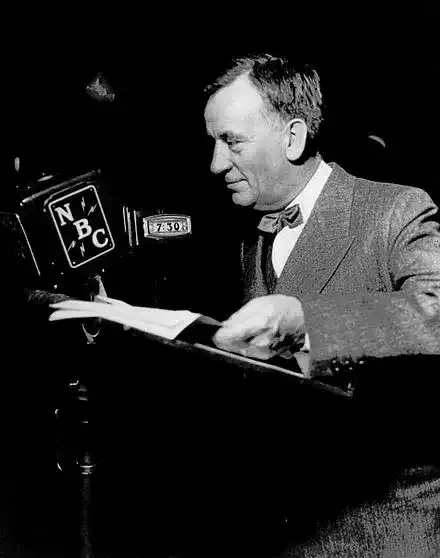
Edgar Albert Guest
The Lamb Skin
It is not ornamental, the cost is not great,
There are other things far more useful, yet truly I state,
Though of all my possesions, there's none can compare,
With that white leather apron, which all Masons wear.
As a young lad I wondered just what it all meant,
When Dad hustled around, and so much time was spent
On shaving and dressing and looking just right,
Until Mother would say: 'It's the Masons tonight.'
And some winter nights she said: 'What makes you go,
Way up there tonight thru the sleet and the snow?
You see the same things every month of the year.'
Then Dad would reply: 'Yes, I know it, my dear.'
'Forty years I have seen the same things, it is true.
And though they are old, they always seem new,
For the hands that I clasp, and the friends that I greet,
Seem a little bit closer each time that we meet.'
Years later I stood at that very same door,
With good men and true who had entered before,
I knelt at the alter, and there I was taught
That virtue and honor can never be bought.
That the spotless white lambskin all Masons revere,
If worthily worn grows more precious each year,
That service to others brings blessings untold,
That man may be poor tho surrounded by gold.
I learned that true brotherhood flourishes there,
That enmities fade 'neath the compass and square,
That wealth and position are all thrust aside,
As there on the level men meet and abide.
So, honor the lambskin, may it always remain
Forever unblemished, and free from all stain,
And when we are called to the Great Father's love,
May we all take our place in that Lodge up above.
668

Walter de la Mare
Nicholas Nye
Thistle and darnell and dock grew there,
And a bush, in the corner, of may,
On the orchard wall I used to sprawl
In the blazing heat of the day;
Half asleep and half awake,
While the birds went twittering by,
And nobody there my lone to share
But Nicholas Nye.
Nicholas Nye was lean and gray,
Lame of leg and old,
More than a score of donkey's years
He had been since he was foaled;
He munched the thistles, purple and spiked,
Would sometimes stoop and sigh,
And turn to his head, as if he said,
"Poor Nicholas Nye!"
Alone with his shadow he'd drowse in the meadow,
Lazily swinging his tail,
At break of day he used to bray,--
Not much too hearty and hale;
But a wonderful gumption was under his skin,
And a clean calm light in his eye,
And once in a while; he'd smile:--
Would Nicholas Nye.
Seem to be smiling at me, he would,
From his bush in the corner, of may,--
Bony and ownerless, widowed and worn,
Knobble-kneed, lonely and gray;
And over the grass would seem to pass
'Neath the deep dark blue of the sky,
Something much better than words between me
And Nicholas Nye.
But dusk would come in the apple boughs,
The green of the glow-worm shine,
The birds in nest would crouch to rest,
And home I'd trudge to mine;
And there, in the moonlight, dark with dew,
Asking not wherefore nor why,
Would brood like a ghost, and as still as a post,
Old Nicholas Nye.
666

Rabindranath Tagore
The Sailor
The boat of the boatman Madhu is moored at the wharf of Rajgunj.
It is uselessly laden with jute, and has been lying there idle
for ever so long.
If he would only lend me his boat, I should man her with a
hundred oars, and hoist sails, five or six or seven.
I should never steer her to stupid markets.
I should sail the seven seas and the thirteen rivers of
fairyland.
But, mother, you won't weep for me in a corner.
I am not going into the forest like Ramachandra to come back
only after fourteen years.
I shall become the prince of the story, and fill my boat with
whatever I like.
I shall take my friend Ashu with me. We shall sail merrily
across the ever seas and the thirteen rivers of fairyland.
We shall set sail in the early morning light.
When at noontide you are bathing at the pond, we shall be in
the land of a strange king.
We shall pass the ford of Tirpurni, and leave behind us the
desert of Tepantar.
When we come back it will be getting dark, and I shall tell
you of all that we have seen.
I shall cross the seven seas and the thirteen rivers of
fairyland.
649

Robert Frost
The Tuft of Flowers
I went to turn the grass once after one
Who mowed it in the dew before the sun.
The dew was gone that made his blade so keen
Before I came to view the levelled scene.
I looked for him behind an isle of trees;
I listened for his whetstone on the breeze.
But he had gone his way, the grass all mown,
And I must be, as he had been,—alone,
"As all must be," I said within my heart,
"Whether they work together or apart."
But as I said it, swift there passed me by
On noiseless wing a bewildered butterfly,
Seeking with memories grown dim over night
Some resting flower of yesterday's delight.
And once I marked his flight go round and round,
As where some flower lay withering on the ground.
And then he flew as far as eye could see,
And then on tremulous wing came back to me.
I thought of questions that have no reply,
And would have turned to toss the grass to dry;
But he turned first, and led my eye to look
At a tall tuft of flowers beside a brook,
A leaping tongue of bloom the scythe had spared
Beside a reedy brook the scythe had bared.
I left my place to know them by their name,
Finding them butterfly-weed when I came.
The mower in the dew had loved them thus,
By leaving them to flourish, not for us,
Nor yet to draw one thought of ours to him,
But from sheer morning gladness at the brim.
The butterfly and I had lit upon,
Nevertheless, a message from the dawn,
That made me hear the wakening birds around,
And hear his long scythe whispering to the ground,
And feel a spirit kindred to my own;
So that henceforth I worked no more alone;
But glad with him, I worked as with his aid,
And weary, sought at noon with him the shade;
And dreaming, as it were, held brotherly speech
With one whose thought I had not hoped to reach.
"Men work together," I told him from the heart,
"Whether they work together or apart."
637
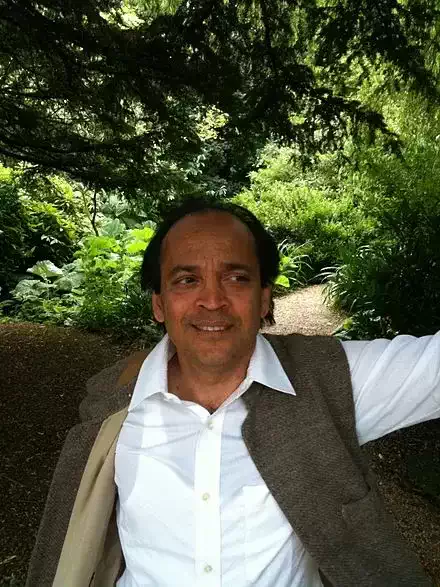
Vikram Seth
Protocols
What can I say to you? How can I retract
All that that fool my voice has spoken -
Now that the facts are plain, the placid surface cracked,
The protocols of friendship broken?
I cannot walk by day as now I walk at dawn
Past the still house where you lie sleeping.
May the sun burn these footprints on the lawn
And hold you in its warmth and keeping.
628
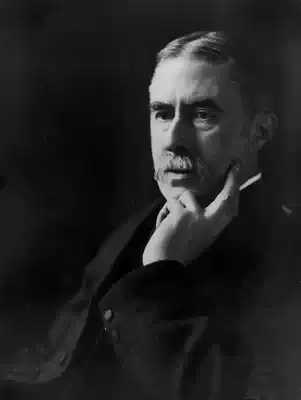
Alfred Edward Housman
Is My Team Ploughing
"Is my team ploughing,
That I was used to drive
And hear the harness jingle
When I was man alive?"
Ay, the horses trample,
The harness jingles now;
No change though you lie under
The land you used to plough.
"Is football playing
Along the river shore,
With lads to chase the leather,
Now I stand up no more?"
Ay, the ball is flying,
The lads play heart and soul;
The goal stands up, the keeper
Stands up to keep the goal.
"Is my girl happy,
That I thought hard to leave,
And has she tired of weeping
As she lies down at eve?"
Ay, she lies down lightly,
She lies not down to weep,
Your girl is well contented.
Be still, my lad, and sleep.
"Is my friend hearty,
Now I am thin and pine,
And has he found to sleep in
A better bed than mine?"
Yes, lad, I lie easy,
I lie as lads would choose;
I cheer a dead man's sweetheart,
Never ask me whose.
640
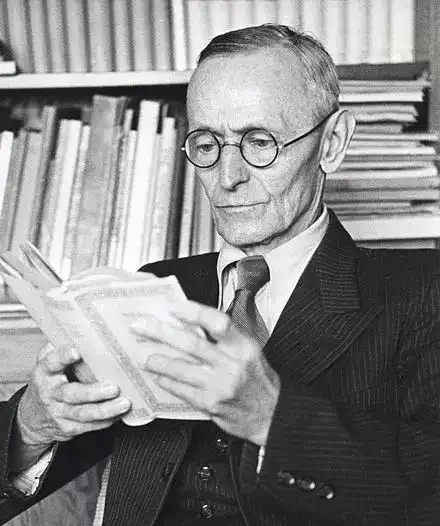
Hermann Hesse
Thinking Of A Friend At Night
In this evil year, autumn comes early...
I walk by night in the field, alone, the rain clatters,
The wind on my hat...And you? And you, my friend?
You are standing--maybe--and seeing the sickle moon
Move in a small arc over the forests
And bivouac fire, red in the black valley.
You are lying--maybe--in a straw field and sleeping
And dew falls cold on your forehead and battle jacket.
It's possible tonight you're on horseback,
The farthest outpost, peering along, with a gun in your fist,
Smiling, whispering, to your exhausted horse.
Maybe--I keep imagining--you are spending the night
As a guest in a strange castle with a park
And writing a letter by candlelight, and tapping
On the piano keys by the window,
Groping for a sound...
--And maybe
You are already silent, already dead, and the day
Will shine no longer into your beloved
Serious eyes, and your beloved brown hand hangs wilted,
And your white forehead split open--Oh, if only,
If only, just once, that last day, I had shown you, told you
Something of my love, that was too timid to speak!
But you know me, you know...and, smiling, you nod
Tonight in front of your strange castle,
And you nod to your horse in the drenched forest,
And you nod to your sleep to your harsh clutter of straw,
And think about me, and smile.
And maybe,
Maybe some day you will come back from the war,
and take a walk with me some evening,
And somebody will talk about Longwy, Luttich, Dammerkirch,
And smile gravely, and everything will be as before,
And no one will speak a word of his worry,
Of his worry and tenderness by night in the field,
Of his love. And with a single joke
You will frighten away the worry, the war, the uneasy nights,
The summer lightning of shy human friendship,
Into the cool past that will never come back.
Translated by James Wright
616
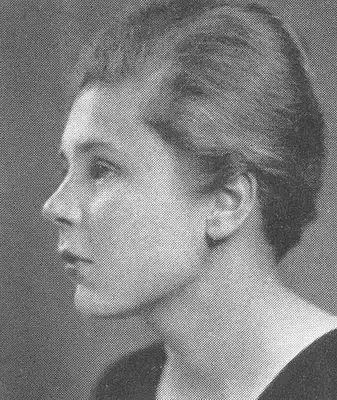
Elizabeth Bishop
The Shampoo
The still explosions on the rocks,
the lichens, grow
by spreading, gray, concentric shocks.
They have arranged
to meet the rings around the moon, although
within our memories they have not changed.
And since the heavens will attend
as long on us,
you've been, dear friend,
precipitate and pragmatical;
and look what happens. For Time is
nothing if not amenable.
The shooting stars in your black hair
in bright formation
are flocking where,
so straight, so soon?
--Come, let me wash it in this big tin basin,
battered and shiny like the moon.
603
Rabindranath Tagore
Friend
Art thou abroad on this stormy night
on thy journey of love, my friend?
The sky groans like one in despair.
I have no sleep tonight.
Ever and again I open my door and look out on
the darkness, my friend!
I can see nothing before me.
I wonder where lies thy path!
By what dim shore of the ink-black river,
by what far edge of the frowning forest,
through what mazy depth of gloom art thou threading
thy course to come to me, my friend?
595

Lord Byron
To Thomas Moore
My boat is on the shore,
And my bark is on the sea;
But, before I go, Tom Moore,
Here's a double health to thee!
Here's a sigh to those who love me,
And a smile to those who hate;
And, whatever sky's above me,
Here's a heart for every fate.
Though the ocean roar around me,
Yet it still shall bear me on;
Though a desert should surround me,
It hath springs that may be won.
Were't the last drop in the well,
As I gasp'd upon the brink,
Ere my fainting spirit fell,
'Tis to thee that I would drink.
With that water, as this wine,
The libation I would pour
Should be peace
with thine and mine,
And a health to thee, Tom Moore!
598

Kazi Nazrul Islam
A Parting
It was no passing encounter on the street,
dear friend.
It was no momentary conversation
on the side-walk.
It was no casual handclasp
at the sudden close of a trip.
You came close to our soul
unfolding yourself moment by moment.
You came not as a conqueror
but as a comrade.
With your smile you won
our hearts.
You did not occupy the throne
and become a king
You entrenched yourself in our hearts
and became a sovereign there.
And so you suffered more than us
when the time came
to say goodbye and depart,
Through timeless acquaintance
you had become one of our own.
Now in our million bleeding hearts
you will forever live as a
tender grief.
I know I'll see you again,
dear friend.
Ours was no casual meeting
on the side-walk.
[Translation: Kabir Chowdhury]
dear friend.
It was no momentary conversation
on the side-walk.
It was no casual handclasp
at the sudden close of a trip.
You came close to our soul
unfolding yourself moment by moment.
You came not as a conqueror
but as a comrade.
With your smile you won
our hearts.
You did not occupy the throne
and become a king
You entrenched yourself in our hearts
and became a sovereign there.
And so you suffered more than us
when the time came
to say goodbye and depart,
Through timeless acquaintance
you had become one of our own.
Now in our million bleeding hearts
you will forever live as a
tender grief.
I know I'll see you again,
dear friend.
Ours was no casual meeting
on the side-walk.
[Translation: Kabir Chowdhury]
593
Boris Pasternak
Humble home. But rum, and charcoal...
Humble home. But rum, and charcoal
Grog of sketches on the wall,
And the cell becomes a mansion,
And the garret is a hall.
No more waves of housecoats: questions,
Even footsteps disappear;
Glassy mica fills the latticed
Work-encompassed vault of air.
Voice, commanding as a levy,
Does not leave a thing immune,
Smelting, fusing… In his gullet
Flows the tin of molten spoons.
What is fame for him, and glory,
Name, position in the world,
When the sudden breath of fusion
Blends his words into the Word?
He will burn for it his chattels,
Friendship, reason, daily round.
On his desk-a glass, unfinished,
World forgotten, clock unwound.
Clustered stanzas change like seething
Wax at fortune-telling times.
He will bless the sleeping children
With the steam of molten rhymes.
587
Lord Byron
To Romance
Parent of golden dreams, Romance!
Auspicious Queen of childish joys,
Who lead'st along, in airy dance,
Thy votive train of girls and boys;
At length, in spells no longer bound,
I break the fetters of my youth;
No more I tread thy mystic round,
But leave thy realms for those of Truth.
And yet 'tis hard to quit the dreams
Which haunt the unsuspicious soul,
Where every nymph a goddess seems,
Whose eyes through rays immortal roll;
While Fancy holds her boundless reign,
And all assume a varied hue;
When Virgins seem no longer vain,
And even Woman's smiles are true.
And must we own thee, but a name,
And from thy hall of clouds descend?
Nor find a Sylph in every dame,
A Pylades in every friend?
But leave, at once, thy realms of air i
To mingling bands of fairy elves;
Confess that woman's false as fair,
And friends have feeling forthemselves?
With shame, I own, I've felt thy sway;
Repentant, now thy reign is o'er;
No more thy precepts I obey,
No more on fancied pinions soar;
Fond fool! to love a sparkling eye,
And think that eye to truth was dear;
To trust a passing wanton's sigh,
And melt beneath a wanton's tear!
Romance! disgusted with deceit,
Far from thy motley court I fly,
Where Affectation holds her seat,
And sickly Sensibility;
Whose silly tears can never flow
For any pangs excepting thine;
Who turns aside from real woe,
To steep in dew thy gaudy shrine.
Now join with sable Sympathy,
With cypress crown'd, array'd in weeds,
Who heaves with thee her simple sigh,
Whose breast for every bosom bleeds;
And call thy sylvan female choir,
To mourn a Swain for ever gone,
Who once could glow with equal fire,
But bends not now before thy throne.
Ye genial Nymphs, whose ready tears
On all occasions swiftly flow;
Whose bosoms heave with fancied fears,
With fancied flames and phrenzy glow
Say, will you mourn my absent name,
Apostate from your gentle train
An infant Bard, at least, may claim
From you a sympathetic strain.
Adieu, fond race! a long adieu!
The hour of fate is hovering nigh;
E'en now the gulf appears in view,
Where unlamented you must lie:
Oblivion's blackening lake is seen,
Convuls'd by gales you cannot weather,
Where you, and eke your gentle queen,
Alas! must perish altogether.
579
Lord Byron
On Revisiting Harrow
Here once engaged the stranger's view
Young Friendship's record simply traced;
Few were her words; but yet, though few,
Resentment's hand the line defaced.
Deeply she cutbut
not erased,
The characters were still so pain,
That Friendship once return'd, and gazed,
Till
Memory hail'd the words again.
Repentance placed them as before;
Forgiveness join d her gentle name;
So fair the inscription seem'd once more,
That Friendship thought it still the same.
Thus might the Record now have been;
But, ah, in spite of Hopes endeavour,
Or Friendships tears, Pride rush'd between
And blotted out the line for ever.
587

Ella Wheeler Wilcox
Greeting Poem
There was a sound in the wind to-day,
Like a joyous cymbal ringing!
And the leaves of the trees talked with the breeze,
And they altogether were singing,
For they knew that an army, both bold and strong,
A brave, brave army, was coming,
Not with the fife and sounds of strife,
With marshal music and drumming,
Not with stern faces and gleaming swords,
That would make blood to flow like water,
While brother and brother should slay each other
On wholesale fields of slaughter;
But rather like rills from a thousand hills,
That ripple through valley and heather,
On, on to the sea, with a song of glee,
Till they meet and mingle together.
They come from the South, and the East, and the West,
The bravest and best in the nation.
They come at no idle and aimless quest,
But to work for a world's salvation.
From the Scot's fair land and from England's strand,
O'er mountain and heather and ocean,
They come; and the foe by their coming shall know
The strength of a Templar's devotion.
On the earnest brows, in the thoughtful eyes,
We read the unchanging story-
They fight in their might for the truth and the right,
And not for vain name or glory.
O grandest of armies! O bravest of bands!
We give you a cordial greeting,
And the blood of our warm hearts beats in the hands
That are offered to you in meeting.
The heart of a Templar is never cold,
Nor stands it aloof from a brother,
And his hand is steady, and always ready
To clasp the hand of another.
In God's great Book, where but angels look,
On pages of spotless beauty
Are written in letters of living light
A Templar's vow and his duty.
'For ever and ever,' the promise reads,
For ever and ever 'twas given.
And who keeps or breaks the pledge that he takes
Must meet the record in heaven.
Our order is noble and grand and strong,
And is gathering strength each hour,
And the good of the earth proclaim its worth,
While the foe turns pale at its power.
And we of the State that men call great,
The nation's brave 'Badger' daughter,
Step by step as we go, are defeating the foe,
While we add to the hosts of cold water.
With a chief at our head whom the foe may well dread,
The Sherman or Grant of our battles,
By day and by night we fight the good fight,
Though never a cannon rattles.
For the tongue and the pen are the swords of our men,
And prayer keeps them whetted and polished;
They will let God's light in on the foe's licensed sin,
Till the traffic of death is abolished.
With cunning hands we fashioned the strands
Of a stout restraining tether,
To fasten the beast, for a season at least,
And our statesmen tied it together.
The beast strains the rope with the idle hope
Of making it weaker or longer,
But the Templars to-day are working away
To make it shorter and stronger.
We give you greeting-we need your aid!
There is work for many a morrow,
There are beautiful souls going down in the bowls,
There are homes that are burdened with sorrow,
There are mourning captives all over the earth,
Hugging the fetters that bind them.
We must show them the light, we must set them aright,
We must work for them all as we find them.
With a soaring 'Faith,' that is stronger than death,
We must work while the day hangs o'er us.
We are brave and strong, and our battle-song
Has 'Hope' for the ringing chorus.
With 'Charity' broad as the mercy of God,
We must lift up the fallen neighbor,
And the Lord's dear band, in the angel land,
Will smile on our blesséd labor.
Welcome, brave warriors in God's holy cause!
The hearts in our bosoms are beating
As one heart to-night, filled with pride and delight-
Welcome, thrice welcome, our greeting.
And though soon between will lie long miles of green,
Though oceans divide us for ever,
The ties which now bind heart with heart, mind with mind,
The hand of Death only can sever.
584

Rudyard Kipling
The Butterfly That Stamped
There was never a Queen like Balkis,
From here to the wide world's end;
But Balkis talked to a butterfly
As you would talk to a friend.
There was never a King like Solomon
Not since the world began;
But Solomon talked to a butterfly
As a man would talk to a man.
She was Queen of Sabea--
And he was Asia's Lord--
But they both of 'em talked to butterflies
When they took their walks abroad!
587
Lord Byron
To George, Earl Delwarr
Oh! yes, I will own we were dear to each other;
The friendships of childhood, though fleeting are true;
The love which you felt was the love of a brother,
Nor less the affection I cherish'd for you.
But Friendship can vary her gentle dominion;
The attachment of years in a moment expires:
Like Love, too, she moves on a swiftwaving
pinion,
But glows not, like Love, with unquenchable fires.
Full oft have we wander'd through Ida together,
And blest were the scenes of our youth, I allow:
In the spring of our life, how serene is the weather!
But winter's rude tempests are gathering now.
No more with affection shall memory blending,
The wonted delights of our childhood retrace:
When pride steels the bosom, the heart is unbending,
And what would be Justice appears a disgrace.
However, dear George, for I still must esteem you;
The few whom I love I can never upbraid:
The chance which has lost may in future redeem you,
Repentance will cancel the vow you have made.
I will not complain, and though chill'd is affection,
With me no corroding resentment shall live:
My bosom is calm'd by the simple reflection,
That both may be wrong, and that both should forgive.
You knew that my soul, that my heart, my existence,
If danger demanded, were wholly your own.
You knew me unalter'd by years or by distance
Devoted to love and to friendship alone.
You knew but
away with the vain retropection!
The bond of affection no longer endures;
Too late you may droop o'er the fond recollection,
And sigh for the friend who was formerly yours.
For the present, we part,
I
will hope not for ever;
For time and regret will restore you at last:
To forget our dimension we both should endeavour,
I ask no atonement, but days like the past.
571

John Keats
Robin Hood
NO! those days are gone away,
And their hours are old and gray,
And their minutes buried all
Under the down-trodden pall
Ofthe leaves of many years:
Many times have winter's shears,
Frozen North, and chilling East,
Sounded tempests to the feast
Of the forest's whispering fleeces,
Since men knew nor rent nor leases.
No, the bugle sounds no more,
And the twanging bow no more;
Silent is the ivory shrill
Past the heath and up the hill;
There is no mid-forest laugh,
Where lone Echo gives the half
To some wight, amaz'd to hear
Jesting, deep in forest drear.
On the fairest time of June
You may go, with sun or moon,
Or the seven stars to light you,
Or the polar ray to right you;
But you never may behold
Little John, or Robin bold;
Never one, of all the clan,
Thrumming on an empty can
Some old hunting ditty, while
He doth his green way beguile
To fair hostess Merriment,
Down beside the pasture Trent;
For he left the merry tale,
Messenger for spicy ale.
Gone, the merry morris din;
Gone, the song of Gamelyn;
Gone, the tough-belted outlaw
Idling in the "grene shawe";
All are gone away and past!
And if Robin should be cast
Sudden from his turfed grave,
And if Marian should have
Once again her forest days,
She would weep, and he would craze:
He would swear, for all his oaks,
Fall'n beneath the dockyard strokes,
Have rotted on the briny seas;
She would weep that her wild bees
Sang not to her---strange! that honey
Can't be got without hard money!
So it is; yet let us sing
Honour to the old bow-string!
Honour to the bugle-horn!
Honour to the woods unshorn!
Honour to the Lincoln green!
Honour to the archer keen!
Honour to tight little John,
And the horse he rode upon!
Honour to bold Robin Hood,
Sleeping in the underwood!
Honour to maid Marian,
And to all the Sherwood clan!
Though their days have hurried by
Let us two a burden try.
577
Boris Pasternak
Soul
My mournful soul, you, sorrowing
For all my friends around,
You have become the burial vault
Of all those hounded down.
Devoting to their memory
A verse, embalming them,
In torment, broken, lovingly
Lamenting over them,
In this our mean and selfish time,
For conscience and for quest
You stand-a columbarium
To lay their souls to rest.
The sum of all their agonies
Has bowed you to the ground.
You smell of dust, of death's decay,
Of morgue and burial mound.
My beggarly, dejected soul,
You heard and saw your fill;
Remembered all and mixed it well,
And ground it like a mill.
Continue pounding and compound
All that I witnessed here
To graveyard compost, as you did
For almost forty years.
570
Ella Wheeler Wilcox
Songs Of A Country Home
I
Who has not felt his heart leap up, and glow
What time the tulips first begin to blow,
Has one sweet joy, still left for him to know.
It is like early loves' imagining;
That fragile pleasure, which the Tulips bring,
When suddenly we see them, in the Spring.
Not all the gardens later royal train,
Not great triumphant Roses, when they reign,
Can bring that delicate delight again.
II
One of the sweetest hours is this;
(Of all I think we like it best
A little restful oasis,
Between the breakfast, and the post.
Just south of coffee, and of toast,
Just north of daily task and duty;
Just west of dreams, this Island gleams,
A fertile spot of peace and beauty.
We wander out across the lawn;
We idle by a bush in bloom;
The Household pets come following on;
Or if the day is one of gloom,
We loiter in a pleasant room
Or from a casement, lean and chatter.
Then comes the mail, like sudden hail,
And off we scatter.
III
When roses die, in languid August days,
We leave the Garden, to its fallen ways;
And seek the shelter of wide porticos,
Where Honeysuckle, in defiance blows
Undaunted by the Sun's too ardent rays.
The matron Summer, turns a wistful gaze
Across green valleys, back to tender Mays;
And something of her large contentment goes,
When roses die.
Yet all her subtle fascination stays
To lure us into idle sweet delays.
The lowered awning, by the hammock shows
Inviting nooks for dreaming and repose;
Oh, restful are the pleasures of those days
When roses die.
IV
The summer folk, fled back to town;
The green woods changed to red and brown;
A sound upon the frosty air
Of windows closing everywhere.
And then the log, lapped by a blaze.
Oh, what is better than these days;
With books and friends and love a-near;
Go on, gay world, but leave me here.
568

Ezra Pound
Tame Cat
It rests me to be among beautiful women
Why should one always lie about such matters?
I repeat:
It rests me to converse with beautiful women
Even though we talk nothing but nonsense,
The purring of the invisible antennae
Is both stimulating and delightful.
Why should one always lie about such matters?
I repeat:
It rests me to converse with beautiful women
Even though we talk nothing but nonsense,
The purring of the invisible antennae
Is both stimulating and delightful.
559
Boris Pasternak
Do not fret, do not cry, do not tax...
Do not fret, do not cry, do not tax
Your last strength, and your heart do not torture.
You're alive, you're inside me, intact,
As a buttress, a friend, an adventure.
I've no fear of standing exposed
As a fraud in my faith in the future.
It's not life, not a union of souls
We are breaking off, but a hoax mutual.
From straw mattresses' sick wretchedness
To the fresh air of wide open spaces!
It's my brother and hand. It's addressed
Like a letter, to you, crisp and bracing.
Like an envelope, tear it across,
With Horizon begin correspondence,
Give your speech the sheer Alpian force,
Overcome the sick sense of forlornness.
O'er the bowl of Bavarian lakes
With the marrow of osseous mountains
You will know I was not a glib fake
And of sugared assurances spouter.
Fare ye well and God bless you! Our bond
And our honour aren't tamely domestic.
Like a sprout in the sunlight, unbend,
And then things will assume a new aspect.
545