
Animals and Nature

Robert W. Service
Priscilla
Jerry MacMullen, the millionaire,
Driving a red-meat bus out there --
How did he win his Croix de Guerre?
Bless you, that's all old stuff:
Beast of a night on the Verdun road,
Jerry stuck with a woeful load,
Stalled in the mud where the red lights glowed,
Prospect devilish tough.
"Little Priscilla" he called his car,
Best of our battered bunch by far,
Branded with many a bullet scar,
Yet running so sweet and true.
Jerry he loved her, knew her tricks;
Swore: "She's the beat of the best big six,
And if ever I get in a deuce of a fix
Priscilla will pull me through."
"Looks pretty rotten right now," says he;
"Hanged if the devil himself could see.
Priscilla, it's up to you and me
To show 'em what we can do."
Seemed that Priscilla just took the word;
Up with a leap like a horse that's spurred,
On with the joy of a homing bird,
Swift as the wind she flew.
Shell-holes shoot at them out of the night;
A lurch to the left, a wrench to the right,
Hands grim-gripping and teeth clenched tight,
Eyes that glare through the dark.
"Priscilla, you're doing me proud this day;
Hospital's only a league away,
And, honey, I'm longing to hit the hay,
So hurry, old girl. . . . But hark!"
Howl of a shell, harsh, sudden, dread;
Another . . . another. . . . "Strike me dead
If the Huns ain't strafing the road ahead
So the convoy can't get through!
A barrage of shrap, and us alone;
Four rush-cases -- you hear 'em moan?
Fierce old messes of blood and bone. . . .
Priscilla, what shall we do?"
Again it seems that Priscilla hears.
With a rush and a roar her way she clears,
Straight at the hell of flame she steers,
Full at its heart of wrath.
Fury of death and dust and din!
Havoc and horror! She's in, she's in;
She's almost over, she'll win, she'll win!
Woof! Crump! right in the path.
Little Priscilla skids and stops,
Jerry MacMullen sways and flops;
Bang in his map the crash he cops;
Shriek from the car: "Mon Dieu!"
One of the blessés hears him say,
Just at the moment he faints away:
"Reckon this isn't my lucky day,
Priscilla, it's up to you."
Sergeant raps on the doctor's door;
"Car in the court with couchés four;
Driver dead on the dashboard floor;
Strange how the bunch got here."
"No," says the Doc, "this chap's alive;
But tell me, how could a man contrive
With both arms broken, a car to drive?
Thunder of God! it's queer."
Same little blessé makes a spiel;
Says he: "When I saw our driver reel,
A Strange Shape leapt to the driving wheel
And sped us safe through the night."
But Jerry, he says in his drawling tone:
"Rats! Why, Priscilla came in on her own.
Bless her, she did it alone, alone. . . ."
Hanged if I know who's right.
317

William Shakespeare
Fairy Land v
FULL fathom five thy father lies;
Of his bones are coral made;
Those are pearls that were his eyes:
Nothing of him that doth fade,
But doth suffer a sea-change
Into something rich and strange.
Sea-nymphs hourly ring his knell:
Ding-dong.
Hark! now I hear them-Ding-
dong, bell!
Of his bones are coral made;
Those are pearls that were his eyes:
Nothing of him that doth fade,
But doth suffer a sea-change
Into something rich and strange.
Sea-nymphs hourly ring his knell:
Ding-dong.
Hark! now I hear them-Ding-
dong, bell!
313

Henry Wadsworth Longfellow
Tales Of A Wayside Inn : Part 2. Interlude I.
'Yes, well your story pleads the cause
Of those dumb mouths that have no speech,
Only a cry from each to each
In its own kind, with its own laws;
Something that is beyond the reach
Of human power to learn or teach,--
An inarticulate moan of pain,
Like the immeasurable main
Breaking upon an unknown beach.'
Thus spake the Poet with a sigh;
Then added, with impassioned cry,
As one who feels the words he speaks,
The color flushing in his cheeks,
The fervor burning in his eye:
'Among the noblest in the land,
Though he may count himself the least,
That man I honor and revere
Who without favor, without fear,
In the great city dares to stand
The friend of every friendless beast,
And tames with his unflinching hand
The brutes that wear our form and face,
The were-wolves of the human race!'
Then paused, and waited with a frown,
Like some old champion of romance,
Who, having thrown his gauntlet down,
Expectant leans upon his lance;
But neither Knight nor Squire is found
To raise the gauntlet from the ground,
And try with him the battle's chance.
'Wake from your dreams, O Edrehi!
Or dreaming speak to us, and make
A feint of being half awake,
And tell us what your dreams may be.
Out of the hazy atmosphere
Of cloud-land deign to reappear
Among us in this Wayside Inn;
Tell us what visions and what scenes
Illuminate the dark ravines
In which you grope your way. Begin!'
Thus the Sicilian spake. The Jew
Made no reply, but only smiled,
As men unto a wayward child,
Not knowing what to answer, do.
As from a cavern's mouth, o'ergrown
With moss and intertangled vines,
A streamlet leaps into the light
And murmurs over root and stone
In a melodious undertone;
Or as amid the noonday night
Of sombre and wind-haunted pines,
There runs a sound as of the sea;
So from his bearded lips there came
A melody without a name,
A song, a tale, a history,
Or whatsoever it may be,
Writ and recorded in these lines.
313

James Whitcomb Riley
The Bat
I.
Thou dread, uncanny thing,
With fuzzy breast and leathern wing,
In mad, zigzagging flight,
Notching the dusk, and buffeting
The black cheeks of the night,
With grim delight!
II.
What witch's hand unhasps
Thy keen claw-cornered wings
From under the barn roof, and flings
Thee forth, with chattering gasps,
To scud the air,
And nip the lady-bug, and tear
Her children's hearts out unaware?
III.
The glow-worm's glimmer, and the bright,
Sad pulsings of the fire-fly's light,
Are banquet lights to thee.
O less than bird, and worse than beast,
Thou Devil's self, or brat, at least,
Grate not thy teeth at me!
314
James Whitcomb Riley
The Boy Lives On Our Farm
The boy lives on our Farm, he's not
Afeard o' horses none!
An' he can make 'em lope, er trot,
Er rack, er pace, er run.
Sometimes he drives two horses, when
He comes to town an' brings
A wagon-full o' 'taters nen,
An' roastin'-ears an' things.
Two horses is 'a team,' he says,
An' when you drive er hitch,
The right-un's a 'near-horse,' I guess
Er 'off'--I don't know which--
The Boy lives on our Farm, he told
Me, too, 'at he can see,
By lookin' at their teeth, how old
A horse is, to a T!
I'd be the gladdest boy alive
Ef I knowed much as that,
An' could stand up like him an' drive,
An' ist push back my hat,
Like he comes skallyhootin' through
Our alley, with one arm
A-wavin' Fare-ye-well! to you--
The Boy lives on our Farm!
314
James Whitcomb Riley
Iry And Billy Jo
Iry an' Billy an' Jo!--
Iry an' Billy's _the boys_,
An' _Jo's_ their _dog_, you know,--
Their pictures took all in a row.
Bet they kin kick up a noise--
Iry and Billy, the boys,
And that-air little dog Jo!
_Iry's_ the one 'at stands
Up there a-lookin' so mild
An' meek--with his hat in his hands,
Like such a 'bediant child-(_
Sakes-alive_!)--An' _Billy_ he sets
In the cheer an' holds onto Jo an' _sweats_
Hisse'f, a-lookin' so good! Ho-ho!
Iry an' Billy an' Jo!
Yit the way them boys, you know,
Usen to jes turn in
An' fight over that dog Jo
Wuz a burnin'-shame-an'-a-sin !--
Iry _he'd_ argy 'at, by gee-whizz!
That-air little Jo-dog wuz _his_!--
An' Billy _he'd_ claim it wuzn't so-'
Cause the dog wuz _his'n_!--An' at it they'd go,
Nip-an'-tugg, tooth-an'-toenail, you know--
Iry an' Billy an' Jo!
But their Pa--(He wuz the marshal then)
He 'tended-like 'at he _jerked 'em up_;
An' got a jury o' Brickyard men
An' helt a _trial_ about the pup:
An' _he_ says _he_ jes like to a-died
When the rest o' us town-boys _testified_--
Regardin', you know,
Iry an' Billy an' Jo.-
'Cause we all knowed, when _the Gypsies_ they
Camped down here by the crick last Fall,
They brung Jo with 'em, an' give him away
To Iry an' Billy fer nothin' at all!--
So the jury fetched in the _verdick_ so
Jo he ain't _neether_ o' theirn fer _shore_-He's
_both_ their dog, an' jes no more!
An' so
They've quit quarrelin' long ago,
Iry an' Billy an' Jo.
314

Emily Dickinson
The Robin's my Criterion for Tune
The Robin's my Criterion for Tune-
Because I grow-where Robins do-
But, were I Cuckoo born
I'd
swear by him-
The ode familiar-rules the Noon-
The Buttercup's, my Whim for Bloom-
Because, we're Orchard sprung-
But, were I Britain born,
I'd Daisies spurn-
None but the Nut-October fit-
Because, through dropping it,
The Seasons flit-I'm taught-
Without the Snow's Tableau
Winter, were lie-to me-
Because I see-New Englandly-
The Queen, discerns like me-
Provincially-
313

John Greenleaf Whittier
Birchbrook Mill
A NOTELESS stream, the Birchbrook runs
Beneath its leaning trees;
That low, soft ripple is its own,
That dull roar is the sea's.
Of human signs it sees alone
The distant church spire's tip,
And, ghost-like, on a blank of gray,
The white sail of a ship.
No more a toiler at the wheel,
It wanders at its will;
Nor dam nor pond is left to tell
Where once was Birchbrook mill.
The timbers of that mill have fed
Long since a farmer's fires;
His doorsteps are the stones that ground
The harvest of his sires.
Man trespassed here; but Nature lost
No right of her domain;
She waited, and she brought the old
Wild beauty back again.
By day the sunlight through the leaves
Falls on its moist, green sod,
And wakes the violet bloom of spring
And autumn's golden-rod.
Its birches whisper to the wind,
The swallow dips her wings
In the cool spray, and on its banks
The gray song-sparrow sings.
But from it, when the dark night falls,
The school-girl shrinks with dread;
The farmer, home-bound from his fields,
Goes by with quickened tread.
They dare not pause to hear the grind
Of shadowy stone on stone;
The plashing of a water-wheel
Where wheel there now is none.
Has not a cry of pain been heard
Above the clattering mill?
The pawing of an unseen horse,
Who waits his mistress still?
Yet never to the listener's eye
Has sight confirmed the sound;
A wavering birch line marks alone
The vacant pasture ground.
No ghostly arms fling up to heaven
The agony of prayer;
No spectral steed impatient shakes
His white mane on the air.
The meaning of that common dread
No tongue has fitly told;
The secret of the dark surmise
The brook and birches hold.
What nameless horror of the past
Broods here forevermore?
What ghost his unforgiven sin
Is grinding o'er and o'er?
Does, then, immortal memory play
The actor's tragic part,
Rehearsals of a mortal life
And unveiled human heart?
God's pity spare a guilty soul
That drama of its ill,
And let the scenic curtain fall
On Birchbrook's haunted mill
313
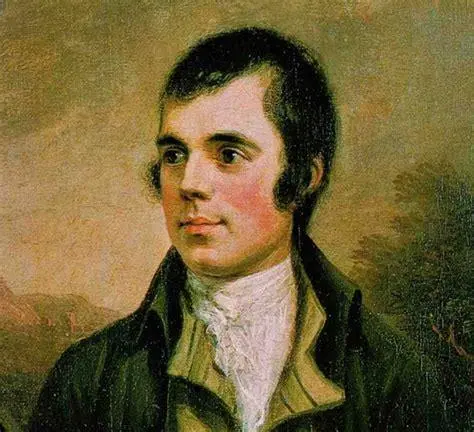
Robert Burns
To a Mountain Daisy
Wee, modest, crimson-tippèd flow'r,
Thou's met me in an evil hour;
For I maun crush amang the stoure
Thy slender stem:
To spare thee now is past my pow'r,
Thou bonie gem.
Alas! it's no thy neibor sweet,
The bonie lark, companion meet,
Bending thee 'mang the dewy weet
Wi' spreck'd breast,
When upward-springing, blythe, to greet
The purpling east.
Cauld blew the bitter-biting north
Upon thy early, humble birth;
Yet cheerfully thou glinted forth
Amid the storm,
Scarce rear'd above the parent-earth
Thy tender form.
The flaunting flowers our gardens yield
High shelt'ring woods an' wa's maun shield:
But thou, beneath the random bield
O' clod or stane,
Adorns the histie stibble-field
Unseen, alane.
There, in thy scanty mantle clad,
Thy snawie-bosom sun-ward spread,
Thou lifts thy unassuming head
In humble guise;
But now the share uptears thy bed,
And low thou lies!
Such is the fate of artless maid,
Sweet flow'ret of the rural shade!
By love's simplicity betray'd
And guileless trust;
Till she, like thee, all soil'd, is laid
Low i' the dust.
Such is the fate of simple bard,
On life's rough ocean luckless starr'd!
Unskilful he to note the card
Of prudent lore,
Till billows rage and gales blow hard,
And whelm him o'er!
Such fate to suffering Worth is giv'n,
Who long with wants and woes has striv'n,
By human pride or cunning driv'n
To mis'ry's brink;
Till, wrench'd of ev'ry stay but Heav'n,
He ruin'd sink!
Ev'n thou who mourn'st the Daisy's fate,
That fate is thine--no distant date;
Stern Ruin's ploughshare drives elate,
Full on thy bloom,
Till crush'd beneath the furrow's weight
Shall be thy doom.
314
James Whitcomb Riley
The Circus-Day Parade
Oh, the Circus-Day parade! How the bugles played and played!
And how the glossy horses tossed their flossy manes, and neighed,
As the rattle and the rhyme of the tenor-drummer's time
Filled all the hungry hearts of us with melody sublime!
How the grand band-wagon shone with a splendor all its own,
And glittered with a glory that our dreams had never known!
And how the boys behind, high and low of every kind,
Marched in unconscious capture, with a rapture undefined!
How the horsemen, two and two, with their plumes of white and blue,
And crimson, gold and purple, nodding by at me and you.
Waved the banners that they bore, as the Knights in days of yore,
Till our glad eyes gleamed and glistened like the spangles that they wore!
How the graceless-graceful stride of the elephant was eyed,
And the capers of the little horse that cantered at his side!
How the shambling camels, tame to the plaudits of their fame,
With listless eyes came silent, masticating as they came.
How the cages jolted past, with each wagon battened fast,
And the mystery within it only hinted of at last
From the little grated square in the rear, and nosing there
The snout of some strange animal that sniffed the outer air!
And, last of all, The Clown, making mirth for all the town,
With his lips curved ever upward and his eyebrows ever down,
And his chief attention paid to the little mule that played
A tattoo on the dashboard with his heels, in the parade.
Oh! the Circus-Day parade! How the bugles played and played!
And how the glossy horses tossed their flossy manes and neighed.
As the rattle and the rhyme of the tenor-drummer's time
Filled all the hungry hearts of us with melody sublime!
312
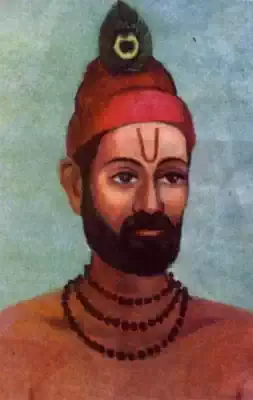
Kabir
The self forgets itself
The self forgets itself
as a frantic dog in a glass temple
barks himself to death;
as a lion, seeing a form in the well,
leaps on the image;
as a rutting elephant sticks his tusk
in a crystal boulder.
The monkey has his fistful of sweets
and won't let go. So
from house to house
he gibbers.
Kabir says, parrot-on-a-pole:
who has caught you?
312

Mirza Ghalib
The dropp dies in the river
The dropp dies in the riverof its joy
Pain goes so far it cures itself
In the spring after the heavy rain the cloud disappears
That was nothing but tears
In the spring the mirror turns green
holding a miracle
Change the shining wind
The rose led us to our eyes
Let whatever is be open.
[Translated by W. S. Merwin and Aijaz Ahmed]
Pain goes so far it cures itself
In the spring after the heavy rain the cloud disappears
That was nothing but tears
In the spring the mirror turns green
holding a miracle
Change the shining wind
The rose led us to our eyes
Let whatever is be open.
[Translated by W. S. Merwin and Aijaz Ahmed]
311

Ogden Nash
The Termite
Some primal termite knocked on wood
And tasted it, and found it good!
And that is why your Cousin May
Fell through the parlor floor today.
And tasted it, and found it good!
And that is why your Cousin May
Fell through the parlor floor today.
312
James Whitcomb Riley
June At Woodruff
Out at Woodruff Place--afar
From the city's glare and jar,
With the leafy trees, instead
Of the awnings, overhead;
With the shadows cool and sweet,
For the fever of the street;
With the silence, like a prayer,
Breathing round us everywhere.
Gracious anchorage, at last,
From the billows of the vast
Tide of life that comes and goes,
Whence and where nobody knows--
Moving, like a skeptic's thought,
Out of nowhere into naught.
Touch and tame us with thy grace,
Placid calm of Woodruff Place!
Weave a wreath of beechen leaves
For the brow that throbs and grieves
O'er the ledger, bloody-lined,
'Neath the sun-struck window-blind!
Send the breath of woodland bloom
Through the sick man's prison room,
Till his old farm-home shall swim
Sweet in mind to hearten him!
Out at Woodruff Place the Muse
Dips her sandal in the dews,
Sacredly as night and dawn
Baptize lilied grove and lawn:
Woody path, or paven way--
She doth haunt them night and day,--
Sun or moonlight through the trees,
To her eyes, are melodies.
Swinging lanterns, twinkling clear
Through night-scenes, are songs to her--
Tinted lilts and choiring hues,
Blent with children's glad halloos;
Then belated lays that fade
Into midnight's serenade-Vine-
like words and zithern-strings
Twined through ali her slumberings.
Blessed be each hearthstone set
Neighboring the violet!
Blessed every rooftree prayed
Over by the beech's shadel
Blessed doorway, opening where
We may look on Nature--there
Hand to hand and face to face-
Storied realm, or Woodruff Place.
309
James Whitcomb Riley
Lullaby
The maple strews the embers of its leaves
O'er the laggard swallows nestled 'neath the eaves;
And the moody cricket falters in his cry--Baby-bye!--
And the lid of night is falling o'er the sky--Baby-bye!--
The lid of night is falling o'er the sky!
The rose is lying pallid, and the cup
Of the frosted calla-lily folded up;
And the breezes through the garden sob and sigh--Baby-bye!-O'er
the sleeping blooms of summer where they lie--Baby-bye!-O'er
the sleeping blooms of summer where they lie!
Yet, Baby--O my Baby, for your sake
This heart of mine is ever wide awake,
And my love may never droop a drowsy eye--Baby-bye!--
Till your own are wet above me when I die--Baby-bye!--
Till your own are wet above me when I die.
308
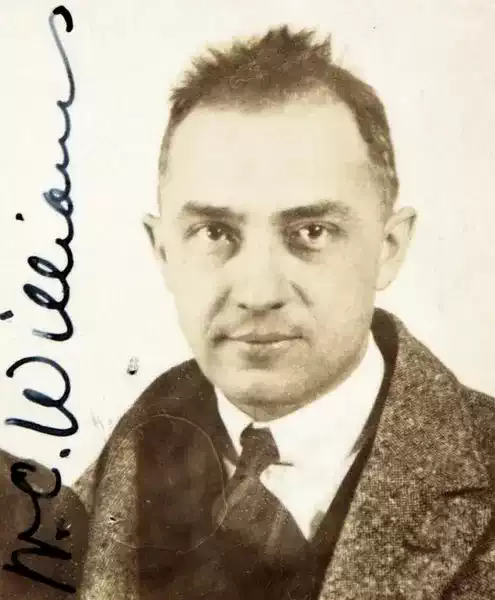
William Carlos Williams
The Spouts
In this world of
as fine a pair of breasts
as ever I saw
the fountain in
Madison Square
spouts up of water
a white tree
that dies and lives
as the rocking water
in the basin
turns from the stonerim
back upon the jet
and rising there
reflectively drops down again.
as fine a pair of breasts
as ever I saw
the fountain in
Madison Square
spouts up of water
a white tree
that dies and lives
as the rocking water
in the basin
turns from the stonerim
back upon the jet
and rising there
reflectively drops down again.
309

Robert Browning
Among the Rocks
Oh, good gigantic smile o' the brown old earth,
This autumn morning! How he sets his bones
To bask i' the sun, and thrusts out knees and feet
For the ripple to run over in its mirth;
Listening the while, where on the heap of stones
The white breast of the sea-lark twitters sweet.
That is the doctrine, simple, ancient, true;
Such is life's trial, as old earth smiles and knows.
If you loved only what were worth your love,
Love were clear gain, and wholly well for you:
Make the low nature better by your throes!
Give earth yourself, go up for gain above!
309
Henry Wadsworth Longfellow
The Song Of Hiawatha XII: The Son Of The Evening Star
Can it be the sun descending
O'er the level plain of water?
Or the Red Swan floating, flying,
Wounded by the magic arrow,
Staining all the waves with crimson,
With the crimson of its life-blood,
Filling all the air with splendor,
With the splendor of its plumage?
Yes; it is the sun descending,
Sinking down into the water;
All the sky is stained with purple,
All the water flushed with crimson!
No; it is the Red Swan floating,
Diving down beneath the water;
To the sky its wings are lifted,
With its blood the waves are reddened!
Over it the Star of Evening
Melts and trembles through the purple,
Hangs suspended in the twilight.
No; it is a bead of wampum
On the robes of the Great Spirit
As he passes through the twilight,
Walks in silence through the heavens.
This with joy beheld Iagoo
And he said in haste: 'Behold it!
See the sacred Star of Evening!
You shall hear a tale of wonder,
Hear the story of Osseo,
Son of the Evening Star, Osseo!
'Once, in days no more remembered,
Ages nearer the beginning,
When the heavens were closer to us,
And the Gods were more familiar,
In the North-land lived a hunter,
With ten young and comely daughters,
Tall and lithe as wands of willow;
Only Oweenee, the youngest,
She the wilful and the wayward,
She the silent, dreamy maiden,
Was the fairest of the sisters.
'All these women married warriors,
Married brave and haughty husbands;
Only Oweenee, the youngest,
Laughed and flouted all her lovers,
All her young and handsome suitors,
And then married old Osseo,
Old Osseo, poor and ugly,
Broken with age and weak with coughing,
Always coughing like a squirrel.
'Ah, but beautiful within him
Was the spirit of Osseo,
From the Evening Star descended,
Star of Evening, Star of Woman,
Star of tenderness and passion!
All its fire was in his bosom,
All its beauty in his spirit,
All its mystery in his being,
All its splendor in his language!
'And her lovers, the rejected,
Handsome men with belts of wampum,
Handsome men with paint and feathers.
Pointed at her in derision,
Followed her with jest and laughter.
But she said: 'I care not for you,
Care not for your belts of wampum,
Care not for your paint and feathers,
Care not for your jests and laughter;
I am happy with Osseo!'
'Once to some great feast invited,
Through the damp and dusk of evening,
Walked together the ten sisters,
Walked together with their husbands;
Slowly followed old Osseo,
With fair Oweenee beside him;
All the others chatted gayly,
These two only walked in silence.
'At the western sky Osseo
Gazed intent, as if imploring,
Often stopped and gazed imploring
At the trembling Star of Evening,
At the tender Star of Woman;
And they heard him murmur softly,
'Ah, showain nemeshin, Nosa!
Pity, pity me, my father!'
'Listen!' said the eldest sister,
'He is praying to his father!
What a pity that the old man
Does not stumble in the pathway,
Does not break his neck by falling!'
And they laughed till all the forest
Rang with their unseemly laughter.
'On their pathway through the woodlands
Lay an oak, by storms uprooted,
Lay the great trunk of an oak-tree,
Buried half in leaves and mosses,
Mouldering, crumbling, huge and hollow.
And Osseo, when he saw it,
Gave a shout, a cry of anguish,
Leaped into its yawning cavern,
At one end went in an old man,
Wasted, wrinkled, old, and ugly;
From the other came a young man,
Tall and straight and strong and handsome.
'Thus Osseo was transfigured,
Thus restored to youth and beauty;
But, alas for good Osseo,
And for Oweenee, the faithful!
Strangely, too, was she transfigured.
Changed into a weak old woman,
With a staff she tottered onward,
Wasted, wrinkled, old, and ugly!
And the sisters and their husbands
Laughed until the echoing forest
Rang with their unseemly laughter.
'But Osseo turned not from her,
Walked with slower step beside her,
Took her hand, as brown and withered
As an oak-leaf is in Winter,
Called her sweetheart, Nenemoosha,
Soothed her with soft words of kindness,
Till they reached the lodge of feasting,
Till they sat down in the wigwam,
Sacred to the Star of Evening,
To the tender Star of Woman.
'Wrapt in visions, lost in dreaming,
At the banquet sat Osseo;
All were merry, all were happy,
All were joyous but Osseo.
Neither food nor drink he tasted,
Neither did he speak nor listen;
But as one bewildered sat he,
Looking dreamily and sadly,
First at Oweenee, then upward
At the gleaming sky above them.
'Then a voice was heard, a whisper,
Coming from the starry distance,
Coming from the empty vastness,
Low, and musical, and tender;
And the voice said: 'O Osseo!
O my son, my best beloved!
Broken are the spells that bound you,
All the charms of the magicians,
All the magic powers of evil;
Come to me; ascend, Osseo!
''Taste the food that stands before you:
It is blessed and enchanted,
It has magic virtues in it,
It will change you to a spirit.
All your bowls and all your kettles
Shall be wood and clay no longer;
But the bowls be changed to wampum,
And the kettles shall be silver;
They shall shine like shells of scarlet,
Like the fire shall gleam and glimmer.
''And the women shall no longer
Bear the dreary doom of labor,
But be changed to birds, and glisten
With the beauty of the starlight,
Painted with the dusky splendors
Of the skies and clouds of evening!'
'What Osseo heard as whispers,
What as words he comprehended,
Was but music to the others,
Music as of birds afar off,
Of the whippoorwill afar off,
Of the lonely Wawonaissa
Singing in the darksome forest.
'Then the lodge began to tremble,
Straight began to shake and tremble,
And they felt it rising, rising,
Slowly through the air ascending,
From the darkness of the tree-tops
Forth into the dewy starlight,
Till it passed the topmost branches;
And behold! the wooden dishes
All were changed to shells of scarlet!
And behold! the earthen kettles
All were changed to bowls of silver!
And the roof-poles of the wigwam
Were as glittering rods of silver,
And the roof of bark upon them
As the shining shards of beetles.
'Then Osseo gazed around him,
And he saw the nine fair sisters,
All the sisters and their husbands,
Changed to birds of various plumage.
Some were jays and some were magpies,
Others thrushes, others blackbirds;
And they hopped, and sang, and twittered,
Perked and fluttered all their feathers,
Strutted in their shining plumage,
And their tails like fans unfolded.
'Only Oweenee, the youngest,
Was not changed, but sat in silence,
Wasted, wrinkled, old, and ugly,
Looking sadly at the others;
Till Osseo, gazing upward,
Gave another cry of anguish,
Such a cry as he had uttered
By the oak-tree in the forest.
'Then returned her youth and beauty,
And her soiled and tattered garments
Were transformed to robes of ermine,
And her staff became a feather,
Yes, a shining silver feather!
'And again the wigwam trembled,
Swayed and rushed through airy currents,
Through transparent cloud and vapor,
And amid celestial splendors
On the Evening Star alighted,
As a snow-flake falls on snow-flake,
As a leaf drops on a river,
As the thistledown on water.
'Forth with cheerful words of welcome
Came the father of Osseo,
He with radiant locks of silver,
He with eyes serene and tender.
And he said: `My son, Osseo,
Hang the cage of birds you bring there,
Hang the cage with rods of silver,
And the birds with glistening feathers,
At the doorway of my wigwam.'
'At the door he hung the bird-cage,
And they entered in and gladly
Listened to Osseo's father,
Ruler of the Star of Evening,
As he said: `O my Osseo!
I have had compassion on you,
Given you back your youth and beauty,
Into birds of various plumage
Changed your sisters and their husbands;
Changed them thus because they mocked you
In the figure of the old man,
In that aspect sad and wrinkled,
Could not see your heart of passion,
Could not see your youth immortal;
Only Oweenee, the faithful,
Saw your naked heart and loved you.
'`In the lodge that glimmers yonder,
In the little star that twinkles
Through the vapors, on the left hand,
Lives the envious Evil Spirit,
The Wabeno, the magician,
Who transformed you to an old man.
Take heed lest his beams fall on you,
For the rays he darts around him
Are the power of his enchantment,
Are the arrows that he uses.'
'Many years, in peace and quiet,
On the peaceful Star of Evening
Dwelt Osseo with his father;
Many years, in song and flutter,
At the doorway of the wigwam,
Hung the cage with rods of silver,
And fair Oweenee, the faithful,
Bore a son unto Osseo,
With the beauty of his mother,
With the courage of his father.
'And the boy grew up and prospered,
And Osseo, to delight him,
Made him little bows and arrows,
Opened the great cage of silver,
And let loose his aunts and uncles,
All those birds with glossy feathers,
For his little son to shoot at.
'Round and round they wheeled and darted,
Filled the Evening Star with music,
With their songs of joy and freedom
Filled the Evening Star with splendor,
With the fluttering of their plumage;
Till the boy, the little hunter,
Bent his bow and shot an arrow,
Shot a swift and fatal arrow,
And a bird, with shining feathers,
At his feet fell wounded sorely.
'But, O wondrous transformation!
`T was no bird he saw before him,
`T was a beautiful young woman,
With the arrow in her bosom!
'When her blood fell on the planet,
On the sacred Star of Evening,
Broken was the spell of magic,
Powerless was the strange enchantment,
And the youth, the fearless bowman,
Suddenly felt himself descending,
Held by unseen hands, but sinking
Downward through the empty spaces,
Downward through the clouds and vapors,
Till he rested on an island,
On an island, green and grassy,
Yonder in the Big-Sea-Water.
'After him he saw descending
All the birds with shining feathers,
Fluttering, falling, wafted downward,
Like the painted leaves of Autumn;
And the lodge with poles of silver,
With its roof like wings of beetles,
Like the shining shards of beetles,
By the winds of heaven uplifted,
Slowly sank upon the island,
Bringing back the good Osseo,
Bringing Oweenee, the faithful.
'Then the birds, again transfigured,
Reassumed the shape of mortals,
Took their shape, but not their stature;
They remained as Little People,
Like the pygmies, the Puk-Wudjies,
And on pleasant nights of Summer,
When the Evening Star was shining,
Hand in hand they danced together
On the island's craggy headlands,
On the sand-beach low and level.
'Still their glittering lodge is seen there,
On the tranquil Summer evenings,
And upon the shore the fisher
Sometimes hears their happy voices,
Sees them dancing in the starlight !'
When the story was completed,
When the wondrous tale was ended,
Looking round upon his listeners,
Solemnly Iagoo added:
'There are great men, I have known such,
Whom their people understand not,
Whom they even make a jest of,
Scoff and jeer at in derision.
From the story of Osseo
Let us learn the fate of jesters!'
All the wedding guests delighted
Listened to the marvellous story,
Listened laughing and applauding,
And they whispered to each other:
'Does he mean himself, I wonder?
And are we the aunts and uncles?'
Then again sang Chibiabos,
Sang a song of love and longing,
In those accents sweet and tender,
In those tones of pensive sadness,
Sang a maiden's lamentation
For her lover, her Algonquin.
'When I think of my beloved,
Ah me! think of my beloved,
When my heart is thinking of him,
O my sweetheart, my Algonquin!
'Ah me! when I parted from him,
Round my neck he hung the wampum,
As a pledge, the snow-white wampum,
O my sweetheart, my Algonquin!
'`I will go with you, he whispered,
Ah me! to your native country;
Let me go with you, he whispered,
O my sweetheart, my Algonquin!
'Far away, away, I answered,
Very far away, I answered,
Ah me! is my native country,
O my sweetheart, my Algonquin!
'When I looked back to behold him,
Where we parted, to behold him,
After me he still was gazing,
O my sweetheart, my Algonquin!
'By the tree he still was standing,
By the fallen tree was standing,
That had dropped into the water,
O my sweetheart, my Algonquin!
'When I think of my beloved,
Ah me! think of my beloved,
When my heart is thinking of him,
O my sweetheart, my Algonquin!'
Such was Hiawatha's Wedding,
Such the dance of Pau-Puk-Keewis,
Such the story of Iagoo,
Such the songs of Chibiabos;
Thus the wedding banquet ended,
And the wedding guests departed,
Leaving Hiawatha happy
With the night and Minnehaha.
309

Carl Sandburg
Flanders
Flanders, the name of a place, a country of people,
Spells itself with letters, is written in books.
"Where is Flanders?" was asked one time,
Flanders known only to those who lived there
And milked cows and made cheese and spoke the home language.
"Where is Flanders?" was asked.
And the slang adepts shot the reply: Search me.
A few thousand people milking cows, raising radishes,
On a land of salt grass and dunes, sand-swept with a sea-breath on it:
This was Flanders, the unknown, the quiet,
The place where cows hunted lush cuds of green on lowlands,
And the raw-boned plowmen took horses with long shanks
Out in the dawn to the sea-breath.
Flanders sat slow-spoken amid slow-swung windmills,
Slow-circling windmill arms turning north or west,
Turning to talk to the swaggering winds, the childish winds,
So Flanders sat with the heart of a kitchen girl
Washing wooden bowls in the winter sun by a window.
307
Emily Dickinson
The rainbow never tells me
The rainbow never tells me
That gust and storm are by,
Yet is she more convincing
Than Philosophy.
My flowers turn from Forums-
Yet eloquent declare
What Cato couldn't prove me
Except the birds were here!
That gust and storm are by,
Yet is she more convincing
Than Philosophy.
My flowers turn from Forums-
Yet eloquent declare
What Cato couldn't prove me
Except the birds were here!
306
James Whitcomb Riley
The Brook-Song
Little brook! Little brook!
You have such a happy look--
Such a very merry manner, as you swerve and
curve and crook--
And your ripples, one and one,
Reach each other's hands and run
Like laughing little children in the sun!
Little brook, sing to me:
Sing about a bumblebee
That tumbled from a lily-bell and grumbled
mumblingly,
Because he wet the film
Of his wings, and had to swim,
While the water-bugs raced round and
laughed at him!
Little brook-sing a song
Of a leaf that sailed along
Down the golden-braided centre of your current
swift and strong,
And a dragon-fly that lit
On the tilting rim of it,
And rode away and wasn't scared a bit.
And sing--how oft in glee
Came a truant boy like me,
Who loved to lean and listen to your lilting
melody,
Till the gurgle and refrain
Of your music in his brain
Wrought a happiness as keen to him
as pain.
Little brook-laugh and leap!
Do not let the dreamer weep:
Sing him all the songs of summer till he sink in
softest sleep;
And then sing soft and low
Through his dreams of long ago--
Sing back to him the rest he used to
know!
306
James Whitcomb Riley
On The Sunny Side
Hi and whoop-hooray, boys!
Sing a song of cheer!
Here's a holiday, boys,
Lasting half a year!
Round the world, and half is
Shadow we have tried;
Now we're where the laugh is,--
On the sunny side!
Pigeons coo and mutter,
Strutting high aloof
Where the sunbeans flutter
Through the stable roof.
Hear the chickens cheep, boys,
And the hen with pride
Clucking them to sleep, boys,
On the sunny side!
Hear the clacking guinea;
Hear the cattle moo;
Hear the horses whinny,
Looking out at you!
On the hitching-block, boys,
Grandly satisfied,
See the old peacock, boys,
On the sunny side!
Robins in the peach-tree;
Bluebirds in the pear;
Blossoms over each tree
In the orchard there!
All the world's in joy, boys,
Glad and glorified
As a romping boy, boys,
On the sunny side!
Where's a heart as mellow?
Where's a soul as free?
Where is any fellow
We would rather be?
Just ourselves or none, boys,
World around and wide,
Laughing in the sun, boys,
On the sunny side!
306
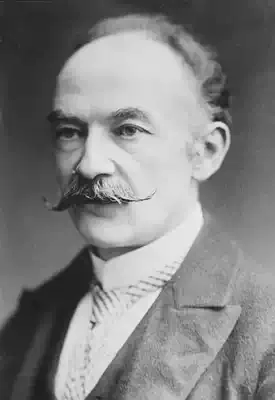
Thomas Hardy
The Bullfinches
Bother Bulleys, let us sing
From the dawn till evening! -
For we know not that we go not
When the day's pale pinions fold
Unto those who sang of old.
When I flew to Blackmoor Vale,
Whence the green-gowned faeries hail,
Roosting near them I could hear them
Speak of queenly Nature's ways,
Means, and moods,--well known to fays.
All we creatures, nigh and far
(Said they there), the Mother's are:
Yet she never shows endeavour
To protect from warrings wild
Bird or beast she calls her child.
Busy in her handsome house
Known as Space, she falls a-drowse;
Yet, in seeming, works on dreaming,
While beneath her groping hands
Fiends make havoc in her bands.
How her hussif'ry succeeds
She unknows or she unheeds,
All things making for Death's taking!
--So the green-gowned faeries say
Living over Blackmoor way.
Come then, brethren, let us sing,
From the dawn till evening! -
For we know not that we go not
When the day's pale pinions fold
Unto those who sang of old.
From the dawn till evening! -
For we know not that we go not
When the day's pale pinions fold
Unto those who sang of old.
When I flew to Blackmoor Vale,
Whence the green-gowned faeries hail,
Roosting near them I could hear them
Speak of queenly Nature's ways,
Means, and moods,--well known to fays.
All we creatures, nigh and far
(Said they there), the Mother's are:
Yet she never shows endeavour
To protect from warrings wild
Bird or beast she calls her child.
Busy in her handsome house
Known as Space, she falls a-drowse;
Yet, in seeming, works on dreaming,
While beneath her groping hands
Fiends make havoc in her bands.
How her hussif'ry succeeds
She unknows or she unheeds,
All things making for Death's taking!
--So the green-gowned faeries say
Living over Blackmoor way.
Come then, brethren, let us sing,
From the dawn till evening! -
For we know not that we go not
When the day's pale pinions fold
Unto those who sang of old.
307
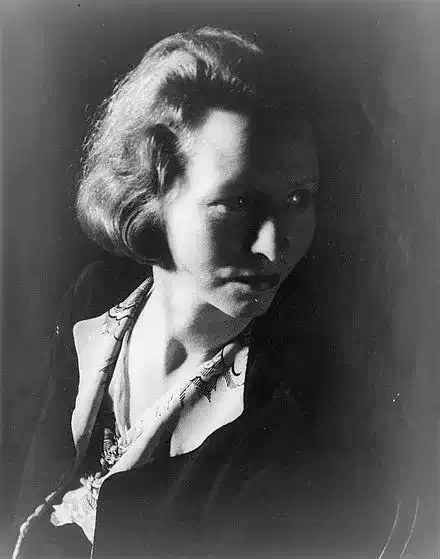
Edna St. Vincent Millay
Doubt No More That Oberon
Doubt no more that Oberon—
Never doubt that Pan
Lived, and played a reed, and ran
After nymphs in a dark forest,
In the merry, credulous days,—
Lived, and led a fairy band
Over the indulgent land!
Ah, for in this dourest, sorest
Age man's eye has looked upon,
Death to fauns and death to fays,
Still the dog-wood dares to raise—
Healthy tree, with trunk and root—
Ivory bowls that bear no fruit,
And the starlings and the jays—
Birds that cannot even sing—
Dare to come again in spring!
307