
Soul
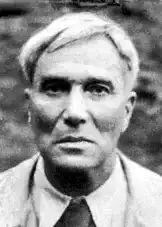
Boris Pasternak
Mary Magdalene I
As soon as night descends, we meet.
Remorse my memories releases.
The demons of the past compete,
And draw and tear my heart to pieces,
Sin, vice and madness and deceit,
When I was slave of men's caprices
And when my dwelling was the street.
The deathly silence is not far;
A few more moments only matter,
Which the Inevitable bar.
But at the edge, before they scatter,
In front of Thee my life I shatter,
As though an alabaster jar.
O what might not have been my fate
By now, my Teacher and my Saviour,
Did not eternity await
Me at the table, as a late
New victim of my past behaviour!
But what can sin now mean to me,
And death, and hell, and sulphur burning,
When, like a graft onto a tree,
I have-for everyone to see-
Grown into being part of Thee
In my immeasurable yearning?
When pressed against my knees I place
Thy precious feet, and weep, despairing,
Perhaps I'm learning to embrace
The cross's rough four-sided face;
And, fainting, all my being sways
Towards Thee, Thy burial preparing.
Read more →
Remorse my memories releases.
The demons of the past compete,
And draw and tear my heart to pieces,
Sin, vice and madness and deceit,
When I was slave of men's caprices
And when my dwelling was the street.
The deathly silence is not far;
A few more moments only matter,
Which the Inevitable bar.
But at the edge, before they scatter,
In front of Thee my life I shatter,
As though an alabaster jar.
O what might not have been my fate
By now, my Teacher and my Saviour,
Did not eternity await
Me at the table, as a late
New victim of my past behaviour!
But what can sin now mean to me,
And death, and hell, and sulphur burning,
When, like a graft onto a tree,
I have-for everyone to see-
Grown into being part of Thee
In my immeasurable yearning?
When pressed against my knees I place
Thy precious feet, and weep, despairing,
Perhaps I'm learning to embrace
The cross's rough four-sided face;
And, fainting, all my being sways
Towards Thee, Thy burial preparing.
544
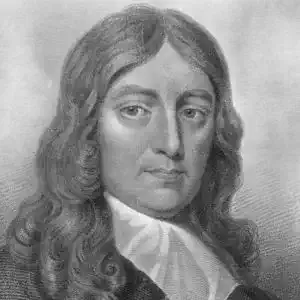
John Milton
Psalm 87
Among the holy Mountains high
Is his foundation fast,
There Seated in his Sanctuary,
His Temple there is plac't.
Sions fair Gates the Lord loves more
Then all the dwellings faire
Of Jacobs Land, though there be store,
And all within his care.
City of God, most glorious things
Of thee abroad are spoke;
I mention Egypt, where proud Kings
Did our forefathers yoke,
I mention Babel to my friends,
Philistia full of scorn,
And Tyre with Ethiops utmost ends,
Lo this man there was born:
But twise that praise shall in our ear
Be said of Sion last
This and this man was born in her,
High God shall fix her fast.
The Lord shall write it in a Scrowle
That ne're shall be out-worn
When he the Nations doth enrowle
That this man there was born.
Both they who sing, and they who dance
With sacred Songs are there,
In thee fresh brooks, and soft streams glance
And all my fountains clear.
Read more →
Is his foundation fast,
There Seated in his Sanctuary,
His Temple there is plac't.
Sions fair Gates the Lord loves more
Then all the dwellings faire
Of Jacobs Land, though there be store,
And all within his care.
City of God, most glorious things
Of thee abroad are spoke;
I mention Egypt, where proud Kings
Did our forefathers yoke,
I mention Babel to my friends,
Philistia full of scorn,
And Tyre with Ethiops utmost ends,
Lo this man there was born:
But twise that praise shall in our ear
Be said of Sion last
This and this man was born in her,
High God shall fix her fast.
The Lord shall write it in a Scrowle
That ne're shall be out-worn
When he the Nations doth enrowle
That this man there was born.
Both they who sing, and they who dance
With sacred Songs are there,
In thee fresh brooks, and soft streams glance
And all my fountains clear.
546

William Butler Yeats
A Man Young And Old
I
First Love
THOUGH nurtured like the sailing moon
In beauty's murderous brood,
She walked awhile and blushed awhile
And on my pathway stood
Until I thought her body bore
A heart of flesh and blood.
But since I laid a hand thereon
And found a heart of stone
I have attempted many things
And not a thing is done,
For every hand is lunatic
That travels on the moon.
She smiled and that transfigured me
And left me but a lout,
Maundering here, and maundering there,
Emptier of thought
Than the heavenly circuit of its stars
When the moon sails out.
II
Human Dignity
Like the moon her kindness is,
If kindness I may call
What has no comprehension in't,
But is the same for all
As though my sorrow were a scene
Upon a painted wall.
So like a bit of stone I lie
Under a broken tree.
I could recover if I shrieked
My heart's agony
To passing bird, but I am dumb
From human dignity.
III
The Mermaid
A mermaid found a swimming lad,
Picked him for her own,
Pressed her body to his body,
Laughed; and plunging down
Forgot in cruel happiness
That even lovers drown.
IV
The Death of the Hare
I have pointed out the yelling pack,
The hare leap to the wood,
And when I pass a compliment
Rejoice as lover should
At the drooping of an eye,
At the mantling of the blood.
Then' suddenly my heart is wrung
By her distracted air
And I remember wildness lost
And after, swept from there,
Am set down standing in the wood
At the death of the hare.
V
The Empty Cup
A crazy man that found a cup,
When all but dead of thirst,
Hardly dared to wet his mouth
Imagining, moon-accursed,
That another mouthful
And his beating heart would burst.
October last I found it too
But found it dry as bone,
And for that reason am I crazed
And my sleep is gone.
VI
His Memories
We should be hidden from their eyes,
Being but holy shows
And bodies broken like a thorn
Whereon the bleak north blows,
To think of buried Hector
And that none living knows.
The women take so little stock
In what I do or say
They'd sooner leave their cosseting
To hear a jackass bray;
My arms are like the twisted thorn
And yet there beauty lay;
The first of all the tribe lay there
And did such pleasure take --
She who had brought great Hector down
And put all Troy to wreck --
That she cried into this ear,
'Strike me if I shriek.'
VII
The Friends of his Youth
Laughter not time destroyed my voice
And put that crack in it,
And when the moon's pot-bellied
I get a laughing fit,
For that old Madge comes down the lane,
A stone upon her breast,
And a cloak wrapped about the stone,
And she can get no rest
With singing hush and hush-a-bye;
She that has been wild
And barren as a breaking wave
Thinks that the stone's a child.
And Peter that had great affairs
And was a pushing man
Shrieks, 'I am King of the Peacocks,'
And perches on a stone;
And then I laugh till tears run down
And the heart thumps at my side,
Remembering that her shriek was love
And that he shrieks from pride.
VIII
Summer and Spring
We sat under an old thorn-tree
And talked away the night,
Told all that had been said or done
Since first we saw the light,
And when we talked of growing up
Knew that we'd halved a soul
And fell the one in t'other's arms
That we might make it whole;
Then peter had a murdering look,
For it seemed that he and she
Had spoken of their childish days
Under that very tree.
O what a bursting out there was,
And what a blossoming,
When we had all the summer-time
And she had all the spring!
IX
The Secrets of the Old
I have old women's sectets now
That had those of the young;
Madge tells me what I dared not think
When my blood was strong,
And what had drowned a lover once
Sounds like an old song.
Though Margery is stricken dumb
If thrown in Madge's way,
We three make up a solitude;
For none alive to-day
Can know the stories that we know
Or say the things we say:
How such a man pleased women most
Of all that are gone,
How such a pair loved many years
And such a pair but one,
Stories of the bed of straw
Or the bed of down.
X
His Wildness
O bid me mount and sail up there
Amid the cloudy wrack,
For peg and Meg and Paris' love
That had so straight a back,
Are gone away, and some that stay
Have changed their silk for sack.
Were I but there and none to hear
I'd have a peacock cry,
For that is natural to a man
That lives in memory,
Being all alone I'd nurse a stone
And sing it lullaby.
XI
From 'Oedipus at Colonus'
Endure what life God gives and ask no longer span;
Cease to remember the delights of youth, travel-wearied aged man;
Delight becomes death-longing if all longing else be vain.
Even from that delight memory treasures so,
Death, despair, division of families, all entanglements of mankind grow,
As that old wandering beggar and these God-hated children know.
In the long echoing street the laughing dancers throng,
The bride is catried to the bridegroom's chamber
through torchlight and tumultuous song;
I celebrate the silent kiss that ends short life or long.
Never to have lived is best, ancient writers say;
Never to have drawn the breath of life, never to have
looked into the eye of day;
The second best's a gay goodnight and quickly turn away.
Read more →
First Love
THOUGH nurtured like the sailing moon
In beauty's murderous brood,
She walked awhile and blushed awhile
And on my pathway stood
Until I thought her body bore
A heart of flesh and blood.
But since I laid a hand thereon
And found a heart of stone
I have attempted many things
And not a thing is done,
For every hand is lunatic
That travels on the moon.
She smiled and that transfigured me
And left me but a lout,
Maundering here, and maundering there,
Emptier of thought
Than the heavenly circuit of its stars
When the moon sails out.
II
Human Dignity
Like the moon her kindness is,
If kindness I may call
What has no comprehension in't,
But is the same for all
As though my sorrow were a scene
Upon a painted wall.
So like a bit of stone I lie
Under a broken tree.
I could recover if I shrieked
My heart's agony
To passing bird, but I am dumb
From human dignity.
III
The Mermaid
A mermaid found a swimming lad,
Picked him for her own,
Pressed her body to his body,
Laughed; and plunging down
Forgot in cruel happiness
That even lovers drown.
IV
The Death of the Hare
I have pointed out the yelling pack,
The hare leap to the wood,
And when I pass a compliment
Rejoice as lover should
At the drooping of an eye,
At the mantling of the blood.
Then' suddenly my heart is wrung
By her distracted air
And I remember wildness lost
And after, swept from there,
Am set down standing in the wood
At the death of the hare.
V
The Empty Cup
A crazy man that found a cup,
When all but dead of thirst,
Hardly dared to wet his mouth
Imagining, moon-accursed,
That another mouthful
And his beating heart would burst.
October last I found it too
But found it dry as bone,
And for that reason am I crazed
And my sleep is gone.
VI
His Memories
We should be hidden from their eyes,
Being but holy shows
And bodies broken like a thorn
Whereon the bleak north blows,
To think of buried Hector
And that none living knows.
The women take so little stock
In what I do or say
They'd sooner leave their cosseting
To hear a jackass bray;
My arms are like the twisted thorn
And yet there beauty lay;
The first of all the tribe lay there
And did such pleasure take --
She who had brought great Hector down
And put all Troy to wreck --
That she cried into this ear,
'Strike me if I shriek.'
VII
The Friends of his Youth
Laughter not time destroyed my voice
And put that crack in it,
And when the moon's pot-bellied
I get a laughing fit,
For that old Madge comes down the lane,
A stone upon her breast,
And a cloak wrapped about the stone,
And she can get no rest
With singing hush and hush-a-bye;
She that has been wild
And barren as a breaking wave
Thinks that the stone's a child.
And Peter that had great affairs
And was a pushing man
Shrieks, 'I am King of the Peacocks,'
And perches on a stone;
And then I laugh till tears run down
And the heart thumps at my side,
Remembering that her shriek was love
And that he shrieks from pride.
VIII
Summer and Spring
We sat under an old thorn-tree
And talked away the night,
Told all that had been said or done
Since first we saw the light,
And when we talked of growing up
Knew that we'd halved a soul
And fell the one in t'other's arms
That we might make it whole;
Then peter had a murdering look,
For it seemed that he and she
Had spoken of their childish days
Under that very tree.
O what a bursting out there was,
And what a blossoming,
When we had all the summer-time
And she had all the spring!
IX
The Secrets of the Old
I have old women's sectets now
That had those of the young;
Madge tells me what I dared not think
When my blood was strong,
And what had drowned a lover once
Sounds like an old song.
Though Margery is stricken dumb
If thrown in Madge's way,
We three make up a solitude;
For none alive to-day
Can know the stories that we know
Or say the things we say:
How such a man pleased women most
Of all that are gone,
How such a pair loved many years
And such a pair but one,
Stories of the bed of straw
Or the bed of down.
X
His Wildness
O bid me mount and sail up there
Amid the cloudy wrack,
For peg and Meg and Paris' love
That had so straight a back,
Are gone away, and some that stay
Have changed their silk for sack.
Were I but there and none to hear
I'd have a peacock cry,
For that is natural to a man
That lives in memory,
Being all alone I'd nurse a stone
And sing it lullaby.
XI
From 'Oedipus at Colonus'
Endure what life God gives and ask no longer span;
Cease to remember the delights of youth, travel-wearied aged man;
Delight becomes death-longing if all longing else be vain.
Even from that delight memory treasures so,
Death, despair, division of families, all entanglements of mankind grow,
As that old wandering beggar and these God-hated children know.
In the long echoing street the laughing dancers throng,
The bride is catried to the bridegroom's chamber
through torchlight and tumultuous song;
I celebrate the silent kiss that ends short life or long.
Never to have lived is best, ancient writers say;
Never to have drawn the breath of life, never to have
looked into the eye of day;
The second best's a gay goodnight and quickly turn away.
551
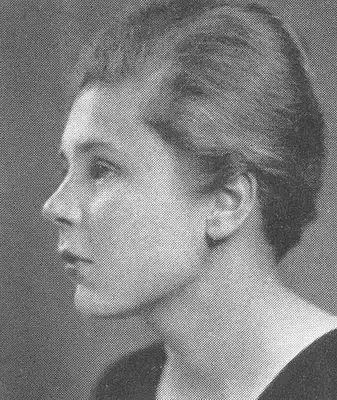
Elizabeth Bishop
Insomnia
The moon in the bureau mirror
looks out a million miles
(and perhaps with pride, at herself,
but she never, never smiles)
far and away beyond sleep, or
perhaps she's a daytime sleeper.
By the Universe deserted,
she'd tell it to go to hell,
and she'd find a body of water,
or a mirror, on which to dwell.
So wrap up care in a cobweb
and drop it down the well
into that world inverted
where left is always right,
where the shadows are really the body,
where we stay awake all night,
where the heavens are shallow as the sea
is now deep, and you love me.
Read more →
looks out a million miles
(and perhaps with pride, at herself,
but she never, never smiles)
far and away beyond sleep, or
perhaps she's a daytime sleeper.
By the Universe deserted,
she'd tell it to go to hell,
and she'd find a body of water,
or a mirror, on which to dwell.
So wrap up care in a cobweb
and drop it down the well
into that world inverted
where left is always right,
where the shadows are really the body,
where we stay awake all night,
where the heavens are shallow as the sea
is now deep, and you love me.
544

Kazi Nazrul Islam
I Know Your Compassion Mother
I know your compassion Mother and hence await better days.
I may meanwhile be battered with losses, want and debt.
You cause me pain only to take me to your Bosom.
Can any mother remain indifferent after inflicting pain on her child.
I know that you are more kind than hard-hearted
So the more you frighten me the closer r get to your Bosom.
There might be good reason for your chiding me.
Just because you make me weep and wince
I cannot say I have no mother.
[Original: Koruna tor jani mago; Translation: Abu Rushd]
Read more →
I may meanwhile be battered with losses, want and debt.
You cause me pain only to take me to your Bosom.
Can any mother remain indifferent after inflicting pain on her child.
I know that you are more kind than hard-hearted
So the more you frighten me the closer r get to your Bosom.
There might be good reason for your chiding me.
Just because you make me weep and wince
I cannot say I have no mother.
[Original: Koruna tor jani mago; Translation: Abu Rushd]
547

John Keats
Sonnet. On A Picture Of Leander
Come hither all sweet Maidens soberly
Down looking aye, and with a chasten'd light
Hid in the fringes of your eyelids white,
And meekly let your fair hands joined be,
As if so gentle that ye could not see,
Untouch'd, a victim of your beauty bright,
Sinking away to his young spirit's night,
Sinking bewilder'd 'mid the dreary sea.
'Tis young Leander toiling to his death.
Nigh swooning he doth purse his weary lips
For Hero's cheek, and smiles against her smile.
O horrid dream! see how his body dips
Dead-heavy; arms and shoulders gleam awhile;
He's gone; up bubbles all his amorous breath!
Read more →
Down looking aye, and with a chasten'd light
Hid in the fringes of your eyelids white,
And meekly let your fair hands joined be,
As if so gentle that ye could not see,
Untouch'd, a victim of your beauty bright,
Sinking away to his young spirit's night,
Sinking bewilder'd 'mid the dreary sea.
'Tis young Leander toiling to his death.
Nigh swooning he doth purse his weary lips
For Hero's cheek, and smiles against her smile.
O horrid dream! see how his body dips
Dead-heavy; arms and shoulders gleam awhile;
He's gone; up bubbles all his amorous breath!
544

Mirza Ghalib
It is not Love it is Madness
(You say) It is not love, it is madness
My madness may be the cause of your fame
Sever not my relationship with you
If nothing then be my enemy
What is the meaning of notoriety in meeting me
If not in public court meet me alone
I am not my own enemy
So what if the stranger is in love with you
Whatever you are, it is due to your own being
If this not known then it is ignorance
Life though fleets like a lightening flash
Yet it is abundant Time to be in love
I do not want debate on the sustenance of love
Be it not love but another dilemma
Give something O biased One
At least the sanction to cry and plea
I will perpetuate the rituals
Even if cruelty be your habit
Teasing and cajoling the beloved cannot leave 'Asad'
Even if there is no union and only the desire remains
Read more →
My madness may be the cause of your fame
Sever not my relationship with you
If nothing then be my enemy
What is the meaning of notoriety in meeting me
If not in public court meet me alone
I am not my own enemy
So what if the stranger is in love with you
Whatever you are, it is due to your own being
If this not known then it is ignorance
Life though fleets like a lightening flash
Yet it is abundant Time to be in love
I do not want debate on the sustenance of love
Be it not love but another dilemma
Give something O biased One
At least the sanction to cry and plea
I will perpetuate the rituals
Even if cruelty be your habit
Teasing and cajoling the beloved cannot leave 'Asad'
Even if there is no union and only the desire remains
545

William Blake
The Little Girl Found
All the night in woe,
Lyca's parents go:
Over vallies deep.
While the desarts weep.
Tired and woe-begone.
Hoarse with making moan:
Arm in arm seven days.
They trac'd the desert ways.
Seven nights they sleep.
Among shadows deep:
And dream they see their child
Starvdd in desart wild.
Pale thro' pathless ways
The fancied image strays.
Famish'd, weeping, weak
With hollow piteous shriek
Rising from unrest,
The trembling woman prest,
With feet of weary woe;
She could no further go.
In his arms he bore.
Her arm'd with sorrow sore:
Till before their way
A couching lion lay.
Turning back was vain,
Soon his heavy mane.
Bore them to the ground;
Then he stalk'd around.
Smelling to his prey,
But their fears allay,
When he licks their hands:
And silent by them stands.
They look upon his eyes
Fill'd with deep surprise:
And wondering behold.
A spirit arm'd in gold.
On his head a crown
On his shoulders down,
Flow'd his golden hair.
Gone was all their care.
Follow me he said,
Weep not for the maid;
In my palace deep.
Lyca lies asleep.
Then they followed,
Where the vision led;
And saw their sleeping child,
Among tygers wild.
To this day they dwell
In a lonely dell
Nor fear the wolvish howl,
Nor the lion's growl.
Read more →
Lyca's parents go:
Over vallies deep.
While the desarts weep.
Tired and woe-begone.
Hoarse with making moan:
Arm in arm seven days.
They trac'd the desert ways.
Seven nights they sleep.
Among shadows deep:
And dream they see their child
Starvdd in desart wild.
Pale thro' pathless ways
The fancied image strays.
Famish'd, weeping, weak
With hollow piteous shriek
Rising from unrest,
The trembling woman prest,
With feet of weary woe;
She could no further go.
In his arms he bore.
Her arm'd with sorrow sore:
Till before their way
A couching lion lay.
Turning back was vain,
Soon his heavy mane.
Bore them to the ground;
Then he stalk'd around.
Smelling to his prey,
But their fears allay,
When he licks their hands:
And silent by them stands.
They look upon his eyes
Fill'd with deep surprise:
And wondering behold.
A spirit arm'd in gold.
On his head a crown
On his shoulders down,
Flow'd his golden hair.
Gone was all their care.
Follow me he said,
Weep not for the maid;
In my palace deep.
Lyca lies asleep.
Then they followed,
Where the vision led;
And saw their sleeping child,
Among tygers wild.
To this day they dwell
In a lonely dell
Nor fear the wolvish howl,
Nor the lion's growl.
550
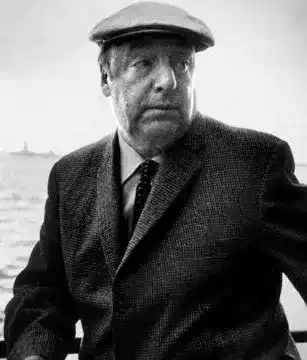
Pablo Neruda
Lovely One
Lovely one,
Just as on the cool stone
Of the spring, the water
Opens a wide flash of foam,
So is the smile of your face,
Lovely one.
Lovely one,
With delicate hands and slender feet
Like a silver pony,
Walking, flower of the world,
Thus I see you,
Lovely one.
Lovely one,
With a nest of copper entangled
On your head, a nest
The colo
Ur of dark honey
Where my heart burns and rests,
Lovely one.
Lovely one,
Your eyes are too big for your face,
Your eyes are too big for the earth.
There are countries, there are rivers,
In your eyes,
My country is your eyes,
I walk through them,
They light the world
Through which I walk,
Lovely one.
Lovely one,
Your breasts are like two loaves made
Of grainy earth and golden moon,
Lovely one.
Lovely one,
Your waist,
My arm shaped it like a river when
It flowed a thousand years through your sweet body,
Lovely one.
Lovely one,
There is nothing like your hips,
Perhaps earth has
In some hidden place
The curve and the fragrance of your body,
Perhaps in some place,
Lovely one.
Lovely one, my lovely one,
Your voice, your skin, your nails,
Lovely one, my lovely one,
Your being, your light, your shadow,
Lovely one,
All that is mine, lovely one,
All that is mine, my dear,
When you walk or rest,
When you sing or sleep,
When you suffer or dream,
Always,
When you are near or far,
Always,
You are mine, my lovely one,
Always.
Read more →
Just as on the cool stone
Of the spring, the water
Opens a wide flash of foam,
So is the smile of your face,
Lovely one.
Lovely one,
With delicate hands and slender feet
Like a silver pony,
Walking, flower of the world,
Thus I see you,
Lovely one.
Lovely one,
With a nest of copper entangled
On your head, a nest
The colo
Ur of dark honey
Where my heart burns and rests,
Lovely one.
Lovely one,
Your eyes are too big for your face,
Your eyes are too big for the earth.
There are countries, there are rivers,
In your eyes,
My country is your eyes,
I walk through them,
They light the world
Through which I walk,
Lovely one.
Lovely one,
Your breasts are like two loaves made
Of grainy earth and golden moon,
Lovely one.
Lovely one,
Your waist,
My arm shaped it like a river when
It flowed a thousand years through your sweet body,
Lovely one.
Lovely one,
There is nothing like your hips,
Perhaps earth has
In some hidden place
The curve and the fragrance of your body,
Perhaps in some place,
Lovely one.
Lovely one, my lovely one,
Your voice, your skin, your nails,
Lovely one, my lovely one,
Your being, your light, your shadow,
Lovely one,
All that is mine, lovely one,
All that is mine, my dear,
When you walk or rest,
When you sing or sleep,
When you suffer or dream,
Always,
When you are near or far,
Always,
You are mine, my lovely one,
Always.
543
E. E. Cummings
this(let's remember)day died again and...
this(let's remember)day died again and
again;whose golden,crimson dooms conceive
an oceaning abyss of orange dream
larger than sky times earth:a flame beyond
soul immemorially forevering amand
as collapsing that grey mind by wave
doom disappeared,out of perhaps(who knows?)
eternity floated a blossoming
(while anyone might slowly count to soon)
rose-did you see her?darling,did you(kiss
me)quickly count to never?you were wrong
-then all the way from perfect nowhere came
(as easily as we forget something)
livingest the imaginable moon
Read more →
again;whose golden,crimson dooms conceive
an oceaning abyss of orange dream
larger than sky times earth:a flame beyond
soul immemorially forevering amand
as collapsing that grey mind by wave
doom disappeared,out of perhaps(who knows?)
eternity floated a blossoming
(while anyone might slowly count to soon)
rose-did you see her?darling,did you(kiss
me)quickly count to never?you were wrong
-then all the way from perfect nowhere came
(as easily as we forget something)
livingest the imaginable moon
540

Walt Whitman
O Sun Of Real Peace
O SUN of real peace! O hastening light!
O free and extatic! O what I here, preparing, warble for!
O the sun of the world will ascend, dazzling, and take his height-
and you too, O my Ideal, will surely ascend!
O so amazing and broad--up there resplendent, darting and burning!
O vision prophetic, stagger'd with weight of light! with pouring
glories!
O lips of my soul, already becoming powerless!
O ample and grand Presidentiads! Now the war, the war is over!
New history! new heroes! I project you!
Visions of poets! only you really last! sweep on! sweep on!
O heights too swift and dizzy yet!
O purged and luminous! you threaten me more than I can stand!
(I must not venture--the ground under my feet menaces me--it will not
support me:
O future too immense,)--O present, I return, while yet I may, to you.
Read more →
O free and extatic! O what I here, preparing, warble for!
O the sun of the world will ascend, dazzling, and take his height-
and you too, O my Ideal, will surely ascend!
O so amazing and broad--up there resplendent, darting and burning!
O vision prophetic, stagger'd with weight of light! with pouring
glories!
O lips of my soul, already becoming powerless!
O ample and grand Presidentiads! Now the war, the war is over!
New history! new heroes! I project you!
Visions of poets! only you really last! sweep on! sweep on!
O heights too swift and dizzy yet!
O purged and luminous! you threaten me more than I can stand!
(I must not venture--the ground under my feet menaces me--it will not
support me:
O future too immense,)--O present, I return, while yet I may, to you.
536

Lord Byron
Lara
LARA. [1]
CANTO THE FIRST.
I.
The Serfs are glad through Lara's wide domain, [2]
And slavery half forgets her feudal chain;
He, their unhoped, but unforgotten lord —
The long selfexiled
chieftain is restored:
There be bright faces in the busy hall,
Bowls on the board, and banners on the wall;
Far chequering o'er the pictured window, plays
The unwonted fagots' hospitable blaze;
And gay retainers gather round the hearth,
With tongues all loudness, and with eyes all mirth.
II.
The chief of Lara is return'd again:
And why had Lara cross'd the bounding main?
Left by his sire, too young such loss to know,
Lord of himself; — that heritage of woe,
That fearful empire which the human breast
But holds to rob the heart within of rest! —
With none to check, and few to point in time
The thousand paths that slope the way to crime;
Then, when he most required commandment, then
Had Lara's daring boyhood govern'd men.
It skills not, boots not, step by step to trace
His youth through all the mazes of its race;
Short was the course his restlessness had run,
But long enough to leave him half undone.
III.
And Lara left in youth his fatherland;
But from the hour he waved his parting hand
Each trace wax'd fainter of his course, till all
Had nearly ceased his memory to recall.
His sire was dust, his vassals could declare,
'Twas all they knew, that Lara was not there;
Nor sent, nor came he, till conjecture grew
Cold in the many, anxious in the few.
His hall scarce echoes with his wonted name,
His portrait darkens in its fading frame,
Another chief consoled his destined bride,
The young forgot him, and the old had died;
"Yet doth he live!" exclaims the impatient heir,
And sighs for sables which he must not wear.
A hundred scutcheons deck with gloomy grace
The Laras' last and longest dwellingplace;
But one is absent from the mouldering file,
That now were welcome to that Gothic pile.
IV.
He comes at last in sudden loneliness,
And whence they know not, why they need not guess;
They more might marvel, when the greeting's o'er,
Not that he came, but came not long before:
No train is his beyond a single page,
Of foreign aspect, and of tender age.
Years had roll'd on, and fast they speed away
To those that wander as to those that stay;
But lack of tidings from another clime
Had lent a flagging wing to weary Time.
They see, they recognise, yet almost deem
The present dubious, or the past a dream.
He lives, nor yet is past his manhood's prime,
Though sear'd by toil, and something touch'd by time;
His faults, whate'er they were, if scarce forgot,
Might be untaught him by his varied lot;
Nor good nor ill of late were known, his name
Might yet uphold his patrimonial fame.
His soul in youth was haughty, but his sins
No more than pleasure from the stripling wins;
And such, if not yet harden'd in their course,
Might be redeem'd, nor ask a long remorse.
V.
And they indeed were changed — 'tis quickly seen,
Whate'er he be, 'twas not what he had been:
That brow in furrow'd lines had fix'd at last,
And spake of passions, but of passion past;
The pride, but not the fire, of early days,
Coldness of mien, and carelessness of praise;
A high demeanour, and a glance that took
Their thoughts from others by a single look;
And that sarcastic levity of tongue,
The stinging of a heart the world hath stung,
That darts in seeming playfulness around,
And makes those feel that will not own the wound:
All these seem'd his, and something more beneath
Than glance could well reveal, or accent breathe.
Ambition, glory, love, the common aim
That some can conquer, and that all would claim,
Within his breast appear'd no more to strive,
Yet seem'd as lately they had been alive;
And some deep feeling it were vain to trace
At moments lighten'd o'er his livid face.
VI.
Not much he loved long question of the past,
Nor told of wondrous wilds, and deserts vast,
In those far lands where he had wander'd lone,
And — as himself would have it seem — unknown:
Yet these in vain his eye could scarcely scan,
Nor glean experience from his fellowman;
But what he had beheld he shunn'd to show,
As hardly worth a stranger's care to know;
If still more prying such inquiry grew,
His brow fell darker, and his words more few.
VII.
Not unrejoiced to see him once again,
Warm was his welcome to the haunts of men;
Born of high lineage, link'd in high command,
He mingled with the magnates of his land;
Join'd the carousals of the great and gay,
And saw them smile or sigh their hours away;
But still he only saw, and did not share
The common pleasure or the general care;
He did not follow what they all pursued,
With hope still baffled, still to be renew'd;
Nor shadowy honour, nor substantial gain,
Nor beauty's preference, and the rival's pain:
Around him some mysterious circle thrown
Repell'd approach, and showed him still alone;
Upon his eye sate something of reproof,
That kept at least frivolity aloof;
And things more timid that beheld him near,
In silence gazed, or whisper'd mutual fear;
And they the wiser, friendlier few confess'd
They deem'd him better than his air express'd.
VIII.
'Twas strange — in youth all action and all life,
Burning for pleasure, not averse from strife;
Woman — the field — the ocean — all that gave
Promise of gladness, peril of a grave,
In turn he tried — he ransack'd all below,
And found his recompence in joy or woe,
No tame, trite medium; for his feelings sought
In that intenseness an escape from thought:
The tempest of his heart in scorn had gazed
On that the feebler elements hath raised;
The rapture of his heart had look'd on high,
And ask'd if greater dwelt beyond the sky:
Chain'd to excess, the slave of each extreme,
How woke he from the wildness of that dream?
Alas! he told not — but he did awake
To curse the wither'd heart that would not break.
IX.
Books, for his volume heretofore was Man,
With eye more curious he appear'd to scan,
And oft, in sudden mood, for many a day
From all communion he would start away:
And then, his rarely call'd attendants said,
Through night's long hours would sound his hurried tread
O'er the dark gallery, where his fathers frown'd
In rude but antique portraiture around.
They heard, but whisper'd — "that must not be known —
The sound of words less earthly than his own.
Yes, they who chose might smile, but some had seen
They scarce knew what, but more than should have been.
Why gazed he so upon the ghastly head
Which hands profane had gather'd from the dead,
That still beside his open'd volume lay,
As if to startle all save him away?
Why slept he not when others were at rest?
Why heard no music, and received no guest?
All was not well, they deem'd — but where the wrong?
Some knew perchance — but 'twere a tale too long;
And such besides were too discreetly wise,
To more than hint their knowledge in surmise;
But if they would — they could" — around the board,
Thus Lara's vassals prattled of their lord.
X.
It was the night — and Lara's glassy stream
The stars are studding, each with imaged beam:
So calm, the waters scarcely seem to stray,
And yet they glide like happiness away;
Reflecting far and fairylike
from high
The immortal lights that live along the sky:
Its banks are fringed with many a goodly tree,
And flowers the fairest that may feast the bee;
Such in her chaplet infant Dian wove,
And Innocence would offer to her love.
These deck the shore; the waves their channel make
In windings bright and mazy like the snake.
All was so still, so soft in earth and air,
You scarce would start to meet a spirit there;
Secure that nought of evil could delight
To walk in such a scene, on such a night!
It was a moment only for the good:
So Lara deem'd, nor longer there he stood,
But turn'd in silence to his castlegate;
Such scene his soul no more could contemplate.
Such scene reminded him of other days,
Of skies more cloudless, moons of purer blaze,
Of nights more soft and frequent, hearts that now —
No — no — the storm may beat upon his brow,
Unfelt — unsparing — but a night like this,
A night of beauty mock'd such breast as his.
XI.
He turn'd within his solitary hall,
And his high shadow shot along the wall;
There were the painted forms of other times,
'Twas all they left of virtues or of crimes,
Save vague tradition; and the gloomy vaults
That hid their dust, their foibles, and their faults;
And half a column of the pompous page,
That speeds the specious tale from age to age:
When history's pen its praise or blame supplies,
And lies like truth, and still most truly lies.
He wandering mused, and as the moonbeam shone
Through the dim lattice o'er the floor of stone,
And the high fretted roof, and saints, that there
O'er Gothic windows knelt in pictured prayer,
Reflected in fantastic figures grew,
Like life, but not like mortal life, to view;
His bristling locks of sable, brow of gloom,
And the wide waving of his shaken plume,
Glanced like a spectre's attributes, and gave
His aspect all that terror gives the grave.
XII.
'Twas midnight — all was slumber; the lone light
Dimm'd in the lamp, as loth to break the night.
Hark! there be murmurs heard in Lara's hall —
A sound — voice — a shriek — a fearful call!
A long, loud shriek — and silence — did they hear
That frantic echo burst the sleeping ear?
They heard and rose, and tremulously brave
Rush where the sound invoked their aid to save;
They come with halflit
tapers in their hands,
And snatch'd in startled haste unbelted brands.
XIII.
Cold as the marble where his length was laid,
Pale as the beam that o'er his features play'd,
Was Lara stretch'd; his halfdrawn
sabre near,
Dropp'd it should seem in more than nature's fear;
Yet he was firm, or had been firm till now,
And still defiance knit his gather'd brow;
Though mix'd with terror, senseless as he lay,
There lived upon his lip the wish to slay;
Some halfform'd
threat in utterance there had died,
Some imprecation of despairing pride;
His eye was almost seal'd, but not forsook
Even in its trance the gladiator's look,
That oft awake his aspect could disclose,
And now was fix'd in horrible repose.
They raise him — bear him: hush! he breathes, he speaks!
The swarthy blush recolours in his cheeks,
His lip resumes its red, his eye, though dim,
Rolls wide and wild, each slowly quivering limb
Recalls its function, but his words are strung
In terms that seem not of his native tongue;
Distinct but strange, enough they understand
To deem them accents of another land,
And such they were, and meant to meet an ear
That hears him not — alas! that cannot hear!
XIV.
His page approach'd, and he alone appear'd
To know the import of the words they heard;
And by the changes of his cheek and brow
They were not such as Lara should avow,
Nor he interpret, yet with less surprise
Than those around their chieftain's state he eyes,
But Lara's prostrate form he bent beside,
And in that tongue which seem'd his own replied,
And Lara heeds those tones that gently seem
To soothe away the horrors of his dream;
If dream it were, that thus could overthrow
A breast that needed not ideal woe.
XV.
Whate'er his frenzy dream'd or eye beheld,
If yet remember'd ne'er to be reveal'd,
Rests at his heart: the custom'd morning came,
And breathed new vigour in his shaking frame;
And solace sought he none from priest nor leech,
And soon the same in movement and in speech
As heretofore he fill'd the passing hours,
Nor less he smiles, nor more his forehead lours
Than these were wont; and if the coming night
Appear'd less welcome now to Lara's sight,
He to his marvelling vassals shew'd it not,
Whose shuddering proved their fear was less forgot.
In trembling pairs (alone they dared not) crawl
The astonish'd slaves, and shun the fated hall;
The waving banner, and the clapping door;
The rustling tapestry, and the echoing floor;
The long dim shadows of surrounding trees,
The flapping bat, the night song of the breeze;
Aught they behold or hear their thought appals
As evening saddens o'er the dark gray walls.
XVI.
Vain thought! that hour of ne'er unravell'd gloom
Came not again, or Lara could assume
A seeming of forgetfulness that made
His vassals more amazed nor less afraid —
Had memory vanish'd then with sense restored?
Since word, nor look, nor gesture of their lord
Betray'd a feeling that recall'd to these
That fever'd moment of his mind's disease.
Was it a dream? was his the voice that spoke
Those strange wild accents; his the cry that broke
Their slumber? his the oppress'd o'erlabour'd
heart
That ceased to beat, the look that made them start?
Could he who thus had suffer'd, so forget
When such as saw that suffering shudder yet?
Or did that silence prove his memory fix'd
Too deep for words, indelible, unmix'd
In that corroding secresy which gnaws
The heart to shew the effect, but not the cause?
Not so in him; his breast had buried both,
Nor common gazers could discern the growth
Of thoughts that mortal lips must leave half told;
They choke the feeble words that would unfold.
XVII.
In him inexplicably mix'd appear'd
Much to be loved and hated, sought and fear'd;
Opinion varying o'er his hidden lot,
In praise or railing ne'er his name forgot;
His silence form'd a theme for others' prate —
They guess'd — they gazed — they fain would know his fate.
What had he been? what was he, thus unknown,
Who walk'd their world, his lineage only known?
A hater of his kind? yet some would say,
With them he could seem gay amidst the gay;
But own'd that smile, if oft observed and near,
Waned in its mirth and wither'd to a sneer;
That smile might reach his lip, but pass'd not by,
None e'er could trace its laughter to his eye:
Yet there was softness too in his regard,
At times, a heart as not by nature hard,
But once perceived, his spirit seem'd to chide
Such weakness, as unworthy of its pride,
And steel'd itself, as scorning to redeem
One doubt from others' half withheld esteem;
In selfinflicted
penance of a breast
Which tenderness might once have wrung from rest;
In vigilance of grief that would compel
The soul to hate for having loved too well.
XVIII.
There was in him a vital scorn of all:
As if the worst had fall'n which could befall,
He stood a stranger in this breathing world,
An erring spirit from another hurled;
A thing of dark imaginings, that shaped
By choice the perils he by chance escaped;
But 'scaped in vain, for in their memory yet
His mind would half exult and half regret:
With more capacity for love than earth
Bestows on most of mortal mould and birth,
His early dreams of good outstripp'd the truth,
And troubled manhood follow'd baffled youth;
With thought of years in phantom chase misspent,
And wasted powers for better purpose lent;
And fiery passions that had pour'd their wrath
In hurried desolation o'er his path,
And left the better feelings all at strife
In wild reflection o'er his stormy life;
But haughty still, and loth himself to blame,
He call'd on Nature's self to share the shame,
And charged all faults upon the fleshly form
She gave to clog the soul, and feast the worm;
'Till he at last confounded good and ill,
And half mistook for fate the acts of will:
Too high for common selfishness, he could
At times resign his own for others' good,
But not in pity, not because he ought,
But in some strange perversity of thought,
That sway'd him onward with a secret pride
To do what few or none would do beside;
And this same impulse would, in tempting time,
Mislead his spirit equally to crime;
So much he soar'd beyond, or sunk beneath
The men with whom he felt condemn'd to breathe,
And long'd by good or ill to separate
Himself from all who shared his mortal state;
His mind abhorring this had fix'd her throne
Far from the world, in regions of her own;
Thus coldly passing all that pass'd below,
His blood in temperate seeming now would flow:
Ah! happier if it ne'er with guilt had glow'd,
But ever in that icy smoothness flow'd:
'Tis true, with other men their path he walk'd,
And like the rest in seeming did and talk'd,
Nor outraged Reason's rules by flaw nor start,
His madness was not of the head, but heart;
And rarely wander'd in his speech, or drew
His thoughts so forth as to offend the view.
XIX.
With all that chilling mystery of mien,
And seeming gladness to remain unseen,
He had (if 'twere not nature's boon) an art
Of fixing memory on another's heart:
It was not love, perchance — nor hate — nor aught
That words can image to express the thought;
But they who saw him did not see in vain,
And once beheld, would ask of him again:
And those to whom he spake remember'd well,
And on the words, however light, would dwell.
None knew nor how, nor why, but he entwined
Himself perforce around the hearer's mind;
There he was stamp'd, in liking, or in hate,
If greeted once; however brief the date
That friendship, pity, or aversion knew,
Still there within the inmost thought he grew.
You could not penetrate his soul, but found
Despite your wonder, to your own he wound.
His presence haunted still; and from the breast
He forced an allunwilling
interest;
Vain was the struggle in that mental net,
His spirit seem'd to dare you to forget!
XX.
There is a festival, where knights and dames,
And aught that wealth or lofty lineage claims,
Appear — a highborn
and a welcomed guest
To Otho's hall came Lara with the rest.
The long carousal shakes the illumined hall,
Well speeds alike the banquet and the ball;
And the gay dance of bounding Beauty's train
Links grace and harmony in happiest chain:
Blest are the early hearts and gentle hands
That mingle there in well according bands;
It is a sight the careful brow might smooth,
And make Age smile, and dream itself to youth,
And Youth forget such hour was pass'd on earth,
So springs the exulting bosom to that mirth!
XXI.
And Lara gazed on these sedately glad,
His brow belied him if his soul was sad,
And his glance follow'd fast each fluttering fair,
Whose steps of lightness woke no echo there:
He lean'd against the lofty pillar nigh
With folded arms and long attentive eye,
Nor mark'd a glance so sternly fix'd on his,
Ill brook'd high Lara scrutiny like this:
At length he caught it, 'tis a face unknown,
But seems as searching his, and his alone;
Prying and dark, a stranger's by his mien,
Who still till now had gazed on him unseen;
At length encountering meets the mutual gaze
Of keen inquiry, and of mute amaze;
On Lara's glance emotion gathering grew,
As if distrusting that the stranger threw;
Along the stranger's aspect fix'd and stern
Flash'd more than thence the vulgar eye could learn.
XXII.
"'Tis he!" the stranger cried, and those that heard
Reecho'd
fast and far the whisper'd word.
"'Tis he!" — "'Tis who?" they question far and near,
Till louder accents rang on Lara's ear;
So widely spread, few bosoms well could brook
The general marvel, or that single look;
But Lara stirr'd not, changed not, the surprise
That sprung at first to his arrested eyes
Seem'd now subsided, neither sunk nor raised
Glanced his eye round, though still the stranger gazed;
And drawing nigh, exclaim'd, with haughty sneer,
"'Tis he! — how came he thence? — what doth he here?"
XXIII.
It were too much for Lara to pass by
Such question, so repeated fierce and high;
With look collected, but with accent cold,
More mildly firm than petulantly bold,
He turn'd, and met the inquisitorial tone —
"My name is Lara! — when thine own is known,
Doubt not my fitting answer to requite
The unlook'd for courtesy of such a knight.
'Tis Lara! — further wouldst thou mark or ask?
I shun no question, and I wear no mask."
"Thou shunn'st no question! Ponder — is there none
Thy heart must answer, though thine ear would shun?
And deem'st thou me unknown too? Gaze again!
At least thy memory was not given in vain.
Oh! never canst thou cancel half her debt,
Eternity forbids thee to forget."
With slow and searching glance upon his face
Grew Lara's eyes, but nothing there could trace
They knew, or chose to know — with dubious look
He deign'd no answer, but his head he shook,
And half contemptuous turn'd to pass away;
But the stern stranger motion'd him to stay.
"A word! — I charge thee stay, and answer here
To one, who, wert thou noble, were thy peer,
But as thou wast and art — nay, frown not, lord,
If false, 'tis easy to disprove the word —
But as thou wast and art, on thee looks down,
Distrusts thy smiles, but shakes not at thy frown.
Art thou not he? whose deeds — "
"Whate'er I be,
Words wild as these, accusers like to thee,
I list no further; those with whom they weigh
May hear the rest, nor venture to gainsay
The wondrous tale no doubt thy tongue can tell,
Which thus begins courteously and well.
Let Otho cherish here his polish'd guest,
To him my thanks and thoughts shall be express'd."
And here their wondering host hath interposed —
"Whate'er there be between you undisclosed,
This is no time nor fitting place to mar
The mirthful meeting with a wordy war.
If thou, Sir Ezzelin, hast ought to show
Which it befits Count Lara's ear to know,
Tomorrow,
here, or elsewhere, as may best
Beseem your mutual judgment, speak the rest;
I pledge myself for thee, as not unknown,
Though, like Count Lara, now return'd alone
From other lands, almost a stranger grown;
And if from Lara's blood and gentle birth
I augur right of courage and of worth,
He will not that untainted line belie,
Nor aught that knighthood may accord deny."
"Tomorrow
be it," Ezzelin replied,
"And here our several worth and truth be tried:
I gage my life, my falchion to attest
My words, so may I mingle with the blest!"
What answers Lara? to its centre shrunk
His soul, in deep abstraction sudden sunk;
The words of many, and the eyes of all
That there were gather'd, seem'd on him to fall;
But his were silent, his appear'd to stray
In far forgetfulness away — away —
Alas! that heedlessness of all around
Bespoke remembrance only too profound.
XXIV.
"Tomorrow!
— ay, tomorrow!"
— further word
Than those repeated none from Lara heard;
Upon his brow no outward passion spoke,
From his large eye no flashing anger broke;
Yet there was something fix'd in that low tone
Which shew'd resolve, determined, though unknown.
He seized his cloak — his head he slightly bow'd,
And passing Ezzelin he left the crowd;
And as he pass'd him, smiling met the frown
With which that chieftain's brow would bear him down:
It was nor smile of mirth, nor struggling pride
That curbs to scorn the wrath it cannot hide;
But that of one in his own heart secure
Of all that he would do, or could endure.
Could this mean peace? the calmness of the good?
Or guilt grown old in desperate hardihood?
Alas! too like in confidence are each
For man to trust to mortal look or speech;
From deeds, and deeds alone, may he discern
Truths which it wrings the unpractised heart to learn.
XXV.
And Lara call'd his page, and went his way —
Well could that stripling word or sign obey:
His only follower from those climes afar
Where the soul glows beneath a brighter star;
For Lara left the shore from whence he sprung,
In duty patient, and sedate though young;
Silent as him he served, his fate appears
Above his station, and beyond his years.
Though not unknown the tongue of Lara's land,
In such from him he rarely heard command;
But fleet his step, and clear his tones would come,
When Lara's lip breathed forth the words of home:
Those accents, as his native mountains dear,
Awake their absent echoes in his ear,
Friends', kindreds', parents', wonted voice recall,
Now lost, abjured, for one — his friend, his all:
For him earth now disclosed no other guide;
What marvel then he rarely left his side?
XXVI.
Light was his form, and darkly delicate
That brow whereon his native sun had sate,
But had not marr'd, though in his beams he grew,
The cheek where oft the unbidden blush shone through;
Yet not such blush as mounts when health would show
All the heart's hue in that delighted glow;
But 'twas a hectic tint of secret care
That for a burning moment fever'd there;
And the wild sparkle of his eye seem'd caught
From high, and lighten'd with electric thought,
Though its black orb those long low lashes' fringe
Had temper'd with a melancholy tinge;
Yet less of sorrow than of pride was there,
Or, if 'twere grief, a grief that none should share:
And pleased not him the sports that please his age,
The tricks of youth, the frolics of the page;
For hours on Lara he would fix his glance,
As allforgotten
in that watchful trance;
And from his chief withdrawn, he wander'd lone,
Brief were his answers, and his questions none;
His walk the wood, his sport some foreign book;
His restingplace
the bank that curbs the brook;
He seem'd, like him he served, to live apart
From all that lures the eye, and fills the heart;
To know no brotherhood; and take from earth
No gift beyond that bitter boon — our birth.
XXVII.
If aught he loved, 'twas Lara; but was shown
His faith in reverence and in deeds alone;
In mute attention; and his care, which guess'd
Each wish, fulfill'd it ere the tongue express'd.
Still there was haughtiness in all he did,
A spirit deep that brook'd not to be chid;
His zeal, though more than that of servile hands,
In act alone obeys, his air commands;
As if 'twas Lara's less than his desire
That thus he served, but surely not for hire.
Slight were the tasks enjoin'd him by his lord,
To hold the stirrup, or to bear the sword;
To tune his lute, or, if he will'd it more,
On tomes of other times and tongues to pore;
But ne'er to mingle with the menial train,
To whom he shew'd not deference nor disdain,
But that wellworn
reserve which proved he knew
No sympathy with that familiar crew:
His soul, whate'er his station or his stem,
Could bow to Lara, not descend to them.
Of higher birth he seem'd, and better days,
Nor mark of vulgar toil that hand betrays,
So femininely white it might bespeak
Another sex, when match'd with that smooth cheek,
But for his garb, and something in his gaze,
More wild and high than woman's eye betrays;
A latent fierceness that far more became
His fiery climate than his tender frame:
True, in his words it broke not from his breast,
But from his aspect might be more than guess'd.
Kaled his name, though rumour said he bore
Another ere he left his mountain shore;
For sometimes he would hear, however nigh,
That name repeated loud without reply,
As unfamiliar, or, if roused again,
Start to the sound, as but remember'd then;
Unless 'twas Lara's wonted voice that spake,
For then, ear, eyes, and heart would all awake.
XXVIII.
He had look'd down upon the festive hall,
And mark'd that sudden strife so mark'd of all;
And when the crowd around and near him told
Their wonder at the calmness of the bold,
Their marvel how the highborn
Lara bore
Such insult from a stranger, doubly sore,
The colour of young Kaled went and came,
The lip of ashes, and the cheek of flame;
And o'er his brow the dampening heartdrops
threw
The sickening iciness of that cold dew
That rises as the busy bosom sinks
With heavy thoughts from which reflection shrinks.
Yes — there be things which we must dream and dare
And execute ere thought be half aware:
Whate'er might Kaled's be, it was enow
To seal his lip, but agonise his brow.
He gazed on Ezzelin till Lara cast
That sidelong smile upon on the knight he pass'd;
When Kaled saw that smile his visage fell,
As if on something recognised right well;
His memory read in such a meaning more
Than Lara's aspect unto others wore.
Forward he sprung — a moment, both were gone,
And all within that hall seem'd left alone;
Each had so fix'd his eye on Lara's mien,
All had so mix'd their feelings with that scene,
That when his long dark shadow through the porch
No more relieves the glare of yon high torch,
Each pulse beats quicker, and all bosoms seem
To bound as doubting from too black a dream,
Such as we know is false, yet dread in sooth,
Because the worst is ever nearest truth.
And they are gone — but Ezzelin is there,
With thoughtful visage and imperious air;
But long remain'd not; ere an hour expired
He waved his hand to Otho, and retired.
XXIX.
The crowd are gone, the revellers at rest;
The courteous host, and allapproving
guest,
Again to that accustom'd couch must creep
Where joy subsides, and sorrow sighs to sleep,
And man, o'erlabour'd with his being's strife,
Shrinks to that sweet forgetfulness of life:
There lie love's feverish hope. and cunning's guile,
Hate's working brain and lull'd ambition's wile;
O'er each vain eye oblivion's pinions wave,
And quench'd existence crouches in a grave.
What better name may slumber's bed become?
Night's sepulchre, the universal home,
Where weakness, strength, vice, virtue, sunk supine,
Alike in naked helplessness recline;
Glad for awhile to heave unconscious breath,
Yet wake to wrestle with the dread of death,
And shun, though day but dawn on ills increased,
That sleep, the loveliest, since it dreams the least.
______
CANTO THE SECOND.
I.
Night wanes — the vapours round the mountains curl'd,
Melt into morn, and Light awakes the world.
Man has another day to swell the past,
And lead him near to little, but his last;
But mighty Nature bounds as from her birth,
The sun is in the heavens, and life on earth;
Flowers in the valley, splendour in the beam,
Health on the gale, and freshness in the stream.
Immortal man! behold her glories shine,
And cry, exulting inly, "They are thine!"
Gaze on, while yet thy gladden'd eye may see,
A morrow comes when they are not for thee;
And grieve what may above thy senseless bier,
Nor earth nor sky will yield a single tear;
Nor cloud shall gather more, nor leaf shall fall,
Nor gale breathe forth one sigh for thee, for all;
But creeping things shall revel in their spoil,
And fit thy clay to fertilise the soil.
II.
'Tis morn — 'tis noon — assembled in the hall,
The gather'd chieftains come to Otho's call:
'Tis now the promised hour, that must proclaim
The life or death of Lara's future fame;
When Ezzelin his charge may here unfold,
And whatsoe'er the tale, it must be told.
His faith was pledged, and Lara's promise given,
To meet it in the eye of man and Heaven.
Why comes he not? Such truths to be divulged,
Methinks the accuser's rest is long indulged.
III.
The hour is past, and Lara too is there,
With selfconfiding,
coldly patient air;
Why comes not Ezzelin? The hour is past,
And murmurs rise, and Otho's brow's o'ercast,
"I know my friend! his faith I cannot fear,
If yet he be on earth, expect him here;
The roof that held him in the valley stands
Between my own and noble Lara's lands;
My halls from such a guest had honour gain'd,
Nor had Sir Ezzelin his host disdain'd,
But that some previous proof forbade his stay,
And urged him to prepare against today;
The word I pledge for his I pledge again,
Or will myself redeem his knighthood's stain."
He ceased — and Lara answer'd, "I am here
To lend at thy demand a listening ear,
To tales of evil from a stranger's tongue,
Whose words already might my heart have wrung,
But that I deem'd him scarcely less than mad,
Or, at the worst, a foe ignobly bad.
I know him not — but me it seems he knew
In lands where — but I must not trifle too:
Produce this babbler — or redeem the pledge;
Here in thy hold, and with thy falchion's edge."
Proud Otho on the instant, reddening, threw
His glove on earth, and forth his sabre flew.
"The last alternative befits me best,
And thus I answer for mine absent guest."
With cheek unchanging from its sallow gloom,
However near his own or other's tomb;
With hand, whose almost careless coolness spoke
Its grasp wellused
to deal the sabrestroke;
With eye, though calm, determined not to spare,
Did Lara too his willing weapon bare.
In vain the circling chieftains round them closed,
For Otho's frenzy would not be opposed;
And from his lip those words of insult fell —
His sword is good who can maintain them well.
IV.
Short was the conflict; furious, blindly rash,
Vain Otho gave his bosom to the gash:
He bled, and fell; but not with deadly wound,
Stretch'd by a dextrous sleight along the ground.
"Demand thy life!" He answer'd not: and then
From that red floor he ne'er had risen again,
For Lara's brow upon the moment grew
Almost to blackness in its demon hue;
And fiercer shook his angry falchion now
Than when his foe's was levell'd at his brow;
Then all was stern collectedness and art,
Now rose the unleaven'd hatred of his heart;
So little sparing to the foe he fell'd,
That when the approaching crowd his arm withheld
He almost turn'd the thirsty point on those
Who thus for mercy dared to interpose;
But to a moment's thought that purpose bent;
Yet look'd he on him still with eye intent,
As if he loathed the ineffectual strife
That left a foe, howe'er o'erthrown, with life;
As if to search how far the wound he gave
Had sent its victim onward to his grave.
V.
They raised the bleeding Otho, and the Leech
Forbade all present question, sign, and speech;
The others met within a neighbouring hall,
And he, incensed and heedless of them all,
The cause and conqueror in this sudden fray,
In haughty silence slowly strode away;
He back'd his steed, his homeward path he took,
Nor cast on Otho's tower a single look.
VI.
But where was he? that meteor of a night,
Who menaced but to disappear with light.
Where was this Ezzelin? who came and went
To leave no other trace of his intent.
He left the dome of Otho long ere morn,
In darkness, yet so well the path was worn
He could not miss it: near his dwelling lay;
But there he was not, and with coming day
Came fast inquiry, which unfolded nought
Except the absence of the chief it sought.
A chamber tenantless, a steed at rest,
His host alarm'd, his murmuring squires distress'd:
Their search extends along, around the path,
In dread to met the marks of prowlers' wrath:
But none are there, and not a brake hath borne
Nor gout of blood, nor shred of mantle torn;
Nor fall nor struggle hath defaced the grass,
Which still retains a mark where murder was;
Nor dabbling fingers left to tell the tale,
The bitter print of each convulsive nail,
When agonised hands that cease to guard,
Wound in that pang the smoothness of the sward.
Some such had been, if here a life was reft,
But these were not; and doubting hope is left;
And strange suspicion, whispering Lara's name,
Now daily mutters o'er his blacken'd fame;
Then sudden silent when his form appear'd,
Awaits the absence of the thing it fear'd;
Again its wonted wondering to renew,
And dye conjecture with a darker hue.
VII.
Days roll along, and Otho's wounds are heal'd,
But not his pride; and hate no more conceal'd:
He was a man of power, and Lara's foe,
The friend of all who sought to work him woe,
And from his country's justice now demands
Account of Ezzelin at Lara's hands.
Who else than Lara could have cause to fear
His presence? who had made him disappear,
If not the man on whom his menaced charge
Had sate too deeply were he left at large?
The general rumour ignorantly loud,
The mystery dearest to the curious crowd;
The seeming friendlessness of him who strove
To win no confidence, and wake no love;
The sweeping fierceness which his soul betray'd,
The skill with which he wielded his keen blade;
Where had his arm unwarlike caught that art?
Where had that fierceness grown upon his heart?
For it was not the blind capricious rage
A word can kindle and a word assuage;
But the deep working of a soul unmix'd
With aught of pity where its wrath had fix'd;
Such as long power and overgorged success
Concentrates into all that's merciless:
These, link'd with that desire which ever sways
Mankind, the rather to condemn than praise,
'Gainst Lara gathering raised at length a storm,
Such as himself might fear, and foes would form,
And he must answer for the absent head
Of one that haunts him still, alive or dead.
VIII.
Within that land was many a malcontent,
Who cursed the tyranny to which he bent;
That soil full many a wringing despot saw,
Who work'd his wantonness in form of law;
Long war without and frequent broil within
Had made a path for blood and giant sin,
That waited but a signal to begin
New havoc, such as civil discord blends,
Which knows no neuter, owns but foes or friends;
Fix'd in his feudal fortress each was lord,
In word and deed obey'd, in soul abhorr'd.
Thus Lara had inherited his lands,
And with them pining hearts and sluggish hands;
But that long absence from his native clime
Had left him stainless of oppression's crime,
And now, diverted by his milder sway,
All dread by slow degrees had worn away;
The menials felt their usual awe alone,
But more for him than them that fear was grown;
They deem'd him now unhappy, though at first
Their evil judgment augur'd of the worst,
And each long restless night, and silent mood,
Was traced to sickness, fed by solitude:
And though his lonely habits threw of late
Gloom o'er his chamber, cheerful was his gate;
For thence the wretched ne'er unsoothed withdrew,
For them, at least, his soul compassion knew.
Cold to the great, contemptuous to the high,
The humble pass'd not his unheeding eye;
Much he would speak not, but beneath his roof
They found asylum oft, and ne'er reproof.
And they who watch'd might mark that, day by day,
Some new retainers gather'd to his sway;
But most of late, since Ezzelin was lost,
He play'd the courteous lord and bounteous host:
Perchance his strife with Otho made him dread
Some snare prepared for his obnoxious head;
Whate'er his view, his favour more obtains
With these, the people, than his fellow thanes.
If this were policy, so far 'twas sound,
The million judged but of him as they found;
From him by sterner chiefs to exile driven
They but required a shelter, and 'twas given.
By him no peasant mourn'd his rifled cot,
And scarce the serf could murmur o'er his lot;
With him old avarice found its hoard secure,
With him contempt forbore to mock the poor;
Youth present cheer and promised recompense
Detain'd, till all too late to part from thence:
To hate he offer'd, with the coming change,
The deep reversion of delay'd revenge;
To love, long baffled by the unequal match,
The wellwon
charms success was sure to snatch.
All now was ripe, he waits but to proclaim
That slavery nothing which was still a name.
The moment came, the hour when Otho thought
Secure at last the vengeance which he sought
His summons found the destined criminal
Begirt by thousands in his swarming hall,
Fresh from their feudal fetters newly riven,
Defying earth, and confident of heaven.
That morning he had freed the soilbound
slaves
Who dig no land for tyrants but their graves!
Such is their cry — some watchword for the fight
Must vindicate the wrong, and warp the right;
Religion — freedom — vengeance — what you will,
A word's enough to raise mankind to kill;
Some factious phrase by cunning caught and spread,
That guilt may reign, and wolves and worms be fed!
IX.
Throughout that clime the feudal chiefs had gain'd
Such sway, their infant monarch hardly reign'd;
Now was the hour for faction's rebel growth,
The serfs contemn'd the one, and hated both:
They waited but a leader, and they found
One to their cause inseparably bound;
By circumstance compell'd to plunge again,
In selfdefence,
amidst the strife of men.
Cut off by some mysterious fate from those
Whom birth and nature meant not for his foes,
Had Lara from that night, to him accurst,
Prepared to meet, but not alone, the worst:
Some reason urged, whate'er it was, to shun
Inquiry into deeds at distance done;
By mingling with his own the cause of all,
E'en if he fail'd, he still delay'd his fall.
The sullen calm that long his bosom kept,
The storm that once had spent itself and slept,
Roused by events that seem'd foredoom'd to urge
His gloomy fortunes to their utmost verge,
Burst forth, and made him all he once had been,
And is again; he only changed the scene.
Light care had he for life, and less for fame,
But not less fitted for the desperate game:
He deem'd himself mark'd out for others' hate,
And mock'd at ruin, so they shared his fate.
What cared he for the freedom of the crowd?
He raised the humble but to bend the proud.
He had hoped quiet in his sullen lair,
But man and destiny beset him there:
Inured to hunters, he was found at bay;
And they must kill, they cannot snare the prey.
Stern, unambitious, silent he had been
Henceforth a calm spectator of life's scene;
But dragg'd again upon the arena, stood
A leader not unequal to the feud;
In voice — mien — gesture — savage nature spoke,
And from his eye the gladiator broke.
X.
What boots the oftrepeated
tale of strife,
The feast of vultures, and the waste of life?
The varying fortune of each separate field,
The fierce that vanquish, and the faint that yield?
The smoking ruin, and the crumbled wall?
In this the struggle was the same with all;
Save that distemper'd passions lent their force
In bitterness that banish'd all remorse.
None sued, for Mercy know her cry was vain,
The captive died upon the battleslain:
In either cause, one rage alone possess'd
The empire of the alternate victor's breast;
And they that smote for freedom or for sway,
Deem'd few were slain, while more remain'd to slay.
It was too late to check the wasting brand,
And Desolation reap'd the famish'd land;
The torch was lighted, and the flame was spread,
And Carnage smiled upon her daily bread.
XI.
Fresh with the nerve the newborn
impulse strung,
The first success to Lara's numbers clung:
But that vain victory hath ruin'd all;
They form no longer to their leader's call:
In blind confusion on the foe they press,
And think to snatch is to secure success.
The lust of booty, and the thirst of hate,
Lure on the broken brigands to their fate:
In vain he doth whate'er a chief may do,
To check the headlong fury of that crew,
In vain their stubborn ardour he would tame,
The hand that kindles cannot quench the flame.
The wary foe alone hath turn'd their mood,
And shewn their rashness to that erring brood:
The feign'd retreat, the nightly ambuscade,
The daily harass, and the fight delay'd,
The long privation of the hoped supply,
The tentless rest beneath the humid sky,
The stubborn wall that mocks the leaguer's art,
And palls the patience of his baffled heart,
Of these they had not deem'd: the battleday
They could encounter as a veteran may;
But more preferr'd the fury of the strife,
And present death, to hourly suffering life:
And famine wrings, and fever sweeps away
His numbers melting fast from their array;
Intemperate triumph fades to discontent,
And Lara's soul alone seems still unbent:
But few remain to aid his voice and hand,
And thousands dwindled to a scanty band:
Desperate, though few, the last and best remain'd
To mourn the discipline they late disdain'd.
One hope survives, the frontier is not far,
And thence they may escape from native war;
And bear within them to the neighbouring state
An exile's sorrows, or an outlaw's hate:
Hard is the task their fatherland to quit,
But harder still to perish or submit.
XII.
It is resolved — they march — consenting Night
Guides with her star their dim and torchless flight;
Already they perceive its tranquil beam
Sleep on the surface of the barrier stream;
Already they descry — Is yon the bank?
Away! 'tis lined with many a hostile rank.
Return or fly! — What glitters in the rear?
'Tis Otho's banner — the pursuer's spear!
Are those the shepherds' fires upon the height?
Alas! they blaze too widely for the flight:
Cut off from hope, and compass'd in the toil,
Less blood, perchance, hath bought a richer spoil!
XIII.
A moment's pause — 'tis but to breathe their band
Or shall they onward press, or here withstand?
It matters little — if they charge the foes
Who by their borderstream
their march oppose,
Some few, perchance, may break and pass the line,
However link'd to baffle such design.
"The charge be ours! to wait for their assault
Were fate well worthy of a coward's halt."
Forth flies each sabre, rein'd is every steed,
And the next word shall scarce outstrip the deed:
In the next tone of Lara's gathering breath
How many shall but hear the voice of death!
XIV.
His blade is bared — in him there is an air
As deep, but far too tranquil for despair;
A something of indifference more than then
Becomes the bravest, if they feel for men.
He turn'd his eye on Kaled, ever near,
And still too faithful to betray one fear;
Perchance 'twas but the moon's dim twilight threw
Along his aspect an unwonted hue
Of mournful paleness, whose deep tint express'd
The truth, and not the terror of his breast.
This Lara mark'd, and laid his hand on his:
It trembled not in such an hour as this;
His lip was silent, scarcely beat his heart,
His eye alone proclaim'd —
"We will not part!
Thy band may perish, or thy friends may flee,
Farewell to life, but not adieu to thee!"
The word hath pass'd his lips, and onward driven,
Pours the link'd band through ranks asunder riven;
Well has each steed obey'd the armed heel,
And flash the scimitars, and rings the steel;
Outnumber'd, not outbraved, they still oppose
Despair to daring, and a front to foes;
And blood is mingled with the dashing stream,
Which runs all redly till the morning beam.
XV.
Commanding, aiding, animating all,
Where foe appear'd to press, or friend to fall,
Cheers Lara's voice, and waves or strikes his steel,
Inspiring hope himself had ceased to feel.
None fled, for well they knew that flight were vain,
But those that waver turn to smite again,
While yet they find the firmest of the foe
Recoil before their leader's look and blow;
Now girt with numbers, now almost alone,
He foils their ranks, or reunites his own;
Himself he spared not — once they seem'd to fly —
Now was the time, he waved his hand on high,
And shook — Why sudden droops that plumed crest?
The shaft is sped — the arrow's in his breast!
That fatal gesture left the unguarded side,
And Death hath stricken down yon arm of pride.
The word of triumph fainted from his tongue;
That hand, so raised, how droopingly it hung!
But yet the sword instinctively retains,
Though from its fellow shrink the falling reins;
These Kaled snatches: dizzy with the blow,
And senseless bending o'er his saddlebow
Perceives not Lara that his anxious page
Beguiles his charger from the combat's rage:
Meantime his followers charge and charge again;
Too mix'd the slayers now to heed the slain!
XVI.
Day glimmers on the dying and the dead,
The cloven cuirass, and the helmless head;
The warhorse
masterless is on the earth,
And that last gasp hath burst his bloody girth:
And near, yet quivering with what life remain'd,
The heel that urged him, and the hand that rein'd:
And some too near that rolling torrent lie,
Whose waters mock the lip of those that die;
That panting thirst which scorches in the breath
Of those that die the soldier's fiery death,
In vain impels the burning mouth to crave
One drop — the last — to cool it for the grave;
With feeble and convulsive effort swept
Their limbs along the crimson'd turf have crept:
The faint remains of life such struggles waste,
But yet they reach the stream, and bend to taste:
They feel its freshness, and almost partake —
Why pause? — No further thirst have they to slake —
It is unquench'd, and yet they feel it not —
It was an agony — but now forgot!
XVII.
Beneath a lime, remoter from the scene,
Where but for him that strife had never been,
A breathing but devoted warrior lay:
'Twas Lara bleeding fast from life away.
His follower once, and now his only guide,
Kneels Kaled watchful o'er his welling side,
And with his scarf would stanch the tides that rush
With each convulsion in a blacker gush;
And then, as his faint breathing waxes low,
In feebler, not less fatal tricklings flow:
He scarce can speak, but motions him 'tis vain,
And merely adds another throb to pain.
He clasps the hand that pang which would assuage,
And sadly smiles his thanks to that dark page,
Who nothing fears, nor feels, nor heeds, nor sees,
Save that damp brow which rests upon his knees;
Save that pale aspect, where the eye, though dim,
Held all the light that shone on earth for him.
XVIII.
The foe arrives, who long had search'd the field,
Their triumph nought till Lara too should yield;
They would remove him, but they see 'twere vain,
And he regards them with a calm disdain,
That rose to reconcile him with his fate,
And that escape to death from living hate:
And Otho comes, and leaping from his steed,
Looks on the bleeding foe that made him bleed,
And questions of his state; he answers not,
Scarce glances on him as on one forgot,
And turns to Kaled: — each remaining word,
They understood not, if distinctly heard;
His dying tones are in that other tongue,
To which some strange remembrance wildly clung.
They spake of other scenes, but what — is known
To Kaled, whom their meaning reach'd alone;
And he replied, though faintly, to their sound,
While gazed the rest in dumb amazement round:
They seem'd even then — that twain — unto the last
To half forget the present in the past;
To share between themselves some separate fate,
Whose darkness none beside should penetrate.
XIX.
Their words though faint were many — from the tone
Their import those who heard could judge alone;
From this, you might have deem'd young Kaled's death
More near than Lara's by his voice and breath,
So sad, so deep, and hesitating broke
The accents his scarcemoving
pale lips spoke;
But Lara's voice, though low, at first was clear
And calm, till murmuring death gasp'd hoarsely near:
But from his visage little could we guess,
So unrepentant, dark, and passionless,
Save that when struggling nearer to his last,
Upon that page his eye was kindly cast;
And once, as Kaled's answering accents ceased,
Rose Lara's hand, and pointed to the East:
Whether (as then the breaking sun from high
Roll'd back the clouds) the morrow caught his eye,
Or that 'twas chance, or some remember'd scene
That raised his arm to point where such had been,
Scarce Kaled seem'd to know, but turn'd away,
As if his heart abhorr'd that coming day,
And shrunk his glance before that morning light
To look on Lara's brow — where all grew night.
Yet sense seem'd left, though better were its loss;
For when one near display'd the absolving cross,
And proffer'd to his touch the holy bead,
Of which his parting soul might own the need,
He look'd upon it with an eye profane,
And smiled — Heaven pardon! if 'twere with disdain;
And Kaled, though he spoke not, nor withdrew
From Lara's face his fix'd despairing view,
With brow repulsive, and with gesture swift,
Flung back the hand which held the sacred gift,
As if such but disturb'd the expiring man,
Nor seem'd to know his life but then began,
The life immortal infinite, secure,
To all for whom that cross hath made it sure!
XX.
But gasping heaved the breath that Lara drew,
And dull the film along his dim eye grew;
His limbs stretch'd fluttering, and his head droop'd o'er
The weak yet still untiring knee that bore:
He press'd the hand he held upon his heart —
It beats no more, but Kaled will not part
With the cold grasp, but feels, and feels in vain,
For that faint throb which answers not again.
"It beats!" — Away, thou dreamer! he is gone —
It once was Lara which thou look'st upon.
XXI.
He gazed, as if not yet had pass'd away
The haughty spirit of that humble clay;
And those around have roused him from his trance,
But cannot tear from thence his fixed glance;
And when in raising him from where he bore
Within his arms the form that felt no more,
He saw the head his breast would still sustain,
Roll down like earth to earth upon the plain;
He did not dash himself thereby, nor tear
The glossy tendrils of his raven hair,
But strove to stand and gaze, but reel'd and fell,
Scarce breathing more than that he loved so well.
Than that he lov'd! Oh! never yet beneath
The breast of man such trusty love may breathe!
That trying moment hath at once reveal'd
The secret long and yet but half conceal'd;
In baring to revive that lifeless breast,
Its grief seem'd ended, but the sex confess'd;
And life return'd, and Kaled felt no shame —
What now to her was Womanhood or Fame?
XXII.
And Lara sleeps not where his fathers sleep,
But where he died his grave was dug as deep;
Nor is his mortal slumber less profound,
Though priest nor bless'd, nor marble deck'd the mound;
And he was mourn'd by one whose quiet grief,
Less loud, outlasts a people's for their chief.
Vain was all question ask'd her of the past,
And vain e'en menace — silent to the last;
She told nor whence nor why she left behind
Her all for one who seem'd but little kind.
Why did she love him? Curious fool! — be still —
Is human love the growth of human will?
To her he might be gentleness; the stern
Have deeper thoughts than your dull eyes discern,
And when they love, your smilers guess not how
Beats the strong heart, though less the lips avow.
They were not common links that form'd the chain
That bound to Lara Kaled's heart and brain;
But that wild tale she brook'd not to unfold,
And seal'd is now each lip that could have told.
XXIII.
They laid him in the earth, and on his breast,
Besides the wound that sent his soul to rest,
They found the scattered dints of many a scar
Which were not planted there in recent war:
Where'er had pass'd his summer years of life,
It seems they vanish'd in a land of strife;
But all unknown his glory or his guilt,
These only told that somewhere blood was spilt.
And Ezzelin, who might have spoke the past,
Return'd no more — that night appear'd his last.
XXIV.
Upon that night (a peasant's is the tale)
A Serf that cross'd the intervening vale,
When Cynthia's light almost gave way to morn,
And nearly veil'd in mist her waning horn;
A Serf, that rose betimes to thread the wood,
And hew the bough that bought his children's food,
Pass'd by the river that divides the plain
Of Otho's lands and Lara's broad domain:
He heard a tramp — a horse and horseman broke
From out the wood — before him was a cloak
Wrapt round some burthen at his saddlebow,
Bent was his head, and hidden was his brow.
Roused by the sudden sight at such a time,
And some foreboding that it might be crime,
Himself unheeded watch'd the stranger's course,
Who reach'd the river, bounded from his horse,
And lifting thence the burthen which he bore,
Heaved up the bank, and dash'd it from the shore, [3]
Then paused, and look'd, and turn'd, and seem'd to watch,
And still another hurried glance would snatch,
And follow with his step the stream that flow'd,
As if even yet too much its surface show'd:
At once he started, stoop'd, around him strewn
The winter floods had scatter'd heaps of stone;
Of these the heaviest thence he gather'd there,
And slung them with a more than common care.
Meantime the Serf had crept to where unseen
Himself might safely mark what this might mean.
He caught a glimpse, as of a floating breast,
And something glitter'd starlike on the vest,
But ere he well could mark the buoyant trunk,
A massy fragment smote it, and it sunk:
It rose again, but indistinct to view,
And left the waters of a purple hue,
Then deeply disappear'd: the horseman gazed
Till ebb'd the latest eddy it had raised;
Then turning, vaulted on his pawing steed,
And instant spurr'd him into panting speed.
His face was mask'd — the features of the dead,
If dead it were, escaped the observer's dread;
But if in sooth a star its bosom bore,
Such is the badge that knighthood ever wore,
And such 'tis known Sir Ezzelin had worn
Upon the night that led to such a morn.
If thus he perish'd, Heaven receive his soul!
His undiscover'd limbs to ocean roll;
And charity upon the hope would dwell
It was not Lara's hand by which he fell.
XXV.
And Kaled — Lara — Ezzelin, are gone,
Alike without their monumental stone!
The first, all efforts vainly strove to wean
From lingering where her chieftain's blood had been.
Grief had so tamed a spirit once too proud,
Her tears were few, her wailing never loud;
But furious would you tear her from the spot
Where yet she scarce believed that he was not,
Her eye shot forth with all the living fire
That haunts the tigress in her whelpless ire;
But left to waste her weary moments there,
She talk'd all idly unto shapes of air,
Such as the busy brain of Sorrow paints,
And woos to listen to her fond complaints;
And she would sit beneath the very tree,
Where lay his drooping head upon her knee;
And in that posture where she saw him fall,
His words, his looks, his dying grasp recall;
And she had shorn, but saved her raven hair,
And oft would snatch it from her bosom there,
And fold and press it gently to the ground,
As if she stanch'd anew some phantom's wound.
Herself would question, and for him reply;
Then rising, start, and beckon him to fly
From some imagined spectre in pursuit;
Then seat her down upon some linden's root,
And hide her visage with her meagre hand,
Or trace strange characters along the sand. —
This could not last — she lies by him she loved;
Her tale untold — her truth too dearly proved.
Byron's Notes.
1. The reader of "Lara" may probably regard it as a sequel to a poem that recently
appeared: whether the cast of the hero's character, the turn of his adventures, and the
general outline and colouring of the story, may not encourage such a supposition, shall
be left to his determination. [The poem is "The Corsair."]
2. The reader is advised that the name only of Lara being Spanish, and no
circumstance of local or national description fixing the scene or hero of the poem to
any country or age, the word "Serf," which could not be correctly applied to the lower
classes in Spain, who were never vassals of the soil, has nevertheless been employed
to designate the followers of our fictitious chieftain.
3. The event in this section was suggested by the description of the death, or rather
burial, of the Duke of Gandia. The most interesting and particular account of it is given
by Burchard, and is in substance as follows: — "On the eighth day of June, the Cardinal
of Valenza and the Duke of Gandia, sons of the Pope, supped with their mother,
Vanozza, near the church of S. Pietro ad vincula; several other persons being present
at the entertainment. A late hour approaching, and the cardinal having reminded his
brother, that it was time to return to the apostolic palace, they mounted their horses or
mules, with only a few attendants, and proceeded together as far as the palace of
Cardinal Ascanio Sforza, when the duke informed the cardinal that, before he returned
home, he had to pay a visit of pleasure. Dismissing therefore all his attendants,
excepting his staffiero, or footman, and a person in a mask, who had paid him a visit
whilst at supper, and who, during the space of a month, or thereabouts, previous to
this time, had called upon him almost daily at the apostolic palace, he took this person
behind him on his mule, and proceeded to the street of the Jews, where he quitted his
servant, directing him to remain there until a certain hour; when, if he did not return,
he might repair to the palace. The duke then seated the person in the mask behind
him, and rode, I know not whither; but in that night he was assassinated, and thrown
into the river. The servant, after having been dismissed, was also assaulted and
mortally wounded; and although he was attended with great care, yet such was his
situation that he could give no intelligible account of what had befallen his master. In
the morning, the duke not having returned to the palace, his servants began to be
alarmed; and one of them informed the pontiff of the evening excursion of his sons,
and that the duke had not yet made his appearance. This gave the pope no small
anxiety; but he conjectured that the duke had been attracted by some courtesan to
pass the night with her, and, not choosing to quit the house in open day, waited till the
following evening to return home. When, however, the evening arrived, and he found
himself disappointed in his expectations, he became deeply afflicted, and began to
make inquiries from different persons, whom he ordered to attend him for that
purpose. Amongst these was a man named Giorgio Schiavoni, who, having discharged
some timber from a bark in the river, had remained on board the vessel to watch it;
and being interrogated whether he had seen any one thrown into the river on the night
preceding, he replied, that he saw two men on foot, who came down the street, and
looked diligently about, to observe whether any person was passing. That seeing no
one, they returned, and a short time later two others came, and looked around in the
same manner as the former: no person still appearing, they gave a sign to their
companions, when a man came, mounted on a white horse, having behind him a dead
body, the head and arms of which hung on one side, and the feet on the other side of
the horse; the two persons on foot supporting the body to prevent its falling. They thus
proceeded towards that part where the filth of the city is usually discharged into the
river, and turning the horse, with his tail towards the water, the two persons took the
dead body by the arms and feet, and with all their strength flung it into the river. The
person on horseback then asked if they had thrown it in; to which they replied, 'Signor,
si' (Yes, Sir). He then looked towards the river, and seeing a mantle floating in the
stream, he inquired what it was that appeared black, to which they answered, it was a
mantle; and one of them throw stones upon it, in consequence of which it sunk. The
attendants of the pontiff then inquired from Giorgio why he had not revealed this to the
governor of the city; to which he replied, that he had seen in his time a hundred dead
bodies thrown into the river at the same place, without any inquiry being made
respecting them; and that he had not, therefore, considered it as a matter of any
importance. The fishermen and seamen were then collected. and ordered to search the
river, where on the following evening, they found the body of the duke, with his habit
entire, and thirty ducats in his purse. He was pierced with nine wounds, one of which
was in his throat, the others in his hand, body, and limbs. No sooner was the pontiff
informed of the death of his son, and that he had been thrown, like filth, into the river,
than, giving way to his grief, he shut himself up in a chamber, and wept bitterly. The
Cardinal of Segovia, and other attendants on the pope, went to the door, and after
many hours spent in persuasions and exhortations, prevailed upon him to admit them.
From the evening of Wednesday till the following Saturday the pope took no food; nor
did he sleep from Thursday morning till the same hour on the ensuing day. At length,
however, giving way to the entreaties of his attendants, he began to restrain his
sorrow, and to consider the injury which his own health might sustain by the further
indulgence of his grief." — Roscoe's Leo the Tenth, vol. i. p. 265.
Read more →
CANTO THE FIRST.
I.
The Serfs are glad through Lara's wide domain, [2]
And slavery half forgets her feudal chain;
He, their unhoped, but unforgotten lord —
The long selfexiled
chieftain is restored:
There be bright faces in the busy hall,
Bowls on the board, and banners on the wall;
Far chequering o'er the pictured window, plays
The unwonted fagots' hospitable blaze;
And gay retainers gather round the hearth,
With tongues all loudness, and with eyes all mirth.
II.
The chief of Lara is return'd again:
And why had Lara cross'd the bounding main?
Left by his sire, too young such loss to know,
Lord of himself; — that heritage of woe,
That fearful empire which the human breast
But holds to rob the heart within of rest! —
With none to check, and few to point in time
The thousand paths that slope the way to crime;
Then, when he most required commandment, then
Had Lara's daring boyhood govern'd men.
It skills not, boots not, step by step to trace
His youth through all the mazes of its race;
Short was the course his restlessness had run,
But long enough to leave him half undone.
III.
And Lara left in youth his fatherland;
But from the hour he waved his parting hand
Each trace wax'd fainter of his course, till all
Had nearly ceased his memory to recall.
His sire was dust, his vassals could declare,
'Twas all they knew, that Lara was not there;
Nor sent, nor came he, till conjecture grew
Cold in the many, anxious in the few.
His hall scarce echoes with his wonted name,
His portrait darkens in its fading frame,
Another chief consoled his destined bride,
The young forgot him, and the old had died;
"Yet doth he live!" exclaims the impatient heir,
And sighs for sables which he must not wear.
A hundred scutcheons deck with gloomy grace
The Laras' last and longest dwellingplace;
But one is absent from the mouldering file,
That now were welcome to that Gothic pile.
IV.
He comes at last in sudden loneliness,
And whence they know not, why they need not guess;
They more might marvel, when the greeting's o'er,
Not that he came, but came not long before:
No train is his beyond a single page,
Of foreign aspect, and of tender age.
Years had roll'd on, and fast they speed away
To those that wander as to those that stay;
But lack of tidings from another clime
Had lent a flagging wing to weary Time.
They see, they recognise, yet almost deem
The present dubious, or the past a dream.
He lives, nor yet is past his manhood's prime,
Though sear'd by toil, and something touch'd by time;
His faults, whate'er they were, if scarce forgot,
Might be untaught him by his varied lot;
Nor good nor ill of late were known, his name
Might yet uphold his patrimonial fame.
His soul in youth was haughty, but his sins
No more than pleasure from the stripling wins;
And such, if not yet harden'd in their course,
Might be redeem'd, nor ask a long remorse.
V.
And they indeed were changed — 'tis quickly seen,
Whate'er he be, 'twas not what he had been:
That brow in furrow'd lines had fix'd at last,
And spake of passions, but of passion past;
The pride, but not the fire, of early days,
Coldness of mien, and carelessness of praise;
A high demeanour, and a glance that took
Their thoughts from others by a single look;
And that sarcastic levity of tongue,
The stinging of a heart the world hath stung,
That darts in seeming playfulness around,
And makes those feel that will not own the wound:
All these seem'd his, and something more beneath
Than glance could well reveal, or accent breathe.
Ambition, glory, love, the common aim
That some can conquer, and that all would claim,
Within his breast appear'd no more to strive,
Yet seem'd as lately they had been alive;
And some deep feeling it were vain to trace
At moments lighten'd o'er his livid face.
VI.
Not much he loved long question of the past,
Nor told of wondrous wilds, and deserts vast,
In those far lands where he had wander'd lone,
And — as himself would have it seem — unknown:
Yet these in vain his eye could scarcely scan,
Nor glean experience from his fellowman;
But what he had beheld he shunn'd to show,
As hardly worth a stranger's care to know;
If still more prying such inquiry grew,
His brow fell darker, and his words more few.
VII.
Not unrejoiced to see him once again,
Warm was his welcome to the haunts of men;
Born of high lineage, link'd in high command,
He mingled with the magnates of his land;
Join'd the carousals of the great and gay,
And saw them smile or sigh their hours away;
But still he only saw, and did not share
The common pleasure or the general care;
He did not follow what they all pursued,
With hope still baffled, still to be renew'd;
Nor shadowy honour, nor substantial gain,
Nor beauty's preference, and the rival's pain:
Around him some mysterious circle thrown
Repell'd approach, and showed him still alone;
Upon his eye sate something of reproof,
That kept at least frivolity aloof;
And things more timid that beheld him near,
In silence gazed, or whisper'd mutual fear;
And they the wiser, friendlier few confess'd
They deem'd him better than his air express'd.
VIII.
'Twas strange — in youth all action and all life,
Burning for pleasure, not averse from strife;
Woman — the field — the ocean — all that gave
Promise of gladness, peril of a grave,
In turn he tried — he ransack'd all below,
And found his recompence in joy or woe,
No tame, trite medium; for his feelings sought
In that intenseness an escape from thought:
The tempest of his heart in scorn had gazed
On that the feebler elements hath raised;
The rapture of his heart had look'd on high,
And ask'd if greater dwelt beyond the sky:
Chain'd to excess, the slave of each extreme,
How woke he from the wildness of that dream?
Alas! he told not — but he did awake
To curse the wither'd heart that would not break.
IX.
Books, for his volume heretofore was Man,
With eye more curious he appear'd to scan,
And oft, in sudden mood, for many a day
From all communion he would start away:
And then, his rarely call'd attendants said,
Through night's long hours would sound his hurried tread
O'er the dark gallery, where his fathers frown'd
In rude but antique portraiture around.
They heard, but whisper'd — "that must not be known —
The sound of words less earthly than his own.
Yes, they who chose might smile, but some had seen
They scarce knew what, but more than should have been.
Why gazed he so upon the ghastly head
Which hands profane had gather'd from the dead,
That still beside his open'd volume lay,
As if to startle all save him away?
Why slept he not when others were at rest?
Why heard no music, and received no guest?
All was not well, they deem'd — but where the wrong?
Some knew perchance — but 'twere a tale too long;
And such besides were too discreetly wise,
To more than hint their knowledge in surmise;
But if they would — they could" — around the board,
Thus Lara's vassals prattled of their lord.
X.
It was the night — and Lara's glassy stream
The stars are studding, each with imaged beam:
So calm, the waters scarcely seem to stray,
And yet they glide like happiness away;
Reflecting far and fairylike
from high
The immortal lights that live along the sky:
Its banks are fringed with many a goodly tree,
And flowers the fairest that may feast the bee;
Such in her chaplet infant Dian wove,
And Innocence would offer to her love.
These deck the shore; the waves their channel make
In windings bright and mazy like the snake.
All was so still, so soft in earth and air,
You scarce would start to meet a spirit there;
Secure that nought of evil could delight
To walk in such a scene, on such a night!
It was a moment only for the good:
So Lara deem'd, nor longer there he stood,
But turn'd in silence to his castlegate;
Such scene his soul no more could contemplate.
Such scene reminded him of other days,
Of skies more cloudless, moons of purer blaze,
Of nights more soft and frequent, hearts that now —
No — no — the storm may beat upon his brow,
Unfelt — unsparing — but a night like this,
A night of beauty mock'd such breast as his.
XI.
He turn'd within his solitary hall,
And his high shadow shot along the wall;
There were the painted forms of other times,
'Twas all they left of virtues or of crimes,
Save vague tradition; and the gloomy vaults
That hid their dust, their foibles, and their faults;
And half a column of the pompous page,
That speeds the specious tale from age to age:
When history's pen its praise or blame supplies,
And lies like truth, and still most truly lies.
He wandering mused, and as the moonbeam shone
Through the dim lattice o'er the floor of stone,
And the high fretted roof, and saints, that there
O'er Gothic windows knelt in pictured prayer,
Reflected in fantastic figures grew,
Like life, but not like mortal life, to view;
His bristling locks of sable, brow of gloom,
And the wide waving of his shaken plume,
Glanced like a spectre's attributes, and gave
His aspect all that terror gives the grave.
XII.
'Twas midnight — all was slumber; the lone light
Dimm'd in the lamp, as loth to break the night.
Hark! there be murmurs heard in Lara's hall —
A sound — voice — a shriek — a fearful call!
A long, loud shriek — and silence — did they hear
That frantic echo burst the sleeping ear?
They heard and rose, and tremulously brave
Rush where the sound invoked their aid to save;
They come with halflit
tapers in their hands,
And snatch'd in startled haste unbelted brands.
XIII.
Cold as the marble where his length was laid,
Pale as the beam that o'er his features play'd,
Was Lara stretch'd; his halfdrawn
sabre near,
Dropp'd it should seem in more than nature's fear;
Yet he was firm, or had been firm till now,
And still defiance knit his gather'd brow;
Though mix'd with terror, senseless as he lay,
There lived upon his lip the wish to slay;
Some halfform'd
threat in utterance there had died,
Some imprecation of despairing pride;
His eye was almost seal'd, but not forsook
Even in its trance the gladiator's look,
That oft awake his aspect could disclose,
And now was fix'd in horrible repose.
They raise him — bear him: hush! he breathes, he speaks!
The swarthy blush recolours in his cheeks,
His lip resumes its red, his eye, though dim,
Rolls wide and wild, each slowly quivering limb
Recalls its function, but his words are strung
In terms that seem not of his native tongue;
Distinct but strange, enough they understand
To deem them accents of another land,
And such they were, and meant to meet an ear
That hears him not — alas! that cannot hear!
XIV.
His page approach'd, and he alone appear'd
To know the import of the words they heard;
And by the changes of his cheek and brow
They were not such as Lara should avow,
Nor he interpret, yet with less surprise
Than those around their chieftain's state he eyes,
But Lara's prostrate form he bent beside,
And in that tongue which seem'd his own replied,
And Lara heeds those tones that gently seem
To soothe away the horrors of his dream;
If dream it were, that thus could overthrow
A breast that needed not ideal woe.
XV.
Whate'er his frenzy dream'd or eye beheld,
If yet remember'd ne'er to be reveal'd,
Rests at his heart: the custom'd morning came,
And breathed new vigour in his shaking frame;
And solace sought he none from priest nor leech,
And soon the same in movement and in speech
As heretofore he fill'd the passing hours,
Nor less he smiles, nor more his forehead lours
Than these were wont; and if the coming night
Appear'd less welcome now to Lara's sight,
He to his marvelling vassals shew'd it not,
Whose shuddering proved their fear was less forgot.
In trembling pairs (alone they dared not) crawl
The astonish'd slaves, and shun the fated hall;
The waving banner, and the clapping door;
The rustling tapestry, and the echoing floor;
The long dim shadows of surrounding trees,
The flapping bat, the night song of the breeze;
Aught they behold or hear their thought appals
As evening saddens o'er the dark gray walls.
XVI.
Vain thought! that hour of ne'er unravell'd gloom
Came not again, or Lara could assume
A seeming of forgetfulness that made
His vassals more amazed nor less afraid —
Had memory vanish'd then with sense restored?
Since word, nor look, nor gesture of their lord
Betray'd a feeling that recall'd to these
That fever'd moment of his mind's disease.
Was it a dream? was his the voice that spoke
Those strange wild accents; his the cry that broke
Their slumber? his the oppress'd o'erlabour'd
heart
That ceased to beat, the look that made them start?
Could he who thus had suffer'd, so forget
When such as saw that suffering shudder yet?
Or did that silence prove his memory fix'd
Too deep for words, indelible, unmix'd
In that corroding secresy which gnaws
The heart to shew the effect, but not the cause?
Not so in him; his breast had buried both,
Nor common gazers could discern the growth
Of thoughts that mortal lips must leave half told;
They choke the feeble words that would unfold.
XVII.
In him inexplicably mix'd appear'd
Much to be loved and hated, sought and fear'd;
Opinion varying o'er his hidden lot,
In praise or railing ne'er his name forgot;
His silence form'd a theme for others' prate —
They guess'd — they gazed — they fain would know his fate.
What had he been? what was he, thus unknown,
Who walk'd their world, his lineage only known?
A hater of his kind? yet some would say,
With them he could seem gay amidst the gay;
But own'd that smile, if oft observed and near,
Waned in its mirth and wither'd to a sneer;
That smile might reach his lip, but pass'd not by,
None e'er could trace its laughter to his eye:
Yet there was softness too in his regard,
At times, a heart as not by nature hard,
But once perceived, his spirit seem'd to chide
Such weakness, as unworthy of its pride,
And steel'd itself, as scorning to redeem
One doubt from others' half withheld esteem;
In selfinflicted
penance of a breast
Which tenderness might once have wrung from rest;
In vigilance of grief that would compel
The soul to hate for having loved too well.
XVIII.
There was in him a vital scorn of all:
As if the worst had fall'n which could befall,
He stood a stranger in this breathing world,
An erring spirit from another hurled;
A thing of dark imaginings, that shaped
By choice the perils he by chance escaped;
But 'scaped in vain, for in their memory yet
His mind would half exult and half regret:
With more capacity for love than earth
Bestows on most of mortal mould and birth,
His early dreams of good outstripp'd the truth,
And troubled manhood follow'd baffled youth;
With thought of years in phantom chase misspent,
And wasted powers for better purpose lent;
And fiery passions that had pour'd their wrath
In hurried desolation o'er his path,
And left the better feelings all at strife
In wild reflection o'er his stormy life;
But haughty still, and loth himself to blame,
He call'd on Nature's self to share the shame,
And charged all faults upon the fleshly form
She gave to clog the soul, and feast the worm;
'Till he at last confounded good and ill,
And half mistook for fate the acts of will:
Too high for common selfishness, he could
At times resign his own for others' good,
But not in pity, not because he ought,
But in some strange perversity of thought,
That sway'd him onward with a secret pride
To do what few or none would do beside;
And this same impulse would, in tempting time,
Mislead his spirit equally to crime;
So much he soar'd beyond, or sunk beneath
The men with whom he felt condemn'd to breathe,
And long'd by good or ill to separate
Himself from all who shared his mortal state;
His mind abhorring this had fix'd her throne
Far from the world, in regions of her own;
Thus coldly passing all that pass'd below,
His blood in temperate seeming now would flow:
Ah! happier if it ne'er with guilt had glow'd,
But ever in that icy smoothness flow'd:
'Tis true, with other men their path he walk'd,
And like the rest in seeming did and talk'd,
Nor outraged Reason's rules by flaw nor start,
His madness was not of the head, but heart;
And rarely wander'd in his speech, or drew
His thoughts so forth as to offend the view.
XIX.
With all that chilling mystery of mien,
And seeming gladness to remain unseen,
He had (if 'twere not nature's boon) an art
Of fixing memory on another's heart:
It was not love, perchance — nor hate — nor aught
That words can image to express the thought;
But they who saw him did not see in vain,
And once beheld, would ask of him again:
And those to whom he spake remember'd well,
And on the words, however light, would dwell.
None knew nor how, nor why, but he entwined
Himself perforce around the hearer's mind;
There he was stamp'd, in liking, or in hate,
If greeted once; however brief the date
That friendship, pity, or aversion knew,
Still there within the inmost thought he grew.
You could not penetrate his soul, but found
Despite your wonder, to your own he wound.
His presence haunted still; and from the breast
He forced an allunwilling
interest;
Vain was the struggle in that mental net,
His spirit seem'd to dare you to forget!
XX.
There is a festival, where knights and dames,
And aught that wealth or lofty lineage claims,
Appear — a highborn
and a welcomed guest
To Otho's hall came Lara with the rest.
The long carousal shakes the illumined hall,
Well speeds alike the banquet and the ball;
And the gay dance of bounding Beauty's train
Links grace and harmony in happiest chain:
Blest are the early hearts and gentle hands
That mingle there in well according bands;
It is a sight the careful brow might smooth,
And make Age smile, and dream itself to youth,
And Youth forget such hour was pass'd on earth,
So springs the exulting bosom to that mirth!
XXI.
And Lara gazed on these sedately glad,
His brow belied him if his soul was sad,
And his glance follow'd fast each fluttering fair,
Whose steps of lightness woke no echo there:
He lean'd against the lofty pillar nigh
With folded arms and long attentive eye,
Nor mark'd a glance so sternly fix'd on his,
Ill brook'd high Lara scrutiny like this:
At length he caught it, 'tis a face unknown,
But seems as searching his, and his alone;
Prying and dark, a stranger's by his mien,
Who still till now had gazed on him unseen;
At length encountering meets the mutual gaze
Of keen inquiry, and of mute amaze;
On Lara's glance emotion gathering grew,
As if distrusting that the stranger threw;
Along the stranger's aspect fix'd and stern
Flash'd more than thence the vulgar eye could learn.
XXII.
"'Tis he!" the stranger cried, and those that heard
Reecho'd
fast and far the whisper'd word.
"'Tis he!" — "'Tis who?" they question far and near,
Till louder accents rang on Lara's ear;
So widely spread, few bosoms well could brook
The general marvel, or that single look;
But Lara stirr'd not, changed not, the surprise
That sprung at first to his arrested eyes
Seem'd now subsided, neither sunk nor raised
Glanced his eye round, though still the stranger gazed;
And drawing nigh, exclaim'd, with haughty sneer,
"'Tis he! — how came he thence? — what doth he here?"
XXIII.
It were too much for Lara to pass by
Such question, so repeated fierce and high;
With look collected, but with accent cold,
More mildly firm than petulantly bold,
He turn'd, and met the inquisitorial tone —
"My name is Lara! — when thine own is known,
Doubt not my fitting answer to requite
The unlook'd for courtesy of such a knight.
'Tis Lara! — further wouldst thou mark or ask?
I shun no question, and I wear no mask."
"Thou shunn'st no question! Ponder — is there none
Thy heart must answer, though thine ear would shun?
And deem'st thou me unknown too? Gaze again!
At least thy memory was not given in vain.
Oh! never canst thou cancel half her debt,
Eternity forbids thee to forget."
With slow and searching glance upon his face
Grew Lara's eyes, but nothing there could trace
They knew, or chose to know — with dubious look
He deign'd no answer, but his head he shook,
And half contemptuous turn'd to pass away;
But the stern stranger motion'd him to stay.
"A word! — I charge thee stay, and answer here
To one, who, wert thou noble, were thy peer,
But as thou wast and art — nay, frown not, lord,
If false, 'tis easy to disprove the word —
But as thou wast and art, on thee looks down,
Distrusts thy smiles, but shakes not at thy frown.
Art thou not he? whose deeds — "
"Whate'er I be,
Words wild as these, accusers like to thee,
I list no further; those with whom they weigh
May hear the rest, nor venture to gainsay
The wondrous tale no doubt thy tongue can tell,
Which thus begins courteously and well.
Let Otho cherish here his polish'd guest,
To him my thanks and thoughts shall be express'd."
And here their wondering host hath interposed —
"Whate'er there be between you undisclosed,
This is no time nor fitting place to mar
The mirthful meeting with a wordy war.
If thou, Sir Ezzelin, hast ought to show
Which it befits Count Lara's ear to know,
Tomorrow,
here, or elsewhere, as may best
Beseem your mutual judgment, speak the rest;
I pledge myself for thee, as not unknown,
Though, like Count Lara, now return'd alone
From other lands, almost a stranger grown;
And if from Lara's blood and gentle birth
I augur right of courage and of worth,
He will not that untainted line belie,
Nor aught that knighthood may accord deny."
"Tomorrow
be it," Ezzelin replied,
"And here our several worth and truth be tried:
I gage my life, my falchion to attest
My words, so may I mingle with the blest!"
What answers Lara? to its centre shrunk
His soul, in deep abstraction sudden sunk;
The words of many, and the eyes of all
That there were gather'd, seem'd on him to fall;
But his were silent, his appear'd to stray
In far forgetfulness away — away —
Alas! that heedlessness of all around
Bespoke remembrance only too profound.
XXIV.
"Tomorrow!
— ay, tomorrow!"
— further word
Than those repeated none from Lara heard;
Upon his brow no outward passion spoke,
From his large eye no flashing anger broke;
Yet there was something fix'd in that low tone
Which shew'd resolve, determined, though unknown.
He seized his cloak — his head he slightly bow'd,
And passing Ezzelin he left the crowd;
And as he pass'd him, smiling met the frown
With which that chieftain's brow would bear him down:
It was nor smile of mirth, nor struggling pride
That curbs to scorn the wrath it cannot hide;
But that of one in his own heart secure
Of all that he would do, or could endure.
Could this mean peace? the calmness of the good?
Or guilt grown old in desperate hardihood?
Alas! too like in confidence are each
For man to trust to mortal look or speech;
From deeds, and deeds alone, may he discern
Truths which it wrings the unpractised heart to learn.
XXV.
And Lara call'd his page, and went his way —
Well could that stripling word or sign obey:
His only follower from those climes afar
Where the soul glows beneath a brighter star;
For Lara left the shore from whence he sprung,
In duty patient, and sedate though young;
Silent as him he served, his fate appears
Above his station, and beyond his years.
Though not unknown the tongue of Lara's land,
In such from him he rarely heard command;
But fleet his step, and clear his tones would come,
When Lara's lip breathed forth the words of home:
Those accents, as his native mountains dear,
Awake their absent echoes in his ear,
Friends', kindreds', parents', wonted voice recall,
Now lost, abjured, for one — his friend, his all:
For him earth now disclosed no other guide;
What marvel then he rarely left his side?
XXVI.
Light was his form, and darkly delicate
That brow whereon his native sun had sate,
But had not marr'd, though in his beams he grew,
The cheek where oft the unbidden blush shone through;
Yet not such blush as mounts when health would show
All the heart's hue in that delighted glow;
But 'twas a hectic tint of secret care
That for a burning moment fever'd there;
And the wild sparkle of his eye seem'd caught
From high, and lighten'd with electric thought,
Though its black orb those long low lashes' fringe
Had temper'd with a melancholy tinge;
Yet less of sorrow than of pride was there,
Or, if 'twere grief, a grief that none should share:
And pleased not him the sports that please his age,
The tricks of youth, the frolics of the page;
For hours on Lara he would fix his glance,
As allforgotten
in that watchful trance;
And from his chief withdrawn, he wander'd lone,
Brief were his answers, and his questions none;
His walk the wood, his sport some foreign book;
His restingplace
the bank that curbs the brook;
He seem'd, like him he served, to live apart
From all that lures the eye, and fills the heart;
To know no brotherhood; and take from earth
No gift beyond that bitter boon — our birth.
XXVII.
If aught he loved, 'twas Lara; but was shown
His faith in reverence and in deeds alone;
In mute attention; and his care, which guess'd
Each wish, fulfill'd it ere the tongue express'd.
Still there was haughtiness in all he did,
A spirit deep that brook'd not to be chid;
His zeal, though more than that of servile hands,
In act alone obeys, his air commands;
As if 'twas Lara's less than his desire
That thus he served, but surely not for hire.
Slight were the tasks enjoin'd him by his lord,
To hold the stirrup, or to bear the sword;
To tune his lute, or, if he will'd it more,
On tomes of other times and tongues to pore;
But ne'er to mingle with the menial train,
To whom he shew'd not deference nor disdain,
But that wellworn
reserve which proved he knew
No sympathy with that familiar crew:
His soul, whate'er his station or his stem,
Could bow to Lara, not descend to them.
Of higher birth he seem'd, and better days,
Nor mark of vulgar toil that hand betrays,
So femininely white it might bespeak
Another sex, when match'd with that smooth cheek,
But for his garb, and something in his gaze,
More wild and high than woman's eye betrays;
A latent fierceness that far more became
His fiery climate than his tender frame:
True, in his words it broke not from his breast,
But from his aspect might be more than guess'd.
Kaled his name, though rumour said he bore
Another ere he left his mountain shore;
For sometimes he would hear, however nigh,
That name repeated loud without reply,
As unfamiliar, or, if roused again,
Start to the sound, as but remember'd then;
Unless 'twas Lara's wonted voice that spake,
For then, ear, eyes, and heart would all awake.
XXVIII.
He had look'd down upon the festive hall,
And mark'd that sudden strife so mark'd of all;
And when the crowd around and near him told
Their wonder at the calmness of the bold,
Their marvel how the highborn
Lara bore
Such insult from a stranger, doubly sore,
The colour of young Kaled went and came,
The lip of ashes, and the cheek of flame;
And o'er his brow the dampening heartdrops
threw
The sickening iciness of that cold dew
That rises as the busy bosom sinks
With heavy thoughts from which reflection shrinks.
Yes — there be things which we must dream and dare
And execute ere thought be half aware:
Whate'er might Kaled's be, it was enow
To seal his lip, but agonise his brow.
He gazed on Ezzelin till Lara cast
That sidelong smile upon on the knight he pass'd;
When Kaled saw that smile his visage fell,
As if on something recognised right well;
His memory read in such a meaning more
Than Lara's aspect unto others wore.
Forward he sprung — a moment, both were gone,
And all within that hall seem'd left alone;
Each had so fix'd his eye on Lara's mien,
All had so mix'd their feelings with that scene,
That when his long dark shadow through the porch
No more relieves the glare of yon high torch,
Each pulse beats quicker, and all bosoms seem
To bound as doubting from too black a dream,
Such as we know is false, yet dread in sooth,
Because the worst is ever nearest truth.
And they are gone — but Ezzelin is there,
With thoughtful visage and imperious air;
But long remain'd not; ere an hour expired
He waved his hand to Otho, and retired.
XXIX.
The crowd are gone, the revellers at rest;
The courteous host, and allapproving
guest,
Again to that accustom'd couch must creep
Where joy subsides, and sorrow sighs to sleep,
And man, o'erlabour'd with his being's strife,
Shrinks to that sweet forgetfulness of life:
There lie love's feverish hope. and cunning's guile,
Hate's working brain and lull'd ambition's wile;
O'er each vain eye oblivion's pinions wave,
And quench'd existence crouches in a grave.
What better name may slumber's bed become?
Night's sepulchre, the universal home,
Where weakness, strength, vice, virtue, sunk supine,
Alike in naked helplessness recline;
Glad for awhile to heave unconscious breath,
Yet wake to wrestle with the dread of death,
And shun, though day but dawn on ills increased,
That sleep, the loveliest, since it dreams the least.
______
CANTO THE SECOND.
I.
Night wanes — the vapours round the mountains curl'd,
Melt into morn, and Light awakes the world.
Man has another day to swell the past,
And lead him near to little, but his last;
But mighty Nature bounds as from her birth,
The sun is in the heavens, and life on earth;
Flowers in the valley, splendour in the beam,
Health on the gale, and freshness in the stream.
Immortal man! behold her glories shine,
And cry, exulting inly, "They are thine!"
Gaze on, while yet thy gladden'd eye may see,
A morrow comes when they are not for thee;
And grieve what may above thy senseless bier,
Nor earth nor sky will yield a single tear;
Nor cloud shall gather more, nor leaf shall fall,
Nor gale breathe forth one sigh for thee, for all;
But creeping things shall revel in their spoil,
And fit thy clay to fertilise the soil.
II.
'Tis morn — 'tis noon — assembled in the hall,
The gather'd chieftains come to Otho's call:
'Tis now the promised hour, that must proclaim
The life or death of Lara's future fame;
When Ezzelin his charge may here unfold,
And whatsoe'er the tale, it must be told.
His faith was pledged, and Lara's promise given,
To meet it in the eye of man and Heaven.
Why comes he not? Such truths to be divulged,
Methinks the accuser's rest is long indulged.
III.
The hour is past, and Lara too is there,
With selfconfiding,
coldly patient air;
Why comes not Ezzelin? The hour is past,
And murmurs rise, and Otho's brow's o'ercast,
"I know my friend! his faith I cannot fear,
If yet he be on earth, expect him here;
The roof that held him in the valley stands
Between my own and noble Lara's lands;
My halls from such a guest had honour gain'd,
Nor had Sir Ezzelin his host disdain'd,
But that some previous proof forbade his stay,
And urged him to prepare against today;
The word I pledge for his I pledge again,
Or will myself redeem his knighthood's stain."
He ceased — and Lara answer'd, "I am here
To lend at thy demand a listening ear,
To tales of evil from a stranger's tongue,
Whose words already might my heart have wrung,
But that I deem'd him scarcely less than mad,
Or, at the worst, a foe ignobly bad.
I know him not — but me it seems he knew
In lands where — but I must not trifle too:
Produce this babbler — or redeem the pledge;
Here in thy hold, and with thy falchion's edge."
Proud Otho on the instant, reddening, threw
His glove on earth, and forth his sabre flew.
"The last alternative befits me best,
And thus I answer for mine absent guest."
With cheek unchanging from its sallow gloom,
However near his own or other's tomb;
With hand, whose almost careless coolness spoke
Its grasp wellused
to deal the sabrestroke;
With eye, though calm, determined not to spare,
Did Lara too his willing weapon bare.
In vain the circling chieftains round them closed,
For Otho's frenzy would not be opposed;
And from his lip those words of insult fell —
His sword is good who can maintain them well.
IV.
Short was the conflict; furious, blindly rash,
Vain Otho gave his bosom to the gash:
He bled, and fell; but not with deadly wound,
Stretch'd by a dextrous sleight along the ground.
"Demand thy life!" He answer'd not: and then
From that red floor he ne'er had risen again,
For Lara's brow upon the moment grew
Almost to blackness in its demon hue;
And fiercer shook his angry falchion now
Than when his foe's was levell'd at his brow;
Then all was stern collectedness and art,
Now rose the unleaven'd hatred of his heart;
So little sparing to the foe he fell'd,
That when the approaching crowd his arm withheld
He almost turn'd the thirsty point on those
Who thus for mercy dared to interpose;
But to a moment's thought that purpose bent;
Yet look'd he on him still with eye intent,
As if he loathed the ineffectual strife
That left a foe, howe'er o'erthrown, with life;
As if to search how far the wound he gave
Had sent its victim onward to his grave.
V.
They raised the bleeding Otho, and the Leech
Forbade all present question, sign, and speech;
The others met within a neighbouring hall,
And he, incensed and heedless of them all,
The cause and conqueror in this sudden fray,
In haughty silence slowly strode away;
He back'd his steed, his homeward path he took,
Nor cast on Otho's tower a single look.
VI.
But where was he? that meteor of a night,
Who menaced but to disappear with light.
Where was this Ezzelin? who came and went
To leave no other trace of his intent.
He left the dome of Otho long ere morn,
In darkness, yet so well the path was worn
He could not miss it: near his dwelling lay;
But there he was not, and with coming day
Came fast inquiry, which unfolded nought
Except the absence of the chief it sought.
A chamber tenantless, a steed at rest,
His host alarm'd, his murmuring squires distress'd:
Their search extends along, around the path,
In dread to met the marks of prowlers' wrath:
But none are there, and not a brake hath borne
Nor gout of blood, nor shred of mantle torn;
Nor fall nor struggle hath defaced the grass,
Which still retains a mark where murder was;
Nor dabbling fingers left to tell the tale,
The bitter print of each convulsive nail,
When agonised hands that cease to guard,
Wound in that pang the smoothness of the sward.
Some such had been, if here a life was reft,
But these were not; and doubting hope is left;
And strange suspicion, whispering Lara's name,
Now daily mutters o'er his blacken'd fame;
Then sudden silent when his form appear'd,
Awaits the absence of the thing it fear'd;
Again its wonted wondering to renew,
And dye conjecture with a darker hue.
VII.
Days roll along, and Otho's wounds are heal'd,
But not his pride; and hate no more conceal'd:
He was a man of power, and Lara's foe,
The friend of all who sought to work him woe,
And from his country's justice now demands
Account of Ezzelin at Lara's hands.
Who else than Lara could have cause to fear
His presence? who had made him disappear,
If not the man on whom his menaced charge
Had sate too deeply were he left at large?
The general rumour ignorantly loud,
The mystery dearest to the curious crowd;
The seeming friendlessness of him who strove
To win no confidence, and wake no love;
The sweeping fierceness which his soul betray'd,
The skill with which he wielded his keen blade;
Where had his arm unwarlike caught that art?
Where had that fierceness grown upon his heart?
For it was not the blind capricious rage
A word can kindle and a word assuage;
But the deep working of a soul unmix'd
With aught of pity where its wrath had fix'd;
Such as long power and overgorged success
Concentrates into all that's merciless:
These, link'd with that desire which ever sways
Mankind, the rather to condemn than praise,
'Gainst Lara gathering raised at length a storm,
Such as himself might fear, and foes would form,
And he must answer for the absent head
Of one that haunts him still, alive or dead.
VIII.
Within that land was many a malcontent,
Who cursed the tyranny to which he bent;
That soil full many a wringing despot saw,
Who work'd his wantonness in form of law;
Long war without and frequent broil within
Had made a path for blood and giant sin,
That waited but a signal to begin
New havoc, such as civil discord blends,
Which knows no neuter, owns but foes or friends;
Fix'd in his feudal fortress each was lord,
In word and deed obey'd, in soul abhorr'd.
Thus Lara had inherited his lands,
And with them pining hearts and sluggish hands;
But that long absence from his native clime
Had left him stainless of oppression's crime,
And now, diverted by his milder sway,
All dread by slow degrees had worn away;
The menials felt their usual awe alone,
But more for him than them that fear was grown;
They deem'd him now unhappy, though at first
Their evil judgment augur'd of the worst,
And each long restless night, and silent mood,
Was traced to sickness, fed by solitude:
And though his lonely habits threw of late
Gloom o'er his chamber, cheerful was his gate;
For thence the wretched ne'er unsoothed withdrew,
For them, at least, his soul compassion knew.
Cold to the great, contemptuous to the high,
The humble pass'd not his unheeding eye;
Much he would speak not, but beneath his roof
They found asylum oft, and ne'er reproof.
And they who watch'd might mark that, day by day,
Some new retainers gather'd to his sway;
But most of late, since Ezzelin was lost,
He play'd the courteous lord and bounteous host:
Perchance his strife with Otho made him dread
Some snare prepared for his obnoxious head;
Whate'er his view, his favour more obtains
With these, the people, than his fellow thanes.
If this were policy, so far 'twas sound,
The million judged but of him as they found;
From him by sterner chiefs to exile driven
They but required a shelter, and 'twas given.
By him no peasant mourn'd his rifled cot,
And scarce the serf could murmur o'er his lot;
With him old avarice found its hoard secure,
With him contempt forbore to mock the poor;
Youth present cheer and promised recompense
Detain'd, till all too late to part from thence:
To hate he offer'd, with the coming change,
The deep reversion of delay'd revenge;
To love, long baffled by the unequal match,
The wellwon
charms success was sure to snatch.
All now was ripe, he waits but to proclaim
That slavery nothing which was still a name.
The moment came, the hour when Otho thought
Secure at last the vengeance which he sought
His summons found the destined criminal
Begirt by thousands in his swarming hall,
Fresh from their feudal fetters newly riven,
Defying earth, and confident of heaven.
That morning he had freed the soilbound
slaves
Who dig no land for tyrants but their graves!
Such is their cry — some watchword for the fight
Must vindicate the wrong, and warp the right;
Religion — freedom — vengeance — what you will,
A word's enough to raise mankind to kill;
Some factious phrase by cunning caught and spread,
That guilt may reign, and wolves and worms be fed!
IX.
Throughout that clime the feudal chiefs had gain'd
Such sway, their infant monarch hardly reign'd;
Now was the hour for faction's rebel growth,
The serfs contemn'd the one, and hated both:
They waited but a leader, and they found
One to their cause inseparably bound;
By circumstance compell'd to plunge again,
In selfdefence,
amidst the strife of men.
Cut off by some mysterious fate from those
Whom birth and nature meant not for his foes,
Had Lara from that night, to him accurst,
Prepared to meet, but not alone, the worst:
Some reason urged, whate'er it was, to shun
Inquiry into deeds at distance done;
By mingling with his own the cause of all,
E'en if he fail'd, he still delay'd his fall.
The sullen calm that long his bosom kept,
The storm that once had spent itself and slept,
Roused by events that seem'd foredoom'd to urge
His gloomy fortunes to their utmost verge,
Burst forth, and made him all he once had been,
And is again; he only changed the scene.
Light care had he for life, and less for fame,
But not less fitted for the desperate game:
He deem'd himself mark'd out for others' hate,
And mock'd at ruin, so they shared his fate.
What cared he for the freedom of the crowd?
He raised the humble but to bend the proud.
He had hoped quiet in his sullen lair,
But man and destiny beset him there:
Inured to hunters, he was found at bay;
And they must kill, they cannot snare the prey.
Stern, unambitious, silent he had been
Henceforth a calm spectator of life's scene;
But dragg'd again upon the arena, stood
A leader not unequal to the feud;
In voice — mien — gesture — savage nature spoke,
And from his eye the gladiator broke.
X.
What boots the oftrepeated
tale of strife,
The feast of vultures, and the waste of life?
The varying fortune of each separate field,
The fierce that vanquish, and the faint that yield?
The smoking ruin, and the crumbled wall?
In this the struggle was the same with all;
Save that distemper'd passions lent their force
In bitterness that banish'd all remorse.
None sued, for Mercy know her cry was vain,
The captive died upon the battleslain:
In either cause, one rage alone possess'd
The empire of the alternate victor's breast;
And they that smote for freedom or for sway,
Deem'd few were slain, while more remain'd to slay.
It was too late to check the wasting brand,
And Desolation reap'd the famish'd land;
The torch was lighted, and the flame was spread,
And Carnage smiled upon her daily bread.
XI.
Fresh with the nerve the newborn
impulse strung,
The first success to Lara's numbers clung:
But that vain victory hath ruin'd all;
They form no longer to their leader's call:
In blind confusion on the foe they press,
And think to snatch is to secure success.
The lust of booty, and the thirst of hate,
Lure on the broken brigands to their fate:
In vain he doth whate'er a chief may do,
To check the headlong fury of that crew,
In vain their stubborn ardour he would tame,
The hand that kindles cannot quench the flame.
The wary foe alone hath turn'd their mood,
And shewn their rashness to that erring brood:
The feign'd retreat, the nightly ambuscade,
The daily harass, and the fight delay'd,
The long privation of the hoped supply,
The tentless rest beneath the humid sky,
The stubborn wall that mocks the leaguer's art,
And palls the patience of his baffled heart,
Of these they had not deem'd: the battleday
They could encounter as a veteran may;
But more preferr'd the fury of the strife,
And present death, to hourly suffering life:
And famine wrings, and fever sweeps away
His numbers melting fast from their array;
Intemperate triumph fades to discontent,
And Lara's soul alone seems still unbent:
But few remain to aid his voice and hand,
And thousands dwindled to a scanty band:
Desperate, though few, the last and best remain'd
To mourn the discipline they late disdain'd.
One hope survives, the frontier is not far,
And thence they may escape from native war;
And bear within them to the neighbouring state
An exile's sorrows, or an outlaw's hate:
Hard is the task their fatherland to quit,
But harder still to perish or submit.
XII.
It is resolved — they march — consenting Night
Guides with her star their dim and torchless flight;
Already they perceive its tranquil beam
Sleep on the surface of the barrier stream;
Already they descry — Is yon the bank?
Away! 'tis lined with many a hostile rank.
Return or fly! — What glitters in the rear?
'Tis Otho's banner — the pursuer's spear!
Are those the shepherds' fires upon the height?
Alas! they blaze too widely for the flight:
Cut off from hope, and compass'd in the toil,
Less blood, perchance, hath bought a richer spoil!
XIII.
A moment's pause — 'tis but to breathe their band
Or shall they onward press, or here withstand?
It matters little — if they charge the foes
Who by their borderstream
their march oppose,
Some few, perchance, may break and pass the line,
However link'd to baffle such design.
"The charge be ours! to wait for their assault
Were fate well worthy of a coward's halt."
Forth flies each sabre, rein'd is every steed,
And the next word shall scarce outstrip the deed:
In the next tone of Lara's gathering breath
How many shall but hear the voice of death!
XIV.
His blade is bared — in him there is an air
As deep, but far too tranquil for despair;
A something of indifference more than then
Becomes the bravest, if they feel for men.
He turn'd his eye on Kaled, ever near,
And still too faithful to betray one fear;
Perchance 'twas but the moon's dim twilight threw
Along his aspect an unwonted hue
Of mournful paleness, whose deep tint express'd
The truth, and not the terror of his breast.
This Lara mark'd, and laid his hand on his:
It trembled not in such an hour as this;
His lip was silent, scarcely beat his heart,
His eye alone proclaim'd —
"We will not part!
Thy band may perish, or thy friends may flee,
Farewell to life, but not adieu to thee!"
The word hath pass'd his lips, and onward driven,
Pours the link'd band through ranks asunder riven;
Well has each steed obey'd the armed heel,
And flash the scimitars, and rings the steel;
Outnumber'd, not outbraved, they still oppose
Despair to daring, and a front to foes;
And blood is mingled with the dashing stream,
Which runs all redly till the morning beam.
XV.
Commanding, aiding, animating all,
Where foe appear'd to press, or friend to fall,
Cheers Lara's voice, and waves or strikes his steel,
Inspiring hope himself had ceased to feel.
None fled, for well they knew that flight were vain,
But those that waver turn to smite again,
While yet they find the firmest of the foe
Recoil before their leader's look and blow;
Now girt with numbers, now almost alone,
He foils their ranks, or reunites his own;
Himself he spared not — once they seem'd to fly —
Now was the time, he waved his hand on high,
And shook — Why sudden droops that plumed crest?
The shaft is sped — the arrow's in his breast!
That fatal gesture left the unguarded side,
And Death hath stricken down yon arm of pride.
The word of triumph fainted from his tongue;
That hand, so raised, how droopingly it hung!
But yet the sword instinctively retains,
Though from its fellow shrink the falling reins;
These Kaled snatches: dizzy with the blow,
And senseless bending o'er his saddlebow
Perceives not Lara that his anxious page
Beguiles his charger from the combat's rage:
Meantime his followers charge and charge again;
Too mix'd the slayers now to heed the slain!
XVI.
Day glimmers on the dying and the dead,
The cloven cuirass, and the helmless head;
The warhorse
masterless is on the earth,
And that last gasp hath burst his bloody girth:
And near, yet quivering with what life remain'd,
The heel that urged him, and the hand that rein'd:
And some too near that rolling torrent lie,
Whose waters mock the lip of those that die;
That panting thirst which scorches in the breath
Of those that die the soldier's fiery death,
In vain impels the burning mouth to crave
One drop — the last — to cool it for the grave;
With feeble and convulsive effort swept
Their limbs along the crimson'd turf have crept:
The faint remains of life such struggles waste,
But yet they reach the stream, and bend to taste:
They feel its freshness, and almost partake —
Why pause? — No further thirst have they to slake —
It is unquench'd, and yet they feel it not —
It was an agony — but now forgot!
XVII.
Beneath a lime, remoter from the scene,
Where but for him that strife had never been,
A breathing but devoted warrior lay:
'Twas Lara bleeding fast from life away.
His follower once, and now his only guide,
Kneels Kaled watchful o'er his welling side,
And with his scarf would stanch the tides that rush
With each convulsion in a blacker gush;
And then, as his faint breathing waxes low,
In feebler, not less fatal tricklings flow:
He scarce can speak, but motions him 'tis vain,
And merely adds another throb to pain.
He clasps the hand that pang which would assuage,
And sadly smiles his thanks to that dark page,
Who nothing fears, nor feels, nor heeds, nor sees,
Save that damp brow which rests upon his knees;
Save that pale aspect, where the eye, though dim,
Held all the light that shone on earth for him.
XVIII.
The foe arrives, who long had search'd the field,
Their triumph nought till Lara too should yield;
They would remove him, but they see 'twere vain,
And he regards them with a calm disdain,
That rose to reconcile him with his fate,
And that escape to death from living hate:
And Otho comes, and leaping from his steed,
Looks on the bleeding foe that made him bleed,
And questions of his state; he answers not,
Scarce glances on him as on one forgot,
And turns to Kaled: — each remaining word,
They understood not, if distinctly heard;
His dying tones are in that other tongue,
To which some strange remembrance wildly clung.
They spake of other scenes, but what — is known
To Kaled, whom their meaning reach'd alone;
And he replied, though faintly, to their sound,
While gazed the rest in dumb amazement round:
They seem'd even then — that twain — unto the last
To half forget the present in the past;
To share between themselves some separate fate,
Whose darkness none beside should penetrate.
XIX.
Their words though faint were many — from the tone
Their import those who heard could judge alone;
From this, you might have deem'd young Kaled's death
More near than Lara's by his voice and breath,
So sad, so deep, and hesitating broke
The accents his scarcemoving
pale lips spoke;
But Lara's voice, though low, at first was clear
And calm, till murmuring death gasp'd hoarsely near:
But from his visage little could we guess,
So unrepentant, dark, and passionless,
Save that when struggling nearer to his last,
Upon that page his eye was kindly cast;
And once, as Kaled's answering accents ceased,
Rose Lara's hand, and pointed to the East:
Whether (as then the breaking sun from high
Roll'd back the clouds) the morrow caught his eye,
Or that 'twas chance, or some remember'd scene
That raised his arm to point where such had been,
Scarce Kaled seem'd to know, but turn'd away,
As if his heart abhorr'd that coming day,
And shrunk his glance before that morning light
To look on Lara's brow — where all grew night.
Yet sense seem'd left, though better were its loss;
For when one near display'd the absolving cross,
And proffer'd to his touch the holy bead,
Of which his parting soul might own the need,
He look'd upon it with an eye profane,
And smiled — Heaven pardon! if 'twere with disdain;
And Kaled, though he spoke not, nor withdrew
From Lara's face his fix'd despairing view,
With brow repulsive, and with gesture swift,
Flung back the hand which held the sacred gift,
As if such but disturb'd the expiring man,
Nor seem'd to know his life but then began,
The life immortal infinite, secure,
To all for whom that cross hath made it sure!
XX.
But gasping heaved the breath that Lara drew,
And dull the film along his dim eye grew;
His limbs stretch'd fluttering, and his head droop'd o'er
The weak yet still untiring knee that bore:
He press'd the hand he held upon his heart —
It beats no more, but Kaled will not part
With the cold grasp, but feels, and feels in vain,
For that faint throb which answers not again.
"It beats!" — Away, thou dreamer! he is gone —
It once was Lara which thou look'st upon.
XXI.
He gazed, as if not yet had pass'd away
The haughty spirit of that humble clay;
And those around have roused him from his trance,
But cannot tear from thence his fixed glance;
And when in raising him from where he bore
Within his arms the form that felt no more,
He saw the head his breast would still sustain,
Roll down like earth to earth upon the plain;
He did not dash himself thereby, nor tear
The glossy tendrils of his raven hair,
But strove to stand and gaze, but reel'd and fell,
Scarce breathing more than that he loved so well.
Than that he lov'd! Oh! never yet beneath
The breast of man such trusty love may breathe!
That trying moment hath at once reveal'd
The secret long and yet but half conceal'd;
In baring to revive that lifeless breast,
Its grief seem'd ended, but the sex confess'd;
And life return'd, and Kaled felt no shame —
What now to her was Womanhood or Fame?
XXII.
And Lara sleeps not where his fathers sleep,
But where he died his grave was dug as deep;
Nor is his mortal slumber less profound,
Though priest nor bless'd, nor marble deck'd the mound;
And he was mourn'd by one whose quiet grief,
Less loud, outlasts a people's for their chief.
Vain was all question ask'd her of the past,
And vain e'en menace — silent to the last;
She told nor whence nor why she left behind
Her all for one who seem'd but little kind.
Why did she love him? Curious fool! — be still —
Is human love the growth of human will?
To her he might be gentleness; the stern
Have deeper thoughts than your dull eyes discern,
And when they love, your smilers guess not how
Beats the strong heart, though less the lips avow.
They were not common links that form'd the chain
That bound to Lara Kaled's heart and brain;
But that wild tale she brook'd not to unfold,
And seal'd is now each lip that could have told.
XXIII.
They laid him in the earth, and on his breast,
Besides the wound that sent his soul to rest,
They found the scattered dints of many a scar
Which were not planted there in recent war:
Where'er had pass'd his summer years of life,
It seems they vanish'd in a land of strife;
But all unknown his glory or his guilt,
These only told that somewhere blood was spilt.
And Ezzelin, who might have spoke the past,
Return'd no more — that night appear'd his last.
XXIV.
Upon that night (a peasant's is the tale)
A Serf that cross'd the intervening vale,
When Cynthia's light almost gave way to morn,
And nearly veil'd in mist her waning horn;
A Serf, that rose betimes to thread the wood,
And hew the bough that bought his children's food,
Pass'd by the river that divides the plain
Of Otho's lands and Lara's broad domain:
He heard a tramp — a horse and horseman broke
From out the wood — before him was a cloak
Wrapt round some burthen at his saddlebow,
Bent was his head, and hidden was his brow.
Roused by the sudden sight at such a time,
And some foreboding that it might be crime,
Himself unheeded watch'd the stranger's course,
Who reach'd the river, bounded from his horse,
And lifting thence the burthen which he bore,
Heaved up the bank, and dash'd it from the shore, [3]
Then paused, and look'd, and turn'd, and seem'd to watch,
And still another hurried glance would snatch,
And follow with his step the stream that flow'd,
As if even yet too much its surface show'd:
At once he started, stoop'd, around him strewn
The winter floods had scatter'd heaps of stone;
Of these the heaviest thence he gather'd there,
And slung them with a more than common care.
Meantime the Serf had crept to where unseen
Himself might safely mark what this might mean.
He caught a glimpse, as of a floating breast,
And something glitter'd starlike on the vest,
But ere he well could mark the buoyant trunk,
A massy fragment smote it, and it sunk:
It rose again, but indistinct to view,
And left the waters of a purple hue,
Then deeply disappear'd: the horseman gazed
Till ebb'd the latest eddy it had raised;
Then turning, vaulted on his pawing steed,
And instant spurr'd him into panting speed.
His face was mask'd — the features of the dead,
If dead it were, escaped the observer's dread;
But if in sooth a star its bosom bore,
Such is the badge that knighthood ever wore,
And such 'tis known Sir Ezzelin had worn
Upon the night that led to such a morn.
If thus he perish'd, Heaven receive his soul!
His undiscover'd limbs to ocean roll;
And charity upon the hope would dwell
It was not Lara's hand by which he fell.
XXV.
And Kaled — Lara — Ezzelin, are gone,
Alike without their monumental stone!
The first, all efforts vainly strove to wean
From lingering where her chieftain's blood had been.
Grief had so tamed a spirit once too proud,
Her tears were few, her wailing never loud;
But furious would you tear her from the spot
Where yet she scarce believed that he was not,
Her eye shot forth with all the living fire
That haunts the tigress in her whelpless ire;
But left to waste her weary moments there,
She talk'd all idly unto shapes of air,
Such as the busy brain of Sorrow paints,
And woos to listen to her fond complaints;
And she would sit beneath the very tree,
Where lay his drooping head upon her knee;
And in that posture where she saw him fall,
His words, his looks, his dying grasp recall;
And she had shorn, but saved her raven hair,
And oft would snatch it from her bosom there,
And fold and press it gently to the ground,
As if she stanch'd anew some phantom's wound.
Herself would question, and for him reply;
Then rising, start, and beckon him to fly
From some imagined spectre in pursuit;
Then seat her down upon some linden's root,
And hide her visage with her meagre hand,
Or trace strange characters along the sand. —
This could not last — she lies by him she loved;
Her tale untold — her truth too dearly proved.
Byron's Notes.
1. The reader of "Lara" may probably regard it as a sequel to a poem that recently
appeared: whether the cast of the hero's character, the turn of his adventures, and the
general outline and colouring of the story, may not encourage such a supposition, shall
be left to his determination. [The poem is "The Corsair."]
2. The reader is advised that the name only of Lara being Spanish, and no
circumstance of local or national description fixing the scene or hero of the poem to
any country or age, the word "Serf," which could not be correctly applied to the lower
classes in Spain, who were never vassals of the soil, has nevertheless been employed
to designate the followers of our fictitious chieftain.
3. The event in this section was suggested by the description of the death, or rather
burial, of the Duke of Gandia. The most interesting and particular account of it is given
by Burchard, and is in substance as follows: — "On the eighth day of June, the Cardinal
of Valenza and the Duke of Gandia, sons of the Pope, supped with their mother,
Vanozza, near the church of S. Pietro ad vincula; several other persons being present
at the entertainment. A late hour approaching, and the cardinal having reminded his
brother, that it was time to return to the apostolic palace, they mounted their horses or
mules, with only a few attendants, and proceeded together as far as the palace of
Cardinal Ascanio Sforza, when the duke informed the cardinal that, before he returned
home, he had to pay a visit of pleasure. Dismissing therefore all his attendants,
excepting his staffiero, or footman, and a person in a mask, who had paid him a visit
whilst at supper, and who, during the space of a month, or thereabouts, previous to
this time, had called upon him almost daily at the apostolic palace, he took this person
behind him on his mule, and proceeded to the street of the Jews, where he quitted his
servant, directing him to remain there until a certain hour; when, if he did not return,
he might repair to the palace. The duke then seated the person in the mask behind
him, and rode, I know not whither; but in that night he was assassinated, and thrown
into the river. The servant, after having been dismissed, was also assaulted and
mortally wounded; and although he was attended with great care, yet such was his
situation that he could give no intelligible account of what had befallen his master. In
the morning, the duke not having returned to the palace, his servants began to be
alarmed; and one of them informed the pontiff of the evening excursion of his sons,
and that the duke had not yet made his appearance. This gave the pope no small
anxiety; but he conjectured that the duke had been attracted by some courtesan to
pass the night with her, and, not choosing to quit the house in open day, waited till the
following evening to return home. When, however, the evening arrived, and he found
himself disappointed in his expectations, he became deeply afflicted, and began to
make inquiries from different persons, whom he ordered to attend him for that
purpose. Amongst these was a man named Giorgio Schiavoni, who, having discharged
some timber from a bark in the river, had remained on board the vessel to watch it;
and being interrogated whether he had seen any one thrown into the river on the night
preceding, he replied, that he saw two men on foot, who came down the street, and
looked diligently about, to observe whether any person was passing. That seeing no
one, they returned, and a short time later two others came, and looked around in the
same manner as the former: no person still appearing, they gave a sign to their
companions, when a man came, mounted on a white horse, having behind him a dead
body, the head and arms of which hung on one side, and the feet on the other side of
the horse; the two persons on foot supporting the body to prevent its falling. They thus
proceeded towards that part where the filth of the city is usually discharged into the
river, and turning the horse, with his tail towards the water, the two persons took the
dead body by the arms and feet, and with all their strength flung it into the river. The
person on horseback then asked if they had thrown it in; to which they replied, 'Signor,
si' (Yes, Sir). He then looked towards the river, and seeing a mantle floating in the
stream, he inquired what it was that appeared black, to which they answered, it was a
mantle; and one of them throw stones upon it, in consequence of which it sunk. The
attendants of the pontiff then inquired from Giorgio why he had not revealed this to the
governor of the city; to which he replied, that he had seen in his time a hundred dead
bodies thrown into the river at the same place, without any inquiry being made
respecting them; and that he had not, therefore, considered it as a matter of any
importance. The fishermen and seamen were then collected. and ordered to search the
river, where on the following evening, they found the body of the duke, with his habit
entire, and thirty ducats in his purse. He was pierced with nine wounds, one of which
was in his throat, the others in his hand, body, and limbs. No sooner was the pontiff
informed of the death of his son, and that he had been thrown, like filth, into the river,
than, giving way to his grief, he shut himself up in a chamber, and wept bitterly. The
Cardinal of Segovia, and other attendants on the pope, went to the door, and after
many hours spent in persuasions and exhortations, prevailed upon him to admit them.
From the evening of Wednesday till the following Saturday the pope took no food; nor
did he sleep from Thursday morning till the same hour on the ensuing day. At length,
however, giving way to the entreaties of his attendants, he began to restrain his
sorrow, and to consider the injury which his own health might sustain by the further
indulgence of his grief." — Roscoe's Leo the Tenth, vol. i. p. 265.
541
Lord Byron
Don Juan: Canto The Fourteenth
If from great nature's or our own abyss
Of thought we could but snatch a certainty,
Perhaps mankind might find the path they miss
But
then 'twould spoil much good philosophy.
One system eats another up, and this
Much as old Saturn ate his progeny;
For when his pious consort gave him stones
In lieu of sons, of these he made no bones.
But System doth reverse the Titan's breakfast,
And eats her parents, albeit the digestion
Is difficult. Pray tell me, can you make fast,
After due search, your faith to any question?
Look back o'er ages, ere unto the stake fast
You bind yourself, and call some mode the best one.
Nothing more true than not to trust your senses;
And yet what are your other evidences?
For me, I know nought; nothing I deny,
Admit, reject, contemn; and what know you,
Except perhaps that you were born to die?
And both may after all turn out untrue.
An age may come, Font of Eternity,
When nothing shall be either old or new.
Death, so call'd, is a thing which makes men weep,
And yet a third of life is pass'd in sleep.
A sleep without dreams, after a rough day
Of toil, is what we covet most; and yet
How clay shrinks back from more quiescent clay!
The very Suicide that pays his debt
At once without instalments (an old way
Of paying debts, which creditors regret)
Lets out impatiently his rushing breath,
Less from disgust of life than dread of death.
'Tis round him, near him, here, there, every where;
And there's a courage which grows out of fear,
Perhaps of all most desperate, which will dare
The worst to know it:when
the mountains rear
Their peaks beneath your human foot, and there
You look down o'er the precipice, and drear
The gulf of rock yawns,you
can't gaze a minute
Without an awful wish to plunge within it.
'Tis true, you don't but,
pale and struck with terror,
Retire: but look into your past impression!
And you will find, though shuddering at the mirror
Of your own thoughts, in all their selfconfession,
The lurking bias, be it truth or error,
To the unknown; a secret prepossession,
To plunge with all your fears but
where? You know not,
And that's the reason why you do or
do not.
But what's this to the purpose? you will say.
Gent. reader, nothing; a mere speculation,
For which my sole excuse is '
tis my way;
Sometimes with and sometimes without occasion
I write what's uppermost, without delay:
This narrative is not meant for narration,
But a mere airy and fantastic basis,
To build up common things with common places.
You know, or don't know, that great Bacon saith,
'Fling up a straw, 'twill show the way the wind blows;'
And such a straw, borne on by human breath,
Is poesy, according as the mind glows;
A paper kite which flies 'twixt life and death,
A shadow which the onward soul behind throws:
And mine's a bubble, not blown up for praise,
But just to play with, as an infant plays.
The world is all before me or
behind;
For I have seen a portion of that same,
And quite enough for me to keep in mind;
Of
passions, too, I have proved enough to blame,
To the great pleasure of our friends, mankind,
Who like to mix some slight alloy with fame;
For I was rather famous in my time,
Until I fairly knock'd it up with rhyme.
I have brought this world about my ears, and eke
The other; that's to say, the clergy, who
Upon my head have bid their thunders break
In pious libels by no means a few.
And yet I can't help scribbling once a week,
Tiring old readers, nor discovering new.
In youth I wrote because my mind was full,
And now because I feel it growing dull.
But 'why then publish?'There
are no rewards
Of fame or profit when the world grows weary.
I ask in turn,
Why
do you play at cards?
Why drink? Why read?
To
make some hour less dreary.
It occupies me to turn back regards
On what I've seen or ponder'd, sad or cheery;
And what I write I cast upon the stream,
To swim or sink I
have had at least my dream.
I think that were I certain of success,
I hardly could compose another line:
So long I've battled either more or less,
That no defeat can drive me from the Nine.
This feeling 'tis not easy to express,
And yet 'tis not affected, I opine.
In play, there are two pleasures for your choosing The
one is winning, and the other losing.
Besides, my Muse by no means deals in fiction:
She gathers a repertory of facts,
Of course with some reserve and slight restriction,
But mostly sings of human things and acts And
that's one cause she meets with contradiction;
For too much truth, at first sight, ne'er attracts;
And were her object only what's call'd glory,
With more ease too she 'd tell a different story.
Love, war, a tempest surely
there 's variety;
Also a seasoning slight of lucubration;
A bird'seye
view, too, of that wild, Society;
A slight glance thrown on men of every station.
If you have nought else, here 's at least satiety
Both in performance and in preparation;
And though these lines should only line portmanteaus,
Trade will be all the better for these Cantos.
The portion of this world which I at present
Have taken up to fill the following sermon,
Is one of which there's no description recent.
The reason why is easy to determine:
Although it seems both prominent and pleasant,
There is a sameness in its gems and ermine,
A dull and family likeness through all ages,
Of no great promise for poetic pages.
With much to excite, there's little to exalt;
Nothing that speaks to all men and all times;
A sort of varnish over every fault;
A kind of commonplace,
even in their crimes;
Factitious passions, wit without much salt,
A want of that true nature which sublimes
Whate'er it shows with truth; a smooth monotony
Of character, in those at least who have got any.
Sometimes, indeed, like soldiers off parade,
They break their ranks and gladly leave the drill;
But then the rollcall
draws them back afraid,
And they must be or seem what they were: still
Doubtless it is a brilliant masquerade;
But when of the first sight you have had your fill,
It palls at
least it did so upon me,
This paradise of pleasure and ennui.
When we have made our love, and gamed our gaming,
Drest, voted, shone, and, may be, something more;
With dandies dined; heard senators declaiming;
Seen beauties brought to market by the score,
Sad rakes to sadder husbands chastely taming;
There's little left but to be bored or bore.
Witness those 'cidevant
jeunes hommes' who stem
The stream, nor leave the world which leaveth them.
'Tis said indeed
a general complaint That
no one has succeeded in describing
The monde, exactly as they ought to paint:
Some say, that authors only snatch, by bribing
The porter, some slight scandals strange and quaint,
To furnish matter for their moral gibing;
And that their books have but one style in common My
lady's prattle, filter'd through her woman.
But this can't well be true, just now; for writers
Are grown of the beau monde a part potential:
I've seen them balance even the scale with fighters,
Especially when young, for that's essential.
Why do their sketches fail them as inditers
Of what they deem themselves most consequential,
The real portrait of the highest tribe?
'Tis that, in fact, there's little to describe.
'Haud ignara loquor;' these are Nugae, 'quarum
Pars parva fui,' but still art and part.
Now I could much more easily sketch a harem,
A battle, wreck, or history of the heart,
Than these things; and besides, I wish to spare 'em,
For reasons which I choose to keep apart.
'Vetabo Cereris sacrum qui vulgarit'
Which means that vulgar people must not share it.
And therefore what I throw off is ideal Lower'd,
leaven'd, like a history of freemasons;
Which bears the same relation to the real,
As Captain Parry's voyage may do to Jason's.
The grand arcanum's not for men to see all;
My music has some mystic diapasons;
And there is much which could not be appreciated
In any manner by the uninitiated.
Alas! worlds fall and
woman, since she fell'd
The world (as, since that history less polite
Than true, hath been a creed so strictly held)
Has not yet given up the practice quite.
Poor thing of usages! coerced, compell'd,
Victim when wrong, and martyr oft when right,
Condemn'd to childbed,
as men for their sins
Have shaving too entail'd upon their chins,
A daily plague, which in the aggregate
May average on the whole with parturition.
But as to women, who can penetrate
The real sufferings of their she condition?
Man's very sympathy with their estate
Has much of selfishness, and more suspicion.
Their love, their virtue, beauty, education,
But form good housekeepers, to breed a nation.
All this were very well, and can't be better;
But even this is difficult, Heaven knows,
So many troubles from her birth beset her,
Such small distinction between friends and foes,
The gilding wears so soon from off her fetter,
That but
ask any woman if she'd choose
(Take her at thirty, that is) to have been
Female or male? a schoolboy or a queen?
'Petticoat influence' is a great reproach,
Which even those who obey would fain be thought
To fly from, as from hungry pikes a roach;
But since beneath it upon earth we are brought,
By various joltings of life's hackney coach,
I for one venerate a petticoat
A
garment of a mystical sublimity,
No matter whether russet, silk, or dimity.
Much I respect, and much I have adored,
In my young days, that chaste and goodly veil,
Which holds a treasure, like a miser's hoard,
And more attracts by all it doth conceal
A
golden scabbard on a Damasque sword,
A loving letter with a mystic seal,
A cure for grief for
what can ever rankle
Before a petticoat and peeping ankle?
And when upon a silent, sullen day,
With a sirocco, for example, blowing,
When even the sea looks dim with all its spray,
And sulkily the river's ripple's flowing,
And the sky shows that very ancient gray,
The sober, sad antithesis to glowing,'
Tis pleasant, if then any thing is pleasant,
To catch a glimpse even of a pretty peasant.
We left our heroes and our heroines
In that fair clime which don't depend on climate,
Quite independent of the Zodiac's signs,
Though certainly more difficult to rhyme at,
Because the sun, and stars, and aught that shines,
Mountains, and all we can be most sublime at,
Are there oft dull and dreary as a dun Whether
a sky's or tradesman's is all one.
An indoor
life is less poetical;
And out of door hath showers, and mists, and sleet,
With which I could not brew a pastoral.
But be it as it may, a bard must meet
All difficulties, whether great or small,
To spoil his undertaking or complete,
And work away like spirit upon matter,
Embarrass'd somewhat both with fire and water.
Juan in
this respect, at least, like saints Was
all things unto people of all sorts,
And lived contentedly, without complaints,
In camps, in ships, in cottages, or courts Born
with that happy soul which seldom faints,
And mingling modestly in toils or sports.
He likewise could be most things to all women,
Without the coxcombry of certain she men.
A fox hunt
to a foreigner is strange;
'T is also subject to the double danger
Of tumbling first, and having in exchange
Some pleasant jesting at the awkward stranger:
But Juan had been early taught to range
The wilds, as doth an Arab turn'd avenger,
So that his horse, or charger, hunter, hack,
Knew that he had a rider on his back.
And now in this new field, with some applause,
He clear'd hedge, ditch, and double post, and rail,
And never craned, and made but few 'faux pas,'
And only fretted when the scent 'gan fail.
He broke, 'tis true, some statutes of the laws
Of hunting for
the sagest youth is frail;
Rode o'er the hounds, it may be, now and then,
And once o'er several country gentlemen.
But on the whole, to general admiration
He acquitted both himself and horse: the squires
Marvell'd at merit of another nation;
The boors cried 'Dang it? who'd have thought it?'Sires,
The Nestors of the sporting generation,
Swore praises, and recall'd their former fires;
The huntsman's self relented to a grin,
And rated him almost a whipperin.
Such were his trophiesnot
of spear and shield,
But leaps, and bursts, and sometimes foxes' brushes;
Yet I must own,although
in this I yield
To patriot sympathy a Briton's blushes,
He
thought at heart like courtly Chesterfield,
Who, after a long chase o'er hills, dales, bushes,
And what not, though he rode beyond all price,
Ask'd next day, 'If men ever hunted twice?'
He also had a quality uncommon
To early risers after a long chase,
Who wake in winter ere the cock can summon
December's drowsy day to his dull race,
A
quality agreeable to woman,
When her soft, liquid words run on apace,
Who likes a listener, whether saint or sinner,
He
did not fall asleep just after dinner;
But, light and airy, stood on the alert,
And shone in the best part of dialogue,
By humouring always what they might assert,
And listening to the topics most in vogue;
Now grave, now gay, but never dull or pert;
And smiling but in secretcunning
rogue!
He ne'er presumed to make an error clearer;
In
short, there never was a better hearer.
And then he danced;all
foreigners excel
The serious Angles in the eloquence
Of pantomime;he
danced, I say, right well,
With emphasis, and also with good sense
A
thing in footing indispensable;
He danced without theatrical pretence,
Not like a balletmaster
in the van
Of his drill'd nymphs, but like a gentleman.
Chaste were his steps, each kept within due bound,
And elegance was sprinkled o'er his figure;
Like swift Camilla, he scarce skimm'd the ground,
And rather held in than put forth his vigour;
And then he had an ear for music's sound,
Which might defy a crotchet critic's rigour.
Such classic passans
flawsset
off our hero,
He glanced like a personified Bolero;
Or, like a flying Hour before Aurora,
In Guido's famous fresco which alone
Is worth a tour to Rome, although no more a
Remnant were there of the old world's sole throne.
The 'tout ensemble' of his movements wore a
Grace of the soft ideal, seldom shown,
And ne'er to be described; for to the dolour
Of bards and prosers, words are void of colour.
No marvel then he was a favourite;
A full grown
Cupid, very much admired;
A little spoilt, but by no means so quite;
At least he kept his vanity retired.
Such was his tact, he could alike delight
The chaste, and those who are not so much inspired.
The Duchess of FitzFulke,
who loved 'tracasserie,'
Began to treat him with some small 'agacerie.'
She was a fine and somewhat fullblown
blonde,
Desirable, distinguish'd, celebrated
For several winters in the grand, grand monde.
I'd rather not say what might be related
Of her exploits, for this were ticklish ground;
Besides there might be falsehood in what's stated:
Her late performance had been a dead set
At Lord Augustus FitzPlantagenet.
This noble personage began to look
A little black upon this new flirtation;
But such small licences must lovers brook,
Mere freedoms of the female corporation.
Woe to the man who ventures a rebuke!
'Twill but precipitate a situation
Extremely disagreeable, but common
To calculators when they count on woman.
The circle smiled, then whisper'd, and then sneer'd;
The Misses bridled, and the matrons frown'd;
Some hoped things might not turn out as they fear'd;
Some would not deem such women could be found;
Some ne'er believed one half of what they heard;
Some look'd perplex'd, and others look'd profound;
And several pitied with sincere regret
Poor Lord Augustus FitzPlantagenet.
But what is odd, none ever named the duke,
Who, one might think, was something in the affair;
True, he was absent, and, 'twas rumour'd, took
But small concern about the when, or where,
Or what his consort did: if he could brook
Her gaieties, none had a right to stare:
Theirs was that best of unions, past all doubt,
Which never meets, and therefore can't fall out.
But, oh! that I should ever pen so sad a line!
Fired with an abstract love of virtue, she,
My Dian of the Ephesians, Lady Adeline,
Began to think the duchess' conduct free;
Regretting much that she had chosen so bad a line,
And waxing chiller in her courtesy,
Look'd grave and pale to see her friend's fragility,
For which most friends reserve their sensibility.
There's nought in this bad world like sympathy:
'Tis so becoming to the soul and face,
Sets to soft music the harmonious sigh,
And robes sweet friendship in a Brussels lace.
Without a friend, what were humanity,
To hunt our errors up with a good grace?
Consoling us with '
Would you had thought twice!
Ah, if you had but follow'd my advice!'
O job! you had two friends: one's quite enough,
Especially when we are ill at ease;
They are but bad pilots when the weather's rough,
Doctors less famous for their cures than fees.
Let no man grumble when his friends fall off,
As they will do like leaves at the first breeze:
When your affairs come round, one way or t'other,
Go to the coffeehouse,
and take another.
But this is not my maxim: had it been,
Some heartaches
had been spared me: yet I care not
I
would not be a tortoise in his screen
Of stubborn shell, which waves and weather wear not.
'Tis better on the whole to have felt and seen
That which humanity may bear, or bear not:
'Twill teach discernment to the sensitive,
And not to pour their ocean in a sieve.
Of all the horrid, hideous notes of woe,
Sadder than owlsongs
or the midnight blast,
Is that portentous phrase, 'I told you so,'
Utter'd by friends, those prophets of the past,
Who, 'stead of saying what you now should do,
Own they foresaw that you would fall at last,
And solace your slight lapse 'gainst 'bonos mores,'
With a long memorandum of old stories.
The Lady Adeline's serene severity
Was not confined to feeling for her friend,
Whose fame she rather doubted with posterity,
Unless her habits should begin to mend:
But Juan also shared in her austerity,
But mix'd with pity, pure as e'er was penn'd:
His inexperience moved her gentle ruth,
And (as her junior by six weeks) his youth.
These forty days' advantage of her years
And
hers were those which can face calculation,
Boldly referring to the list of peers
And noble births, nor dread the enumeration
Gave
her a right to have maternal fears
For a young gentleman's fit education,
Though she was far from that leap year, whose leap,
In female dates, strikes Time all of a heap.
This may be fix'd at somewhere before thirty
Say
sevenandtwenty;
for I never knew
The strictest in chronology and virtue
Advance beyond, while they could pass for new.
O Time! why dost not pause? Thy scythe, so dirty
With rust, should surely cease to hack and hew.
Reset it; shave more smoothly, also slower,
If but to keep thy credit as a mower.
But Adeline was far from that ripe age,
Whose ripeness is but bitter at the best:
'Twas rather her experience made her sage,
For she had seen the world and stood its test,
As I have said in
I
forget what page;
My Muse despises reference, as you have guess'd
By this time;but
strike six from seven and
twenty,
And you will find her sum of years in plenty.
At sixteen she came out; presented, vaunted,
She put all coronets into commotion:
At seventeen, too, the world was still enchanted
With the new Venus of their brilliant ocean:
At eighteen, though below her feet still panted
A hecatomb of suitors with devotion,
She had consented to create again
That Adam, call'd 'The happiest of men.'
Since then she had sparkled through three glowing winters,
Admired, adored; but also so correct,
That she had puzzled all the acutest hinters,
Without the apparel of being circumspect:
They could not even glean the slightest splinters
From off the marble, which had no defect.
She had also snatch'd a moment since her marriage
To bear a son and heir and
one miscarriage.
Fondly the wheeling fireflies
flew around her,
Those little glitterers of the London night;
But none of these possess'd a sting to wound her She
was a pitch beyond a coxcomb's flight.
Perhaps she wish'd an aspirant profounder;
But whatsoe'er she wish'd, she acted right;
And whether coldness, pride, or virtue dignify
A woman, so she's good, what does it signify?
I hate a motive, like a lingering bottle
Which with the landlord makes too long a stand,
Leaving allclaretless
the unmoisten'd throttle,
Especially with politics on hand;
I hate it, as I hate a drove of cattle,
Who whirl the dust as simooms whirl the sand;
I hate it, as I hate an argument,
A laureate's ode, or servile peer's 'content.'
'Tis sad to hack into the roots of things,
They are so much intertwisted with the earth;
So that the branch a goodly verdure flings,
I reck not if an acorn gave it birth.
To trace all actions to their secret springs
Would make indeed some melancholy mirth;
But this is not at present my concern,
And I refer you to wise Oxenstiern.
With the kind view of saving an eclat,
Both to the duchess and diplomatist,
The Lady Adeline, as soon's she saw
That Juan was unlikely to resist
(For foreigners don't know that a faux pas
In England ranks quite on a different list
From those of other lands unblest with juries,
Whose verdict for such sin a certain cure is);
The Lady Adeline resolved to take
Such measures as she thought might best impede
The farther progress of this sad mistake.
She thought with some simplicity indeed;
But innocence is bold even at the stake,
And simple in the world, and doth not need
Nor use those palisades by dames erected,
Whose virtue lies in never being detected.
It was not that she fear'd the very worst:
His Grace was an enduring, married man,
And was not likely all at once to burst
Into a scene, and swell the clients' clan
Of Doctors' Commons: but she dreaded first
The magic of her Grace's talisman,
And next a quarrel (as he seem'd to fret)
With Lord Augustus FitzPlantagenet.
Her Grace, too, pass'd for being an intrigante,
And somewhat mechante in her amorous sphere;
One of those pretty, precious plagues, which haunt
A lover with caprices soft and dear,
That like to make a quarrel, when they can't
Find one, each day of the delightful year;
Bewitching, torturing, as they freeze or glow,
And what
is worst of all won't
let you go:
The sort of thing to turn a young man's head,
Or make a Werter of him in the end.
No wonder then a purer soul should dread
This sort of chaste liaison for a friend;
It were much better to be wed or dead,
Than wear a heart a woman loves to rend.
'T is best to pause, and think, ere you rush on,
If that a 'bonne fortune' be really 'bonne.'
And first, in the o'erflowing of her heart,
Which really knew or thought it knew no guile,
She call'd her husband now and then apart,
And bade him counsel Juan. With a smile
Lord Henry heard her plans of artless art
To wean Don Juan from the siren's wile;
And answer'd, like a statesman or a prophet,
In such guise that she could make nothing of it.
Firstly, he said, 'he never interfered
In any body's business but the king's:'
Next, that 'he never judged from what appear'd,
Without strong reason, of those sort of things:'
Thirdly, that 'Juan had more brain than beard,
And was not to be held in leading strings;'
And fourthly, what need hardly be said twice,
'That good but rarely came from good advice.'
And, therefore, doubtless to approve the truth
Of the last axiom, he advised his spouse
To leave the parties to themselves, forsooth At
least as far as bienseance allows:
That time would temper Juan's faults of youth;
That young men rarely made monastic vows;
That opposition only more attaches But
here a messenger brought in despatches:
And being of the council call'd 'the Privy,'
Lord Henry walk'd into his cabinet,
To furnish matter for some future Livy
To tell how he reduced the nation's debt;
And if their full contents I do not give ye,
It is because I do not know them yet;
But I shall add them in a brief appendix,
To come between mine epic and its index.
But ere he went, he added a slight hint,
Another gentle commonplace
or two,
Such as are coin'd in conversation's mint,
And pass, for want of better, though not new:
Then broke his packet, to see what was in 't,
And having casually glanced it through,
Retired; and, as went out, calmly kiss'd her,
Less like a young wife than an aged sister.
He was a cold, good, honourable man,
Proud of his birth, and proud of every thing;
A goodly spirit for a state divan,
A figure fit to walk before a king;
Tall, stately, form'd to lead the courtly van
On birthdays, glorious with a star and string;
The very model of a chamberlain
And
such I mean to make him when I reign.
But there was something wanting on the whole
I
don't know what, and therefore cannot tell
Which
pretty womenthe
sweet souls!call
soul.
Certes it was not body; he was well
Proportion'd, as a poplar or a pole,
A handsome man, that human miracle;
And in each circumstance of love or war
Had still preserved his perpendicular.
Still there was something wanting, as I've said That
undefinable 'Je ne scais quoi,'
Which, for what I know, may of yore have led
To Homer's Iliad, since it drew to Troy
The Greek Eve, Helen, from the Spartan's bed;
Though on the whole, no doubt, the Dardan boy
Was much inferior to King Menelaus:But
thus it is some women will betray us.
There is an awkward thing which much perplexes,
Unless like wise Tiresias we had proved
By turns the difference of the several sexes;
Neither can show quite how they would be loved.
The sensual for a short time but connects us,
The sentimental boasts to be unmoved;
But both together form a kind of centaur,
Upon whose back 'tis better not to venture.
A something allsufficient
for the heart
Is that for which the sex are always seeking:
But how to fill up that same vacant part?
There lies the ruband
this they are but weak in.
Frail mariners afloat without a chart,
They run before the wind through high seas breaking;
And when they have made the shore through every shock,
'Tis odd, or odds, it may turn out a rock.
There is a flower call'd 'Love in Idleness,'
For which see Shakspeare's everblooming garden;
I
will not make his great description less,
And beg his British godship's humble pardon,
If in my extremity of rhyme's distress,
I touch a single leaf where he is warden;
But
though the flower is different, with the French
Or Swiss Rousseau, cry 'Voila la Pervenche!'
Eureka! I have found it! What I mean
To say is, not that love is idleness,
But that in love such idleness has been
An accessory, as I have cause to guess.
Hard labour's an indifferent gobetween;
Your men of business are not apt to express
Much passion, since the merchantship,
the Argo,
Convey'd Medea as her supercargo.
'Beatus ille procul!' from 'negotiis,'
Saith Horace; the great little poet's wrong;
His other maxim, 'Noscitur a sociis,'
Is much more to the purpose of his song;
Though even that were sometimes too ferocious,
Unless good company be kept too long;
But, in his teeth, whate'er their state or station,
Thrice happy they who have an occupation!
Adam exchanged his Paradise for ploughing,
Eve made up millinery with fig leaves The
earliest knowledge from the tree so knowing,
As far as I know, that the church receives:
And since that time it need not cost much showing,
That many of the ills o'er which man grieves,
And still more women, spring from not employing
Some hours to make the remnant worth enjoying.
And hence high life is oft a dreary void,
A rack of pleasures, where we must invent
A something wherewithal to be annoy'd.
Bards may sing what they please about Content;
Contented, when translated, means but cloy'd;
And hence arise the woes of sentiment,
Blue devils, and blue stockings,
and romances
Reduced to practice, and perform'd like dances.
I do declare, upon an affidavit,
Romances I ne'er read like those I have seen;
Nor, if unto the world I ever gave it,
Would some believe that such a tale had been:
But such intent I never had, nor have it;
Some truths are better kept behind a screen,
Especially when they would look like lies;
I therefore deal in generalities.
'An oyster may be cross'd in love,'and
why?
Because he mopeth idly in his shell,
And heaves a lonely subterraqueous sigh,
Much as a monk may do within his cell:
And apropos
of monks, their piety
With sloth hath found it difficult to dwell;
Those vegetables of the Catholic creed
Are apt exceedingly to run to seed.
O Wilberforce! thou man of black renown,
Whose merit none enough can sing or say,
Thou hast struck one immense Colossus down,
Thou moral Washington of Africa!
But there's another little thing, I own,
Which you should perpetrate some summer's day,
And set the other halt of earth to rights;
You have freed the blacks now
pray shut up the whites.
Shut up the baldcoot
bully Alexander!
Ship off the Holy Three to Senegal;
Teach them that 'sauce for goose is sauce for gander,'
And ask them how they like to be in thrall?
Shut up each high heroic salamander,
Who eats fire gratis (since the pay's but small);
Shut up no,
not the King, but the Pavilion,
Or else 'twill cost us all another million.
Shut up the world at large, let Bedlam out;
And you will be perhaps surprised to find
All things pursue exactly the same route,
As now with those of soi disant
sound mind.
This I could prove beyond a single doubt,
Were there a jot of sense among mankind;
But till that point d'appui is found, alas!
Like Archimedes, I leave earth as 'twas.
Our gentle Adeline had one defect
Her
heart was vacant, though a splendid mansion;
Her conduct had been perfectly correct,
As she had seen nought claiming its expansion.
A wavering spirit may be easier wreck'd,
Because 'tis frailer, doubtless, than a stanch one;
But when the latter works its own undoing,
Its inner crash is like an earthquake's ruin.
She loved her lord, or thought so; but that love
Cost her an effort, which is a sad toil,
The stone of Sisyphus, if once we move
Our feelings 'gainst the nature of the soil.
She had nothing to complain of, or reprove,
No bickerings, no connubial turmoil:
Their union was a model to behold,
Serene and noble,conjugal,
but cold.
There was no great disparity of years,
Though much in temper; but they never clash'd:
They moved like stars united in their spheres,
Or like the Rhone by Leman's waters wash'd,
Where mingled and yet separate appears
The river from the lake, all bluely dash'd
Through the serene and placid glassy deep,
Which fain would lull its riverchild
to sleep.
Now when she once had ta'en an interest
In any thing, however she might flatter
Herself that her intentions were the best,
Intense intentions are a dangerous matter:
Impressions were much stronger than she guess'd,
And gather'd as they run like growing water
Upon her mind; the more so, as her breast
Was not at first too readily impress'd.
But when it was, she had that lurking demon
Of double nature, and thus doubly named Firmness
yclept in heroes, kings, and seamen,
That is, when they succeed; but greatly blamed
As obstinacy, both in men and women,
Whene'er their triumph pales, or star is tamed:
And
'twill perplex the casuist in morality
To fix the due bounds of this dangerous quality.
Had Buonaparte won at Waterloo,
It had been firmness; now 'tis pertinacity:
Must the event decide between the two?
I leave it to your people of sagacity
To draw the line between the false and true,
If such can e'er be drawn by man's capacity:
My business is with Lady Adeline,
Who in her way too was a heroine.
She knew not her own heart; then how should I?
I think not she was then in love with Juan:
If so, she would have had the strength to fly
The wild sensation, unto her a new one:
She merely felt a common sympathy
(I will not say it was a false or true one)
In him, because she thought he was in danger,
Her
husband's friend, her own, young, and a stranger,
She was, or thought she was, his friend and
this
Without the farce of friendship, or romance
Of Platonism, which leads so oft amiss
Ladies who have studied friendship but in France,
Or Germany, where people purely kiss.
To thus much Adeline would not advance;
But of such friendship as man's may to man be
She was as capable as woman can be.
No doubt the secret influence of the sex
Will there, as also in the ties of blood,
An innocent predominance annex,
And tune the concord to a finer mood.
If free from passion, which all friendship checks,
And your true feelings fully understood,
No friend like to a woman earth discovers,
So that you have not been nor will be lovers.
Love bears within its breast the very germ
Of change; and how should this be otherwise?
That violent things more quickly find a term
Is shown through nature's whole analogies;
And how should the most fierce of all be firm?
Would you have endless lightning in the skies?
Methinks Love's very title says enough:
How should 'the tender passion' e'er be tough?
Alas! by all experience, seldom yet
(I merely quote what I have heard from many)
Had lovers not some reason to regret
The passion which made Solomon a zany.
I've also seen some wives (not to forget
The marriage state, the best or worst of any)
Who were the very paragons of wives,
Yet made the misery of at least two lives.
I've also seen some female friends ('tis odd,
But trueas,
if expedient, I could prove)
That faithful were through thick and thin, abroad,
At home, far more than ever yet was LoveWho
did not quit me when Oppression trod
Upon me; whom no scandal could remove;
Who fought, and fight, in absence, too, my battles,
Despite the snake Society's loud rattles.
Whether Don Juan and chaste Adeline
Grew friends in this or any other sense,
Will be discuss'd hereafter, I opine:
At present I am glad of a pretence
To leave them hovering, as the effect is fine,
And keeps the atrocious reader in suspense;
The surest way for ladies and for books
To bait their tender, or their tenter, hooks.
Whether they rode, or walk'd, or studied Spanish
To read Don Quixote in the original,
A pleasure before which all others vanish;
Whether their talk was of the kind call'd 'small,'
Or serious, are the topics I must banish
To the next Canto; where perhaps I shall
Say something to the purpose, and display
Considerable talent in my way.
Above all, I beg all men to forbear
Anticipating aught about the matter:
They'll only make mistakes about the fair,
And Juan too, especially the latter.
And I shall take a much more serious air
Than I have yet done, in this epic satire.
It is not clear that Adeline and Juan
Will fall; but if they do, 'twill be their ruin.
But great things spring from little:
Would
you think,
That in our youth, as dangerous a passion
As e'er brought man and woman to the brink
Of ruin, rose from such a slight occasion,
As few would ever dream could form the link
Of such a sentimental situation?
You'll never guess, I 'll bet you millions, milliards
It
all sprung from a harmless game at billiards.
'Tis strange,but
true; for truth is always strange;
Stranger than fiction; if it could be told,
How much would novels gain by the exchange!
How differently the world would men behold!
How oft would vice and virtue places change!
The new world would be nothing to the old,
If some Columbus of the moral seas
Would show mankind their souls' antipodes.
What 'antres vast and deserts idle' then
Would be discover'd in the human soul!
What icebergs in the hearts of mighty men,
With selflove
in the centre as their pole!
What Anthropophagi are nine of ten
Of those who hold the kingdoms in control
Were things but only call'd by their right name,
Caesar himself would be ashamed of fame.
Read more →
Of thought we could but snatch a certainty,
Perhaps mankind might find the path they miss
But
then 'twould spoil much good philosophy.
One system eats another up, and this
Much as old Saturn ate his progeny;
For when his pious consort gave him stones
In lieu of sons, of these he made no bones.
But System doth reverse the Titan's breakfast,
And eats her parents, albeit the digestion
Is difficult. Pray tell me, can you make fast,
After due search, your faith to any question?
Look back o'er ages, ere unto the stake fast
You bind yourself, and call some mode the best one.
Nothing more true than not to trust your senses;
And yet what are your other evidences?
For me, I know nought; nothing I deny,
Admit, reject, contemn; and what know you,
Except perhaps that you were born to die?
And both may after all turn out untrue.
An age may come, Font of Eternity,
When nothing shall be either old or new.
Death, so call'd, is a thing which makes men weep,
And yet a third of life is pass'd in sleep.
A sleep without dreams, after a rough day
Of toil, is what we covet most; and yet
How clay shrinks back from more quiescent clay!
The very Suicide that pays his debt
At once without instalments (an old way
Of paying debts, which creditors regret)
Lets out impatiently his rushing breath,
Less from disgust of life than dread of death.
'Tis round him, near him, here, there, every where;
And there's a courage which grows out of fear,
Perhaps of all most desperate, which will dare
The worst to know it:when
the mountains rear
Their peaks beneath your human foot, and there
You look down o'er the precipice, and drear
The gulf of rock yawns,you
can't gaze a minute
Without an awful wish to plunge within it.
'Tis true, you don't but,
pale and struck with terror,
Retire: but look into your past impression!
And you will find, though shuddering at the mirror
Of your own thoughts, in all their selfconfession,
The lurking bias, be it truth or error,
To the unknown; a secret prepossession,
To plunge with all your fears but
where? You know not,
And that's the reason why you do or
do not.
But what's this to the purpose? you will say.
Gent. reader, nothing; a mere speculation,
For which my sole excuse is '
tis my way;
Sometimes with and sometimes without occasion
I write what's uppermost, without delay:
This narrative is not meant for narration,
But a mere airy and fantastic basis,
To build up common things with common places.
You know, or don't know, that great Bacon saith,
'Fling up a straw, 'twill show the way the wind blows;'
And such a straw, borne on by human breath,
Is poesy, according as the mind glows;
A paper kite which flies 'twixt life and death,
A shadow which the onward soul behind throws:
And mine's a bubble, not blown up for praise,
But just to play with, as an infant plays.
The world is all before me or
behind;
For I have seen a portion of that same,
And quite enough for me to keep in mind;
Of
passions, too, I have proved enough to blame,
To the great pleasure of our friends, mankind,
Who like to mix some slight alloy with fame;
For I was rather famous in my time,
Until I fairly knock'd it up with rhyme.
I have brought this world about my ears, and eke
The other; that's to say, the clergy, who
Upon my head have bid their thunders break
In pious libels by no means a few.
And yet I can't help scribbling once a week,
Tiring old readers, nor discovering new.
In youth I wrote because my mind was full,
And now because I feel it growing dull.
But 'why then publish?'There
are no rewards
Of fame or profit when the world grows weary.
I ask in turn,
Why
do you play at cards?
Why drink? Why read?
To
make some hour less dreary.
It occupies me to turn back regards
On what I've seen or ponder'd, sad or cheery;
And what I write I cast upon the stream,
To swim or sink I
have had at least my dream.
I think that were I certain of success,
I hardly could compose another line:
So long I've battled either more or less,
That no defeat can drive me from the Nine.
This feeling 'tis not easy to express,
And yet 'tis not affected, I opine.
In play, there are two pleasures for your choosing The
one is winning, and the other losing.
Besides, my Muse by no means deals in fiction:
She gathers a repertory of facts,
Of course with some reserve and slight restriction,
But mostly sings of human things and acts And
that's one cause she meets with contradiction;
For too much truth, at first sight, ne'er attracts;
And were her object only what's call'd glory,
With more ease too she 'd tell a different story.
Love, war, a tempest surely
there 's variety;
Also a seasoning slight of lucubration;
A bird'seye
view, too, of that wild, Society;
A slight glance thrown on men of every station.
If you have nought else, here 's at least satiety
Both in performance and in preparation;
And though these lines should only line portmanteaus,
Trade will be all the better for these Cantos.
The portion of this world which I at present
Have taken up to fill the following sermon,
Is one of which there's no description recent.
The reason why is easy to determine:
Although it seems both prominent and pleasant,
There is a sameness in its gems and ermine,
A dull and family likeness through all ages,
Of no great promise for poetic pages.
With much to excite, there's little to exalt;
Nothing that speaks to all men and all times;
A sort of varnish over every fault;
A kind of commonplace,
even in their crimes;
Factitious passions, wit without much salt,
A want of that true nature which sublimes
Whate'er it shows with truth; a smooth monotony
Of character, in those at least who have got any.
Sometimes, indeed, like soldiers off parade,
They break their ranks and gladly leave the drill;
But then the rollcall
draws them back afraid,
And they must be or seem what they were: still
Doubtless it is a brilliant masquerade;
But when of the first sight you have had your fill,
It palls at
least it did so upon me,
This paradise of pleasure and ennui.
When we have made our love, and gamed our gaming,
Drest, voted, shone, and, may be, something more;
With dandies dined; heard senators declaiming;
Seen beauties brought to market by the score,
Sad rakes to sadder husbands chastely taming;
There's little left but to be bored or bore.
Witness those 'cidevant
jeunes hommes' who stem
The stream, nor leave the world which leaveth them.
'Tis said indeed
a general complaint That
no one has succeeded in describing
The monde, exactly as they ought to paint:
Some say, that authors only snatch, by bribing
The porter, some slight scandals strange and quaint,
To furnish matter for their moral gibing;
And that their books have but one style in common My
lady's prattle, filter'd through her woman.
But this can't well be true, just now; for writers
Are grown of the beau monde a part potential:
I've seen them balance even the scale with fighters,
Especially when young, for that's essential.
Why do their sketches fail them as inditers
Of what they deem themselves most consequential,
The real portrait of the highest tribe?
'Tis that, in fact, there's little to describe.
'Haud ignara loquor;' these are Nugae, 'quarum
Pars parva fui,' but still art and part.
Now I could much more easily sketch a harem,
A battle, wreck, or history of the heart,
Than these things; and besides, I wish to spare 'em,
For reasons which I choose to keep apart.
'Vetabo Cereris sacrum qui vulgarit'
Which means that vulgar people must not share it.
And therefore what I throw off is ideal Lower'd,
leaven'd, like a history of freemasons;
Which bears the same relation to the real,
As Captain Parry's voyage may do to Jason's.
The grand arcanum's not for men to see all;
My music has some mystic diapasons;
And there is much which could not be appreciated
In any manner by the uninitiated.
Alas! worlds fall and
woman, since she fell'd
The world (as, since that history less polite
Than true, hath been a creed so strictly held)
Has not yet given up the practice quite.
Poor thing of usages! coerced, compell'd,
Victim when wrong, and martyr oft when right,
Condemn'd to childbed,
as men for their sins
Have shaving too entail'd upon their chins,
A daily plague, which in the aggregate
May average on the whole with parturition.
But as to women, who can penetrate
The real sufferings of their she condition?
Man's very sympathy with their estate
Has much of selfishness, and more suspicion.
Their love, their virtue, beauty, education,
But form good housekeepers, to breed a nation.
All this were very well, and can't be better;
But even this is difficult, Heaven knows,
So many troubles from her birth beset her,
Such small distinction between friends and foes,
The gilding wears so soon from off her fetter,
That but
ask any woman if she'd choose
(Take her at thirty, that is) to have been
Female or male? a schoolboy or a queen?
'Petticoat influence' is a great reproach,
Which even those who obey would fain be thought
To fly from, as from hungry pikes a roach;
But since beneath it upon earth we are brought,
By various joltings of life's hackney coach,
I for one venerate a petticoat
A
garment of a mystical sublimity,
No matter whether russet, silk, or dimity.
Much I respect, and much I have adored,
In my young days, that chaste and goodly veil,
Which holds a treasure, like a miser's hoard,
And more attracts by all it doth conceal
A
golden scabbard on a Damasque sword,
A loving letter with a mystic seal,
A cure for grief for
what can ever rankle
Before a petticoat and peeping ankle?
And when upon a silent, sullen day,
With a sirocco, for example, blowing,
When even the sea looks dim with all its spray,
And sulkily the river's ripple's flowing,
And the sky shows that very ancient gray,
The sober, sad antithesis to glowing,'
Tis pleasant, if then any thing is pleasant,
To catch a glimpse even of a pretty peasant.
We left our heroes and our heroines
In that fair clime which don't depend on climate,
Quite independent of the Zodiac's signs,
Though certainly more difficult to rhyme at,
Because the sun, and stars, and aught that shines,
Mountains, and all we can be most sublime at,
Are there oft dull and dreary as a dun Whether
a sky's or tradesman's is all one.
An indoor
life is less poetical;
And out of door hath showers, and mists, and sleet,
With which I could not brew a pastoral.
But be it as it may, a bard must meet
All difficulties, whether great or small,
To spoil his undertaking or complete,
And work away like spirit upon matter,
Embarrass'd somewhat both with fire and water.
Juan in
this respect, at least, like saints Was
all things unto people of all sorts,
And lived contentedly, without complaints,
In camps, in ships, in cottages, or courts Born
with that happy soul which seldom faints,
And mingling modestly in toils or sports.
He likewise could be most things to all women,
Without the coxcombry of certain she men.
A fox hunt
to a foreigner is strange;
'T is also subject to the double danger
Of tumbling first, and having in exchange
Some pleasant jesting at the awkward stranger:
But Juan had been early taught to range
The wilds, as doth an Arab turn'd avenger,
So that his horse, or charger, hunter, hack,
Knew that he had a rider on his back.
And now in this new field, with some applause,
He clear'd hedge, ditch, and double post, and rail,
And never craned, and made but few 'faux pas,'
And only fretted when the scent 'gan fail.
He broke, 'tis true, some statutes of the laws
Of hunting for
the sagest youth is frail;
Rode o'er the hounds, it may be, now and then,
And once o'er several country gentlemen.
But on the whole, to general admiration
He acquitted both himself and horse: the squires
Marvell'd at merit of another nation;
The boors cried 'Dang it? who'd have thought it?'Sires,
The Nestors of the sporting generation,
Swore praises, and recall'd their former fires;
The huntsman's self relented to a grin,
And rated him almost a whipperin.
Such were his trophiesnot
of spear and shield,
But leaps, and bursts, and sometimes foxes' brushes;
Yet I must own,although
in this I yield
To patriot sympathy a Briton's blushes,
He
thought at heart like courtly Chesterfield,
Who, after a long chase o'er hills, dales, bushes,
And what not, though he rode beyond all price,
Ask'd next day, 'If men ever hunted twice?'
He also had a quality uncommon
To early risers after a long chase,
Who wake in winter ere the cock can summon
December's drowsy day to his dull race,
A
quality agreeable to woman,
When her soft, liquid words run on apace,
Who likes a listener, whether saint or sinner,
He
did not fall asleep just after dinner;
But, light and airy, stood on the alert,
And shone in the best part of dialogue,
By humouring always what they might assert,
And listening to the topics most in vogue;
Now grave, now gay, but never dull or pert;
And smiling but in secretcunning
rogue!
He ne'er presumed to make an error clearer;
In
short, there never was a better hearer.
And then he danced;all
foreigners excel
The serious Angles in the eloquence
Of pantomime;he
danced, I say, right well,
With emphasis, and also with good sense
A
thing in footing indispensable;
He danced without theatrical pretence,
Not like a balletmaster
in the van
Of his drill'd nymphs, but like a gentleman.
Chaste were his steps, each kept within due bound,
And elegance was sprinkled o'er his figure;
Like swift Camilla, he scarce skimm'd the ground,
And rather held in than put forth his vigour;
And then he had an ear for music's sound,
Which might defy a crotchet critic's rigour.
Such classic passans
flawsset
off our hero,
He glanced like a personified Bolero;
Or, like a flying Hour before Aurora,
In Guido's famous fresco which alone
Is worth a tour to Rome, although no more a
Remnant were there of the old world's sole throne.
The 'tout ensemble' of his movements wore a
Grace of the soft ideal, seldom shown,
And ne'er to be described; for to the dolour
Of bards and prosers, words are void of colour.
No marvel then he was a favourite;
A full grown
Cupid, very much admired;
A little spoilt, but by no means so quite;
At least he kept his vanity retired.
Such was his tact, he could alike delight
The chaste, and those who are not so much inspired.
The Duchess of FitzFulke,
who loved 'tracasserie,'
Began to treat him with some small 'agacerie.'
She was a fine and somewhat fullblown
blonde,
Desirable, distinguish'd, celebrated
For several winters in the grand, grand monde.
I'd rather not say what might be related
Of her exploits, for this were ticklish ground;
Besides there might be falsehood in what's stated:
Her late performance had been a dead set
At Lord Augustus FitzPlantagenet.
This noble personage began to look
A little black upon this new flirtation;
But such small licences must lovers brook,
Mere freedoms of the female corporation.
Woe to the man who ventures a rebuke!
'Twill but precipitate a situation
Extremely disagreeable, but common
To calculators when they count on woman.
The circle smiled, then whisper'd, and then sneer'd;
The Misses bridled, and the matrons frown'd;
Some hoped things might not turn out as they fear'd;
Some would not deem such women could be found;
Some ne'er believed one half of what they heard;
Some look'd perplex'd, and others look'd profound;
And several pitied with sincere regret
Poor Lord Augustus FitzPlantagenet.
But what is odd, none ever named the duke,
Who, one might think, was something in the affair;
True, he was absent, and, 'twas rumour'd, took
But small concern about the when, or where,
Or what his consort did: if he could brook
Her gaieties, none had a right to stare:
Theirs was that best of unions, past all doubt,
Which never meets, and therefore can't fall out.
But, oh! that I should ever pen so sad a line!
Fired with an abstract love of virtue, she,
My Dian of the Ephesians, Lady Adeline,
Began to think the duchess' conduct free;
Regretting much that she had chosen so bad a line,
And waxing chiller in her courtesy,
Look'd grave and pale to see her friend's fragility,
For which most friends reserve their sensibility.
There's nought in this bad world like sympathy:
'Tis so becoming to the soul and face,
Sets to soft music the harmonious sigh,
And robes sweet friendship in a Brussels lace.
Without a friend, what were humanity,
To hunt our errors up with a good grace?
Consoling us with '
Would you had thought twice!
Ah, if you had but follow'd my advice!'
O job! you had two friends: one's quite enough,
Especially when we are ill at ease;
They are but bad pilots when the weather's rough,
Doctors less famous for their cures than fees.
Let no man grumble when his friends fall off,
As they will do like leaves at the first breeze:
When your affairs come round, one way or t'other,
Go to the coffeehouse,
and take another.
But this is not my maxim: had it been,
Some heartaches
had been spared me: yet I care not
I
would not be a tortoise in his screen
Of stubborn shell, which waves and weather wear not.
'Tis better on the whole to have felt and seen
That which humanity may bear, or bear not:
'Twill teach discernment to the sensitive,
And not to pour their ocean in a sieve.
Of all the horrid, hideous notes of woe,
Sadder than owlsongs
or the midnight blast,
Is that portentous phrase, 'I told you so,'
Utter'd by friends, those prophets of the past,
Who, 'stead of saying what you now should do,
Own they foresaw that you would fall at last,
And solace your slight lapse 'gainst 'bonos mores,'
With a long memorandum of old stories.
The Lady Adeline's serene severity
Was not confined to feeling for her friend,
Whose fame she rather doubted with posterity,
Unless her habits should begin to mend:
But Juan also shared in her austerity,
But mix'd with pity, pure as e'er was penn'd:
His inexperience moved her gentle ruth,
And (as her junior by six weeks) his youth.
These forty days' advantage of her years
And
hers were those which can face calculation,
Boldly referring to the list of peers
And noble births, nor dread the enumeration
Gave
her a right to have maternal fears
For a young gentleman's fit education,
Though she was far from that leap year, whose leap,
In female dates, strikes Time all of a heap.
This may be fix'd at somewhere before thirty
Say
sevenandtwenty;
for I never knew
The strictest in chronology and virtue
Advance beyond, while they could pass for new.
O Time! why dost not pause? Thy scythe, so dirty
With rust, should surely cease to hack and hew.
Reset it; shave more smoothly, also slower,
If but to keep thy credit as a mower.
But Adeline was far from that ripe age,
Whose ripeness is but bitter at the best:
'Twas rather her experience made her sage,
For she had seen the world and stood its test,
As I have said in
I
forget what page;
My Muse despises reference, as you have guess'd
By this time;but
strike six from seven and
twenty,
And you will find her sum of years in plenty.
At sixteen she came out; presented, vaunted,
She put all coronets into commotion:
At seventeen, too, the world was still enchanted
With the new Venus of their brilliant ocean:
At eighteen, though below her feet still panted
A hecatomb of suitors with devotion,
She had consented to create again
That Adam, call'd 'The happiest of men.'
Since then she had sparkled through three glowing winters,
Admired, adored; but also so correct,
That she had puzzled all the acutest hinters,
Without the apparel of being circumspect:
They could not even glean the slightest splinters
From off the marble, which had no defect.
She had also snatch'd a moment since her marriage
To bear a son and heir and
one miscarriage.
Fondly the wheeling fireflies
flew around her,
Those little glitterers of the London night;
But none of these possess'd a sting to wound her She
was a pitch beyond a coxcomb's flight.
Perhaps she wish'd an aspirant profounder;
But whatsoe'er she wish'd, she acted right;
And whether coldness, pride, or virtue dignify
A woman, so she's good, what does it signify?
I hate a motive, like a lingering bottle
Which with the landlord makes too long a stand,
Leaving allclaretless
the unmoisten'd throttle,
Especially with politics on hand;
I hate it, as I hate a drove of cattle,
Who whirl the dust as simooms whirl the sand;
I hate it, as I hate an argument,
A laureate's ode, or servile peer's 'content.'
'Tis sad to hack into the roots of things,
They are so much intertwisted with the earth;
So that the branch a goodly verdure flings,
I reck not if an acorn gave it birth.
To trace all actions to their secret springs
Would make indeed some melancholy mirth;
But this is not at present my concern,
And I refer you to wise Oxenstiern.
With the kind view of saving an eclat,
Both to the duchess and diplomatist,
The Lady Adeline, as soon's she saw
That Juan was unlikely to resist
(For foreigners don't know that a faux pas
In England ranks quite on a different list
From those of other lands unblest with juries,
Whose verdict for such sin a certain cure is);
The Lady Adeline resolved to take
Such measures as she thought might best impede
The farther progress of this sad mistake.
She thought with some simplicity indeed;
But innocence is bold even at the stake,
And simple in the world, and doth not need
Nor use those palisades by dames erected,
Whose virtue lies in never being detected.
It was not that she fear'd the very worst:
His Grace was an enduring, married man,
And was not likely all at once to burst
Into a scene, and swell the clients' clan
Of Doctors' Commons: but she dreaded first
The magic of her Grace's talisman,
And next a quarrel (as he seem'd to fret)
With Lord Augustus FitzPlantagenet.
Her Grace, too, pass'd for being an intrigante,
And somewhat mechante in her amorous sphere;
One of those pretty, precious plagues, which haunt
A lover with caprices soft and dear,
That like to make a quarrel, when they can't
Find one, each day of the delightful year;
Bewitching, torturing, as they freeze or glow,
And what
is worst of all won't
let you go:
The sort of thing to turn a young man's head,
Or make a Werter of him in the end.
No wonder then a purer soul should dread
This sort of chaste liaison for a friend;
It were much better to be wed or dead,
Than wear a heart a woman loves to rend.
'T is best to pause, and think, ere you rush on,
If that a 'bonne fortune' be really 'bonne.'
And first, in the o'erflowing of her heart,
Which really knew or thought it knew no guile,
She call'd her husband now and then apart,
And bade him counsel Juan. With a smile
Lord Henry heard her plans of artless art
To wean Don Juan from the siren's wile;
And answer'd, like a statesman or a prophet,
In such guise that she could make nothing of it.
Firstly, he said, 'he never interfered
In any body's business but the king's:'
Next, that 'he never judged from what appear'd,
Without strong reason, of those sort of things:'
Thirdly, that 'Juan had more brain than beard,
And was not to be held in leading strings;'
And fourthly, what need hardly be said twice,
'That good but rarely came from good advice.'
And, therefore, doubtless to approve the truth
Of the last axiom, he advised his spouse
To leave the parties to themselves, forsooth At
least as far as bienseance allows:
That time would temper Juan's faults of youth;
That young men rarely made monastic vows;
That opposition only more attaches But
here a messenger brought in despatches:
And being of the council call'd 'the Privy,'
Lord Henry walk'd into his cabinet,
To furnish matter for some future Livy
To tell how he reduced the nation's debt;
And if their full contents I do not give ye,
It is because I do not know them yet;
But I shall add them in a brief appendix,
To come between mine epic and its index.
But ere he went, he added a slight hint,
Another gentle commonplace
or two,
Such as are coin'd in conversation's mint,
And pass, for want of better, though not new:
Then broke his packet, to see what was in 't,
And having casually glanced it through,
Retired; and, as went out, calmly kiss'd her,
Less like a young wife than an aged sister.
He was a cold, good, honourable man,
Proud of his birth, and proud of every thing;
A goodly spirit for a state divan,
A figure fit to walk before a king;
Tall, stately, form'd to lead the courtly van
On birthdays, glorious with a star and string;
The very model of a chamberlain
And
such I mean to make him when I reign.
But there was something wanting on the whole
I
don't know what, and therefore cannot tell
Which
pretty womenthe
sweet souls!call
soul.
Certes it was not body; he was well
Proportion'd, as a poplar or a pole,
A handsome man, that human miracle;
And in each circumstance of love or war
Had still preserved his perpendicular.
Still there was something wanting, as I've said That
undefinable 'Je ne scais quoi,'
Which, for what I know, may of yore have led
To Homer's Iliad, since it drew to Troy
The Greek Eve, Helen, from the Spartan's bed;
Though on the whole, no doubt, the Dardan boy
Was much inferior to King Menelaus:But
thus it is some women will betray us.
There is an awkward thing which much perplexes,
Unless like wise Tiresias we had proved
By turns the difference of the several sexes;
Neither can show quite how they would be loved.
The sensual for a short time but connects us,
The sentimental boasts to be unmoved;
But both together form a kind of centaur,
Upon whose back 'tis better not to venture.
A something allsufficient
for the heart
Is that for which the sex are always seeking:
But how to fill up that same vacant part?
There lies the ruband
this they are but weak in.
Frail mariners afloat without a chart,
They run before the wind through high seas breaking;
And when they have made the shore through every shock,
'Tis odd, or odds, it may turn out a rock.
There is a flower call'd 'Love in Idleness,'
For which see Shakspeare's everblooming garden;
I
will not make his great description less,
And beg his British godship's humble pardon,
If in my extremity of rhyme's distress,
I touch a single leaf where he is warden;
But
though the flower is different, with the French
Or Swiss Rousseau, cry 'Voila la Pervenche!'
Eureka! I have found it! What I mean
To say is, not that love is idleness,
But that in love such idleness has been
An accessory, as I have cause to guess.
Hard labour's an indifferent gobetween;
Your men of business are not apt to express
Much passion, since the merchantship,
the Argo,
Convey'd Medea as her supercargo.
'Beatus ille procul!' from 'negotiis,'
Saith Horace; the great little poet's wrong;
His other maxim, 'Noscitur a sociis,'
Is much more to the purpose of his song;
Though even that were sometimes too ferocious,
Unless good company be kept too long;
But, in his teeth, whate'er their state or station,
Thrice happy they who have an occupation!
Adam exchanged his Paradise for ploughing,
Eve made up millinery with fig leaves The
earliest knowledge from the tree so knowing,
As far as I know, that the church receives:
And since that time it need not cost much showing,
That many of the ills o'er which man grieves,
And still more women, spring from not employing
Some hours to make the remnant worth enjoying.
And hence high life is oft a dreary void,
A rack of pleasures, where we must invent
A something wherewithal to be annoy'd.
Bards may sing what they please about Content;
Contented, when translated, means but cloy'd;
And hence arise the woes of sentiment,
Blue devils, and blue stockings,
and romances
Reduced to practice, and perform'd like dances.
I do declare, upon an affidavit,
Romances I ne'er read like those I have seen;
Nor, if unto the world I ever gave it,
Would some believe that such a tale had been:
But such intent I never had, nor have it;
Some truths are better kept behind a screen,
Especially when they would look like lies;
I therefore deal in generalities.
'An oyster may be cross'd in love,'and
why?
Because he mopeth idly in his shell,
And heaves a lonely subterraqueous sigh,
Much as a monk may do within his cell:
And apropos
of monks, their piety
With sloth hath found it difficult to dwell;
Those vegetables of the Catholic creed
Are apt exceedingly to run to seed.
O Wilberforce! thou man of black renown,
Whose merit none enough can sing or say,
Thou hast struck one immense Colossus down,
Thou moral Washington of Africa!
But there's another little thing, I own,
Which you should perpetrate some summer's day,
And set the other halt of earth to rights;
You have freed the blacks now
pray shut up the whites.
Shut up the baldcoot
bully Alexander!
Ship off the Holy Three to Senegal;
Teach them that 'sauce for goose is sauce for gander,'
And ask them how they like to be in thrall?
Shut up each high heroic salamander,
Who eats fire gratis (since the pay's but small);
Shut up no,
not the King, but the Pavilion,
Or else 'twill cost us all another million.
Shut up the world at large, let Bedlam out;
And you will be perhaps surprised to find
All things pursue exactly the same route,
As now with those of soi disant
sound mind.
This I could prove beyond a single doubt,
Were there a jot of sense among mankind;
But till that point d'appui is found, alas!
Like Archimedes, I leave earth as 'twas.
Our gentle Adeline had one defect
Her
heart was vacant, though a splendid mansion;
Her conduct had been perfectly correct,
As she had seen nought claiming its expansion.
A wavering spirit may be easier wreck'd,
Because 'tis frailer, doubtless, than a stanch one;
But when the latter works its own undoing,
Its inner crash is like an earthquake's ruin.
She loved her lord, or thought so; but that love
Cost her an effort, which is a sad toil,
The stone of Sisyphus, if once we move
Our feelings 'gainst the nature of the soil.
She had nothing to complain of, or reprove,
No bickerings, no connubial turmoil:
Their union was a model to behold,
Serene and noble,conjugal,
but cold.
There was no great disparity of years,
Though much in temper; but they never clash'd:
They moved like stars united in their spheres,
Or like the Rhone by Leman's waters wash'd,
Where mingled and yet separate appears
The river from the lake, all bluely dash'd
Through the serene and placid glassy deep,
Which fain would lull its riverchild
to sleep.
Now when she once had ta'en an interest
In any thing, however she might flatter
Herself that her intentions were the best,
Intense intentions are a dangerous matter:
Impressions were much stronger than she guess'd,
And gather'd as they run like growing water
Upon her mind; the more so, as her breast
Was not at first too readily impress'd.
But when it was, she had that lurking demon
Of double nature, and thus doubly named Firmness
yclept in heroes, kings, and seamen,
That is, when they succeed; but greatly blamed
As obstinacy, both in men and women,
Whene'er their triumph pales, or star is tamed:
And
'twill perplex the casuist in morality
To fix the due bounds of this dangerous quality.
Had Buonaparte won at Waterloo,
It had been firmness; now 'tis pertinacity:
Must the event decide between the two?
I leave it to your people of sagacity
To draw the line between the false and true,
If such can e'er be drawn by man's capacity:
My business is with Lady Adeline,
Who in her way too was a heroine.
She knew not her own heart; then how should I?
I think not she was then in love with Juan:
If so, she would have had the strength to fly
The wild sensation, unto her a new one:
She merely felt a common sympathy
(I will not say it was a false or true one)
In him, because she thought he was in danger,
Her
husband's friend, her own, young, and a stranger,
She was, or thought she was, his friend and
this
Without the farce of friendship, or romance
Of Platonism, which leads so oft amiss
Ladies who have studied friendship but in France,
Or Germany, where people purely kiss.
To thus much Adeline would not advance;
But of such friendship as man's may to man be
She was as capable as woman can be.
No doubt the secret influence of the sex
Will there, as also in the ties of blood,
An innocent predominance annex,
And tune the concord to a finer mood.
If free from passion, which all friendship checks,
And your true feelings fully understood,
No friend like to a woman earth discovers,
So that you have not been nor will be lovers.
Love bears within its breast the very germ
Of change; and how should this be otherwise?
That violent things more quickly find a term
Is shown through nature's whole analogies;
And how should the most fierce of all be firm?
Would you have endless lightning in the skies?
Methinks Love's very title says enough:
How should 'the tender passion' e'er be tough?
Alas! by all experience, seldom yet
(I merely quote what I have heard from many)
Had lovers not some reason to regret
The passion which made Solomon a zany.
I've also seen some wives (not to forget
The marriage state, the best or worst of any)
Who were the very paragons of wives,
Yet made the misery of at least two lives.
I've also seen some female friends ('tis odd,
But trueas,
if expedient, I could prove)
That faithful were through thick and thin, abroad,
At home, far more than ever yet was LoveWho
did not quit me when Oppression trod
Upon me; whom no scandal could remove;
Who fought, and fight, in absence, too, my battles,
Despite the snake Society's loud rattles.
Whether Don Juan and chaste Adeline
Grew friends in this or any other sense,
Will be discuss'd hereafter, I opine:
At present I am glad of a pretence
To leave them hovering, as the effect is fine,
And keeps the atrocious reader in suspense;
The surest way for ladies and for books
To bait their tender, or their tenter, hooks.
Whether they rode, or walk'd, or studied Spanish
To read Don Quixote in the original,
A pleasure before which all others vanish;
Whether their talk was of the kind call'd 'small,'
Or serious, are the topics I must banish
To the next Canto; where perhaps I shall
Say something to the purpose, and display
Considerable talent in my way.
Above all, I beg all men to forbear
Anticipating aught about the matter:
They'll only make mistakes about the fair,
And Juan too, especially the latter.
And I shall take a much more serious air
Than I have yet done, in this epic satire.
It is not clear that Adeline and Juan
Will fall; but if they do, 'twill be their ruin.
But great things spring from little:
Would
you think,
That in our youth, as dangerous a passion
As e'er brought man and woman to the brink
Of ruin, rose from such a slight occasion,
As few would ever dream could form the link
Of such a sentimental situation?
You'll never guess, I 'll bet you millions, milliards
It
all sprung from a harmless game at billiards.
'Tis strange,but
true; for truth is always strange;
Stranger than fiction; if it could be told,
How much would novels gain by the exchange!
How differently the world would men behold!
How oft would vice and virtue places change!
The new world would be nothing to the old,
If some Columbus of the moral seas
Would show mankind their souls' antipodes.
What 'antres vast and deserts idle' then
Would be discover'd in the human soul!
What icebergs in the hearts of mighty men,
With selflove
in the centre as their pole!
What Anthropophagi are nine of ten
Of those who hold the kingdoms in control
Were things but only call'd by their right name,
Caesar himself would be ashamed of fame.
540
Walt Whitman
A Hand-Mirror
HOLD it up sternly! See this it sends back! (Who is it? Is it you?)
Outside fair costume--within ashes and filth,
No more a flashing eye--no more a sonorous voice or springy step;
Now some slave's eye, voice, hands, step,
A drunkard's breath, unwholesome eater's face, venerealee's flesh,
Lungs rotting away piecemeal, stomach sour and cankerous,
Joints rheumatic, bowels clogged with abomination,
Blood circulating dark and poisonous streams,
Words babble, hearing and touch callous,
No brain, no heart left--no magnetism of sex;
Such, from one look in this looking-glass ere you go hence,
Such a result so soon--and from such a beginning!
Read more →
Outside fair costume--within ashes and filth,
No more a flashing eye--no more a sonorous voice or springy step;
Now some slave's eye, voice, hands, step,
A drunkard's breath, unwholesome eater's face, venerealee's flesh,
Lungs rotting away piecemeal, stomach sour and cankerous,
Joints rheumatic, bowels clogged with abomination,
Blood circulating dark and poisonous streams,
Words babble, hearing and touch callous,
No brain, no heart left--no magnetism of sex;
Such, from one look in this looking-glass ere you go hence,
Such a result so soon--and from such a beginning!
541
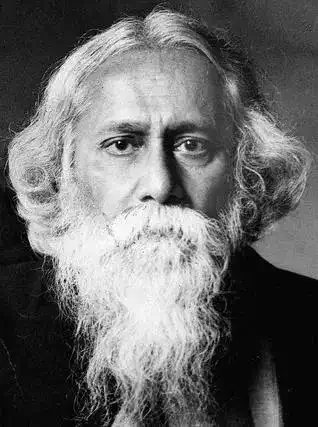
Rabindranath Tagore
Old And New
Thou hast made me known to friends whom I knew not.
Thou hast given me seats in homes not my own.
Thou hast brought the distant near and made a brother of the stranger.
I am uneasy at heart when I have to leave my accustomed shelter;
I forget that there abides the old in the new,
and that there also thou abidest.
Through birth and death, in this world or in others,
wherever thou leadest me it is thou, the same,
the one companion of my endless life
who ever linkest my heart with bonds of joy to the unfamiliar.
When one knows thee, then alien there is none, then no door is shut.
Oh, grant me my prayer that I may never lose
the bliss of the touch of the one
in the play of many.
Read more →
Thou hast given me seats in homes not my own.
Thou hast brought the distant near and made a brother of the stranger.
I am uneasy at heart when I have to leave my accustomed shelter;
I forget that there abides the old in the new,
and that there also thou abidest.
Through birth and death, in this world or in others,
wherever thou leadest me it is thou, the same,
the one companion of my endless life
who ever linkest my heart with bonds of joy to the unfamiliar.
When one knows thee, then alien there is none, then no door is shut.
Oh, grant me my prayer that I may never lose
the bliss of the touch of the one
in the play of many.
541

Ezra Pound
Night Litany
O Dieu, purifiez nos cceurs!
Purifiez nos coeurs !
Yea the lines hast thou laid unto me
in pleasant places,
And the beauty of this thy Venice
hast thou shown unto me
Until is its loveliness become unto me
a thing of tears.
O God, what great kindness
have we done in times past
and forgotten it,
That thou givest this wonder unto us,
O God of waters?
O God of the night,
What great sorrow
Cometh unto us,
That thou thus repayest us
Before the time of its coming?
O God of silence,
Purifiez nos coeurs,
Purifiez nos coeurs,
For we have seen
The glory of the shadow of the
likeness of thine handmaid,
Yea, the glory of the shadow
of thy Beauty hath walked
Upon the shadow of the waters
In this thy Venice.
And before the holiness
Of the shadow of thy handmaid
Have I hidden mine eyes,
O God of waters.
O God of silence,
Purifiez nos coeurs,
Purifiez nos coeurs,
O God of waters,
make clean our hearts within us,
For I have seen the
Shadow of this thy Venice
Floating upon the waters,
And thy stars
Have seen this thing, out of their far courses
Have they seen this thing,
O God of waters,
Even as are thy stars
Silent unto us in their far-coursing,
Even so is mine heart
become silent within me.
Purifiez nos coeurs,
O God of the silence,
Purifiez nos coeurs,
O God of waters.
Read more →
Purifiez nos coeurs !
Yea the lines hast thou laid unto me
in pleasant places,
And the beauty of this thy Venice
hast thou shown unto me
Until is its loveliness become unto me
a thing of tears.
O God, what great kindness
have we done in times past
and forgotten it,
That thou givest this wonder unto us,
O God of waters?
O God of the night,
What great sorrow
Cometh unto us,
That thou thus repayest us
Before the time of its coming?
O God of silence,
Purifiez nos coeurs,
Purifiez nos coeurs,
For we have seen
The glory of the shadow of the
likeness of thine handmaid,
Yea, the glory of the shadow
of thy Beauty hath walked
Upon the shadow of the waters
In this thy Venice.
And before the holiness
Of the shadow of thy handmaid
Have I hidden mine eyes,
O God of waters.
O God of silence,
Purifiez nos coeurs,
Purifiez nos coeurs,
O God of waters,
make clean our hearts within us,
For I have seen the
Shadow of this thy Venice
Floating upon the waters,
And thy stars
Have seen this thing, out of their far courses
Have they seen this thing,
O God of waters,
Even as are thy stars
Silent unto us in their far-coursing,
Even so is mine heart
become silent within me.
Purifiez nos coeurs,
O God of the silence,
Purifiez nos coeurs,
O God of waters.
535
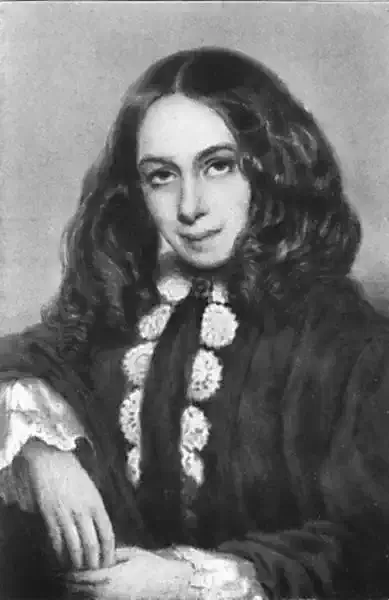
Elizabeth Barrett Browning
A Woman's Shortcomings
She has laughed as softly as if she sighed,
She has counted six, and over,
Of a purse well filled, and a heart well tried -
Oh, each a worthy lover!
They "give her time"; for her soul must slip
Where the world has set the grooving;
She will lie to none with her fair red lip:
But love seeks truer loving.
She trembles her fan in a sweetness dumb,
As her thoughts were beyond recalling;
With a glance for one, and a glance for some,
From her eyelids rising and falling;
Speaks common words with a blushful air,
Hears bold words, unreproving;
But her silence says - what she never will swear -
And love seeks better loving.
Go, lady! lean to the night-guitar,
And drop a smile to the bringer;
Then smile as sweetly, when he is far,
At the voice of an in-door singer.
Bask tenderly beneath tender eyes;
Glance lightly, on their removing;
And join new vows to old perjuries -
But dare not call it loving!
Unless you can think, when the song is done,
No other is soft in the rhythm;
Unless you can feel, when left by One,
That all men else go with him;
Unless you can know, when unpraised by his breath,
That your beauty itself wants proving;
Unless you can swear "For life, for death!" -
Oh, fear to call it loving!
Unless you can muse in a crowd all day
On the absent face that fixed you;
Unless you can love, as the angels may,
With the breadth of heaven betwixt you;
Unless you can dream that his faith is fast,
Through behoving and unbehoving;
Unless you can die when the dream is past -
Oh, never call it loving!
Read more →
She has counted six, and over,
Of a purse well filled, and a heart well tried -
Oh, each a worthy lover!
They "give her time"; for her soul must slip
Where the world has set the grooving;
She will lie to none with her fair red lip:
But love seeks truer loving.
She trembles her fan in a sweetness dumb,
As her thoughts were beyond recalling;
With a glance for one, and a glance for some,
From her eyelids rising and falling;
Speaks common words with a blushful air,
Hears bold words, unreproving;
But her silence says - what she never will swear -
And love seeks better loving.
Go, lady! lean to the night-guitar,
And drop a smile to the bringer;
Then smile as sweetly, when he is far,
At the voice of an in-door singer.
Bask tenderly beneath tender eyes;
Glance lightly, on their removing;
And join new vows to old perjuries -
But dare not call it loving!
Unless you can think, when the song is done,
No other is soft in the rhythm;
Unless you can feel, when left by One,
That all men else go with him;
Unless you can know, when unpraised by his breath,
That your beauty itself wants proving;
Unless you can swear "For life, for death!" -
Oh, fear to call it loving!
Unless you can muse in a crowd all day
On the absent face that fixed you;
Unless you can love, as the angels may,
With the breadth of heaven betwixt you;
Unless you can dream that his faith is fast,
Through behoving and unbehoving;
Unless you can die when the dream is past -
Oh, never call it loving!
536

William Wordsworth
The Sparrow's Nest
BEHOLD, within the leafy shade,
Those bright blue eggs together laid!
On me the chance-discovered sight
Gleamed like a vision of delight.
I started---seeming to espy
The home and sheltered bed,
The Sparrow's dwelling, which, hard by
My Father' house, in wet or dry
My sister Emmeline and I
Together visited.
She looked at it and seemed to fear it;
Dreading, tho' wishing, to be near it:
Such heart was in her, being then
A little Prattler among men.
The Blessing of my later year
Was with me when a boy:
She gave me eyes, she gave me ears;
And humble care, and delicate fears;
A heart, the fountain of sweet tears;
And love, and thought, and joy.
Read more →
Those bright blue eggs together laid!
On me the chance-discovered sight
Gleamed like a vision of delight.
I started---seeming to espy
The home and sheltered bed,
The Sparrow's dwelling, which, hard by
My Father' house, in wet or dry
My sister Emmeline and I
Together visited.
She looked at it and seemed to fear it;
Dreading, tho' wishing, to be near it:
Such heart was in her, being then
A little Prattler among men.
The Blessing of my later year
Was with me when a boy:
She gave me eyes, she gave me ears;
And humble care, and delicate fears;
A heart, the fountain of sweet tears;
And love, and thought, and joy.
541
William Blake
Devine Image
To Mercy, Pity, Peace, and Love,
All pray in their distress,
And to these virtues of delight
Return their thankfulness.
For Mercy, Pity, Peace, and Love,
Is God our Father dear;
And Mercy, Pity, Peace, and Love,
Is man, his child and care.
For Mercy has a human heart
Pity, a human face;
And Love, the human form divine;
And Peace, the human dress.
Then every man, of every clime,
That prays in his distress,
Prays to the human form divine:
Love, Mercy, Pity, Peace.
And all must love the human form,
In heathen, Turk, or Jew.
Where Mercy, Love, and Pity dwell,
There God is dwelling too.
Read more →
All pray in their distress,
And to these virtues of delight
Return their thankfulness.
For Mercy, Pity, Peace, and Love,
Is God our Father dear;
And Mercy, Pity, Peace, and Love,
Is man, his child and care.
For Mercy has a human heart
Pity, a human face;
And Love, the human form divine;
And Peace, the human dress.
Then every man, of every clime,
That prays in his distress,
Prays to the human form divine:
Love, Mercy, Pity, Peace.
And all must love the human form,
In heathen, Turk, or Jew.
Where Mercy, Love, and Pity dwell,
There God is dwelling too.
537
Rabindranath Tagore
My Polar Star
I have made You the polar star of my
existence; never again can I lose my way in the
voyage of life.
Wherever I go, You are always there to
shower your benefience all around me. Your face
is ever present before my mind's eyes.
If I lose sight of You even for a moment, I
almost lose my mind.
Whenever my heart is about to go astray, just
a glance of You makes it feel ashamed of itself.
Read more →
existence; never again can I lose my way in the
voyage of life.
Wherever I go, You are always there to
shower your benefience all around me. Your face
is ever present before my mind's eyes.
If I lose sight of You even for a moment, I
almost lose my mind.
Whenever my heart is about to go astray, just
a glance of You makes it feel ashamed of itself.
542
Walt Whitman
Proud Music Of The Storm
PROUD music of the storm!
Blast that careers so free, whistling across the prairies!
Strong hum of forest tree-tops! Wind of the mountains!
Personified dim shapes! you hidden orchestras!
You serenades of phantoms, with instruments alert,
Blending, with Nature's rhythmus, all the tongues of nations;
You chords left us by vast composers! you choruses!
You formless, free, religious dances! you from the Orient!
You undertone of rivers, roar of pouring cataracts;
You sounds from distant guns, with galloping cavalry!
Echoes of camps, with all the different bugle-calls!
Trooping tumultuous, filling the midnight late, bending me powerless,
Entering my lonesome slumber-chamber--Why have you seiz'd me?
Come forward, O my Soul, and let the rest retire;
Listen--lose not--it is toward thee they tend;
Parting the midnight, entering my slumber-chamber,
For thee they sing and dance, O Soul.
A festival song!
The duet of the bridegroom and the bride--a marriage-march,
With lips of love, and hearts of lovers, fill'd to the brim with
love;
The red-flush'd cheeks, and perfumes--the cortege swarming, full of
friendly faces, young and old,
To flutes' clear notes, and sounding harps' cantabile.
Now loud approaching drums!
Victoria! see'st thou in powder-smoke the banners torn but flying?
the rout of the baffled?
Hearest those shouts of a conquering army?
(Ah, Soul, the sobs of women--the wounded groaning in agony,
The hiss and crackle of flames--the blacken'd ruins--the embers of
cities,
The dirge and desolation of mankind.)
Now airs antique and medieval fill me!
I see and hear old harpers with their harps, at Welsh festivals:
I hear the minnesingers, singing their lays of love,
I hear the minstrels, gleemen, troubadours, of the feudal ages.
Now the great organ sounds,
Tremulous--while underneath, (as the hid footholds of the earth,
On which arising, rest, and leaping forth, depend,
All shapes of beauty, grace and strength--all hues we know,
Green blades of grass, and warbling birds--children that gambol and
play--the clouds of heaven above,)
The strong base stands, and its pulsations intermits not,
Bathing, supporting, merging all the rest--maternity of all the rest;
And with it every instrument in multitudes,
The players playing--all the world's musicians,
The solemn hymns and masses, rousing adoration,
All passionate heart-chants, sorrowful appeals,
The measureless sweet vocalists of ages,
And for their solvent setting, Earth's own diapason,
Of winds and woods and mighty ocean waves;
A new composite orchestra--binder of years and climes--ten-fold
renewer,
As of the far-back days the poets tell--the Paradiso,
The straying thence, the separation long, but now the wandering done,
The journey done, the Journeyman come home,
And Man and Art, with Nature fused again.
Tutti! for Earth and Heaven!
The Almighty Leader now for me, for once has signal'd with his wand.
The manly strophe of the husbands of the world,
And all the wives responding.
The tongues of violins!
(I think, O tongues, ye tell this heart, that cannot tell itself;
This brooding, yearning heart, that cannot tell itself.)
Ah, from a little child,
Thou knowest, Soul, how to me all sounds became music;
My mother's voice, in lullaby or hymn;
(The voice--O tender voices--memory's loving voices!
Last miracle of all--O dearest mother's, sister's, voices;)
The rain, the growing corn, the breeze among the long-leav'd corn,
The measur'd sea-surf, beating on the sand,
The twittering bird, the hawk's sharp scream,
The wild-fowl's notes at night, as flying low, migrating north or
south,
The psalm in the country church, or mid the clustering trees, the
open air camp-meeting,
The fiddler in the tavern--the glee, the long-strung sailor-song,
The lowing cattle, bleating sheep--the crowing cock at dawn.
All songs of current lands come sounding 'round me,
The German airs of friendship, wine and love,
Irish ballads, merry jigs and dances--English warbles,
Chansons of France, Scotch tunes--and o'er the rest,
Italia's peerless compositions.
Across the stage, with pallor on her face, yet lurid passion,
Stalks Norma, brandishing the dagger in her hand.
I see poor crazed Lucia's eyes' unnatural gleam;
Her hair down her back falls loose and dishevell'd.
I see where Ernani, walking the bridal garden,
Amid the scent of night-roses, radiant, holding his bride by the
hand,
Hears the infernal call, the death-pledge of the horn.
To crossing swords, and grey hairs bared to heaven,
The clear, electric base and baritone of the world,
The trombone duo--Libertad forever!
From Spanish chestnut trees' dense shade,
By old and heavy convent walls, a wailing song,
Song of lost love--the torch of youth and life quench'd in despair,
Song of the dying swan--Fernando's heart is breaking.
Awaking from her woes at last, retriev'd Amina sings;
Copious as stars, and glad as morning light, the torrents of her joy.
(The teeming lady comes!
The lustrious orb--Venus contralto--the blooming mother,
Sister of loftiest gods--Alboni's self I hear.)
I hear those odes, symphonies, operas;
I hear in the William Tell, the music of an arous'd and angry people;
I hear Meyerbeer's Huguenots, the Prophet, or Robert;
Gounod's Faust, or Mozart's Don Juan.
I hear the dance-music of all nations,
The waltz, (some delicious measure, lapsing, bathing me in
bliss;)
The bolero, to tinkling guitars and clattering castanets.
I see religious dances old and new,
I hear the sound of the Hebrew lyre,
I see the Crusaders marching, bearing the cross on high, to the
martial clang of cymbals;
I hear dervishes monotonously chanting, interspers'd with frantic
shouts, as they spin around, turning always towards Mecca;
I see the rapt religious dances of the Persians and the Arabs;
Again, at Eleusis, home of Ceres, I see the modern Greeks dancing,
I hear them clapping their hands, as they bend their bodies,
I hear the metrical shuffling of their feet.
I see again the wild old Corybantian dance, the performers wounding
each other;
I see the Roman youth, to the shrill sound of flageolets, throwing
and catching their weapons,
As they fall on their knees, and rise again.
I hear from the Mussulman mosque the muezzin calling;
I see the worshippers within, (nor form, nor sermon, argument, nor
word,
But silent, strange, devout--rais'd, glowing heads--extatic faces.)
I hear the Egyptian harp of many strings,
The primitive chants of the Nile boatmen;
The sacred imperial hymns of China,
To the delicate sounds of the king, (the stricken wood and stone;)
Or to Hindu flutes, and the fretting twang of the vina,
A band of bayaderes.
Now Asia, Africa leave me--Europe, seizing, inflates me;
To organs huge, and bands, I hear as from vast concourses of voices,
Luther's strong hymn, Eine feste Burg ist unser Gott;
Rossini's Stabat Mater dolorosa;
Or, floating in some high cathedral dim, with gorgeous color'd
windows,
The passionate Agnus Dei, or Gloria in Excelsis.
Composers! mighty maestros!
And you, sweet singers of old lands--Soprani! Tenori! Bassi!
To you a new bard, carolling free in the west,
Obeisant, sends his love.
(Such led to thee, O Soul!
All senses, shows and objects, lead to thee,
But now, it seems to me, sound leads o'er all the rest.)
I hear the annual singing of the children in St. Paul's Cathedral;
Or, under the high roof of some colossal hall, the symphonies,
oratorios of Beethoven, Handel, or Haydn;
The Creation, in billows of godhood laves me.
Give me to hold all sounds, (I, madly struggling, cry,)
Fill me with all the voices of the universe,
Endow me with their throbbings--Nature's also,
The tempests, waters, winds--operas and chants--marches and
dances,
Utter--pour in--for I would take them all.
Then I woke softly,
And pausing, questioning awhile the music of my dream,
And questioning all those reminiscences--the tempest in its fury,
And all the songs of sopranos and tenors,
And those rapt oriental dances, of religious fervor,
And the sweet varied instruments, and the diapason of organs,
And all the artless plaints of love, and grief and death,
I said to my silent, curious Soul, out of the bed of the slumber
chamber,
Come, for I have found the clue I sought so long,
Let us go forth refresh'd amid the day,
Cheerfully tallying life, walking the world, the real,
Nourish'd henceforth by our celestial dream.
And I said, moreover,
Haply, what thou hast heard, O Soul, was not the sound of winds,
Nor dream of raging storm, nor sea-hawk's flapping wings, nor harsh
scream,
Nor vocalism of sun-bright Italy,
Nor German organ majestic--nor vast concourse of voices--nor layers
of harmonies;
Nor strophes of husbands and wives--nor sound of marching soldiers,
Nor flutes, nor harps, nor the bugle-calls of camps;
But, to a new rhythmus fitted for thee,
Poems, bridging the way from Life to Death, vaguely wafted in night
air, uncaught, unwritten,
Which, let us go forth in the bold day, and write.
Read more →
Blast that careers so free, whistling across the prairies!
Strong hum of forest tree-tops! Wind of the mountains!
Personified dim shapes! you hidden orchestras!
You serenades of phantoms, with instruments alert,
Blending, with Nature's rhythmus, all the tongues of nations;
You chords left us by vast composers! you choruses!
You formless, free, religious dances! you from the Orient!
You undertone of rivers, roar of pouring cataracts;
You sounds from distant guns, with galloping cavalry!
Echoes of camps, with all the different bugle-calls!
Trooping tumultuous, filling the midnight late, bending me powerless,
Entering my lonesome slumber-chamber--Why have you seiz'd me?
Come forward, O my Soul, and let the rest retire;
Listen--lose not--it is toward thee they tend;
Parting the midnight, entering my slumber-chamber,
For thee they sing and dance, O Soul.
A festival song!
The duet of the bridegroom and the bride--a marriage-march,
With lips of love, and hearts of lovers, fill'd to the brim with
love;
The red-flush'd cheeks, and perfumes--the cortege swarming, full of
friendly faces, young and old,
To flutes' clear notes, and sounding harps' cantabile.
Now loud approaching drums!
Victoria! see'st thou in powder-smoke the banners torn but flying?
the rout of the baffled?
Hearest those shouts of a conquering army?
(Ah, Soul, the sobs of women--the wounded groaning in agony,
The hiss and crackle of flames--the blacken'd ruins--the embers of
cities,
The dirge and desolation of mankind.)
Now airs antique and medieval fill me!
I see and hear old harpers with their harps, at Welsh festivals:
I hear the minnesingers, singing their lays of love,
I hear the minstrels, gleemen, troubadours, of the feudal ages.
Now the great organ sounds,
Tremulous--while underneath, (as the hid footholds of the earth,
On which arising, rest, and leaping forth, depend,
All shapes of beauty, grace and strength--all hues we know,
Green blades of grass, and warbling birds--children that gambol and
play--the clouds of heaven above,)
The strong base stands, and its pulsations intermits not,
Bathing, supporting, merging all the rest--maternity of all the rest;
And with it every instrument in multitudes,
The players playing--all the world's musicians,
The solemn hymns and masses, rousing adoration,
All passionate heart-chants, sorrowful appeals,
The measureless sweet vocalists of ages,
And for their solvent setting, Earth's own diapason,
Of winds and woods and mighty ocean waves;
A new composite orchestra--binder of years and climes--ten-fold
renewer,
As of the far-back days the poets tell--the Paradiso,
The straying thence, the separation long, but now the wandering done,
The journey done, the Journeyman come home,
And Man and Art, with Nature fused again.
Tutti! for Earth and Heaven!
The Almighty Leader now for me, for once has signal'd with his wand.
The manly strophe of the husbands of the world,
And all the wives responding.
The tongues of violins!
(I think, O tongues, ye tell this heart, that cannot tell itself;
This brooding, yearning heart, that cannot tell itself.)
Ah, from a little child,
Thou knowest, Soul, how to me all sounds became music;
My mother's voice, in lullaby or hymn;
(The voice--O tender voices--memory's loving voices!
Last miracle of all--O dearest mother's, sister's, voices;)
The rain, the growing corn, the breeze among the long-leav'd corn,
The measur'd sea-surf, beating on the sand,
The twittering bird, the hawk's sharp scream,
The wild-fowl's notes at night, as flying low, migrating north or
south,
The psalm in the country church, or mid the clustering trees, the
open air camp-meeting,
The fiddler in the tavern--the glee, the long-strung sailor-song,
The lowing cattle, bleating sheep--the crowing cock at dawn.
All songs of current lands come sounding 'round me,
The German airs of friendship, wine and love,
Irish ballads, merry jigs and dances--English warbles,
Chansons of France, Scotch tunes--and o'er the rest,
Italia's peerless compositions.
Across the stage, with pallor on her face, yet lurid passion,
Stalks Norma, brandishing the dagger in her hand.
I see poor crazed Lucia's eyes' unnatural gleam;
Her hair down her back falls loose and dishevell'd.
I see where Ernani, walking the bridal garden,
Amid the scent of night-roses, radiant, holding his bride by the
hand,
Hears the infernal call, the death-pledge of the horn.
To crossing swords, and grey hairs bared to heaven,
The clear, electric base and baritone of the world,
The trombone duo--Libertad forever!
From Spanish chestnut trees' dense shade,
By old and heavy convent walls, a wailing song,
Song of lost love--the torch of youth and life quench'd in despair,
Song of the dying swan--Fernando's heart is breaking.
Awaking from her woes at last, retriev'd Amina sings;
Copious as stars, and glad as morning light, the torrents of her joy.
(The teeming lady comes!
The lustrious orb--Venus contralto--the blooming mother,
Sister of loftiest gods--Alboni's self I hear.)
I hear those odes, symphonies, operas;
I hear in the William Tell, the music of an arous'd and angry people;
I hear Meyerbeer's Huguenots, the Prophet, or Robert;
Gounod's Faust, or Mozart's Don Juan.
I hear the dance-music of all nations,
The waltz, (some delicious measure, lapsing, bathing me in
bliss;)
The bolero, to tinkling guitars and clattering castanets.
I see religious dances old and new,
I hear the sound of the Hebrew lyre,
I see the Crusaders marching, bearing the cross on high, to the
martial clang of cymbals;
I hear dervishes monotonously chanting, interspers'd with frantic
shouts, as they spin around, turning always towards Mecca;
I see the rapt religious dances of the Persians and the Arabs;
Again, at Eleusis, home of Ceres, I see the modern Greeks dancing,
I hear them clapping their hands, as they bend their bodies,
I hear the metrical shuffling of their feet.
I see again the wild old Corybantian dance, the performers wounding
each other;
I see the Roman youth, to the shrill sound of flageolets, throwing
and catching their weapons,
As they fall on their knees, and rise again.
I hear from the Mussulman mosque the muezzin calling;
I see the worshippers within, (nor form, nor sermon, argument, nor
word,
But silent, strange, devout--rais'd, glowing heads--extatic faces.)
I hear the Egyptian harp of many strings,
The primitive chants of the Nile boatmen;
The sacred imperial hymns of China,
To the delicate sounds of the king, (the stricken wood and stone;)
Or to Hindu flutes, and the fretting twang of the vina,
A band of bayaderes.
Now Asia, Africa leave me--Europe, seizing, inflates me;
To organs huge, and bands, I hear as from vast concourses of voices,
Luther's strong hymn, Eine feste Burg ist unser Gott;
Rossini's Stabat Mater dolorosa;
Or, floating in some high cathedral dim, with gorgeous color'd
windows,
The passionate Agnus Dei, or Gloria in Excelsis.
Composers! mighty maestros!
And you, sweet singers of old lands--Soprani! Tenori! Bassi!
To you a new bard, carolling free in the west,
Obeisant, sends his love.
(Such led to thee, O Soul!
All senses, shows and objects, lead to thee,
But now, it seems to me, sound leads o'er all the rest.)
I hear the annual singing of the children in St. Paul's Cathedral;
Or, under the high roof of some colossal hall, the symphonies,
oratorios of Beethoven, Handel, or Haydn;
The Creation, in billows of godhood laves me.
Give me to hold all sounds, (I, madly struggling, cry,)
Fill me with all the voices of the universe,
Endow me with their throbbings--Nature's also,
The tempests, waters, winds--operas and chants--marches and
dances,
Utter--pour in--for I would take them all.
Then I woke softly,
And pausing, questioning awhile the music of my dream,
And questioning all those reminiscences--the tempest in its fury,
And all the songs of sopranos and tenors,
And those rapt oriental dances, of religious fervor,
And the sweet varied instruments, and the diapason of organs,
And all the artless plaints of love, and grief and death,
I said to my silent, curious Soul, out of the bed of the slumber
chamber,
Come, for I have found the clue I sought so long,
Let us go forth refresh'd amid the day,
Cheerfully tallying life, walking the world, the real,
Nourish'd henceforth by our celestial dream.
And I said, moreover,
Haply, what thou hast heard, O Soul, was not the sound of winds,
Nor dream of raging storm, nor sea-hawk's flapping wings, nor harsh
scream,
Nor vocalism of sun-bright Italy,
Nor German organ majestic--nor vast concourse of voices--nor layers
of harmonies;
Nor strophes of husbands and wives--nor sound of marching soldiers,
Nor flutes, nor harps, nor the bugle-calls of camps;
But, to a new rhythmus fitted for thee,
Poems, bridging the way from Life to Death, vaguely wafted in night
air, uncaught, unwritten,
Which, let us go forth in the bold day, and write.
537
Lord Byron
To Edward Noel Long, Esq.
'Nil ego contulerim jucundo sanus amico.' — Horace.
Dear Long, in this sequester'd scene,
While all around in slumber lie,
The joyous days, which ours have been
Come rolling fresh on Fancy's eye;
Thus, if, amidst the gathering storm,
While clouds the darken'd noon deform,
Yon heaven assumes a varied glow,
I hail the sky's celestial bow,
Which spreads the sign of future peace,
And bids the war of tempests cease.
Ah! though the present brings but pain,
I think those days may come again;
Or if, in melancholy mood,
Some lurking envious fear intrude,
To check my bosom's fondest thought,
And interrupt the golden dream
I crush the fiend with malice fraught,
And, still, indulge my wonted theme.
Although we ne'er again can trace,
In Granta's vale, the pedant's lore,
Nor through the groves of Ida chace
Our raptured visions, as before;
Though Youth has flown on rosy pinion,
And Manhood claims his stern dominion,
Age will not every hope destroy,
But yields some hours of sober joy.
Yes, I will hope that Time's broad wing
Will shed around some dews of spring:
But, if his scythe must sweep the flowers
Which bloom among the fairy bowers,
Where smiling Youth delights to dwell,
And hearts with early rapture swell;
In frowning Age, with cold control,
Confines the current of the soul,
Congeals the tear of Pity's eye,
Or checks the sympathetic sigh,
Or hears, unmov'd, Misfortune's groan,
And bids me feel for self alone;
Oh! may my bosom never learn
To soothe its wonted heedless flow;
Still may I rove untutor'd, wild,
But ne'er forget another's woe.
Yes, as you knew me in the days
O'er which Remembrance yet delays
And even in age, at heart a child.
Though, now, on airy visions borne,
To you my soul is still the same.
Oft has it ben my fate to mourn,
And all my former joys are tame:
But, hence! ye hours of sabl hue!
Your frowns are gone, my sorrows o'er:
By every bliss my childhood knew,
I'll think upon your shade no more.
Thus, when the whirlwind's rage is past,
And caves their sullen roar enclose,
We heed no more the wintery blast,
When lull'd by zephyr to repose.
Full often has my infant Muse
Attun'd to love her languid lyre;
But, now, without a theme to choose,
The strains in stolen sighs expire.
My youthful nymps, alas! are flown;
E — is a wife, and C — a mother,
And Carolina sighs alone,
And Mary's given to another;
And Cora's eye, which roll'd on me,
Can now no more my love recall In
truth, dear LONG, 'twas time to flee For
Cora's eye will shine on all.
And though the Sun, with genial rays,
His beams aike to all displays,
And every lady's eye's a sun,
These last should be confin'd to one.
The souls' meridian don't become her,
Whose sun desplays a general summer!
Thus faint is every former flame,
And Passion's self is now a name;
As, when the ebbing flames are low,
The aid which once improv'd their light,
And bade them burn with fiercer glow,
Now quenches all their sparks in night;
Thus has it been with Passion's fires,
As many a boy and girl remembers,
While all the force of love expires,
Extinguish'd with the dying embers.
But now, dear LONG, 'tis midnight's noon,
And clouds obscure the watery moon,
Whose beauties I shall not rehearse,
Describ'd in every stripling's verse;
For why should I the path go o'er
Which every bard has trod before?
Yet ere yon silver lamp of night
Has thrice perform'd her stated round,
Has thrice retraced her path of light,
And chased away the gloom profound,
I trust that we, my gentle Friend,
Shall see her rolling orbit wend,
Above the dearloved
peaceful seat,
Which once contain'd our youth's retreat;
And then, with those our childhood knew,
We'll mingle in the festive crew;
While many a tale of former day
Shall wing the laughing hours away;
And all the flow of souls shall pour
Tha sacred intellectual shower,
Nor cease, till Luna's waning horn
Scarce glimmers through the mist of Morn.
Read more →
Dear Long, in this sequester'd scene,
While all around in slumber lie,
The joyous days, which ours have been
Come rolling fresh on Fancy's eye;
Thus, if, amidst the gathering storm,
While clouds the darken'd noon deform,
Yon heaven assumes a varied glow,
I hail the sky's celestial bow,
Which spreads the sign of future peace,
And bids the war of tempests cease.
Ah! though the present brings but pain,
I think those days may come again;
Or if, in melancholy mood,
Some lurking envious fear intrude,
To check my bosom's fondest thought,
And interrupt the golden dream
I crush the fiend with malice fraught,
And, still, indulge my wonted theme.
Although we ne'er again can trace,
In Granta's vale, the pedant's lore,
Nor through the groves of Ida chace
Our raptured visions, as before;
Though Youth has flown on rosy pinion,
And Manhood claims his stern dominion,
Age will not every hope destroy,
But yields some hours of sober joy.
Yes, I will hope that Time's broad wing
Will shed around some dews of spring:
But, if his scythe must sweep the flowers
Which bloom among the fairy bowers,
Where smiling Youth delights to dwell,
And hearts with early rapture swell;
In frowning Age, with cold control,
Confines the current of the soul,
Congeals the tear of Pity's eye,
Or checks the sympathetic sigh,
Or hears, unmov'd, Misfortune's groan,
And bids me feel for self alone;
Oh! may my bosom never learn
To soothe its wonted heedless flow;
Still may I rove untutor'd, wild,
But ne'er forget another's woe.
Yes, as you knew me in the days
O'er which Remembrance yet delays
And even in age, at heart a child.
Though, now, on airy visions borne,
To you my soul is still the same.
Oft has it ben my fate to mourn,
And all my former joys are tame:
But, hence! ye hours of sabl hue!
Your frowns are gone, my sorrows o'er:
By every bliss my childhood knew,
I'll think upon your shade no more.
Thus, when the whirlwind's rage is past,
And caves their sullen roar enclose,
We heed no more the wintery blast,
When lull'd by zephyr to repose.
Full often has my infant Muse
Attun'd to love her languid lyre;
But, now, without a theme to choose,
The strains in stolen sighs expire.
My youthful nymps, alas! are flown;
E — is a wife, and C — a mother,
And Carolina sighs alone,
And Mary's given to another;
And Cora's eye, which roll'd on me,
Can now no more my love recall In
truth, dear LONG, 'twas time to flee For
Cora's eye will shine on all.
And though the Sun, with genial rays,
His beams aike to all displays,
And every lady's eye's a sun,
These last should be confin'd to one.
The souls' meridian don't become her,
Whose sun desplays a general summer!
Thus faint is every former flame,
And Passion's self is now a name;
As, when the ebbing flames are low,
The aid which once improv'd their light,
And bade them burn with fiercer glow,
Now quenches all their sparks in night;
Thus has it been with Passion's fires,
As many a boy and girl remembers,
While all the force of love expires,
Extinguish'd with the dying embers.
But now, dear LONG, 'tis midnight's noon,
And clouds obscure the watery moon,
Whose beauties I shall not rehearse,
Describ'd in every stripling's verse;
For why should I the path go o'er
Which every bard has trod before?
Yet ere yon silver lamp of night
Has thrice perform'd her stated round,
Has thrice retraced her path of light,
And chased away the gloom profound,
I trust that we, my gentle Friend,
Shall see her rolling orbit wend,
Above the dearloved
peaceful seat,
Which once contain'd our youth's retreat;
And then, with those our childhood knew,
We'll mingle in the festive crew;
While many a tale of former day
Shall wing the laughing hours away;
And all the flow of souls shall pour
Tha sacred intellectual shower,
Nor cease, till Luna's waning horn
Scarce glimmers through the mist of Morn.
542

Rudyard Kipling
The Love Song of Har Dyal
Alone upon the housetops to the North
I turn and watch the lightnings in the sky--
The glamour of thy footsteps in the North.
Come back to me, Beloved, or I die.
Below my feet the still bazar is laid--
Far, far below the weary camels lie--
The camels and the captives of thy raid.
Come back to me, Beloved, or I die!
My father's wife is old and harsh with years,
And drudge of all my father's house am I--
My bread is sorrow and my drink is tears.
Come back to me, Beloved, or I die!
Read more →
I turn and watch the lightnings in the sky--
The glamour of thy footsteps in the North.
Come back to me, Beloved, or I die.
Below my feet the still bazar is laid--
Far, far below the weary camels lie--
The camels and the captives of thy raid.
Come back to me, Beloved, or I die!
My father's wife is old and harsh with years,
And drudge of all my father's house am I--
My bread is sorrow and my drink is tears.
Come back to me, Beloved, or I die!
540
Rabindranath Tagore
Lover's Gifts XIII: Last Night in the Garden
Last night in the garden I offered you my youth's foaming wine. You
lifted the cup to your lips, you shut your eyes and smiled while
I raised your veil, unbound your tresses, drawing down upon my
breast your face sweet with its silence, last night when the moon's
dream overflowed the world of slumber.
To-day in the dew-cooled calm of the dawn you are walking to
God's temple, bathed and robed in white, with a basketful of
flowers in your hand. I stand aside in the shade under the tree,
with my head bent, in the calm of the dawn by the lonely road to
the temple.
Read more →
lifted the cup to your lips, you shut your eyes and smiled while
I raised your veil, unbound your tresses, drawing down upon my
breast your face sweet with its silence, last night when the moon's
dream overflowed the world of slumber.
To-day in the dew-cooled calm of the dawn you are walking to
God's temple, bathed and robed in white, with a basketful of
flowers in your hand. I stand aside in the shade under the tree,
with my head bent, in the calm of the dawn by the lonely road to
the temple.
537