
Poems List

The 'Eathen

The 'Eathen
The 'eathen in 'is blindness bows down to wood an' stone;
'E don't obey no orders unless they is 'is own;
'E keeps 'is side-arms awful: 'e leaves 'em all about,
An' then comes up the regiment an' pokes the 'eathen out.
All along o' dirtiness, all along o' mess,
All along o' doin' things rather-more-or-less,
All along of abby-nay, kul, an' hazar-ho, *
Mind you keep your rifle an' yourself jus' so!
* abby-nay: Not now. kul: To-morrow. hazar-ho: Wait a bit.
The young recruit is 'aughty -- 'e draf's from Gawd knows where;
They bid 'im show 'is stockin's an' lay 'is mattress square;
'E calls it bloomin' nonsense -- 'e doesn't know no more --
An' then up comes 'is Company an' kicks 'im round the floor!
The young recruit is 'ammered -- 'e takes it very 'ard;
'E 'angs 'is 'ead an' mutters -- 'e sulks about the yard;
'E talks o' "cruel tyrants" 'e'll swing for by-an'-by,
An' the others 'ears an' mocks 'im, an' the boy goes orf to cry.
The young recruit is silly -- 'e thinks o' suicide;
'E's lost 'is gutter-devil; 'e 'asn't got 'is pride;
But day by day they kicks 'im, which 'elps 'im on a bit,
Till 'e finds 'isself one mornin' with a full an' proper kit.
Gettin' clear o' dirtiness, gettin' done with mess,
Gettin' shut o' doin' things rather-more-or-less;
Not so fond of abby-nay, kul, nor hazar-ho,
Learns to keep 'is rifle an' 'isself jus' so!
The young recruit is 'appy -- 'e throws a chest to suit;
You see 'im grow mustaches; you 'ear 'im slap 'is boot;
'E learns to drop the "bloodies" from every word 'e slings,
An' 'e shows an 'ealthy brisket when 'e strips for bars an' rings.
The cruel-tyrant-sergeants they watch 'im 'arf a year;
They watch 'im with 'is comrades, they watch 'im with 'is beer;
They watch 'im with the women at the regimental dance,
And the cruel-tyrant-sergeants send 'is name along for "Lance".
An' now 'e's 'arf o' nothin', an' all a private yet,
'Is room they up an' rags 'im to see what they will get;
They rags 'im low an' cunnin', each dirty trick they can,
But 'e learns to sweat 'is temper an' 'e learns to sweat 'is man.
An', last, a Colour-Sergeant, as such to be obeyed,
'E schools 'is men at cricket, 'e tells 'em on parade;
They sees 'em quick an' 'andy, uncommon set an' smart,
An' so 'e talks to orficers which 'ave the Core at 'eart.


'E learns to do 'is watchin' without it showin' plain;
'E learns to save a dummy, an' shove 'im straight again;
'E learns to check a ranker that's buyin' leave to shirk;
An' 'e learns to make men like 'im so they'll learn to like their work.
An' when it comes to marchin' he'll see their socks are right,
An' when it comes to action 'e shows 'em 'ow to sight;
'E knows their ways of thinkin' and just what's in their mind;
'E knows when they are takin' on an' when they've fell be'ind.
'E knows each talkin' corpril that leads a squad astray;
'E feels 'is innards 'eavin', 'is bowels givin' way;
'E sees the blue-white faces all tryin' 'ard to grin,
An' 'e stands an' waits an' suffers till it's time to cap 'em in.
An' now the hugly bullets come peckin' through the dust,
An' no one wants to face 'em, but every beggar must;
So, like a man in irons which isn't glad to go,
They moves 'em off by companies uncommon stiff an' slow.
Of all 'is five years' schoolin' they don't remember much
Excep' the not retreatin', the step an' keepin' touch.
It looks like teachin' wasted when they duck an' spread an' 'op,
But if 'e 'adn't learned 'em they'd be all about the shop!
An' now it's "'Oo goes backward?" an' now it's "'Oo comes on?"
And now it's "Get the doolies," an' now the captain's gone;
An' now it's bloody murder, but all the while they 'ear
'Is voice, the same as barrick drill, a-shepherdin' the rear.
'E's just as sick as they are, 'is 'eart is like to split,
But 'e works 'em, works 'em, works 'em till he feels 'em take the bit;
The rest is 'oldin' steady till the watchful bugles play,
An' 'e lifts 'em, lifts 'em, lifts 'em through the charge that wins the day!
The 'eathen in 'is blindness bows down to wood an' stone;
'E don't obey no orders unless they is 'is own;
The 'eathen in 'is blindness must end where 'e began,
But the backbone of the Army is the non-commissioned man!
Keep away from dirtiness -- keep away from mess.
Don't get into doin' things rather-more-or-less!
Let's ha' done with abby-nay, kul, an' hazar-ho;
Mind you keep your rifle an' yourself jus' so!
585

The Disciple

The Disciple
He that hath a Gospel
To loose upon Mankind,
Though he serve it utterly--
Body, soul and mind--
Though he go to Calvary
Daily for its gain--
It is His Disciple
Shall make his labour vain.
He that hath a Gospel
For all earth to own--
Though he etch it on the steel,
Or carve it on the stone--
Not to be misdoubted
Through the after-days--
It is His Disciple
Shall read it many ways.
It is His Disciple
(Ere Those Bones are dust )
Who shall change the Charter,
Who shall split the Trust--
Amplify distinctions,
Rationalize the Claim;
Preaching that the Master
Would have done the same.
It is His Disciple
Who shall tell us how
Much the Master would have scrapped
Had he lived till now--
What he would have modified
Of what he said before.
It is His Disciple
Shall do this and more....
He that hath a Gospel
Whereby Heaven is won
( Carpenter, or cameleer,
Or Maya's dreaming son ),
Many swords shall pierce Him,
Mingling blood with gall;
But His Own Disciple
Shall wound Him worst of all!
476

The Derelict

The Derelict
~And reports the derelict ~Mary Pollock~ still at sea.~
SHIPPING NEWS.
I was the staunchest of our fleet
Till the sea rose beneath our feet
Unheralded, in hatred past all measure.
Into his pits he stamped my crew,
Buffeted, blinded, bound and threw,
Bidding me eyeless wait upon his pleasure.
Man made me, and my will
Is to my maker still,
Whom now the currents con, the rollers steer --
Lifting forlorn to spy
Trailed smoke along the sky,
Falling afraid lest any keel come near!
Wrenched as the lips of thirst,
Wried, dried, and split and burst,
Bone-bleached my decks, wind-scoured to the graining;
And jarred at every roll
The gear that was my soul
Answers the anguish of my beams' complaining.
For life that crammed me full,
Gangs of the prying gull
That shriek and scrabble on the riven hatches!
For roar that dumbed the gale,
My hawse-pipes guttering wail,
Sobbing my heart out through the uncounted watches!
Blind in the hot blue ring
Through all my points I swing --
Swing and return to shift the sun anew.
Blind in my well-known sky
I hear the stars go by,
Mocking the prow that cannot hold one true!
White on my wasted path
Wave after wave in wrath
Frets 'gainst his fellow, warring where to send me.
Flung forward, heaved aside,
Witless and dazed I bide
The mercy of the comber that shall end me.
North where the bergs careen,
The spray of seas unseen
Smokes round my head and freezes in the falling;
South where the corals breed,
The footless, floating weed


Folds me and fouls me, strake on strake upcrawling.
I that was clean to run
My race against the sun --
Strength on the deep, am bawd to all disaster --
Whipped forth by night to meet
My sister's careless feet,
And with a kiss betray her to my master!
Man made me, and my will
Is to my maker still --
To him and his, our peoples at their pier:
Lifting in hope to spy
Trailed smoke along the sky,
Falling afraid lest any keel come near!
500

The Dead King

The Dead King
EDWARD VII.
Who in the Realm to-day lays down dear life for the sake of a land more dear?
And, unconcerned for his own estate, toils till the last grudged sands have run?
Let him approach. It is proven here
Our King asks nothing of any man more than Our King himself, has done.
For to him above all was Life good, above all he commanded
Her abundance full-handed.
The peculiar treasure of Kings was his for the taking:
All that men come to in dreams he inherited waking: --
His marvel of world-gathered armies -- one heart and all races;
His seas 'neath his keels when his war-castles foamed to their places;
The thundering foreshores that answered his heralded landing;
The huge lighted cities adoring, the assemblies upstanding;
The Councils of Kings called in haste to learn how he was minded --
The kingdoms, the Powers, and the Glories he dealt with unblinded.
To him came all captains of men, all achievers of glory
Hot from the press of their battles they told him their story.
They revealed him their lives in an hour and, saluting departed,
Joyful to labour afresh -- he had made them new-hearted.
And, since he weighed men from his youth, and no lie long deceived him,
He spoke and exacted the truth, and the basest believed him.
And God poured him an exquisite wine, that was daily renewed to him,
In the clear-welling love of his peoples that daily accrued to him.
Honour and service we gave him, rejoicingly fearless;
Faith absolute, trust beyond speech and a friendship as peerless.
And since he was Master and Servant in all that we asked him,
We leaned hard on his wisdom in all things, knowing not how we tasked him.
For on him each new day laid command, every tyrannous hour,
To confront, or confirm, or make smooth some dread issue of power;
To deliver true, judgment aright at the instant, unaided,
In the strict, level, ultimate phrase that allowed or dissuaded;
To foresee, to allay, to avert from us perils unnumbered,
To stand guard on our gates when he guessed that the watchmen had slumbered;
To win time, to turn hate, to woo folly to service and, mightily schooling
His strength to the use of his Nations, to rule as not ruling.
These were the works of our King; Earth's peace was the proof of them.
God gave him great works to fulfil, and to us the behoof of them.
We accepted his toil as our right -- none spared, none excused him.
When he was bowed by his burden his rest was refused him.
We troubled his age with our weakness -- the blacker our shame to us!
Hearing his People had need of him, straightway he came to us.
As he received so he gave -- nothing grudged, naught denying,
Not even the last gasp of his breath when he strove for us, dying.
For our sakes, without question, he put from him all that he cherished.


Simply as any that serve him he served and he perished.
All that Kings covet was his, and he flung it aside for us.
Simply as any that die in his service he died for us!
Who in the Realm to-day has choice of the easy road or the hard to tread?
And, much concerned for his own estate, would sell his soul to remain in the
sun?

Let him depart nor look on Our dead.
Our King asks nothing of any man more than Our King himself has done.
466

The Decline of the West

The Decline of the West
Now it is not good for the Christian's health to hustle the Aryan
brown,
For the Christian riles, and the Aryan smiles, and he weareth the
Christian down;
And the end of the fight is a tombstone white with the name of
the late deceased,
And the epitaph drear: "A Fool lies here who tried to hustle the
East."
646

The Crab That Played with the Sea

The Crab That Played with the Sea
China-going P. & O.'s
Pass Pau Amma's playground close,
And his Pusat Tasek lies
Near the track of most B.I.'s.
N.Y.K. and N.D.L.
Know Pau Amma's home as well
As the Fisher of the Sea knows
"Bens," M.M.'s and Rubattinos.
But (and this is rather queer)
A.T.L.'s can qiot come here;
O. and O. and D.O.A.
Must go round another way.
Orient, Anchor, Bibby, Hall,
Never go that way at all.
U.C.S. would have a fit
If it found itself on it.
And if "Beavers" took their cargoes
To Penang instead of Lagos,
Or a fat Shaw-Savill bore
Passengers to Singapore,
Or a White Star were to try a
Little trip to Sourabaya,
Or a B.S.A. went on
Past Natal to Cheribon,
The the great Mr. Lloyds would come
Whith a wire and drag them home!
. . . . .
You will know what my riddle means
When you've eaten mangosteens.
578

The Cure

The Cure
Long years ago, ere R--lls or R--ce
Trebled the mileage man could cover;
When Sh--nks's Mare was H--bs--n's Choice,
And Bl--r--ot had not flown to Dover:
When good hoteliers looked askance
If any power save horse-flesh drew vans--
'Time was in easy, hand-made France,
I met the Cure of Saint Juvans.
He was no babbler, but, at last,
One learned from things he left unspoken
How in some fiery, far-off past,
His, and a woman's, heart were broken.
He sought for death, but found it not,
Yet, seeking, found his true vocation,
And fifty years, by all forgot,
Toiled at a simple folk's salvation.
His pay was lower than our Dole;
The piteous little church he tended
Had neither roof nor vestments whole
Save what his own hard fingers mended:
While, any hour, at every need
(As Conscience or La Grippe assailed 'em),
His parish bade him come with speed,
And, foot or cart, he never failed 'em,
His speech--to suit his hearers--ran
From pure Parisian to gross peasant,
With interludes North African
If any Legionnaire were present:
And when some wine-ripe atheist mocked
His office or the Faith he knelt in,
He left the sinner dumb and shocked
By oaths his old Battalion dealt in.
And he was learned in Death and Life;
And he was Logic's self (as France is).
He knew his flock-man, maid, and wife--
Their forebears, failings, and finances.
Spite, Avarice, Devotion, Lies--
Passion ablaze or sick Obsession--
He dealt with each physician-wise;
Stern or most tender, at Confession...
To-day? God knows where he may lie--
His Cross of weathered beads above him:
But one not worthy to untie
His shoe-string, prays you read--and love him!
374

The Consolations of Memory

The Consolations of Memory
Circa -- Done out of Boethius by Geoffrey Chaucer
Blessed was our first age and morning-time. Then were no
waies tarren, ne no cars numberen, but each followed his owne
playing-busyness to go about singly or by large interspaces,
for to leden his viage after his luste and layen under clene hedge.
Jungling there was not, nor the overtaking wheele, and all those
now cruel clarions were full-hushed and full-still. Then nobile
horses, lest they should make the chariots moveable to run by
cause of this new feare, we did not press, and were apayed by
sweete thankes of him that drave. There was not cursings ne
adventure of death blinded bankes betweene, but good-fellowship
of yoke-mates at ignorance equal, and a one pillar of dust covered
all exodus.... But, see now how the blacke road hath
strippen herself of hearte and beauty where the dumbe lampe of
Tartarus winketh red, etc.
469

The Conversion of Aurelian McGoggin

The Conversion of Aurelian McGoggin
Ride with an idle whip, ride with an unused heel,
But, once in a way, there will come a day
When the colt must be taught to feel
The lash that falls, and the curb that galls, and the sting
of the rowelled steel.
360

The City of Sleep

The City of Sleep
Over the edge of the purple down,
Where the single lamplight gleams,
Know ye the road to the Merciful Town
That is hard by the Sea of Dreams--
Where the poor may lay their wrongs away,
And the sick may forget to weep?
But we--pity us! Oh, pity us!
We wakeful; ah, pity us! --
We must go back with Policeman Day--
Back from the City of Sleep!
Weary they turn from the scroll and crown,
Fetter and prayer and plough--
They that go up to the Merciful Town,
For her gates are closing now.
It is their right in the Baths of Night
Body and soul to steep,
But we--pity us! ah, pity us!
We wakeful; oh, pity us!--
We must go back with Policeman Day--
Back from the City of Sleep!
Over the edge of the purple down,
Ere the tender dreams begin,
Look--we may look--at the Merciful Town,
But we may not enter in!
Outcasts all, from her guarded wall
Back to our watch we creep:
We--pity us! ah, pity us!
We wakeful; oh, pity us!--
We that go back with Policeman Day--
Back from the City of Sleep!
413

Comments (0)

Log in to post a comment.

NoComments

Identification and basic context

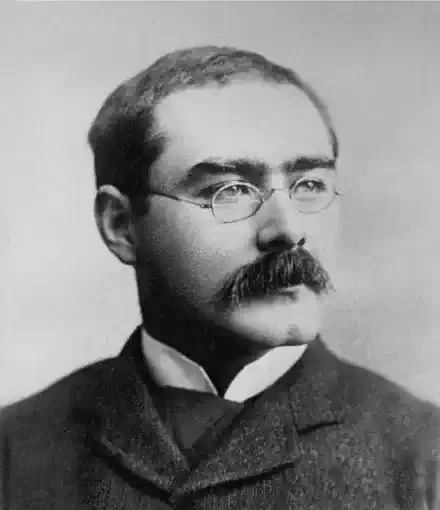
Joseph Rudyard Kipling was an English writer and poet. He is widely known by his middle name, Rudyard. Born in Bombay, British India, he spent much of his formative years there and later in England. His father was an artist and principal of an art school in India. Kipling was a British national and wrote in English.

Childhood and education

Kipling's early childhood in India deeply shaped his worldview and literary output. After returning to England for his education, he attended the United Services College in Westward Ho!, Devon, which provided the setting for his novel 'Stalky & Co.'. His time there was marked by a harsh but formative experience. He received a practical education rather than a formal university degree, returning to India to begin his career in journalism.

Literary trajectory

Kipling began his literary career as a journalist in Lahore, India, in the 1880s. His early stories, often published in periodicals, showcased his keen observation of Indian life and his developing narrative skill. He gained significant fame with collections like 'Plain Tales from the Hills' and 'Soldiers Three'. His move to London in the 1890s further cemented his international reputation. He also wrote novels, essays, and songs, demonstrating a remarkable versatility.

Works, style, and literary characteristics

Kipling's major works include 'The Jungle Book' (1894), 'Kim' (1901), 'The Just So Stories' (1902), and numerous poems like 'If—' and 'The White Man's Burden'. His dominant themes often revolve around India, the British Empire, the lives of soldiers, the relationship between humans and animals, and the complexities of loyalty and duty. His style is characterized by vivid imagery, a strong narrative drive, and a colloquial yet precise use of language. He mastered various forms, from short stories and novels to ballads and epic poems. His poetic voice is often didactic, authoritative, and nationalistic. He employed powerful metaphors and rhythms, making his works highly memorable.

Cultural and historical context

Kipling was a prominent voice during the height of the British Empire, and his work is inextricably linked to the imperialist project. He lived through periods of expansion, conflict, and colonial administration, which heavily influenced his perspective. He was part of a generation of writers grappling with themes of empire, race, and cultural encounter. His strong espousal of the 'White Man's Burden' placed him at the center of contemporary debates about colonialism.

Personal life

Kipling's personal life was marked by his experiences in India and his strong sense of duty and patriotism. His marriage to Caroline Starr Balestier provided a stable partnership. He experienced personal tragedies, including the early death of his daughter Josephine, which deeply affected him and is thought to have influenced some of his later works, such as 'Kim'. He was a complex figure, deeply devoted to his family and his work.

Recognition and reception

Kipling achieved immense fame and recognition during his lifetime. He was awarded the Nobel Prize in Literature in 1907, becoming the first English-language recipient. His works were widely translated and celebrated internationally. However, his strong imperialist views also drew criticism, and his reception has been complex, with ongoing discussions about the political implications of his writings.

Influences and legacy

Kipling was influenced by his experiences in India, classical literature, and the journalistic tradition. His legacy is significant, though debated. He is credited with profoundly shaping the adventure story genre and children's literature. His influence can be seen in subsequent generations of writers who explored themes of empire, adventure, and the wilderness. His poems, particularly 'If—', remain widely quoted. His work continues to be adapted into films and other media.

Interpretation and critical analysis

Kipling's work is often analyzed through the lens of colonialism, examining his portrayal of indigenous peoples and his support for British imperial rule. Critical interpretations highlight his narrative skill and imaginative power while also scrutinizing his problematic political stances. Debates continue regarding the extent to which his stories can be separated from their imperialist context.

Curiosities and lesser-known aspects

Despite his fame, Kipling was notoriously private and sometimes irascible. He had a deep fascination with machinery and technology, which sometimes found its way into his stories. He was also known for his meticulous attention to detail in his writing. A lesser-known aspect is his significant contribution to the development of the short story form.

Death and memory

Rudyard Kipling died in London. His memory is preserved through his vast literary output, which continues to be read and studied, albeit often with critical commentary on his political views. His home, Batemans, is now a National Trust property and museum, offering insights into his life and work.