19 de February
Born on this day
13
José Fanha was a Portuguese poet, playwright, and short story writer, known for his work that explores the human condition with accessible yet profound language. His poetry addresses themes such as daily life, interpersonal relationships, and the passage of time, often with a melancholic yet hopeful tone. His writing reflects a keen sensitivity to the small joys and sorrows of life, making his work resonate with a wide audience. Fanha also stood out for his activity in theater and writing for children and young people, demonstrating remarkable versatility. He was an active member of the literary community, contributing to the dissemination of poetry and the encouragement of reading.
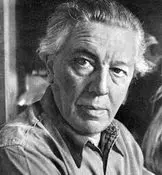
André Breton was a French writer, poet, and surrealist theorist, best known as the founder and principal theorist of Surrealism. His work explored the unconscious mind, dreams, and irrationality, seeking to liberate human thought and expression from the constraints of logic and convention. He championed automatic writing and the power of the imagination.
Always for the First Time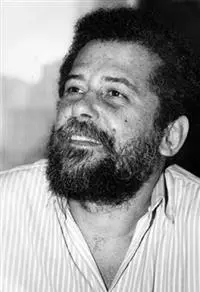
José Carlos Capinam, better known as Capinam or Capinan, is a Brazilian poet and musician.
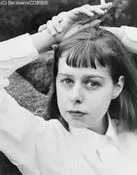
Carson McCullers was a prominent American writer, born in Columbus, Georgia, in 1917. She is known for her novels that explore loneliness, alienation, and complex human relationships, often in Southern United States settings. Her works frequently portray eccentric and marginalized characters who struggle to find connection and meaning in a challenging world.
I live with the people I create and it has always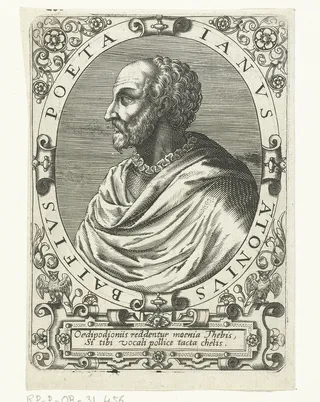
Jean-Antoine de Baïf was a French poet and scholar, a founding member of the 'Pléiade', a group of poets who sought to revitalize French poetry. He is known for his metric innovations and for attempting to reform the French language in poetry, introducing verses with regular meters inspired by classical antiquity.
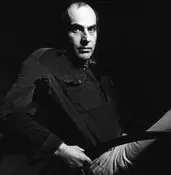
Thomas Brasch was born in a small English town in Yorkshire, in February 1945, to Jewish parents who had emigrated to escape Nazi extermination.


Alfredo Bryce Echenique is a renowned Peruvian writer, known for his vibrant and humorous prose that frequently explores the complexities of Peruvian life and the experiences of the Latin American diaspora. His work is marked by memorable characters and narratives that blend the tragic and the comic, reflecting on identity, memory, and the human condition with a unique and engaging voice. With an unmistakable style, Bryce Echenique has won over readers and critics worldwide, solidifying his place as one of the most important exponents of contemporary Latin American literature. His novels are an invitation to immerse oneself in universes rich in detail, emotions, and profound reflections on life.

Bin Ramke is an American poet known for his lyrical and introspective writing. His works often explore themes of memory, landscape, and the transient nature of existence, with a language that combines the colloquial and the formal. He is recognized for his ability to create vivid imagery and evoke deep emotions in his readers. His poetry is marked by a keen sensitivity to the details of everyday life, transforming the ordinary into the extraordinary. Ramke has been an influential voice in contemporary poetry, inspiring other writers with his unique approach and his dedication to the art of the word.


Died on this day
13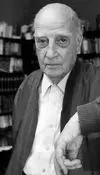
Rómulo Vasco da Gama de Carvalho, Portuguese, was a chemist, a high school physics and chemistry teacher at Liceu Pedro Nunes and Liceu Camões, a pedagogue, and a researcher in the History of Science.
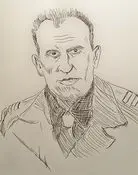
René Char was a French poet, a central figure of surrealist poetry and, later, one of the most original and influential poets of the 20th century. His work is marked by concise, aphoristic language and a profound reflection on the human condition, freedom, and resistance. Char's poetry, often defined as "poetry of action," seeks the alliance between thought and lyricism, exploring beauty and transcendence in everyday life.

Portuguese deputy

Georg Büchner was a German writer, playwright, and biologist, known for his innovative work that pioneered realism and expressionism in literature and theater. Despite his short life, he left a significant literary legacy. His most famous works include the play "Woyzeck", considered a masterpiece of modern theater, and "Danton's Death". Büchner was also noted for his satirical and political writing, criticizing the society and oppression of his time.
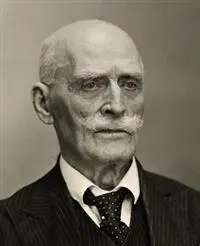
Knut Hamsun was a prominent Norwegian writer, awarded the Nobel Prize in Literature in 1920, whose works explore the human psyche with unique intensity and innovative style. His writing is marked by the exploration of themes such as alienation, poverty, madness, and man's relationship with nature, often through tormented and marginal characters. Hamsun is recognized for significantly influencing literary modernism, especially through his stream-of-consciousness technique and his penetrating gaze into the complexities of existence. Despite his literary brilliance, his figure is also marked by controversies due to his sympathies for the Nazi regime, an aspect that raises complex debates about art and the artist.


José da Silva Maia Ferreira, Portuguese poet of Colonial Angola, whose existence was distinguished above all by his character of wandering.

Jacques Brenner was a French writer, literary critic, and editor. His work encompasses essays, criticisms, and texts on literature, with a particular interest in contemporary poetry and prose. Brenner dedicated himself to analyzing and promoting the work of various writers, contributing to intellectual debate and literary dissemination in France. His role as an editor was also fundamental to launching new talents.

Enrique González Martínez was a Mexican poet, doctor, and diplomat, a central figure of late modernism and a precursor of avant-garde poetry in Mexico. His work is characterized by a deep reflection on time, the fleeting nature of life, and the search for transcendence, with a refined language and great musicality. Through his poetry, he explored themes such as melancholy, solitude, and death, but also the beauty of the moment and the persistence of the spirit. His influence on subsequent generations of Mexican poets was considerable.