
Change and Transformation

Rudyard Kipling
Columns
Out o' the wilderness, dusty an' dry
(Time, an' 'igh time to be trekkin' again!)
Oo is it 'eads to the Detail Supply?
A sectioin, a pompom, an' six 'undred men.
'Ere comes the clerk with 'is lantern an' keys
(Time, an 'igh time to be trekkin 'again!)
" Surplus of everything--draw what you please
"For the section, the pompom, an' six 'unrdred men."
"What are our orders an' where do we lay? .
(Time, an 'igh time to be trekkin' again!)
"You came after dark--you will leave before day,
"You section, you pompom, you six' undred men!"
Down the tin street, 'alf awake an 'unfed,
'Ark to 'em blessin' the Gen'ral in bed!
Now by the church an' the outspan they wind--
Over the ridge an' it's all lef' be'ind
For the section, etc.
Soon they will camp as the dawn's growin' grey,
Roll up for coffee an' sleep while they may--
The section , etc.
Read their 'ome letters, their papers an' such,
For they'll move after dark to astonish the Dutch
With a section, etc.
'Untin' for shade as the long hours pass--
Blankets on rifles or burrows in grass,
Lies the section, etc.
Dossin' or beatin' a shirt in the sun,
Watching chameleons or cleanin' a gun,
Waits the section, etc.
With nothin' but stillness as far as you please,
An' the silly mirage stringin' islands an' seas
Round the section, etc.
So they strips off their hide an' they grills in their bones,
Till the shadows crawl out from beneath the pore stones
Toward the section, etc.
An' the Mauser-bird stops an' the jacals begin
A the 'orse-guard comes up and the Gunners 'ook in
As a 'int the pompom an' six 'undred men . . . .
Off through the dark with the stars to rely on---
(Alpha Centauri an' somethin' Orion)
Moves the section, etc.
Same bloomin' 'ole which the ant-bear 'as broke,
Same bloomin' stumble an' same bloomin' joke
Down the section, etc.
Same "which is right?" where the cart-tracks divide,
Same "give it up" from the same clever guide
To the section, etc.
Same tumble-down on the same 'idden farm,
Same white-eyed Kaffir 'oo gives the alarm--
Of the section, etc.
Same shootin' wild at the end o' the night,
Same flyin'-tackle an' same messy fight,
By the section, etc.
Same ugly 'iccup an' same 'orrid squeal,
When it's too dark to see an' it's too late to feel
In the section, etc.
(Same batch of prisoners, 'airy an' still,
Watchin' their comrades bolt over the 'ill
From the section, etc.)
Same chilly glare in the eye of the sun
As 'e gets up displeasured to see what was done
By the section, etc.
Same splash o' pink on the stoep or the kraal,
An' the same quiet face which 'as finished with all
In the section, the pompom, an' six 'undred men.
Out o' the wilderness, dusty an' dry
(Time, an' 'igh time to be trekkin' again!)
' Oo is it 'eads to the Detail Supply ?
A section, a pompom, an 'six' 'undred men.

Emily Dickinson
We see-Comparatively
The Thing so towering high
We could not grasp its segment
Unaided-Yesterday-
This Morning's finer Verdict-
Makes scarcely worth the toil-
A furrow-Our Cordillera-
Our Apennine-a Knoll-
Perhaps 'tis kindly-done us-
The Anguish-and the loss-
The wrenching-for His Firmament
The Thing belonged to us-
To spare these Striding Spirits
Some Morning of Chagrin-
The waking in a Gnat's-embrace-
Our Giants-further on-

Carl Sandburg
Woman With A Past
There was a woman tore off a red velvet gown
And slashed the white skin of her right shoulder
And a crimson zigzag wrote a finger nail hurry.
There was a woman spoke six short words
And quit a life that was old to her
For a life that was new.
There was a woman swore an oath
And gave hoarse whisper to a prayer
And it was all over.
She was a thief and a whore and a kept woman,
She was a thing to be used and played with.
She wore an ancient scarlet sash.
The story is thin and wavering,
White as a face in the first apple blossoms,
White as a birch in the snow of a winter moon.
The story is never told.
There are white lips whisper alone.
There are red lips whisper alone.
In the cool of the old walls,
In the white of the old walls,
The red song is over.
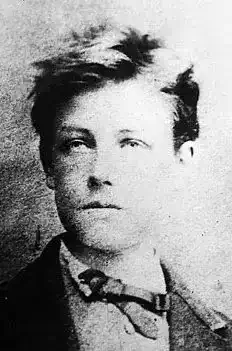
Arthur Rimbaud
Dawn
dead. Battalions of shadows still kept the forest road.
I walked, walking warm and vital breath, While stones watched, and wings rose
soundlessly.
My first adventure, in a path already gleaming With a clear pale light, Was a flower
who told me its name.
I laughted at the blond Wasserfall That threw its hair across the pines: On the silvered
summit, I came upon the goddess.
Then one by one, I lifted her veils. In the long walk, waving my arms.
Across the meadow, where I betrayed her to the cock. In the heart of town she fled
among the steeples and domes, And I hunted her, scrambling like a beggar on marble
wharves.
Above the road, near a thicket of laurel, I caught her in her gathered veils, And smelled
the scent of her immense body. Dawn and the child fell together at the bottom of the
wood.
When I awoke, it was noon.

Derek Walcott
A City's Death By Fire
I wrote the tale by tallow of a city's death by fire;
Under a candle's eye, that smoked in tears, I
Wanted to tell, in more than wax, of faiths that were snapped like wire.
All day I walked abroad among the rubbled tales,
Shocked at each wall that stood on the street like a liar;
Loud was the bird-rocked sky, and all the clouds were bales
Torn open by looting, and white, in spite of the fire.
By the smoking sea, where Christ walked, I asked, why
Should a man wax tears, when his wooden world fails?
In town, leaves were paper, but the hills were a flock of faiths;
To a boy who walked all day, each leaf was a green breath
Rebuilding a love I thought was dead as nails,
Blessing the death and the baptism by fire.
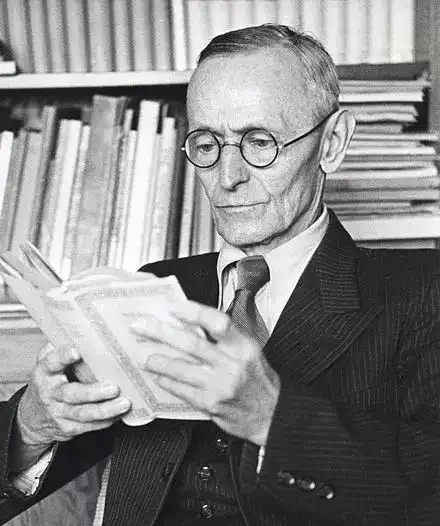
Hermann Hesse
Stages
Departs, so life at every stage,
So every virtue, so our grasp of truth,
Blooms in its day and may not last forever.
Since life may summon us at every age
Be ready, heart, for parting, new endeavor,
Be ready bravely and without remorse
To find new light that old ties cannot give.
In all beginnings dwells a magic force
For guarding us and helping us to live.
Serenely let us move to distant places
And let no sentiments of home detain us.
The Cosmic Spirit seeks not to restrain us
But lifts us stage by stage to wider spaces.
If we accept a home of our own making,
Familiar habit makes for indolence.
We must prepare for parting and leave-taking
Or else remain the slave of permanence.
Even the hour of our death may send
Us speeding on to fresh and newer spaces,
And life may summon us to newer races.
So be it, heart: bid farewell without end.
Rudyard Kipling
The Mary Gloster
Dick, it's your daddy, dying; you've got to listen to him!
Good for a fortnight, am I? The doctor told you? He lied.
I shall go under by morning, and -- Put that nurse outside.
'Never seen death yet, Dickie? Well, now is your time to learn,
And you'll wish you held my record before it comes to your turn.
Not counting the Line and the Foundry, the yards and the village, too,
I've made myself and a million; but I'm damned if I made you.
Master at two-and-twenty, and married at twenty-three --
Ten thousand men on the pay-roll, and forty freighters at sea!
Fifty years between 'em, and every year of it fight,
And now I'm Sir Anthony Gloster, dying, a baronite:
For I lunched with his Royal 'Ighness -- what was it the papers a-had?
"Not least of our merchant-princes." Dickie, that's me, your dad!
I didn't begin with askings. I took my job and I stuck;
And I took the chances they wouldn't, an' now they're calling it luck.
Lord, what boats I've handled -- rotten and leaky and old!
Ran 'em, or -- opened the bilge-cock, precisely as I was told.
Grub that 'ud bind you crazy, and crews that 'ud turn you grey,
And a big fat lump of insurance to cover the risk on the way.
The others they dursn't do it; they said they valued their life
(They've served me since as skippers). I went, and I took my wife.
Over the world I drove 'em, married at twenty-three,
And your mother saving the money and making a man of me.
I was content to be master, but she said there was better behind;
She took the chances I wouldn't, and I followed your mother blind.
She egged me to borrow the money, an' she helped me to clear the loan,
When we bought half shares in a cheap 'un and hoisted a flag of our own.
Patching and coaling on credit, and living the Lord knew how,
We started the Red Ox freighters -- we've eight-and-thirty now.
And those were the days of clippers, and the freights were clipper-freights,
And we knew we were making our fortune, but she died in Macassar Straits --
By the Little Paternosters, as you come to the Union Bank --
And we dropped her in fourteen fathom; I pricked it off where she sank.
Owners we were, full owners, and the boat was christened for her,
And she died in the Mary Gloster. My heart, how young we were!
So I went on a spree round Java and well-nigh ran her ashore,
But your mother came and warned me and I wouldn't liquor no more:
Strict I stuck to my business, afraid to stop or I'd think,
Saving the money (she warned me), and letting the other men drink.
And I met M'Cullough in London (I'd turned five 'undred then),
And 'tween us we started the Foundry -- three forges and twenty men:
Cheap repairs for the cheap 'uns. It paid, and the business grew,
For I bought me a steam-lathe patent, and that was a gold mine too.
"Cheaper to build 'em than buy 'em," I said, but M'Cullough he shied,
And we wasted a year in talking before we moved to the Clyde.
And the Lines were all beginning, and we all of us started fair,
Building our engines like houses and staying the boilers square.
But M'Cullough 'e wanted cabins with marble and maple and all,
And Brussels an' Utrecht velvet, and baths and a Social Hall,
And pipes for closets all over, and cutting the frames too light,
But M'Cullough he died in the Sixties, and -- Well, I'm dying to-night. . . .
I knew -- I knew what was coming, when we bid on the Byfleet's keel --
They piddled and piffled with iron: I'd given my orders for steel!
Steel and the first expansions. It paid, I tell you, it paid,
When we came with our nine-knot freighters and collared the long-run trade!
And they asked me how I did it, and I gave 'em the Scripture text,
"You keep your light so shining a little in front o' the next!"
They copied all they could follow, but they couldn't copy my mind,
And I left 'em sweating and stealing a year and a half behind.
Then came the armour-contracts, but that was M'Cullough's side;
He was always best in the Foundry, but better, perhaps, he died.
I went through his private papers; the notes was plainer than print;
And I'm no fool to finish if a man'll give me a hint.
(I remember his widow was angry.) So I saw what the drawings meant,
And I started the six-inch rollers, and it paid me sixty per cent --
Sixty per cent with failures, and more than twice we could do,
And a quarter-million to credit, and I saved it all for you!
I thought -- it doesn't matter -- you seemed to favour your ma,
But you're nearer forty than thirty, and I know the kind you are.
Harrer an' Trinity College! I ought to ha' sent you to sea --
But I stood you an education, an' what have you done for me?
The things I knew was proper you wouldn't thank me to give,
And the things I knew was rotten you said was the way to live.
For you muddled with books and pictures, an' china an' etchin's an' fans,
And your rooms at college was beastly -- more like a whore's than a man's --
Till you married that thin-flanked woman, as white and as stale as a bone,
An' she gave you your social nonsense; but where's that kid o' your own?
I've seen your carriages blocking the half o' the Cromwell Road,
But never the doctor's brougham to help the missus unload.
(So there isn't even a grandchild, an' the Gloster family's done.)
Not like your mother, she isn't. She carried her freight each run.
But they died, the pore little beggars! At sea she had 'em -- they died.
Only you, an' you stood it; you haven't stood much beside.
Weak, a liar, and idle, and mean as a collier's whelp
Nosing for scraps in the galley. No help -- my son was no help!
So he gets three 'undred thousand, in trust and the interest paid.
I wouldn't give it you, Dickie -- you see, I made it in trade.
You're saved from soiling your fingers, and if you have no child,
It all comes back to the business. Gad, won't your wife be wild!
'Calls and calls in her carriage, her 'andkerchief up to 'er eye:
"Daddy! dear daddy's dyin'!" and doing her best to cry.
Grateful? Oh, yes, I'm grateful, but keep her away from here.
Your mother 'ud never ha' stood 'er, and, anyhow, women are queer. . . .
There's women will say I've married a second time.
Not quite! But give pore Aggie a hundred, and tell her your lawyers'll fight.
She was the best o' the boiling -- you'll meet her before it ends;
I'm in for a row with the mother -- I'll leave you settle my friends:
For a man he must go with a woman, which women don't understand --
Or the sort that say they can see it they aren't the marrying brand.
But I wanted to speak o' your mother that's Lady Gloster still --
I'm going to up and see her, without it's hurting the will.
Here! Take your hand off the bell-pull. Five thousand's waiting for you,
If you'll only listen a minute, and do as I bid you do.
They'll try to prove me crazy, and, if you bungle, they can;
And I've only you to trust to! (O God, why ain't he a man?)
There's some waste money on marbles, the same as M'Cullough tried --
Marbles and mausoleums -- but I call that sinful pride.
There's some ship bodies for burial -- we've carried 'em, soldered and packed;
Down in their wills they wrote it, and nobody called them cracked.
But me -- I've too much money, and people might. . . . All my fault:
It come o' hoping for grandsons and buying that Wokin' vault.
I'm sick o' the 'ole dam' business; I'm going back where I came.
Dick, you're the son o' my body, and you'll take charge o' the same!
I want to lie by your mother, ten thousand mile away,
And they'll want to send me to Woking; and that's where you'll earn your pay.
I've thought it out on the quiet, the same as it ought to be done --
Quiet, and decent, and proper -- an' here's your orders, my son.
You know the Line? You don't, though. You write to the Board, and tell
Your father's death has upset you an' you're goin' to cruise for a spell,
An' you'd like the Mary Gloster -- I've held her ready for this --
They'll put her in working order and you'll take her out as she is.
Yes, it was money idle when I patched her and put her aside
(Thank God, I can pay for my fancies!) -- the boat where your mother died,
By the Little Paternosters, as you come to the Union Bank,
We dropped her -- I think I told you -- and I pricked it off where she sank --
['Tiny she looked on the grating -- that oily, treacly sea --]
'Hundred and eighteen East, remember, and South just three.
Easy bearings to carry -- three South -- three to the dot;
But I gave M'Andrew a copy in case of dying -- or not.
And so you'll write to M'Andrew, he's Chief of the Maori Line;
They'll give him leave, if you ask 'em and say it's business o' mine.
I built three boats for the Maoris, an' very well pleased they were,
An' I've known Mac since the Fifties, and Mac knew me -- and her.
After the first stroke warned me I sent him the money to keep
Against the time you'd claim it, committin' your dad to the deep;
For you are the son o' my body, and Mac was my oldest friend,
I've never asked 'im to dinner, but he'll see it out to the end.
Stiff-necked Glasgow beggar, I've heard he's prayed for my soul,
But he couldn't lie if you paid him, and he'd starve before he stole!
He'll take the Mary in ballast -- you'll find her a lively ship;
And you'll take Sir Anthony Gloster, that goes on 'is wedding-trip,
Lashed in our old deck-cabin with all three port-holes wide,
The kick o' the screw beneath him and the round blue seas outside!
Sir Anthony Gloster's carriage -- our 'ouse-flag flyin' free --
Ten thousand men on the pay-roll and forty freighters at sea!
He made himself and a million, but this world is a fleetin' show,
And he'll go to the wife of 'is bosom the same as he ought to go --
By the heel of the Paternosters -- there isn't a chance to mistake --
And Mac'll pay you the money as soon as the bubbles break!
Five thousand for six weeks' cruising, the staunchest freighter afloat,
And Mac he'll give you your bonus the minute I'm out o' the boat!
He'll take you round to Macassar, and you'll come back alone;
He knows what I want o' the Mary. . . . I'll do what I please with my own.
Your mother 'ud call it wasteful, but I've seven-and-thirty more;
I'll come in my private carriage and bid it wait at the door. . . .
For my son 'e was never a credit: 'e muddled with books and art,
And 'e lived on Sir Anthony's money and 'e broke Sir Anthony's heart.
There isn't even a grandchild, and the Gloster family's done --
The only one you left me, O mother, the only one!
Harrer and Trinity College -- me slavin' early an' late --
An' he thinks I'm dying crazy, and you're in Macassar Strait!
Flesh o' my flesh, my dearie, for ever an' ever amen,
That first stroke come for a warning; I ought to ha' gone to you then,
But -- cheap repairs for a cheap 'un -- the doctors said I'd do:
Mary, why didn't you warn me? I've allus heeded to you,
Excep' -- I know -- about women; but you are a spirit now;
An', wife, they was only women, and I was a man. That's how.
An' a man 'e must go with a woman, as you could not understand;
But I never talked 'em secrets. I paid 'em out o' hand.
Thank Gawd, I can pay for my fancies! Now what's five thousand to me,
For a berth off the Paternosters in the haven where I would be?
I believe in the Resurrection, if I read my Bible plain,
But I wouldn't trust 'em at Wokin'; we're safer at sea again.
For the heart it shall go with the treasure -- go down to the sea in ships.
I'm sick of the hired women -- I'll kiss my girl on her lips!
I'll be content with my fountain, I'll drink from my own well,
And the wife of my youth shall charm me -- an' the rest can go to Hell!
(Dickie, he will, that's certain.) I'll lie in our standin'-bed,
An' Mac'll take her in ballast -- an' she trims best by the head. . . .
Down by the head an' sinkin', her fires are drawn and cold,
And the water's splashin' hollow on the skin of the empty hold --
Churning an' choking and chuckling, quiet and scummy and dark --
Full to her lower hatches and risin' steady. Hark!
That was the after-bulkhead. . . . She's flooded from stem to stern. . . .
Never seen death yet, Dickie? . . . Well, now is your time to learn!

Alfred Lord Tennyson
The Flower
I cast to earth a seed.
Up there came a flower,
The people said, a weed.
To and fro they went
Thro' my garden bower,
And muttering discontent
Cursed me and my flower.
Then it grew so tall
It wore a crown of light,
But thieves from o'er the wall
Stole the seed by night.
Sow'd it far and wide
By every town and tower,
Till all the people cried,
"Splendid is the flower!"
Read my little fable:
He that runs may read.
Most can raise the flowers now,
For all have got the seed.
And some are pretty enough,
And some are poor indeed;
And now again the people
Call it but a weed.
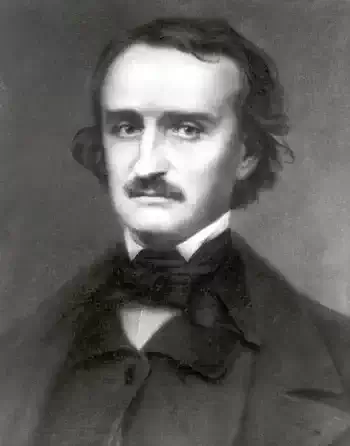
Edgar Allan Poe
The Haunted Palace
By good angels tenanted,
Once a fair and stately palace
Radiant
palace- reared its head.
In the monarch Thought's dominion
It
stood there!
Never seraph spread a pinion
Over fabric half so fair!
Banners yellow, glorious, golden,
On its roof did float and flow,
(This- all this- was in the olden
Time long ago,)
And every gentle air that dallied,
In that sweet day,
Along the ramparts plumed and pallid,
A winged odor went away.
Wanderers in that happy valley,
Through two luminous windows, saw
Spirits moving musically,
To a lute's well-tuned law,
Round about a throne where, sitting
(Porphyrogene!)
In state his glory well-befitting,
The ruler of the realm was seen.
And all with pearl and ruby glowing
Was the fair palace door,
Through which came flowing, flowing, flowing,
And sparkling evermore,
A troop of Echoes, whose sweet duty
Was but to sing,
In voices of surpassing beauty,
The wit and wisdom of their king.
But evil things, in robes of sorrow,
Assailed the monarch's high estate.
(Ah, let us mourn!- for never morrow
Shall dawn upon him desolate!)
And round about his home the glory
That blushed and bloomed,
Is but a dim-remembered story
Of the old time entombed.
And travellers, now, within that valley,
Through the red-litten windows see
Vast forms, that move fantastically
To a discordant melody,
While, like a ghastly rapid river,
Through the pale door
A hideous throng rush out forever
And laugh- but smile no more.
-THE END
.
Rudyard Kipling
The Floods
In the hills above us, in the hills;
And presently the floods break way
Whose strength is in the hills.
The trees they suck from every cloud,
The valley brooks they roar aloud--
Bank-high for the lowlands, lowlands,
Lowlands under the hills!
The first wood down is sere and small,
From the hills--the brishings off the hills;
And then come by the bats and all
We cut last year in the hills;
And then the roots we tried to cleave
But found too tough and had to leave--
Polting through the lowlands, lowlands,
Lowlands under the hills!
The eye shall look, the ear shall hark
To the hills, the doings in the hills,
And rivers mating in the dark
With tokens from the hills.
Now what is weak will! surely go,
And what is strong must prove it so--
Stand Fast in the lowlands, lowlands,
Lowlands under the hills!
The floods they shall not be afraid--
Nor the hills above 'em, nor the hills--
Of any fence which man has made
Betwixt him and the hills.
The waters shall not reckon twice
For any work of man's device,
But bid it down to the lowlands, lowlands,
Lowlands under the hills!
The floods shall sweep corruption clean--
By the hills, the blessing of the hills--
That more the meadows may be green
New-mended from the hills.
The crops and cattle shall increase,
Nor little children shall not cease.
Go--plough the lowlands, lowlands,
Lowlands under the hills!
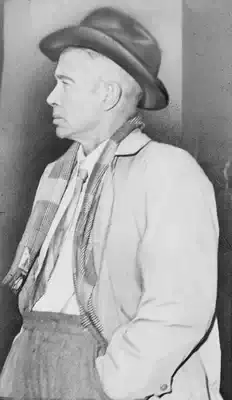
E. E. Cummings
Spring is like a perhaps hand
(which comes carefully
out of Nowhere)arranging
a window,into which people look(while
people stare
arranging and changing placing
carefully there a strange
thing and a known thing here)and
changing everything carefully
spring is like a perhaps
Hand in a window
(carefully to
and fro moving New and
Old things,while
people stare carefully
moving a perhaps
fraction of flower here placing
an inch of air there)and
without breaking anything.

Paul Laurence Dunbar
Old
Alike the Ocean'd ebb and flow;
I have seen kingdoms rise and fall
Like springtime shadows on a wall.
I have seen houses rendered great
That grew from life's debased estate,
And all, all, all is change I see,
So, dearest God, take me, take me.

William Butler Yeats
Easter, 1916
Coming with vivid faces
From counter or desk among grey
Eighteenth-century houses.
I have passed with a nod of the head
Or polite meaningless words,
Or have lingered awhile and said
Polite meaningless words,
And thought before I had done
Of a mocking tale or a gibe
To please a companion
Around the fire at the club,
Being certain that they and I
But lived where motley is worn:
All changed, changed utterly:
A terrible beauty is born.
That woman's days were spent
In ignorant good-will,
Her nights in argument
Until her voice grew shrill.
What voice more sweet than hers
When, young and beautiful,
She rode to harriers?
This man had kept a school
And rode our winged horse;
This other his helper and friend
Was coming into his force;
He might have won fame in the end,
So sensitive his nature seemed,
So daring and sweet his thought.
This other man I had dreamed
A drunken, vainglorious lout.
He had done most bitter wrong
To some who are near my heart,
Yet I number him in the song;
He, too, has resigned his part
In the casual comedy;
He, too, has been changed in his turn,
Transformed utterly:
A terrible beauty is born.
Hearts with one purpose alone
Through summer and winter seem
Enchanted to a stone
To trouble the living stream.
The horse that comes from the road.
The rider, the birds that range
From cloud to tumbling cloud,
Minute by minute they change;
A shadow of cloud on the stream
Changes minute by minute;
A horse-hoof slides on the brim,
And a horse plashes within it;
The long-legged moor-hens dive,
And hens to moor-cocks call;
Minute by minute they live:
The stone's in the midst of all.
Too long a sacrifice
Can make a stone of the heart.
O when may it suffice?
That is Heaven's part, our part
To murmur name upon name,
As a mother names her child
When sleep at last has come
On limbs that had run wild.
What is it but nightfall?
No, no, not night but death;
Was it needless death after all?
For England may keep faith
For all that is done and said.
We know their dream; enough
To know they dreamed and are dead;
And what if excess of love
Bewildered them till they died?
I write it out in a verse -
MacDonagh and MacBride
And Connolly and pearse
Now and in time to be,
Wherever green is worn,
Are changed, changed utterly:
A terrible beauty is born.
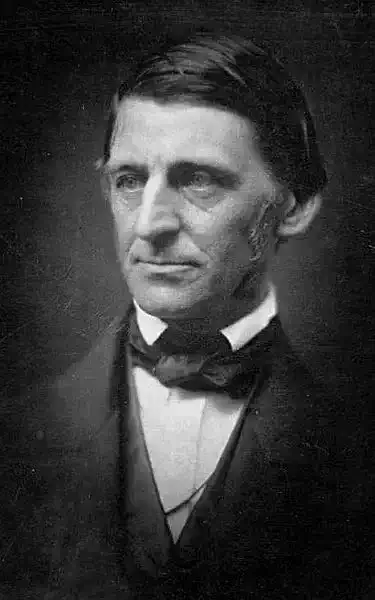
Ralph Waldo Emerson
Uriel.
Which the brooding soul surveys,
Or ever the wild Time coin'd itself
Into calendar months and days.
This was the lapse of Uriel,
Which in Paradise befell.
Once, among the Pleiads walking,
Sayd overheard the young gods talking;
And the treason, too long pent,
To his ears was evident.
The young deities discuss'd
Laws of form, and metre just,
Orb, quintessence, and sunbeams,
What subsisteth, and what seems.
One, with low tones that decide,
And doubt and reverend use defied,
With a look that solved the sphere,
And stirr'd the devils everywhere,
Gave his sentiment divine
Against the being of a line.
'Line in nature is not found;
Unit and universe are round;
In vain produced, all rays return;
Evil will bless, and ice will burn.'
As Uriel spoke with piercing eye,
A shudder ran around the sky;
The stern old war-gods shook their heads;
The seraphs frown'd from myrtle-beds;
Seem'd to the holy festival
The rash word boded ill to all;
The balance-beam of Fate was bent;
The bounds of good and ill were rent;
Strong Hades could not keep his own,
But all slid to confusion.
A sad self-knowledge withering fell
On the beauty of Uriel;
In heaven once eminent, the god
Withdrew that hour into his cloud;
Whether doom'd to long gyration
In the sea of generation,
Or by knowledge grown too bright
To hit the nerve of feebler sight.
Straightway a forgetting wind
Stole over the celestial kind,
And their lips the secret kept,
If in ashes the fire-seed slept.
But, now and then, truth-speaking things
Shamed the angels' veiling wings;
And, shrilling from the solar course,
Or from fruit of chemic force,
Procession of a soul in matter,
Or the speeding change of water,
Or out of the good of evil born,
Came Uriel's voice of cherub scorn,
And a blush tinged the upper sky,
And the gods shook, they knew not why
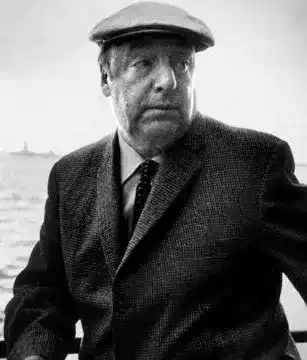
Pablo Neruda
Enigma with Flower
how to arrive, like the lily, at will,
the white figure, that pierces
the motionless eternity of earth,
pushing at clear, faint, form,
till the hour strikes: that clay,
with a white ray, or a spur of milk.
Shedding of clothing, the thick darkness of soil,
on whose cliff the fair flower advances,
till the flag of its whiteness
defeats the contemptible deep of night,
and, from the motion of light,
spills itself in astonished seed.
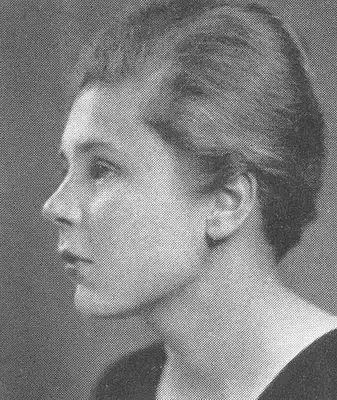
Elizabeth Bishop
The Weed
I lay upon a grave, or bed,
(at least, some cold and close-built bower).
In the cold heart, its final thought
stood frozen, drawn immense and clear,
stiff and idle as I was there;
and we remained unchanged together
for a year, a minute, an hour.
Suddenly there was a motion,
as startling, there, to every sense
as an explosion. Then it dropped
to insistent, cautious creeping
in the region of the heart,
prodding me from desperate sleep.
I raised my head. A slight young weed
had pushed up through the heart and its
green head was nodding on the breast.
(All this was in the dark.)
It grew an inch like a blade of grass;
next, one leaf shot out of its side
a twisting, waving flag, and then
two leaves moved like a semaphore.
The stem grew thick. The nervous roots
reached to each side; the graceful head
changed its position mysteriously,
since there was neither sun nor moon
to catch its young attention.
The rooted heart began to change
(not beat) and then it split apart
and from it broke a flood of water.
Two rivers glanced off from the sides,
one to the right, one to the left,
two rushing, half-clear streams,
(the ribs made of them two cascades)
which assuredly, smooth as glass,
went off through the fine black grains of earth.
The weed was almost swept away;
it struggled with its leaves,
lifting them fringed with heavy drops.
A few drops fell upon my face
and in my eyes, so I could see
(or, in that black place, thought I saw)
that each drop contained a light,
a small, illuminated scene;
the weed-deflected stream was made
itself of racing images.
(As if a river should carry all
the scenes that it had once reflected
shut in its waters, and not floating
on momentary surfaces.)
The weed stood in the severed heart.
"What are you doing there?" I asked.
It lifted its head all dripping wet
(with my own thoughts?)
and answered then: "I grow," it said,
"but to divide your heart again."
Pablo Neruda
The Night in Isla Negra
beat at the walls of my house.
The shadow is all one, the sky
throbs now along with the ocean,
and sky and shadow erupt
in the crash of their vast conflict.
All night long they struggle;
nobody knows the name
of the harsh light that keeps slowly opening
like a languid fruit.
So on the coast comes to light,
out of seething shadow, the harsh dawn,
gnawed at by the moving salt,
swept clean by the mass of night,
bloodstained in its sea-washed crater.
Pablo Neruda
‘In the wave-strike over unquiet stones’
the brightness bursts and bears the rose
and the ring of water contracts to a cluster
to one drop of azure brine that falls.
O magnolia radiance breaking in spume,
magnetic voyager whose death flowers
and returns, eternal, to being and nothingness:
shattered brine, dazzling leap of the ocean.
Merged, you and I, my love, seal the silence
while the sea destroys its continual forms,
collapses its turrets of wildness and whiteness,
because in the weft of those unseen garments
of headlong water, and perpetual sand,
we bear the sole, relentless tenderness.
Boris Pasternak
Change
Not simply lofty views expressing:
Their lives alone, I felt, were true,
Devoid of pomp and window-dressing.
No stranger to the manor house,
Its finery and lordly tenor,
I was a friend of down-and-outs,
And shunned the idly sponging manner.
For choosing friendship in the ranks
Of working people, though no rebel,
I had the honour to be stamped
As also one among the rabble.
The state of basements, unadorned,
Of attics with no frills or curtains
Was tangible without pretence
And full of substance, weighty, certain.
And I went bad when rot defaced
Our time, and life became infested,
When grief was censured as disgrace
And all played optimists and yes-men.
My faith in those who seemed my friends
Was broken and our ties were sundered.
I, too, lost Man, the Human, since
He had been lost by all and sundry.

Kazi Nazrul Islam
The Ecstasy of Destruction
There rages the summer storm
flying the flag of the New and the Young,
There comes he who had not come so long;
Dancing merrily
drink we will the joy of destruction.
There comes the Terrible
like the fierce executioner of eternal time
across the dark well of death
through smouldering smoke
lighting the torch of thunder.
There, listen to his ringing laughter.
Come, make merry and rejoice!
The wavy locks of his hair
make the sky rock and swing.
Even the ominous comet is at his service.
His blood, like an unsheathed sword,
rocks the bosom of the father of the universe.
Look, this wild tumultuous tunnoil
has made the sky and the earth still and numb
Come, make merry and rejoice.
A dozen suns glitter and shine in his burning eyes
And the sorrows of the world cluster in his
tangled and disheveled hair.
A single dropp of his tear
makes the seven seas roll and swell.
In his giant arms he crakles the mother-earth
and cries out, 'Welcome, Destruction! '
Come, comrades, make merry and rejoice, '
Oh, have no fear!
The deluge will soon overtake the universe.
The final hour is fast drawing near.
The rotting old and the dying decrepit
will now be wiped out for good.
Now at last at the end of the long night of darkness
The glorious dawn will come with a smile
in her soft and tender dress.
Look, there the young moon shines in his unkempt hair.
Its light will fill your room
and make it glow with a strange radiance,
Come, make merry and rejoice!
There he comes flashing his whip of blood and lightning,
directing the passage of eternity.
The neighing of his horse reverberates in the stormy wind
and in the song of thunder.
The blast of his hoofs hits the stars
and scatters them shooting
through the columns of the blue-domed sky.
The gods are all lying in the dead well
of a dark dungeon.
They are tied to the cold stony pillar
of the sacriticial altar.
Indeed this is the time for him
to come triumphantly riding his gorgeous chariot.
O comrades, come, make merry and rejoice!
Why should the sight of destruction frighten you?
All this upheaval is but the birth pain
of a new creation.
There comes the bold new youth
eager to wipe out all that is ugly and decayed.
He comes with' his unkempt hair and careless dress
on the wings of the Deluge
with a smile on his lips.
He is the eternal beauty
who knows how to destroy and build again,
Come, make merry and rejoice!
What fear has he
for whom all this destruction and rebuilding
is but a game?
Come, make merry and rejoice,
and welcome the Beautiful
who comes today in the garb of the Terrible.
[Translation: Kabir Chowdhury]
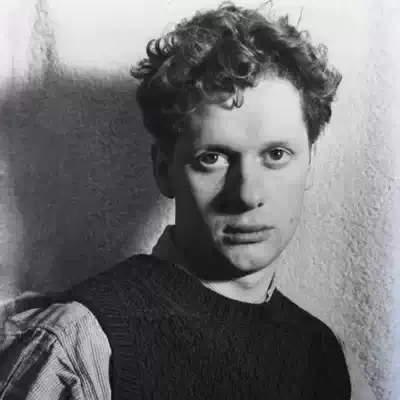
Dylan Thomas
A Grief Ago
She who was who I hold, the fats and the flower,
Or, water-lammed, from the scythe-sided thorn,
Hell wind and sea,
A stem cementing, wrestled up the tower,
Rose maid and male,
Or, master venus, through the paddler's bowl
Sailed up the sun;
Who is my grief,
A chrysalis unwrinkling on the iron,
Wrenched by my fingerman, the leaden bud
Shot through the leaf,
Was who was folded on the rod the aaron
Road east to plague,
The horn and ball of water on the frog
Housed in the side.
And she who lies,
Like exodus a chapter from the garden,
Brand of the lily's anger on her ring,
Tugged through the days
Her ropes of heritage, the wars of pardon,
On field and sand
The twelve triangles of the cherub wind
Engraving going.
Who then is she,
She holding me? The people's sea drives on her,
Drives out the father from the caesared camp;
The dens of shape
Shape all her whelps with the long voice of water,
That she I have,
The country-handed grave boxed into love,
Rise before dark.
The night is near,
A nitric shape that leaps her, time and acid;
I tell her this: before the suncock cast
Her bone to fire,
Let her inhale her dead, through seed and solid
Draw in their seas,
So cross her hand with their grave gipsy eyes,
And close her fist.
Arthur Rimbaud
After The Flood
A hare stopped in the clover and swaying flowerbells,
and said a prayer to the rainbow,
through the spider's web.
Oh! the precious stones that began to hide,-and
the flowers that already looked around.
In the dirty main street, stalls were set up
and boats were hauled toward the sea,
high tiered as in old prints.
Blood flowed at Blue Beard's,-through
slaughterhouses, in circuses,
where the windows were blanched by God's seal.
Blood and milk flowed. Beavers built.
'Mazagrans' smoked in the little bars.
In the big glass house, still dripping,
children in mourning looked
at the marvelous pictures.
A door banged; and in the village square
the little boy waved his arms,
understood by weather vanes
and cocks on steeples everywhere,
in the bursting shower.
Madame *** installed a piano in the Alps.
Mass and first communions were celebrated
at the hundred thousand altars of the cathedral.
Caravans set out. And Hotel Splendid was built
in the chaos of ice and of the polar night.
Ever after the moon heard jackals howling
across the deserts of thyme,
and eclogues in wooden shoes growling in the orchard.
Then in the violet and budding forest,
Eucharis told me it was spring.
Gush, pond,-- Foam, roll on the bridge and over the woods;-black
palls and organs, lightening and thunder, rise and roll;-waters
and sorrows rise and launch the Floods again.
For since they have been dissipated-oh!
the precious stones being buried and the opened flowers!-it's
unbearable! and the Queen, the Witch who lights her fire
in the earthen pot will never tell us what she knows,
and what we do not know.
Rudyard Kipling
The Palace
I cleared me ground for a Palace such as a King should build.
I decreed and dug down to my levels. Presently, under the silt,
I came on the wreck of a Palace such as a King had built.
There was no worth in the fashion -- there was no wit in the plan --
Hither and thither, aimless, the ruined footings ran --
Masonry, brute, mishandled, but carven on every stone:
"After me cometh a Builder. Tell him, I too have known."
Swift to my use in my trenches, where my well-planned ground-works grew,
I tumbled his quoins and his ashlars, and cut and reset them anew.
Lime I milled of his marbles; burned it, slacked it, and spread;
Taking and leaving at pleasure the gifts of the humble dead.
Yet I despised not nor gloried; yet, as we wrenched them apart,
I read in the razed foundations the heart of that builder's heart.
As he had risen and pleaded, so did I understand
The form of the dream he had followed in the face of the thing he had planned.
* * * * *
When I was a King and a Mason -- in the open noon of my pride,
They sent me a Word from the Darkness. They whispered and called me aside.
They said -- "The end is forbidden." They said -- "Thy use is fulfilled.
"Thy Palace shall stand as that other's -- the spoil of a King who shall build."
I called my men from my trenches, my quarries, my wharves, and my sheers.
All I had wrought I abandoned to the faith of the faithless years.
Only I cut on the timber -- only I carved on the stone:
"After me cometh a Builder. Tell him, I too have known!"

Rabindranath Tagore
Roaming Cloud
uselessly roaming in the sky, O my sun ever-glorious!
Thy touch has not yet melted my vapor,
making me one with thy light,
and thus I count months and years separated from thee.
If this be thy wish and if this be thy play,
then take this fleeting emptiness of mine,
paint it with colors, gild it with gold,
float it on the wanton wind and spread it in varied wonders.
And again when it shall be thy wish to end this play at night,
I shall melt and vanish away in the dark,
or it may be in a smile of the white morning,
in a coolness of purity transparent.