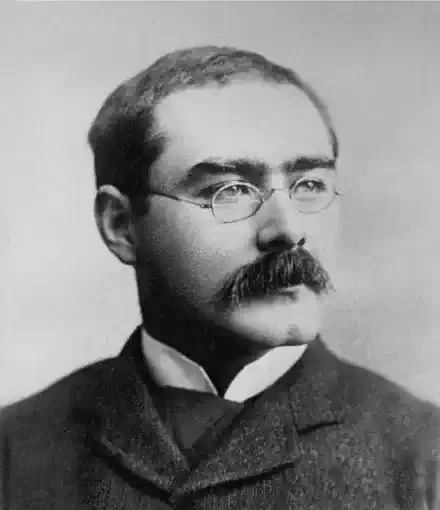
Poems List

The Merchantmen

The Merchantmen
King Solomon drew merchantmen,
Because of his desire
For peacocks, apes, and ivory,
From Tarshish unto Tyre:
With cedars out of Lebanon
Which Hiram rafted down,
But we be only sailormen
That use in London Town.
Coastwise -- cross-seas -- round the world and back again --
Where the flaw shall head us or the full Trade suits --
Plain-sail -- storm-sail -- lay your board and tack again --
And that's the way we'll pay Paddy Doyle for his boots!
We bring no store of ingots,
Of spice or precious stones,
But that we have we gathered
With sweat and aching bones:
In flame beneath the tropics,
In frost upon the floe,
And jeopardy of every wind
That does between them go.
And some we got by purchase,
And some we had by trade,
And some we found by courtesy
Of pike and carronade --
At midnight, 'mid-sea meetings,
For charity to keep,
And light the rolling homeward-bound
That rode a foot too deep.
By sport of bitter weather
We're walty, strained, and scarred
From the kentledge on the kelson
To the slings upon the yard.
Six oceans had their will of us
To carry all away --
Our galley's in the Baltic,
And our boom's in Mossel Bay!
We've floundered off the Texel,
Awash with sodden deals,
We've slipped from Valparaiso
With the Norther at our heels:
We've ratched beyond the Crossets
That tusk the Southern Pole,
And dipped our gunnels under
To the dread Agulhas roll.
Beyond all outer charting
We sailed where none have sailed,


And saw the land-lights burning
On islands none have hailed;
Our hair stood up for wonder,
But, when the night was done,
There danced the deep to windward
Blue-empty 'neath the sun!
Strange consorts rode beside us
And brought us evil luck;
The witch-fire climbed our channels,
And flared on vane and truck:
Till, through the red tornado,
That lashed us nigh to blind,
We saw The Dutchman plunging,
Full canvas, head to wind!
We've heard the Midnight Leadsman
That calls the black deep down --
Ay, thrice we've heard The Swimmer,
The Thing that may not drown.
On frozen bunt and gasket
The sleet-cloud drave her hosts,
When, manned by more than signed with us,
We passed the Isle o' Ghosts!
And north, amid the hummocks,
A biscuit-toss below,
We met the silent shallop
That frighted whalers know;
For, down a cruel ice-lane,
That opened as he sped,
We saw dead Henry Hudson
Steer, North by West, his dead.
So dealt God's waters with us
Beneath the roaring skies,
So walked His signs and marvels
All naked to our eyes:
But we were heading homeward
With trade to lose or make --
Good Lord, they slipped behind us
In the tailing of our wake!
Let go, let go the anchors;
Now shamed at heart are we
To bring so poor a cargo home
That had for gift the sea!
Let go the great bow-anchors --
Ah, fools were we and blind --
The worst we stored with utter toil,
The best we left behind!


Coastwise -- cross-seas -- round the world and back again,
Whither flaw shall fail us or the Trades drive down:
Plain-sail -- storm-sail -- lay your board and tack again --
And all to bring a cargo up to London Town!
469

The Mary Gloster

The Mary Gloster

I've paid for your sickest fancies; I've humoured your crackedest whim --
Dick, it's your daddy, dying; you've got to listen to him!
Good for a fortnight, am I? The doctor told you? He lied.
I shall go under by morning, and -- Put that nurse outside.
'Never seen death yet, Dickie? Well, now is your time to learn,
And you'll wish you held my record before it comes to your turn.
Not counting the Line and the Foundry, the yards and the village, too,
I've made myself and a million; but I'm damned if I made you.
Master at two-and-twenty, and married at twenty-three --
Ten thousand men on the pay-roll, and forty freighters at sea
Fifty years between'em, and every year of it fight,
And now I'm Sir Anthony Gloster, dying, a baronite:
For I lunched with his Royal 'Ighness -- what was it the papers had?
"Not the least of our merchant-princes." Dickie, that's me, your dad!
I didn't begin with askings. I took my job and I stuck;
I took the chances they wouldn't, an' now they're calling it luck.
Lord, what boats I've handled -- rotten and leaky and old --
Ran 'em, or -- opened the bilge-cock, precisely as I was told.
Grub that 'ud bind you crazy, and crews that 'ud turn you grey,
And a big fat lump of insurance to cover the risk on the way.
The others they dursn't do it; they said they valued their life
(They've served me since as skippers). I went, and I took my wife.
Over the world I drove 'em, married at twenty-three,
And your mother saving the money and making a man of me.
I was content to be master, but she said there was better behind;
She took the chances I wouldn't, and I followed your mother blind.
She egged me to borrow the money, an' she helped me to clear the loan,
When we bougnt half-shares in a cheap 'un and hoisted a flag of our own.
Patching and coaling on credit, and living the Lord knew how,
We started the Red Ox freighters -- we've eight-and-thirty now.
And those were the days of clippers, and the freights were clipper-freights,
And we knew we were making our fortune, but she died in Macassar Straits --
By the Little Patemosters, as you come to the Union Bank --
And we dropped her in fourteen fathom: I pricked it off where she sank.
Owners we were, full owners, and the boat was christened for her,
And she died in the Mary Gloster. My heart; how young we were!
So I went on a spree round Java and well-nigh ran her ashore,
But your mother came and warned me and I would't liquor no more:
Strict I stuck to my business, afraid to stop or I'd think,
Saving the money (she warned me), and letting the other men drink.
And I met M'Cullough in London (I'd saved five 'undred then ),
And 'tween us we started the Foundry -- three forges and twenty men.
Cheap repairs for the cheap 'uns. It paid, and the business grew;
For I bought me a steam-lathe patent, and that was a gold mine too.
"Cheaper to build 'em than buy 'em;" I said, but M'Cullough he shied,
And we wasted a year in talking before we moved to the Clyde.
And the Lines were all beginning, and we all of us started fair,
Building our engines like houses and staying the boilers square.
But M'Cullough 'e wanted cabins with marble and maple and all,


And Brussels an' Utrecht velvet, and baths and a Social Hall,
And pipes for closets all over, and cutting the frames too light,
But M'Cullough he died in the Sixties, and ---- Well, I'm dying to-night...
I knew -- I knew what was coming, when we bid on the Byfleet's keel --
They piddled and piffled with iron, I'd given my orders for steel!
Steel and the first expansions. It paid, I tell you, it paid,
When we came with our nine-knot freighters and collared the long-run trade!
And they asked me how I did it; and I gave 'em the Scripture text,
"You keep your light so shining a little in front o' the next!"
They copied all they could follow, but they couldn't copy my mind,
And I left 'em sweating and stealing a year and a half behind.
Then came the armour-contracts, but that was M'Cullough's side;
He was always best in the Foundry, but better, perhaps, he died.
I went through his private papers; the notes was plainer than print;
And I'm no fool to finish if a man'll give me a hint.
(I remember his widow was angry.) So I saw what his drawings meant;
And I started the six-inch rollers, and it paid me sixty per cent.
Sixty per cent with failures, and more than twice we could do,
And a quarter-million to credit, and I saved it all for you!
I thought -- it doesn't matter -- you seemed to favour your ma,
But you're nearer forty than thirty, and I know the kind you are.
Harrer an' Trinity College! I ought to ha' sent you to sea --
But I stood you an education, an' what have you done for me?
The things I knew was proper you wouldn't thank me to give,
And the things I knew was rotten you said was the way to live.
For you muddled with books and pictures, an' china an' etchin's an'fans.
And your rooms at college was beastly -- more like a whore's than a man's;
Till you married that thin-flanked woman, as white and as stale as a bone,
An' she gave you your social nonsense; but where's that kid o' your own?
I've seen your carriages blocking the half o' the Cromwell Road,
But never the doctor's brougham to help the missus unload.
(So there isn't even a grandchild, an' the Gloster family's done. )
Not like your mother, she isn't. She carried her freight each run.
But they died, the pore little beggars! At sea she had 'em -- they died.
Only you, an' you stood it. You haven't stood much beside.
Weak, a liar, and idle, and mean as a collier's whelp
Nosing for scraps in the galley. No help --- my son was no help!
So he gets three 'undred thousand, in trust and the interest paid.
I wouldn't give it you, Dickie -- you see, I made it in trade.
You're saved from soiling your fingers, and if you have no child,
It all comes back to the business. 'Gad, won't your wife be wild!
'Calls and calls in her carriage, her 'andkerchief up to 'er eye:
"Daddy! dear daddy's dyin'!" and doing her best to cry.
Grateful? Oh, yes, I'm grateful, but keep her away from here.
Your mother 'ud never ha' stood 'er, and, anyhow, women are queer.
There's women will say I've married a second time. Not quite!
But give pore Aggie a hundred, and tell her your lawyers'll fight.
She was the best o' the boiling -- you'll meet her before it ends.
I'm in for a row with the mother -- I'll leave you settle my friends.
For a man he must go with a woman, which women don't understand --
Or the sort that say they can see it they aren't the marrying brand.
But I wanted to speak o' your mother that's Lady Gloster still;


I'm going to up and see her, without its hurting the will.
Here! Take your hand off the bell-pull. Five thousand's waiting for you,
If you'll only listen a minute, and do as I bid you do.
They'll try to prove me crazy, and, if you bungle, they can;
And I've only you to trust to! (O God, why ain't it a man? )
There's some waste money on marbles, the same as M'Cullough tried --
Marbles and mausoleums -- but I call that sinful pride.
There's some ship bodies for burial -- we've Pied 'em, soldered and packed,
Down in their wills they wrote it, and nobody called them cracked.
But me -- I've too much money, and people might . . . All my fault:
It come o' hoping for grandsons and buying that Wokin' vault. . . .
I'm sick o' the 'ole dam' business. I'm going back where I came.
Dick, you're the son o' my body, and you'll take charge o' the same!
I want to lie by your mother, ten thousand mile away,
And they'll want to send me to Woking; and that's where you'll earn your pay.
I've thought it out on the quiet, the same as it ought to be done --
Quiet, and decent, and proper -- an' here's your orders, my son.
You know the Line? You don't, though. You write to the Board, and tell
Your father's death has upset you an' you're going to cruise for a spell,
An' you'd like the Mary Gloster -- I've held her ready for this --
They'll put her in working order and you'll take her out as she is.
Yes, it was money idle when I patched her and laid her aside
(Thank God, I can pay for my fancies!) -- the boat where your mother died,
By the Little Paternosters, as you come to the Union Bank,
We dropped her -- I think I told you -- and I pricked it off where she sank.
['Tiny she looked on the grating -- that oily, treacly sea --]
'Hundred and Eighteen East, remember, and South just Three.
Easy bearings to carry -- Three South-Three to the dot;
But I gave McAndrew a copy in case of dying -- or not.
And so you'll write to McAndrew, he's Chief of the Maori Line
They'Il give him leave, if you ask 'em and say it's business o' mine.
I built three boats for the Maoris, an' very well pleased they were,
An I've known Mac since the Fifties, and Mac knew me -- and her.
After the first stroke warned me I sent him the money to keep
Against the time you'd claim it, committin' your dad to the deep;
For you are the son o' my body, and Mac was my oldest friend,
I've never asked 'im to dinner, but he'll see it out to the end.
Stiff-necked Glasgow beggar! I've heard he's prayed for my soul,
But he couldn't lie if you paid him, and he'd starve before he stole.
He'll take the Mary in ballast -- you'll find her a lively ship;
And you'll take Sir Anthony Gloster, that goes on 'is wedding-trip,
Lashed in our old deck-cabin with all three port-holes wide,
The kick o' the screw beneath him and the round blue seas outside!
Sir Anthony Gloster's carriage -- our 'ouse-flag flyin' free --
Ten thousand men on the pay-roll and forty freighters at sea!
He made himself and a million, but this world is a fleetin' show,
And he'll go to the wife of 'is bosom the same as he ought to go --
By the heel of the Paternosters -- there isn't a chance to mistake --
And Mac'll pay you the money as soon as the bubbles break!
Five thousand for six weeks' cruising, the staunchest freighter afloat,
And Mac he'll give you your bonus the minute I'm out o' the boat!
He'll take you round to Macassar, and you'll come back alone;


He knows what I want o' the Mary . . . . I'll do what I please with my own.
Your mother 'ud call it wasteful, but I've seven-and-thirty more;
I'll come in my private carriage and bid it wait at the door. . . .
For my son 'e was never a credit: 'e muddled with books and art,
And e' lived on Sir Anthony's money and 'e broke Sir Anthony's heart.
There isn't even a grandchild, and the Gloster family's done --
The only one you left me -- O mother, the only one!
Harrer and Trinity College -- me slavin'early an' late --
An' he thinks I'm dying crazy, and you're in Macassar Strait!
Flesh o' my flesh, my dearie, for ever an' ever amen,
That first stroke come for a warning. I ought to ha' gone to you then.
But -- cheap repairs for a cheap 'un -- the doctor said I'd do.
Mary, why didn't you warn me? I've allus heeded to you,
Excep' -- I know -- about women; but you are a spirit now;
An', wife, they was only women, and I was a man. That's how.
An' a man 'e must go with a woman, as you could not understand;
But I never talked 'em secrets. I paid 'em out o' hand.
Thank Gawd, I can pay for my fancies! Now what's five thousand to me,
For a berth off the Paternosters in the haven where I would be?
I believe in the Resurrection, if I read my Bible plain,
But I wouldn't trust 'em at Wokin'; we're safer at sea again.
For the heart it shall go with the treasure -- go down to the sea in ships.
I'm sick of the hired women. I'll kiss my girl on her lips!
I'll be content with my fountain. I'll drink from my own well,
And the wife of my youth shall charm me -- an'the rest can go to Hell!
(Dickie, he will, that's certain.) I'll lie in our standin'-bed,
An' Mac'll take her in ballast -- an' she trims best by the head. . . .
Down by the head an' sinkin', her fires are drawn and cold,
And the water's splashin' hollow on the skin of the empty hold --
Churning an' choking and chuckling, quiet and scummy and dark --
Full to her lower hatches and risin' steady. Hark!
That was the after-bulkhead. . . . She's flooded from stem to stern. . . .
'Never seen death yet, Dickie? . . . Well, now is your time to learn!
434

The Master-Cook

The Master-Cook
With us there rade a Maister-Cook that came
From the Rochelle which is neere Angouleme.
Littel hee was, but rounder than a topp,
And his small berd hadde dipped in manie a soppe,
His honde was smoother than beseemeth mann's,
And his discoorse was all of marzipans,
Of tripes of Caen, or Burdeux snailes swote,
And Seinte Menhoulde wher cooken pigges-foote.
To Thoulouse and to Bress and Carcasson
For pyes and fowles and chesnottes hadde hee wonne,
Of hammes of Thuringie colde hee prate,
And well hee knew what Princes hadde on plate
At Christmas-tide, from Artois to Gascogne.
Lordinges, quod hee, manne liveth nat alone
By bred, but meates rost and seethed, and broth,
And purchasable deinties, on mine othe.
Honey and hote gingere well liketh hee,
And whales-flesch mortred with spicerie.
For, lat be all how man denie or carpe,"
Him thries a daie his honger maketh sharpe,
And setteth him at boorde with hawkes eyne,
Snuffing what dish is set beforne to deyne,
Nor, till with meate he all--to fill to brim,
None other matter nowher mooveth him.
Lat holie Seintes sterve as bookes boast,
Most mannes soule is in his bellie most.
For, as man thinketh in his hearte is hee,
But, as hee eateth so his thought shall bee.
And Holie Fader's self (with reveraunce)
Oweth to Cooke his port and his presaunce.
Wherebye it cometh past disputison
Cookes over alle men have dominion,
Which follow them as schippe her gouvernail.
Enoff of wordes-beginneth heere my tale:--
464

The Mare's Nest

The Mare's Nest
Jane Austen Beecher Stowe de Rouse
Was good beyond all earthly need;
But, on the other hand, her spouse
Was very, very bad indeed.
He smoked cigars, called churches slow,
And raced -- but this she did not know.
For Belial Machiavelli kept
The little fact a secret, and,
Though o'er his minor sins she wept,
Jane Austen did not understand
That Lilly -- thirteen-two and bay
Absorbed one-half her husband's pay.
She was so good, she made hime worse;
(Some women are like this, I think;)
He taught her parrot how to curse,
Her Assam monkey how to drink.
He vexed her righteous soul until
She went up, and he went down hill.
Then came the crisis, strange to say,
Which turned a good wife to a better.
A telegraphic peon, one day,
Brought her -- now, had it been a letter
For Belial Machiavelli, I
Know Jane would just have let it lie.
But 'twas a telegram instead,
Marked "urgent," and her duty plain
To open it. Jane Austen read:
"Your Lilly's got a cough again.
Can't understand why she is kept
At your expense." Jane Austen wept.
It was a misdirected wire.
Her husband was at Shaitanpore.
She spread her anger, hot as fire,
Through six thin foreign sheets or more.
Sent off that letter, wrote another
To her solicitor -- and mother.
Then Belial Machiavelli saw
Her error and, I trust, his own,
Wired to the minion of the Law,
And traveled wifeward -- not alone.
For Lilly -- thirteen-two and bay --
Came in a horse-box all the way.
There was a scene -- a weep or two --
With many kisses. Austen Jane
Rode Lilly all the season through,


And never opened wires again.
She races now with Belial. This
Is very sad, but so it is.
457

The Lowestoft Boat

The Lowestoft Boat
East Coast Patrols of the War, -
In Lowestoft a boat was laid,
Mark well what I do say!
And she was built for the herring-trade,
But she has gone a-rovin', a-rovin', a-rovin',
The Lord knows where!
They gave her Government coal to burn,
And a Q.F. gun at bow and stern,
And sent her out a-rovin', etc.
Her skipper was mate of a bucko ship
Which always killed one man per trip,
So he is used to rovin', etc.
Her mate was skipper of a chapel in Wales,
And so he fights in topper and tails--
Religi-ous tho' rovin', etc.
Her engineer is fifty-eight,'
So he's prepared to meet his fate,
Which ain't unlikely rovin', etc.
Her leading-stoker's seventeen,
So he don't know what the Judgments mean,
Unless he cops 'em rovin', etc.
Her cook was chef in the Lost Dogs' Home,
Mark well what I do say!
And I'm sorry for Fritz when they all come
A-rovin', a-rovin', a-roarin' and a-rovin',
Round the North Sea rovin',
The Lord knows where!
455

The Love Song of Har Dyal

The Love Song of Har Dyal
Alone upon the housetops to the North
I turn and watch the lightnings in the sky--
The glamour of thy footsteps in the North.
Come back to me, Beloved, or I die.
Below my feet the still bazar is laid--
Far, far below the weary camels lie--
The camels and the captives of thy raid.
Come back to me, Beloved, or I die!
My father's wife is old and harsh with years,
And drudge of all my father's house am I--
My bread is sorrow and my drink is tears.
Come back to me, Beloved, or I die!
521

The Long Trail

The Long Trail
There's a whisper down the field where the year has shot her yield,
And the ricks stand grey to the sun,
Singing: "Over then, come over, for the bee has quit the dover,
"And your English summer's done."
You have heard the beat of the off-shore wind,
And the thresh of the deep-sea rain;
You have heard the song -- how long? how long?
Pull out on the trail again!
Ha' done with the Tents of Shem, dear lass,
We've seen the seasons through,
And it's time to turn the old trail, our own trail, the out trail,
Pull out, pull out, on the Long Trail-the trail that is always new!
It's North you may run to the rime-ringed sun
Or South to the blind Hom's hate;
Or East all the way into Mississippi Bay,
Or West to the Golden Gate --
Where the blindest bluffs hold good, dear lass,
And the wildest tales are true,
And the men bulk big on the old trail, our own trail, the out trail,
And life runs large on the Long Trail -- the trail that is always new.
The days are sick and cold, and the skies are grey and old
And the twice-breathed airs blow damp;
And I'd sell my tired soul for the bucking beam-sea roll
Of a black Bilbao tramp,
With her load-line over her hatch, dear lass,
And a drunken Dago crew,
And her nose held down on the old trail, our own trail, the out trail
From Cadiz south on the Long Trail-the trail that is always new.
There be triple ways to take, of the eagle or the snake,
Or the way of a man with a maid;
But the sweetest way to me is a ship's upon the sea
In the heel of the North-East Trade.
Can you hear the crash on her brows, dear lass.
And the drum of the racing screw,
As she ships it green on the old trail, our own trail, the out trail,
As she lifts and 'scends on the Long Trail -- the trail that is always new?
See the shaking funnels roar, with the Peter at the fore,
And the fenders grind and heave,
And the derricks clack and grate, as the tackle hooks the crate,
And the fall-rope whines through the sheave;
It's "Gang-plank up and in," dear lass,
It's "Hawsers warp her through!"
And it's "All clear aft" on the old trail, our own trail, the out trail,
We're backing down on the Long Trail -- the trail that is always new.
O the mutter overside, when the port-fog holds us tied,
And the sirens hoot their dread,
When foot by foot we creep o'er the hueless, viewless deep


To the sob of the questing lead!
It's down by the Lower Hope, dear lass,
With the Grinfleet Sands in view,
Till the Mouse swings green on the old trail, our own trail, the out trail,
And the Gull Light lifts on the Long Trail -- the trail that is always new.
O the blazing tropic night, when the wake's a welt of light
That holds the hot sky tame,
And the steady fore-foot snores through the planet-powdered floors
Where the scared whale flukes in flame!
Her plates are flaked by the sun, dear lass
And her ropes are taut with the dew,
For we're booming down on the old trail, our own trail, the out trail,
We're sagging south on the Long Trail -- the trail that is always new.
Then home, get her home, where the drunken rollers comb,
And the shouting seas drive by,
And the engines stamp and ring, and the wet bows reel and swing,
And the Southern Cross rides high!
Yes, the old lost stars wheel back, dear lass,
That blaze in the velvet blue.
They're all old friends on the old trail, our own trail, the out trail,
They're God's own guides on the Long Trail -- the trail that is always new.
Fly forward, O my heart, from the Foreland to the Start
We're steaming all too slow,
And it's twenty thousand mile to our little lazy isle
Where the trumpet-orchids blow!
You have heard the call of the off-shore wind
And the voice of the deep-sea rain;
You have heard the song-how long? how long?
Pull out on the trail again!
The Lord knows what we may find, dear lass,
And The Deuce knows we may do
But we're back once more on the old trail, our own trail, the out trail,
We're down, hull-down, on the Long Trail -- the trail that is always new!
442

The Legends Of Evil

The Legends Of Evil
This is the sorrowful story
Told when the twilight fails
And the monkeys walk together
Holding their neighbours' tails: --
"Our fathers lived in the forest,
Foolish people were they,
They went down to the cornland
To teach the farmers to play.
"Our fathers frisked in the millet,
Our fathers skipped in the wheat,
Our fathers hung from the branches,
Our fathers danced in the street.
"Then came the terrible farmers,
Nothing of play they knew,
Only. . .they caught our fathers
And set them to labour too!
"Set them to work in the cornland
With ploughs and sickles and flails,
Put them in mud-walled prisons
And -- cut off their beautiful tails!
"Now, we can watch our fathers,
Sullen and bowed and old,
Stooping over the millet,
Sharing the silly mould,
"Driving a foolish furrow,
Mending a muddy yoke,
Sleeping in mud-walled prisons,
Steeping their food in smoke.
"We may not speak to our fathers,
For if the farmers knew
They would come up to the forest
And set us to labour too."
This is the horrible story
Told as the twilight fails
And the monkeys walk together
Holding their kinsmen's tails.
II
'Twas when the rain fell steady an' the Ark was pitched an' ready,
That Noah got his orders for to take the bastes below;
He dragged them all together by the horn an' hide an' feather,
An' all excipt the Donkey was agreeable to go.


Thin Noah spoke him fairly, thin talked to him sevarely,
An' thin he cursed him squarely to the glory av the Lord: --
"Divil take the ass that bred you, and the greater ass that fed you --
Divil go wid you, ye spalpeen!" an' the Donkey went aboard.
But the wind was always failin', an' 'twas most onaisy sailin',
An' the ladies in the cabin couldn't stand the stable air;
An' the bastes betwuxt the hatches, they tuk an' died in batches,
Till Noah said: -- "There's wan av us that hasn't paid his fare!"
For he heard a flusteration 'mid the bastes av all creation --
The trumpetin' av elephints an' bellowin' av whales;
An' he saw forninst the windy whin he wint to stop the shindy
The Divil wid a stable-fork bedivillin' their tails.
The Divil cursed outrageous, but Noah said umbrageous: --
"To what am I indebted for this tenant-right invasion?"
An' the Divil gave for answer: -- "Evict me if you can, sir,
For I came in wid the Donkey -- on Your Honour's invitation."
477

The Light That Failed

The Light That Failed
So we settled it all when the storm was done
As comfy as comfy could be;
And I was to wait in the barn, my dears,
Because I was only three.
And Teddy would run to the rainbow's foot
Because he was five and a man--
And that's how it all began, my dears,
And that's how it all began!
Then we brought the lances down--then the trumpets blew--
When we went to Kandahar, ridin' two an' two.
Ridin'--ridin'--ridin' two an' two!
Ta-ra-ra-ra-ra-ra-a!
All the way to Kandahar,
Ridin' two an' two.
The wolf-cub at even lay hid in the corn,
When the smoke of the cooking hung grey.
He knew where the doe made a couch for her fawn,
And he looked to his strength for his prey.
But the moon swept the smoke-wreaths away;
And he turned from his meal in the villager's close,
And he bayed to the moon as she rose.
"I have a thousand men," said he,
"To wait upon my will;
And towers nine upon the Tyne,
And three upon the Till."
"And what care I for your men? " said she,
"Or towers from Tyne to Till?
Sith you must go with me," said she,
"To wait upon my will.
And you may lead a thousand men
Nor ever draw the rein,
But before you lead the Fairy Queen
'Twill burst your heart in twain."
He has slipped his foot from the stirrup-bar,
The bridle from his hand,
And he is bound by hand and foot
To the Queen of Fairy Land.
"If I have taken the common clay
And wrought it cunningly
In the shape of a God that was digged a clod,
The greater honour to me."
"If thou hast taken the common clay,
And thy hands be not free
From the taint of the soil, thou hast made thy spoil


The greater shame to thee."
The lark will make her hymn to God,
The partridge call her brood,
While I forget the heath I trod,
The fields wherein I stood.
'Tis dule to know not night from morn,
But greater dule to know
I can but hear the hunter's horn
That once I used to blow.
There were three friends that buried the fourth,
The mould in his mouth and the dust in his eyes,
And they .went south and east and north--
The strong man fights but the sick man dies.
There were three friends that spoke of the dead--
The strong man fights but the sick man dies--
"And would he were here with us now," they said,
"The Sun in our face and the wind in our eyes."
Yet at the last ere our spearmen had found him,
Yet at the last, ere a sword-thrust could save,
Yet at the last, with his masters around him,
He spoke of the Faith as a master to slave.
Yet at the last though the Kafirs had maimed him,
Broken by bondage and wrecked by the reiver,
Yet at the last, tho' the darkness had claimed him,
He colled on Allah and died a Believer!
407

The Law of the Jungle

The Law of the Jungle
Now this is the Law of the Jungle -- as old and as true as the sky; And the Wolf
that shall keep it may prosper, but the Wolf that shall break it must die. AAs the
creeper that girdles the tree-trunk the Law runneth forward and back --
For the strength of the Pack is the Wolf, and the strength of the Wolf is the Pack.

Wash daily from nose-tip to tail-tip; drink deeply, but never too deep;
And remember the night is for hunting, and forget not the day is for sleep.
The Jackal may follow the Tiger, but, Cub, when thy whiskers are grown,
Remember the Wolf is a Hunter -- go forth and get food of thine own.
Keep peace withe Lords of the Jungle -- the Tiger, the Panther, and Bear.
And trouble not Hathi the Silent, and mock not the Boar in his lair.
When Pack meets with Pack in the Jungle, and neither will go from the trail,
Lie down till the leaders have spoken -- it may be fair words shall prevail.
When ye fight with a Wolf of the Pack, ye must fight him alone and afar,
Lest others take part in the quarrel, and the Pack be diminished by war.
The Lair of the Wolf is his refuge, and where he has made him his home,
Not even the Head Wolf may enter, not even the Council may come.
The Lair of the Wolf is his refuge, but where he has digged it too plain,
The Council shall send him a message, and so he shall change it again.
If ye kill before midnight, be silent, and wake not the woods with your bay,
Lest ye frighten the deer from the crop, and your brothers go empty away.
Ye may kill for yourselves, and your mates, and your cubs as they need, and ye can;
But kill not for pleasure of killing, and seven times never kill Man!
If ye plunder his Kill from a weaker, devour not all in thy pride;
Pack-Right is the right of the meanest; so leave him the head and the hide.
The Kill of the Pack is the meat of the Pack. Ye must eat where it lies;
And no one may carry away of that meat to his lair, or he dies.
The Kill of the Wolf is the meat of the Wolf. He may do what he will;
But, till he has given permission, the Pack may not eat of that Kill.
Cub-Right is the right of the Yearling. From all of his Pack he may claim
Full-gorge when the killer has eaten; and none may refuse him the same.
Lair-Right is the right of the Mother. From all of her year she may claim
One haunch of each kill for her litter, and none may deny her the same.
Cave-Right is the right of the Father -- to hunt by himself for his own:
He is freed of all calls to the Pack; he is judged by the Council alone.
Because of his age and his cunning, because of his gripe and his paw,
In all that the Law leaveth open, the word of your Head Wolf is Law.
Now these are the Laws of the Jungle, and many and mighty are they;
But the head and the hoof of the Law and the haunch and the hump is -- Obey!
785

Comments (0)

Log in to post a comment.

NoComments

Identification and basic context

Joseph Rudyard Kipling was an English writer and poet. He is widely known by his middle name, Rudyard. Born in Bombay, British India, he spent much of his formative years there and later in England. His father was an artist and principal of an art school in India. Kipling was a British national and wrote in English.

Childhood and education

Kipling's early childhood in India deeply shaped his worldview and literary output. After returning to England for his education, he attended the United Services College in Westward Ho!, Devon, which provided the setting for his novel 'Stalky & Co.'. His time there was marked by a harsh but formative experience. He received a practical education rather than a formal university degree, returning to India to begin his career in journalism.

Literary trajectory

Kipling began his literary career as a journalist in Lahore, India, in the 1880s. His early stories, often published in periodicals, showcased his keen observation of Indian life and his developing narrative skill. He gained significant fame with collections like 'Plain Tales from the Hills' and 'Soldiers Three'. His move to London in the 1890s further cemented his international reputation. He also wrote novels, essays, and songs, demonstrating a remarkable versatility.

Works, style, and literary characteristics

Kipling's major works include 'The Jungle Book' (1894), 'Kim' (1901), 'The Just So Stories' (1902), and numerous poems like 'If—' and 'The White Man's Burden'. His dominant themes often revolve around India, the British Empire, the lives of soldiers, the relationship between humans and animals, and the complexities of loyalty and duty. His style is characterized by vivid imagery, a strong narrative drive, and a colloquial yet precise use of language. He mastered various forms, from short stories and novels to ballads and epic poems. His poetic voice is often didactic, authoritative, and nationalistic. He employed powerful metaphors and rhythms, making his works highly memorable.

Cultural and historical context

Kipling was a prominent voice during the height of the British Empire, and his work is inextricably linked to the imperialist project. He lived through periods of expansion, conflict, and colonial administration, which heavily influenced his perspective. He was part of a generation of writers grappling with themes of empire, race, and cultural encounter. His strong espousal of the 'White Man's Burden' placed him at the center of contemporary debates about colonialism.

Personal life

Kipling's personal life was marked by his experiences in India and his strong sense of duty and patriotism. His marriage to Caroline Starr Balestier provided a stable partnership. He experienced personal tragedies, including the early death of his daughter Josephine, which deeply affected him and is thought to have influenced some of his later works, such as 'Kim'. He was a complex figure, deeply devoted to his family and his work.

Recognition and reception

Kipling achieved immense fame and recognition during his lifetime. He was awarded the Nobel Prize in Literature in 1907, becoming the first English-language recipient. His works were widely translated and celebrated internationally. However, his strong imperialist views also drew criticism, and his reception has been complex, with ongoing discussions about the political implications of his writings.

Influences and legacy

Kipling was influenced by his experiences in India, classical literature, and the journalistic tradition. His legacy is significant, though debated. He is credited with profoundly shaping the adventure story genre and children's literature. His influence can be seen in subsequent generations of writers who explored themes of empire, adventure, and the wilderness. His poems, particularly 'If—', remain widely quoted. His work continues to be adapted into films and other media.

Interpretation and critical analysis

Kipling's work is often analyzed through the lens of colonialism, examining his portrayal of indigenous peoples and his support for British imperial rule. Critical interpretations highlight his narrative skill and imaginative power while also scrutinizing his problematic political stances. Debates continue regarding the extent to which his stories can be separated from their imperialist context.

Curiosities and lesser-known aspects

Despite his fame, Kipling was notoriously private and sometimes irascible. He had a deep fascination with machinery and technology, which sometimes found its way into his stories. He was also known for his meticulous attention to detail in his writing. A lesser-known aspect is his significant contribution to the development of the short story form.

Death and memory

Rudyard Kipling died in London. His memory is preserved through his vast literary output, which continues to be read and studied, albeit often with critical commentary on his political views. His home, Batemans, is now a National Trust property and museum, offering insights into his life and work.