Poems List

The Legend of Mirth

The Legend of Mirth
The Four Archangels, so the legends tell,
Raphael, Gabriel, Michael, Azrael,
Being first of those to whom the Power was shown
Stood first of all the Host before The Throne,
And, when the Charges were allotted, burst
Tumultuous-winged from out the assembly first.
Zeal was their spur that bade them strictly heed
Their own high judgment on their lightest deed.
Zeal was their spur that, when relief was given,
Urged them unwearied to new toils in Heaven;
For Honour's sake perfecting every task
Beyond what e 'en Perfection's self could ask. . .
And Allah, Who created Zeal and Pride,
Knows how the twain are perilous-near allied.
It chanced on one of Heaven's long-lighted days,
The Four and all the Host being gone their ways
Each to his Charge, the shining Courts were void
Save for one Seraph whom no charge employed,
With folden wings and slumber-threatened brow,
To whom The Word: "Beloved, what dost thou?"
"By the Permission," came the answer soft,
Little I do nor do that little oft.
As is The Will in Heaven so on Earth
Where by The Will I strive to make men mirth"
He ceased and sped, hearing The Word once more:
" Beloved, go thy way and greet the Four."
Systems and Universes overpast,
The Seraph came upon the Four, at last,
Guiding and guarding with devoted mind
The tedious generations of mankind
Who lent at most unwilling ear and eye
When they could not escape the ministry. . . .
Yet, patient, faithful, firm, persistent, just
Toward all that gross, indifferent, facile dust,
The Archangels laboured to discharge their trust
By precept and example, prayer and law,
Advice, reproof, and rule, but, labouring, saw
Each in his fellows' countenance confessed,
The Doubt that sickens: "Have I done my best?"
Even as they sighed and turned to toil anew,
The Seraph hailed them with observance due;
And, after some fit talk of higher things,
Touched tentative on mundane happenings.
This they permitting, he, emboldened thus,
Prolused of humankind promiscuous,
And, since the large contention less avails
Than instances observed, he told them tales--
Tales of the shop, the bed, the court, the street,


Intimate, elemental, indiscreet:
Occasions where Confusion smiting swift
Piles jest on jest as snow-slides pile the drift
Whence, one by one, beneath derisive skies,
The victims' bare, bewildered heads arise--
Tales of the passing of the spirit, graced
With humour blinding as the doom it faced--
Stark tales of ribaldy that broke aside
To tears, by laughter swallowed ere they dried-
Tales to which neither grace nor gain accrue,
But Only (Allah be exalted!) true,
And only, as the Seraph showed that night,
Delighting to the limits of delight.
These he rehearsed with artful pause and halt,
And such pretence of memory at fault,
That soon the Four--so well the bait was thrown--
Came to his aid with memories of their own--
Matters dismissed long since as small or vain,
Whereof the high significance had lain
Hid, till the ungirt glosses made it plain.
Then, as enlightenment came broad and fast,
Each marvelled at his own oblivious past
Until--the Gates of Laughter opened wide--
The Four, with that bland Seraph at their side,
While they recalled, compared, and amplified,
In utter mirth forgot both Zeal and Pride!
High over Heaven the lamps of midnight burned
Ere, weak with merriment, the Four returned,
Not in that order they were wont to keep--
Pinion to pinion answering, sweep for sweep,
In awful diapason heard afar--
But shoutingly adrift 'twixt star and star;
Reeling a planet's orbit left or right
As laughter took them in the abysmal Night;
Or, by the point of some remembered jest,
Winged and brought helpless down through gulfs unguessed,
Where the blank worlds that gather to the birth
Leaped in the Womb of Darkness at their mirth,
And e'en Gehenna's bondsmen understood.
They were not damned from human brotherhood . . .
Not first nor last of Heaven's high Host, the Four
That night took place beneath The Throne once more.
lovelier than their morning majesty,
The understanding light behind the eye!
more compelling than their old command,
The new-learned friendly gesture of the hand!
sweeter than their zealous fellowship,


The wise half-smile that passed from lip to lip!
well and roundly, when Command was given,
They told their tale against themselves to Heaven,
And in the silence, waiting on The Word,
Received the Peace and Pardon of The Lord!
573

The Last Shuttee

The Last Shuttee
Not many years ago a King died in one of the Rajpoot States.
His wives, disregarding the orders of the English against Suttee,
would have broken out of the palace had not the gates been barred.
But one of them, disguised as the King's favourite dancing-girl,
passed through the line of guards and reached the pyre. There,
her courage failing, she prayed her cousin, a baron of the court,
to kill her. This he did, not knowing who she was.
Udai Chand lay sick to death
In his hold by Gungra hill.
All night we heard the death-gongs ring
For the soul of the dying Rajpoot King,
All night beat up from the women's wing
A cry that we could not still.
All night the barons came and went,
The lords of the outer guard:
All night the cressets glimmered pale
On Ulwar sabre and Tonk jezail,
Mewar headstall and Marwar mail,
That clinked in the palace yard.
In the Golden room on the palace roof
All night he fought for air:
And there was sobbing behind the screen,
Rustle and whisper of women unseen,
And the hungry eyes of the Boondi Queen
On the death she might not share.
He passed at dawn -- the death-fire leaped
From ridge to river-head,
From the Malwa plains to the Abu scars:
And wail upon wail went up to the stars
Behind the grim zenana-bars,
When they knew that the King was dead.
The dumb priest knelt to tie his mouth
And robe him for the pyre.
The Boondi Queen beneath us cried:
"See, now, that we die as our mothers died
In the bridal-bed by our master's side!
Out, women! -- to the fire!"
We drove the great gates home apace:
White hands were on the sill:
But ere the rush of the unseen feet
Had reached the turn to the open street,
The bars shot down, the guard-drum beat --
We held the dovecot still.


A face looked down in the gathering day,
And laughing spoke from the wall:
"Oh]/e, they mourn here: let me by --
Azizun, the Lucknow nautch-girl, I!
When the house is rotten, the rats must fly,
And I seek another thrall.
"For I ruled the King as ne'er did Queen, --
To-night the Queens rule me!
Guard them safely, but let me go,
Or ever they pay the debt they owe
In scourge and torture!" She leaped below,
And the grim guard watched her flee.
They knew that the King had spent his soul
On a North-bred dancing-girl:
That he prayed to a flat-nosed Lucknow god,
And kissed the ground where her feet had trod,
And doomed to death at her drunken nod,
And swore by her lightest curl.
We bore the King to his fathers' place,
Where the tombs of the Sun-born stand:
Where the gray apes swing, and the peacocks preen
On fretted pillar and jewelled screen,
And the wild boar couch in the house of the Queen
On the drift of the desert sand.
The herald read his titles forth,
We set the logs aglow:
"Friend of the English, free from fear,
Baron of Luni to Jeysulmeer,
Lord of the Desert of Bikaneer,
King of the Jungle, -- go!"
All night the red flame stabbed the sky
With wavering wind-tossed spears:
And out of a shattered temple crept
A woman who veiled her head and wept,
And called on the King -- but the great King slept,
And turned not for her tears.
Small thought had he to mark the strife --
Cold fear with hot desire --
When thrice she leaped from the leaping flame,
And thrice she beat her breast for shame,
And thrice like a wounded dove she came
And moaned about the fire.
One watched, a bow-shot from the blaze,
The silent streets between,
Who had stood by the King in sport and fray,


To blade in ambush or boar at bay,
And he was a baron old and gray,
And kin to the Boondi Queen.
He said: "O shameless, put aside
The veil upon thy brow!
Who held the King and all his land
To the wanton will of a harlot's hand!
Will the white ash rise from the blistered brand?
Stoop down, and call him now!"
Then she: "By the faith of my tarnished soul,
All things I did not well,
I had hoped to clear ere the fire died,
And lay me down by my master's side
To rule in Heaven his only bride,
While the others howl in Hell.
"But I have felt the fire's breath,
And hard it is to die!
Yet if I may pray a Rajpoot lord
To sully the steel of a Thakur's sword
With base-born blood of a trade abhorred," --
And the Thakur answered, "Ay."
He drew and struck: the straight blade drank
The life beneath the breast.
"I had looked for the Queen to face the flame,
But the harlot dies for the Rajpoot dame --
Sister of mine, pass, free from shame,
Pass with thy King to rest!"
The black log crashed above the white:
The little flames and lean,
Red as slaughter and blue as steel,
That whistled and fluttered from head to heel,
Leaped up anew, for they found their meal
On the heart of -- the Boondi Queen!
756

The Last of the Light Brigade

The Last of the Light Brigade
There were thirty million English who talked of England's might,
There were twenty broken troopers who lacked a bed for the night.
They had neither food nor money, they had neither service nor trade;
They were only shiftless soldiers, the last of the Light Brigade.
They felt that life was fleeting; they knew not that art was long,
That though they were dying of famine, they lived in deathless song.
They asked for a little money to keep the wolf from the door;
And the thirty million English sent twenty pounds and four!
They laid their heads together that were scarred and lined and grey;
Keen were the Russian sabres, but want was keener than they;
And an old Troop-Sergeant muttered, "Let us go to the man who writes
The things on Balaclava the kiddies at school recites."
They went without bands or colours, a regiment ten-file strong,
To look for the Master-singer who had crowned them all in his song;
And, waiting his servant's order, by the garden gate they stayed,
A desolate little cluster, the last of the Light Brigade.
They strove to stand to attention, to straighten the toil-bowed back;
They drilled on an empty stomach, the loose-knit files fell slack;
With stooping of weary shoulders, in garments tattered and frayed,
They shambled into his presence, the last of the Light Brigade.
The old Troop-Sergeant was spokesman, and "Beggin' your pardon," he said,
"You wrote o' the Light Brigade, sir. Here's all that isn't dead.
An' it's all come true what you wrote, sir, regardin' the mouth of hell;
For we're all of us nigh to the workhouse, an, we thought we'd call an' tell.
"No, thank you, we don't want food, sir; but couldn't you take an' write
A sort of 'to be continued' and 'see next page' o' the fight?
We think that someone has blundered, an' couldn't you tell 'em how?
You wrote we were heroes once, sir. Please, write we are starving now."
The poor little army departed, limping and lean and forlorn.
And the heart of the Master-singer grew hot with "the scorn of scorn."
And he wrote for them wonderful verses that swept the land like flame,
Till the fatted souls of the English were scourged with the thing called Shame.
O thirty million English that babble of England's might,
Behold there are twenty heroes who lack their food to-night;
Our children's children are lisping to "honour the charge they made-"
And we leave to the streets and the workhouse the charge of the Light Brigade!
516

The Last Chantey

The Last Chantey
"~And there was no more sea.~"
Thus said The Lord in the Vault above the Cherubim
Calling to the Angels and the Souls in their degree:
"Lo! Earth has passed away
On the smoke of Judgment Day.
That Our word may be established shall We gather up the sea?"
Loud sang the souls of the jolly, jolly mariners:
"Plague upon the hurricane that made us furl and flee!
But the war is done between us,
In the deep the Lord hath seen us --
Our bones we'll leave the barracout', and God may sink the sea!"
Then said the soul of Judas that betray]\ed Him:
"Lord, hast Thou forgotten Thy covenant with me?
How once a year I go
To cool me on the floe?
And Ye take my day of mercy if Ye take away the sea!"
Then said the soul of the Angel of the Off-shore Wind:
(He that bits the thunder when the bull-mouthed breakers flee):
"I have watch and ward to keep
O'er Thy wonders on the deep,
And Ye take mine honour from me if Ye take away the sea!"
Loud sang the souls of the jolly, jolly mariners:
"Nay, but we were angry, and a hasty folk are we!
If we worked the ship together
Till she foundered in foul weather,
Are we babes that we should clamour for a vengeance on the sea?"
Then said the souls of the slaves that men threw overboard:
"Kennelled in the picaroon a weary band were we;
But Thy arm was strong to save,
And it touched us on the wave,
And we drowsed the long tides idle till Thy Trumpets tore the sea."
Then cried the soul of the stout Apostle Paul to God:
"Once we frapped a ship, and she laboured woundily.
There were fourteen score of these,
And they blessed Thee on their knees,
When they learned Thy Grace and Glory under Malta by the sea!"
Loud sang the souls of the jolly, jolly mariners,
Plucking at their harps, and they plucked unhandily:
"Our thumbs are rough and tarred,
And the tune is something hard --
May we lift a Deep-sea Chantey such as seamen use at sea?"


Then said the souls of the gentlemen-adventurers --
Fettered wrist to bar all for red iniquity:
"Ho, we revel in our chains
O'er the sorrow that was Spain's;
Heave or sink it, leave or drink it, we were masters of the sea!"
Up spake the soul of a gray Gothavn 'speckshioner --
(He that led the flinching in the fleets of fair Dundee):
"Oh, the ice-blink white and near,
And the bowhead breaching clear!
Will Ye whelm them all for wantonness that wallow in the sea?"
Loud sang the souls of the jolly, jolly mariners,
Crying: "Under Heaven, here is neither lead nor lee!
Must we sing for evermore
On the windless, glassy floor?
Take back your golden fiddles and we'll beat to open sea!"
Then stooped the Lord, and He called the good sea up to Him,
And 'stablished his borders unto all eternity,
That such as have no pleasure
For to praise the Lord by measure,
They may enter into galleons and serve Him on the sea.
Sun, wind, and cloud shall fail not from the face of it,
Stinging, ringing spindrift, nor the fulmar flying free;
And the ships shall go abroad
To the Glory of the Lord
Who heard the silly sailor-folk and gave them back their sea!
423

The Last Lap

The Last Lap
How do we know, by the bank-high river,
Where the mired and sulky oxen wait,
And it looks as though we might wait for ever,
How do we know that the floods abate?
There is no change in the current's brawling--
Louder and harsher the freshet scolds;
Yet we can feel she is falling, falling
And the more she threatens the less she holds,
Down to the drift, with no word spoken,
The wheel-chained wagons slither and slue....
Achtung! The back of the worst is broken!
And--lash your leaders!--we're through--we're through!
How do we know, when the port-fog holds us
Moored and helpless, a mile from the pier,
And the week-long summer smother enfolds us--
How do we know it is going to clear?
There is no break in the blindfold weather,
But, one and another, about the bay,
The unseen capstans clink together,
Getting ready to up and away.
A pennon whimpers--the breeze has found us--
A headsail jumps through the thinning haze.
The whole hull follows, till--broad around us--
The clean-swept ocean says: "Go your ways!"
How do we know, when the long fight rages,
On the old, stale front that we cannot shake,
And it looks as though we were locked for ages,
How do we know they are going to break?
There is no lull in the level firing,
Nothing has shifted except the sun.
Yet we can feel they are tiring, tiring--
Yet we can tell they are ripe to run.
Something wavers, and, while we wonder,
Their centre-trenches are emptying out,
And, before their useless flanks go under,
Our guns have pounded retreat to rout!
447

The Ladies

The Ladies
I've taken my fun where I've found it;
I've rogued an' I've ranged in my time;
I've 'ad my pickin' o' sweet'earts,
An' four o' the lot was prime.
One was an 'arf-caste widow,
One was a woman at Prome,
One was the wife of a ~jemadar-sais~, [Head-groom.]
An' one is a girl at 'ome.
Now I aren't no 'and with the ladies,
For, takin' 'em all along,
You never can say till you've tried 'em,
An' then you are like to be wrong.
There's times when you'll think that you mightn't,
There's times when you'll know that you might;
But the things you will learn from the Yellow an' Brown,
They'll 'elp you a lot with the White!
I was a young un at 'Oogli,
Shy as a girl to begin;
Aggie de Castrer she made me,
An' Aggie was clever as sin;
Older than me, but my first un --
More like a mother she were --
Showed me the way to promotion an' pay,
An' I learned about women from 'er!
Then I was ordered to Burma,
Actin' in charge o' Bazar,
An' I got me a tiddy live 'eathen
Through buyin' supplies off 'er pa.
Funny an' yellow an' faithful --
Doll in a teacup she were,
But we lived on the square, like a true-married pair,
An' I learned about women from 'er!
Then we was shifted to Neemuch
(Or I might ha' been keepin' 'er now),
An' I took with a shiny she-devil,
The wife of a nigger at Mhow;
'Taught me the gipsy-folks' ~bolee~; [Slang.]
Kind o' volcano she were,
For she knifed me one night 'cause I wished she was white,
And I learned about women from 'er!
Then I come 'ome in the trooper,
'Long of a kid o' sixteen --
Girl from a convent at Meerut,
The straightest I ever 'ave seen.
Love at first sight was 'er trouble,
~She~ didn't know what it were;
An' I wouldn't do such, 'cause I liked 'er too much,


But -- I learned about women from 'er!
I've taken my fun where I've found it,
An' now I must pay for my fun,
For the more you 'ave known o' the others
The less will you settle to one;
An' the end of it's sittin' and thinkin',
An' dreamin' Hell-fires to see;
So be warned by my lot (which I know you will not),
An' learn about women from me!
What did the Colonel's Lady think?
Nobody never knew.
Somebody asked the Sergeant's wife,
~An'~ she told 'em true!
When you get to a man in the case,
They're like as a row of pins --
For the Colonel's Lady an' Judy O'Grady
Are sisters under their skins!
478

The Land

The Land
When Julius Fabricius, Sub-Prefect of the Weald,
In the days of Diocletian owned our Lower River-field,
He called to him Hobdenius-a Briton of the Clay,
Saying: "What about that River-piece for layin' in to hay?"
And the aged Hobden answered: "I remember as a lad
My father told your father that she wanted dreenin' bad.
An' the more that you neeglect her the less you'll get her clean.
Have it jest as you've a mind to, but, if I was you, I'd dreen."
So they drained it long and crossways in the lavish Roman style--
Still we find among the river-drift their flakes of ancient tile,
And in drouthy middle August, when the bones of meadows show,
We can trace the lines they followed sixteen hundred years ago.
Then Julius Fabricius died as even Prefects do,
And after certain centuries, Imperial Rome died too.
Then did robbers enter Britain from across the Northern main
And our Lower River-field was won by Ogier the Dane.
Well could Ogier work his war-boat --well could Ogier wield his brand--
Much he knew of foaming waters--not so much of farming land.
So he called to him a Hobden of the old unaltered blood,
Saying: "What about that River-piece; she doesn't look no good?"
And that aged Hobden answered "'Tain't for me not interfere.
But I've known that bit o' meadow now for five and fifty year.
Have it jest as you've a mind to, but I've proved it time on ' time,
If you want to change her nature you have got to give her lime!"
Ogier sent his wains to Lewes, twenty hours' solemn walk,
And drew back great abundance of the cool, grey, healing chalk.
And old Hobden spread it broadcast, never heeding what was in't.--
Which is why in cleaning ditches, now and then we find a flint.
Ogier died. His sons grew English -- Anglo-Saxon was their name--
Till out of blossomed Normandy another pirate came;
For Duke William conquered England and divided with his men,
And our Lower River-field he gave to William of Warenne.
But the Brook (you know her habit) rose one rainy autumn night
And tore down sodden flitches of the bank to left and right.
So, said William to his Bailiff as they rode their dripping rounds:
"Hob, what about that River-bit--the Brook's got up no bounds? "
And that aged Hobden answered: "'Tain't my business to advise,
But ye might ha' known 'twould happen from the way the valley lies.
Where ye can't hold back the water you must try and save the sile.
Hev it jest as you've a mind to, but, if I was you, I'd spile!"
They spiled along the water-course with trunks of willow-trees,
And planks of elms behind 'em and immortal oaken knees.


And when the spates of Autumn whirl the gravel-beds away
You can see their faithful fragments, iron-hard in iron clay.
. . . . . . . . . .
Georgii Quinti Anno Sexto, I, who own the River-field,
Am fortified with title-deeds, attested, signed and sealed,
Guaranteeing me, my assigns, my executors and heirs
All sorts of powers and profits which-are neither mine nor theirs,
I have rights of chase and warren, as my dignity requires.
I can fish-but Hobden tickles--I can shoot--but Hobden wires.
I repair, but he reopens, certain gaps which, men allege,
Have been used by every Hobden since a Hobden swapped a hedge.
Shall I dog his morning progress o'er the track-betraying dew?
Demand his dinner-basket into which my pheasant flew?
Confiscate his evening faggot under which my conies ran,
And summons him to judgment? I would sooner summons Pan.
His dead are in the churchyard--thirty generations laid.
Their names were old in history when Domesday Book was made;
And the passion and the piety and prowess of his line
Have seeded, rooted, fruited in some land the Law calls mine.
Not for any beast that burrows, not for any bird that flies,
Would I lose his large sound council, miss his keen amending eyes.
He is bailiff, woodman, wheelwright, field-surveyor, engineer,
And if flagrantly a poacher--'tain't for me to interfere.
"Hob, what about that River-bit?" I turn to him again,
With Fabricius and Ogier and William of Warenne.
"Hev it jest as you've a mind to, but"-and here he takes command.
For whoever pays the taxes old Mus' Hobden owns the land.
473

The King's Job

The King's Job
The Tudor Monarchy
Once on a time was a King anxious to understand
What was the wisest thing a man could do for his land.
Most of his population hurried to answer the question,
Each with a long oration, each with a new suggestion.
They interrupted his meals--he wasn't safe in his bed from 'em--
They hung round his neck and heels, and at last His Majesty fled
from 'em.
He put on a leper's cloak (people leave lepers alone),
Out of the window he broke, and abdicated his throne.
All that rapturous day, while his Court and his ministers mourn
him,
He danced on his own highway till his own Policeman warned
him.
Gay and cheerful he ran (lepers don't cheer as a rule)
Till he found a philosopher-man teaching an infant-school.
The windows were open wide, the King sat down on the grass,
And heard the children inside reciting "Our King is an ass."
The King popped in his head: "Some people would call this
treason,
But I think you are right," he said; "Will you kindly give me your
reason?"
Lepers in school are as rare as kings with a leper's dress on,
But the class didn't stop or stare; it calmly went on with the
lesson:
"The wisest thing, we suppose, that a man can do for his land.
Is the work that lies under his nose, with the tools that lie under
his hand."

The King whipped off his cloak, and stood in his crown before
'em.
He said: "My dear little folk, Ex ore parvulorum--."
(Which is Latin for "Children know more than grown-ups would
credit")
You have shown me the road to go, and I propose to tread it."
Back to his Kingdom he ran, and issued a Proclamation,
"Let every living man return to his occupation!"
Then he explained to the mob who cheered in his palace and round it,
"I've been to look for a job, and Heaven be praised I've found it!"
529

The Kingdom

The Kingdom
Now we are come to our Kingdom,
And the State is thus and thus;
Our legions wait at the Palace gate—
Little it profits us.
Now we are come to our Kingdom!
Now we are come to our Kingdom,
And the Crown is ours to take—
With a naked sword at the Council board,
And under the throne the snake.
Now we are come to our Kingdom !
Now we are come to our Kingdom,
And the Realm is ours by right,
With shame and fear for our daily cheer,
And heaviness at night.
Now we are come to our Kingdom !
Now we are come to our Kingdom,
But my love's eyelids fall.
All that I wrought for, all that I fought for,
Delight her nothing at all.
My crown is of withered leaves,
For she sits in the dust and grieves.
Now we are come to our Kingdom !
415

The Juggler's Song

The Juggler's Song
When the drums begin to beat
Down the street,
When the poles are fetched and guyed,
When the tight-rope's stretched and tied,
When the dance-girls make salaam,
When the snake-bag wakes alarm,
When the pipes set up their drone,
When the sharp-edged knives are thrown
When the red-hot coals are shown,
To be swallowed by-and-by--
Arre, Brethren, here come I!
Stripped to loin-cloth in the sun,
Search me well and watch me close!
Tell me how my tricks are done--
Tell me how the mango grows!
Give a man who is not made
To his trade
Swords to fling and catch again,
Coins to ring and snatch again,
Men to harm and cure again,
Snakes to charm and lure again--
He'll be hurt by his own blade,
By his serpents disobeyed,
By his clumsiness bewrayed,
By the people laughed to scorn--
So 'tis not with juggler born!
Pinch of dust or withered flower,
Chance-flung nut or borrowed staff,
Serve his need and shore his power,
Bind the spell or loose the laugh!
502

Comments (0)

Log in to post a comment.

NoComments

Identification and basic context

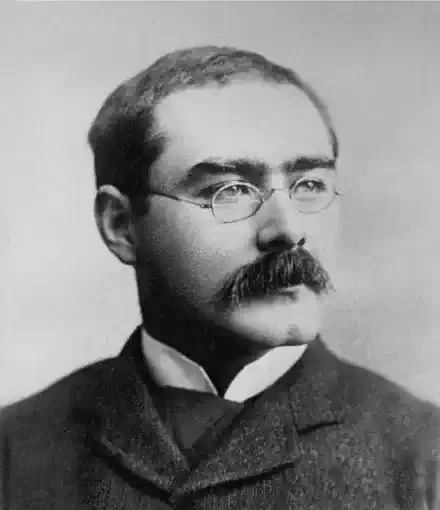
Joseph Rudyard Kipling was an English writer and poet. He is widely known by his middle name, Rudyard. Born in Bombay, British India, he spent much of his formative years there and later in England. His father was an artist and principal of an art school in India. Kipling was a British national and wrote in English.

Childhood and education

Kipling's early childhood in India deeply shaped his worldview and literary output. After returning to England for his education, he attended the United Services College in Westward Ho!, Devon, which provided the setting for his novel 'Stalky & Co.'. His time there was marked by a harsh but formative experience. He received a practical education rather than a formal university degree, returning to India to begin his career in journalism.

Literary trajectory

Kipling began his literary career as a journalist in Lahore, India, in the 1880s. His early stories, often published in periodicals, showcased his keen observation of Indian life and his developing narrative skill. He gained significant fame with collections like 'Plain Tales from the Hills' and 'Soldiers Three'. His move to London in the 1890s further cemented his international reputation. He also wrote novels, essays, and songs, demonstrating a remarkable versatility.

Works, style, and literary characteristics

Kipling's major works include 'The Jungle Book' (1894), 'Kim' (1901), 'The Just So Stories' (1902), and numerous poems like 'If—' and 'The White Man's Burden'. His dominant themes often revolve around India, the British Empire, the lives of soldiers, the relationship between humans and animals, and the complexities of loyalty and duty. His style is characterized by vivid imagery, a strong narrative drive, and a colloquial yet precise use of language. He mastered various forms, from short stories and novels to ballads and epic poems. His poetic voice is often didactic, authoritative, and nationalistic. He employed powerful metaphors and rhythms, making his works highly memorable.

Cultural and historical context

Kipling was a prominent voice during the height of the British Empire, and his work is inextricably linked to the imperialist project. He lived through periods of expansion, conflict, and colonial administration, which heavily influenced his perspective. He was part of a generation of writers grappling with themes of empire, race, and cultural encounter. His strong espousal of the 'White Man's Burden' placed him at the center of contemporary debates about colonialism.

Personal life

Kipling's personal life was marked by his experiences in India and his strong sense of duty and patriotism. His marriage to Caroline Starr Balestier provided a stable partnership. He experienced personal tragedies, including the early death of his daughter Josephine, which deeply affected him and is thought to have influenced some of his later works, such as 'Kim'. He was a complex figure, deeply devoted to his family and his work.

Recognition and reception

Kipling achieved immense fame and recognition during his lifetime. He was awarded the Nobel Prize in Literature in 1907, becoming the first English-language recipient. His works were widely translated and celebrated internationally. However, his strong imperialist views also drew criticism, and his reception has been complex, with ongoing discussions about the political implications of his writings.

Influences and legacy

Kipling was influenced by his experiences in India, classical literature, and the journalistic tradition. His legacy is significant, though debated. He is credited with profoundly shaping the adventure story genre and children's literature. His influence can be seen in subsequent generations of writers who explored themes of empire, adventure, and the wilderness. His poems, particularly 'If—', remain widely quoted. His work continues to be adapted into films and other media.

Interpretation and critical analysis

Kipling's work is often analyzed through the lens of colonialism, examining his portrayal of indigenous peoples and his support for British imperial rule. Critical interpretations highlight his narrative skill and imaginative power while also scrutinizing his problematic political stances. Debates continue regarding the extent to which his stories can be separated from their imperialist context.

Curiosities and lesser-known aspects

Despite his fame, Kipling was notoriously private and sometimes irascible. He had a deep fascination with machinery and technology, which sometimes found its way into his stories. He was also known for his meticulous attention to detail in his writing. A lesser-known aspect is his significant contribution to the development of the short story form.

Death and memory

Rudyard Kipling died in London. His memory is preserved through his vast literary output, which continues to be read and studied, albeit often with critical commentary on his political views. His home, Batemans, is now a National Trust property and museum, offering insights into his life and work.