Carl Sandburg

Carl Sandburg

1878–1967 · lived 89 years US US

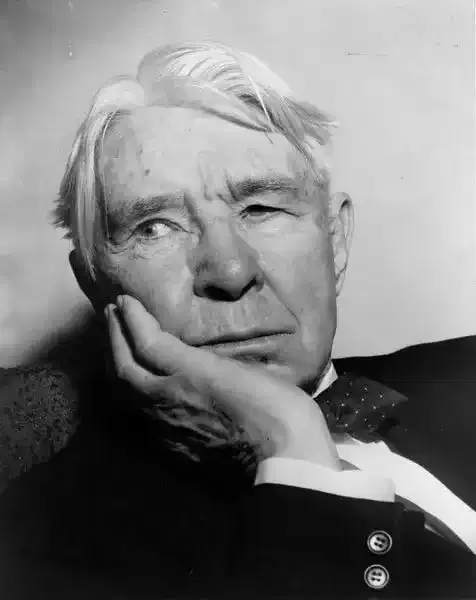
Carl Sandburg was an American poet, historian, novelist, and lexicographer. He is considered one of the most important American poets of the 20th century, known for his free verse and his focus on the American working class and the landscapes of the American Midwest. His poetry often celebrated the common man and the industrial might of America, earning him a reputation as the "poet of the people." Beyond his poetry, Sandburg was also a prolific biographer, most notably of Abraham Lincoln, and a collector of folklore and songs.

n. 1878-01-06, Galesburg · m. 1967-07-22, Flat Rock

52,800 Views

Grass

Pile the bodies high at Austerlitz and Waterloo.
Shovel them under and let me work
-I am the grass; I cover all.

And pile them high at Gettysburg
And pile them high at Ypres and Verdun.
Shovel them under and let me work.
Two years, ten years, and the passengers ask the conductor:

What place is this?
Where are we now?

I am the grass.
Let me work.
Read full poem
Bio

Identification and basic context

Carl Sandburg was an American poet, writer, historian, novelist, and lexicographer. He is widely celebrated for his free verse poetry, which often depicted the American people, especially the working class, and the landscapes of the American Midwest. His work captured the spirit of industrial America and the lives of ordinary people. Sandburg was born in Galesburg, Illinois, and was of Swedish immigrant descent. His linguistic background and early exposure to different cultures influenced his writing style.

Childhood and education

Sandburg's childhood was marked by hard work and limited formal schooling. He left school at the age of thirteen to work and help support his family. Despite this, he was an avid reader and possessed a strong desire for self-education. He worked various jobs, including as a milkman, a railroad laborer, and a salesman, which exposed him to a wide range of American life and experiences. His early readings included works that would later influence his poetic voice, instilling in him a deep appreciation for the vernacular and the common person's experience.

Literary trajectory

Sandburg's literary career began to take shape in his early adulthood. He attended Lombard College in Galesburg, Illinois, where he began writing poetry. His early work was published in small magazines. A pivotal moment was his involvement with Alfred Stieglitz's gallery and his association with the avant-garde literary scene in Chicago. He gained national recognition with the publication of "Chicago Poems" in 1916. His work evolved through distinct phases, increasingly embracing themes of American identity, industry, and the lives of everyday people. He was also active as a journalist, contributing to various publications and anthologies.

Works, style, and literary characteristics

Sandburg's major works include "Chicago Poems" (1916), "Cornhuskers" (1918), "Smoke and Steel" (1920), and "The People, Yes" (1936). His style is characterized by its use of free verse, colloquial language, and vivid imagery, often drawing from the sounds and sights of industrial America. He explored themes of the American dream, the struggle of the working class, the beauty of the common, and the vastness of the American landscape. His poetic voice is often direct, celebratory, and deeply empathetic towards ordinary individuals. Sandburg's language was accessible, reflecting the vernacular of the people he wrote about, and his poems often possessed a strong, rhythmic quality, reminiscent of American folk music. He is noted for bringing the language and spirit of the American Midwest into poetry.

Cultural and historical context

Sandburg lived and wrote during a period of immense transformation in American history, including industrialization, World War I, the Roaring Twenties, the Great Depression, and World War II. He was closely associated with the Chicago Renaissance, a flourishing of arts and literature in Chicago in the early 20th century. He was part of a generation of poets who sought to break away from traditional poetic forms and embrace a more modern, American idiom. His work often reflected the social and economic conditions of his time, particularly the lives of laborers and immigrants. He engaged with the political and social issues of his era, aligning himself with progressive ideals.

Personal life

Sandburg was married to photographer and artist Lilian Steichen, sister of photographer Edward Steichen. They had three daughters. His personal life, though often private, was deeply intertwined with his work, providing him with inspiration and grounding. He was known for his deep connection to the land and his simple lifestyle. He and his family lived on a farm in North Carolina for many years, where he continued to write and pursue his interests in folklore and music. His beliefs were generally progressive, and he was a strong advocate for the common person.

Recognition and reception

Sandburg received significant recognition during his lifetime, including two Pulitzer Prizes: one for his "Complete Poems" (1951) and another for his biography of Abraham Lincoln (1940). He was widely read and admired, hailed as a voice for the common American. His work continues to be studied and appreciated for its enduring portrayal of American life and its innovative use of language. While some critics noted his departure from more traditional poetic forms, his impact and popularity have solidified his place in American literature.

Influences and legacy

Sandburg was influenced by Walt Whitman's embrace of democracy and expansive verse, as well as by the realism and social consciousness of other contemporary writers. He, in turn, influenced generations of American poets with his accessible style, his championing of vernacular language, and his focus on the lives of ordinary Americans. His biography of Lincoln is considered a monumental work in American historiography. Sandburg's legacy lies in his profound connection to the American spirit and his ability to make the lives and experiences of common people the subject of celebrated poetry.

Interpretation and critical analysis

Sandburg's poetry is often interpreted as a celebration of American democracy and the resilience of its people. Critics have analyzed his use of free verse and colloquial language as a deliberate attempt to democratize poetry, making it accessible to a wider audience. His works are seen as a vital record of early 20th-century American life, capturing its industrial dynamism and its social struggles. The critical discourse often centers on his ability to balance a grounded realism with a lyrical sensibility.

Curiosities and lesser-known aspects

Sandburg was also a dedicated folk singer and collector of American folk songs. He amassed a large collection of these songs, which he performed and compiled. He was a multifaceted figure, also known for his collection of Lincolniana. His writing habits were often described as disciplined, but he also possessed a spontaneous and improvisational spirit, much like the folk music he loved. He was known to carry notebooks and jot down observations constantly.

Death and memory

Carl Sandburg died of natural causes at the age of 89. His passing was widely mourned, and his contributions to American literature and culture were deeply acknowledged. His home in Flat Rock, North Carolina, has been preserved as the Carl Sandburg Home National Historic Site, ensuring his legacy continues to inspire future generations.

Poems

116

Maybe

Maybe


Maybe he believes me, maybe not.
Maybe I can marry him, maybe not.


Maybe the wind on the prairie,
The wind on the sea, maybe,
Somebody, somewhere, maybe can tell.


I will lay my head on his shoulder
And when he asks me I will say yes,
Maybe.
319

Manual System

Manual System

Mary has a thingamajig clamped on her ears
And sits all day taking plugs out and sticking plugs in.
Flashes and flashes--voies and voices
calling for ears to put words in
Faces at the ends of wires asking for other faces
at the ends of other wires:
All day taking plugs out and sticking plugs in,
Mary has a thingamajig clamped on her ears.
363

Mask

Mask


Fling your red scarf faster and faster, dancer.
It is summer and the sun loves a million green leaves, masses of green.
Your red scarf flashes across them calling and a-calling.
The silk and flare of it is a great soprano leading a chorus
Carried along in a rouse of voices reaching for the heart of the world.
Your toes are singing to meet the song of your arms:


Let the red scarf go swifter.
Summer and the sun command you.
344

Mamie

Mamie


Mamie beat her head against the bars of a little Indiana town and dreamed of romance
and big things off somewhere the way the railroad trains all ran.
She could see the smoke of the engines get lost down where the streaks of steel
flashed in the sun and when the newspapers came in on the morning mail she knew
there was a big Chicago far off, where all the trains ran.
She got tired of the barber shop boys and the post office chatter and the church gossip
and the old pieces the band played on the Fourth of July and Decoration Day
And sobbed at her fate and beat her head against the bars and was going to kill herself
When the thought came to her that if she was going to die she might as well die
struggling for a clutch of romance among the streets of Chicago.
She has a job now at six dollars a week in the basement of the Boston Store
And even now she beats her head against the bars in the same old way and wonders if
there is a bigger place the railroads run to from Chicago where maybe there is
romance
and big things
and real dreams
that never go smash.
376

Lost

Lost


Desolate and lone
All night long on the lake
Where fog trails and mist creeps,
The whistle of a boat
Calls and cries unendingly,
Like some lost child
In tears and trouble
Hunting the harbor's breast
And the harbor's eyes.
372

Localities

Localities


Wagon wheel gap is a place I never saw
And Red Horse Gulch and the chutes of Cripple Creek.


Red-shirted miners picking in the sluices,
Gamblers with red neckties in the night streets,
The fly-by-night towns of Bull Frog and Skiddoo,
The night-cool limestone white of Death Valley,
The straight drop of eight hundred feet
From a shelf road in the Hasiampa Valley:
Men and places they are I never saw.


I have seen three White Horse taverns,
One in Illinois, one in Pennsylvania,
One in a timber-hid road of Wisconsin.


I bought cheese and crackers
Between sun showers in a place called White Pigeon
Nestling with a blacksmith shop, a post-office,
And a berry-crate factory, where four roads cross.


On the Pecatonica River near Freeport
I have seen boys run barefoot in the leaves
Throwing clubs at the walnut trees
In the yellow-and-gold of autumn,
And there was a brown mash dry on the inside of their hands.
On the Cedar Fork Creek of Knox County
I know how the fingers of late October
Loosen the hazel nuts.
I know the brown eyes of half-open hulls.
I know boys named Lindquist, Swanson, Hildebrand.
I remember their cries when the nuts were ripe.
And some are in machine shops; some are in the navy;
And some are not on payrolls anywhere.
Their mothers are through waiting for them to come home.
333

Limited

Limited


I am riding on a limited express, one of the crack trains
of the nation.
Hurtling across the prairie into blue haze and dark air
go fifteen all-steel coaches holding a thousand people.
(All the coaches shall be scrap and rust and all the men
and women laughing in the diners and sleepers shall
pass to ashes.)
I ask a man in the smoker where he is going and he
answers: "Omaha."
412

Last Answers

Last Answers

I wrote a poem on the mist
And a woman asked me what I meant by it.
I had thought till then only of the beauty of the mist,
how pearl and gray of it mix and reel,
And change the drab shanties with lighted lamps at evening
into points of mystery quivering with color.


I answered:
The whole world was mist once long ago and some day
it will all go back to mist,
Our skulls and lungs are more water than bone and tissue
And all poets love dust and mist because all the last answers
Go running back to dust and mist.
288

Lawyer

Lawyer


When the jury files in to deliver a verdict after weeks of direct and cross examinations,
hot clashes
of lawyers and cool decisions of the judge,
There are points of high silence--twiddling of thumbs is at an end--bailiffs near
cuspidors take fresh
chews of tobacco and wait--and the clock has a chance for its ticking to be heard.
A lawyer for the defense clears his throat and holds himself ready if the word is "Guilty"
to enter
motion for a new trial, speaking in a soft voice, speaking in a voice slightly colored with
bitter wrongs
mingled with monumental patience, speaking with mythic Atlas shoulders of many
preposterous,
unjust circumstances.
410

Jungheimer's

Jungheimer's


In western fields of corn and northern timber lands,
They talk about me, a saloon with a soul,
The soft red lights, the long curving bar,
The leather seats and dim corners,
Tall brass spittoons, a nigger cutting ham,
And the painting of a woman half-dressed thrown reckless across a bed after a night of
booze and riots.
428

Quotes

40

Videos

50

Comments (0)

Share
Log in to post a comment.

No comments yet. Be the first to comment.