Poem of the day

Do Not Go Gentle Into That Good Night

Dylan Thomas
Do not go gentle into that good night, 
Old age should burn and rave at close of day; 
Rage, rage against the dying of the light. 

Though wise men at their end know dark is right, 
Because their words had forked no lightning they 
Do not go gentle into that good night. 

Good men, the last wave by, crying how bright 
Their frail deeds might have danced in a green bay, 
Rage, rage against the dying of the light. 

Wild men who caught and sang the sun in flight, 
And learn, too late, they grieved it on its way, 
Do not go gentle into that good night. 

Grave men, near death, who see with blinding sight 
Blind eyes could blaze like meteors and be gay, 
Rage, rage against the dying of the light. 

And you, my father, there on that sad height, 
Curse, bless, me now with your fierce tears, I pray. 
Do not go gentle into that good night. 
Rage, rage against the dying of the light.
Read full poem

Born on this day

10
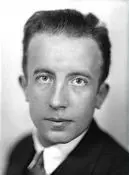
Paul Éluard

Paul Eluard was a highly influential French poet, considered one of the leading figures of Surrealism and a prominent voice in 20th-century French literature. His poetry, characterized by its lyrical beauty, emotional intensity, and profound exploration of love, freedom, and social justice, evolved through various phases, from early Symbolist influences to his engagement with Surrealism and later, with the Resistance movement. Eluard's work is marked by its accessible yet deeply evocative language, its celebration of the everyday, and its unwavering humanism. He is celebrated for his ability to translate complex emotions and political ideals into powerful and enduring poetic expressions, making him a beloved and critically acclaimed figure.

At the Window
Leonardo Henke

Leonardo Henke is a contemporary poet whose work is characterized by a fusion of lyrical and reflective elements, exploring the human condition in dialogue with the world around him. His poetry is marked by accessible language, yet possesses a depth that invites introspection. His writing addresses themes such as identity, memory, time, and interpersonal relationships, with a particular sensitivity to the nuances of everyday experience. Henke positions himself as a voice to follow in current Lusophone poetry, due to his originality and his ability to connect with the reader through simple and touching verses.

Odylo Costa Filho

Odylo Costa Filho was a Brazilian poet, journalist, and politician, a prominent figure in the culture of Maranhão. His poetic work is marked by intense lyricism and the exploration of social and existential themes, with a strong connection to Maranhão's identity. As a journalist and politician, he dedicated himself to defending social causes and promoting culture in his region. His poetry, although sometimes engaged, maintains a profound sensitivity and a search for authentic expression, consolidating him as an important representative of the literature of his land.

Gerard Reve

Gerard Reve was a prominent Dutch writer, known for his innovative and often controversial literary work. His writing is marked by a unique style, combining the everyday with the spiritual and the grotesque, exploring themes such as loneliness, love, death, and the search for meaning in a changing society. Reve is considered a central figure in post-war Dutch literature, whose work continues to provoke and inspire readers.

Fernando Miguel Bernardes

Fernando Miguel Bernardes is a contemporary poet whose work is distinguished by the exploration of existential themes and the uniqueness of his lyrical expression. His writing, marked by dense and imagistic language, invites reflection on the human condition, time, and the search for meaning. Throughout his career, he has been consolidating an authentic poetic voice and establishing himself as a relevant name in current Portuguese poetry.

António Simões

António Simões emerged as a singular voice in Portuguese poetry, exploring the depths of human existence with a language rich in symbolism and a profound lyrical sensitivity. His work, often marked by poignant introspection, addresses universal themes such as love, the passage of time, memory, and the search for meaning. Simões dedicated himself to the poetic art with formal rigor and a passion that have consolidated him as a prominent poet.

Lupercio Leonardo de Argensola

Lupercio Leonardo de Argensola was a distinguished Spanish poet and military man, known for his poetic work which is framed within courtly lyrics and satirical poetry. His production is characterized by the sharpness of his wit, formal perfection, and a style that often borders on irony and humor, addressing universal themes with a critical and observant perspective. As a military man, he participated in various campaigns, experiences that undoubtedly enriched his worldview and his writing.

Nicasio Álvarez de Cienfuegos

Nicasio Álvarez de Cienfuegos was a Spanish poet and politician, a prominent figure of Neoclassicism and a precursor of Romanticism in Spain. Known for his liberal spirit and his defense of freedom, his poetic work combines neoclassical formal elegance with a pre-Romantic sensibility that anticipates themes and tones of the following literary stage. His poetry, often reflective and melancholic, addresses love, nature, and social criticism.

Salvador Díaz Mirón

Mexican poet, a prominent figure of late Romanticism and a precursor of Modernism. His work is characterized by its expressive force, lyrical intensity, and exploration of themes such as love, homeland, nature, and the pursuit of beauty. Díaz Mirón is recognized for his mastery of language, impeccable meter, and profound emotional depth, earning him the recognition as "The Singer of Veracruz." His poetry represents a bridge between tradition and aesthetic renewal in Mexico.

Died on this day

9
Vicente Aleixandre

Vicente Aleixandre was a Spanish poet, a central figure of the Generation of '27. His poetic work is marked by a deep lyricism and an exploration of the themes of love, death, the cosmos, and the human condition, often with a language charged with symbolism and dreamlike imagery. He was awarded the Nobel Prize in Literature in 1977, recognizing the universality and strength of his poetic expression, which made him one of the most important Spanish-language poets of the 20th century.

Inácio Raposo

Inácio Raposo was a Portuguese priest, writer, and poet, associated with the neorealist movement. His literary work, although not extensive, reflects a strong social commitment and an attentive eye to the realities of the people, especially in the rural context. His poetry is marked by simplicity of language, empathy for the humble, and trenchant social criticism. As a professor and active figure in the community, Inácio Raposo dedicated part of his life to cultural dissemination and education. His poetry is a testament to his faith, his humanism, and his concern for social justice.

Teixeira de Pascoaes

Joaquim de Araújo Correia de Pascoaes, better known as Teixeira de Pascoaes, was a Portuguese poet and writer, a central figure of the Renascença Portuguesa movement and one of the main representatives of Saudosismo. His poetic work is marked by deep introspection, mysticism, and a strong sense of national identity.

Friedrich Dürrenmatt

Friedrich Dürrenmatt was a prominent Swiss playwright, novelist, and essayist, known for his grotesque and philosophical plays that explore the complexities of the human condition, justice, and morality. He often used elements of black humor, satire, and the absurd to question reality and society. His plays, such as "The Visit" and "The Physicists," achieved international recognition.

Emotions have no place in business, unless you do
Gaston Miron

Gaston Miron was a Canadian poet and political activist known for his influence on Quebec literature. His work frequently explored themes of national identity, resistance, and the human condition.

Luís de Magalhães

Luís de Magalhães was a Portuguese poet and journalist, a notable figure of the late 19th and early 20th centuries. His poetic work, marked by a strong lyrical and existential charge, explored themes such as love, melancholy, nature, and the ephemerality of life, consolidating him as an important representative of the poetry of his time.