Poem of the day

Do Not Go Gentle Into That Good Night

Dylan Thomas
Do not go gentle into that good night, 
Old age should burn and rave at close of day; 
Rage, rage against the dying of the light. 

Though wise men at their end know dark is right, 
Because their words had forked no lightning they 
Do not go gentle into that good night. 

Good men, the last wave by, crying how bright 
Their frail deeds might have danced in a green bay, 
Rage, rage against the dying of the light. 

Wild men who caught and sang the sun in flight, 
And learn, too late, they grieved it on its way, 
Do not go gentle into that good night. 

Grave men, near death, who see with blinding sight 
Blind eyes could blaze like meteors and be gay, 
Rage, rage against the dying of the light. 

And you, my father, there on that sad height, 
Curse, bless, me now with your fierce tears, I pray. 
Do not go gentle into that good night. 
Rage, rage against the dying of the light.
Read full poem

Born on this day

12
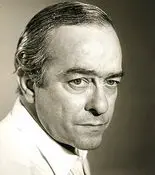
Vinicius de Moraes

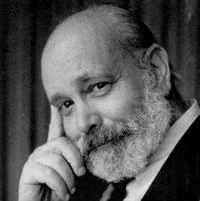
Vinicius de Moraes was a Brazilian poet, playwright, journalist, and composer, considered one of the greatest exponents of lyric poetry in the Portuguese language. His work is marked by deep lyricism, exploring themes such as love, beauty, melancholy, and everyday life, with an accessible and musical language. He is also remembered as one of the fathers of Bossa Nova, having composed several songs that became classics of Brazilian popular music.

Helena Amin

Helena Amin was a literary figure whose poetic work stood out for its depth and expressiveness. Her work explores the complexities of the human experience, the relationship with the world, and the nuances of feeling. With a language that oscillates between delicacy and strength, Amin consolidated a space of her own in contemporary poetry, influencing readers and critics with her unique vision and artistic sensibility.

Lígia Diniz

Lígia Diniz is a contemporary Portuguese poet, whose work is distinguished by the exploration of themes such as memory, identity, and the ephemerality of time, in a language that combines lyrical sensibility with pronounced existential reflection. Her poetry, marked by a strong imagery and subtle musicality, dialogues with literary tradition, while asserting itself as a singular voice in the current poetic landscape.

Miguel Ángel Asturias

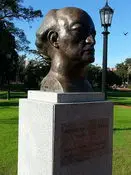
Miguel Ángel Asturias was a Guatemalan writer, awarded the Nobel Prize in Literature in 1967. His work is deeply rooted in the traditions, myths, and social realities of Guatemala and Latin America. Through poetic and innovative language, Asturias explored themes such as cultural identity, oppression, social injustice, and the relationship between the indigenous and Western worlds. He is considered one of the pioneers of magical realism in Latin American literature, influencing generations of writers. With a life marked by political activism and exile, Asturias dedicated his writing to giving voice to the marginalized and denouncing the power structures that oppressed indigenous peoples and the working classes. His literary contribution is fundamental to understanding the complex social and cultural reality of Central America, leaving a lasting legacy in universal literature.

Eugenio Montejo

Eugenio Montejo was a Venezuelan poet whose work stands out for its reflective depth and exploration of themes such as time, memory, and nature. His poetry is recognized for its imagistic density and precise language, combining lyricism with a strong philosophical component. Montejo is considered one of the most relevant voices in contemporary Hispanic-American poetry.

Álvaro Guerra

Álvaro Guerra was a Portuguese poet and translator, known for his poetic work marked by lyrical and introspective language. His writing often explores themes such as love, memory, and the passage of time, with a sensitivity that associates him with literary currents of his time. He was also an active translator, contributing to the dissemination of foreign authors in Portugal.

Marsílio Ficino

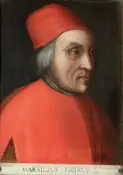
Marsilio Ficino was an influential Italian philosopher, theologian, and humanist of the Renaissance. He was a central figure in the revival of Platonism in Europe and one of the main thinkers of Neoplatonism.

Maria da Cunha

Maria da Cunha was a distinguished Portuguese poet and writer, known for her lyrical prose and for exploring themes such as memory, identity, and the individual's relationship with the world. Her work, although sometimes discreet in the literary landscape, possesses a depth and sensitivity that make her a unique voice. With careful and introspective writing, Maria da Cunha made a valuable contribution to contemporary Portuguese literature.

Monika Herceg

Monika Herceg is a contemporary Croatian writer whose works explore identity, memory, and complex human relationships. Her writing is marked by deep sensitivity and an ability to weave engaging narratives that resonate with universal themes. She stands out in the literary scene for her authentic voice and the reflections she provokes in her readers. With an approach that moves between the lyrical and the prosaic, Herceg constructs multifaceted characters and vivid settings. Her work invites introspection, addressing the human condition with nuance and depth, consolidating her as an important figure in current Croatian literature.

Leonardo Castellani

Leonardo Castellani was an Argentine priest, writer, essayist, and poet, a prominent figure in 20th-century Catholic literature and thought. His work is characterized by profound erudition, an aphoristic style, and a critical view of contemporary reality and the human condition. He addressed theological, philosophical, literary, and social themes with a multifaceted and often provocative prose. His thought, rooted in Thomistic and Augustinian tradition, projected itself originally onto the problems of his time, offering a unique perspective that distinguished him within the Hispano-American intellectual landscape.

Died on this day

9
Manuel António Pina

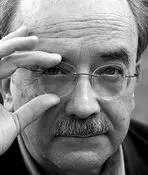
Manuel António Pina was a Portuguese poet, writer, playwright, and essayist, a prominent figure in contemporary literature. His work, characterized by apparent simplicity, philosophical depth, and a keen eye on the human condition, explores themes such as childhood, memory, language, and transcendence. Recognized for his originality and his ability to reinvent poetic form, Pina left a significant legacy, marked by reflection on existence and the art of writing.

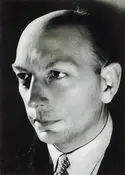
Henri Michaux

Henri Michaux was a Belgian poet, writer, and painter, known for his deep exploration of the human psyche, imaginary journeys, and experimentation with psychotropic substances. His work, marked by raw language and disturbing imagery, defies easy categorization, moving between poetry, diary, and narrative.

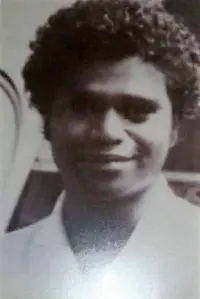
Gulamo Khan

Gulamo Khan is a Mozambican poet known for his poetry that explores the complexities of identity, culture, and the human condition. His work often reflects the experiences and challenges of living in a post-colonial context, addressing themes such as ancestry, memory, and the search for a sense of belonging. With a language rich in imagery and symbolism, Khan constructs verses that resonate with the musicality and orality of his African roots, while also engaging with the universal literary tradition. His poetry invites reflection on cultural diversity and the universality of human emotions.

Jonathan Swift

Jonathan Swift was an Anglo-Irish satirist, essayist, political pamphleteer, and poet, best known for "Gulliver's Travels." His biting wit and sharp social commentary made him a prominent figure in English literature. He often used irony and fantasy to critique societal norms and political corruption, leaving a lasting impact on satire and prose.

Just get the right syllable in the proper place.
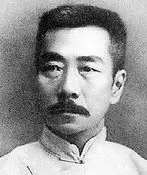
Lu Xun

Lu Xun (1881-1936), born Zhou Shuren, is widely regarded as the father of modern Chinese literature. A sharp critic of Chinese traditions and society of his time, he used writing as a weapon to awaken national consciousness. His works often depict the lives of ordinary people and social injustices. He studied medicine in Japan, but soon abandoned his career to dedicate himself to literature, believing it was more important to heal the spirit of the people than their bodies. His influence on 20th-century Chinese literature and thought is immeasurable.

Tito Olívio

Tito Olívio is a poet whose work is distinguished by its lyrical intensity and deep exploration of human emotions. His poetic compositions address universal themes such as love, loss, memory, and the search for meaning, with a language that oscillates between delicacy and expressive strength. His poetry, often marked by a particular sonority and evocative imagery, invites reflection on the human condition and its dilemmas. Tito Olívio constructs a singular poetic universe, where subjectivity intertwines with universality, leaving an indelible mark on the literary landscape.

Manuel Granjo de Matos

Manuel Granjo de Matos was a Portuguese poet whose work is distinguished by its lyrical depth and exploration of universal themes such as existence, time, and memory. With a style marked by expressive restraint and the search for the exact word, Matos built a poetry that resonates with its intellectual honesty and its ability to touch the reader on deeper levels. His literary contribution is valued for its consistency and the intrinsic quality of his verses.

Samuel Lillo

Samuel Lillo is a Chilean literary figure, known for his contribution to literature through his works.

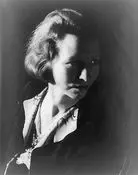
Edna St. Vincent Millay

Edna St. Vincent Millay was a prominent American poet and playwright, celebrated for her lyrical verse and her passionate, often rebellious, spirit. A leading voice of the "Lost Generation," her work captured the zeitgeist of the Jazz Age with its themes of love, freedom, social injustice, and the complexities of modern life. Millay's skillful use of traditional forms, such as the sonnet, combined with her bold modern sensibilities, earned her widespread acclaim and a devoted readership.

And we are done forever