
Death and Mourning
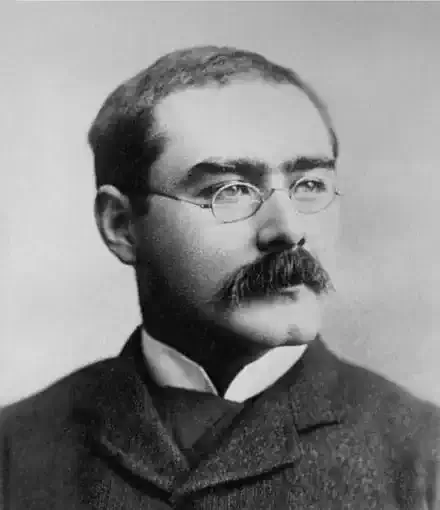
Rudyard Kipling
The Power of the Dog
There is sorrow enough in the natural way
From men and women to fill our day;
And when we are certain of sorrow in store,
Why do we always arrange for more?
Brothers and Sisters, I bid you beware
Of giving your heart to a dog to tear.
Buy a pup and your money will buy
Love unflinching that cannot lie--
Perfect passion and worship fed
By a kick in the ribs or a pat on the head.
Nevertheless it is hardly fair
To risk your heart for a dog to tear.
When the fourteen years which Nature permits
Are closing in asthma, or tumour, or fits,
And the vet's unspoken prescription runs
To lethal chambers or loaded guns,
Then you will find--it's your own affair--
But...you've given your heart for a dog to tear.
When the body that lived at your single will,
With its whimper of welcome, is stilled (how still!);
When the spirit that answered your every mood
Is gone--wherever it goes--for good,
You will discover how much you care,
And will give your heart for the dog to tear.
We've sorrow enough in the natural way,
When it comes to burying Christian clay.
Our loves are not given, but only lent,
At compound interest of cent per cent.
Though it is not always the case, I believe,
That the longer we've kept 'em, the more do we grieve:
For, when debts are payable, right or wrong,
A short-time loan is as bad as a long--
So why in Heaven (before we are there)
Should we give our hearts to a dog to tear?
Read more →
745
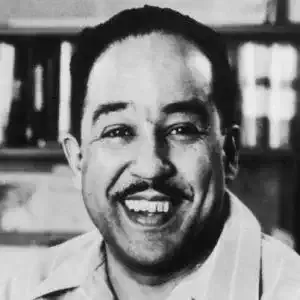
Langston Hughes
Deceased
Harlem
Sent him home
in a long box-
Too dead
To know why:
The licker
Was lye.
Read more →
728
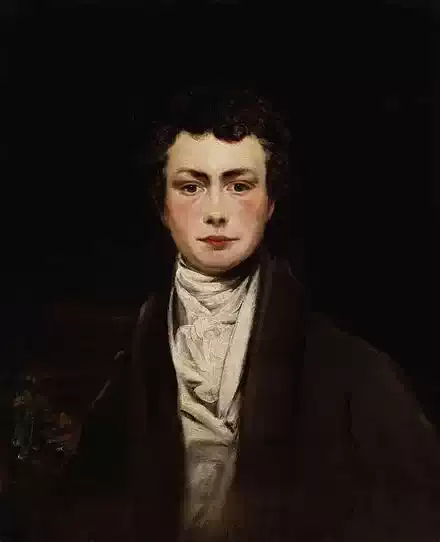
Thomas Moore
Oft, in the Stilly Night
Oft, in the stilly night,
Ere slumber's chain has bound me,
Fond memory brings the light
Of other days around me;
The smiles, the tears,
Of boyhood's years,
The words of love then spoken;
The eyes that shone,
Now dimm'd and gone,
The cheerful hearts now broken!
Thus, in the stilly night,
Ere slumber's chain hath bound me,
Sad memory brings the light
Of other days around me.
When I remember all
The friends, so link'd together,
I've seen around me fall,
Like leaves in wintry weather;
I feel like one
Who treads alone
Some banquet-hall deserted,
Whose lights are fled,
Whose garlands dead,
And all but he departed!
Thus, in the stilly night,
Ere slumber's chain has bound me,
Sad memory brings the light
Of other days around me.
Read more →
704

Henry Lawson
Talbragar
Jack Denver died on Talbragar when Christmas Eve began,
And there was sorrow round the place, for Denver was a man;
Jack Denver’s wife bowed down her head—her daughter’s grief was wild,
And big Ben Duggan by the bed stood sobbing like a child.
But big Ben Duggan saddled up, and galloped fast and far,
To raise the biggest funeral ever seen on Talbragar.
By station home
And shearing shed
Ben Duggan cried, “Jack Denver’s dead!
Roll up at Talbragar!”
He borrowed horses here and there, and rode all Christmas Eve,
And scarcely paused a moment’s time the mournful news to leave;
He rode by lonely huts and farms, until the day was done
And then he turned his horse’s head and made for Ross’s Run.
No Bushman in a single day had ridden half so far
Since Johnson brought the doctor to his wife at Talbragar.
By diggers’ camps
Ben Duggan sped—
At each he cried, “Jack Denver’s dead!
Roll up at Talbragar!”
That night he passed the humpies of the splitters on the ridge,
And roused the bullock-drivers camped at Belinfante’s Bridge;
And as he climbed the ridge again the moon shone on the rise;
The soft white moonbeams glistened in the tears that filled his eyes;
He dashed the rebel drops away—for blinding things they are—
But ’twas his best and truest friend who died on Talbragar.
At Blackman’s Run
Before the dawn,
Ben Duggan cried, “Jack Denver’s gone!
Roll up at Talbragar!”
At all the shanties round the place they‘d beard his horse’s tramp,
He took the track to Wilson’s Luck, and told the diggers’ camp;
But in the gorge by Deadman’s Gap the mountain shades were black,
And there a newly-fallen tree was lying on the track—
He saw too late, and then he heard the swift hoof ’s sudden jar,
And big Ben Duggan ne’er again rode home to Talbragar.
“The wretch is drunk,
And Denver’s dead—
A burning shame!” the people said
Next day at Talbragar.
For thirty miles round Talbragar the boys rolled up in strength,
And Denver had a funeral a good long mile in length;
Round Denver’s grave that Christmas day rough Bushmen’s eyes were dim—
The Western Bushmen knew the way to bury dead like him;
But some returning homeward found, by light of moon and star,
Ben Duggan dying in the rocks, ten miles from Talbragar.
They knelt around.
He raised his head
And faintly gasped, “Jack Denver’s dead,
Roll up at Talbragar!”
But one short hour before he died he woke and understood;
They told him, when he asked them, that the funeral was good;
And then there came into his eyes a sad and softened light.
He said. “Poor Denver’s wife and kids—you’ll see that they’re all right?”
And still the careless Bushmen tell by tent and shanty bar
How Duggan raised a funeral years back on Talbragar.
And far and wide
When Duggan died.
The bushmen of the western side
Rode in to Talbragar.
Read more →
707

Emily Dickinson
I dreaded that first Robin, so
I dreaded that first Robin, so,
But He is mastered, now,
I'm accustomed to Him grown,
He hurts a little, though-
I thought If I could only live
Till that first Shout got by-
Not all Pianos in the Woods
Had power to mangle me-
I dared not meet the Daffodils-
For fear their Yellow Gown
Would pierce me with a fashion
So foreign to my own-
I wished the Grass would hurry
So-
when 'twas time to see
He'd
be too tall, the tallest one
Could stretch-to look at me-
I could not bear the Bees should come,
I wished they'd stay away
In those dim countries where they go,
What word had they, for me?
They're here, though; not a creature failed-
No Blossom stayed away
In gentle deference to me-
The Queen of Calvary-
Each one salutes me, as he goes,
And I, my childish Plumes,
Lift, in bereaved acknowledgment
Of their unthinking Drums-
Read more →
702
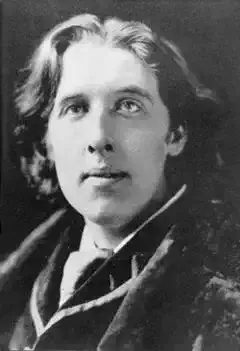
Oscar Wilde
Chanson
A ring of gold and a milk-white dove
Are goodly gifts for thee,
And a hempen rope for your own love
To hang upon a tree.
For you a House of Ivory,
(Roses are white in the rose-bower)!
A narrow bed for me to lie,
(White, O white, is the hemlock flower)!
Myrtle and jessamine for you,
(O the red rose is fair to see)!
For me the cypress and the rue,
(Finest of all is rosemary)!
For you three lovers of your hand,
(Green grass where a man lies dead)!
For me three paces on the sand,
(Plant lilies at my head)!
Read more →
697

William Shakespeare
Sonnet 66: Tired with all these, for restful death I cry
Tired with all these, for restful death I cry,
As to behold desert a beggar born,
And needy nothing trimmed in jollity,
And purest faith unhappily forsworn,
And gilded honour shamefully misplaced,
And maiden virtue rudely strumpeted,
And right perfection wrongfully disgraced,
And strength by limping sway disablèd
And art made tongue-tied by authority,
And folly doctor-like controlling skill,
And simple truth miscalled simplicity,
And captive good attending captain ill.
Tired with all these, from these would I be gone,
Save that to die, I leave my love alone.
Read more →
697
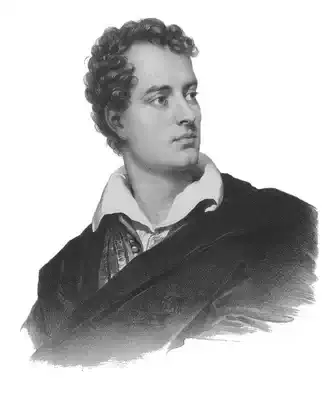
Lord Byron
Oh! Weep For Those
I.
Oh! Weep for those that wept by Babel's stream,
Whose shrines are desolate, whose land a dream,
Weep for the harp of Judah's broken shell
Mournwhere
their God that dweltthe
Godless dwell!
II.
And where shall Israel lave her bleeding feet?
And when shall Zion's songs agains seem sweet?
And Judah's melody once more rejoice
The hearts that leap'd before its heavenly voice?
III.
Tribes of the wandering foot and weary breast!
How shall ye flee away and be at rest!
The wilddove
hath her nestthe
fox his cave
Mankind
their CountryIsrael
but the grave.
Read more →
714
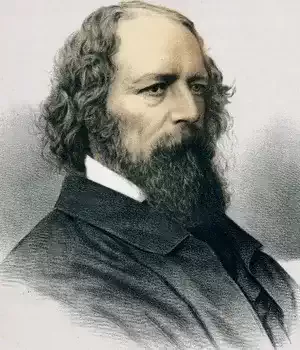
Alfred Lord Tennyson
Tithonus
The woods decay, the woods decay and fall,
The vapours weep their burthen to the ground,
Man comes and tills the field and lies beneath,
And after many a summer dies the swan.
Me only cruel immortality
Consumes; I wither slowly in thine arms,
Here at the quiet limit of the world,
A white-hair'd shadow roaming like a dream
The ever-silent spaces of the East,
Far-folded mists, and gleaming halls of morn.
Alas! for this gray shadow, once a man-So
glorious in his beauty and thy choice,
Who madest him thy chosen, that he seem'd
To his great heart none other than a God!
I ask'd thee, "Give me immortality."
Then didst thou grant mine asking with a smile,
Like wealthy men who care not how they give.
But thy strong Hours indignant work'd their wills,
And beat me down and marr'd and wasted me,
And tho' they could not end me, left me maim'd
To dwell in presence of immortal youth,
Immortal age beside immortal youth,
And all I was in ashes. Can thy love
Thy beauty, make amends, tho' even now,
Close over us, the silver star, thy guide,
Shines in those tremulous eyes that fill with tears
To hear me? Let me go: take back thy gift:
Why should a man desire in any way
To vary from the kindly race of men,
Or pass beyond the goal of ordinance
Where all should pause, as is most meet for all?
A soft air fans the cloud apart; there comes
A glimpse of that dark world where I was born.
Once more the old mysterious glimmer steals
From any pure brows, and from thy shoulders pure,
And bosom beating with a heart renew'd.
Thy cheek begins to redden thro' the gloom,
Thy sweet eyes brighten slowly close to mine,
Ere yet they blind the stars, and the wild team
Which love thee, yearning for thy yoke, arise,
And shake the darkness from their loosen'd manes,
And beat the twilight into flakes of fire.
Lo! ever thus thou growest beautiful
In silence, then before thine answer given
Departest, and thy tears are on my cheek.
Why wilt thou ever scare me with thy tears,
And make me tremble lest a saying learnt,
In days far-off, on that dark earth, be true?
"The Gods themselves cannot recall their gifts."
Ay me! ay me! with what another heart
In days far-off, and with what other eyes
I used to watch if I be he that watch'd
The lucid outline forming round thee; saw
The dim curls kindle into sunny rings;
Changed with thy mystic change, and felt my blood
Glow with the glow that slowly crimson'd all
Thy presence and thy portals, while I lay,
Mouth, forehead, eyelids, growing dewy-warm
With kisses balmier than half-opening buds
Of April, and could hear the lips that kiss'd
Whispering I knew not what of wild and sweet,
Like that strange song I heard Apollo sing,
While Ilion like a mist rose into towers.
Yet hold me not for ever in thine East;
How can my nature longer mix with thine?
Coldly thy rosy shadows bathe me, cold
Are all thy lights, and cold my wrinkled feet
Upon thy glimmering thresholds, when the steam
Floats up from those dim fields about the homes
Of happy men that have the power to die,
And grassy barrows of the happier dead.
Release me, and restore me to the ground;
Thou seest all things, thou wilt see my grave:
Thou wilt renew thy beauty morn by morn;
I earth in earth forget these empty courts,
And thee returning on thy silver wheels.
Read more →
705

Kazi Nazrul Islam
The Curse
When I shall be no more
You will suffer, I promise,
Cursed, friendless and alone.
Then you will ask the evening star about me,
And with my picture engrave, fin your heart
Will roam through forests and seas
And around hills and dales,
Weeping many a desolate tear.
Then you will realise, my dear,
Then you will search for me desperately
Far and near.
When your soul will tremble
At some one's familiar touch,
And your heart will gladden
Imagining my presence by your bed,
You will suddenly wake up with a start
From your sleep,
And discover with a freezing heart
That it was nothing but an empty dream.
With eager arms spread
You will advance to embrace,
But there will be no trace of me.
Instead, you will meet
An emptiness, dull and dreary.
In anguish you will close your eyes,
Then my darling will you realise.
Trying to sing
You will find your voice choked with tears.
And, all around, people will whisper
About the song, taught by that stranger,
And then you will remember me,
And the fond caresses I bestowed on you.
Thinking of those nights
Your hard and glittering eyes
Will overflow with brimming tears
Then will you regret your past deceptions,
Then will you realise the pang of separation.
When your garden will grow fragrant
With daisies, jasmine and ivy bowers
You will suddenly think of my grave
Covered with snow-white flowers,
And your fingers, busy in making a garland
Will suddenly grow1hesitant and numb.
Your smiling face will turn pale and wan,
And tears will swim in your eyes,
Then, my dear, will you realise.
Autumn wind will come again,
And the lovely dewy nights will reappear
All, all will remain
Save this traveller, bound for the eternal night.
Friends will gather by your side.
And the love will take you in his arms,
But suddenly his touch
Will bring to your mind
The touch of another one.
Turning the joyous moment poisonous and bitter.
That is my cruse for you, sweetheart dear.
Winter nights will come again
But I will return no more.
Yet you will remember the time
When resting your head on my loving arm
You quietly slept, with only contempt in your heart.
The memory of those days
Will make your bed one of singing thorns,
I forecast.
The tide will come in the river again.
Again the boat will float en a pleasure cruise
With gay and loving company.
And yet, the memory of other voyages,
Of a boat speeding by the dark coast,
And of me sitting close beside
Will haunt you like a ghost relentlessly.
Then will Your tears mingle with your sighs,
Then you will realise..
When Your friend will be imprisoned like me
You will shed bitter tears,
When he will treat You negligently
Your happiness will lie in ruins
Then will You find Your days
Cheerless, dreary and lying.
Then will you realise, how very wrong
You were about me.
The rises will blossom again
Again the stars will shine,
And the pale moon reign in the sky:
Season will follow season in regular order,.
But for you
There will be no pleasure.
You will only cry and bewail your lost treasure.
The storm will come,
All tornado will appear,
All ties will break asunder.
And your tiny cottage will tremble in fear.
Then you will remember him
Who will not be by your side.
And you will hanker for his caresses, my dear.
At that hour will you realise.
At that hour will you regret your profuse lies.
The wound in my bosom
That once hurt you so..
Would perhaps appear sweet to. you now.
Tired and weary and forlorn at last
You might now seek it yourself,
And then shall I reappear.
And who knows
You will probably throw yourself
In my arms in a pleasant swoon
And worship me in humility.
Then will you know, my dear,
Then will the final truth be simple and clear.
[Translation: Kabir Chowdhury]
Read more →
709
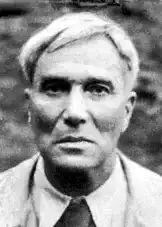
Boris Pasternak
In Memory of Marina Tsvetaeva
Dismal day, with the weather inclement.
Inconsolably rivulets run
Down the porch in front of the doorway;
Through my wide-open windows they come.
But behind the old fence on the roadside,
See, the public gardens are flooded.
Like wild beasts in a den, the rainclouds
Sprawl about in shaggy disorder.
In such weather, I dream of a volume
On the beauties of Earth in our age,
And I draw an imp of the forest
Just for you on the title-page.
Oh, Marina, I'd find it no burden,
And the time has been long overdue:
Your sad clay should be brought from Yelabuga
By a requiem written for you.
All the triumph of your homecoming
I considered last year in a place
Near a snow-covered bend in the river
Where boats winter, locked in the ice.
What can I do to be of service?
Convey somehow your own request,
For in the silence of your going
There's a reproach left unexpressed.
A loss is always enigmatic.
I hunt for clues to no avail,
And rack my brains in fruitless torment:
Death has no lineaments at all.
Words left half-spoken, self-deception,
Promises, shadows-all are vain,
And only faith in resurrection
Can give the semblance of a sign.
Step out into the open country:
Winter's a sumptuous funeral wake.
Add currants to the dusk, then wine,
And there you have your funeral cake.
The apple-tree stands in a snowdrift
Outside. All this year long, to me,
The snow-clad city's been a massive
Monument to your memory.
With your face turned to meet your Maker.
You yearn for Him from here on Earth,
As in the days when those upon it
Were yet to appreciate your worth
Read more →
679
Kazi Nazrul Islam
Fateha-i-Doazdaham [The Passing Away]
What an amazing sight is this!
Tears well up even is Azrail's eyes!
His stony heart lies in a sea of grief
trembling like a leaf.
His iron fist, ever alert to make the kill,
is weak and palsied,
his mind dull and inert, his heart lacerated,
his blue headgear kissing the dust in despair!
Even Gabriel's fiery wings appear to be in pieces,
The debt of the world is all but paid,
and yet the heart is full of pain.
Mikail ceaselessly pours all the waters
of the salty seas on the bosom of the earth.
In the dark still night pine branches swing
endlessly in the stormy wind.
Is this the same moon of the twelfth night?
Is this the same Rabiul Awwal?
In the northeastern sky a dark flag flies.
Even Israfil's bugle of annihilation cries weakly.
The heart-crushing thunder, too, weeps
in inconsolable grief.
O Azrail Satan, why do you stand at the
prophet's door?
But even in his eyes tears well up
and they flood the plains of Medina!
The mighty Borrak raises his head
and with his prancing feet spans the earth
and the sky;
he looks at God's throne and neighs angrily
and yet with pity!
All the angels and fairies weep today,
Even the flames of Hell die
leaving only a sea of weary waters.
Today even all the nargis lala of Firdous
break down in a flood of tears.
Mother earth clasps to her bosom
the corpse of her son,
her whole body shakes with deep sighs,
and in the caves of hell mourn the genii.
Well, did Solomon die a second death?
The doe does not care today for her young ones,
they go without their mother's milk'
The birds, too, have forgotten to sing.
All the leaves and flowers fall off from tile trees
and a chilly north wind blows heavily,
The world seems to have reached the end of her days,
all her veins and arteries appear to have snapped.
Mecca and Medina, overwhelmed with grief,
look desolate and dead.
It seems all have assembled in the plain
of Roz-Hashr
and are now crazily running about everywhere.
Even the Kaaba trembles violently every now and then.
The whole creation seems to be suffocating!
All happy tunes sound weak and subdued;
a sad strain pervades the whole atmosphere.
Whose sharp edged sword strikes at the distant moon?
Tears roll down Abu Bakr's cheeks in an endless stream,
and mother Ayesha's cry frightens even the stars
in the sky.
Maddened with grief, Omar brandishes his sword
and cries,
'I shall not spare even God,
Him I shall kill!'
Bereft of his senses the mighty hero rants,
'Who says that the prophet is dead?
Who wants to take his body to the grave?
Let him come near, and I'll severe
his head from his neck!'
Who cry with such broken hearts
in the mosques and over the domes and minarets.?
The muazzin, too, is upset.
Deep is his grief, his heart dull and heavy.
Even Belal's voice breaks in uncontrollable anguish
as he recites the azan! -
The call for janaza, as it tearfully trembles
in the air,
seems to pluck one's heart out!
grief-stricken Usman lies in a swoon,
and the heroic Ali sobs like a child,
sorrow and pain have blunted his double edged zulfiquar!
And, look, there the prophet's darling-daughter
Fatima sobs in heart-breaking grief.
'Where has father gone?', she cries,
and wildly runs about with per uncombed hair,
all dishevelled and awry.
Hassan and Hossain writhe on the ground
like two stricken doves,
'Where has grandpa gone?', they wail,
and look for him everywhere.
The day has lost its sun,
the night its moon and stars.
The world looks sombre and dark
and all eyes shed tears of blood.
The seven seas chum and foam
and appear to drown the heavens above,
they seem to be sweeping away the whole universe,
leaving nothing behind but a vast ocean
of salty tears.
Even God looks sad and restless,
He longs to clasp His friend to His breast,
and yet a strange pain sears His heart;
how can He snatch one away from the
bosom of the earth
for whom the whole creation laments
in this fashion!
There is a great rejoicing in Heaven today.
A mood of festivity prevails there.
All the angels and fairies heartily sing;
'SalIa Allahu-Alaihe-Salam!'
They stand row after row with folded hands
and sing the prophet's praise.
Tears well up only in mother earth's eyes!
Have Amina, Abdullah and the ever devoted
Khadija come?
Look! A gracious smile lights up the face
of even the Lord of the universe! .
Only the children of mother earth lament;
'What is this injustice of yours, O God?'
Today the bright lights of Heaven grow brighter still,
and a happier laughter rings out there,
while mother earth's light dies
and an inky blackness engulfs her!
Today over the tears of the earth
Heaven's laughter rings out endlessly,
and like the roaring of the ocean
from every comer resound the words:
'Salla Allahu-Alaihe-Salam!'
[Original: the same as above; Translation: Kabir Chowdhury]
Read more →
665
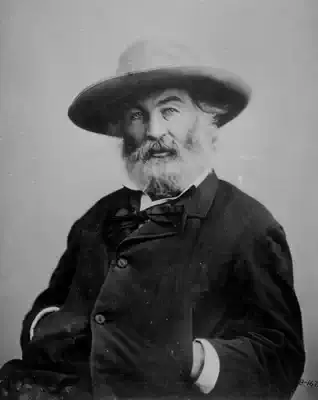
Walt Whitman
The Wound Dresser
AN old man bending, I come, among new faces,
Years looking backward, resuming, in answer to children,
Come tell us, old man, as from young men and maidens that love me;
(Arous'd and angry, I'd thought to beat the alarum, and urge relentless war,
but soon my fingers fail'd me, my face droop'd and I resign'd myself,
To sit by the wounded and soothe them, or silently watch the dead
Years hence of these scenes, of these furious passions, these chances,
Of unsurpass’d heroes, (was one side so brave? the other was equally brave
Now be witness again—paint the mightiest armies of earth;
Of those armies so rapid, so wondrous, what saw you to tell us?
What stays with you latest and deepest? of curious panics,
Of hard-fought engagements, or sieges tremendous, what deepest remains?
2
O maidens and young men I love, and that love me,
What you ask of my days, those the strangest and sudden your talking recalls;
Soldier alert I arrive, after a long march, cover’d with sweat and dust;
In the nick of time I come, plunge in the fight, loudly shout in the rush of successful
charge;
Enter the captur’d works.... yet lo! like a swift-running river, they fade;
Pass and are gone, they fade—I dwell not on soldiers’ perils or soldiers’ joys;
(Both I remember well—many the hardships, few the joys, yet I was content.)
But in silence, in dreams’ projections,
While the world of gain and appearance and mirth goes on,
So soon what is over forgotten, and waves wash the imprints off the sand,
With hinged knees returning, I enter the doors—(while for you up there,
Whoever you are, follow me without noise, and be of strong heart.)
3
Bearing the bandages, water and sponge,
Straight and swift to my wounded I go,
Where they lie on the ground, after the battle brought in;
Where their priceless blood reddens the grass, the ground;
Or to the rows of the hospital tent, or under the roof’d hospital;
To the long rows of cots, up and down, each side, I return;
To each and all, one after another, I draw near—not one do I miss;
An attendant follows, holding a tray—he carries a refuse pail,
Soon to be fill’d with clotted rags and blood, emptied and fill’d again.
I onward go, I stop,
With hinged knees and steady hand, to dress wounds;
I am firm with each—the pangs are sharp, yet unavoidable;
One turns to me his appealing eyes—(poor boy! I never knew you,
Yet I think I could not refuse this moment to die for you, if that would save you.)
On, on I go!—(open doors of time! open hospital doors!)
The crush’d head I dress, (poor crazed hand, tear not the bandage away
The neck of the cavalry-man, with the bullet through and through, I examine;
Hard the breathing rattles, quite glazed already the eye, yet life struggles hard;
(Come, sweet death! be persuaded, O beautiful death!
In mercy come quickly.)
From the stump of the arm, the amputated hand,
I undo the clotted lint, remove the slough, wash off the matter and blood;
Back on his pillow the soldier bends, with curv’d neck, and side-falling head;
His eyes are closed, his face is pale, he dares not look on the bloody stump,
And has not yet look’d on it.
I dress a wound in the side, deep, deep;
But a day or two more—for see, the frame all wasted already, and sinking,
And the yellow-blue countenance see.
I dress the perforated shoulder, the foot with the bullet wound,
Cleanse the one with a gnawing and putrid gangrene, so sickening, so offensive,
While the attendant stands behind aside me, holding the tray and pail.
I am faithful, I do not give out;
The fractur’d thigh, the knee, the wound in the abdomen,
These and more I dress with impassive hand, (yet deep in my breast a fire, a burning
flame.)
4
Thus in silence, in dreams’ projections,
Returning, resuming, I thread my way through the hospitals;
The hurt and wounded I pacify with soothing hand,
I sit by the restless all the dark night—some are so young;
Some suffer so much—I recall the experience sweet and sad;
(Many a soldier’s loving arms about this neck have cross’d and rested,
Many a soldier’s kiss dwells on these bearded lips.)
Read more →
663
Lord Byron
The Destruction of Sennacherib
The Assyrian came down like the wolf on the fold,
And his cohorts were gleaming in purple and gold;
And the sheen of their spears was like stars on the sea,
When the blue wave rolls nightly on deep Galilee.
Like the leaves of the forest when Summer is green,
That host with their banners at sunset were seen:
Like the leaves of the forest when Autumn hath blown,
That host on the morrow lay withered and strown.
For the Angel of Death spread his wings on the blast,
And breathed in the face of the foe as he passed;
And the eyes of the sleepers waxed deadly and chill,
And their hearts but once heaved, and for ever grew still!
And there lay the steed with his nostril all wide,
But through it there rolled not the breath of his pride;
And the foam of his gasping lay white on the turf,
And cold as the spray of the rockbeating
surf.
And there lay the rider distorted and pale,
With the dew on his brow, and the rust on his mail:
And the tents were all silent, the banners alone,
The lances unlifted, the trumpet unblown.
And the widows of Ashur are loud in their wail,
And the idols are broke in the temple of Baal;
And the might of the Gentile, unsmote by the sword,
Hath melted like snow in the glance of the Lord!
Read more →
667
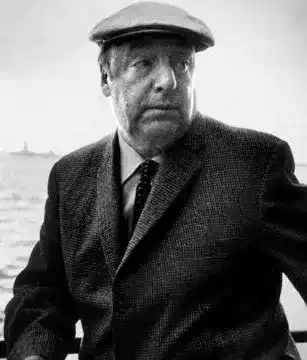
Pablo Neruda
Nothing But Death
There are cemeteries that are lonely,
graves full of bones that do not make a sound,
the heart moving through a tunnel,
in it darkness, darkness, darkness,
like a shipwreck we die going into ourselves,
as though we were drowning inside our hearts,
as though we lived falling out of the skin into the soul.
And there are corpses,
feet made of cold and sticky clay,
death is inside the bones,
like a barking where there are no dogs,
coming out from bells somewhere, from graves somewhere,
growing in the damp air like tears of rain.
Sometimes I see alone
coffins under sail,
embarking with the pale dead, with women that have dead hair,
with bakers who are as white as angels,
and pensive young girls married to notary publics,
caskets sailing up the vertical river of the dead,
the river of dark purple,
moving upstream with sails filled out by the sound of death,
filled by the sound of death which is silence.
Death arrives among all that sound
like a shoe with no foot in it, like a suit with no man in it,
comes and knocks, using a ring with no stone in it, with no
finger in it,
comes and shouts with no mouth, with no tongue, with no
throat.
Nevertheless its steps can be heard
and its clothing makes a hushed sound, like a tree.
I'm not sure, I understand only a little, I can hardly see,
but it seems to me that its singing has the color of damp violets,
of violets that are at home in the earth,
because the face of death is green,
and the look death gives is green,
with the penetrating dampness of a violet leaf
and the somber color of embittered winter.
But death also goes through the world dressed as a broom,
lapping the floor, looking for dead bodies,
death is inside the broom,
the broom is the tongue of death looking for corpses,
it is the needle of death looking for thread.
Death is inside the folding cots:
it spends its life sleeping on the slow mattresses,
in the black blankets, and suddenly breathes out:
it blows out a mournful sound that swells the sheets,
and the beds go sailing toward a port
where death is waiting, dressed like an admiral.
Translated by Robert Bly
Read more →
672
Pablo Neruda
Ode to Clothes
Every morning you wait,
clothes, over a chair,
to fill yourself with
my vanity, my love,
my hope, my body.
Barely
risen from sleep,
I relinquish the water,
enter your sleeves,
my legs look for
the hollows of your legs,
and so embraced
by your indefatigable faithfulness
I rise, to tread the grass,
enter poetry,
consider through the windows,
the things,
the men, the women,
the deeds and the fights
go on forming me,
go on making me face things
working my hands,
opening my eyes,
using my mouth,
and so,
clothes,
I too go forming you,
extending your elbows,
snapping your threads,
and so your life expands
in the image of my life.
In the wind
you billow and snap
as if you were my soul,
at bad times
you cling
to my bones,
vacant, for the night,
darkness, sleep
populate with their phantoms
your wings and mine.
I wonder
if one day
a bullet
from the enemy
will leave you stained with my blood
and then
you will die with me
or one day
not quite
so dramatic
but simple,
you will fall ill,
clothes,
with me,
grow old
with me, with my body
and joined
we will enter
the earth.
Because of this
each day
I greet you
with reverence and then
you embrace me and I forget you,
because we are one
and we will go on
facing the wind, in the night,
the streets or the fight,
a single body,
one day, one day, some day, still.
Read more →
668

William Wordsworth
The Seven Sisters
Or, The Solitude Of Binnorie
SEVEN Daughter had Lord Archibald,
All children of one mother:
You could not say in one short day
What love they bore each other.
A garland, of seven lilies, wrought!
Seven sisters that together dwell;
But he, bold Knight as ever fought,
Their Father, took of them no thought,
He loved the wars so well.
Sing, mournfully, oh! mournfully,
The solitude of Binnorie!
Fresh blows the wind, a western wind,
And from the shores of Erin,
Across the wave, a Rover brave
To Binnorie is steering:
Right onward to the Scottish strand
The gallant ship is borne;
The warriors leap upon the land,
And hark! the Leader of the band
Hath blown his bugle horn.
Sing, mournfully, oh! mournfully,
The solitude of Binnorie!
Beside a grotto of their own,
With boughs above them closing,
The Seven are laid, and in the shade
They lie like fawns reposing.
But now, upstarting with affright
At noise of man and steed,
Away they fly to left, to rightÑ
Of your fair household, Father-knight,
Methinks you take small heed!
Sing, mournfully, oh! mournfully,
The solitude of Binnorie!
Away the even fair Campbells fly,
And, over hill and hollow,
With menace proud, and insult loud,
The youthful Rovers follow.
Cried they, 'Your Father loves to roam:
Enough for him to find
The empty house when he comes home;
For us your yellow ringlets comb,
For us be fair and kind!'
Sing, mournfully, oh! mournfully,
The solitude of Binnorie!
Some close behind, some side to side,
Like clouds in stormy weather;
They run, and cry, 'Nay, let us die,
And let us die together.'
A lake was near; the shore was steep;
There never foot had been;
They ran, and with a deperate leap
Together plunged into the deep,
Nor ever more were seen.
Sing, mournfully, oh! mournfully,
The solitude of Binnorie!
The stream that flows out of the lake,
As through the glen it rambles,
Repeats a moan o'er moss and stone,
For those seven lovely Campbells.
Seven little Islands, green and bare,
Have risen from out the deep:
The fishers say, those sisters fair,
By faeries all are buried there,
And there together sleep.
Sing, mournfully, oh! mournfully,
The solitude of Binnorie!
Read more →
650
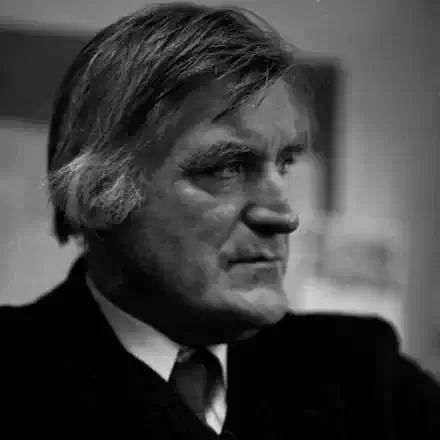
Ted Hughes
A Woman Unconscious
Russia and America circle each other;
Threats nudge an act that were without doubt
A melting of the mould in the mother,
Stones melting about the root.
The quick of the earth burned out:
The toil of all our ages a loss
With leaf and insect. Yet flitting thought
(Not to be thought ridiculous)
Shies from the world-cancelling black
Of its playing shadow: it has learned
That there's no trusting (trusting to luck)
Dates when the world's due to be burned;
That the future's no calamitous change
But a malingering of now,
Histories, towns, faces that no
Malice or accident much derange.
And though bomb be matched against bomb,
Though all mankind wince out and nothing endure --
Earth gone in an instant flare --
Did a lesser death come
Onto the white hospital bed
Where one, numb beyond her last of sense,
Closed her eyes on the world's evidence
And into pillows sunk her head.
Read more →
654
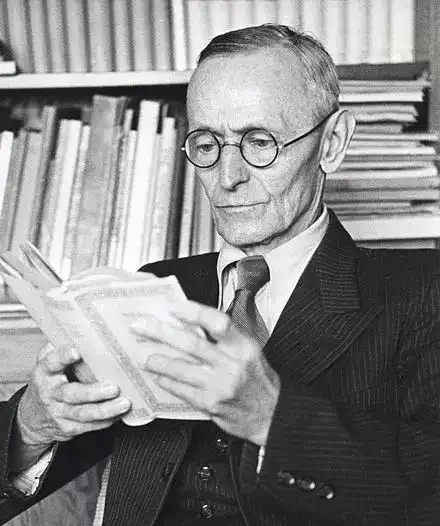
Hermann Hesse
In Secret We Thirst
Graceful, spiritual,
with the gentleness of arabesques
our life is similar
to the existence of fairies
that spin in soft cadence
around nothingness
to which we sacrifice
the here and now
Dreams of beauty, youthful joy
like a breath in pure harmony
with the depth of your young surface
where sparkles the longing for the night
for blood and barbarity
In the emptiness, spinning, without aims or needs
dance free our lives
always ready for the game
yet, secretly, we thirst for reality
for the conceiving, for the birth
we are thirst for sorrows and death
Read more →
642
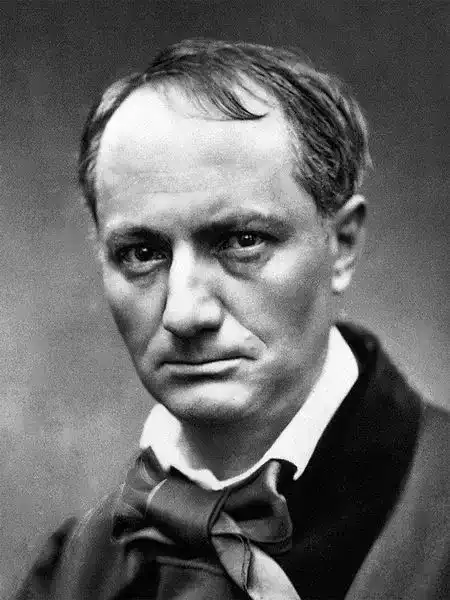
Charles Baudelaire
Lethe
Come to my heart, cruel, insensible one,
Adored tiger, monster with the indolent air;
I would for a long time plunge my trembling fingers
Into the heavy tresses of your hair;
And in your garments that exhale your perfume
I would bury my aching head,
And breathe, like a withered flower,
The sweet, stale reek of my love that is dead.
I want to sleep! sleep rather than live!
And in a slumber, dubious as the tomb's,
I would lavish my kisses without remorse
Upon the burnished copper of your limbs.
To swallow my abated sobs
Nothing equals your bed's abyss;
Forgetfulness dwells in your mouth,
And Lethe flows from your kiss.
My destiny, henceforth my pleasure,
I shall obey, predestined instrument,
Docile martyr, condemned innocent,
Whose fervour but augments his torment.
I shall suck, to drown my rancour,
Nepenthe, hemlock, an opiate,
At the charming tips of this pointed breast
That has never imprisoned a heart.
Read more →
637
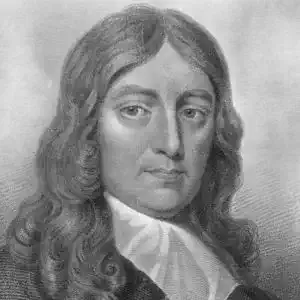
John Milton
On Time
Fly, envious Time, till thou run out thy race,
Call on the lazy leaden-stepping hours,
Whose speed is but the heavy plummet's pace;
And glut thyself with what thy womb devours,
Which is no more than what is false and vain,
And merely mortal dross;
So little is our loss,
So little is thy gain.
For when as each thing bad thou hast intombed,
And last of all thy greedy self consumed,
Then long Eternity shall greet our bliss
With an individual kiss,
And Joy shall overtake us as a flood;
When every thing that is sincerely good
And perfectly divine,
With truth, and peace, and love, shall ever shine
About the supreme throne
Of Him, t' whose happy-making sight alone
When once our heav'nly-guided soul shall climb,
Then, all this earthly grossness quit,
Attired with stars, we shall for ever sit,
Triumphing over Death, and Chance, and thee, O Time.
Read more →
644
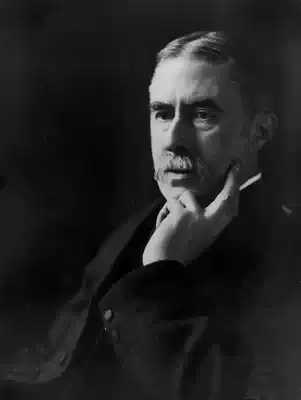
Alfred Edward Housman
Is My Team Ploughing
"Is my team ploughing,
That I was used to drive
And hear the harness jingle
When I was man alive?"
Ay, the horses trample,
The harness jingles now;
No change though you lie under
The land you used to plough.
"Is football playing
Along the river shore,
With lads to chase the leather,
Now I stand up no more?"
Ay, the ball is flying,
The lads play heart and soul;
The goal stands up, the keeper
Stands up to keep the goal.
"Is my girl happy,
That I thought hard to leave,
And has she tired of weeping
As she lies down at eve?"
Ay, she lies down lightly,
She lies not down to weep,
Your girl is well contented.
Be still, my lad, and sleep.
"Is my friend hearty,
Now I am thin and pine,
And has he found to sleep in
A better bed than mine?"
Yes, lad, I lie easy,
I lie as lads would choose;
I cheer a dead man's sweetheart,
Never ask me whose.
Read more →
640
Boris Pasternak
Lessons of English
When Desdemona sang a ditty-
In her last hours among the living-
It wasn't love that she lamented,
And not her star-she mourned a willow.
When Desdemona started singing,
With tears near choking off her voice,
Her evil demon for her evil day
Stored up of weeping rills a choice.
And when Ophelia sang a ballad-
In her last hours among the living-
All dryness of her soul was carried
Aloft by gusts of wind, like cinders.
The day Ophelia started singing,
By bitterness of daydreams jaded,
What trophies did she clutch, when sinking?
A bunch of buttercups and daisies.
Their shoulders stripped of passion's tatters,
They took, their hearts a-quake with fear,
The Universe's chilly baptism-
To stun their loving forms with spheres.
Read more →
646
Boris Pasternak
August
This was its promise, held to faithfully:
The early morning sun came in this way
Until the angle of its saffron beam
Between the curtains and the sofa lay,
And with its ochre heat it spread across
The village houses, and the nearby wood,
Upon my bed and on my dampened pillow
And to the corner where the bookcase stood.
Then I recalled the reason why my pillow
Had been so dampened by those tears that fell
I'd
dreamt I saw you coming one by one
Across the wood to wish me your farewell.
You came in ones and twos, a straggling crowd;
Then suddenly someone mentioned a word:
It was the sixth of August, by Old Style,
And the Transfiguration of Our Lord.
For from Mount Tabor usually this day
There comes a light without a flame to shine,
And autumn draws all eyes upon itself
As clear and unmistaken as a sign.
But you came forward through the tiny, stripped,
The pauperly and trembling alder grove,
Into the graveyard's coppice, russet-red,
Which, like stamped gingerbread, lay there and glowed.
And with the silence of those high treetops
Was neighbour only the imposing sky
And in the echoed crowing of the cocks
The distances and distances rang by:
There in the churchyard underneath the trees,
Like some surveyor from the government
Death gazed on my pale face to estimate
How large a grave would suit my measurement.
All those who stood there could distinctly hear
A quiet voice emerge from where I lay:
The voice was mine, my past; prophetic words
That sounded now, unsullied by decay:
'Farewell, wonder of azure and of gold
Surrounding the Transfiguration's power:
Assuage now with a woman's last caress
The bitterness of my predestined hour!
'Farewell timeless expanse of passing years!
Farewell, woman who flung your challenge steeled
Against the abyss of humiliations:
For it is I who am your battlefield!
'Farewell, you span of open wings outspread,
The voluntary obstinacy of flight,
O figure of the world revealed in speech,
Creative genius, wonder-working might!'
Read more →
646