
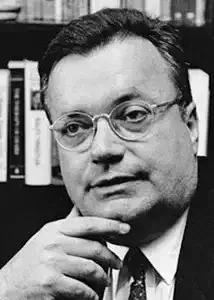
Luís Filipe Castro Mendes
 PT
PT
Luís Filipe Castro Mendes is a poet and essayist whose work is characterized by intelligence, erudition, and a profound reflection on the human condition, art, and society. His poetry, which oscillates between lyricism and essayism, addresses themes such as time, memory, identity, culture, and civic engagement, with careful language and notable formal rigor. With a multifaceted career, which also includes political and diplomatic activity, Castro Mendes builds a coherent and consistent body of work, marked by an attentive gaze on the world and its contradictions. His poetry is an invitation to contemplation and critical thinking, engaging with the literary tradition while proposing an innovative look at contemporary issues, establishing himself as one of the most significant voices in Portuguese literature.
n. 1950-11-21, Idanha-a-Nova · m. , Barcelona
Bio
Identification and basic context
Luís Filipe de Lima Vicente de Castro Mendes is a prominent Portuguese poet, essayist, novelist, playwright, and politician. He was born in Lisbon, Portugal, on May 25, 1950. He is the son of António Vicente de Castro Mendes and Maria Eugénia de Lima. His work is written in Portuguese.Childhood and education
Luís Filipe Castro Mendes attended Liceu Camões, in Lisbon, where he completed his secondary education. Later, he graduated in Law from the Faculty of Law of the University of Lisbon. His academic training in Law and his cultural experiences in Lisbon shaped his critical thinking and worldview.Literary career
The beginning of his literary career dates back to the 1970s, with the publication of poetry and essays. Castro Mendes quickly stood out for his erudition, the depth of his reflections, and the mastery of his language. Over time, his work evolved, maintaining a constant dialogue with the Portuguese and universal literary tradition, but always with an innovative perspective on contemporary issues. He has published several books of poetry, essays, a novel, and plays, consolidating himself as a central figure in Portuguese literature.Work, style, and literary characteristics
Luís Filipe Castro Mendes' main works include poetry collections such as "Ouvir a Noite" (1976), "O Sangue e a Neve" (1982), "Os Dias e as Noites" (1991), "Viagem de Inverno" (2007), "O Mar" (2010), "A Cor do Tempo" (2014), and "Coração na Boca" (2018). In prose, his notable essays include "A Poesia e o Poeta" (1983) and "O Novo e o Muito Antigo" (2015), and the novel "A Língua das Mulheres" (1995). The dominant themes in his work are the passage of time, memory, identity, the human condition, art, literature, culture, politics, and civic engagement. His poetry explores the relationship between the individual and history, the fragility of existence, and the search for meaning in a constantly changing world. He frequently addresses the figure of the poet and the role of poetry in society. Castro Mendes' style is marked by intelligence, clarity of thought, and formal rigor. Although he uses various forms, there is a preference for dense, imagistic, and musical language, which combines lyricism with philosophical and essayistic reflection. His poetic voice is often that of an attentive and thoughtful observer, who questions reality and himself.Cultural and historical context
Luís Filipe Castro Mendes lived and produced his work during a period of significant transformations in Portugal, including the end of the Estado Novo, the Carnation Revolution, and the consolidation of democracy. His work reflects this context, with strong civic and political engagement. He belonged to the post-Marxist and post-surrealist generation but always maintained an independent position, engaging with various literary and philosophical currents. His activity as a diplomat and, subsequently, as Minister of Culture (2015-2018) in Portugal brought him closer to centers of political and cultural decision-making, influencing his perspective on art and society.Personal life
Luís Filipe Castro Mendes was married to the poet and translator Joana Matos, with whom he had children. His personal life, marked by a strong connection to family and friends, intertwines with his public and literary activity. His personal experiences and reflections nourish the depth and humanity of his work.Recognition and reception
Luís Filipe Castro Mendes is widely recognized as one of the most important contemporary Portuguese poets. He has received several literary awards, such as the PEN Club Portuguese Poetry Award and the Portuguese Writers Association Award. His work has been the subject of academic study and intense critical reception, both in Portugal and abroad.Influences and legacy
Among his influences are authors from the Portuguese literary tradition, such as Fernando Pessoa and Sophia de Mello Breyner Andresen, but also thinkers and poets from other latitudes. Castro Mendes' legacy lies in his ability to reconcile poetry with essayism and civic engagement, offering a model of an intellectual committed to his time. He has influenced later generations of poets and writers through his rigorous thematic and formal approach.Interpretation and critical analysis
Castro Mendes' work is often analyzed from the perspective of his reflection on temporality, memory, and the nature of poetic language. His poetry is seen as a space of resistance against the trivialization of thought and the superficiality of contemporary culture.Curiosities and lesser-known aspects
Beyond his literary and political facets, Luís Filipe Castro Mendes is known for his love of classical music and his vast general knowledge. His ability to move between different universes – from diplomacy to poetic creation – is an aspect that demonstrates the breadth of his talent and vision.Death and memory
Luís Filipe Castro Mendes is a living author, and his literary memory continues to be built through his constantly expanding work and the impact his cultural and political intervention has had in Portugal.Poems
0No poems found
Videos
50
Comments (0)
No comments yet. Be the first to comment.