

Authors List
Browse our collection of authors
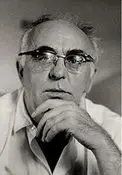
Charles Olson

1910-12-27 – 1970-01-10
Charles Olson was an American poet, essayist, and academic, a central figure in post-World War II poetry. His work is marked by an intense exploration of individual experience and history, integrating philosophy and anthropology into verses that seek to capture the totality of being. Olson is often associated with Black Mountain College, where he taught and developed many of his theories on poetry, proposition, and perception. His legacy lies in redefining poetic practice, encouraging a more direct and visceral approach to language and reality, profoundly influencing generations of experimental poets.
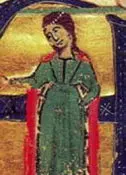
Beatriz de Diá

1140 – 1212
Beatriz de Diá was a medieval troubadour, active in the 13th century. Little is known about her life, but her work, composed in Galician-Portuguese, is part of the Galician-Portuguese lyric tradition. Her songs, with themes of love, reflect the mentality and customs of the courtly era.
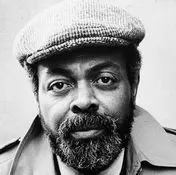
Amiri Baraka
1934-10-07 – 2014-01-09
Amiri Baraka, born LeRoi Jones, was an influential American poet, playwright, essayist, activist, and musician. A central figure in the 1960s counterculture and the Black Arts movement, his work intensely addressed Black identity, racial oppression, politics, and American culture. It was characterized by visceral, politicized writing and the exploration of diverse artistic forms, including poetry, theater, and music.
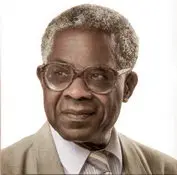
Aimé Césaire
1913-06-26 – 2008-04-17
Aimé Césaire was a Martinican poet, writer, and politician, a prominent figure in the literary and political movement of Négritude. His poetic work, marked by expressive force and denunciation of colonialism, deeply explored African and Caribbean identity. He was also an influential political leader, fighting for decolonization and the rights of oppressed peoples.
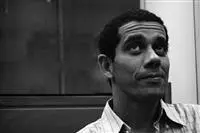
Leonardo Martinelli

1978-04-27 – 2008
Leonardo Martinelli is a Brazilian poet known for his visceral writing and exploration of existential and social themes. His work is characterized by raw and direct language, often addressing the complexity of human relationships, the anguish of urban life, and the search for meaning in the contemporary world. Martinelli has established himself as a relevant voice in recent Brazilian poetry, standing out for the originality and expressive force of his verses.
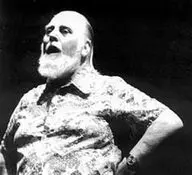
Bob Cobbing

1920-07-30 – 2002-09-29
Bob Cobbing was a pioneer of visual and sound poetry, known for his experimental approach and the deconstruction of traditional poetic forms. His work, often performative, explored the materiality of language, the sonority of words, and the relationship between text and image. Cobbing was a central figure in the British artistic avant-garde, promoting experimentation and collaboration.
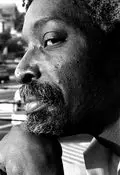
Itamar Assumpção
1949-09-13 – 2003-06-12
Itamar Assumpção was a Brazilian poet, composer, and singer, known for his innovative and engaged poetry, which frequently addressed social and existential themes with an ironic and critical tone. His work stood out for its fusion of languages, mixing the colloquial with the erudite, and for exploring new sonorities in Brazilian popular music, where he collaborated with various artists.
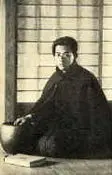
Shinkichi Takahashi

1901-01-28 – 1987-06-05
Shinkichi Takahashi was a Japanese poet, known as one of the pioneers of Zen poetry in Japan. His work is characterized by the fusion of Buddhist Zen tradition and modern poetic expression. His verses explore the nature of reality, impermanence, and enlightenment through often paradoxical language and surprising imagery, inviting contemplation and transcendence.
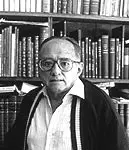
Haroldo Maranhão
1927-08-07 – 2004-01-01
Haroldo Maranhão was a Brazilian poet, essayist, and literary critic, whose work is notable for its lyrical depth and exploration of existential and social themes. With a rich and imagistic language, he explored the complexities of the human condition, the relationship with the land, and memory. His literary production encompassed poetry and prose, always with a keen eye on the nuances of language and the expressive power of words. He was also an engaged intellectual, contributing to the cultural debate of his time.
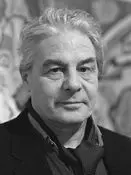
Lucebert

1924-09-15 – 1994-05-10
Lucebert (real name: Lubertus Jacobus Swaanswijk) was a Dutch poet and painter, a central figure in the experimental CoBrA movement. His poetry, like his art, is characterized by a playful, transgressive, and often provocative approach that challenges linguistic and artistic conventions. With a body of work marked by experimentation and the pursuit of authentic and visceral expression, Lucebert explored themes such as the human condition, freedom, nature, and social criticism. His ability to merge the visual and the verbal, creating poetic images charged with meaning and emotion, established him as one of the most unique and influential post-war artists in the Netherlands and Europe.
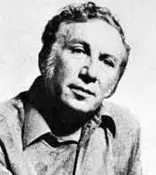
Nizâr Qabbânî

1923-03-21 – 1998-04-30
Nizâr Qabbânî was a prominent Syrian poet and diplomat, known for his works exploring love, sensuality, and social and political critique. His poetry, written in accessible and direct language, resonated deeply with the Arab public, making him one of the most popular Arab poets of the 20th century. Qabbânî addressed universal themes such as romantic love and passion, but also social and political issues, including the status of women in Arab society and criticism of oppressive regimes. His works are characterized by a strong emotional charge and a language that combines tradition with modernity.
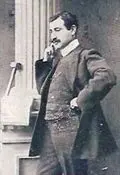
Daniel Varoujan

1884-04-20 – 1915-08-26
Daniel Varoujan was an Armenian poet, known for his lyrical work that celebrated the culture, nature, and soul of his people. His words were an echo of Armenian landscapes and traditions, conveying a deep love for his homeland and identity. Varoujan is remembered as one of the most poignant voices in 20th-century Armenian literature, whose poetic legacy continues to inspire and move.
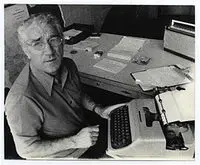
João Apolinário

1924-01-18 – 1988-10-22
João Apolinário was a Portuguese poet whose work is part of the context of contemporary poetry. His writing is marked by a profound reflection on the human condition, time, and memory, with a refined language and a strong imagery.
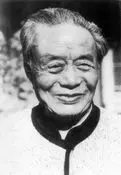
Ai Qing

1910-03-27 – 1996-05-05
Ai Qing was a prominent Chinese poet, known for his lyrical and socially conscious poetry. His works address themes such as the lives of ordinary people, the struggle against oppression, and the beauty of nature, reflecting a deep love for his homeland and a humanist spirit. His writing, marked by a direct and emotional style, had a significant influence on modern Chinese poetry, making him a central figure in 20th-century Chinese literature.
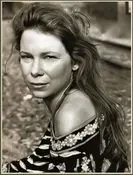
Lhasa de Sela
1972-09-27 – 2010-01-01
Lhasa de Sela was a Mexican singer-songwriter, known for her unique and emotive voice and for the fusion of musical styles that included influences from folk, blues, rock, and traditional Latin American music. Her music, often sung in different languages, addressed themes such as love, loss, spirituality, and the inner journey, with a depth and authenticity that captivated a loyal audience worldwide. With a mesmerizing stage presence and a discography that reflects a constant pursuit of artistic expression, Lhasa left a musical legacy that celebrates cultural diversity and the intensity of the human experience.
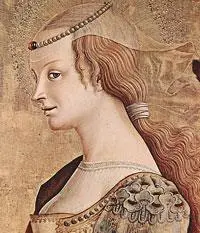
Hadewijch de Antuérpia

1190 – 1240
Hadewijch was a 13th-century mystic and poet, a prominent figure in medieval Dutch literature. Her work, deeply rooted in religious experience and divine love, is marked by intense subjectivity and a language rich in symbolism. Centered on the quest for union with God, her poetry explores the dynamics of courtly love transposed to the spiritual plane, where the soul yearns for the presence of the Beloved. Her works, which include lyric poetry and mystical prose, offer a unique glimpse into the spirituality of the era and continue to inspire with their emotional depth and theological complexity. Hadewijch is recognized for her contribution to religious literature and her ability to express the highest human aspirations.
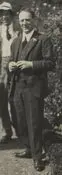
Walter de la Mare
1873-04-25 – 1956-06-22
Walter de la Mare was an English poet, short story writer, and novelist. He is best known for his lyrical poetry, which often explores themes of childhood innocence, the supernatural, dreams, and the passage of time. His work is characterized by its musicality, delicate imagery, and a sense of wonder and melancholy. De la Mare also wrote significant prose, including ghost stories and novels for children, demonstrating a versatile imagination that bridged the adult and child's perspective.
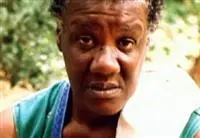
Stela do Patrocínio
1941-01-09 – 1998-01-01
Stela do Patrocínio was a singular figure in Brazilian poetry, known for her work that blends lyricism with a profound observation of everyday life and the human condition. Her writing stands out for its sensitivity and its ability to evoke powerful images, often exploring themes such as the passage of time, memory, and interpersonal relationships with a language that is both accessible and dense. With a discreet trajectory, Stela do Patrocínio left a poetic legacy that continues to resonate for its authenticity and expressive force, consolidating herself as an important voice in contemporary literature.
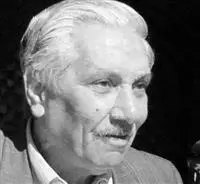
Abd al-Wahhab Al-Bayati

1926-12-19 – 1999-08-03
Abd al-Wahhab Al-Bayati was a prominent Iraqi poet, considered one of the pioneers of modern Arabic poetry. His work is deeply marked by the experience of exile, the struggle against oppression, and the pursuit of social justice and freedom. Al-Bayati is known for his powerful poetic voice and his ability to blend Arab tradition with Western influences, creating poetry that resonates with universal themes of identity, hope, and resistance.
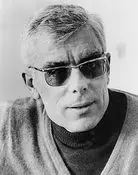
Gabriel Ferrater

1922-05-20 – 1972-04-27
Gabriel Ferrater was a Catalan poet, literary critic, and linguist, a prominent figure of social poetry and cultural resistance in Francoist Spain. His work, marked by raw realism and a profound reflection on the human condition, language, and social reality, is in continuity with avant-garde poetry but strongly anchored in everyday life. He is recognized for his direct language, his irony, and his ability to transform the prosaic into the poetic.
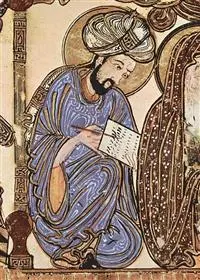
Ibn Zaidûn
1003-01-01 – 1071
Ibn Zaidûn was a prominent Andalusian Arab poet and statesman, considered one of the greatest exponents of Arabic poetry of his time. His work, deeply marked by his passion for Wallada bint al-Mustakfi, is renowned for its elegance, richness of imagery, and exploration of themes such as love, longing, and nature. Ibn Zaidûn is remembered as a master of lyric poetry and an influential cultural figure of Al-Andalus.
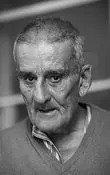
Leopoldo María Panero
1948-06-16 – 2014-03-05
Leopoldo María Panero was a Spanish poet associated with the generation of "Novísimos", known for their reinterpretation of the poetic tradition with influences from other arts. His work is marked by a confessional tone, the exploration of marginality, violence, madness, and existential themes, often reflecting his own life experiences.
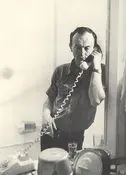
Frank O'Hara
1926-03-27 – 1966-07-25
Frank O'Hara was an American poet associated with the New York School movement. His work, characterized by distinctive spontaneity and colloquiality, captures the cultural effervescence of 20th-century New York. A poet of everyday life, the city, and personal relationships, O'Hara explored the urban experience with a lyrical and sometimes ironic gaze, leaving a legacy of vibrant and accessible poetry.
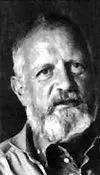
Helmut Heissenbüttel

1921-06-21 – 1996-09-19
Helmut Heissenbüttel was a German writer, a pioneer of concrete and experimental poetry in Germany. His work explored the potentialities of language and poetic form, challenging traditional literary conventions. Heissenbüttel is recognized for his avant-garde approach, which significantly influenced contemporary German-language poetry, opening new paths for linguistic and aesthetic experimentation.